
REVIEW · FUSHIMI INARI SHRINE TOURS
Kyoto Fushimiinari:Wagashi Making & Small Group Tea Ceremony
A handmade wagashi and a bowl of matcha turn this 75-minute Kyoto experience into something more personal than a quick cultural demonstration. You work in the kitchen, then move through a tiny garden into a Japanese-style room with tatami mats and a garden view.
I like the hands-on sweet-making and the small group, capped at six people. I also like that the tea ceremony is explained clearly rather than treated as a test of perfect manners. The main consideration is practical: you need to sit on the floor unless you request a chair in advance, and bare feet are not allowed.
The most useful parts of the experience are:
- Make your own seasonal wagashi: Prepare one kind of Japanese sweet by hand, with the recipe changing according to the season.
- Prepare your own matcha: Learn to whisk one bowl of tea with a bamboo whisk after watching the host demonstrate the proper method.
- Enter a real Japanese-style room: Walk through a small garden and sit on tatami in an authentic room, weather permitting.
- Learn the meaning behind the ritual: Hear about tea history, ceremony manners, and the hanging scroll in the alcove.
- Ask questions in English: The instructors are licensed guide interpreters, and Miho has been praised for her warm welcome and clear English.
- Keep the group intimate: With no more than six participants, the class allows time for questions and individual help.
From Kitchen Counter to Tatami Room
This experience begins at a local house, where an English-speaking host welcomes you and takes you to the kitchen. That opening matters. You are not simply shown a finished sweet and asked to admire it. You make one kind of wagashi yourself.
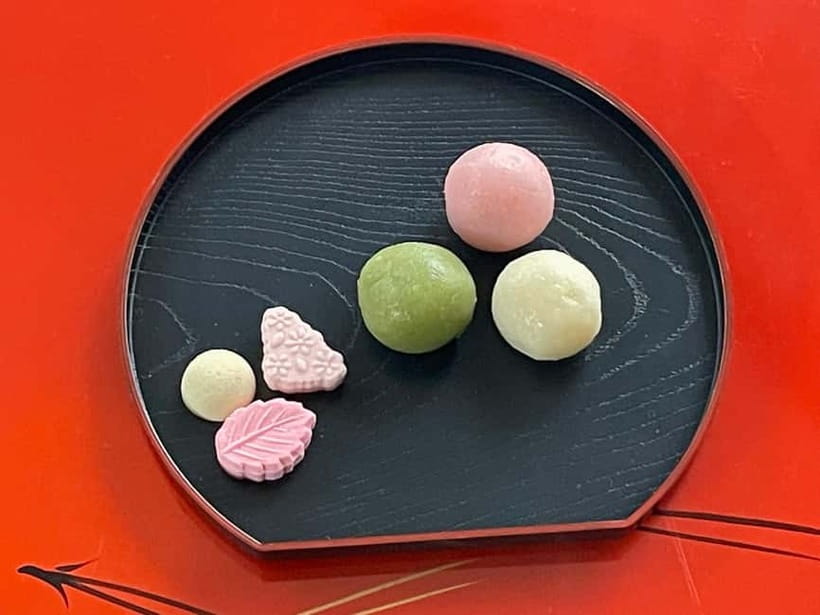
The exact sweet depends on the season, so the finished item may not look like the pictures you saw when booking. That change is part of the point. Japanese confectionery often follows the calendar, and the class gives you a small, edible example of that habit.
The class is hands-on, with the instructor guiding you through the process. Past sessions have included mochi filled with red bean paste and white bean paste. You should expect careful shaping and straightforward instruction, not a professional pastry course. The goal is to understand how the sweet is made and leave with something you helped create.
I like this first step because it gives the tea ceremony a clear purpose. You will later eat the wagashi with matcha, so the sweet is not an unrelated craft project. It becomes part of the tea service.
The Small Garden and Japanese Room
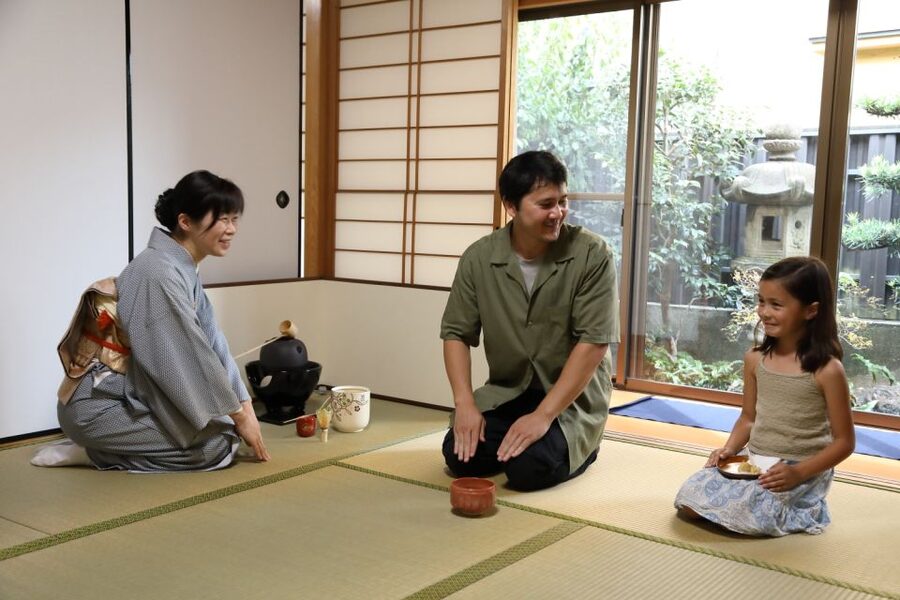
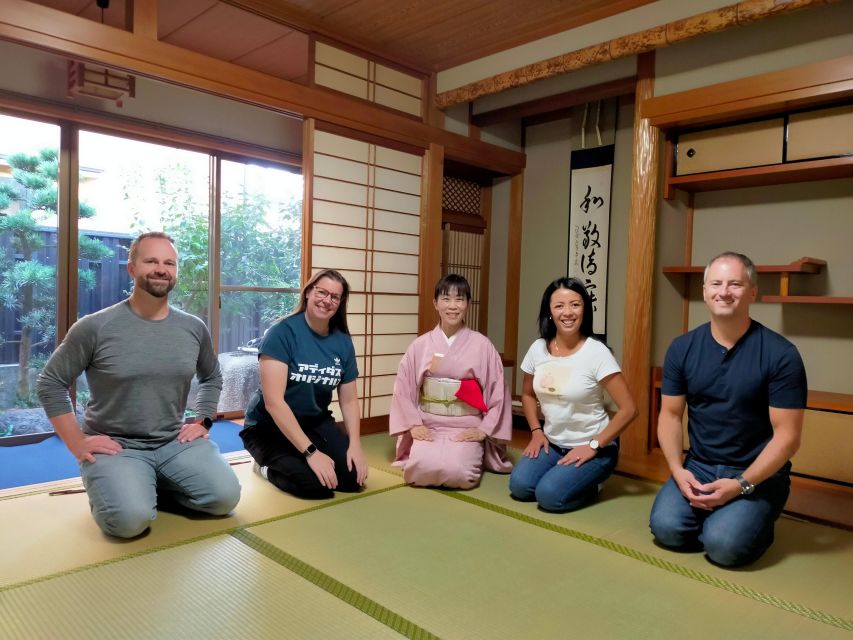
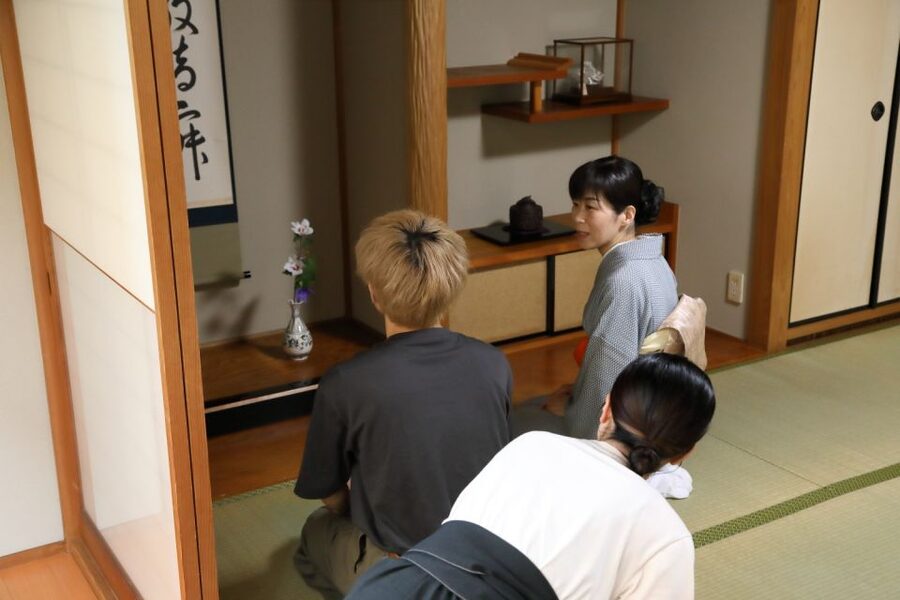
After the kitchen class, the group receives an explanation of how to attend a tea ceremony and how to behave in a Japanese room. When the weather is dry, you walk outside through a very small garden before entering the tea room.
Do not expect a large garden visit or a long outdoor stroll. This is a short transition from the house to the room. Its value is in the change of pace. You leave the kitchen, pass through the garden, and enter a quieter setting with tatami flooring and a garden view.
The room is described as an authentic Japanese-style space, with a hanging scroll placed in the alcove at the back. The instructor explains what the scroll means and why it belongs in that setting. That detail helps you see the room as more than attractive scenery. The objects have a role, and the ceremony takes place within that arrangement.
Rain changes this part of the experience. You may not walk through the garden if the weather is poor. The tea ceremony still takes place, but the outdoor transition is not guaranteed.
More Fushimi Inari Shrine Tours in Kyoto:
- Kyoto: Tea Ceremony in a Traditional Tea House in Kiyomizu
★ 4.9 · 3,519 reviews - Fushimi Inari Hidden Hiking Tour (Private Option Available)
★ 5.0 · 1,750 reviews - Osaka/Kyoto:Kinkakuji,Arashiyama,FushimiInariShrine,NaraPark
★ 4.1 · 1,596 reviews
Understanding the Tea Ceremony Without Feeling Tested
Once seated, you learn about the history of tea and the purpose of the ceremony. The instructor also explains basic manners, how to receive the sweets, and how to drink matcha.
That preparation makes the ceremony easier to enjoy. Japanese tea etiquette can look exact from the outside, but you are given enough information to follow along. The session is informative without demanding that you already know the rules.
The experience is not presented as a formal examination. You can take part at your own pace, and questions about the ritual and Japanese culture are welcome. This is a good fit if you want cultural context but do not want a rigid performance where one wrong movement spoils the mood.
The English instruction is an important part of the value. The instructors are licensed guide interpreters, and the English-speaking host explains the steps and meanings covered in the session. Miho is one host named in the experience feedback, and her warm welcome and strong English were singled out. The tea master is not named in the available details, but the teaching includes time for questions.
Eating the Wagashi You Just Made
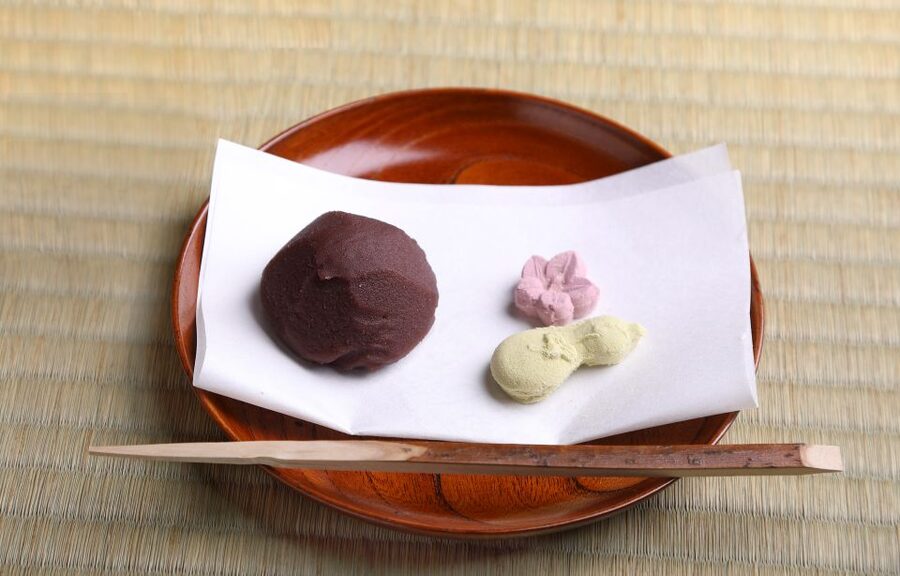
Before you prepare your own matcha, you eat the Japanese sweet made during the kitchen class. The instructor first demonstrates how to enjoy the confectionery with the tea.
This is a small but well-planned part of the session. Wagashi is not simply a dessert placed beside your drink. Its sweetness balances the bitterness of matcha, and eating it at the right point helps you understand how the two are meant to work together.
You receive one type of traditional Japanese confectionery. The exact style may change with the season, and the sweets may differ from the booking photographs. If you have a food allergy or restriction, tell the provider in advance. The information supplied does not promise that every dietary need can be handled on the day, so advance notice is important.
The sweets can also include bean pastes, such as red bean or white bean paste. If you already know you dislike bean-based fillings, keep that in mind before booking.
Whisking Two Bowls of Matcha
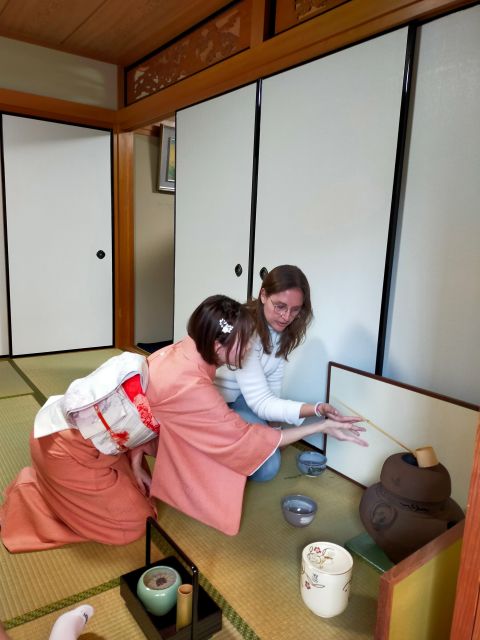
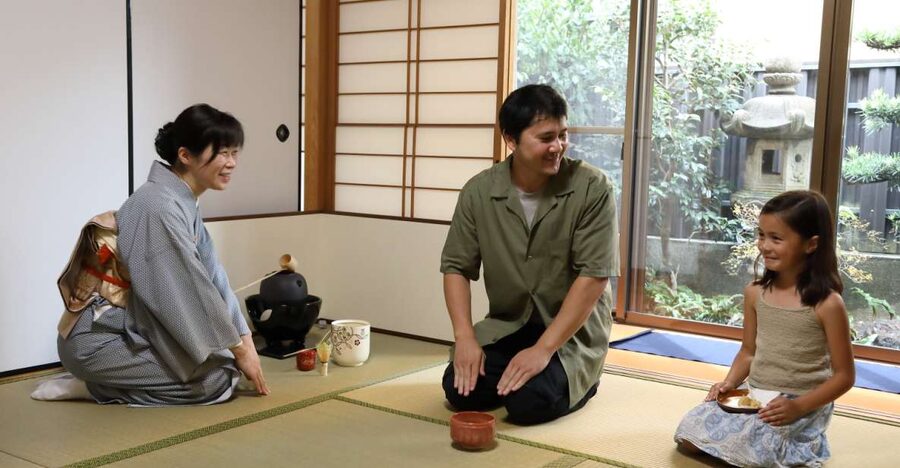
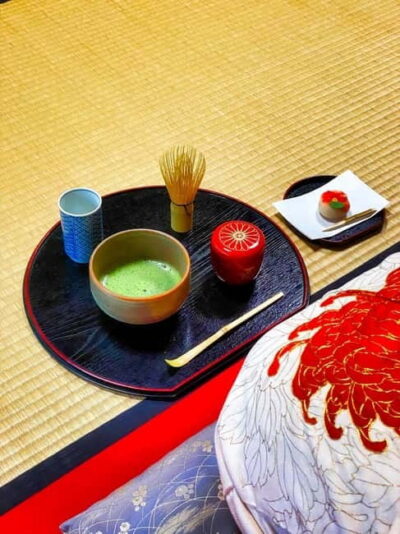
The tea portion includes two bowls of matcha. The first is prepared for you, and the second is the bowl you make yourself.
The host begins by demonstrating the ceremonial preparation. You then learn how to use the bamboo whisk and prepare your own bowl. This gives you a useful souvenir that does not take up space in your luggage: you can serve matcha to friends or family after returning home.
The point is not to create a perfect tea master’s bowl in one short class. Instead, you learn the basic motion, the order of the steps, and the care involved in making the drink. The instructor stays nearby to help, which is especially useful in a group of six or fewer.
I like this arrangement more than a ceremony where you only watch. You still see the formal preparation, but you also get to handle the tools. It gives the experience a bit of play without turning the ceremony into a stage show.
Matcha has a distinct bitter taste, and the wagashi helps soften it. If you have never tried matcha, this pairing is a gentle introduction. If you already enjoy it, the appeal is in learning how the drink fits into the ceremony.
Same country, a different morning at the gates:
- Kyoto: Tea Ceremony Ju-An at Jotokuji Temple
★ 4.9 · 3,207 reviews - Kyoto/Osaka: Nara, Fushimi Inari Taisha, Arashiyama Bus Tour
★ 4.7 · 1,275 reviews - Kyoto Arashiyama Walking Tour: Bamboo, Monkeys, Gardens & Secrets
★ 5.0 · 1,216 reviews - Arashiyama Bamboo, Temple, Monkeys, or Secret Sake Brewery
★ 4.8 · 886 reviews
Why the Six-Person Limit Matters
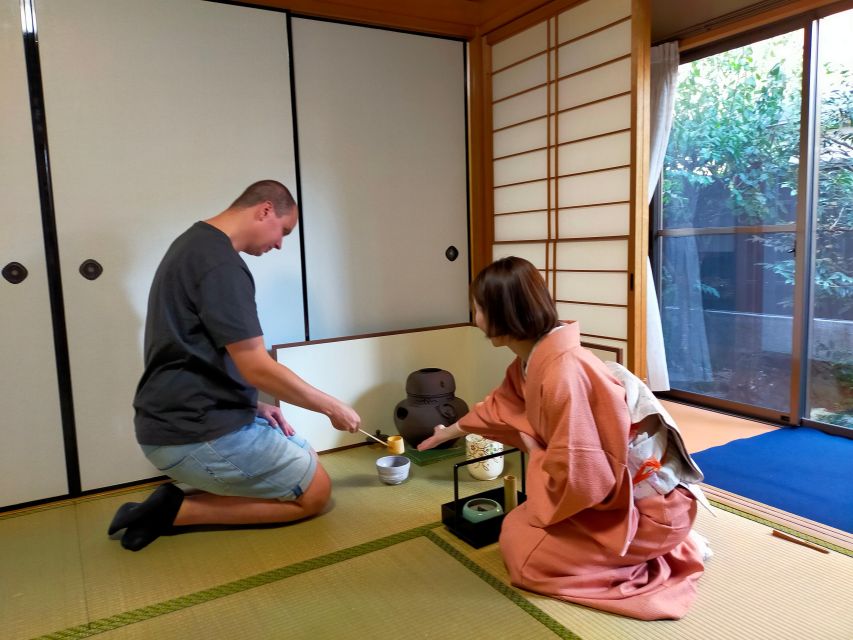
A group limit of six keeps the session personal. The instructor can explain the whisking motion, answer questions, and help with the wagashi without addressing a crowded room.
Small groups also suit the setting. A local home and Japanese-style room have a different feel from a large classroom built for tour groups. You have more room to notice the garden view, the alcove, the tatami, and the sequence of the ceremony.
The tradeoff is that the experience may sell out at popular times, so you should check starting times when making plans. The duration is fixed at 75 minutes, which makes it easy to fit before or after other time in the Fushimi Inari area.
At $55 per person, I consider the price fair if you value instruction and participation. You receive a wagashi class, two bowls of matcha, tea ceremony guidance, cultural explanation, and a small-group setting. It is not the cheapest way to drink tea in Kyoto, but it offers more than a cup served at a café.
You are paying for the host’s time, the teaching, the ingredients, the room, and the chance to prepare the tea yourself. If you only want to sample matcha, this is more than you need. If you want a short cultural activity with a practical skill attached, the price makes better sense.
Practical Details Before You Go
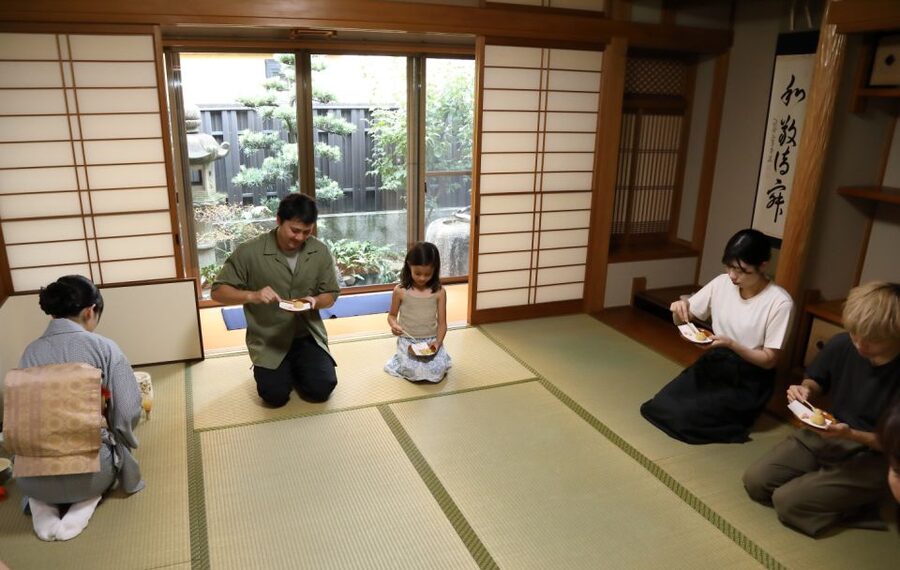
Wear socks. Bare feet are not allowed, which is easy to forget if you are wearing sandals during a warm Kyoto day.
You will normally sit on the tatami floor. Chairs and tables are available for people who find floor seating difficult, but you need to request them in advance. Wheelchair users cannot take part, according to the stated suitability information.
Photography has limits. Flash photography and video recording are not allowed, and the host may ask you not to take photographs during certain parts of the session. That rule protects the quiet atmosphere and keeps the ceremony from becoming a phone-handling exercise.
The experience does not include hotel pickup, hotel drop-off, or help calling a taxi. Plan your route to the meeting point before the start time. The supplied information identifies the activity as being at Fushimi Inari in Kyoto, but it does not provide a full meeting address here, so use the exact booking instructions when arranging your day.
Cancellation is flexible up to 24 hours before the activity for a full refund, and you can reserve now and pay later. Those terms are useful if your Kyoto schedule may shift, though you still need to arrive on time once you book a place.
Who Will Enjoy This Experience Most
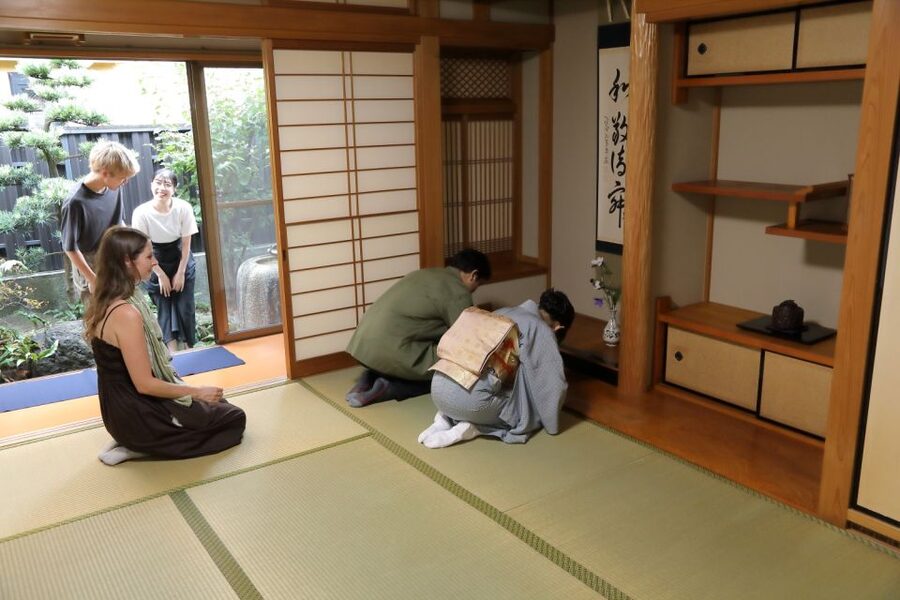
I would choose this for someone who wants a calm cultural break during a busy Kyoto itinerary. It suits couples, solo visitors, friends, and families with children aged eight or older who can follow instructions and sit on the floor.
It is especially good for you if:
- You want to make something rather than only watch a demonstration.
- You are curious about Japanese manners and the meaning of tea rituals.
- You prefer English explanations and a small group.
- You enjoy trying traditional sweets and do not mind bean-based fillings.
- You want an indoor activity that lasts less than an hour and a half.
It is less suitable if you need full wheelchair access, cannot sit on the floor without a pre-arranged chair, or want a long garden visit. It is also not the right choice if you expect a completely private ceremony, since the group can include up to six participants.
The tone is welcoming rather than severe. You will learn the proper way to participate, but you will not be expected to arrive with expert knowledge of tea ceremony. That balance makes the class approachable for first-time visitors.
Should You Book the Fushimi Inari Wagashi and Tea Class?
Book it if you want a short, participatory introduction to Japanese culture with clear English instruction. The strongest parts are the seasonal wagashi class, the authentic room, and the chance to whisk your own matcha instead of watching from the sidelines.
At $55, the experience offers solid value for a 75-minute session, particularly because it includes two bowls of tea, the sweet-making lesson, the confectionery, and all fees. Its limitations are clear: no hotel transport, no video, possible floor seating, and no wheelchair access.
I would place it on a Kyoto plan when you want a quiet contrast to temple visits and busy streets. Bring socks, mention food restrictions ahead of time, and request a chair before arrival if needed. If that setup suits you, this is a warm and useful way to learn a little Japanese hospitality and take home a skill you can repeat.
FAQ
How long does the wagashi and tea ceremony experience last?
The experience lasts 75 minutes.
How many people can join the activity?
The group is limited to six participants.
Is the experience taught in English?
Yes. The instructor language is English, and the instructors are licensed guide interpreters.
What is included in the price?
The price includes an English-speaking instructor, two bowls of matcha, one wagashi-making lesson, one type of traditional Japanese confectionery, explanations of tea preparation and sweet-eating manners, and all fees and taxes.
Do I need to sit on the floor?
The ceremony takes place on tatami flooring, but chairs and tables are available for people who find floor seating difficult. You need to request this in advance.
Can children or wheelchair users join?
Children under eight are not permitted, and the experience is not suitable for wheelchair users.
Just added around Kyoto
- Osaka/Kyoto: Katsuoji, Kinkakuji, Arashiyama 1-Day Bus Tour★ 4.6 · 33 reviews
- Kyoto:Kiyomizu-dera Temple Rent a kimono and ride a rickshaw★ 4.8 · 7 reviews
- Kyoto: Wagashi (Japanese sweets) Cooking near Fushimiinari★ 5.0 · 40 reviews
- Kyoto: Kimono/Yukata Rental 5 Minute from Kiyomizu-dera★ 4.7 · 89 reviews
- Kyoto: Samurai Sword & Kimono Action Filming Experience★ 4.8 · 78 reviews
- KYOTO: Tempio Kiyomizu Pagode Gion “Geisya” (Guida Italiana)★ 4.7 · 17 reviews
- Best of Kyoto: Red Gates of Fushimi Inari & Kiyomizu Temple★ 4.8 · 36 reviews
- Kyoto: Sake Brewery and Tasting Tour in Fushimi★ 4.8 · 55 reviews
Fushimi Inari Shrine Tours, compared.
Tea Ceremony in a Traditional Tea House in Kiyomizu
Read our review →
Fushimi Inari Hidden Hiking Tour (Private Option Available)
Read our review →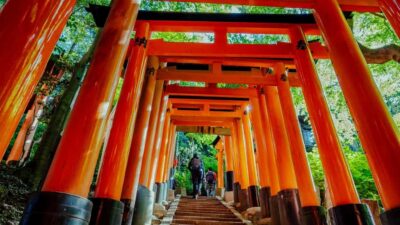
Osaka/Kyoto:Kinkakuji,Arashiyama,FushimiInariShrine,NaraPark
Read our review →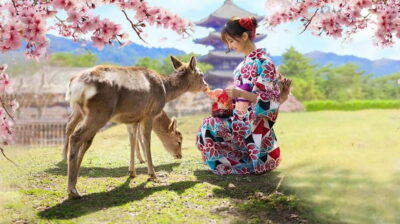
Kyoto/Osaka: Nara, Fushimi Inari Taisha, Arashiyama Bus Tour
Read our review →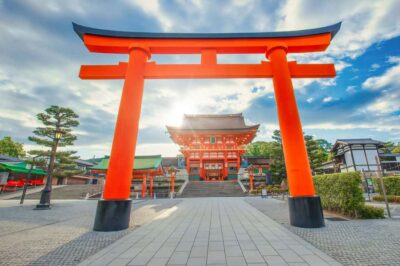
Osaka/Kyoto: Arashiyama, Nara & Fushimi Inari Shrine w/Lunch
Read our review →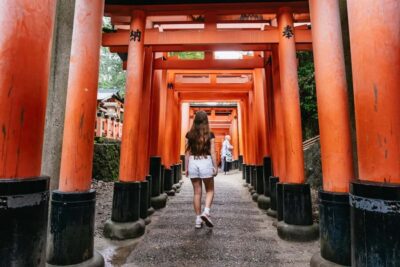
Nijo Castle, Kiyomizu & Fushimi Inari Guided Tour
Read our review →
Browse the lists this tour appears in