
REVIEW · KYOTO TEMPLE TOURS
Kyoto: Tea Ceremony Ju-An at Jotokuji Temple
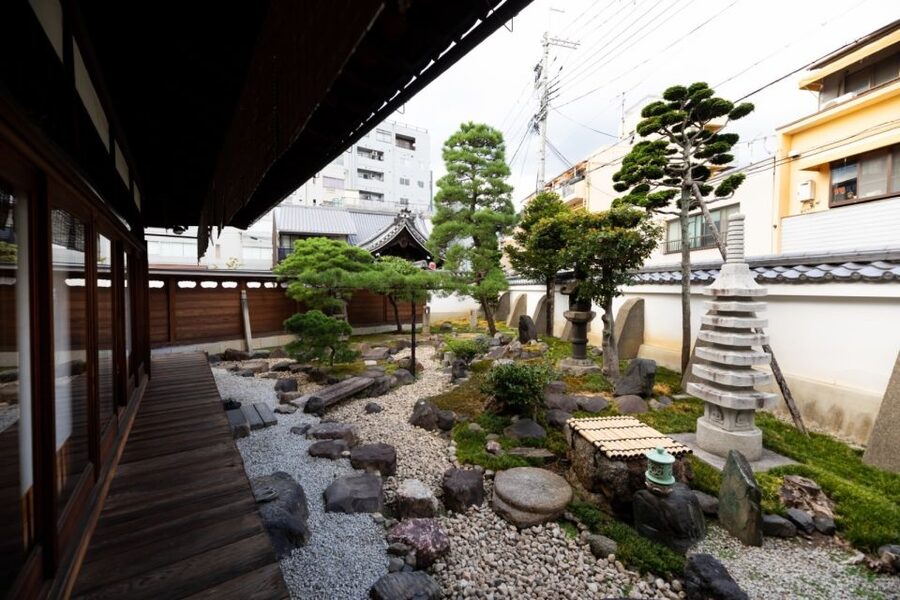
Jotokuji Temple gives this matcha ceremony something a plain tea room cannot: you begin with a purification ritual and pass through a working temple before sitting down to tea. The tea master explains each quiet movement, then lets you prepare your own bowl under guidance. I like the setting, and I like the clear English explanations from hosts such as Kate and Taka.
I also like the small group, which keeps the session personal without making it feel stiff. The main consideration is comfort: the tearoom has three steps and traditional floor seating, although chairs and stools can be provided. At $29 for 70 minutes, this is a focused cultural lesson rather than a long temple tour.
Key points
- A real temple setting: Enter through Jotokuji Temple’s main gates, see the Main Hall, and pause at the purification fountain before tea.
- You make matcha yourself: The tea master demonstrates the tools and movements, then helps you prepare your own cup.
- Small English-speaking groups: Numbers are limited to 10, with an instructor explaining the ritual and answering questions.
- A gentle introduction: The session offers a shorter introduction than a full formal ceremony, making it easier for first-time visitors.
- Traditional seating with options: Floor seating is part of the atmosphere, but stools and chairs are available on request.
- Good value at $29: You receive a guided temple introduction, matcha, sweets, instruction, and participation in a 70-minute session.
Why Jotokuji Temple makes the tea ceremony better
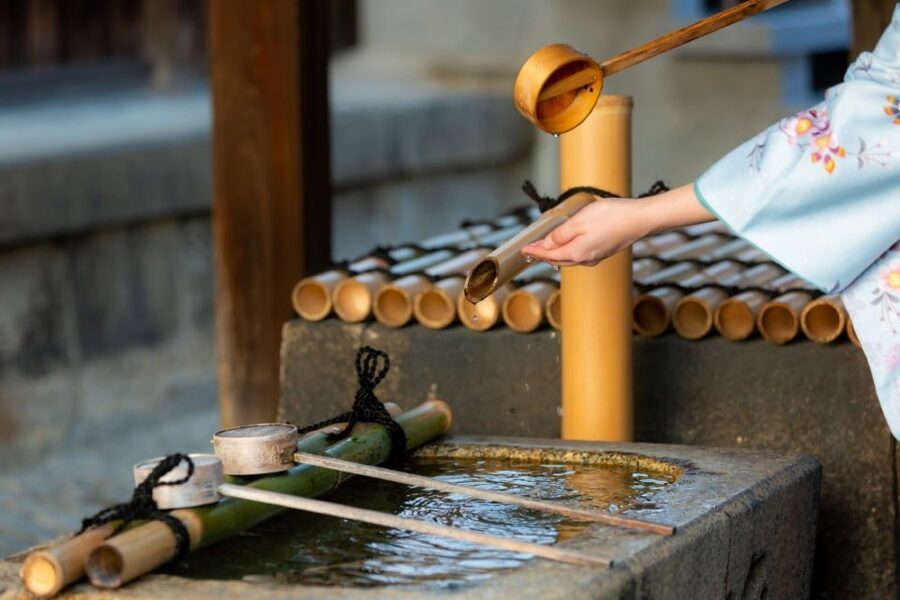
A tea ceremony can feel a little detached from daily Japanese life if it takes place only in a tourist studio. Here, the temple entrance sets the tone before the matcha appears.
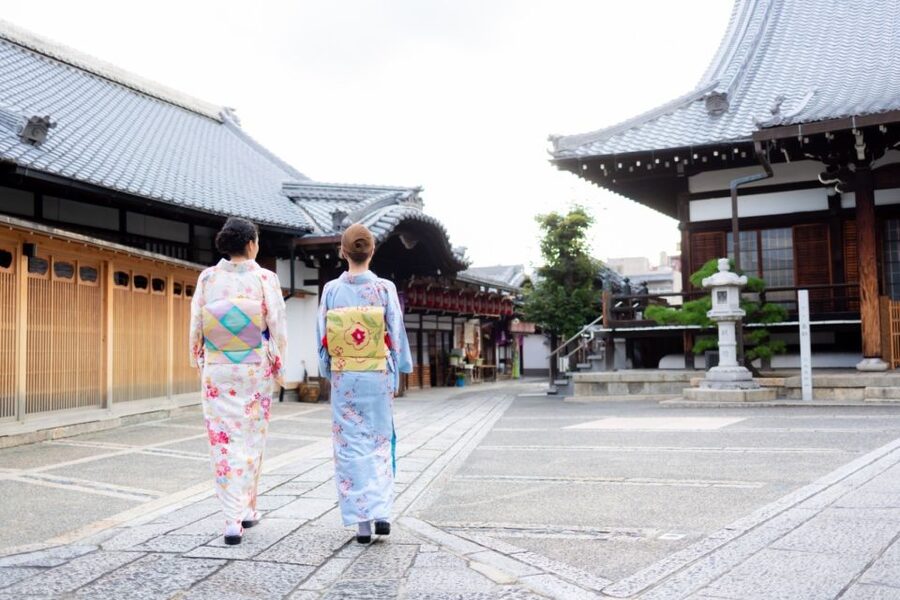
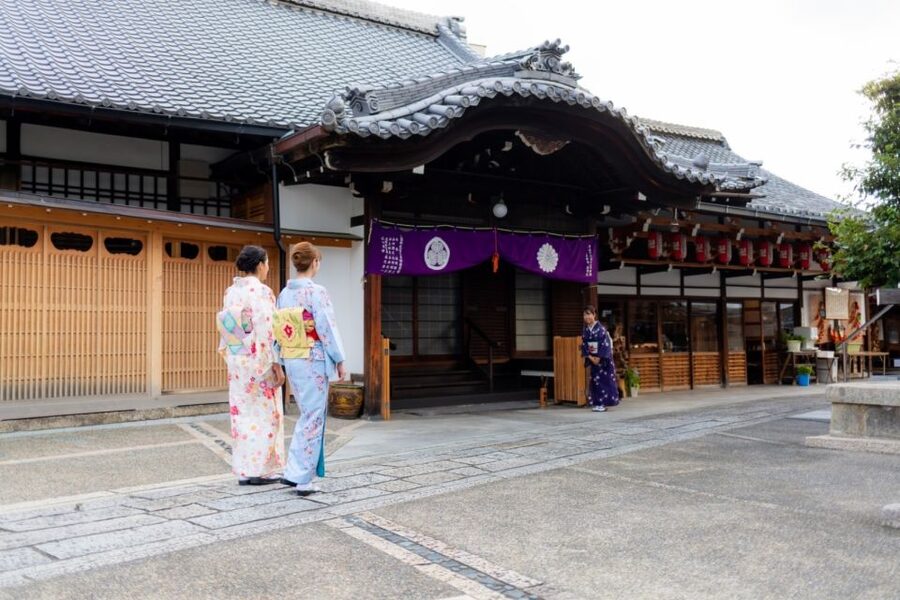
You enter through the main gates of Jotokuji Temple and face the Main Hall. The tea room entrance is to your left, up a few steps, but you do not rush straight inside. The meeting area is near the red benches, where your guide waits for the group.
That short walk matters. You have time to notice the temple architecture, the quiet grounds, and the purification fountain. The activity is not built around checking off several sights, so even a few unhurried minutes can help you shift away from Kyoto’s busy streets.
The temple portion is modest, not a full guided visit to every building. I would think of it as a setting and an introduction rather than a separate sightseeing tour. You get enough context to understand why the ceremony is taking place here, but the main event remains the tea lesson.
A few more temple visits around Kyoto worth a look
- Kyoto/Osaka: Nara, Fushimi Inari Taisha, Arashiyama Bus Tour
★ 4.7 · 1,275 reviews - Arashiyama Bamboo, Temple, Monkeys, or Secret Sake Brewery
★ 4.8 · 886 reviews - Kyoto: Arashiyama Bamboo Forest, Monkeys, Matcha & Temple Tour
★ 5.0 · 759 reviews
Arriving at the red benches and tea room
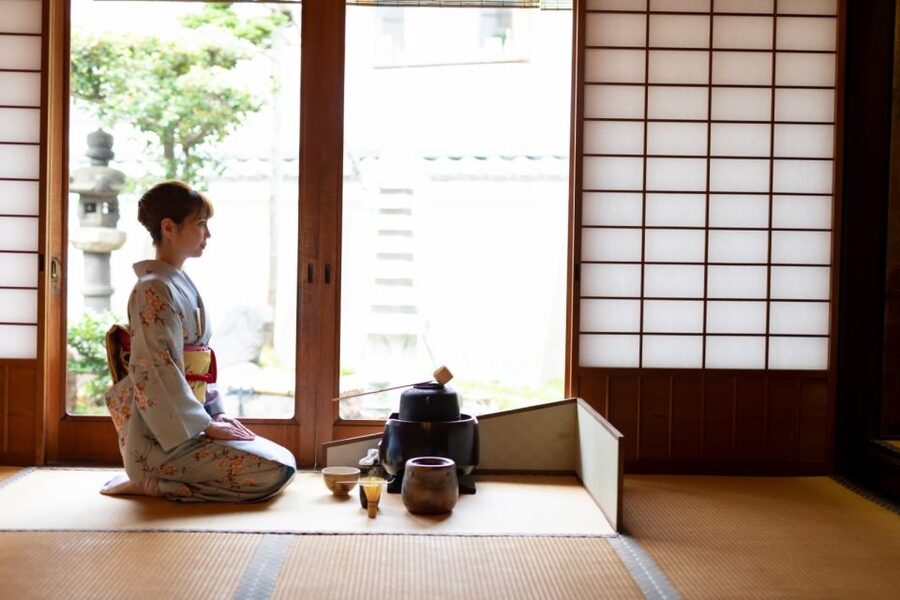
The meeting point can sound more complicated than it is. The address is Tea Ceremony Juan, 556, Gojo-sagaru, Tominokoji Dori, Shimogyo-Ku, Kyoto. Once inside the temple, face the Main Hall and look to the left for the steps leading toward the tea room.
You first meet near the red benches. In good weather, you may sit there while taking in the grounds. If rain comes along, you can wait under the shop’s gable or in the Grand Tearoom. This is a useful detail because the meeting area is partly outdoors, so do not assume you will wait in a large enclosed lobby.
The entrance to the Grand Tearoom is on your left as you pass through the main gates, with a parish shop nearby. After the temple introduction and a little time outside, you enter the tearoom and remove your shoes.
That shoe removal is part of the change in mood. You leave the hard surfaces of the temple grounds behind and move into a smaller, quieter room where everyone sits together. The group limit of 10 helps here. It is large enough to provide energy and questions, but small enough for the instructor to keep an eye on each person’s technique.
The purification ritual comes first
The ceremony begins with a traditional purification ritual. For many visitors from outside Japan, this may be the first part that feels genuinely unfamiliar, and that is exactly why the explanation helps.
You are not simply shown a bowl of matcha and told to copy someone. The instructor explains the purpose of the ritual and how it fits into the ceremony. That context turns a series of gestures into something you can understand and respect.
The purification fountain also gives you a clear link between the temple grounds and the tea room. The ceremony does not appear out of nowhere. It follows a set of customs designed to prepare both the space and the people entering it.
I would pay attention here rather than treating this as a quick photo stop. The first few minutes explain the spirit of the session: careful movements, attention to others, and a pause from the speed of ordinary sightseeing.
Removing your shoes and taking your place
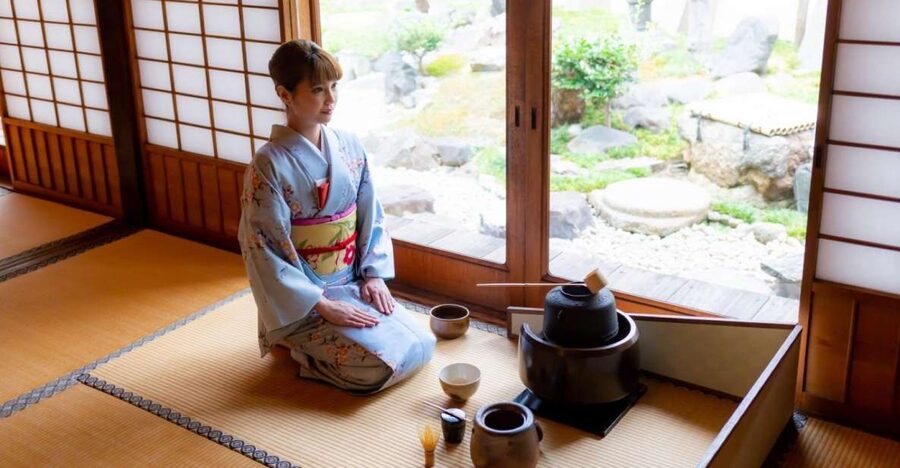
Inside the Grand Tearoom, you remove your shoes at the entrance and take your seat with the group. Traditional tea ceremonies often involve sitting on the floor, and that posture is part of the visual and physical experience.
It is also the point where comfort can become important. The activity notes that chairs and stools can be provided for anyone who is not comfortable sitting in the traditional position. Ask for one rather than enduring discomfort in silence. A relaxed participant will get more from the instruction than someone focused on sore knees.
The tearoom itself is not wheelchair accessible because of three steps, even though the temple grounds are wheelchair accessible. For that reason, the experience is not suitable for wheelchair users. This is the most important practical limitation to know before booking.
Once everyone is settled, the host and tea master explain what will happen. The English instruction is central to the experience. Hosts named in the session feedback include Kate and Taka, with other sessions also mentioning Yaki. The exact team may vary, but the format remains an English-led explanation followed by a tea master’s demonstration.
Same country, a different morning at the gates:
- Kyoto: Tea Ceremony in a Traditional Tea House in Kiyomizu
★ 4.9 · 3,519 reviews - Fushimi Inari Hidden Hiking Tour (Private Option Available)
★ 5.0 · 1,750 reviews - Osaka/Kyoto:Kinkakuji,Arashiyama,FushimiInariShrine,NaraPark
★ 4.1 · 1,596 reviews - Kyoto Arashiyama Walking Tour: Bamboo, Monkeys, Gardens & Secrets
★ 5.0 · 1,216 reviews
Watching the tea master prepare matcha
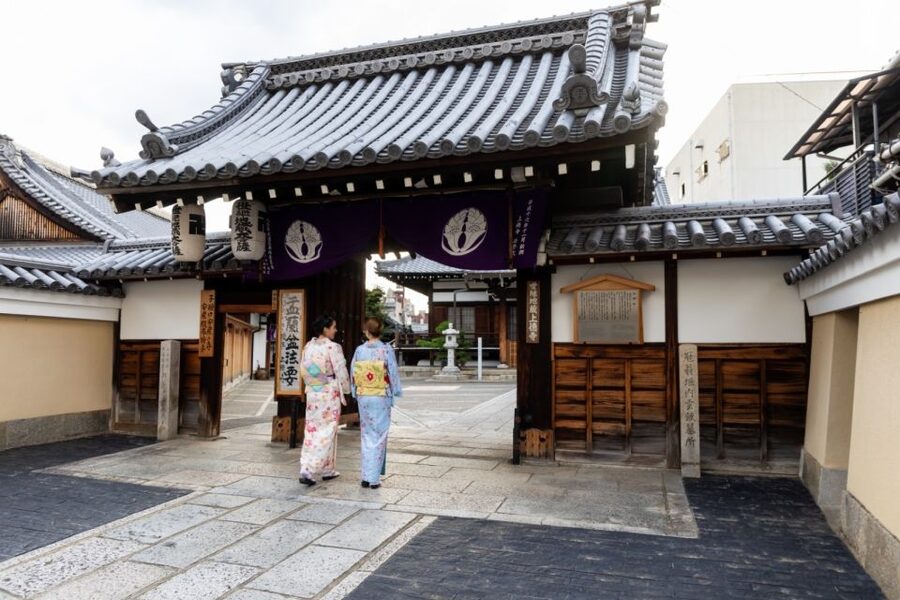
The most absorbing part of the session is the demonstration. The tea master prepares matcha with measured movements, and the host explains what you are seeing.
The tools are not treated as random props. The bowl, scoop, whisk, and other implements each have a place in the process. The measured pace gives you time to notice small actions that would be easy to miss in a faster demonstration.
This is not a performance built only for watching. The purpose is to help you understand how the tea is made and why the ritual has such a careful structure. You learn the etiquette of drinking matcha as well as the preparation itself.
I like that the instruction appears to avoid making the tradition feel intimidating. You are shown what to do, given an explanation of why it matters, and then invited to take part. That balance is important for first-time visitors. The ceremony keeps its sense of formality without turning you into an anxious student afraid of making one wrong movement.
Making your own bowl of matcha
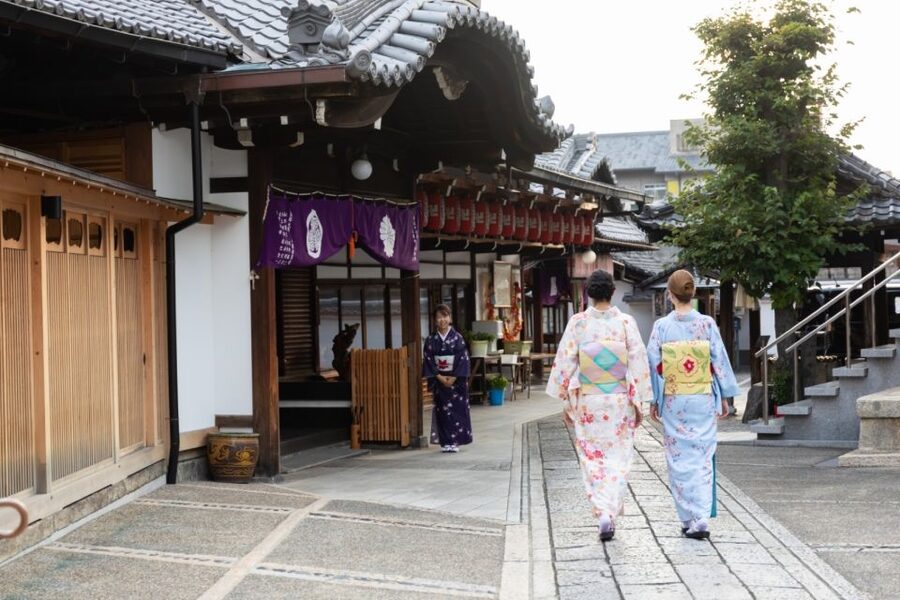
After watching the tea master, you have the chance to prepare your own tea. This changes the session from a demonstration into a workshop.
You handle the ceremonial implements and follow the steps with help from the tea master and English-speaking host. Your own bowl will probably feel less polished than the professional demonstration, but that is not the point. The value is in understanding the rhythm and effort involved.
The hands-on section also gives you a better sense of matcha itself. You see how the powder becomes a drink, learn how to handle the whisk, and then taste the result. The tea is served with sweets, a pairing that softens the bitterness of matcha and gives the ceremony a simple moment of pleasure.
Several details make this stronger than a quick tasting. You do not merely receive a prepared cup. You learn the process, try it yourself, and have room to ask questions. If you are curious about Japanese customs, this is where the history and physical action come together.
What you learn about Japanese tea culture
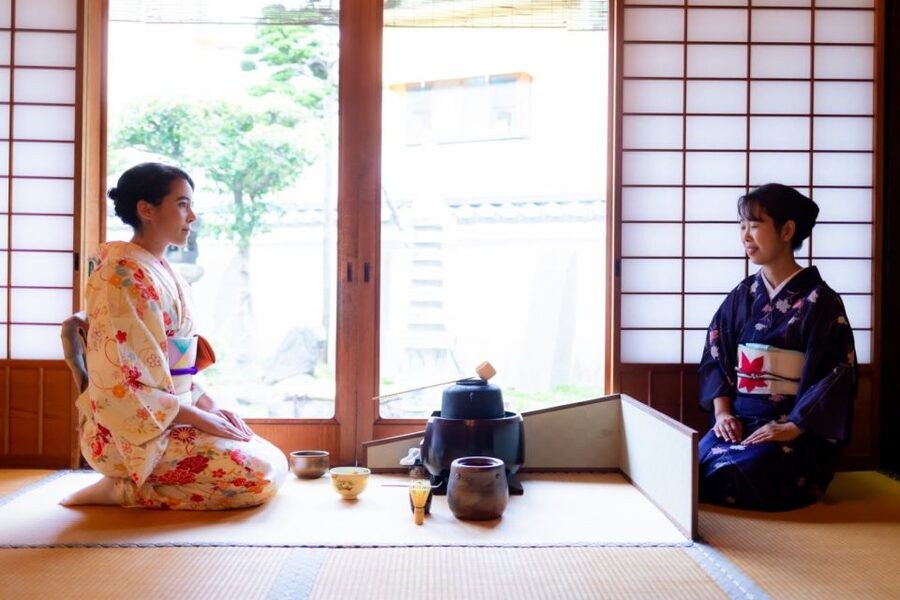
The activity explains more than how to whisk green tea. It places the ceremony within Japanese ideas about hospitality, respect, attention, and daily conduct.
You learn the correct way to drink matcha and the reason for certain gestures. The session also explains the importance of the ceremony itself, rather than presenting it as a collection of decorative movements.
This is where the 70-minute length works well. A full formal tea ceremony can take much longer, while this session gives you an accessible introduction within a normal sightseeing day. You get enough time for explanation, demonstration, tasting, and participation without committing half a day.
Do not book it expecting a detailed academic lecture on every school of tea or a long history of Jotokuji Temple. The emphasis is practical and welcoming. You leave with a working sense of what you saw and a better idea of why the ceremony is conducted so carefully.
The atmosphere: calm, but not silent
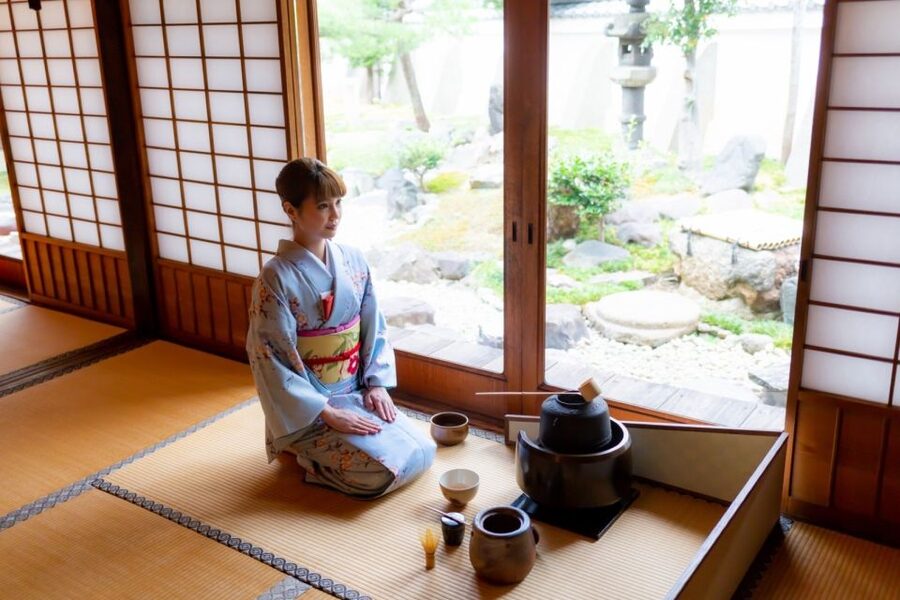
The setting creates a peaceful mood, but this is not a silent meditation session. The host talks, translates, explains, and invites questions. That is a strength for most English-speaking visitors, especially if this is your first contact with the tradition.
The best moments come when the explanations pause and the tea master’s movements take over. The sound of the whisk, the quiet attention in the room, and the formal handling of each object give the session its calm center.
At other times, the group may be asking questions or trying to prepare tea. That makes the experience more social and less austere. If you want complete silence, a tea ceremony workshop may not be the right choice. If you want to understand what is happening, the talk is essential.
The small group helps maintain a warm atmosphere. You are not lost in a crowd, and the instructor can include people who need extra help. This also makes it a good choice for couples, families with older children, and solo visitors who want a cultural activity without joining a large tour.
Is $29 good value?
At $29 per person, the price is reasonable for Kyoto, particularly because the experience combines several elements in one short visit.
You receive:
- A guided introduction to Jotokuji Temple
- The purification ritual
- A 70-minute English-led workshop
- A tea master’s demonstration
- Matcha and sweets
- The chance to prepare your own tea
- A small group limited to 10 people
The value is strongest if you want participation rather than a photo opportunity. You are paying for instruction, access to the ceremony, and the setting. The session also fills a useful gap in a Kyoto itinerary: it is substantial enough to feel like an event, but short enough to fit before or after other plans.
The price does not include a meal or a kimono. A kimono can be rented separately, but it is not needed to take part. I would not add the costume unless dressing up is a major part of your Kyoto plans. The ceremony itself provides the cultural focus.
Free cancellation up to 24 hours before the activity and the option to reserve now and pay later also reduce the risk of fitting this into a changing itinerary. Check the available start times before you build the rest of your day.
Who will enjoy this most?
I would recommend the experience to anyone curious about Japanese customs but unsure how to approach a formal tea ceremony. The explanations make the tradition easier to follow, and the hands-on preparation keeps the session from becoming passive.
It also suits people who want a quieter break from Kyoto’s major sightseeing areas. The temple setting gives you a chance to slow down without asking you to spend an entire morning in meditation.
Families and mixed-age groups may appreciate the practical format. The session includes watching, listening, tasting, and doing, so it has several points of interest. The floor seating may be the main issue for anyone with mobility or knee concerns, though stools and chairs can be arranged.
You may want to skip it if your priority is a full temple tour, a meal, a kimono photo session, or a long formal ceremony. This is an introduction and workshop. Its strength is clarity and access, not length or elaborate production.
Small practical details that matter
Plan to arrive with the meeting point in mind. Enter through the main gates, face the Main Hall, and look left for the steps toward the tea room. The red benches are the nearby meeting area.
Wear shoes that are easy to remove. You will take them off before entering the Grand Tearoom, and simple footwear makes the transition easier.
Allow for the weather. The red benches are outdoors, though you can wait under the shop’s gable or in the Grand Tearoom if it rains. The temple itself is accessible to wheelchair users, but the tearoom’s three steps mean the activity is not suitable for wheelchair users.
You do not need to bring tea-making experience. The instructor and tea master explain each stage, and the workshop is designed for beginners. Ask questions as you go, since the small group makes it possible to get clarification.
Should you book the Ju-An tea ceremony?
Book it if you want a hands-on introduction to matcha in a genuine temple setting. The strongest reasons are the purification ritual, the measured demonstration, the chance to make your own tea, and the clear English guidance from hosts such as Kate and Taka.
At $29, it offers good value for a 70-minute cultural activity, especially when you want something more meaningful than a quick tasting. Keep your expectations in check: it is not a full temple visit or a four-hour formal ceremony, and the tearoom is not wheelchair accessible.
For most first-time visitors, I would put this high on a Kyoto activity list. It gives you a respectful way into a tradition that can otherwise feel difficult to understand from the outside.
FAQ
How long does the tea ceremony last?
The experience lasts 70 minutes. It includes the temple introduction, purification ritual, tea demonstration, explanations, tasting, and the chance to prepare your own matcha.
Where is the meeting point?
The meeting point is Tea Ceremony Juan at 556, Gojo-sagaru, Tominokoji Dori, Shimogyo-Ku, Kyoto. Inside Jotokuji Temple, face the Main Hall and look left for the steps leading to the tea room. The guide waits near the red benches.
Is the experience conducted in English?
Yes. The instructor and explanations are in English.
How many people are in each group?
The group is limited to 10 participants.
Can I sit on a chair instead of the floor?
Yes. Chairs and stools can be provided for people who are not comfortable sitting on the floor in the traditional position.
Is the tea room wheelchair accessible?
No. The temple is wheelchair accessible, but the tea room has three steps. The activity is therefore not suitable for wheelchair users.
Just added around Kyoto
- Osaka/Kyoto: Katsuoji, Kinkakuji, Arashiyama 1-Day Bus Tour★ 4.6 · 33 reviews
- Kyoto:Kiyomizu-dera Temple Rent a kimono and ride a rickshaw★ 4.8 · 7 reviews
- Kyoto: Wagashi (Japanese sweets) Cooking near Fushimiinari★ 5.0 · 40 reviews
- Kyoto: Kimono/Yukata Rental 5 Minute from Kiyomizu-dera★ 4.7 · 89 reviews
- Kyoto Fushimiinari:Wagashi Making & Small Group Tea Ceremony★ 5.0 · 14 reviews
- Kyoto: Samurai Sword & Kimono Action Filming Experience★ 4.8 · 78 reviews
- KYOTO: Tempio Kiyomizu Pagode Gion “Geisya” (Guida Italiana)★ 4.7 · 17 reviews
- Best of Kyoto: Red Gates of Fushimi Inari & Kiyomizu Temple★ 4.8 · 36 reviews
Kyoto Temple Tours, compared.
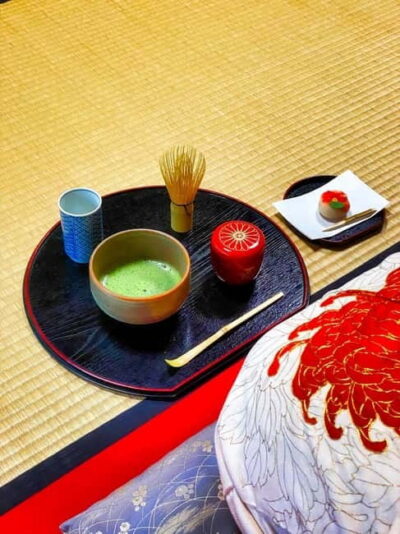
Tea Ceremony in a Traditional Tea House in Kiyomizu
Read our review →
Fushimi Inari Hidden Hiking Tour (Private Option Available)
Read our review →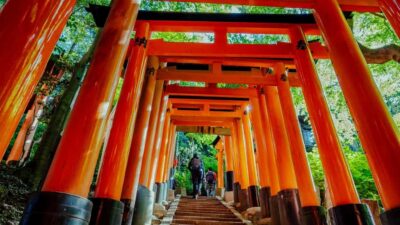
Osaka/Kyoto:Kinkakuji,Arashiyama,FushimiInariShrine,NaraPark
Read our review →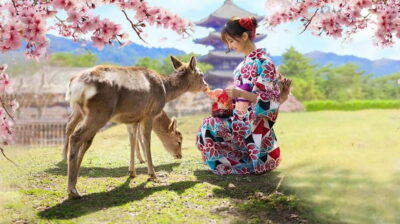
Kyoto/Osaka: Nara, Fushimi Inari Taisha, Arashiyama Bus Tour
Read our review →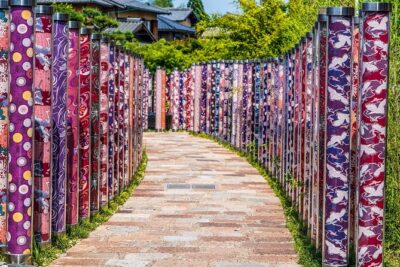
Kyoto Arashiyama Walking Tour: Bamboo, Monkeys, Gardens & Secrets
Read our review →
Arashiyama Bamboo, Temple, Monkeys, or Secret Sake Brewery
Read our review →
Arashiyama Bamboo Forest, Monkeys, Matcha & Temple Tour
Read our review →
Osaka/Kyoto: Arashiyama, Nara & Fushimi Inari Shrine w/Lunch
Read our review →Browse the lists this tour appears in