
REVIEW · KYOTO TEMPLE TOURS
Arashiyama Bamboo, Temple, Monkeys, or Secret Sake Brewery
Arashiyama is one of Kyoto’s prettiest districts, but its famous bamboo grove can feel like a quick photo stop if you visit alone. This five-hour walking tour gives the area room to breathe, linking the grove with a private garden, Zen temple, river views, shopping streets, and the macaques on Iwatayama.
I like the mix of major sights and quieter stops, especially Okochi Sanso Garden and Nonomiya Shrine. I also like the way guides such as Karim, Tom, Francis, and Toru have adjusted the pace for heat, rain, children, and endless questions. The catch is simple: this is a real walking tour, and the final climb to the monkey park is steep.
Key points to know before booking
- Bamboo is only the beginning: You also visit Nonomiya Shrine, Okochi Sanso Garden, Tenryuji Temple, Kimono Forest, Togetsukyo Bridge, and the monkey park.
- The hill matters: Reaching the macaques takes about 15 to 20 minutes on a steep path, followed by a fine view over the Katsura River and Kyoto.
- Your guide shapes the day: Karim, Tom, Francis, Toru, Alice, and others have been praised for clear explanations, humor, photography help, and sensible rest stops.
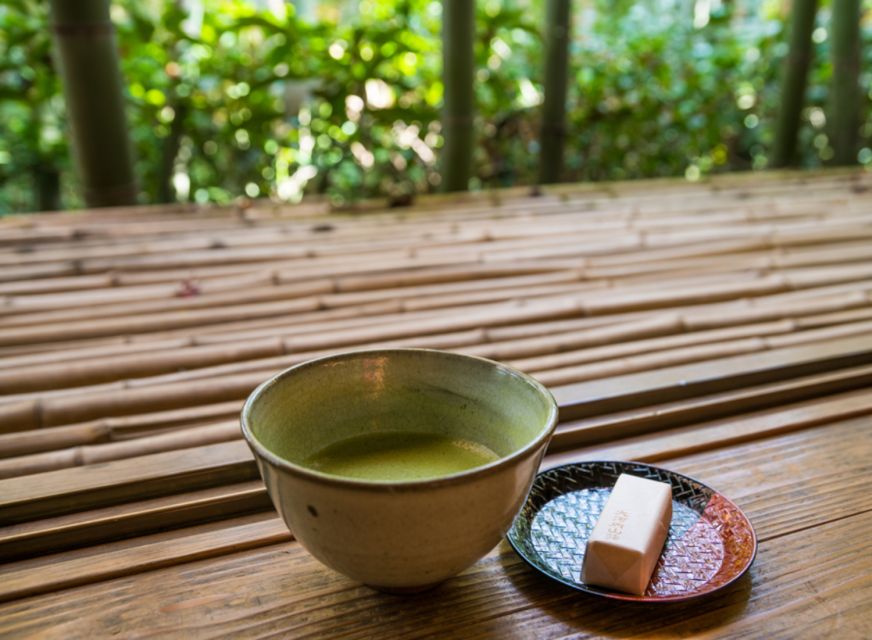
- You get more than a photo walk: Entrance fees to Okochi Sanso, Tenryuji, and the monkey park are included, along with green tea.
- There may be two route choices: One route continues through the shopping street to the bridge and monkeys. Another includes a short train ride, local lunch, and sake tasting at Tanzan Brewery.
- Plan for weather and effort: The tour runs rain or shine. Bring comfortable shoes, water, sun protection, and some cash.
Starting at Saga-Arashiyama Station
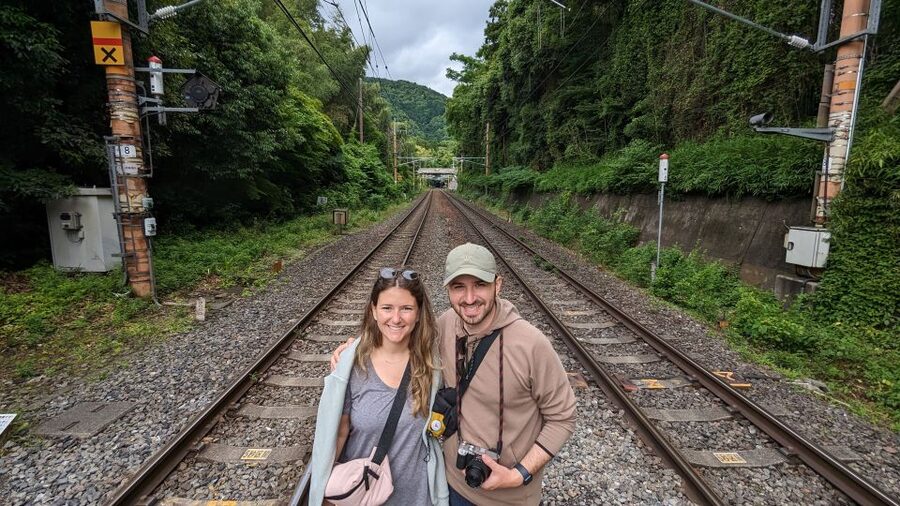
The meeting point is convenient, but follow the directions carefully. After leaving the JR Saga-Arashiyama Station gates, turn right, go downstairs, and meet by the map near the vending machines on the north side. Your guide should be wearing a red polo shirt or jacket marked JTA, for Japan Tour Adventure.
Arrive 15 minutes early. This is not the sort of tour where you can stroll in five minutes late and catch up at the next temple. An arrival after the official departure time counts as a no-show, with no refund.
The train station is a sensible starting point because the tour begins on foot and stays mostly within Arashiyama. You will not be riding around in a bus. That makes the outing more personal, but it also means your legs are part of the ticket.
The standard tour lasts 330 minutes, or five and a half hours. The advertised duration is often described as five hours, so allow the longer figure when planning the rest of your day.
More Drinks Tours in Kyoto:
- Kyoto: Sake Brewery and Tasting Tour in Fushimi
★ 4.8 · 55 reviews - Kyoto: Fushimi Sake Brewery Tour – 18 Tastings in 2.5 Hours
★ 4.7 · 36 reviews - Japanese Sake Breweries Tour in Kyoto Fushimi
★ 4.3 · 13 reviews
Bamboo Grove and Nonomiya Shrine
The bamboo grove is the headline act. Tall green stalks rise on both sides of the path, creating the narrow corridor that appears in so many Kyoto photographs. Your guide can help you find good places for pictures and explain how this part of Arashiyama fits into the district’s religious and cultural setting.
The scheduled walk through the grove is about 25 minutes. That is enough to enjoy the setting without pretending the entire morning will be spent among bamboo. The grove is also a public attraction, so do not expect complete quiet or an empty path, particularly at popular times.
After the bamboo, the group walks for about five minutes to Nonomiya Shrine. This smaller stop adds useful context. You can see how a Shinto shrine differs from the Buddhist temple later in the tour, and your guide can show you how to approach the shrine and pray respectfully.
That practical instruction is one of the tour’s strengths. A guide can explain what you are looking at without turning every stop into a long lecture. Several guides are described as warm and easy to talk with, which matters when you are learning customs that can feel unfamiliar.
Okochi Sanso Garden and a welcome tea stop
Okochi Sanso Garden is one of the best reasons to choose this outing instead of simply walking through the bamboo grove by yourself. The garden was once the home of actor Okochi Denjiro, and the grounds offer carefully arranged paths, quiet viewpoints, and a more controlled visit than the public streets outside.
The tour includes admission, so you do not need to budget separately for the entry ticket. The visit lasts about 40 minutes and includes free time for photographs and a stop at the former tea house rest area.
A green tea or other included beverage gives you a chance to sit down. That pause is not filler. Arashiyama can be hot and humid, and the walking adds up quickly. Guides have adjusted the pace and added shade breaks on very hot days, including days when temperatures reached around 39 degrees Celsius.
I would use this stop to slow down. Do not race from viewpoint to viewpoint with your camera raised. The garden is valuable because it gives you a quieter look at Japanese garden design, with the hills and trees used as part of the view.
Tenryuji Temple and its koi pond
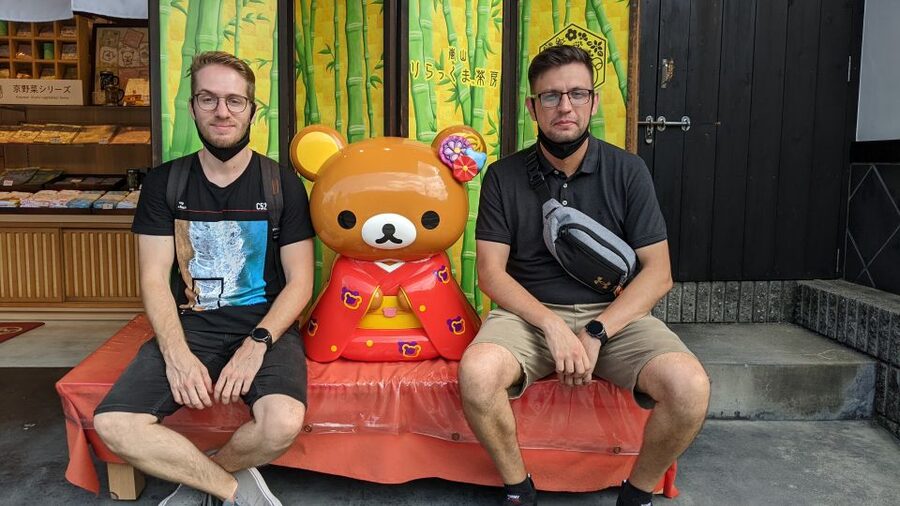
From Okochi Sanso, it is a short walk to Tenryuji, one of Arashiyama’s major Zen temples. Admission is included, and the schedule allows about 30 minutes for the temple grounds.
Tenryuji is not just another historic building on a checklist. The grounds bring together religious architecture, a pond, garden paths, and views toward the surrounding hills. The koi pond is a small but memorable detail, especially for children who may need a visual break from temple explanations.
Your guide will offer background on Zen practice, temple customs, and the stories connected with the site. Some guides have also explained the temple’s dragon imagery, which helped make the visit more accessible for families and first-time visitors.
You will have some free time here, and part of the stop may be self-guided. That balance works well. A guide gives you the framework, then you can look around at your own speed instead of standing shoulder to shoulder while every detail is explained.
The main limitation is time. Thirty minutes is enough for an introduction, not a complete study of Tenryuji. If the temple is a top priority for you, plan to return on your own after the tour.
More Brewery Visits in Kyoto:
Food, shopping, and the two possible routes
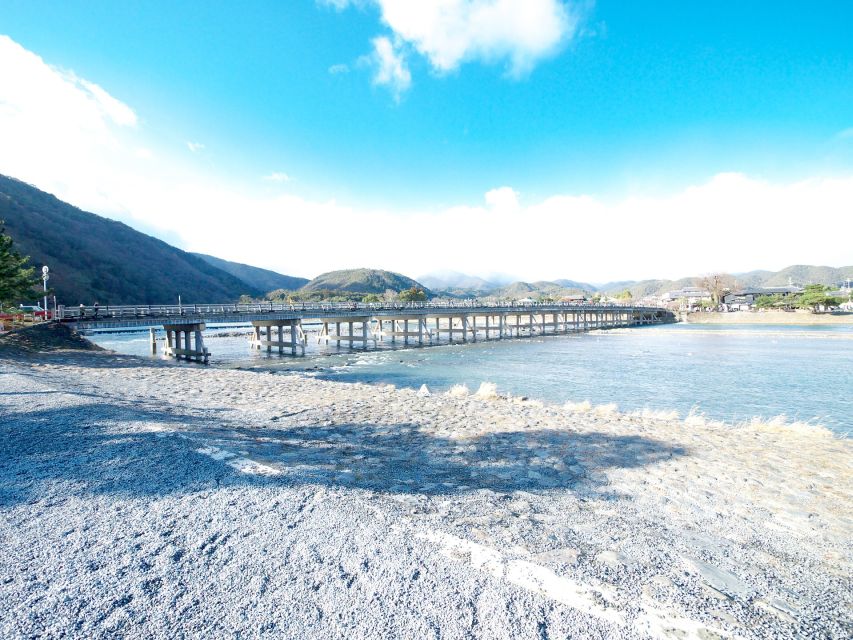
After Tenryuji, the group moves through Arashiyama’s shopping area for roughly 30 minutes. This is your chance to look at local snacks, browse small shops, and try regional food. Lunch is not included, so bring cash and be ready to pay for anything you eat.
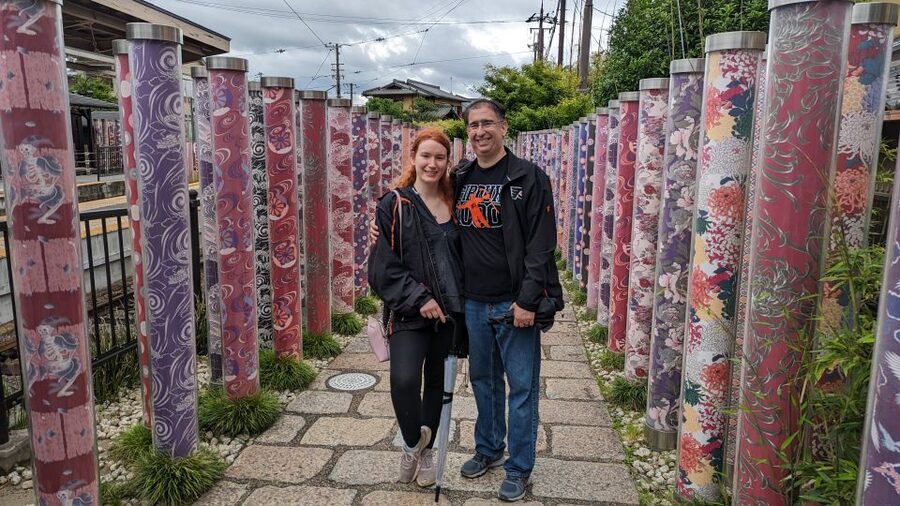
The schedule also includes the Kimono Forest, a collection of patterned textile cylinders near the station area. It is a quick photo stop rather than a major historical sight. Then comes Togetsukyo Bridge, one of the district’s best-known views, with the Katsura River below and the hills beyond.
At this point, the experience may differ by departure. Option A continues through the shopping street, Kimono Forest, Togetsukyo Bridge, and Iwatayama Monkey Park. This is the clearest choice if your priority is seeing the classic Arashiyama sights in one stretch.
Option B returns to the station for a short train ride through the mountains, followed by lunch in an area described as popular with locals and free of the usual tourist crowds. It then visits Tanzan Brewery, where sake tasting is included.
The brewery route sounds appealing if you want food and sake alongside scenery. But do not assume every departure includes it. Ask the operator which option is running on your date, what is covered, and how the timing affects the monkey park and other stops. The detailed schedule provided for this experience follows the route to the monkey park, while the description also presents the brewery as an alternative.
The climb to Iwatayama Monkey Park
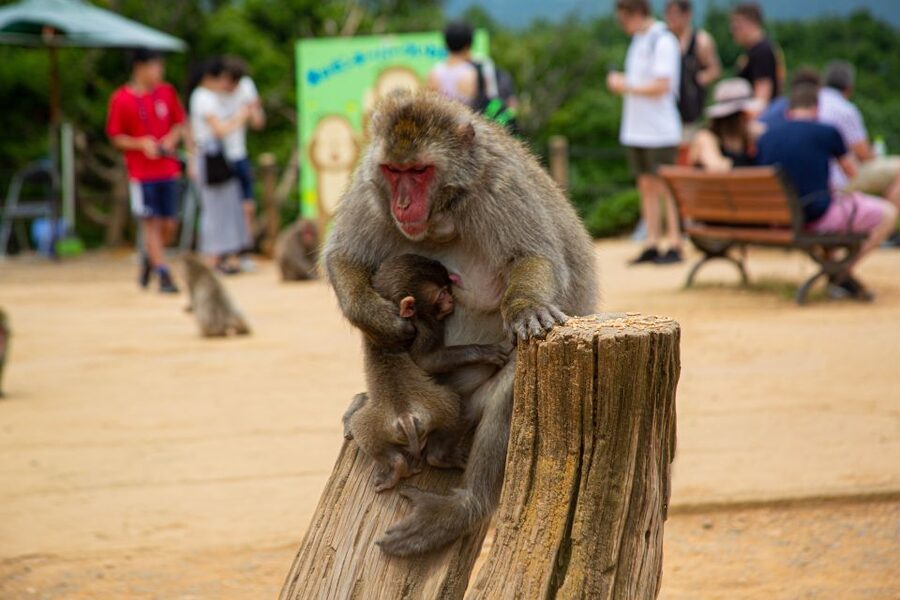
The final major stop is Iwatayama Monkey Park. The tour provides the entry ticket, but the guide does not carry you to the top. After receiving instructions and your ticket, you make the climb yourself.
Expect about 15 to 20 minutes on a steep path. It is not a technical hike, but it is enough to challenge anyone dealing with mobility problems, knee trouble, poor footwear, or summer heat. Take water, wear shoes with a good grip, and be honest about your energy level before starting.
At the top, you can see Japanese macaques in their own setting rather than behind a zoo barrier. The animals are the obvious attraction, but the view over Kyoto and the Katsura River may be just as memorable. Several guides have helped visitors find good photo angles and explained how to behave around the monkeys.
Pay attention to the park’s instructions. Do not treat the macaques like pets, and keep your belongings secure. The experience is best when you watch the animals calmly instead of trying to force a close encounter.
The official guided portion ends at the monkey park. After the guide gives you the ticket and instructions, you can stay as long as you like and leave when you are ready. You may walk back toward the Arashiyama area or use the route toward Saga-Arashiyama Station, depending on the instructions that day.
That arrangement is useful. You are not forced to descend with the group immediately, and you can spend extra time with the monkeys if the view and setting have won you over.
How the guides affect the experience
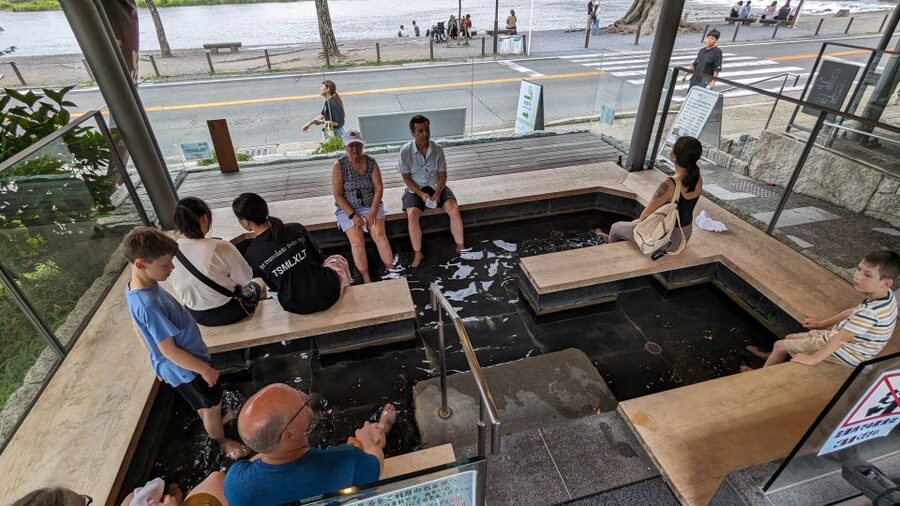
This tour depends heavily on the person leading it. The strongest guides combine cultural explanation with ordinary practical help: where to buy water, when to rest, how to pray at a shrine, where to take photographs, and how to handle the heat.
Karim has been described as energetic, flexible, and good at finding food and picture stops. Tom has been praised for history, religion, literature, humor, and his ability to keep families involved. Francis has offered clear cultural explanations and friendly conversation, while Toru has been noted for fluent English and strong storytelling.
Alice has adjusted the route to the group’s needs, including useful advice about drinks and facilities. Other named guides include Kevin, Remi, Agustin, Elodie, and Toru. The quality of the day can vary with the individual guide, but the repeated pattern is clear: the experience works best when you ask questions and tell the guide what pace you need.
English is the dependable language for a shared tour. French, German, and Spanish may be available, but the company does not promise a particular language on every date. Contact the operator before booking if language is important, even for a private group.
Walking pace, group size, and weather
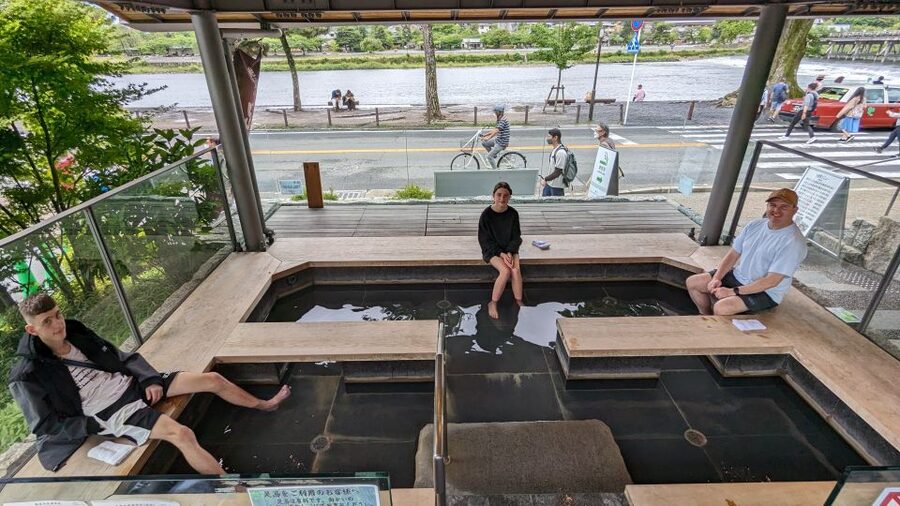
The standard format is a shared tour, with private groups available. Group size can vary. Some departures have been very small, with only a few people, while the usual maximum is described as 12. A small group gives you more time to ask questions and makes it easier for the guide to adjust the pace.
The route is manageable for people in reasonable physical condition, but it is not a gentle stroll. You walk between every stop, spend about an hour at the monkey park, and climb the hill at the end. Summer can be especially demanding. Families with children have enjoyed the day, but younger children may become tired or irritable in heat and humidity.
Rain does not cancel the tour. Bring an umbrella or rain protection when needed, and expect paths and stairs to feel less comfortable in wet weather. The gardens and bamboo can look beautiful in rain, but your shoes will still notice it.
The included tea and rest periods help, yet you should carry water and some cash. Lunch, extra drinks, souvenirs, hotel pickup, and hotel drop-off are not included.
Is the $87 price fair?
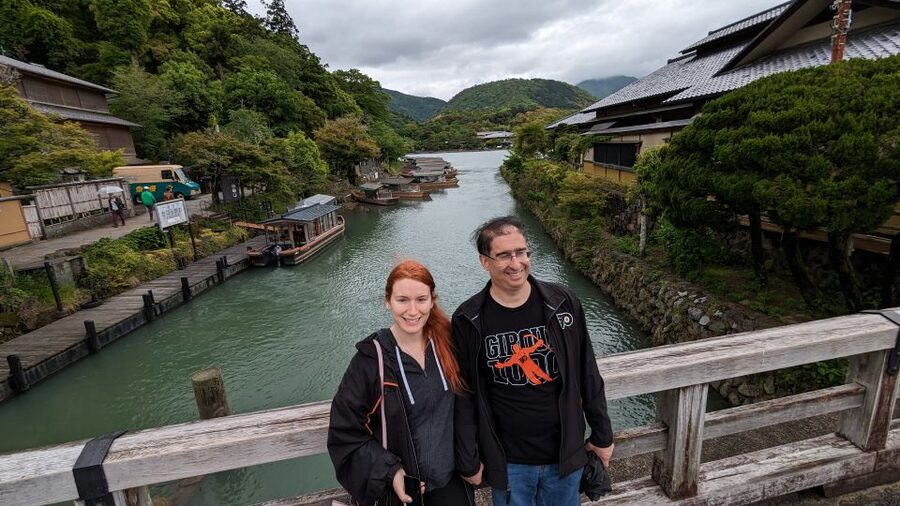
At $87 per person, the value depends on how much independent planning you want to do. You receive a bilingual local guide, admission to Okochi Sanso Garden, Tenryuji Temple, and Iwatayama Monkey Park, plus green tea and souvenir pictures.
Buying each ticket separately would not give you the same cultural explanation, route planning, or help with shrine and temple customs. The guide also connects several places that are easy to visit in the wrong order or miss entirely, such as Okochi Sanso and the quieter parts of the garden route.
The price is less attractive if you already know Arashiyama well, prefer to set your own pace, or want to spend hours at one temple. You also pay for time spent walking between places, which is a benefit for some people and a drawback for others.
The included tickets make the price easier to justify, especially for first-time visitors. The sake brewery option may add extra value if it is available and includes the promised tasting, but confirm the route and lunch arrangements before counting it in your budget.
Free cancellation up to 24 hours before departure and reserve-now, pay-later booking make it easier to fit the tour into a changing Kyoto schedule. The two-guest minimum is important for solo visitors: a departure may be canceled, moved, or refunded if no second participant books.
Who should book this Arashiyama tour?
I would choose this tour if you want one organized morning or afternoon that covers the main Arashiyama sights without spending your time researching temple entrances, walking routes, and local customs.
It suits first-time Kyoto visitors, families with older children, couples, and anyone who enjoys asking questions while walking. It is also a good fit if you want more than the standard bamboo grove photograph, especially the garden, temple, river, and monkey park combination.
I would think twice if you have mobility issues, dislike hills, or want a slow day with long stretches of quiet. The monkey park climb is the key test, and the full route can feel demanding in hot weather.
Should you book it?
Book it if you want a guided introduction to Arashiyama with included admission, a clear route, cultural explanations, and a strong final view from the monkey park. The combination of bamboo, garden, Zen temple, shopping street, and macaques gives you a broad picture of the district in one outing.
Skip it if you only want the bamboo grove, need a fully accessible route, or prefer to linger at each sight. If you do book, arrive early, wear proper walking shoes, bring water and cash, and confirm your preferred language and route option in advance.
FAQ
How long does the Arashiyama tour last?
The activity is listed as five hours, with the detailed duration given as 330 minutes. Plan on five and a half hours, plus any time you choose to spend at the monkey park after the guided portion ends.
Where does the tour meet?
Meet by the map near the vending machines on the north side of JR Saga-Arashiyama Station. After leaving the gates, turn right and go downstairs. Look for a guide wearing a red polo shirt or jacket with the JTA company logo.
Is this a bus tour?
No. This is a walking tour. You walk between the bamboo grove, shrine, garden, temple, shopping area, bridge, and monkey park.
Is the monkey park climb difficult?
The path to the top takes about 15 to 20 minutes and is steep. Comfortable shoes and a reasonable level of physical fitness are required.
What is included in the price?
The price includes a bilingual local guide, admission to Okochi Sanso Garden, Tenryuji Temple, and Iwatayama Monkey Park, green tea, and souvenir pictures.
Is lunch included?
No. Lunch is not included. An alternate route may include a local lunch stop and sake tasting at Tanzan Brewery, so confirm which option operates on your chosen date.
Can I book the tour in French, German, or Spanish?
Those languages may be available, but they are not guaranteed on a shared tour. Contact the operator before booking to confirm the language for your date.
Can a solo visitor book?
Yes, but the tour requires at least two participants to operate. A solo booking may be canceled, rescheduled, or refunded if a second guest does not book.
More Sake Tastings in Kyoto
- Nagano: Snow Monkeys, Zenkoji Temple & Sake Day Trip
★ 4.9 · 833 reviews
More Food and Drink Tours in Kyoto
- Kyoto: Fushimi Sake District Tour with Boat Ride
★ 4.6 · 10 reviews - Bangkok by Night: Temples, Markets and Food Tuk-Tuk Tour
★ 5.0 · 3,752 reviews - Bangkok: Markets, Temples and Food Night Tour by Tuk Tuk
★ 4.9 · 2,371 reviews - 1-Day Snow Monkeys, Zenko-ji Temple & Sake in Nagano
★ 5.0 · 1,020 reviews
Just added around Kyoto
- Osaka/Kyoto: Katsuoji, Kinkakuji, Arashiyama 1-Day Bus Tour★ 4.6 · 33 reviews
- Kyoto:Kiyomizu-dera Temple Rent a kimono and ride a rickshaw★ 4.8 · 7 reviews
- Kyoto: Wagashi (Japanese sweets) Cooking near Fushimiinari★ 5.0 · 40 reviews
- Kyoto: Kimono/Yukata Rental 5 Minute from Kiyomizu-dera★ 4.7 · 89 reviews
- KYOTO: Tempio Kiyomizu Pagode Gion “Geisya” (Guida Italiana)★ 4.7 · 17 reviews
- Kyoto Fushimiinari:Wagashi Making & Small Group Tea Ceremony★ 5.0 · 14 reviews
- Kyoto: Samurai Sword & Kimono Action Filming Experience★ 4.8 · 78 reviews
- Best of Kyoto: Red Gates of Fushimi Inari & Kiyomizu Temple★ 4.8 · 36 reviews
Kyoto Temple Tours, compared.
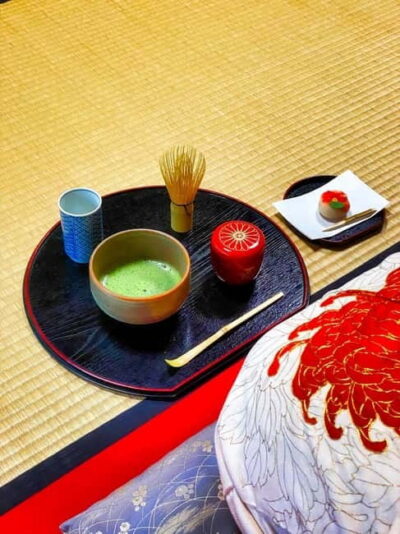
Tea Ceremony in a Traditional Tea House in Kiyomizu
Read our review →
Fushimi Inari Hidden Hiking Tour (Private Option Available)
Read our review →
Osaka/Kyoto:Kinkakuji,Arashiyama,FushimiInariShrine,NaraPark
Read our review →
Kyoto/Osaka: Nara, Fushimi Inari Taisha, Arashiyama Bus Tour
Read our review →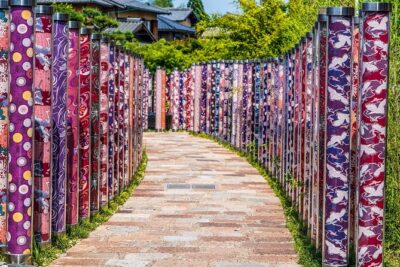
Kyoto Arashiyama Walking Tour: Bamboo, Monkeys, Gardens & Secrets
Read our review →
Arashiyama Bamboo Forest, Monkeys, Matcha & Temple Tour
Read our review →
Osaka/Kyoto: Arashiyama, Nara & Fushimi Inari Shrine w/Lunch
Read our review →Browse the lists this tour appears in