REVIEW · FUSHIMI INARI SHRINE TOURS
Kyoto Fushimi-Inari Night Walking Tour
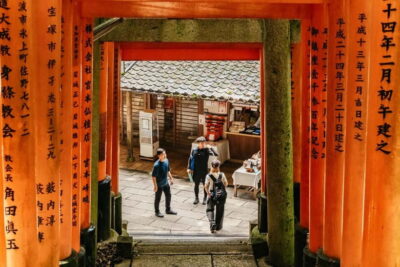
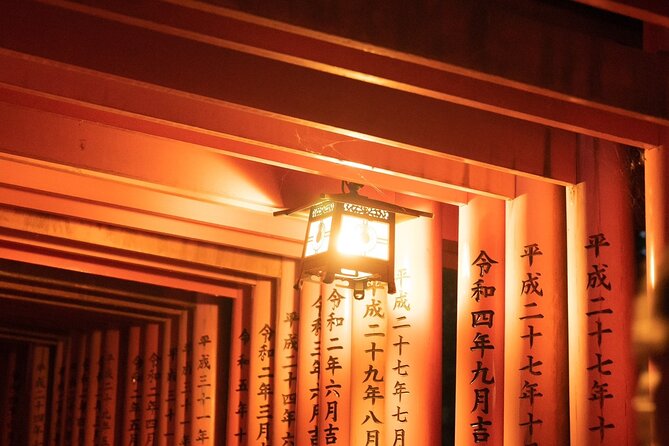
Fushimi Inari is famous for its endless-looking rows of red torii gates. After sunset, the shrine feels quieter, cooler, and more mysterious, with lanterns and path lights guiding you uphill. I especially like the small group of no more than 12 and the practical cultural explanations from guides such as Jem, Tammy, Caleb, Hiro, and Masaki. You get room to ask questions and time to take photos.
I also like that the tour helps with navigation after dark, when the shrine paths can feel confusing. The tradeoff is simple: this is not only a dusk photo stop. Depending on your start time and season, much of the walk may take place in full darkness on uphill mountain paths, so bring proper walking shoes and an extra layer.
Key points to know before you book
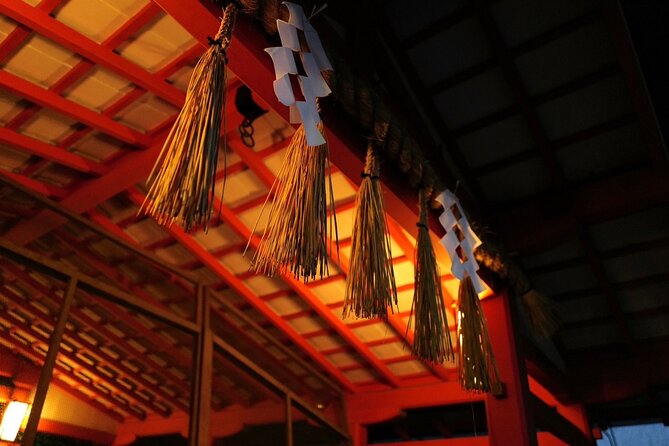
- Night changes the mood: The famous torii gates look different after sunset, with fewer people and softly lit paths.
- Small groups matter: The maximum group size is 12, making it easier to hear explanations and ask questions.
- Guides add cultural context: Expect explanations of Shinto worship, fox statues, offerings, prayers, and the shrine’s connection to rice, business, health, and success.
- It is a real walk: The experience lasts about 1.5 to 2 hours and follows paths toward Mount Inari.
- The meeting point is precise: Find the fox statue at the entrance to Fushimi Inari Taisha, near the Inari Station area.
- The price buys more than a photo stop: At $43.11 per person, you are paying for a guided evening walk, cultural interpretation, and help finding your way through the shrine.
Why Fushimi Inari works so well after dark
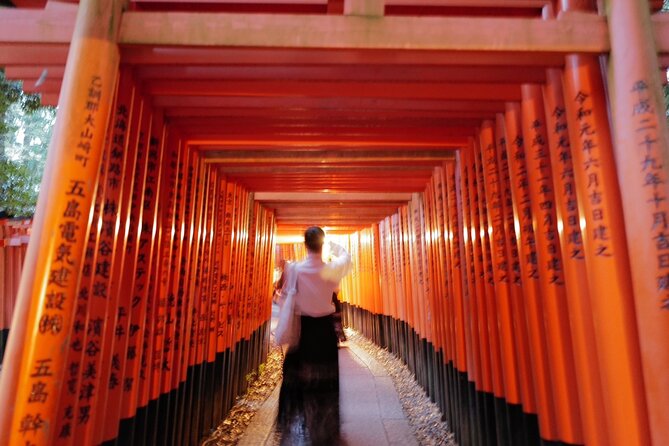
During the day, Fushimi Inari Taisha can feel crowded. The shrine is one of Kyoto’s best-known sights, and its thousands of torii gates draw a steady stream of people into the mountain paths.
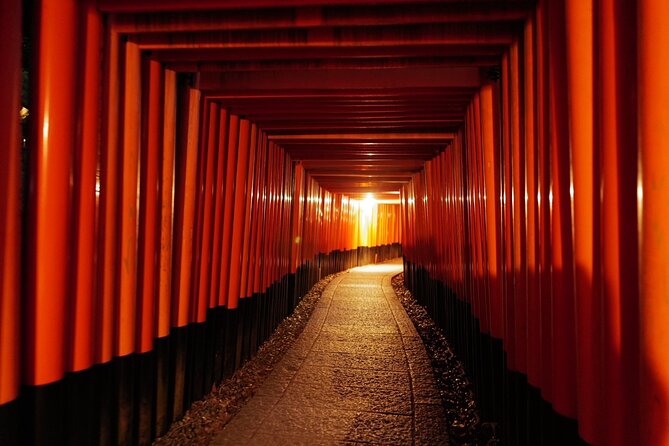
The evening changes the pace. The heat drops, the crowds thin as the tour continues, and the red gates take on a darker, more dramatic tone. You still get the famous sight, but the experience is less about rushing through a photo line and more about noticing the shrine’s smaller details.
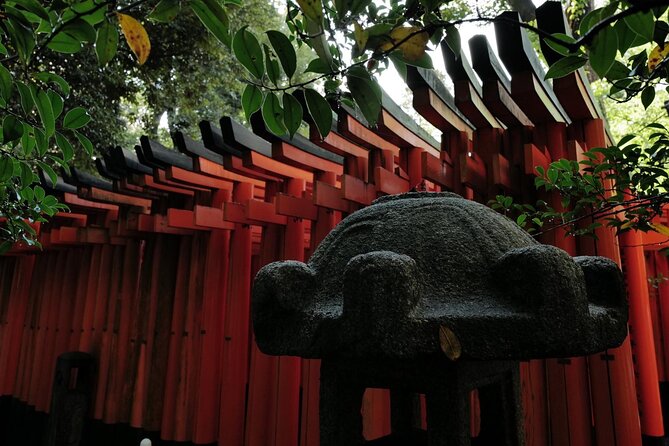
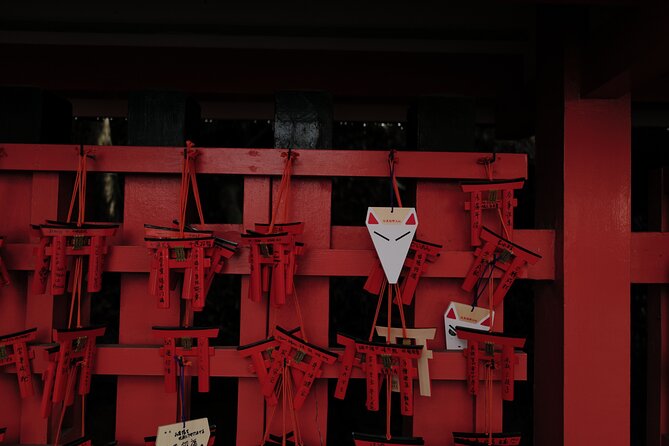
I like the fact that the tour does not treat Fushimi Inari as a simple tunnel of gates. Your guide points out objects and customs that are easy to miss on your own. That may include stone fox figures, smaller worship areas, prayer practices, and the meaning behind the shrine’s design.
The night setting also gives the tour a stronger sense of place. It is not a theatrical attraction, and you should not expect every section to be brightly lit. Instead, you walk through a working Shinto shrine after the main daytime rush, with lights along the route and darker sections on the mountain.
More Temple Sunset Tours in Japan
- Kyoto Fushimi-Inari Night Walking Tour
★ 4.8 · 171 reviews - Kyoto Magical Night English Tour: Gion & Fushimi Inari Shrine
★ 5.0 · 97 reviews - Candlelit Zen: Evening Meditation at Kyoto’s Secret Temple
★ 5.0 · 10 reviews
Meeting by the fox statue at the shrine entrance
The tour begins at the fox statue by the entrance to Fushimi Inari Taisha. The listed location is in Fushimi Ward, close to the Inari Station area, and the activity ends back at the same meeting point.
That return to the starting point is useful. You do not need to figure out a second pickup location after walking uphill in the dark, and you can continue with dinner or return to your accommodation from the familiar shrine entrance.
Give yourself enough time to find the statue. Fushimi Inari has several entrances and a large station area, so do not treat the meeting point as a vague instruction to meet somewhere near the shrine. The exact fox statue is the detail that matters.
The tour uses a mobile ticket, and confirmation is provided when you book. Guides have also contacted participants through WhatsApp to confirm the address and attendance, which can be helpful if you are worried about meeting in the right place.
Walking through the torii gates toward Mount Inari
The main attraction is the route through the torii gates and up the lower paths of Mount Inari. These gates were donated by individuals, families, and businesses, and the shrine is dedicated to Inari, associated with rice, agriculture, and business.
That background gives the gates more meaning than their famous color and repeating shapes. You begin to see them as acts of devotion and requests for good fortune, not only as a photogenic passage.
Your guide can explain how people pray for success, health, and happiness, and how worship at the shrine works. Some stops involve smaller shrines and stone fox statues. The fox is closely linked with Inari, and the statues appear throughout the grounds in different forms and settings.
The walking route also gives you a chance to see how the shrine blends religious sites with woodland paths and mountain viewpoints. You will not simply remain at the entrance buildings. The route heads into the shrine grounds and continues along paths lined with torii.
Expect a small hike rather than a flat stroll. One participant specifically recommended walking shoes and layers for a December visit. That is sensible advice for any season, since the route climbs into the mountain area and the temperature can change after sunset.
What your guide adds to the visit
Fushimi Inari is free to enter, but that does not mean it is easy to understand. You can walk through the gates by yourself, yet it is easy to miss the purpose of a side shrine, the meaning of an object, or the proper way to approach a prayer area.
The strongest part of this tour is the guide’s explanation of those details. Jem is described as organized and good at keeping the group together while explaining the site’s importance. Tammy is praised for being patient and for showing how to pray at different places, where the rituals can vary.
Caleb’s style is especially suitable for families and mixed-age groups. His explanations are described as clear, interactive, and easy for children to follow. He also keeps the information moving rather than turning the walk into a long lecture.
Hiro is another guide who brings useful cultural and historical context. He has been praised for answering questions openly and for helping participants feel welcome in Japan. Masaki is noted for taking photos, giving people time to stop, and offering suggestions for food and other places to visit.
Other guides named in the tour feedback include Yessi and Vincent. Yessi is good at pointing out details you might walk past, while Vincent is described as friendly and patient with photography stops.
Guide assignments can vary, so you should not book solely to meet one particular person. Still, the range of comments points to a consistent strength: the tour is built around human explanation, not just walking from one gate to the next.
More Temple Walking Tours in Japan
- Kyoto Arashiyama Walking Tour: Bamboo, Monkeys, Gardens & Secrets
★ 5.0 · 1,216 reviews - Kyoto Tea Ceremony & Kiyomizu-dera Temple Walking Tour
★ 5.0 · 115 reviews - Kyoto: Fushimi Inari Taisha Guided Walking Tour
★ 4.6 · 65 reviews - Kyoto: Fushimi Inari Taisha Shrine Walking Tour with Guide
★ 4.8 · 18 reviews
Dusk, full darkness, and the best timing
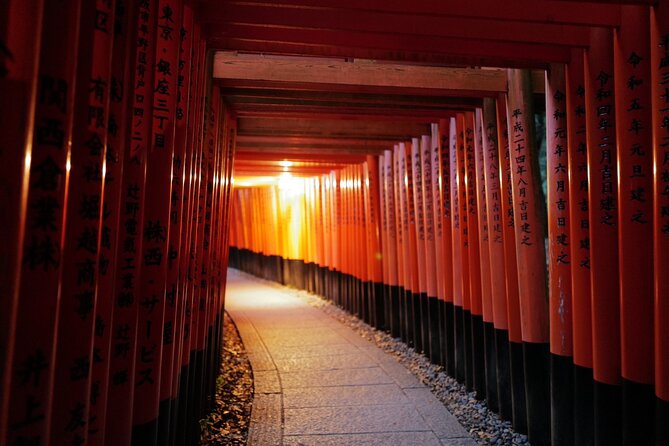
The experience is advertised as a dusk and nighttime walk, but the exact feel depends on the start time and the season. A 6 p.m. start can offer a short period of fading daylight before the route becomes dark. Other departures may take place mostly after sunset.
That distinction matters for photography. Late afternoon gives you some natural light and then the evening atmosphere. A later start gives you a more fully nighttime visit from the beginning.
The paths have lights, but do not expect the entire mountain route to be brightly illuminated. One useful description of the experience is that you should be ready for mountain paths through the gates in the dark. That is part of the appeal, but it also means you need to watch your footing and stay with the group.
The cooler air is a real advantage in Kyoto’s hot months. An evening tour can be much more comfortable than walking uphill during the afternoon, especially in August. In winter, the same timing works in the opposite direction, so layers are important.
If your main goal is the classic red-gate photograph with the clearest detail, an earlier start may suit you. If you want atmosphere and a quieter walk, choose the latest practical evening time offered.
How crowded is it at night?
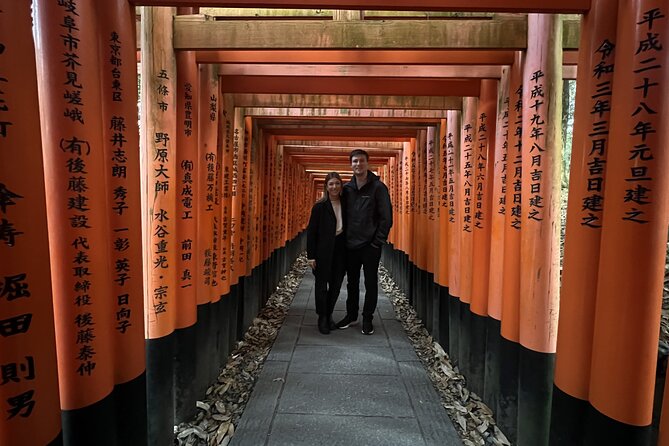
Night does not mean empty. You may still find plenty of people near the entrance and at the beginning of the route, especially when the tour starts around dusk.
The useful change comes gradually. As the evening continues, the numbers tend to thin out. That gives you more space to pause, listen, and take photos without feeling as if you are blocking a constant stream of people.
The smaller group also helps. With up to 12 people, the guide can keep everyone together without the stiff, crowded feel of a large coach excursion. You can hear the explanation and ask a question without needing to fight for the guide’s attention.
Still, this is one of Kyoto’s major sights. If you need complete solitude, this tour cannot promise it. The better expectation is a calmer, more atmospheric visit, not a private shrine.
Is $43.11 a fair price?
The price is $43.11 per person, and admission to Fushimi Inari itself is free. That means the value comes from the guide, the route, the small group, and the cultural interpretation.
For a self-guided visit, you can enter the shrine without paying an admission fee and walk the gates at your own pace. You would save money, but you would also need to research Shinto customs, understand what you are seeing, and manage the route yourself after dark.
This tour makes more sense if you want context. The guides explain the shrine’s connection to Inari, the meaning of the fox statues, prayer traditions, and the purpose of the torii gates. You are also paying for someone to lead you through a confusing mountain shrine at night.
I consider the price reasonable for a first visit, especially if you have limited time in Kyoto. It is less compelling for someone who has already studied Fushimi Inari and prefers wandering alone with a camera.
The free cancellation policy adds some flexibility. You can cancel for a full refund up to 24 hours before the start time. Changes or cancellations within 24 hours are not accepted for a refund, and the cut-off follows local Kyoto time.
Who will enjoy this walking tour most?
This experience suits you if you want more than a quick daytime photo. It works particularly well for first-time visitors who want a clear introduction to Shinto practice and the shrine’s cultural role.
Families can also do well here, provided everyone is comfortable with an uphill walk after dark. Caleb’s explanations have worked well for children, and the small group makes it easier to keep the experience personal.
Photography-minded visitors should enjoy the changing light, the repeated gate patterns, and the lower crowd levels later in the evening. Just remember that darkness can make some photos harder, so this is as much about mood as sharp detail.
The tour is also a good fit if you feel uneasy navigating a large shrine at night. Fushimi Inari has many paths, side shrines, and turns. Having a guide removes much of the guesswork and lets you focus on the setting.
Most people can participate, and service animals are allowed. You should still judge the uphill walk for yourself, especially if you have difficulty with extended walking or uneven mountain paths.
Practical tips for a smoother evening
Wear walking shoes with a secure sole. This is not a formal shrine visit that ends at the entrance. You will follow paths into the mountain area for up to two hours.
Bring a light layer in summer and warmer layers in winter. The evening timing helps with Kyoto’s heat, but December visitors have specifically found layers useful.
Arrive early enough to locate the fox statue. Keep your mobile ticket and booking confirmation easy to reach, and check any guide message about the meeting point.
Stay close to the group once the route becomes dark. The guide is there not only to explain the shrine but also to keep the walk organized.
Finally, leave room in your evening for food afterward. Masaki and other guides have offered dinner suggestions, and returning to the entrance makes it easy to continue your night in the Fushimi area.
Should you book the Fushimi Inari night tour?
Book it if you want fewer crowds, cooler air, and clear cultural explanations at one of Kyoto’s most famous sights. The strongest reasons are the small group, the guide-led route, and the chance to see the torii gates after the daytime rush.
Skip it if you want a completely independent visit, dislike uphill walking, or need bright daylight for every photograph. Fushimi Inari is free, and you can explore it without a guide.
For most first-time visitors, I think the tour earns its price. The gates are impressive on their own, but the shrine makes more sense when someone explains the fox statues, prayer customs, and reasons behind the torii donations. Add the cooler evening air and a guide to lead you through the mountain paths, and this becomes a practical, atmospheric way to see Fushimi Inari.
FAQ
How long does the Fushimi Inari night tour last?
The tour lasts approximately 1 hour 30 minutes to 2 hours.
Where does the tour begin?
Meet at the fox statue at the entrance to Fushimi Inari Taisha Shrine in Fushimi Ward, near the Inari Station area.
Where does the tour end?
The activity ends back at the same meeting point.
How large is the group?
The tour has a maximum of 12 participants.
Is admission to Fushimi Inari included?
The shrine has free admission. The tour price covers the guided walking experience.
Can I cancel for a full refund?
Yes. You can cancel at least 24 hours before the start time for a full refund. Cancellations or changes made less than 24 hours before the experience are not accepted for a refund.
More Fushimi Inari Shrine Tours in Kyoto
- Kyoto: Tea Ceremony in a Traditional Tea House in Kiyomizu
★ 4.9 · 3,519 reviews - Fushimi Inari Hidden Hiking Tour (Private Option Available)
★ 5.0 · 1,750 reviews - Osaka/Kyoto:Kinkakuji,Arashiyama,FushimiInariShrine,NaraPark
★ 4.1 · 1,596 reviews - Kyoto/Osaka: Nara, Fushimi Inari Taisha, Arashiyama Bus Tour
★ 4.7 · 1,275 reviews
More Temple Walking Tours in Kyoto
- Kyoto: Private Walking Tour with Kiyomizu Temple & Gion
★ 5.0 · 7 reviews
Just added around Kyoto
- Osaka/Kyoto: Katsuoji, Kinkakuji, Arashiyama 1-Day Bus Tour★ 4.6 · 33 reviews
- Kyoto:Kiyomizu-dera Temple Rent a kimono and ride a rickshaw★ 4.8 · 7 reviews
- Kyoto: Wagashi (Japanese sweets) Cooking near Fushimiinari★ 5.0 · 40 reviews
- Kyoto: Kimono/Yukata Rental 5 Minute from Kiyomizu-dera★ 4.7 · 89 reviews
- Kyoto Fushimiinari:Wagashi Making & Small Group Tea Ceremony★ 5.0 · 14 reviews
- Kyoto: Samurai Sword & Kimono Action Filming Experience★ 4.8 · 78 reviews
- KYOTO: Tempio Kiyomizu Pagode Gion “Geisya” (Guida Italiana)★ 4.7 · 17 reviews
- Kyoto: Sake Brewery and Tasting Tour in Fushimi★ 4.8 · 55 reviews
Fushimi Inari Shrine Tours, compared.
Tea Ceremony in a Traditional Tea House in Kiyomizu
Read our review →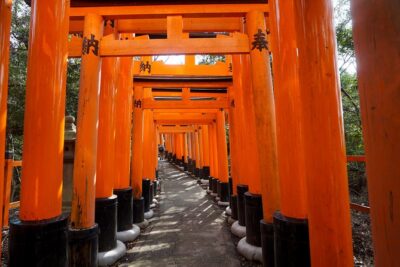
Fushimi Inari Hidden Hiking Tour (Private Option Available)
Read our review →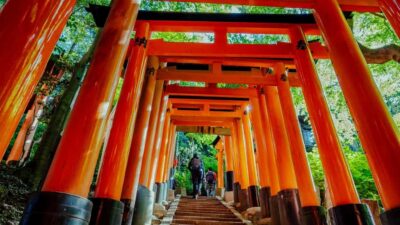
Osaka/Kyoto:Kinkakuji,Arashiyama,FushimiInariShrine,NaraPark
Read our review →
Kyoto/Osaka: Nara, Fushimi Inari Taisha, Arashiyama Bus Tour
Read our review →
Osaka/Kyoto: Arashiyama, Nara & Fushimi Inari Shrine w/Lunch
Read our review →
Nijo Castle, Kiyomizu & Fushimi Inari Guided Tour
Read our review →