
REVIEW · FUSHIMI INARI SHRINE TOURS
Kyoto: Fushimi Inari Taisha Guided Walking Tour
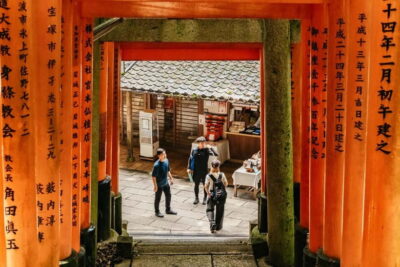
Fushimi Inari Taisha is Kyoto’s great visual showstopper: thousands of vermilion torii gates climb Mount Inari behind the shrine. This two to three hour tour gives you a guide to explain what you are seeing, rather than leaving you to snap photos and wonder why fox statues are everywhere.
I like the choice between a shorter lower shrine visit and the longer mountain walk. I also like the small group limit of nine, which gives guides room to answer questions, take photos, and adjust the pace. The main catch is simple: the upper trail means steps and steady walking, so this is not a good fit for visitors with mobility, heart, respiratory, or pregnancy concerns.
Key points to know
- Choose your walking level: Visit the lower shrine and famous gates, or add the Mount Inari trail for more shrines and views.
- Expect a personal guide: English-speaking guides such as Katz, Christiana, Raphael, Nobumasa, and others have led this experience, though your assigned guide will vary.
- Allow two to three hours: The tour includes the shrine, a guided walk, and about 30 minutes around the street-food area.
- Pay $24 for practical context: Entrance fees and guiding are included, making this good value if you want cultural explanation as well as sightseeing.
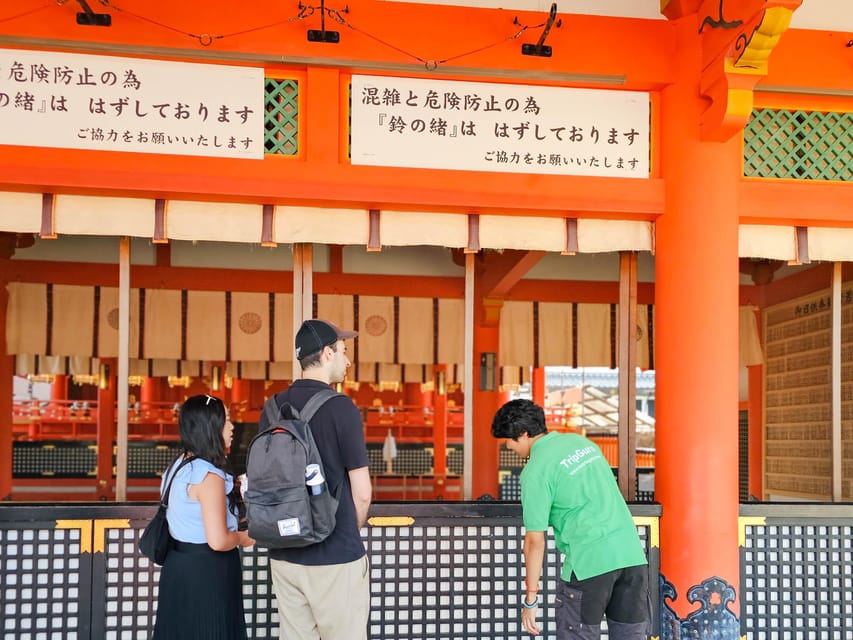
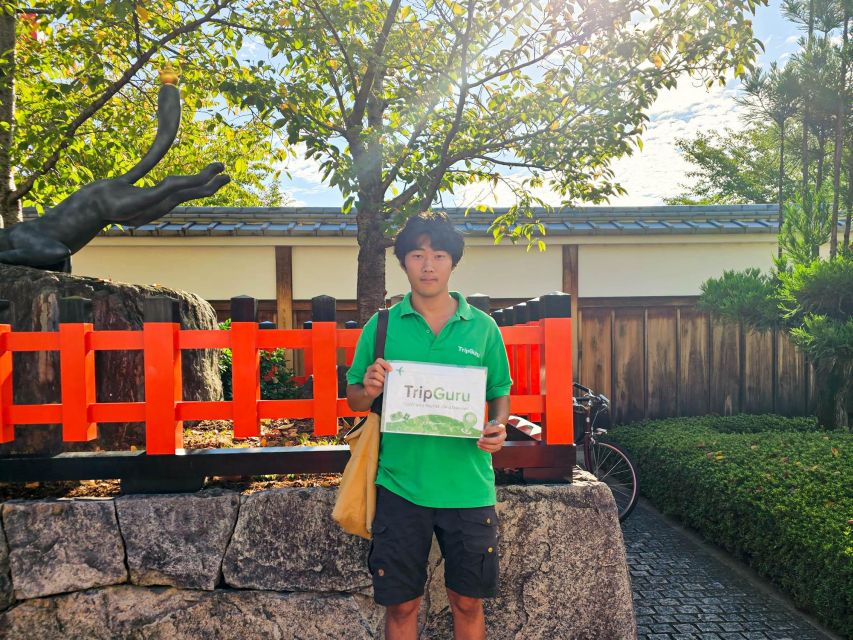
- Meet near the shrine: Start at Daily Yamazaki Fushimi Inari Shrine, where your guide will wear a TripGuru shirt or hold a TripGuru sign.
Why Fushimi Inari Works So Well With a Guide
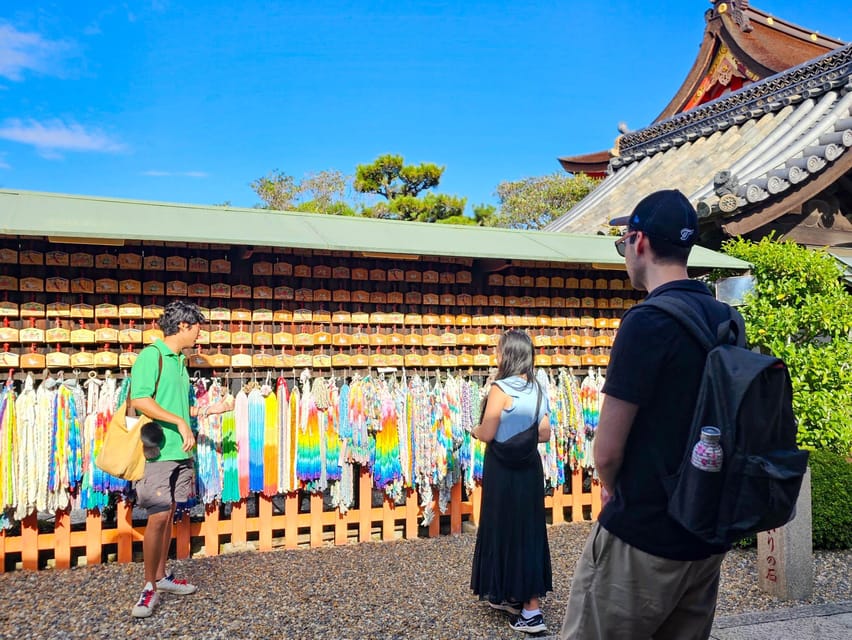
Fushimi Inari Taisha is easy to recognize but harder to understand at a glance. The torii gates are photogenic, yet the shrine is also a working Shinto site with layers of belief, worship, symbols, and local custom.
A guide can explain Inari, the deity linked with agriculture and commerce, and the role of foxes as Inari’s messengers. That context changes the visit. Instead of seeing only a long tunnel of red gates, you begin to notice the smaller shrines, offerings, stone fox figures, and the difference between the lower and upper sections.
The guide also helps you make sensible choices with limited time. If you have only a morning or afternoon free, you can see the main shrine and the most recognizable torii gates without committing to the full mountain route. If you have more energy, you can keep climbing and gain quieter sections of the trail.
The English-speaking guides have been praised for being friendly, clear, and patient. Katz, Christiana, Raphael, and Nobumasa are among the guides who have led the tour, but the actual person depends on the date and assignment. Several guides have also helped with photos, pauses, hydration, and questions, which matters on a warm day or when your group includes children or older adults.
More Temple Walking Tours in Japan
- Kyoto Arashiyama Walking Tour: Bamboo, Monkeys, Gardens & Secrets
★ 5.0 · 1,216 reviews - Kyoto Fushimi-Inari Night Walking Tour
★ 5.0 · 320 reviews - Kyoto Fushimi-Inari Night Walking Tour
★ 4.8 · 171 reviews
Meeting at Daily Yamazaki Fushimi Inari Shrine
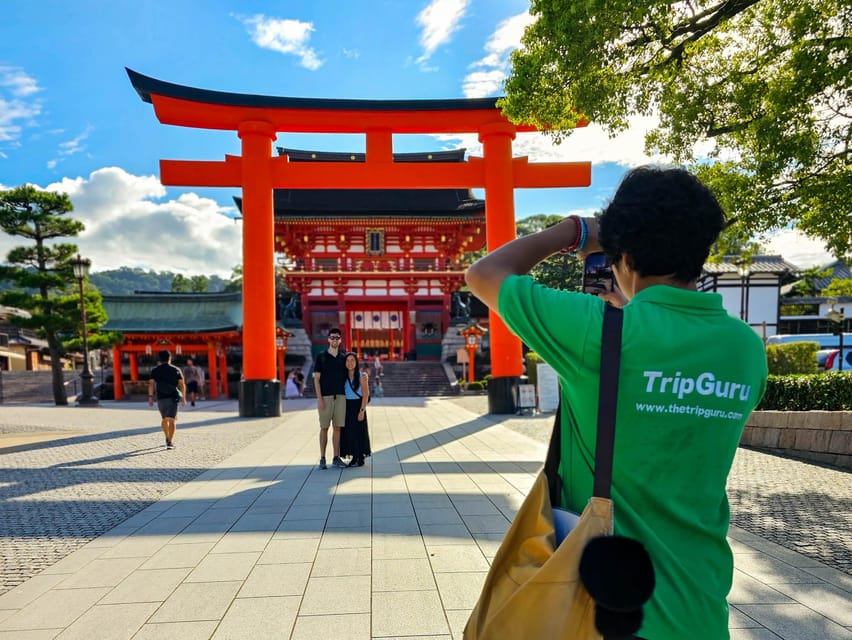
The meeting point is Daily Yamazaki Fushimi Inari Shrine. Look for a guide wearing a TripGuru shirt or holding a TripGuru sign.
Give yourself extra time to get there. Morning traffic can be heavier than navigation apps suggest, and the guide waits only 10 minutes before moving on. That short grace period is worth taking seriously, especially if you are traveling across Kyoto or relying on a busy road route.
The tour does not include hotel pickup or drop-off, so you need to reach the starting point on your own. It is a straightforward arrangement, but it keeps the price low and lets the tour begin close to the shrine itself.
Wear comfortable shoes. The short option still involves walking, and the full option adds a mountain trail with more climbing. Dress modestly and respectfully, avoiding tank tops or very short clothing on the shrine grounds. This is both practical and courteous at an active religious site.
The Lower Shrine: A Useful First Look
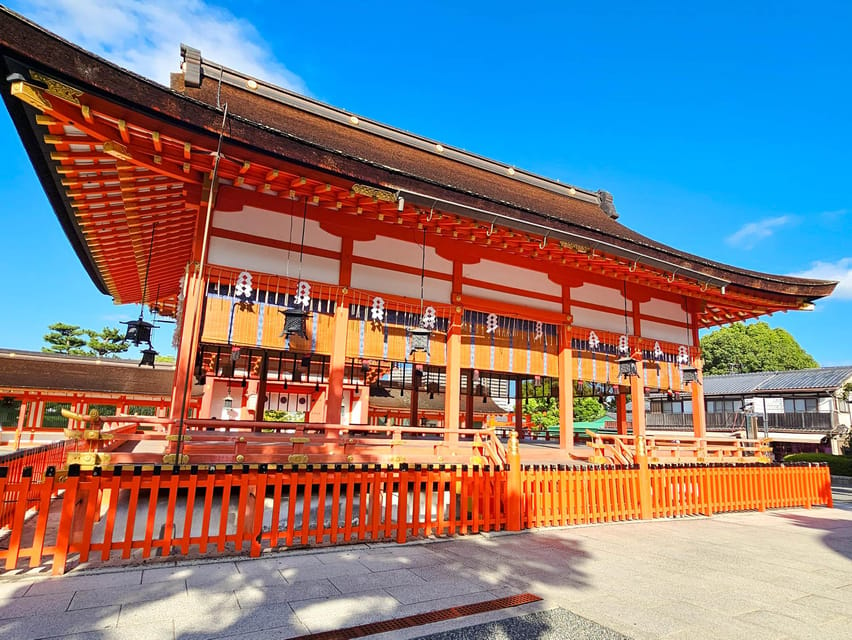
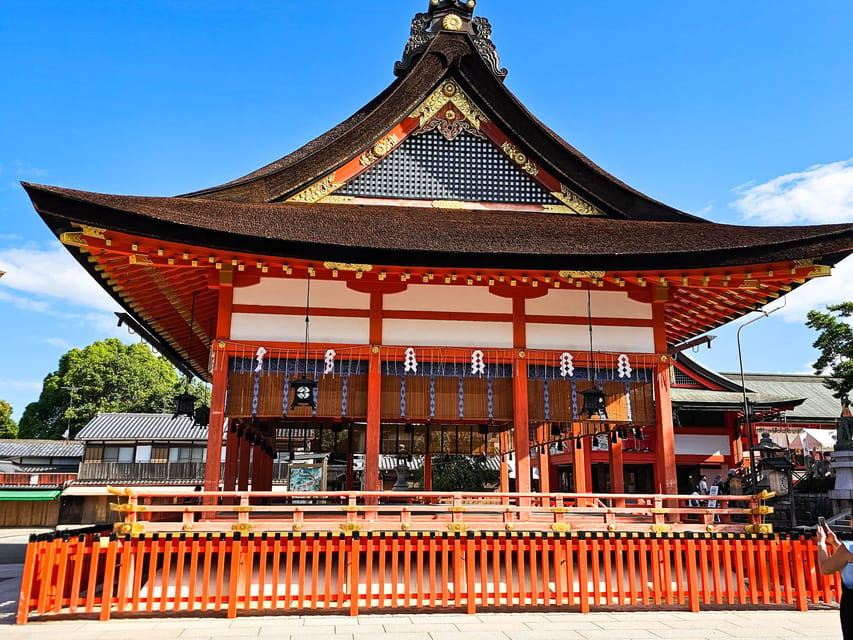
The lower section sits at the base of Mount Inari. It contains the main entrance, offering hall, and several smaller shrines, giving you a proper introduction before the famous trail begins.
This part suits visitors who want the essential Fushimi Inari experience without spending extra time on a mountain path. You can see the shrine’s major features, learn about Inari worship, and reach the photogenic torii gates without choosing the longer route.
That shorter choice is called Option B. It is the better match if your Kyoto schedule is tight, if you want to save your legs for another sightseeing stop, or if the group includes someone who cannot manage a longer uphill walk. The tour still lasts long enough to feel like more than a quick photo stop, but it does not cover as much of Mount Inari.
Do not confuse short with effortless. Fushimi Inari can be crowded, and walking through the shrine grounds requires patience. You may also want time to stop for pictures, listen to explanations, and look at the smaller religious details instead of rushing through.
The Vermilion Torii Gates and Mount Inari
The full version, Option A, combines the lower shrine with the trail up Mount Inari. This adds about an hour of walking and takes you through the upper part of the shrine.
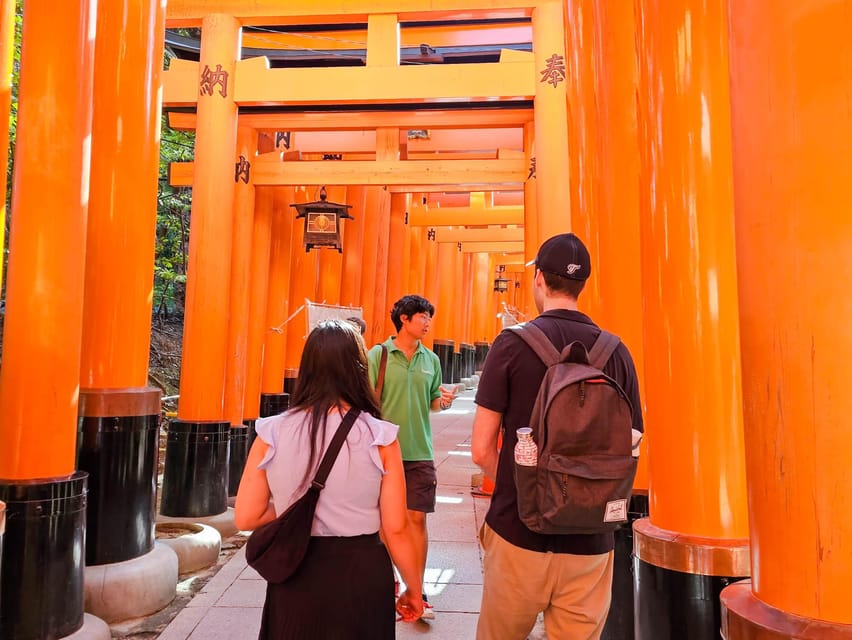
The torii gates are donated structures, and their repeated color and close spacing create the famous tunnel effect. A guide gives you a better chance of understanding why they are there and how the shrine’s religious role connects to the surrounding mountain.
As you climb, the shrine is divided into smaller points of worship rather than one single building at the top. You will encounter smaller shrines along the route, along with changing views toward Kyoto and the surrounding mountains. The payoff is not only the gates themselves, but the sense that Fushimi Inari continues far beyond the first photo stop.
The full route needs honest planning. This is a walking tour on a mountain, not a flat city stroll. People with mobility impairments, heart problems, respiratory issues, or pregnancy should not book it. If you are uncertain about your stamina, choose the lower shrine option or ask before booking.
Guides have sometimes built in pauses and checked on hydration. One guide even carried a bag and supplied water for a participant, while another made sure a group with children and strollers could manage the visit. Those are useful signs of attentive guiding, but they should not be treated as a promise that every physical need can be accommodated.
More Temple Walking Tours in Kyoto
- Kyoto Tea Ceremony & Kiyomizu-dera Temple Walking Tour
★ 5.0 · 115 reviews - Kyoto: Fushimi Inari Taisha Shrine Walking Tour with Guide
★ 4.8 · 18 reviews - Kyoto: Private Walking Tour with Kiyomizu Temple & Gion
★ 5.0 · 7 reviews
Street Food and the Final 30 Minutes
After the shrine visit, the itinerary includes about 30 minutes of walking around the street-food area before returning to the original meeting point.
This gives the tour a pleasant finish. You can see the commercial side of the shrine district and consider buying food or drinks, although meals and beverages are not included in the $24 price. Personal spending is up to you.
The street-food stop is also a practical chance to slow down after the mountain route. If you choose the shorter option, it adds a little more local atmosphere to a compact outing. Do not expect a food tour with tastings included. Think of it as a guided walk through the area, with time to explore on your own.
The group then returns to Daily Yamazaki Fushimi Inari Shrine. Since the tour begins and ends at the same place, it is easier to plan your next Kyoto stop than it would be with a faraway finish.
Is $24 Good Value in Kyoto?
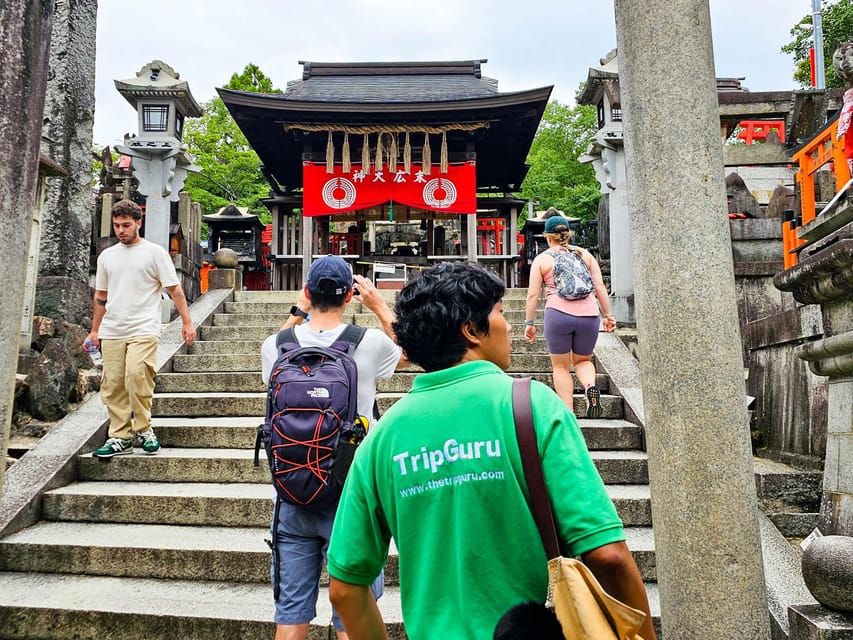
At $24 per person, this is a modestly priced guided experience in one of Kyoto’s most famous places. The fee includes the English-speaking guide, entrance fees, and walking tour. You are paying mainly for explanation, structure, and a small group rather than transportation or food.
I think the value is strongest for first-time visitors who want help making sense of Shinto customs. If you already know Fushimi Inari well and only want to walk through the gates at your own speed, you may prefer visiting independently. The shrine itself is not presented as an all-day guided program here.
The small group limit of nine is important. It is large enough to keep the price down, but small enough for questions and personal attention. Past groups have sometimes been treated almost like private tours, though you should not assume that will happen on every date.
The reserve-now, pay-later option also helps if your Kyoto schedule is still shifting. You can hold a place without paying immediately, and cancellation is free up to 24 hours ahead for a full refund. Same-day and last-minute booking are accepted when space remains, but availability and starting times should be checked before you rely on it.
Who Should Choose the Full Route?
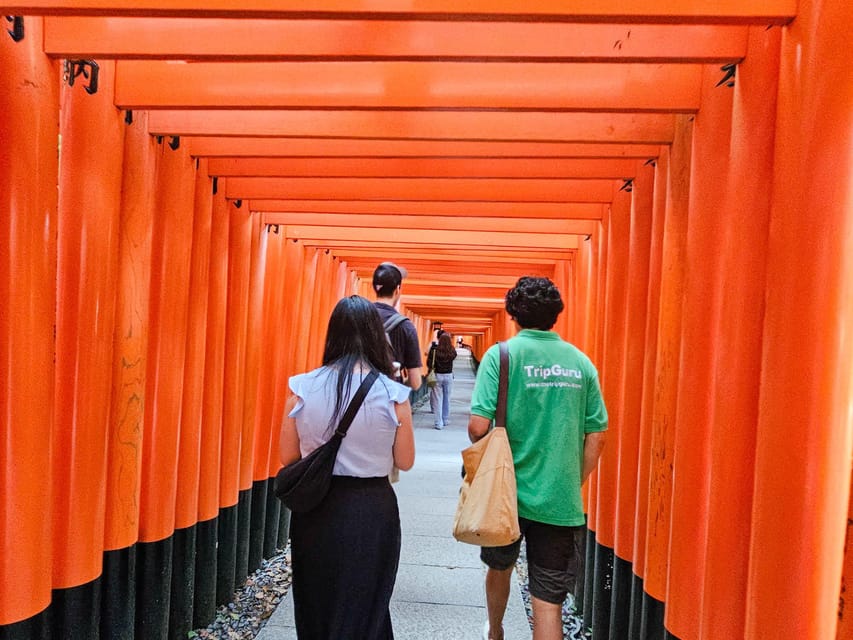
Choose Option A if you want more than the famous entrance gates. You will get smaller shrines, mountain walking, and views toward Kyoto, but you must be ready for roughly an extra hour on the trail.
It works well for active visitors who have a half-day gap and want a focused cultural stop. It also suits anyone who likes asking questions as they walk, since the guide can connect the physical setting with Inari worship and the symbolism around the shrine.
The shorter Option B is smarter for a tight itinerary, limited stamina, or a group that wants the most recognizable sights with less exertion. Families may also prefer deciding based on the children’s energy that day. One guide successfully accommodated a group with two children and strollers, but the official suitability limits still matter, especially for anyone with significant mobility or medical concerns.
Bring water, particularly in warm weather, even though guides have sometimes helped with hydration. Comfortable shoes are essential, and modest clothing is expected throughout the shrine grounds.
The Guide Can Make or Break the Visit
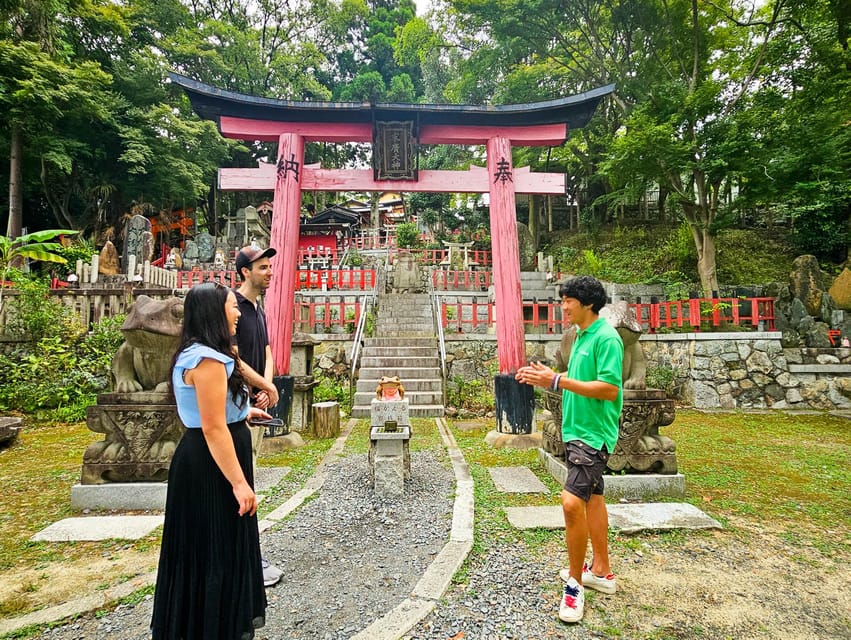
The strongest feature of this tour is the human explanation. The shrine is visually obvious, but its meaning is not. A good guide turns the gates, foxes, offerings, and smaller shrines into connected parts of a living religious place.
The guides praised most warmly have been friendly and easy to question. Katz was described as clear and informative. Christiana was personable. Raphael made an effort with children and strollers. Nobumasa was noted for his warmth and strong command of the area. Other guides have taken pictures, suggested places to eat, carried bags, and checked that people were comfortable.
That personal care is especially useful because the walk is not just a series of fixed indoor stops. You are outside, moving through a busy shrine and up a trail. A guide who notices when you need a break can make the difference between an enjoyable visit and a tiring slog.
Still, guide quality can vary by individual, and names cannot be guaranteed. The overall score is 4.6 from 65 ratings, which supports the idea that the guiding is usually a major strength, but it is sensible to book for the structure and cultural help rather than expecting a particular person.
Timing, Crowds, and Your Expectations
The tour lasts two to three hours, depending on the option and pace. That makes it easy to fit into a Kyoto day, but it is not long enough to cover every corner of Mount Inari at a leisurely pace.
Fushimi Inari is famous, so you should expect other people around the main approach and well-known gate sections. The guide helps you move with purpose, but cannot remove the crowds. If your goal is quiet photography, you will need patience and perhaps a willingness to keep walking beyond the first gate tunnel.
Morning traffic can make arrival slower than expected. Leave a cushion before the meeting time and remember the 10-minute waiting limit. Being late could mean missing the group entirely.
This tour is offered in English only. That is ideal if you want explanations in English, but it is not the right choice if you need another language.
Should You Book It?
Book this tour if you want Fushimi Inari to mean more than red gates in a photograph. For $24, you get a small English-speaking group, a choice of walking lengths, entrance fees, and a guide who can explain Inari, fox symbolism, shrine customs, and the mountain setting.
Choose the shorter route if you are short on time or unsure about the climb. Choose the full route if you want smaller shrines and city views and are comfortable walking uphill. I would skip it if you need a fully accessible outing, dislike group schedules, or prefer exploring without a guide.
For most first-time visitors with a free morning or afternoon, this is a practical way to see one of Kyoto’s essential sights without spending a full day or a large amount of money.
FAQ
How long does the Fushimi Inari walking tour last?
The tour lasts two to three hours. The longer option includes about an extra hour of walking on Mount Inari.
What is included in the price?
The $24 price includes an English-speaking guide, entrance fees, and the walking tour. Food, drinks, hotel transportation, and personal expenses are not included.
Can I choose a shorter version of the tour?
Yes. Option B covers the lower shrine and the famous torii gate area without the longer mountain walk. Option A includes both the lower and upper sections.
Where does the tour meet?
Meet at Daily Yamazaki Fushimi Inari Shrine. The guide will wear a TripGuru shirt or hold a TripGuru sign.
Is the tour conducted in English?
Yes. The live tour guide speaks English.
How many people are in the group?
The group is limited to nine participants.
Can I book the tour at the last minute?
Last-minute and same-day bookings are accepted when availability remains. You should check the available starting times before booking.
Is the tour suitable for people with mobility or medical concerns?
The tour is not suitable for pregnant women or people with mobility impairments, heart problems, or respiratory issues. Comfortable shoes are required, especially for the Mount Inari option.
More Fushimi Inari Shrine Tours in Kyoto
- Kyoto: Tea Ceremony in a Traditional Tea House in Kiyomizu
★ 4.9 · 3,519 reviews - Fushimi Inari Hidden Hiking Tour (Private Option Available)
★ 5.0 · 1,750 reviews - Osaka/Kyoto:Kinkakuji,Arashiyama,FushimiInariShrine,NaraPark
★ 4.1 · 1,596 reviews - Kyoto/Osaka: Nara, Fushimi Inari Taisha, Arashiyama Bus Tour
★ 4.7 · 1,275 reviews
Just added around Kyoto
- Osaka/Kyoto: Katsuoji, Kinkakuji, Arashiyama 1-Day Bus Tour★ 4.6 · 33 reviews
- Kyoto:Kiyomizu-dera Temple Rent a kimono and ride a rickshaw★ 4.8 · 7 reviews
- Kyoto: Wagashi (Japanese sweets) Cooking near Fushimiinari★ 5.0 · 40 reviews
- Kyoto: Kimono/Yukata Rental 5 Minute from Kiyomizu-dera★ 4.7 · 89 reviews
- KYOTO: Tempio Kiyomizu Pagode Gion “Geisya” (Guida Italiana)★ 4.7 · 17 reviews
- Kyoto Fushimiinari:Wagashi Making & Small Group Tea Ceremony★ 5.0 · 14 reviews
- Kyoto: Samurai Sword & Kimono Action Filming Experience★ 4.8 · 78 reviews
- Best of Kyoto: Red Gates of Fushimi Inari & Kiyomizu Temple★ 4.8 · 36 reviews
Fushimi Inari Shrine Tours, compared.
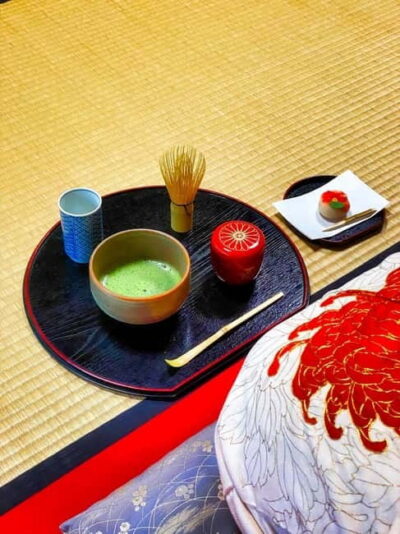
Tea Ceremony in a Traditional Tea House in Kiyomizu
Read our review →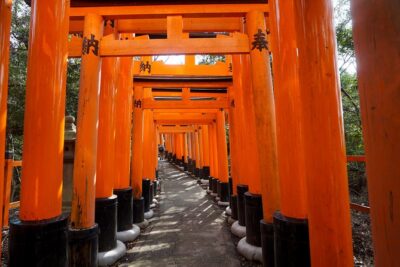
Fushimi Inari Hidden Hiking Tour (Private Option Available)
Read our review →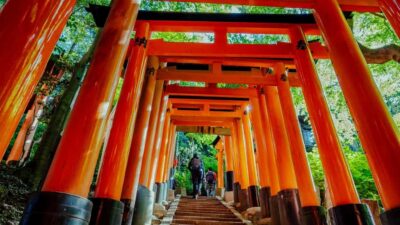
Osaka/Kyoto:Kinkakuji,Arashiyama,FushimiInariShrine,NaraPark
Read our review →
Kyoto/Osaka: Nara, Fushimi Inari Taisha, Arashiyama Bus Tour
Read our review →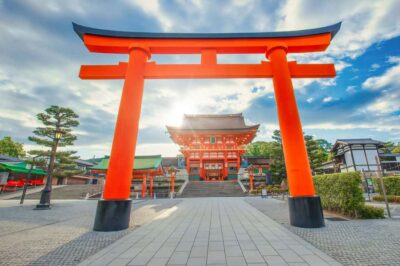
Osaka/Kyoto: Arashiyama, Nara & Fushimi Inari Shrine w/Lunch
Read our review →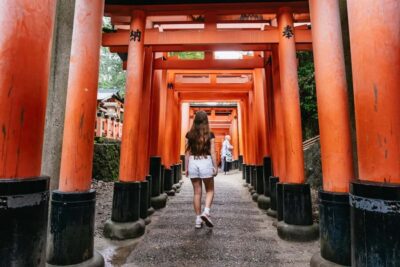
Nijo Castle, Kiyomizu & Fushimi Inari Guided Tour
Read our review →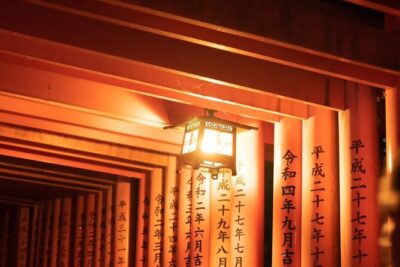
Browse the lists this tour appears in