
REVIEW · FUSHIMI INARI SHRINE TOURS
Kyoto Magical Night English Tour: Gion & Fushimi Inari Shrine
Kyoto feels most atmospheric after sunset, when Fushimi Inari’s red torii gates and Gion’s wooden streets take on a softer mood. This tour links both in one compact evening, with a local English-speaking guide explaining shrine customs, legends, architecture, and the difference between Shinto shrines and Buddhist temples.
I like the small private-group format, which makes it easier to ask questions and adjust the pace. I also like the practical extras: guides take photos, share Kyoto tips, and may help with restaurant or transit questions. The main caution is pace. You cover a lot on foot in 2 hours 30 minutes, so bring good shoes and expect some uphill walking at Fushimi Inari.
Key points before you book
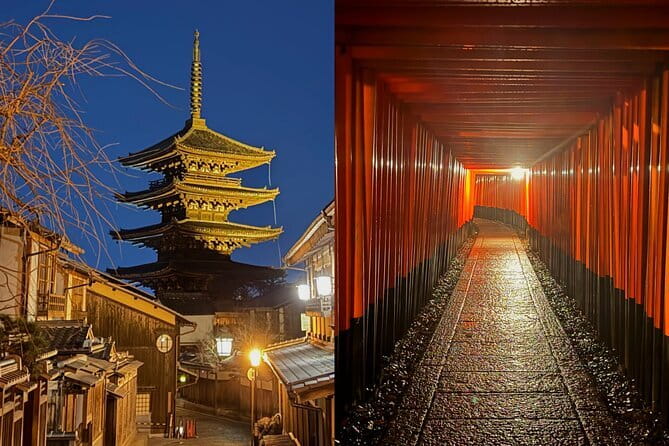
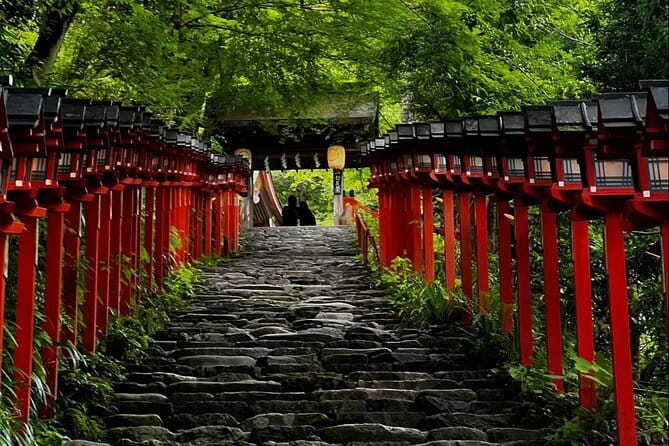
- Fushimi Inari after dark: Spend about an hour among the famous red torii gates, with guidance on shrine etiquette and local beliefs.
- A broad Higashiyama route: See Hanamikoji, Gion, Yasui Konpiragu, Yasaka Pagoda, Ninenzaka, Nene-no-Michi, and Yasaka Shrine.
- Private activity: Only your group takes part, though group size and guide assignment can vary.
- Photos are included: Guides take professional photos, and some groups received dozens of images and short videos soon after the tour.
- Public transit is extra: Allow ¥480 per person for transportation during the walk.
- A fast introduction to Kyoto: This is useful on your first evening, but it is not a slow, lingering temple tour.
Why this Kyoto night walk works so well
The smart idea here is the pairing. Fushimi Inari gives you a strong first look at Shinto worship and one of Japan’s most recognizable sights. Gion and southern Higashiyama then show you old Kyoto through wooden townhouses, stone lanes, pagodas, shrines, and evening lights.
You are not simply being driven between photo stops. You use public transportation and spend most of the evening walking. That means you get a better feel for how the districts connect, but it also means this is a real walking tour, not an easy sightseeing loop.
At $26.43 per person, the price is modest for a private activity with an English-speaking guide, included admission fees, and photos. You still pay ¥480 per person for public transportation, plus anything you eat or drink. The value is strongest if you want context and orientation early in your Kyoto stay. If you already know the city well and prefer to explore at your own pace, the route may feel rushed.
The tour has earned a 5.0 rating from 97 reviews, with 100 percent recommending it. The strongest praise centers on the guides, especially Ikki, who is repeatedly described as warm, clear, prepared, and attentive. Other praised guides include Yui, Yuki, Mariko, Joi, and Yuri. Since this is a guide-led experience, your evening will depend partly on who leads it, but the repeated pattern is good communication, cultural explanations, and helpful local advice.
More Temple Sunset Tours in Japan
- Kyoto Fushimi-Inari Night Walking Tour
★ 5.0 · 320 reviews - Kyoto Fushimi-Inari Night Walking Tour
★ 4.8 · 171 reviews - Candlelit Zen: Evening Meditation at Kyoto’s Secret Temple
★ 5.0 · 10 reviews
Starting at Fushimi Inari’s torii gates
The first stop is Fushimi Inari-taisha, reached from the meeting point near the Statue of Izumo-no-Okuni in Kawabatacho, Higashiyama Ward. The shrine is dedicated to Inari, associated with rice and prosperity, and is famous for its thousands of red torii gates climbing the wooded slopes of Mount Inari.
You spend about one hour here. That is enough to walk through a meaningful section of the gates and understand the place, but not enough to explore every path on the mountain. This matters because Fushimi Inari can easily consume half a day if you try to walk to the upper summit.
At night, the gates create a different mood from the usual daytime visit. The route feels quieter in many sections, and the evening light makes the colors and shadows especially good for photographs. Still, do not expect complete solitude. Fushimi Inari is one of Kyoto’s most famous sights.
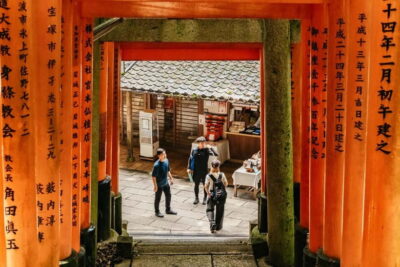
A guide adds real value here. You can learn how to behave at the shrine, how Shinto worship differs from temple practice, and why the torii gates are so important. Several guides also explain the myths and stories connected with Inari. This turns a famous photo stop into a place with meaning.
The path is not flat. You may walk uphill and over uneven surfaces, so supportive shoes matter. The tour description calls for moderate physical fitness, and that is a fair warning. If someone in your group needs frequent breaks, tell the guide early. One group with older family members was accommodated with regular pauses, but the route still covers a lot of ground.
Hanamikoji Street and the evening side of Gion
After Fushimi Inari, the tour moves into Gion, beginning with Hanamikoji Street. This stop lasts about 10 minutes, so think of it as a guided introduction rather than a full district walk.
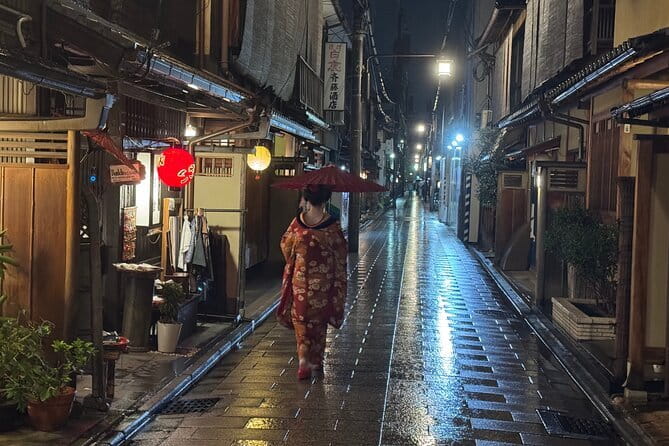
Hanamikoji is lined with traditional wooden machiya buildings and teahouses. It is also associated with geisha and maiko, though sightings are never guaranteed. That uncertainty is part of the point. You are walking through a working historic district, not a stage built for visitors.
Please keep your camera manners in mind. Do not block doorways, chase performers, or photograph people without permission. Your guide can help you understand the local setting and point out details you could easily miss on your own.
The short stop is useful because the guide can explain what makes Gion different from a standard shopping street. The wooden facades, narrow lanes, and teahouse culture are tied to Kyoto’s traditional arts. At the same time, 10 minutes is brief. If you want a detailed look at Gion’s entertainment history or a chance to enter a teahouse, this tour is not designed for that.
The next 10-minute stop is simply listed as Gion, allowing the guide to show you more of the district beyond Hanamikoji. This is where the route benefits from a local guide who knows which alleys are pleasant and less crowded. Several tour descriptions praise guides for taking groups through quiet lanes with plenty of atmosphere.
Yasui Konpiragu and the relationship stone

Yasui Konpiragu is a small but memorable stop. The shrine is known for prayers to end harmful relationships and encourage better ones. Its central ritual involves a large stone covered in paper talismans, with a narrow opening through it.
You have about 10 minutes here. That is enough for an explanation and, if you wish, a chance to take part in the custom. One guide also showed a guest a nearby statue associated with prayers for recovery after the guest mentioned a knee injury. This is a good example of how the private format can make the evening more personal.
The shrine may appeal to you even if you are not interested in the ritual itself. It shows how Japanese religious sites often connect daily worries with prayer. Love, family, health, luck, and protection are not abstract ideas here. They appear in very direct, practical forms.
Because the stop is short, you should listen carefully to the explanation before deciding what you want to do. The guide can help you understand the custom without turning it into a rushed photo opportunity.
More Fushimi Inari Shrine Tours in Kyoto:
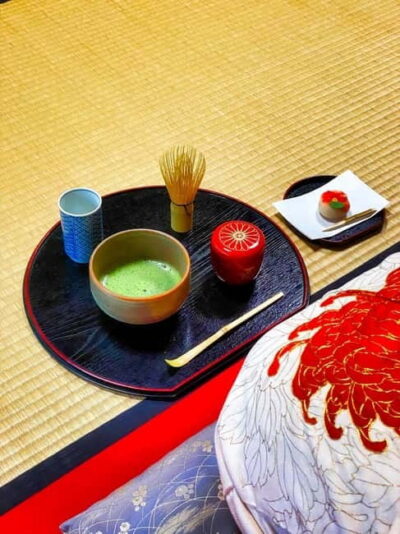
- Kyoto: Tea Ceremony in a Traditional Tea House in Kiyomizu
★ 4.9 · 3,519 reviews - Fushimi Inari Hidden Hiking Tour (Private Option Available)
★ 5.0 · 1,750 reviews - Osaka/Kyoto:Kinkakuji,Arashiyama,FushimiInariShrine,NaraPark
★ 4.1 · 1,596 reviews - Kyoto/Osaka: Nara, Fushimi Inari Taisha, Arashiyama Bus Tour
★ 4.7 · 1,275 reviews
Yasaka Pagoda and the old Higashiyama streets
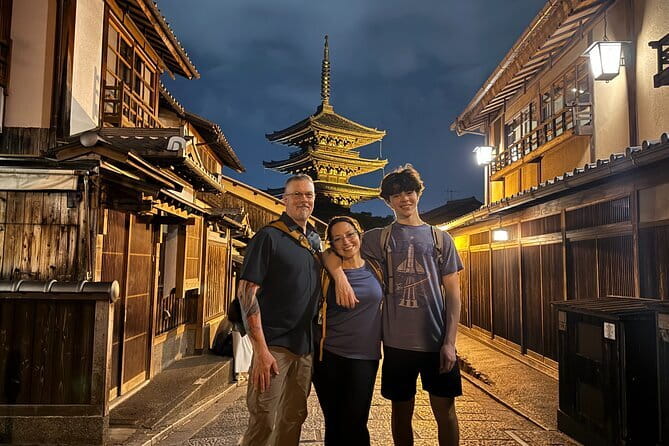
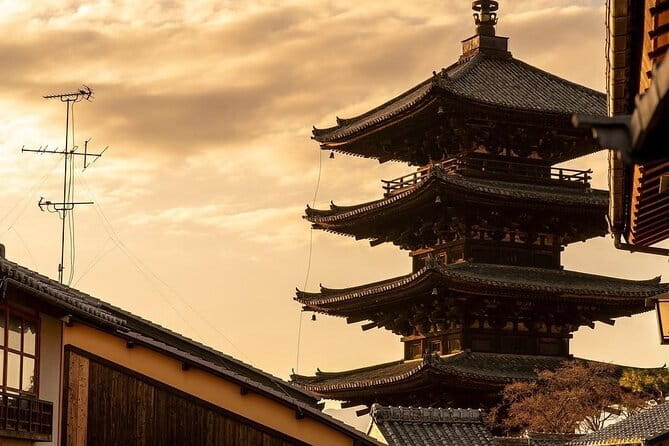
The route continues to Yasakanoto, better known as Yasaka Pagoda at Hokanji Temple. You spend about 15 minutes here. The pagoda is one of Kyoto’s best-known landmarks and gives the surrounding streets a strong sense of place.
The stop is mainly about seeing and photographing the pagoda from the street. The information provided does not promise entry inside, so do not book this tour expecting a long temple visit. The reward is the view of the wooden tower rising above the historic neighborhood.
From there, the walk continues through Sannenzaka and Ninenzaka. These stone-paved lanes are lined with old wooden buildings, restaurants, and souvenir shops. They are among Kyoto’s most attractive streets, but they are also popular, especially at busy times.
The tour allows 15 minutes here. That is enough for a guided walk and photos, but not enough for serious shopping or a leisurely meal. If you see a shop you want to revisit, make a note of it and return another day.
Your guide can also explain the local warning about walking carefully on these slopes. The lanes are uneven and sometimes steep. The setting looks gentle in photographs, but comfortable shoes and attention underfoot are more useful than fancy footwear.
This section is one of the best reasons to choose an evening departure. The streets can feel calmer after daytime crowds thin out, though the level of quiet depends on the date and hour. You should still expect other people around the best-known viewpoints.
Nene-no-Michi and Yasaka Shrine
Nene-no-Michi is a 15-minute section along a quieter historic path named for Nene, the wife of a powerful shogun. It passes temples and traditional streets, offering a calmer contrast to the more commercial parts of Ninenzaka.
This is the kind of stretch that benefits from a guide. Without local context, it can look like a pleasant lane and little more. With an explanation of the people and temples connected to the area, the walk becomes easier to place within Kyoto’s past.
The final destination is Yasaka Shrine, with another 15 minutes allocated for the visit. Yasaka is the head shrine for approximately 2,300 related shrines across Japan and is associated with prosperity and protection.
Your guide can show you how to pay your respects and explain the shrine’s role. This is also a useful closing stop because it brings you back toward central Gion rather than ending in an isolated part of the city.
The listed itinerary says the tour ends back at the meeting point. That is important if you are making dinner plans. Allow a little flexibility after the official end time, especially if your group needs photos or directions.
What the guide adds to the evening
The best part of this experience is not the number of stops. You could find most of them on a map. The value comes from having someone explain what you are seeing and help you move through Kyoto without wasting time.
The guides use stories, simple explanations, and sometimes visual material. Ikki, in particular, has used laminated charts with explanations and graphics. That can help when you are trying to understand unfamiliar religious customs in a short period.
The guide may also help with practical questions outside the formal route. Guests received advice about public transportation, Kyoto restaurants, language, and places to visit during the rest of their stay. One guide even helped a group get seated at a recommended yakiniku restaurant after the walk.
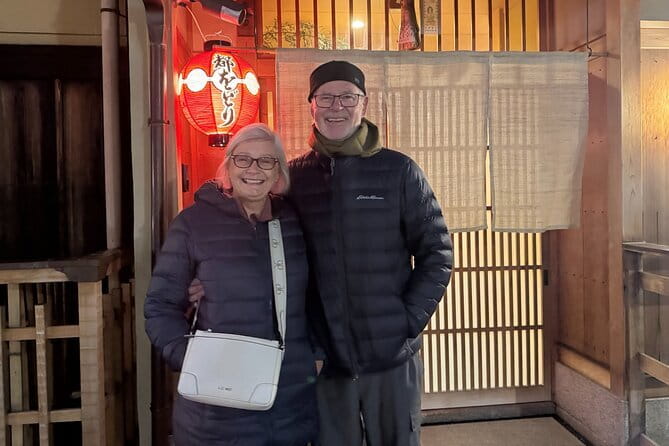
Photos are another useful extra. The guides take pictures at the stops, and several groups received them quickly afterward. One group received more than 40 photos and a couple of short videos within about an hour. The exact number will vary, but you can reasonably expect the guide to help document the evening.
The private format is especially helpful for families. A family of eight with children aged 5 to 12 found that the guide answered the children’s questions and kept them involved. Older relatives were also accommodated with breaks. That said, the route remains active, and young children or older adults may need a slower arrangement.
Pace, transport, and practical tradeoffs
This is a 2-hour-30-minute tour using public transportation and plenty of walking. The listed stop times add up to the full duration, so there is little spare time for long rests, shopping, or meals.
The tour costs $26.43 per person, with group discounts available. Admission fees for the temples and shrines are included, although the listed stops are generally free-access areas. Public transportation costs ¥480 per person and is not included.
You must arrive on time at the Statue of Izumo-no-Okuni. If you miss the meeting time, you cannot join later and will not receive a refund. The meeting point is near public transportation, but you should still allow time to find the exact statue.
Wear shoes that are comfortable for pavement, stone lanes, and the slope at Fushimi Inari. Carry water if you need it, since food and drinks are not included. Rain does not automatically ruin the experience, and one group found the wet streets added atmosphere, but a small umbrella or rain jacket would make the walk easier.
The tour offers free cancellation up to 24 hours before the start time. Cancellations made less than 24 hours before departure are not refunded, and late changes are not accepted.
Who should book this Kyoto night tour?
I would recommend it to first-time visitors who want a fast, guided introduction to southern Kyoto. It is also a good choice for couples, families, and small groups who want evening photos without arranging the route themselves.
It suits you if you enjoy walking, ask plenty of questions, and want to understand shrine customs rather than simply collect photographs. It is less suitable if you want long visits inside temples, extensive shopping time, a relaxed food tour, or a slow photographic outing.
The guide assignment matters. If you have a preferred guide, you can ask for Ikki, Yui, Yuki, Mariko, Joi, or Yuri, but the information does not guarantee a particular person. The repeated praise for Ikki suggests why he is often requested, especially for his preparation, warmth, and ability to adapt the route.
Should you book it?
Book this tour if you want to see Fushimi Inari and Gion in one evening, with cultural explanations and photos included. At the price, it offers a useful amount of guidance and local help, especially on your first night in Kyoto.
Skip it if you dislike brisk walking or want to linger at each shrine. The route is ambitious for 2 hours 30 minutes. For most visitors who want a well-organized first look at Kyoto after dark, though, it is a practical and enjoyable choice.
FAQ
How long does the Kyoto Magical Night tour last?
The tour lasts approximately 2 hours 30 minutes.
What sights are included?
The route includes Fushimi Inari-taisha Shrine, Hanamikoji Street, Gion, Yasui Konpiragu, Yasaka Pagoda, Sannenzaka and Ninenzaka, Nene-no-Michi, and Yasaka Shrine.
Is the tour conducted in English?
Yes. The tour includes a passionate local English-speaking guide.
Is this a private tour?
Yes. Only your group participates in the activity.
How much does the tour cost?
The listed price is $26.43 per person. Group discounts are available.
Is public transportation included?
No. Public transportation costs ¥480 per person and is paid separately.
Are admission fees included?
Yes. Admission fees for all temples and shrines visited on the tour are included.
Are food and drinks included?
No. Food and drinks are not included.
What happens if I arrive late?
If you are late for the meeting time, you cannot join the tour and will not receive a refund.
More Temple Sunset Tours in Kyoto
- Angkor Wat Sunrise or Sunset Tour with Guide from Siem Reap
★ 5.0 · 12,109 reviews - Siem Reap: Angkor Wat: Small-Group Sunrise or Sunset Tour
★ 5.0 · 9,444 reviews - Athens: Cape Sounion & Poseidon Temple Sunset Half-Day Trip
★ 4.8 · 8,241 reviews - Siem Reap: Angkor Wat 2-Day Tour with Sunrise and Sunset
★ 4.9 · 4,429 reviews
Just added around Kyoto
- Osaka/Kyoto: Katsuoji, Kinkakuji, Arashiyama 1-Day Bus Tour★ 4.6 · 33 reviews
- Kyoto:Kiyomizu-dera Temple Rent a kimono and ride a rickshaw★ 4.8 · 7 reviews
- Kyoto: Wagashi (Japanese sweets) Cooking near Fushimiinari★ 5.0 · 40 reviews
- Kyoto: Kimono/Yukata Rental 5 Minute from Kiyomizu-dera★ 4.7 · 89 reviews
- Kyoto Fushimiinari:Wagashi Making & Small Group Tea Ceremony★ 5.0 · 14 reviews
- Kyoto: Samurai Sword & Kimono Action Filming Experience★ 4.8 · 78 reviews
- KYOTO: Tempio Kiyomizu Pagode Gion “Geisya” (Guida Italiana)★ 4.7 · 17 reviews
- Best of Kyoto: Red Gates of Fushimi Inari & Kiyomizu Temple★ 4.8 · 36 reviews
Fushimi Inari Shrine Tours, compared.
Tea Ceremony in a Traditional Tea House in Kiyomizu
Read our review →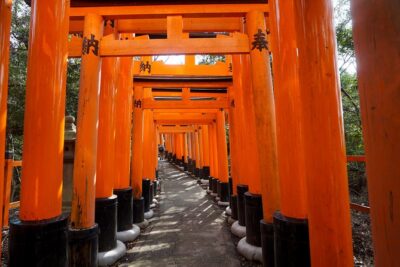
Fushimi Inari Hidden Hiking Tour (Private Option Available)
Read our review →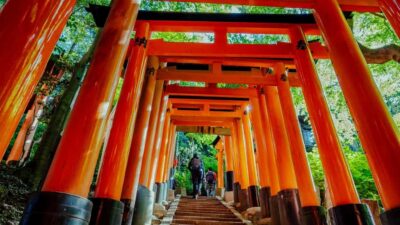
Osaka/Kyoto:Kinkakuji,Arashiyama,FushimiInariShrine,NaraPark
Read our review →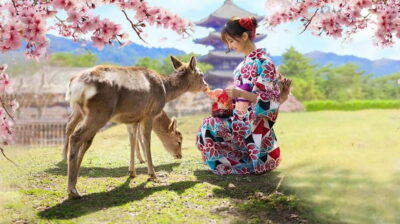
Kyoto/Osaka: Nara, Fushimi Inari Taisha, Arashiyama Bus Tour
Read our review →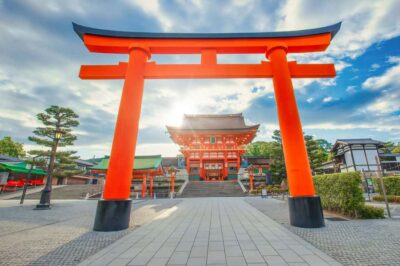
Osaka/Kyoto: Arashiyama, Nara & Fushimi Inari Shrine w/Lunch
Read our review →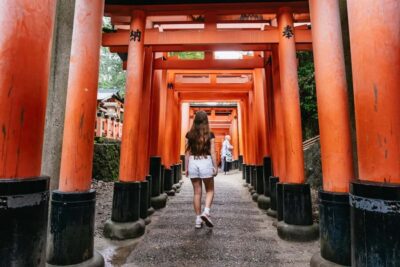
Nijo Castle, Kiyomizu & Fushimi Inari Guided Tour
Read our review →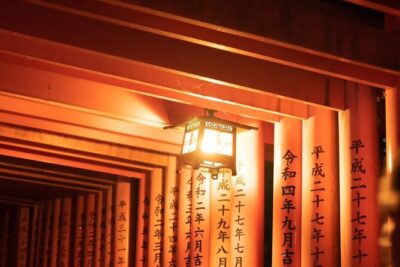
Browse the lists this tour appears in