
REVIEW · FUSHIMI INARI SHRINE TOURS
Kyoto Early Bird English Tour: Fushimi Inari & Gion(Private opt)
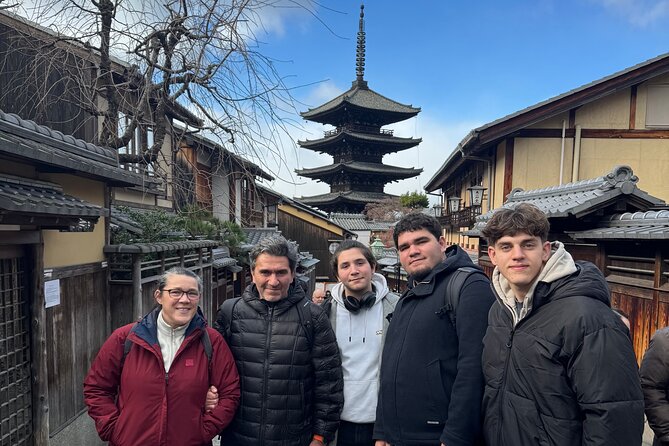
Fushimi Inari is at its best before the day fills with people. This tour gets you beneath the famous red torii gates early, then carries you through Kiyomizu-dera, Sannenzaka, Yasaka Pagoda, Gion, and Yasaka Shrine in one well-packed morning. Ikki, a Kyoto-born guide frequently named by guests, adds cultural context and takes photos along the way.
I like two things right away: the early start saves you from the worst crowds, and the route links several famous sights without making you plan every train, walk, and turn. I also like the personal touch, especially the guide’s photos, food suggestions, and help with onward directions.
The main catch is the pace. This is a walking tour with public transportation, hills, temple steps, and seven stops. The advertised duration is four to five hours, though one account describes a much shorter outing, so confirm the expected timing before booking if your schedule is tight.
Key points at a glance
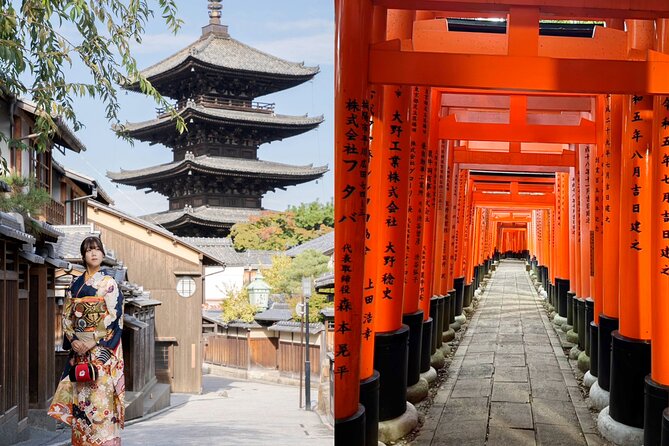
- Start before the crowds: Fushimi Inari comes first, when the torii paths are generally calmer.
- A private experience: Only your group takes part, which makes questions and photo stops easier.
- Seven major stops: The route covers Fushimi Inari, Kiyomizu-dera, Sannenzaka, Yasaka Pagoda, Yasaka Koshin-Do, Gion, and Yasaka Shrine.
- Photos are part of the service: Your guide takes pictures during the tour and sends them afterward.
- Budget for ¥890 extra: Public transportation costs ¥390, and Kiyomizu-dera admission costs ¥500.
- Best for active sightseers: Expect plenty of walking, temple steps, uneven streets, and a moderate fitness requirement.
Why the early start matters at Fushimi Inari
The morning begins at Kyoto Station, a practical meeting point with rail and bus connections. From there, you use public transportation and continue mainly on foot. The route is not a coach tour, so you get closer to Kyoto’s streets and neighborhoods, but you also need comfortable shoes and a little stamina.
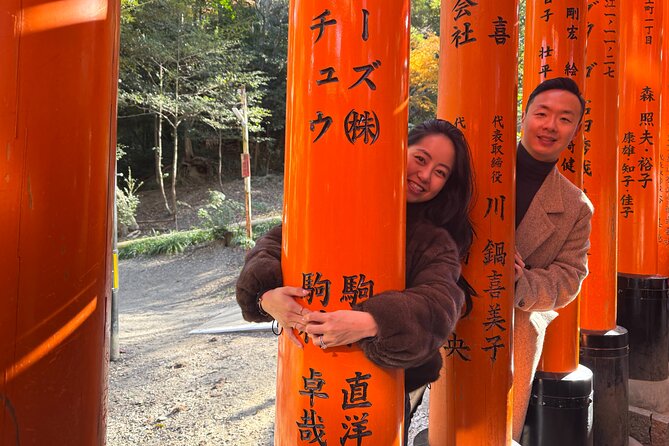
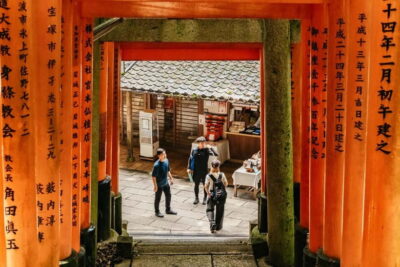
Fushimi Inari-taisha is the morning’s first major sight. The shrine is dedicated to Inari, associated with rice and prosperity, and its hillside paths are lined with thousands of orange-red torii gates. They form long corridors through the wooded slopes of Mount Inari, giving you the classic Kyoto photograph almost immediately.
The timing is the real prize. Fushimi Inari is one of Kyoto’s most photographed places, and later in the day the narrow gate paths can feel crowded. Starting here gives you a better chance to enjoy the colors, forest, and shrine details without constantly stopping for foot traffic.
You should keep your expectations sensible. The tour allows about an hour at Fushimi Inari, not a full hike around Mount Inari. You will see the famous lower section and receive explanations about the shrine, but this is not designed as an extended mountain climb.
More Private Temple Tours in Japan
- Fushimi Inari Hidden Hiking Tour (Private Option Available)
★ 5.0 · 1,750 reviews - Kyoto: Zen Meditation at a Private Temple with a Monk
★ 5.0 · 202 reviews - Kyoto: Fushimi Inari Hidden Hike (Private)
★ 5.0 · 31 reviews
Kiyomizu-dera and the first big Kyoto view
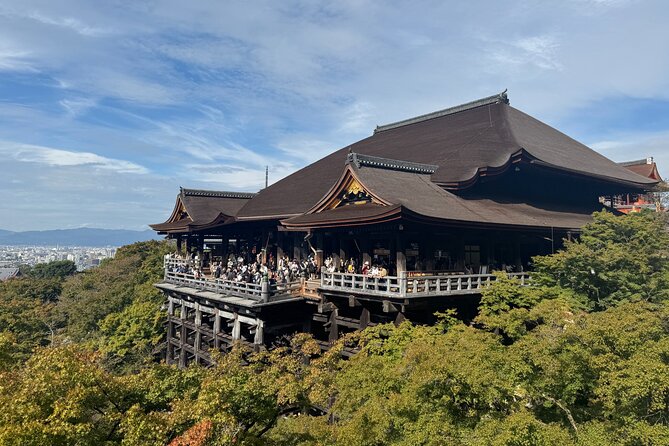
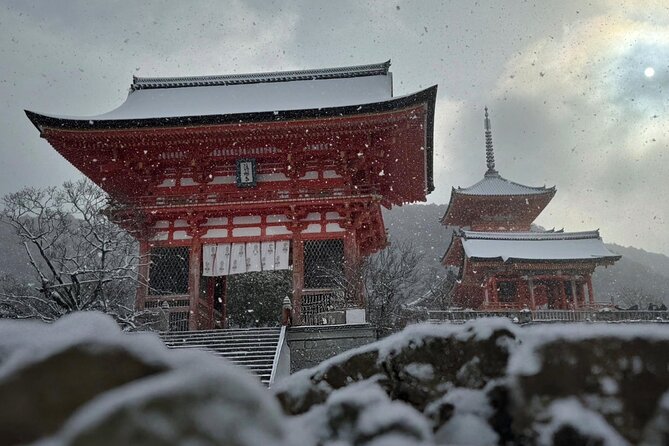
The next major stop is Kiyomizu-dera, one of Kyoto’s best-known temples. It sits above the city and is valued for its historic setting, broad views, and dramatic wooden construction. The approach gives you a sense of old Kyoto before you even reach the main temple grounds.
Admission is not included, so allow ¥500 per person. That fee is modest, but it is important to know about because the tour price does not cover every expense.
You get roughly an hour here. That is enough to see the central areas, listen to explanations about the temple, take photos, and enjoy the view. It may not be enough if you want to explore every corner slowly, buy souvenirs, and linger at every worship point.
Kiyomizu-dera is also where the physical side of the morning becomes clearer. The approach includes slopes and steps, and the temple area can involve uneven surfaces. You do not need an athlete’s fitness level, but the moderate fitness warning is worth taking seriously.
The guide’s role matters most at places like this. A temple can be visually impressive yet confusing if you do not understand what you are seeing or how local worship works. Ikki is praised for explaining religious customs, temple symbols, and the proper way to take part in prayers. One particularly useful detail is his prepared booklet, which includes images and simple explanations about language, temple history, and customs.
Sannenzaka, Ninenzaka, and the old streets below the temple
After Kiyomizu-dera, the route moves through Sannenzaka and Ninenzaka. These stone-paved lanes are lined with wooden buildings, souvenir shops, cafés, and restaurants. They are short on the schedule, with about 15 minutes listed, so think of this as a guided introduction rather than a long shopping break.
I like this section because it connects the temple visit with everyday Kyoto. Instead of jumping from one major sight to another, you walk through streets where the old architectural style remains part of the experience. The lanes are photogenic, but they can also be busy and slightly awkward underfoot.
If you want to buy sweets, crafts, or gifts, you may need to return on your own. Fifteen minutes is enough for a quick look and a few photos, not a relaxed shopping session. The good news is that the guide can point out places to revisit after the formal tour ends.
Yasaka Pagoda and Yasaka Koshin-Do
Yasaka Pagoda, also called Hokanji Temple, receives another 15-minute stop. Its tall wooden form is one of the most recognizable sights in the Higashiyama area. The structure’s scale is striking when viewed from the surrounding streets, and it gives you a strong sense of Kyoto’s older city fabric.
This is primarily a photo and explanation stop. The schedule does not allow for a long temple visit, so your guide will likely focus on the pagoda’s place in the neighborhood and its age. If you want to study the building in detail, you may want to return later.
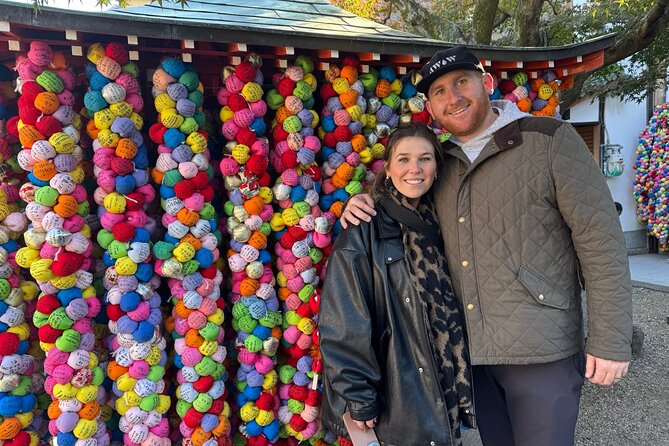
Yasaka Koshin-Do is smaller and more unusual. Its colorful hanging decorations give it a different feel from Kyoto temples that use quieter tones. The stop lasts about 15 minutes, which is enough to see the decoration, take pictures, and hear why this place is distinctive.
These short stops are part of the tour’s appeal. They add character between the headline sights. They also explain why the morning can feel full: you are not only visiting two major temples, but also pausing at several smaller cultural sites.
More Private Temple Tours in Kyoto
- Kyoto to Arashiyama Day Trip – Private & Personalized
★ 4.2 · 22 reviews - Kyoto: Nara, Todaiji, Kasuga Taisha Shrine Private Full Day
★ 4.9 · 18 reviews - Kyoto: Half-Day Private Tour Gion Geisha District & Kiyomizu
★ 4.4 · 7 reviews - Kyoto: Private Walking Tour with Kiyomizu Temple & Gion
★ 5.0 · 7 reviews
Gion, where the route slows down
Gion is Kyoto’s best-known geisha district, with traditional wooden machiya houses, teahouses, and preserved lanes. The tour gives you about 15 minutes here, so you should view this as a brief orientation to the area rather than a full afternoon in Gion.
A guide is useful in Gion because the district has customs that deserve respect. You should not block narrow lanes, enter private spaces, or treat people as photo props. The route focuses on the character of the streets and the history of the district, not on chasing geisha sightings.
The compact timing is both a strength and a limitation. You get a first look at Gion after visiting the nearby temple district, but you will not have much time for dinner, shopping, or a slow walk through every lane. Since the tour ends nearby, you can continue exploring after the guide leaves.
Yasaka Shrine and a useful finish in central Kyoto
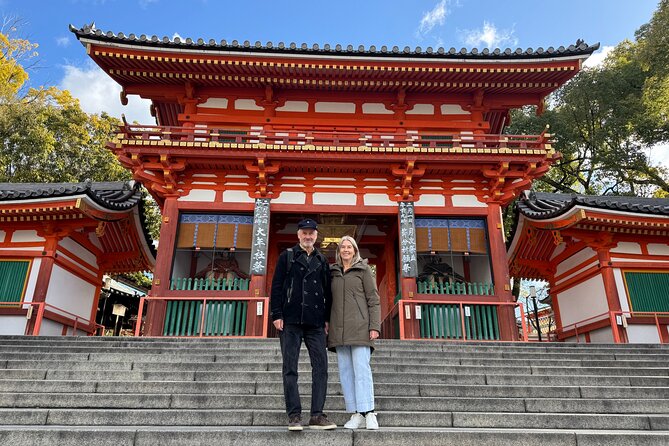
The final stop is Yasaka Shrine, reached after the Gion portion of the walk. The shrine is linked with around 2,300 related shrines across Japan and is associated with protection and prosperity. It is a fitting finish because it brings together several themes from the morning: worship, local tradition, architecture, and Kyoto’s continuing role as a cultural center.
You have about 30 minutes here, giving you more breathing room than at the smaller stops. You can ask final questions, take photos, and get suggestions for the rest of your day.
The tour ends at Yasaka Shrine rather than returning you to Kyoto Station. That is convenient if you plan to continue in Higashiyama, Gion, or nearby central Kyoto. It is less convenient if you have luggage at the station or a strict train departure, so plan your route before the tour begins.
The guide can help you work out the next step. Several accounts describe Ikki offering restaurant suggestions and even walking with a group toward a conveyor-belt sushi restaurant. That kind of local help is useful, especially on your first Kyoto visit, though the exact recommendation will depend on your interests and the guide assigned.
What the private format really gives you
This is a private activity, so only your group takes part. That does not make the walking route private in the sense of having empty streets or exclusive access to temples, but it does change the feel of the morning.
You can ask more questions without holding up a large group. The guide can adjust explanations for children, older family members, or people who want more detail about religion and local customs. One family described the experience as working well across three generations, including an eight-year-old child and teenagers.
The private format also helps with photographs. Your guide can stop for group pictures instead of rushing everyone through the same viewpoint. The photography is one of the tour’s strongest extras, especially if you are traveling as a couple or family and usually end up taking turns behind the camera.
Ikki is the guide most often singled out by name. He is described as Kyoto-born, fluent in English, friendly, patient, funny, and well prepared. If you specifically want Ikki, ask whether he is available rather than assuming the request is guaranteed. Jay is also mentioned as assisting on one outing.
The photo service and local advice
Professional photos are included, which is unusual for a basic walking tour. The guide takes pictures at Fushimi Inari, Kiyomizu-dera, Yasaka Pagoda, and other points along the route, then sends them afterward.
This is more than a small convenience. Kyoto’s most famous sights are places where you want a photo, but the best angles often require someone else to take it. You can still take your own pictures, of course, but the guide’s help means you spend less time arranging a stranger to press the button.
The local advice is another useful part of the experience. Ikki has offered food recommendations, directions for the rest of a Kyoto stay, and help finding a restaurant after the formal route. A good guide can save you from spending the afternoon in a place chosen only because it appeared first on a search map.
Price, extra costs, and overall value
The listed cost is $99.10 per person. For a private, English-language morning with a local guide and photography, that can be fair value, especially for a couple or small family that wants personal attention.
You should add two required costs to your mental budget:
- Public transportation: ¥390 per person
- Kiyomizu-dera admission: ¥500 per person
Food and drinks are not included. The total is still reasonable for a half-day introduction, but the value depends on what you want. If you prefer to wander alone and read signs at your own pace, you can visit these areas for less. If you want cultural explanations, help with customs, family photos, and a route that connects the major sights, the extra cost has a clear purpose.
Group discounts are listed, but the activity itself is private. Ask how the discount applies to your party before booking. The tour has had more than five bookings in the past month and carries a five-star rating from 139 published ratings, with 100 percent recommending it. Those figures suggest strong demand, but you should still judge the format against your own pace and interests.
Timing, walking, and the one point to confirm
The stated duration is approximately four to five hours. That is a sensible estimate for seven stops, public transportation, and a long walking route. However, one account describes the outing as lasting about two and a half hours, so timing may vary by guide, pace, weather, or how much time your group spends at each site.
If you have a train, restaurant booking, or another timed activity, ask for the likely finish time before you commit. Do not assume the tour will return you to Kyoto Station.
You also need to arrive on time. Late arrivals cannot join and do not receive a refund. Free cancellation is available up to 24 hours before the start time, but changes or cancellations inside that window are not refunded.
Who should book this Kyoto morning?
I would choose this tour for a first visit to Kyoto, especially if you have only one morning to cover the city’s most famous eastern sights. It is also a good match for couples and families who want personal photos and a guide who can explain local religion without turning every stop into a lecture.
It suits you if you enjoy walking, ask questions, and prefer a clear route. It is less suitable if you have limited mobility, dislike hills and steps, want extended shopping time, or prefer to explore one temple in great detail.
Families should find the private setup helpful. The guide can keep children involved and adjust the pace within reason, though the route still covers a lot of ground. Older relatives may enjoy the cultural explanations, but you should consider the uneven streets and amount of standing.
Should you book this Fushimi Inari and Gion tour?
Book it if you want an efficient first look at Kyoto, care about cultural context, and value having someone take good photos. The early Fushimi Inari start is the strongest reason to choose it, while the personal guidance from Ikki adds much of the tour’s character.
Skip it if your priority is a slow, independent day at Kiyomizu-dera and Gion. The route is full, the short stops are purposeful but brief, and the walking can be demanding.
Before booking, confirm the guide, expected duration, group discount, and end-of-tour plan. If those details fit your day, this is a practical way to connect Kyoto’s major sights in one morning without losing the human side of the city.
FAQ
Where does the tour begin?
It begins at Kyoto Station, at Higashishiokoji Kamadonocho in Shimogyo Ward.
Where does the tour end?
It ends at Yasaka Shrine in the Gion area. From there, you can continue sightseeing or take public transportation to your hotel or another attraction.
How long does the tour last?
The listed duration is approximately four to five hours. One account describes a shorter outing, so confirm the expected timing if you have plans afterward.
Is this a private tour?
Yes. Only your group participates in the activity.
What language is the tour conducted in?
The tour includes an English-speaking local guide.
Is Fushimi Inari admission included?
Yes. Fushimi Inari-taisha has no admission charge for this tour.
Is Kiyomizu-dera admission included?
No. You pay ¥500 per person for admission to Kiyomizu-dera.
How much should I budget for transportation?
Public transportation costs ¥390 per person and is not included in the tour price.
Are food and drinks included?
No. Food and drinks are not included.
What happens if I arrive late?
If you are late for the meeting time, you cannot join the tour and will not receive a refund.
Can the guide take photos?
Yes. Professional photos are taken during the tour and sent afterward.
More Fushimi Inari Shrine Tours in Kyoto
- Kyoto: Tea Ceremony in a Traditional Tea House in Kiyomizu
★ 4.9 · 3,519 reviews - Osaka/Kyoto:Kinkakuji,Arashiyama,FushimiInariShrine,NaraPark
★ 4.1 · 1,596 reviews - Kyoto/Osaka: Nara, Fushimi Inari Taisha, Arashiyama Bus Tour
★ 4.7 · 1,275 reviews - Osaka/Kyoto: Arashiyama, Nara & Fushimi Inari Shrine w/Lunch
★ 4.4 · 754 reviews
Just added around Kyoto
- Osaka/Kyoto: Katsuoji, Kinkakuji, Arashiyama 1-Day Bus Tour★ 4.6 · 33 reviews
- Kyoto:Kiyomizu-dera Temple Rent a kimono and ride a rickshaw★ 4.8 · 7 reviews
- Kyoto: Wagashi (Japanese sweets) Cooking near Fushimiinari★ 5.0 · 40 reviews
- Kyoto: Kimono/Yukata Rental 5 Minute from Kiyomizu-dera★ 4.7 · 89 reviews
- Kyoto Fushimiinari:Wagashi Making & Small Group Tea Ceremony★ 5.0 · 14 reviews
- Kyoto: Samurai Sword & Kimono Action Filming Experience★ 4.8 · 78 reviews
- KYOTO: Tempio Kiyomizu Pagode Gion “Geisya” (Guida Italiana)★ 4.7 · 17 reviews
- Best of Kyoto: Red Gates of Fushimi Inari & Kiyomizu Temple★ 4.8 · 36 reviews
Fushimi Inari Shrine Tours, compared.
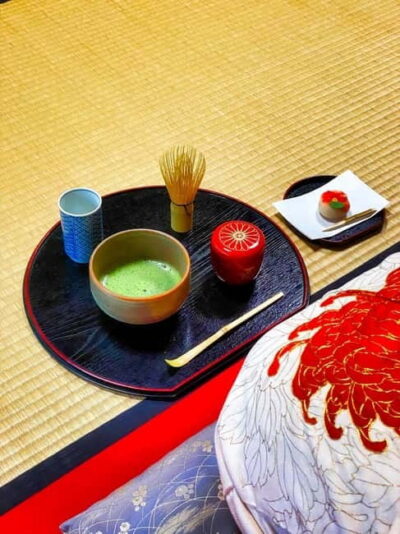
Tea Ceremony in a Traditional Tea House in Kiyomizu
Read our review →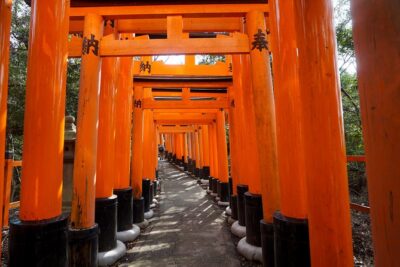
Fushimi Inari Hidden Hiking Tour (Private Option Available)
Read our review →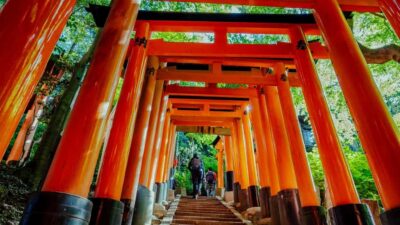
Osaka/Kyoto:Kinkakuji,Arashiyama,FushimiInariShrine,NaraPark
Read our review →
Kyoto/Osaka: Nara, Fushimi Inari Taisha, Arashiyama Bus Tour
Read our review →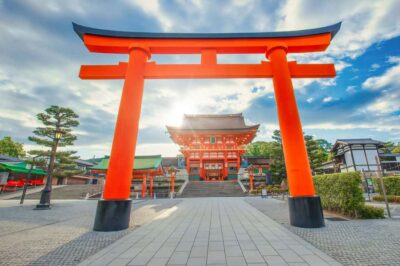
Osaka/Kyoto: Arashiyama, Nara & Fushimi Inari Shrine w/Lunch
Read our review →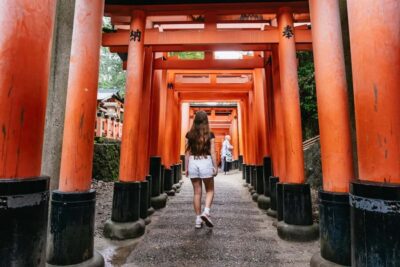
Nijo Castle, Kiyomizu & Fushimi Inari Guided Tour
Read our review →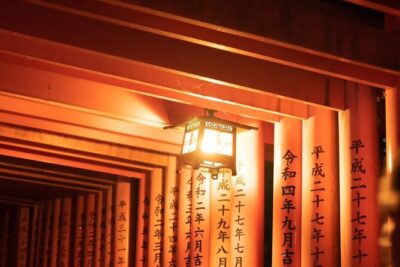
Browse the lists this tour appears in