
REVIEW · FUSHIMI INARI SHRINE TOURS
Kyoto: Half-day Guided Bike Tour with Fushimi Inari
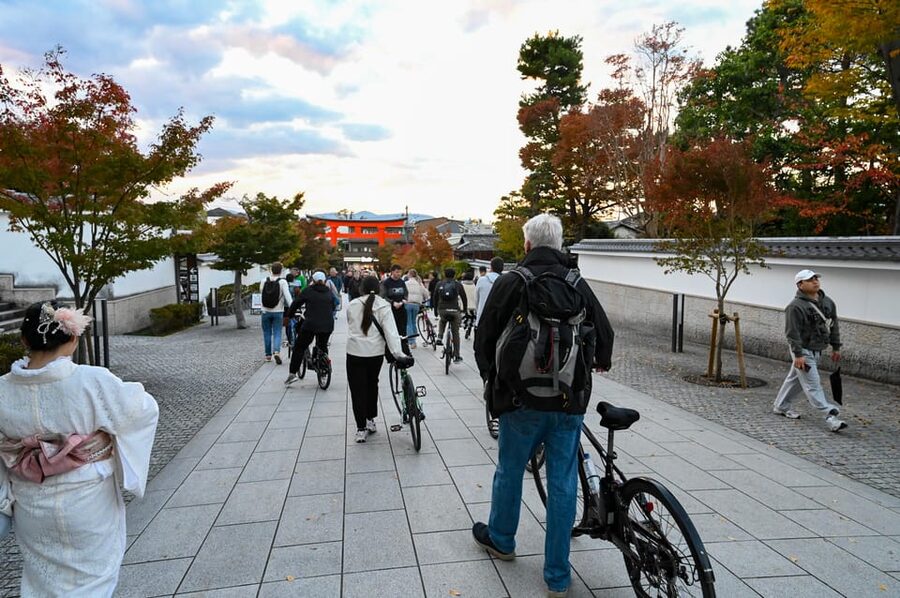
South Kyoto is at its best from a bicycle seat, where you can connect grand temples with quiet neighborhood streets, canal paths, and the back lanes of Gion. The highlight is the ride into Fushimi Inari, where you leave the bike behind for a walk beneath the famous orange torii gates.
I like the small group, limited to eight people, and the gentle pace. I also like the mix of famous sights and calmer corners, especially the Takase Canal, Kamo River, and Gion backstreets. Guides such as Jay, Julian, Indra, Sean, and Mayco have earned especially strong praise for clear explanations and a friendly approach.
The main consideration is distance. One guest recorded more than 15 kilometers, so this is not simply a short spin between nearby sights. You need to be comfortable riding a bicycle, and an e-bike costs an additional 3,000 yen.
Key points to know before you book
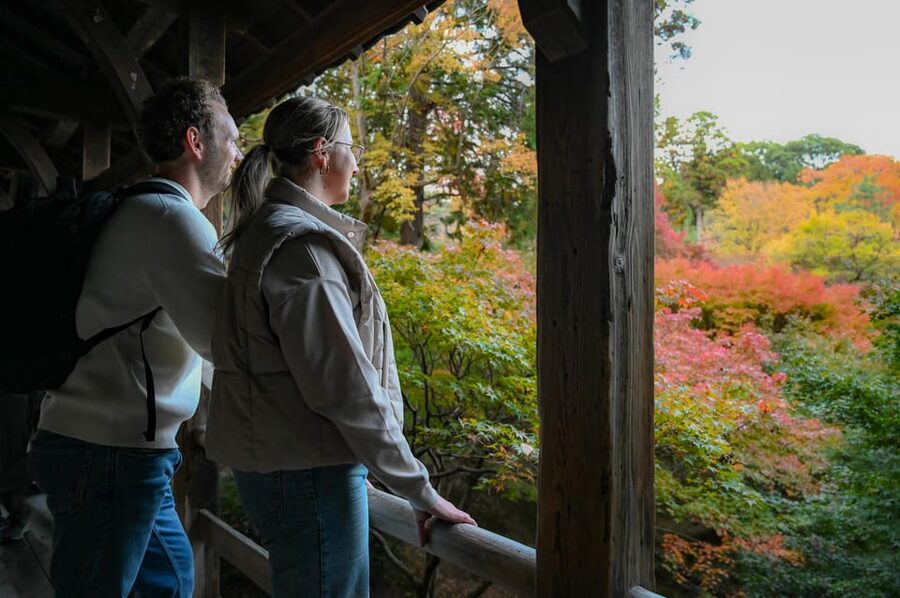
- Fushimi Inari comes at the end: You finish with a 45-minute guided visit to Kyoto’s famous orange torii gates.
- The route mixes major sights and local streets: Toji, Higashi-Honganji, Gion, Tofukuji, canals, and rivers all fit into one morning or afternoon.
- The group stays small: A maximum of eight participants makes it easier to ask questions and keep a relaxed pace.
- The ride can exceed 15 kilometers: This suits active visitors who want sightseeing with a bit of exercise.
- E-bikes cost 3,000 yen extra: Request one ahead of time if hills, distance, or stamina are a concern.
- You need to be at least 13: Comfortable clothes, sturdy shoes, sunscreen, and weather protection will make the ride easier.
Why a bicycle works so well in South Kyoto
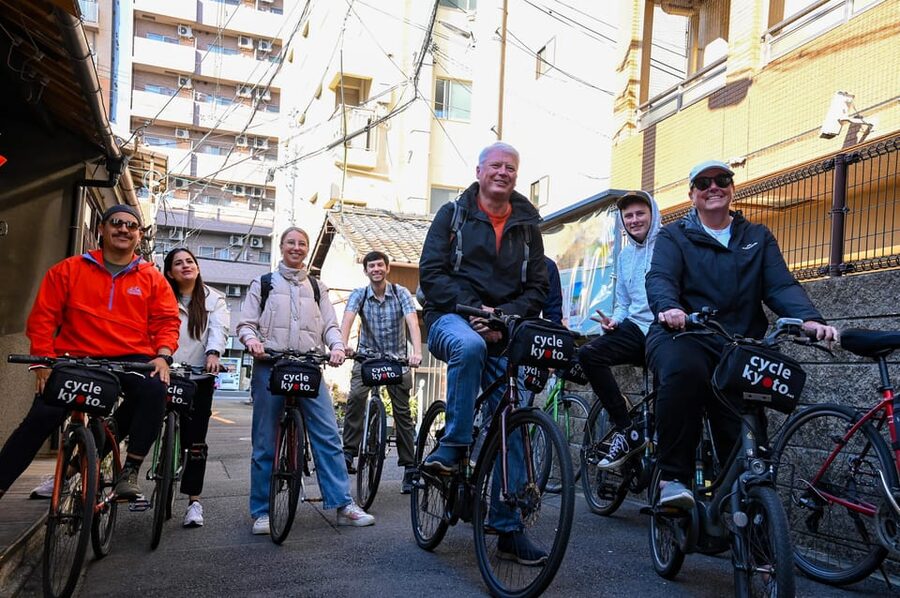
Kyoto’s major sights are spread across a wide area. Walking between them takes time, while public transport can leave you with short but repeated walks from stations and busy roads. A bicycle gives you a more connected view of the city.
You ride past temples, canals, rivers, older residential streets, and the teahouse district without spending the whole outing underground or inside a train. The pace is also slow enough to notice small details, but fast enough to cover ground.
This is not a hard cycling trip in the sporting sense. Still, you should expect a proper ride rather than a token pedal. The route can cover more than 15 kilometers, according to one participant, and the tour lasts 210 minutes. The guides generally keep things easygoing, but you will be cycling for much of the time.
The small group matters here. With no more than eight people, the guide can give directions clearly, answer questions, and adjust the pace more easily than on a large group outing. Sean, for example, adapted the time spent at stops when a small group wanted to linger. That sort of flexibility is useful in Kyoto, where one temple garden may hold your attention longer than expected.
More Fushimi Inari Shrine Tours in Kyoto:
- Kyoto: Tea Ceremony in a Traditional Tea House in Kiyomizu
★ 4.9 · 3,519 reviews - Fushimi Inari Hidden Hiking Tour (Private Option Available)
★ 5.0 · 1,750 reviews - Osaka/Kyoto:Kinkakuji,Arashiyama,FushimiInariShrine,NaraPark
★ 4.1 · 1,596 reviews
Starting near Kyoto Station and getting ready to ride
The meeting point is Cycle Kyoto, close to Kyoto JR Station. From the station, go past Avanti, cross one set of traffic lights, pass the Daily Yamazaki convenience store, and take the next left.
Allow enough time to find the shop. The directions are clear once you are in the area, but Kyoto Station is large and can take a few minutes to navigate. Arriving early also gives you time to settle on a bicycle and helmet size.
The tour begins with a 15-minute safety briefing. You receive a bicycle, helmet, and water, plus a small pouch attached to the bike for personal items. That pouch is useful for a phone, wallet, or small camera, but you should avoid bringing more than you need.
Wear clothes that let you move freely. Comfortable shoes are important, and sunscreen is worth packing even on a cool day. Warm clothing is also advised, since temperatures can change during the ride. Check the weather before you leave, particularly during Kyoto’s rainy periods.
Toji: an impressive first temple stop
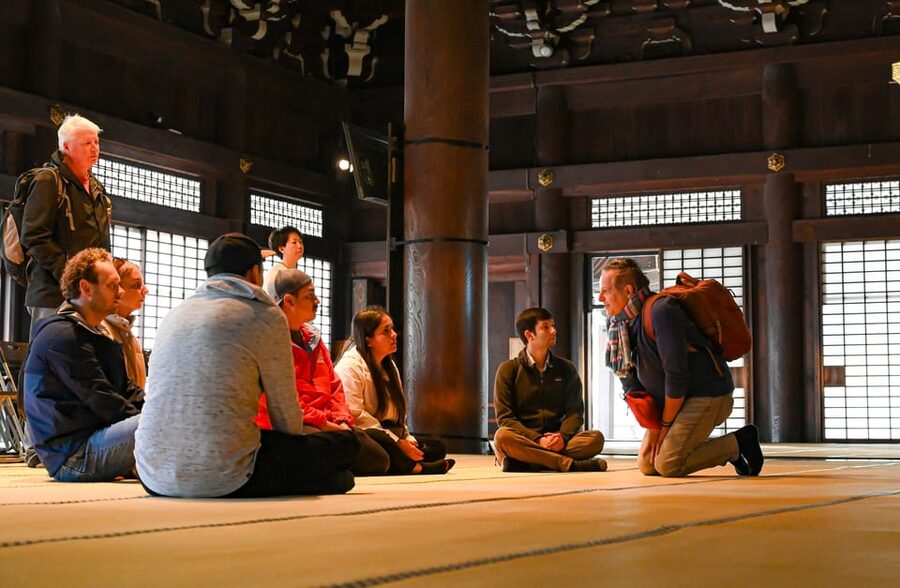
The first major stop is Toji, a UNESCO-listed temple and one of Kyoto’s key historic sites. The tour allows about 35 minutes here, enough for a guided visit rather than a quick look from the entrance.
Toji is a strong opening stop because it immediately gives you a sense of Kyoto’s scale and religious importance. You get a major temple setting before moving into smaller streets and riverside areas. The guide can also provide context that helps you make more sense of the temples you see later.
This is one place where cycling improves the day. You do not have to choose between spending time at Toji and reaching Fushimi Inari. The bicycle keeps the route moving without reducing every stop to a photograph.
Higashi-Honganji and the calm of a huge temple
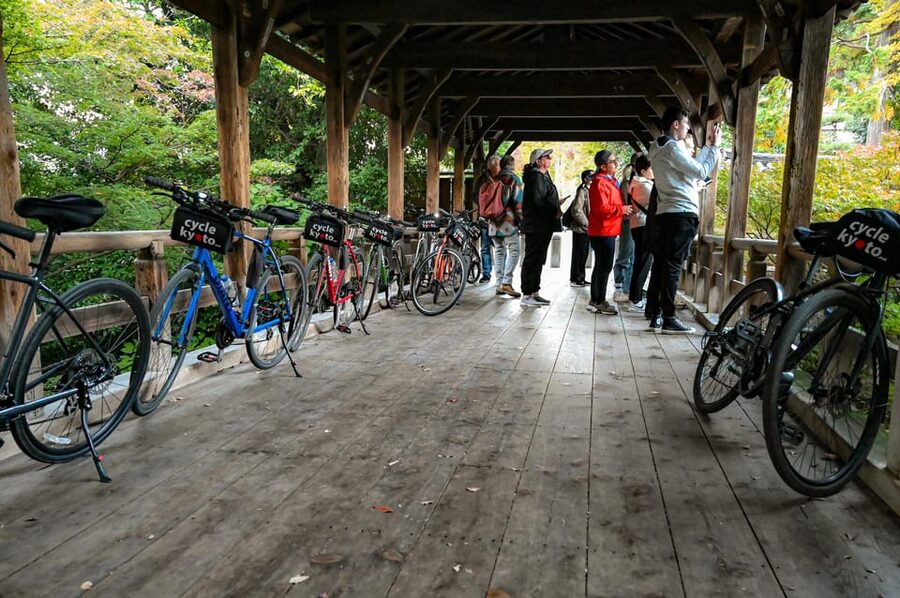
Next comes Higashi-Honganji, with about 35 minutes for a guided visit. It is one of Japan’s largest temples, and its broad grounds give you a change of scale after Toji.
The temple is worth seeing for its size and atmosphere, but the value of the stop also comes from the guide’s explanation. A good guide can point out how the site functions, what you are looking at, and how it fits into Kyoto’s religious life.
Jay, Julian, Indra, Sean, Juan, and Mayco are among the guides who have led this tour. The strongest praise has focused on their ability to explain history and culture in an approachable way. That is important at places such as Higashi-Honganji, where the architecture can look grand but unfamiliar if you have no context.
More Cycling Tours in Kyoto:
- Kyoto: Fushimi Inari Shrine and Tofukuji Temple E-Bike Tour
★ 5.0 · 75 reviews - Kyoto: Hidden Gems E-Bike Tour Through Backstreets & Temples
★ 4.9 · 54 reviews - Bangkok: Temples, Canals & Local Life Bike Tour
★ 4.9 · 3,511 reviews - Bangkok: Night Bike Tour with Temples & Flower Market Visit
★ 4.8 · 751 reviews
Takase Canal and the Kamo River
After the central temples, the ride follows the Takase Canal for about 10 minutes, then reaches the Kamo River for around 15 minutes. These are shorter stops, but they help break up the temple visits.
The canal gives you a quieter view of Kyoto, while the Kamo River opens up the route and lets you see the city from a different angle. You are not rushing from one ticket gate to another. You are riding through the spaces between the famous sights.
This section is also a welcome change for your legs and attention. A morning made up only of temple interiors can become tiring. The water, open views, and steady cycling create a more varied outing.
Do not expect a long riverside picnic or a full nature stop. The schedule allows a short visit, not an extended rest. Think of the canal and river as part of the ride’s character, not separate destinations requiring a large block of time.
Gion by bicycle, away from the main routes
The ride then reaches Gion, Kyoto’s famous geisha and teahouse district. About 30 minutes are set aside for a guided look at the backstreets.
Gion can be crowded on its best-known streets, but a bicycle tour gives you a chance to see the district as a connected neighborhood rather than a single photo stop. You move through quieter lanes and get a better sense of the wooden buildings, narrow streets, and traditional atmosphere.
You should follow the guide closely here and ride carefully. Gion is not a place for fast cycling, and the narrow streets require attention. The payoff is a slower look at one of Kyoto’s most recognizable districts without spending the whole visit in the busiest section.
This part is especially useful for first-time visitors who want more than the standard postcard view. The tour does not turn Gion into a staged show. Instead, you see the streets and receive background about the district from the guide.
Tofukuji for photographs and a change of pace
Tofukuji is next, with about 30 minutes for a photo stop. This is a shorter, more relaxed visit after the guided sections at Toji and Higashi-Honganji.
The temple is known for its striking setting and attractive views, making it a good place to pause with a camera. The tour does not promise a full temple visit here, so keep your expectations in check. You are stopping for photographs and a look around, not spending hours exploring every building or garden.
That limitation is also part of the tour’s strength. The route covers several major locations in one half-day, so the schedule has to keep moving. Tofukuji gives you another memorable setting without taking so much time that you miss Fushimi Inari.
Fushimi Inari and the orange torii gates
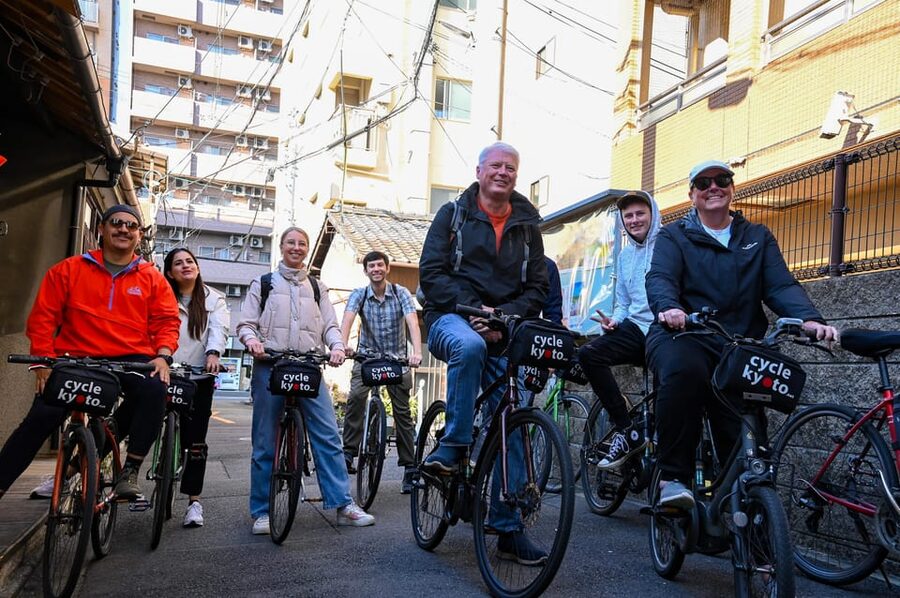
The final major stop is Fushimi Inari Taisha, with about 45 minutes for a guided visit. This is the tour’s big finish and likely the sight most people already know from photographs.
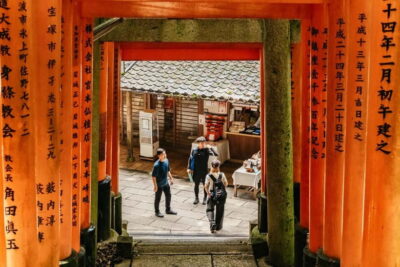
The shrine is famous for its long corridors of orange torii gates. You leave the bicycle and walk through the gates with the guide, who can explain what you are seeing and help you use your limited time well.
Forty-five minutes is enough to experience the lower section and walk through the most recognizable gates, but it is not enough to explore the entire mountain route. If you want to hike far up Inari Mountain, you will need a separate visit. The tour is designed to give you a strong introduction while still getting you back to Cycle Kyoto on schedule.
Arriving later in the route can be helpful. You have already seen several temples and parts of southern Kyoto, so Fushimi Inari feels like a natural finale rather than an isolated stop. It also gives you a chance to stretch your legs after the bike ride.
Guide quality and the feel of the group
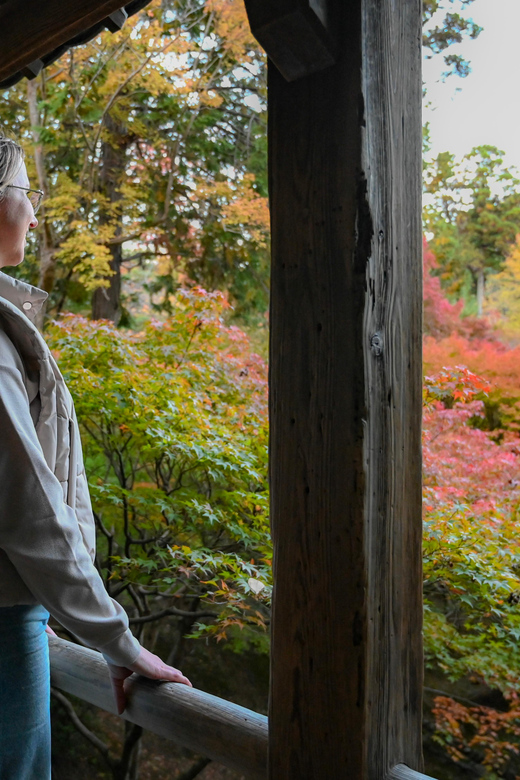
The guide can make or break a sightseeing ride. Here, the strongest part of the experience is the personal attention from the English-speaking guides.
Jay has been praised for his passion and for making people feel comfortable. Julian has handled poor weather with a good attitude and kept the tour enjoyable. Indra has been especially good at answering questions and sharing useful local context. Juan, Sean, and Mayco have also received strong praise for their patience, relaxed manner, and clear explanations.
Those details matter because Kyoto’s temples can blur together if you only collect names and photographs. A guide who explains the purpose of a site, points out less obvious features, and answers questions turns the ride into a more useful introduction to the city.
The group size, capped at eight, supports that style. You are not likely to get the same level of conversation on a coach tour. A small group also makes it easier for the guide to check that everyone is comfortable on the bike.
What the $77 price gets you
At $77 per person, the price is reasonable for a 210-minute guided outing that includes the bicycle, helmet, water, and an English-speaking guide. You are paying for transport between several sights, local interpretation, and a route that would take more planning to reproduce on your own.
The value is strongest if you want to see a lot in half a day. Toji, Higashi-Honganji, Gion, Tofukuji, the Kamo River, and Fushimi Inari form a busy schedule. Arranging that sequence independently would mean working out the best order, finding rental bikes, navigating unfamiliar streets, and managing temple visits around transport connections.
The value is less clear if you prefer long, unhurried visits at one or two temples. This tour gives you an overview of South Kyoto, not a slow study of each site. You will also need to budget another 3,000 yen if you request an e-bike.
Meals are not included. The outing is only half a day, so that is not a major issue, but eat beforehand or plan a meal after returning to Cycle Kyoto.
Who should book this ride?
This tour suits active first-time visitors who want an introduction to South Kyoto without spending the day on trains. It is also a good choice if you enjoy hearing local background while moving through ordinary streets, rather than visiting one attraction at a time.
You should be able to ride a bicycle confidently and manage a route that may exceed 15 kilometers. The tour is not suitable for children under 13, people who cannot ride, or people with back problems.
An e-bike may be a sensible upgrade if you are unsure about your stamina. You need to request it and pay 3,000 yen extra, so do not assume one will be included with the standard booking.
The ride also suits visitors who want a small group. With only eight places, you can ask questions and stay connected to the guide. It is less suitable if you want complete independence or dislike following a fixed route.
Weather, clothing, and practical details
Rain does not automatically ruin the outing. Julian kept a tour going in poor weather, but you should still check conditions before setting out and dress accordingly.
Wear comfortable clothing and shoes suitable for cycling. Bring sunscreen, warm layers, and a camera. Smoking, alcohol, and drugs are not allowed during the activity.
Free cancellation is available up to 24 hours before departure for a full refund, and you can reserve now and pay later. The tour is offered in English, with starting times depending on availability.
Should you book the Cycle Kyoto ride?
Book it if you want to cover several important South Kyoto sights in one active, well-organized half-day. The mix of temples, Gion lanes, waterways, and Fushimi Inari is the real reason to choose it. You get a much broader sense of the city than you would from visiting a single shrine.
Skip it if you want a slow temple day, cannot ride comfortably, or have only a short time at Fushimi Inari and want to hike far up the mountain. For most active visitors, though, the $77 fee is fair, the small group is a real advantage, and the route offers a useful balance of famous places and quieter Kyoto streets.
FAQ
How long does the Kyoto bike tour last?
The tour lasts 210 minutes, or three and a half hours.
How many people are in the group?
The group is limited to eight participants.
Is the tour conducted in English?
Yes. The tour includes a live English-speaking guide.
What is included in the price?
The price includes bicycle rental, a helmet, a guide, and water. Meals are not included.
What is the minimum age?
You must be at least 13 years old to join the public tour.
Can I use an e-bike?
E-bikes are available upon request for an upgrade fee of 3,000 yen.
Where does the tour begin and end?
The tour starts and returns to Cycle Kyoto, near Kyoto JR Station. From the station, go past Avanti, cross one set of traffic lights, pass the Daily Yamazaki convenience store, and take the next left.
Can I cancel for a full refund?
Yes. You can cancel up to 24 hours before departure for a full refund.
More Half-Day Trips in Kyoto
- Kyoto: Half-Day Private Tour Gion Geisha District & Kiyomizu
★ 4.4 · 7 reviews - Athens: Cape Sounion & Poseidon Temple Sunset Half-Day Trip
★ 4.8 · 8,241 reviews - Cape Sounion and Temple of Poseidon Half-Day Small-Group Tour from Athens
★ 4.5 · 3,205 reviews - From Athens: Temple of Poseidon & Cape Sounion Half-Day Tour
★ 4.3 · 1,082 reviews
Just added around Kyoto
- Osaka/Kyoto: Katsuoji, Kinkakuji, Arashiyama 1-Day Bus Tour★ 4.6 · 33 reviews
- Kyoto:Kiyomizu-dera Temple Rent a kimono and ride a rickshaw★ 4.8 · 7 reviews
- Kyoto: Kimono/Yukata Rental 5 Minute from Kiyomizu-dera★ 4.7 · 89 reviews
- Kyoto: Wagashi (Japanese sweets) Cooking near Fushimiinari★ 5.0 · 40 reviews
- Kyoto Fushimiinari:Wagashi Making & Small Group Tea Ceremony★ 5.0 · 14 reviews
- Kyoto: Samurai Sword & Kimono Action Filming Experience★ 4.8 · 78 reviews
- KYOTO: Tempio Kiyomizu Pagode Gion “Geisya” (Guida Italiana)★ 4.7 · 17 reviews
- Best of Kyoto: Red Gates of Fushimi Inari & Kiyomizu Temple★ 4.8 · 36 reviews
Fushimi Inari Shrine Tours, compared.
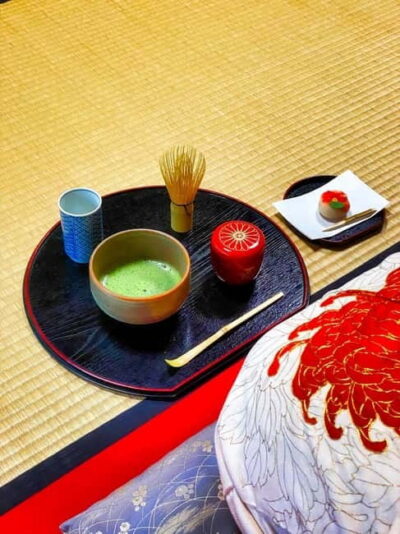
Tea Ceremony in a Traditional Tea House in Kiyomizu
Read our review →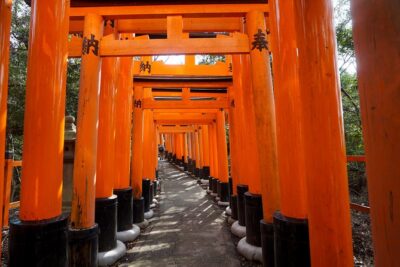
Fushimi Inari Hidden Hiking Tour (Private Option Available)
Read our review →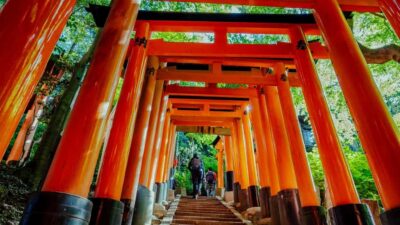
Osaka/Kyoto:Kinkakuji,Arashiyama,FushimiInariShrine,NaraPark
Read our review →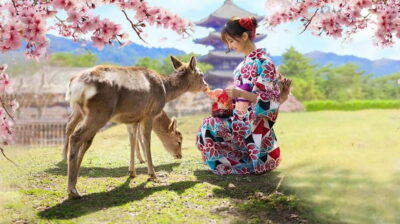
Kyoto/Osaka: Nara, Fushimi Inari Taisha, Arashiyama Bus Tour
Read our review →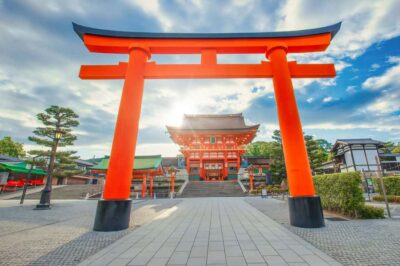
Osaka/Kyoto: Arashiyama, Nara & Fushimi Inari Shrine w/Lunch
Read our review →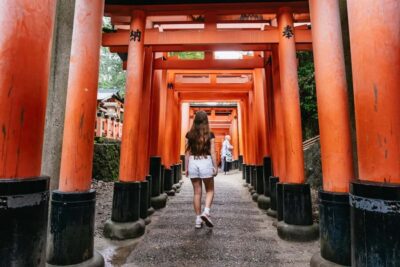
Nijo Castle, Kiyomizu & Fushimi Inari Guided Tour
Read our review →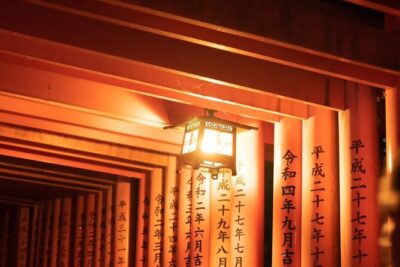
Browse the lists this tour appears in