
REVIEW · FUSHIMI INARI SHRINE TOURS
Kyoto Home Cooking Class &Supermarket tour near Fushimiinari
The best part of this four-hour experience is that it feels less like a standard cooking demonstration and more like being invited into a Japanese home for lunch. You’ll cook with Miho in a traditional room, eat what you make beside a garden view, then walk through a local supermarket to find the ingredients again.
I like the small maximum of six people, which gives you real hands-on time instead of a front-row seat to someone else’s lesson. I also like the practical supermarket visit, where Japanese labels and unfamiliar products become useful tools rather than puzzles. The main consideration is the price: at $127 per person, this costs more than a basic cooking class, though lunch, ingredients, recipes, and the four-hour format add solid value.
Key points to know before booking
- Dashi comes first: You learn the Japanese soup stock that forms the base of many everyday dishes.
- Miho teaches in clear English: Instructions are designed for English speakers, and the class is limited to six participants.
- You cook, then eat your own meal: The dishes are prepared by you or with a partner, not simply demonstrated.
- The setting feels genuinely domestic: Lunch takes place in a traditional Japanese room with a garden view.
- The supermarket visit has a practical purpose: You see where to find the seasonings and ingredients used in class.
- Vegetarian and vegan cooking is possible: The class uses vegetarian dashi, but dietary needs should be shared in advance.
A Japanese lunch that begins with dashi
This class gives you a useful doorway into Japanese food. Rather than treating sushi or tempura as isolated specialties, it starts with dashi, the soup stock found in a wide range of Japanese cooking.
That is an important choice. Once you understand the stock, you begin to see how soups, sauces, seasonings, and side dishes fit together. You are not only copying a recipe. You are learning one of the basic building blocks behind the food you will find in Japanese restaurants and homes.
Miho leads the class in English and demonstrates each part before you begin. Her teaching style is direct and patient, which matters when you are handling unfamiliar ingredients or techniques. You can expect to work alone or with a partner, depending on the dish and the group.
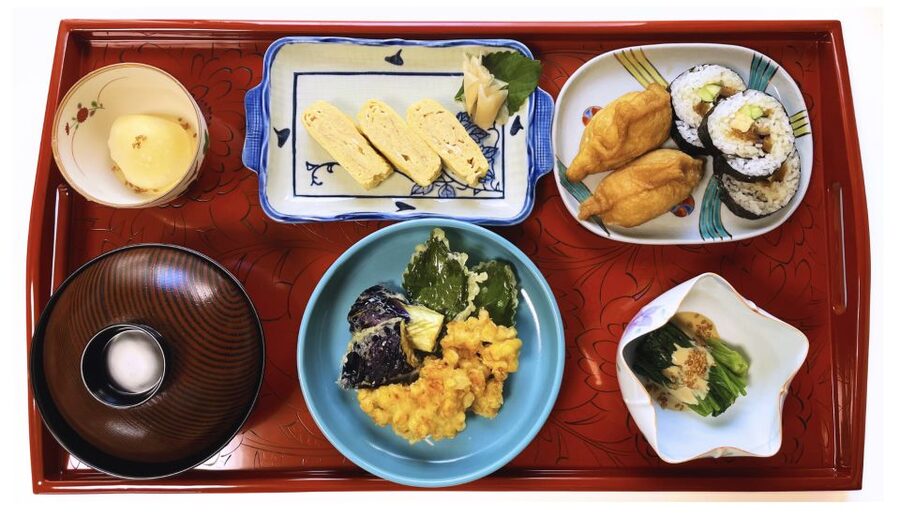
The exact menu can change with the season. The class description says you will prepare about five dishes, while past sessions have included a larger spread such as miso soup, tempura, sushi, Japanese rolled omelet, salad, and dessert. Mochi has also appeared in the menu. Think of the number as flexible rather than fixed.
More Fushimi Inari Shrine Tours in Kyoto:
- Kyoto: Tea Ceremony in a Traditional Tea House in Kiyomizu
★ 4.9 · 3,519 reviews - Fushimi Inari Hidden Hiking Tour (Private Option Available)
★ 5.0 · 1,750 reviews - Osaka/Kyoto:Kinkakuji,Arashiyama,FushimiInariShrine,NaraPark
★ 4.1 · 1,596 reviews
Cooking in a traditional home near Fushimi Inari
The setting is a major part of the experience. You cook in a traditional Japanese home, then sit down to eat in a Japanese-style room with a garden view. This gives you a glimpse of domestic design and dining that a restaurant meal cannot provide.
You should bring socks, since you will be spending time in a traditional room. The house setting also means this is not a polished restaurant kitchen built for large demonstrations. The appeal is the personal scale. You get a more direct connection with the instructor and a quieter place to enjoy the meal.
The garden view adds a pleasant pause after the work of cooking. Once the dishes are ready, you can sit with the other participants and eat everything together. That meal is not an extra tasting added at the end. It is the reward for learning the techniques and preparing the food yourself.
This arrangement also suits solo visitors. With no more than six people, it is easier to join the conversation and receive help. Couples and families can work together, while someone arriving alone is not left watching from the side.
What you actually cook during the four hours
The class begins with instruction about dashi and the basic ingredients used in Japanese cuisine. Miho demonstrates the steps, then gives you time to prepare the dishes yourself. This pattern is useful because you can watch the technique once and then try it while the details are still fresh.
You may learn several different styles of preparation in one session. Past menus have included:
- Miso soup made with dashi
- Tempura
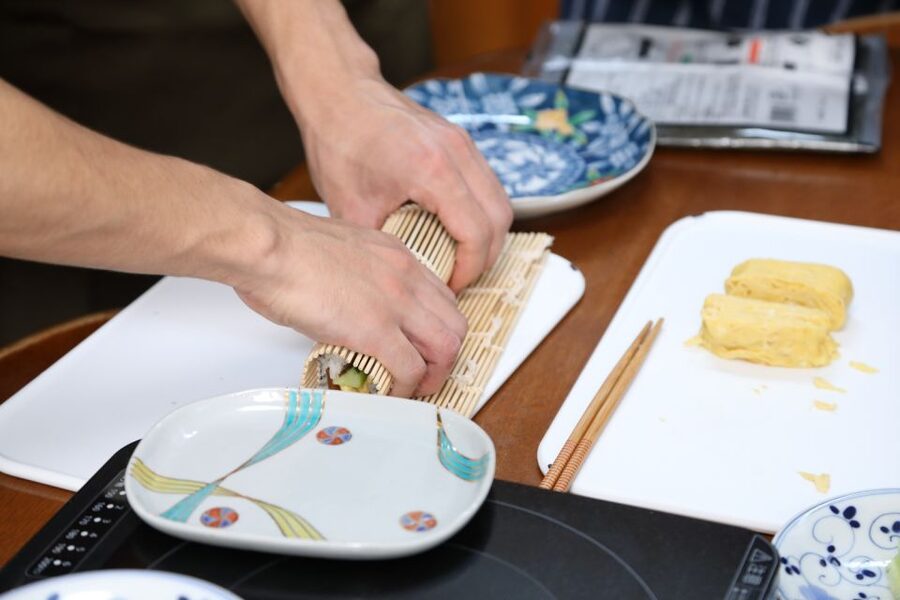
- Sushi
- Japanese omelet, often called rolled egg
- Salad
- Mochi or another dessert
- Seasonal dishes chosen for the time of year
This is a broad introduction, not a specialist sushi course or a dedicated tempura workshop. That makes it a good fit if you want to understand a range of home dishes. If you already have strong cooking skills, the value will come more from the ingredients, methods, and cultural context than from basic kitchen practice.
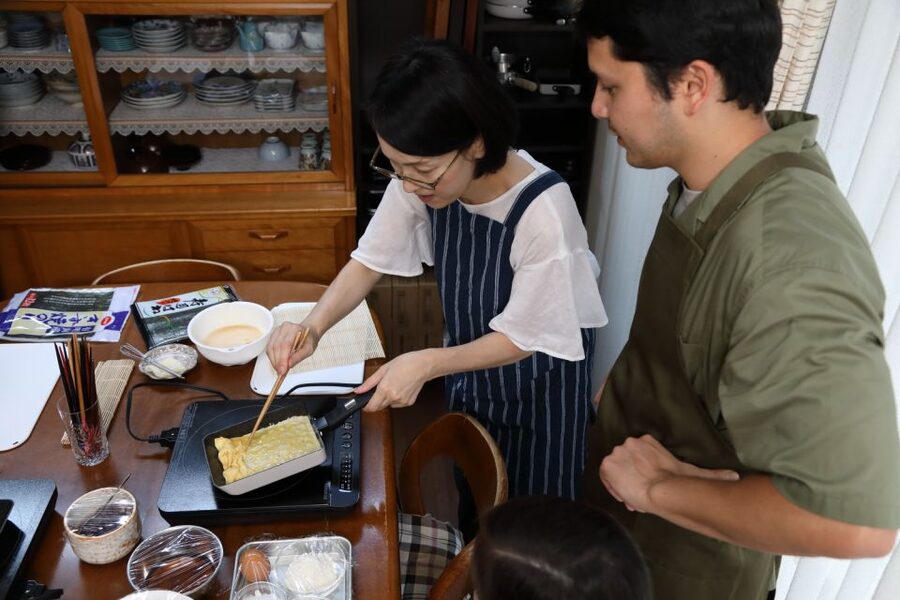
The Japanese omelet deserves attention. It looks simple, but rolling the egg neatly takes a little control and timing. Miho’s clear demonstration helps you see how the technique works before you try it. You also get the satisfaction of making something that can seem far harder than it is when ordered in a restaurant.
Tempura, sushi, soup, and dessert provide different tasks and textures. You are likely to move between chopping, mixing, shaping, seasoning, and cooking. That variety keeps the class active without making it feel like a single long recipe.
The meal is part of the lesson
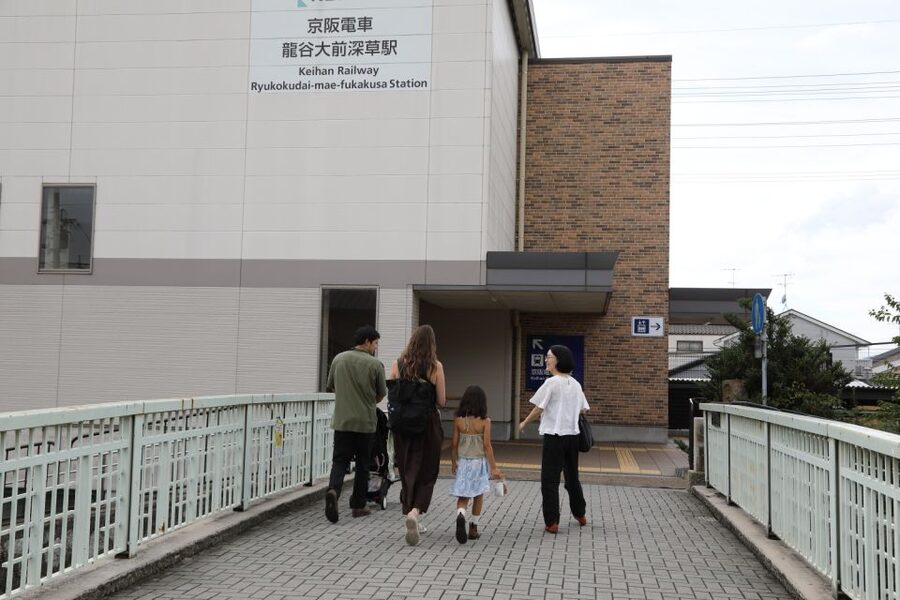
After cooking, you sit together in the traditional room and eat the food you have made. I like this part because it connects technique with everyday life. You are not just collecting notes and photographs. You are seeing how several small dishes can form a Japanese meal.
The setting also changes the pace. The class begins with instruction and hands-on work, then shifts into a shared lunch. You have time to look at the dishes, taste the balance of flavors, and think about what you would change when cooking at home.
Several past menus have been described as generous enough to feel like a feast. That does not mean you should expect a restaurant-style tasting menu, since the food depends on the season and the class plan. It does mean lunch is a central part of the experience, not a token snack.
For families, the format can work well. One family with three young children found that the menu and teaching were adapted to suit them, with patience during the class. Children aged 12 and below must take part with a guardian, and children under six cannot join. If you are booking with older children, remember that the group still needs to work together in a cooking environment.
More Cooking Classes in Kyoto:
- Kyoto: Wagashi (Japanese sweets) Cooking near Fushimiinari
★ 5.0 · 40 reviews - Cooking Class in a former Artist Monastery in the Heart of Monopoli
★ 5.0 · 18 reviews - Private Tour: Grand Palace,Wat Phra Kaew, Museum&Cooking Class
★ 5.0 · 7 reviews
Why the supermarket visit is more useful than it sounds
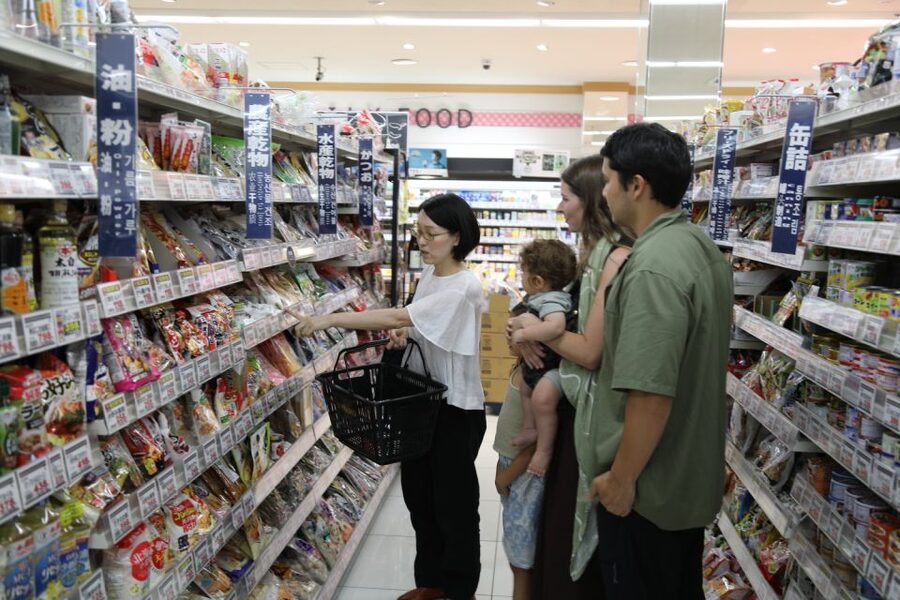
The supermarket visit comes after lunch and gives the class a strong practical finish. Miho takes you through a local supermarket to show you the ingredients and products used in Japanese cooking.
This is where the lesson becomes easier to repeat at home. You may understand how to make miso soup, sushi, or a Japanese omelet, but still have no idea which package of dashi, miso, vinegar, or seasoning to buy. Seeing the products in their normal shopping environment helps close that gap.
Miho also explains products beyond only the ingredients used in the class. That makes the visit useful for anyone curious about Japanese food in general. You can ask about unfamiliar items and learn what you might find in a Japanese kitchen.
You can buy ingredients for your own cooking if you wish. The activity does not include those purchases, so consider the supermarket stop an opportunity rather than a required part of the cost.
This visit is also a good reason to schedule the class earlier in your Japan trip. You can use what you learn later, perhaps by shopping for ingredients and trying one of the recipes again. It is less useful if you are flying home immediately and have no room for food products, though the information still helps you read Japanese supermarket shelves.
Recipes you can use after returning home
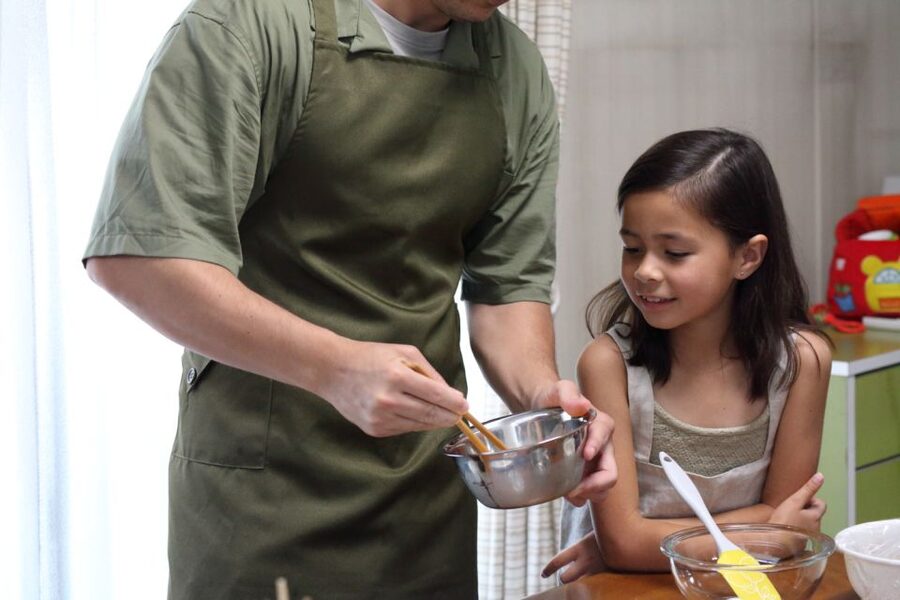
You receive recipes for the dishes prepared in class. This adds lasting value, especially because the food is selected for home cooking rather than only for show.
The recipes give you a reference for ingredients and steps, while the supermarket visit helps you identify what to buy. That combination is stronger than a recipe sheet alone. You are shown the cooking method, then shown the products in a real shop.
You should still expect some adaptation outside Japan. Seasonal ingredients may not be available in your local store, and product brands differ from country to country. The class gives you a practical starting point, but you may need to ask at an Asian grocery store or adjust ingredients at home.
For a food-focused trip, this is one of the better souvenirs you can take home. A small kitchen tool or packaged snack may remind you of Kyoto for a while. A recipe you can cook for family and friends gives the experience a longer life.
Vegetarian and dietary considerations
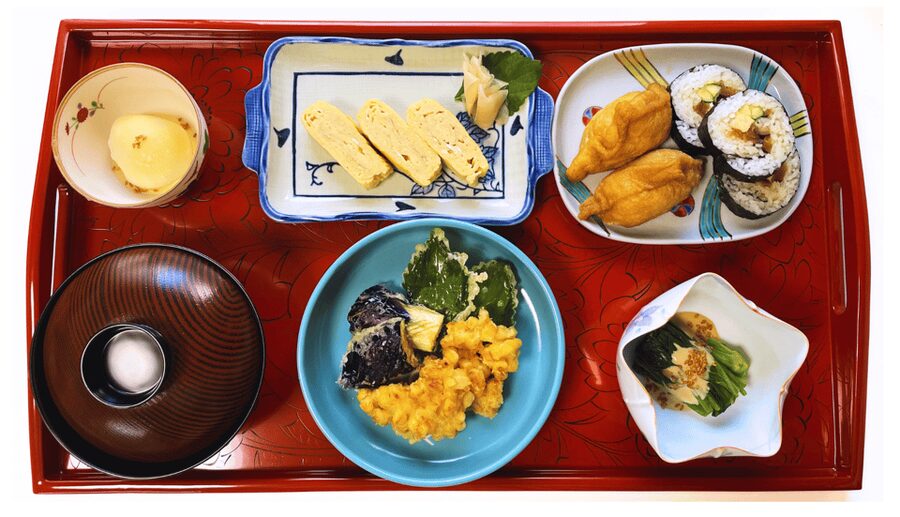
Vegetarian and vegan participants are welcome because the class uses dashi suited to vegetarian cooking. You should tell the instructor about your dietary needs in advance so the menu can be planned properly.
The menu changes by season, so do not assume the exact dishes listed in an example will appear on your date. If you have strict dietary requirements, ask before booking and confirm what the class can accommodate.
The provided information does not list every possible allergen or substitution. If you have a serious allergy, contact the provider before reserving rather than relying on an informal request on the day.
Group size, language, and teaching style
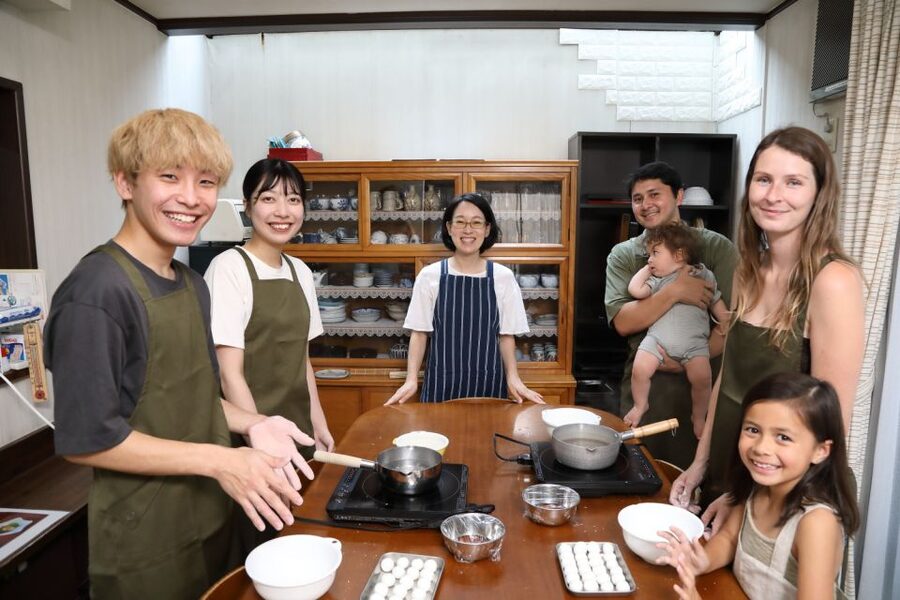
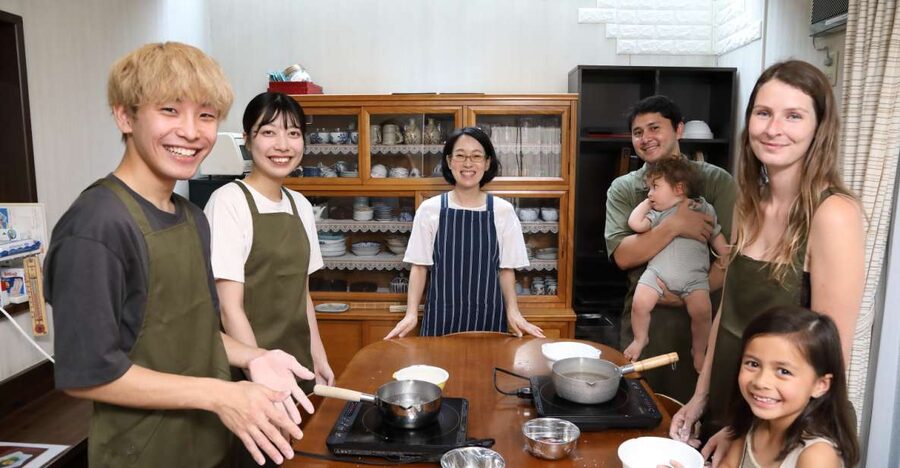
The maximum group size is six people, and the class is conducted in English. The instructors are licensed guide interpreters, so the lesson covers more than cooking motions. You can ask about ingredients, methods, and products without needing to rely on gestures.
Miho is the instructor named in several accounts of the experience. Her teaching is described as clear, friendly, patient, and direct. Those qualities matter in a hands-on class, where too much explanation can slow the work but too little can leave you guessing.
The small group also limits the risk of a crowded workstation. You should still expect to share some tasks if you attend with a partner or if the dish is designed for teamwork. That is part of the social nature of the class, but solo participants who want to control every step should keep it in mind.
Is $127 a fair price?
At $127 per person, this is not a budget meal or a quick demonstration. You are paying for four hours of instruction, lunch, all seasonings and ingredients, a traditional home setting, a small group, the supermarket visit, and recipes to use later.
I consider the price reasonable for visitors who want a full cultural activity rather than a single meal. The class combines cooking, dining, language support, and shopping advice in one session. The maximum of six also gives the experience a personal scale that large classes usually cannot match.
The value is weaker if you only want to taste Japanese food or learn one recipe. You can eat well for less elsewhere in Kyoto, and a short cooking workshop may cost less. This class makes most sense when you want to understand the ingredients and repeat the dishes at home.
Lunch is included, but gratuity is not. Hotel pickup and drop-off are also not included, so you need to arrange your own way to the class location near Fushimi Inari.
Who should book this cooking class?
I would choose this experience for:
- First-time visitors who want a friendly introduction to Japanese home food
- Couples looking for a shared activity near Fushimi Inari
- Solo visitors who prefer a small group and clear English instruction
- Families with children old enough to take part safely
- Vegetarians and vegans who arrange the menu in advance
- Cooks who want recipes and shopping help they can use at home
It may be less suitable if you have mobility limitations. The activity is not suitable for wheelchair users, and you should bring socks for the traditional room.
It is also not the right pick if you want a formal professional cooking course. The focus is on accessible home cooking, shared lunch, and cultural context. You will learn useful skills, but this is designed for visitors, not culinary-school training.
Booking advice and final verdict
The flexible booking terms are helpful: you can cancel up to 24 hours ahead for a full refund, and you can reserve now and pay later. Starting times vary, so check availability before planning your day around Fushimi Inari.
I would book this class if you want to meet a local instructor, cook several dishes, and leave with enough information to try Japanese food at home. The traditional room, garden view, supermarket visit, and recipes give it more substance than a basic cooking demonstration.
Skip it if your schedule is tight, your main goal is sightseeing, or $127 feels too high for a food activity. For everyone else, especially anyone who enjoys cooking and wants a calmer look at everyday Japanese food, this is a strong four-hour use of your Kyoto time.
FAQ
How long does the Kyoto home cooking class last?
The experience lasts four hours, including the cooking lesson, lunch, and visit to a local supermarket.
Where does the class take place?
It takes place near Fushimi Inari in a traditional Japanese home with a garden view.
How many people can join the class?
The group is limited to a maximum of six participants.
Is the class taught in English?
Yes. The class is conducted in English, and the instructors are licensed guide interpreters.
What food will I prepare?
You will prepare about five dishes, though the menu can change by season. Examples include dashi-based soup, tempura, sushi, Japanese rolled omelet, salad, and dessert. Some sessions have included mochi and additional dishes.
Can vegetarians and vegans participate?
Yes. The class uses vegetarian dashi and welcomes vegetarian and vegan participants. Tell the provider about your dietary needs in advance.
What should I bring, and who cannot participate?
Bring socks for the traditional Japanese room. Children aged 12 and below must attend with a guardian, children under six are not suitable for the activity, and the class is not suitable for wheelchair users.
More Workshops in Kyoto
- Kyoto: Calligraphy class at Buddhist temple in city center
★ 5.0 · 167 reviews - Bali: Silver Jewelry Making Class in Kuta or Uluwatu
★ 4.9 · 380 reviews - Bali: Uluwatu Silver Jewelry Making Workshop with Creation
★ 4.9 · 260 reviews - Best Surf Lesson around Uluwatu
★ 5.0 · 64 reviews
Just added around Kyoto
- Osaka/Kyoto: Katsuoji, Kinkakuji, Arashiyama 1-Day Bus Tour★ 4.6 · 33 reviews
- Kyoto:Kiyomizu-dera Temple Rent a kimono and ride a rickshaw★ 4.8 · 7 reviews
- Kyoto: Wagashi (Japanese sweets) Cooking near Fushimiinari★ 5.0 · 40 reviews
- Kyoto: Kimono/Yukata Rental 5 Minute from Kiyomizu-dera★ 4.7 · 89 reviews
- Kyoto Fushimiinari:Wagashi Making & Small Group Tea Ceremony★ 5.0 · 14 reviews
- Kyoto: Samurai Sword & Kimono Action Filming Experience★ 4.8 · 78 reviews
- KYOTO: Tempio Kiyomizu Pagode Gion “Geisya” (Guida Italiana)★ 4.7 · 17 reviews
- Best of Kyoto: Red Gates of Fushimi Inari & Kiyomizu Temple★ 4.8 · 36 reviews
Fushimi Inari Shrine Tours, compared.
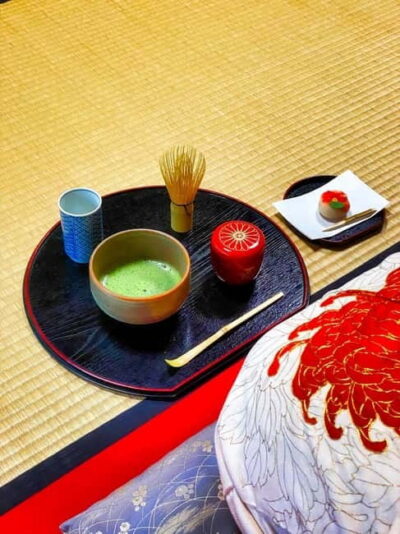
Tea Ceremony in a Traditional Tea House in Kiyomizu
Read our review →
Fushimi Inari Hidden Hiking Tour (Private Option Available)
Read our review →
Osaka/Kyoto:Kinkakuji,Arashiyama,FushimiInariShrine,NaraPark
Read our review →
Kyoto/Osaka: Nara, Fushimi Inari Taisha, Arashiyama Bus Tour
Read our review →
Osaka/Kyoto: Arashiyama, Nara & Fushimi Inari Shrine w/Lunch
Read our review →
Nijo Castle, Kiyomizu & Fushimi Inari Guided Tour
Read our review →
Browse the lists this tour appears in