REVIEW · MEIJI SHRINE & SENSO-JI TOURS
Tokyo Early Morning Tour Asakusa Meiji Shrine (Private Opt)
Tokyo is easiest to enjoy before the day gets hot and packed. This five-hour morning route links Sensoji, Tsukiji, Meiji Jingu, and Shibuya Crossing, giving you a useful first look at four very different parts of the city. I like the early start for two reasons: you get a calmer Asakusa and a more manageable Tsukiji, and an English-speaking guide can explain the customs and stories that are easy to miss on your own.
I also like the choice of a small group of no more than eight or a private tour, plus the help with public transportation. Guides such as Hana Tanaka and Kouta have been praised for explaining temple history clearly, answering questions, working well with families, and showing visitors how to use Tokyo’s trains. The main drawback is the pace: four major sights in one morning leaves limited time for shopping, eating, or lingering at any one place, and transportation costs about 600 yen extra.
Key points to know before booking
- Four major Tokyo sights in one morning: The route covers Asakusa, Tsukiji, Meiji Jingu, and Shibuya Crossing.
- A useful early start: Morning timing helps you avoid the heavier afternoon crowds and heat.
- Small-group or private format: The group option is capped at eight people, with a private choice also available.
- Strong guide element: Hana Tanaka and Kouta are noted for clear explanations, local advice, and family-friendly help.
- Food is not included: Tsukiji is a highlight for eating, but you pay separately for anything you buy.
- Plan for extra transport costs: About 600 yen is not included in the tour price.
Why this early route works well in Tokyo
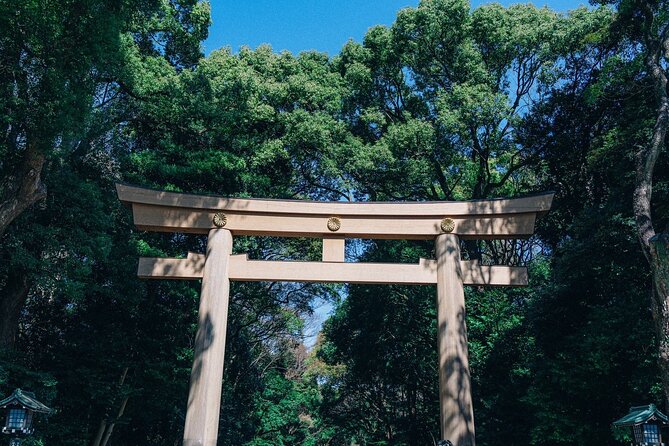
At $59.46 per person, this is best viewed as an orientation tour rather than a full exploration of each neighborhood. You are paying for a planned route, an English-speaking guide, and the time saved by moving between several important districts without having to work out the order yourself.
That value is strongest on a first morning in Tokyo. Asakusa gives you traditional Tokyo, Tsukiji adds food and market culture, Meiji Jingu provides a quieter shrine setting, and Shibuya finishes with the city’s modern energy. You will not master any one area in five hours, but you will leave with a clear sense of how different Tokyo can feel from district to district.
The early timing matters. Sensoji and Tsukiji can become much harder to enjoy later in the day, particularly when narrow walkways fill with people. A morning visit also gives you a better chance to see the shrine grounds and market without spending the whole time working around crowds.
The tour suits people who want structure. If you already know Tokyo well, or prefer to spend half a day at one market or shrine, this schedule may feel rushed. If you are new to the city, the route is a practical way to get your bearings fast.
More Private Temple Tours in Japan
- Tokyo: Zen Meditation at a Private Temple with a Monk
★ 5.0 · 510 reviews - From Tokyo: Nikko World Heritage Site Private Full-Day Trip
★ 4.9 · 243 reviews - From Tokyo: Private Tour Snow Monkey Park & Zenko-ji Temple
★ 4.7 · 184 reviews
Starting at Asakusa and Sensoji
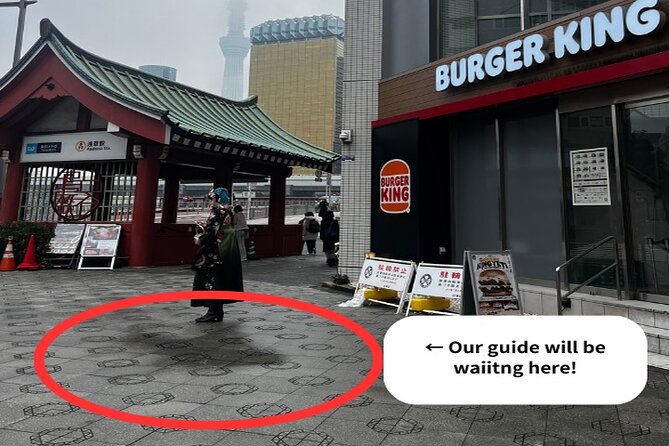
The meeting point is outside Burger King Asakusa Azumabashi, at 2-chome 20-6 Kaminarimon, Taito City. That location puts you close to Asakusa’s major sights and near public transportation, but you should allow enough time to find the exact entrance and arrive ready for an early start.
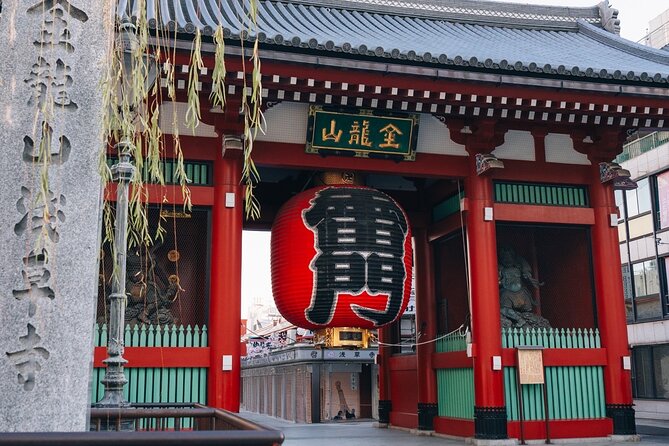
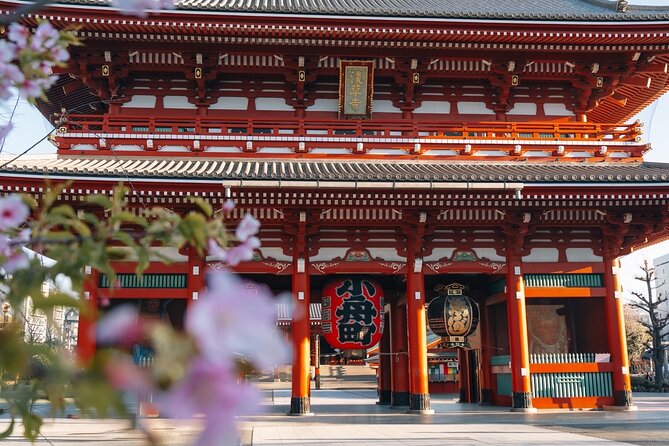
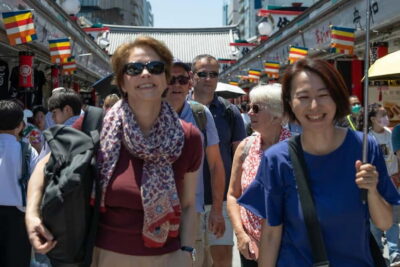
Asakusa is the traditional opening act. Its main attraction is Sensoji, Tokyo’s oldest and best-known Buddhist temple. The approach through Nakamise Shopping Street adds color and context, with shops leading toward the temple and plenty of visual details to absorb as you walk.
This is where a guide earns the fee. Temple grounds can look simple if you do not know what you are seeing, yet the route, customs, and history become more meaningful with explanation. The guides on this tour have been praised for making the temple visit clear and personable rather than turning it into a dry lecture.
You should expect about one hour here. That is enough for an introduction, photographs, and a look at the main temple area. It is not enough for a slow browse through every shop or a long stop at nearby attractions, so plan to return to Asakusa later if you want a deeper visit.
One useful advantage is the chance to ask basic questions at the start of your Tokyo trip. Guides such as Hana have helped people understand local customs and public transportation, which can make the rest of your stay less intimidating. That practical help may be as valuable as the formal sightseeing.
Tsukiji for market atmosphere and breakfast options
The next stop is Tsukiji Fish Market, once the world’s largest seafood market. The wholesale inner market has moved to Toyosu, but the outer market remains the place to browse food shops and sample market fare.
You have about an hour here, and food is the main reason to pay attention. The tour price does not include food or drinks, so bring some yen if you want to eat. The advantage of having a guide is that you can get advice about what to try and how to use your time, rather than wandering without a plan.
Do not arrive expecting the old wholesale market experience. Tsukiji’s outer market is still a lively food stop, but the original inner-market functions are no longer there. That distinction matters if your main goal is to see auction activity or large-scale seafood trading.
For me, this is the stop where the schedule feels tightest. An hour works for a quick look and a snack, but food lovers could easily want much longer. If Tsukiji is the reason you booked, treat the tour as an introduction and return independently later.
The timing does help. An early visit is more practical for a market than an afternoon stop, and the guide can point out useful details while the area is still active. Several guides have also offered specific food tips, which makes this part feel more personal than a simple pass through the neighborhood.
Meiji Jingu, a quiet change of pace
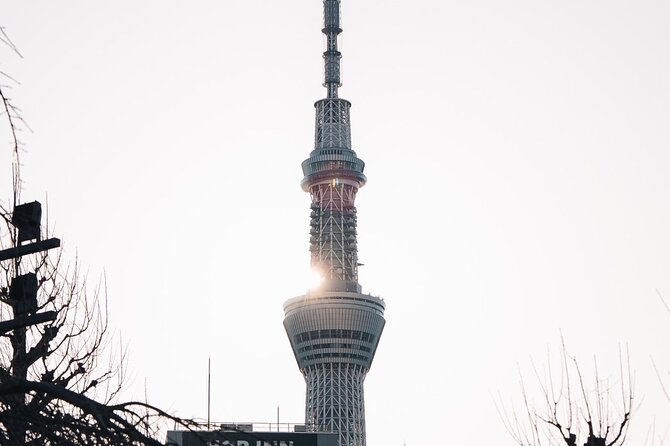
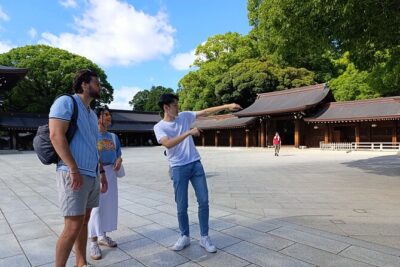
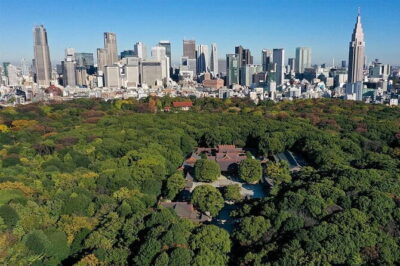
After the market, the route shifts from food and street life to Meiji Jingu Shrine. Located in central Tokyo, the Shinto shrine is dedicated to Emperor Meiji and Empress Shoken and sits within a broad wooded area.
The contrast is the point. You begin among temple gates and shopping streets, move through a food market, then enter a more peaceful shrine setting. That change gives the morning a good rhythm and prevents the tour from becoming a string of similar urban stops.
The scheduled time here is about 90 minutes, the longest stop on the route. That gives you more room to walk, listen, and take in the grounds without feeling quite as hurried. A guide can explain the difference between the Buddhist temple in Asakusa and the Shinto shrine here, helping you understand two important parts of Japanese religious culture.
Keep in mind that this is still a guided introduction, not an exhaustive shrine visit. The focus is on the main experience and the surrounding forested grounds. If you enjoy quiet walks or want more time for reflection, you may wish you had the entire morning here, but the longer stop gives Meiji Jingu more breathing room than the other sights.
The setting also makes this a good place for families and first-time visitors. One guide, Kouta, was especially good at answering questions and relating to teenagers. That matters on a route with several historical stops, since a guide who adjusts to the group can keep younger visitors involved.
More Private Temple Tours in Tokyo
- Tokyo Zen Meditation at Private Temple with Monk
★ 5.0 · 178 reviews - Tokyo: Nikko World Heritage Private Day Trip Hotel Pick-up
★ 4.8 · 145 reviews - Tokyo: Snow Monkey Park and Zenkoji Temple Private Day Tour
★ 4.7 · 127 reviews - Tokyo: Nikko Private Day Tour with English Speaking Driver
★ 4.8 · 97 reviews
Finishing at Shibuya Crossing and Hachiko
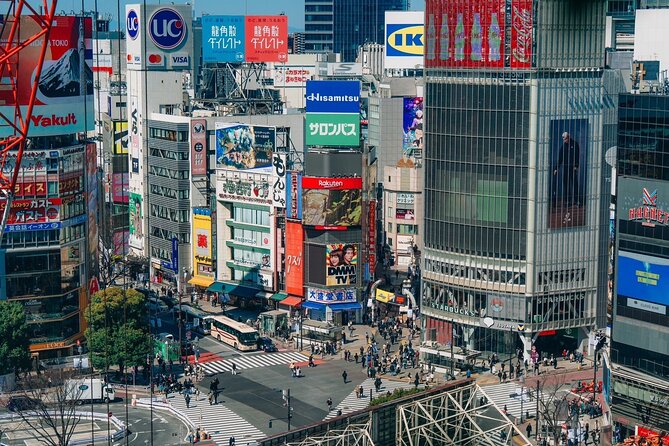
The final stop is Shibuya Crossing, one of Tokyo’s most recognizable modern sights. Located outside Shibuya Station, the crossing fills from several directions when the signals change, creating the famous pedestrian scramble.
You have roughly 30 minutes here. That is enough to see the crossing, take photographs, and understand the area, but it is not enough for a serious look at Shibuya’s shops or side streets. The short visit makes sense because the crossing is an experience to observe rather than a place requiring a long guided walk.
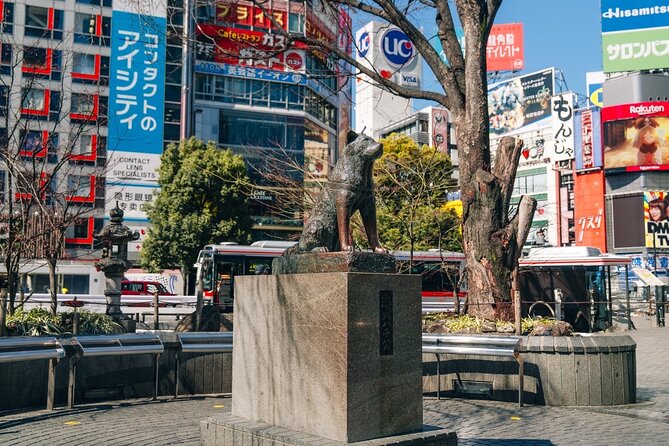
The tour ends at the Hachiko Statue, outside Shibuya Station at 2-chome 1 Dogenzaka. Hachiko’s story gives the modern district a more personal finish. Ending here is also practical because you can continue exploring Shibuya, return to your hotel, or use the station for the next part of your day.
I like this ending because it does not leave you at a random street corner. You finish beside a clear landmark and a major transport hub. If you are still full of energy, Shibuya is ready for more. If the early start has caught up with you, the end point makes it easy to stop.
Group size, private options, and guide quality
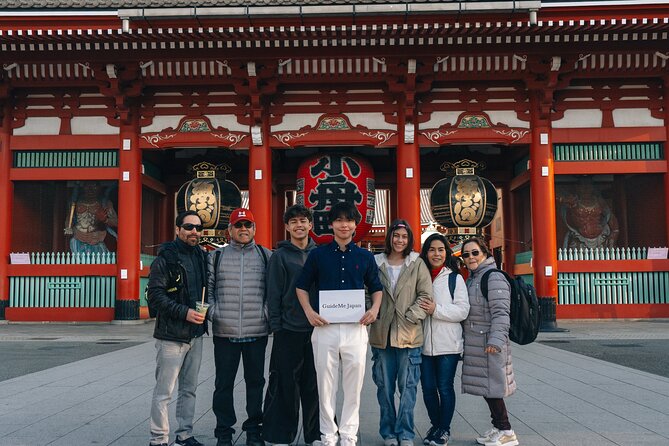
The small-group tour has a maximum of eight people, which is a useful limit for a route involving temple grounds, market lanes, and train connections. You are less likely to lose the guide in a crowd, and questions are easier to ask than on a large coach tour.
A private option is also available. That may be worth considering if your group includes children, older family members, or people with different interests. A private guide can usually give the group more control over the pace, though the provided details do not promise a customized itinerary, so confirm exactly what the private option includes before booking.
There is also a self-guided choice listed among the available formats. Because the tour information also specifies an English-speaking guide, check the option you select carefully so you know if a guide will accompany you or if you are receiving a route to follow independently.
The strongest guide names connected with this experience are Hana Tanaka and Kouta. Hana has helped people with train navigation, temple history, local customs, and food choices at Tsukiji. Kouta has been praised for answering questions and connecting well with teenagers. Those details suggest that the guide’s personality is a major part of the experience, not just an extra voice beside the sights.
No guide can remove every challenge from Tokyo’s transport system, but having someone explain the basics can be a real advantage on your first day. The tour includes the English-speaking guide, while transportation is separate.
What the $59.46 price really buys you
The headline price is $59.46 per person. Group discounts may be available, and the private option could be priced differently, so check the final amount for your party before payment.
The price is reasonable if you value a planned route and live commentary. Four major areas spread across Tokyo require time and transport, and a guide can spare you the effort of working out how to connect them. The value is even better for a family or first-time group that wants help with trains and cultural questions.
It is less compelling if you only want entry to the sights. Admission is free at all four listed stops, and food and drinks are not included. You will also pay about 600 yen for transportation. In other words, most of the fee covers the guide, planning, and convenience rather than tickets.
The tour is not designed as a food tour, temple pilgrimage, or shopping outing. It gives you a taste of each. I would book it for a first morning, then return independently to the place that interests you most.
Who should book this Tokyo morning tour?
I would recommend it to first-time visitors who want a quick introduction without spending their first day staring at a transit map. It also suits families, especially if you want someone to keep the route moving and make the cultural details easier for younger people.
It is a good fit for people who like early starts, short walks between major sights, and a guide who can answer questions as they come up. Moderate physical fitness is required, so expect to be on your feet and moving between stops.
You may want something else if you dislike fixed schedules or prefer slow travel. Tsukiji deserves more than an hour for serious food exploration, and Asakusa or Meiji Jingu could each fill a longer visit. The tour gives you range, not depth.
Book it if your priority is seeing several famous areas before the afternoon crowds arrive. Skip it if your main goal is an unhurried market breakfast or a long, quiet shrine visit.
FAQ
How long does the Tokyo early morning tour last?
The advertised duration is approximately five hours. Individual guide-led experiences may run longer, as one described experience lasted six hours, so allow some flexibility in your schedule.
Which sights are included?
The route includes Asakusa and Sensoji, Tsukiji Fish Market, Meiji Jingu Shrine, and Shibuya Crossing. It ends at the Hachiko Statue.
Where does the tour start?
The meeting point is Burger King Asakusa Azumabashi, at 2-chome 20-6 Cross Building Royal Palace, Kaminarimon, Taito City, Tokyo 111-0034.
Where does the tour end?
The tour ends at the Hachiko Statue, at 2-chome 1 Dogenzaka, Shibuya, Tokyo 150-0043. The statue is outside Shibuya Station.
Is transportation included?
No. Transportation costs are separate and are estimated at about 600 yen.
Is food included?
No. Food and drinks are not included. You can purchase food separately at Tsukiji Fish Market.
How large is the group?
The group tour has a maximum of eight people. A private option is also available.
What happens if I need to cancel?
You can receive a full refund if you cancel at least 24 hours before the experience start time. Cancellations or changes made less than 24 hours before the start are not accepted for a refund.
More Meiji Shrine and Senso-ji Tours in Tokyo
- Tokyo: Asakusa Walking Tour with Sensoji Temple Visit
★ 4.8 · 1,583 reviews - Tokyo Panoramic 1 Day: Meiji Shrine, Asakusa, Odaiba and SKYTREE®
★ 4.5 · 1,222 reviews - Tokyo: Asakusa and Tokyo’s Oldest Temple Senso-ji Tour
★ 4.9 · 352 reviews - Tokyo: Meiji Shrine Walking Tour — Shinto & Imperial System
★ 4.9 · 266 reviews
More Temple Sunrise Tours in Japan
- Tokyo Morning Tour: Asakusa, Meiji Shrine and Tsukiji Fish Market
★ 5.0 · 128 reviews - Tokyo Morning Tour : Meiji Shrine, Asakusa and Fish Market
★ 5.0 · 102 reviews - Tokyo Morning Tour: Meiji Shrine, Asakusa & Fish Market
★ 4.9 · 44 reviews - Kyoto: Early Morning Fushimi Inari Shrine – Beat the Crowds
★ 4.9 · 48 reviews
Just added around Tokyo
- Tokyo:Nikko UNESCO World Heritage Sites Private 1-Day Tour★ 3.8 · 6 reviews
- Tokyo War History Tour: Yasukuni Shrine & War Museum★ 4.5 · 6 reviews
- Tokyo: Snow Monkey Park and Zenkoji Temple Private Day Tour★ 4.7 · 127 reviews
- Tokyo: Sensoji Temple & Street Food: Private Tour with guide★ 4.6 · 8 reviews
- Tokyo: Shibuya Sky, Harajuku & Meiji Shrine Highlights Tour★ 4.5 · 9 reviews
- Tokyo: Nikko Private Sightseeing Day Trip with Driver★ 5.0 · 10 reviews
- Tokyo → Nikko:Private Customizable Day Trip (English Driver)★ 4.9 · 26 reviews
- Tokyo’s Kitchen: Tsukiji Market Food & Culture Walk★ 4.7 · 74 reviews
Meiji Shrine & Senso-ji Tours, compared.
Asakusa Walking Tour with Sensoji Temple Visit
Read our review →
Tokyo Panoramic 1 Day: Meiji Shrine, Asakusa, Odaiba and SKYTREE®
Read our review →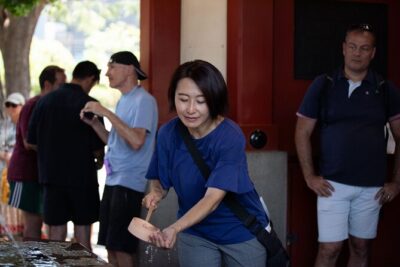
Asakusa Senso-ji Temple and Old Tokyo Walking Tour
Read our review →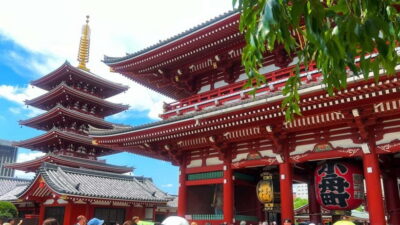
Asakusa and Tokyo’s Oldest Temple Senso-ji Tour
Read our review →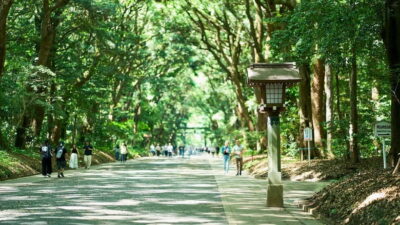
Meiji Shrine Walking Tour — Shinto & Imperial System
Read our review →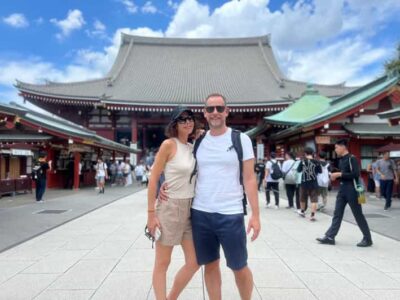
Meiji Jingu Shrine and Shinto Culture Walking Tour
Read our review →