
REVIEW · MEIJI SHRINE & SENSO-JI TOURS
Asakusa Senso-ji Temple and Old Tokyo Walking Tour
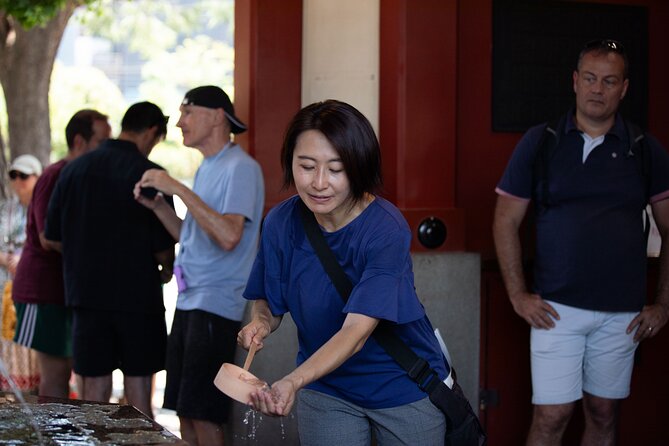
Asakusa makes a strong first introduction to Tokyo because its temples, food streets, river views, and old neighborhood character all fit into one walk. The best part of this tour is not simply seeing Senso-ji, but learning what you are looking at: how to purify yourself, draw a fortune, and pray at both a Buddhist temple and a Shinto shrine.
I like the small maximum of 12 people, which gives you a fair chance to hear the guide and ask questions. I also like the practical local advice, from where to try snacks to which food streets deserve a return visit. The main drawback is the crowded meeting area around Kaminarimon, so finding your guide may take patience, especially on a busy day.
Key points at a glance
- Senso-ji with useful context: Learn the customs and stories that make the temple more meaningful.
- Two kinds of worship: See the difference between Buddhist Senso-ji and nearby Asakusa Shrine.
- Old Tokyo streets: Walk Nakamise, Shin Nakamise, and Hoppy Street rather than visiting only the main temple gate.
- Small-group format: The group is limited to 12 people, a helpful size in crowded Asakusa.
- Good first-day choice: The two-hour route gives you a cultural footing for the rest of your Tokyo visit.
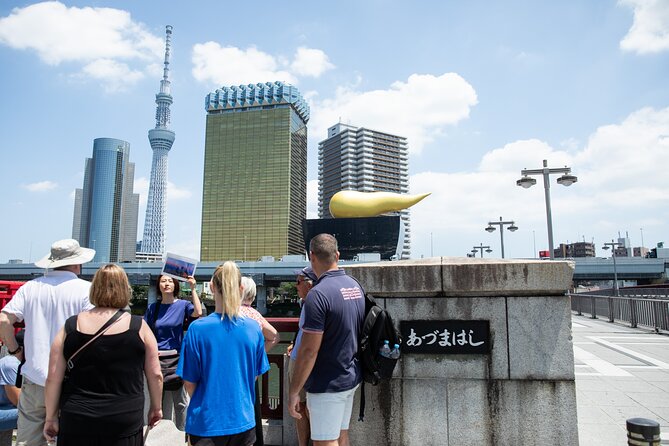
- A pleasant finish: The walk ends near Azuma Bridge, with views toward Tokyo Skytree and the Asahi Beer Hall.
Why Asakusa works so well for a first Tokyo walk
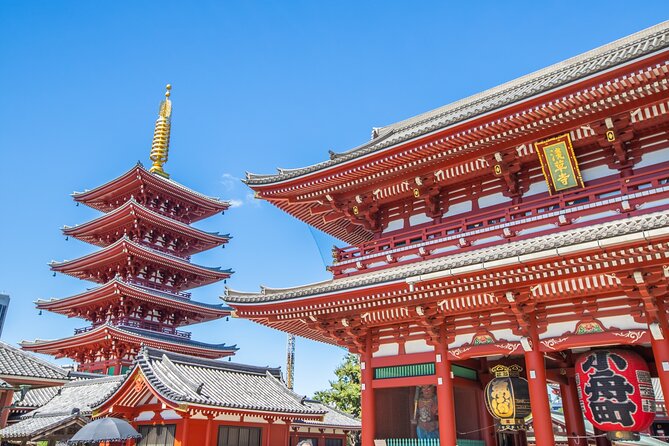
Tokyo can feel like several cities stitched together. Asakusa gives you an easier starting point. Here, the grand entrance of Kaminarimon, the long approach to Senso-ji, small food stalls, traditional souvenirs, local pubs, and the Sumida River all sit within a manageable area.
You do not need to spend a full day to get a useful introduction. This tour takes about two hours, making it easy to schedule on your first morning, between larger attractions, or before an evening meal. One especially good use is booking it early in your trip, when you are still learning basic Japanese temple and shrine customs.
The guide adds value by explaining details that are easy to miss alone. You may see incense smoke, a washing basin, prayer plaques, fortune slips, and worshippers bowing, but it is harder to know what each action means without help. The tour turns those small details into part of the visit rather than background scenery.
The route is also social without being unwieldy. A group of up to 12 people is large enough to have some energy, but small enough for the guide to keep an eye on everyone. Guides named in the feedback include Aya, Glenda, Keiko, Loc, Polina, Mei, Hiroko, Nana, Rio, and Ayaka. The quality of the experience will depend partly on who leads your departure, but the repeated strengths are clear: careful explanations, friendly conversation, and time for questions.
More Temple Walking Tours in Japan
- Tokyo: Asakusa Walking Tour with Sensoji Temple Visit
★ 4.8 · 1,583 reviews - Kyoto Arashiyama Walking Tour: Bamboo, Monkeys, Gardens & Secrets
★ 5.0 · 1,216 reviews - Kyoto Fushimi-Inari Night Walking Tour
★ 5.0 · 320 reviews
Starting at Kaminarimon and Nakamise Shopping Street
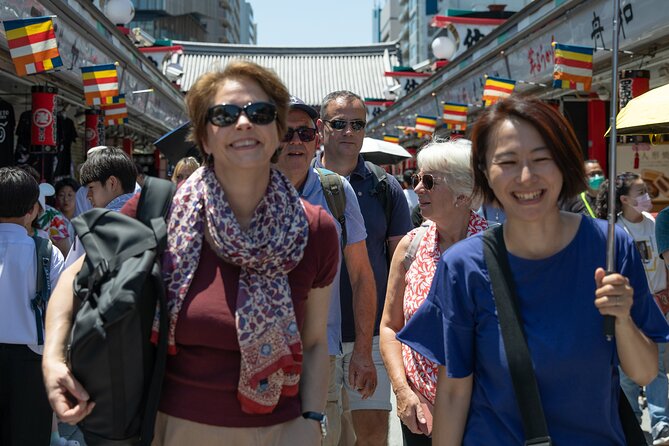
The meeting point is Tokiwado Kaminari-okoshi Honpo at 1-chome-3-2 Asakusa. From there, the walk heads toward Kaminarimon and Nakamise Shopping Street, the traditional shopping approach to Senso-ji.
Allow extra time to find the guide. The area around the gate can be crowded, and one early-morning booking found the meeting point a little tricky. A mobile ticket is provided, and confirmation arrives when you book, but you still need to arrive with enough time to orient yourself.
Nakamise is more than a path to the temple. Its rows of stalls sell traditional snacks, small souvenirs, and useful gifts to take home. Your guide can explain what you are seeing and point out food ideas for later. Do not plan to eat your way through the street during the guided portion, though. Ten minutes is listed here, so the stop is mainly for orientation and a quick look.
I like this opening because it gives you the visual drama of Asakusa right away. The drawback is that the street can feel crowded and commercial. If you want quiet photographs, this is not the place to linger during the busiest part of the day. The tour helps you understand the setting, but you may want to return alone later for slower shopping.
Understanding Senso-ji beyond the big red gate
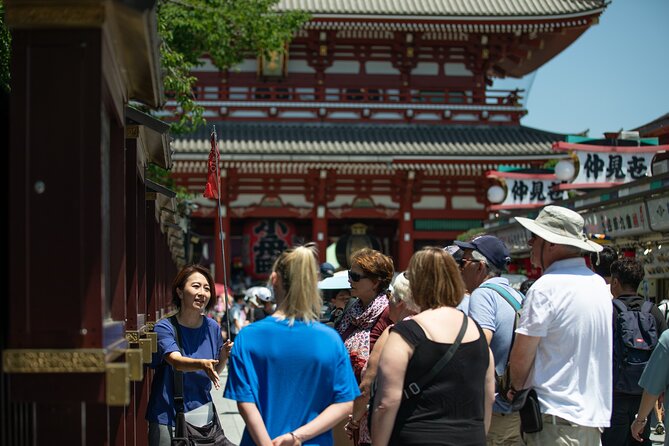
Senso-ji receives about 30 minutes of the tour, and that is the center of the experience. The temple is one of Asakusa’s defining sights, but its scale and crowds can make it difficult to know where to focus. A guide gives the visit a clear shape.
Expect historical and cultural commentary about the temple, its role in Asakusa, and the way it has helped shape the neighborhood’s identity. The explanations are aimed at first-time visitors, so you do not need prior knowledge of Buddhism or Japanese history.
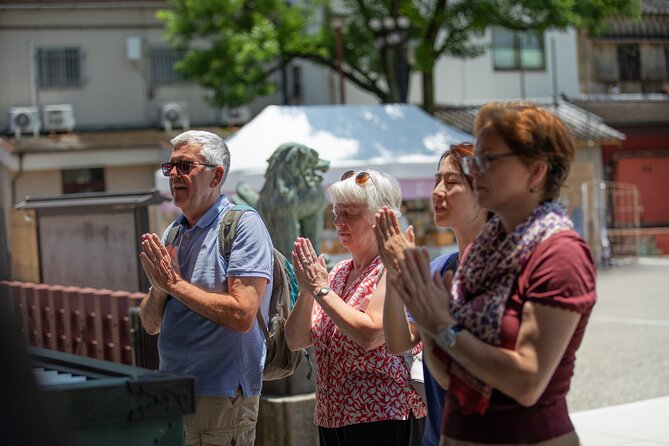
The most useful part is the instruction on temple customs. Guides explain how to purify yourself, how to approach the worship area, and how to pray properly. You can also learn about drawing fortunes. These are simple actions, but knowing what to do makes you feel less like you are copying the person ahead of you.
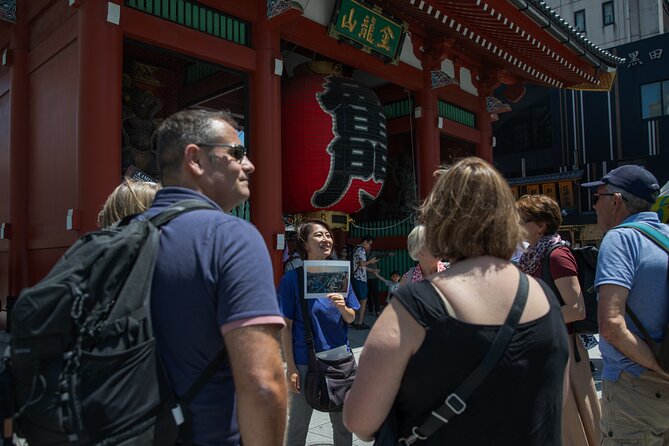
Several guides are praised for making the temple easy to understand in clear English. Glenda, in particular, has used visual material in a binder to explain Senso-ji and related history. That kind of aid can help when names and dates become hard to remember.
You should also expect a little free time for photographs and personal viewing. This matters because a good walking tour should not keep you moving every second. You get an explanation, then a chance to look up at the architecture, watch the rituals, or take photos.
The tour may also include a useful viewpoint overlooking the temple. That is a small but welcome touch. Senso-ji is best appreciated from several angles, and a guide who knows where to position the group can save you time.
Comparing Senso-ji with Asakusa Shrine
Asakusa Shrine sits beside Senso-ji, yet it represents a different religious tradition. The shrine is also known as Sanja-sama, or the Three Shrine, and is dedicated to the three men connected with the founding of Senso-ji.
The 15-minute stop helps you compare Buddhist and Shinto customs without needing a separate museum visit. That contrast is one of the strongest reasons to take the tour. If you visit only the temple, you may leave with a broad impression of Japanese religion but miss the distinction between the two sites.
Your guide can show you how worship differs at a temple and shrine, including purification and prayer procedures. Guides also answer questions about Buddhism, Shinto, and Japanese customs. This is where the small group matters. If you are unsure about a ritual, you can ask without trying to catch a guide’s voice across a huge crowd.
The shrine stop is brief, so do not expect an extensive religious lecture. It works best as a clear comparison and a pause from the main temple approach. If you want to study every building and inscription, you will need to return on your own.
More Meiji Shrine and Senso-ji Tours in Japan:
- Tokyo Panoramic 1 Day: Meiji Shrine, Asakusa, Odaiba and SKYTREE®
★ 4.5 · 1,222 reviews - Tokyo: Asakusa and Tokyo’s Oldest Temple Senso-ji Tour
★ 4.9 · 352 reviews - Tokyo: Meiji Shrine Walking Tour — Shinto & Imperial System
★ 4.9 · 266 reviews - Tokyo: Meiji Jingu Shrine and Shinto Culture Walking Tour
★ 5.0 · 245 reviews
Hoppy Street and the old neighborhood feel
Hoppy Street is a short stop, listed at about 10 minutes, but it changes the tone of the walk. The area is known for izakayas, or Japanese pubs, and for Hoppy, a non-alcoholic beer-flavored drink.
This is a useful reminder that Asakusa is not only a temple district. It is also a place for casual meals, drinks, and neighborhood routines. The street’s character is more relaxed and local than the grand entrance to Senso-ji, though it can still be lively and crowded.
You are not buying food or drinks as part of the tour. Those costs are separate, and the short time here is better viewed as an introduction. Several guides offer suggestions for local food, and that advice can be especially helpful if you have no dinner plans.
One practical tip: keep notes on the places your guide recommends. You may not have time to stop during the walk, but Hoppy Street and the surrounding lanes are good candidates for a later return. The tour is strongest when it gives you a map of possibilities for the rest of your day.
Shin Nakamise and shopping beyond the temple route
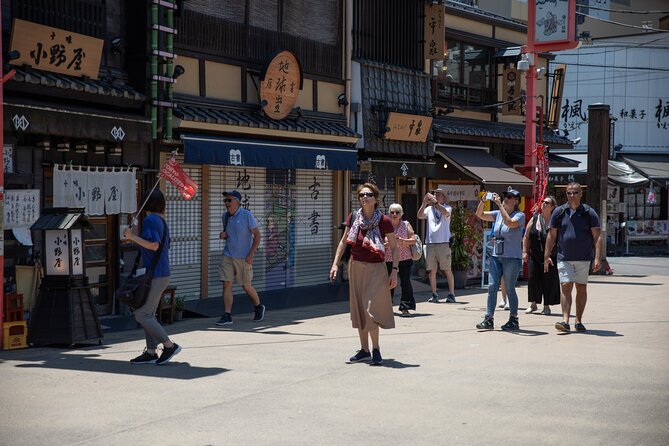
The walk also extends to Shin Nakamise, a more modern shopping street connected with the traditional Nakamise area. This gives you a useful contrast. Nakamise leads directly toward Senso-ji and feels closely tied to the temple visit, while Shin Nakamise mixes newer shops and everyday shopping with old Tokyo references.
This stop is not assigned a full time in the supplied route, so treat it as a short walking section rather than a dedicated shopping session. You will have more freedom to browse after the tour.
I find this addition worthwhile because first-time visitors often see only the main temple road. The side streets show how Asakusa functions as a real neighborhood, not just a sightseeing zone. They also give you more options for snacks, small gifts, and a return visit away from the main gate.
Finishing at Azuma Bridge and the Sumida River
The tour ends near Azuma Bridge at 2-chome-1-16 Kaminarimon. The bridge crosses the Sumida River and connects Asakusa with Kuramae. It offers views toward Tokyo Skytree and the Asahi Beer Hall, including its recognizable golden sculpture.
Ending here gives the walk a natural finish. You move from temple grounds and narrow shopping streets to open river views and a broader look at Tokyo. It is also a useful place to continue your day, though transportation back to the starting point is not included.
The final stop is listed at about 10 minutes. That is enough for orientation and photos, but not an extended river walk. If the view catches your attention, leave your schedule open afterward. You can decide on a longer walk once you know how much time you have.
What the $20 price really buys you
At $20 per person, this is a modestly priced guided experience in one of Tokyo’s most visited districts. Admission to the temple, shrine, streets, and bridge is free, so you are paying for the guide’s time and interpretation rather than entry tickets.
That is a good deal if you are new to Japan. The practical instruction on worship, the explanation of Buddhist and Shinto differences, and the local food suggestions are difficult to gather in two hours by simply wandering.
The price is less compelling if you already know Asakusa well or prefer to read signs and explore alone. The route is short, and you will not receive meals, drinks, transportation, or private guiding. Tips are optional, and personal expenses are extra.
For a solo visitor, the format can be particularly useful. You get company without paying the much higher cost of a private tour. Couples and families may also appreciate the straightforward pace and limited group size.
Pace, comfort, and practical limits
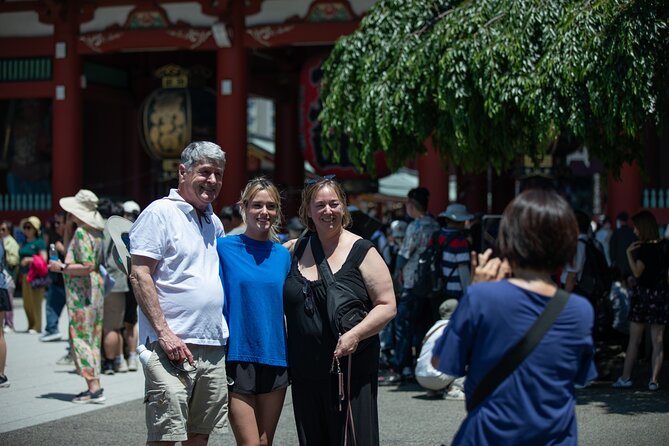
The route lasts about two hours and is conducted on foot. Most people can participate, and the meeting point is near public transportation. Wear comfortable shoes, since the tour moves among streets, temple grounds, shopping areas, and the bridge.
There is no promise of a quiet route. Asakusa is popular, and crowds may affect both the pace and your view of the temple. The guide can help you avoid confusion, but cannot remove the crowds.
The tour requires good weather. If poor weather forces cancellation, you are offered another date or a full refund. Otherwise, you can cancel for a full refund up to 24 hours before the start time. Changes or cancellations inside that window are not accepted.
Service animals are allowed. Food, drinks, insurance, transportation to and from the meeting point, and gratuities are not included.
Who should book this Asakusa tour
I would choose this tour for a first visit to Tokyo, especially if you want cultural basics before visiting other temples and shrines. It is also a smart choice for a short Tokyo stay because the route covers several different sides of Asakusa without taking half a day.
Book it if you want:
- Clear explanations of Buddhist and Shinto customs
- A short introduction that fits a busy schedule
- Help finding your way through the main Asakusa sights
- Local suggestions for food and shopping
- A small group rather than a large scheduled walk
- A guide who can answer questions and take occasional photos
I would skip it if you want a slow food crawl, a private tour, or a long historical lecture at each site. You will also need to accept some street crowds and a meeting point that may take a moment to locate.
Should you book it?
For $20, this is an easy recommendation for first-time visitors who want more than temple photographs. The best value comes from the guide’s explanations: how to pray, why the temple and shrine differ, and where Asakusa continues beyond Senso-ji.
Book early in your Tokyo stay, then return to Nakamise, Hoppy Street, or Shin Nakamise later with the guide’s suggestions in mind. That two-part approach gives you the context first and the freedom to browse at your own speed afterward.
FAQ
How long does the Asakusa walking tour last?
The tour lasts approximately two hours.
What is the maximum group size?
The group is limited to 12 participants.
Is the tour conducted in English?
Yes. An English-speaking local guide leads the walking tour.
Which main sights are included?
The route includes Nakamise Shopping Street near Kaminarimon, Senso-ji Temple, Asakusa Shrine, Hoppy Street, Shin Nakamise, and Azuma Bridge.
Does the tour include food or drinks?
No. Food, drinks, and personal expenses are not included.
Where does the tour start and finish?
It starts at Tokiwado Kaminari-okoshi Honpo, 1-chome-3-2 Asakusa, Taito City. It finishes near Azuma Bridge at 2-chome-1-16 Kaminarimon.
Is transportation included?
No. Transportation to and from the meeting point is not included.
What happens if the weather is poor?
The experience requires good weather. If it is canceled because of poor weather, you will be offered another date or a full refund.
Just added around Japan
- From Asakusa: Old Tokyo, Temples, Gardens and Pop Culture★ 5.0 · 47 reviews
- Private guided tour: Mt. Aso volcano, grasslands, Aso Shrine★ 5.0 · 19 reviews
- Goshuin Collecting tour at Asakusa Local Temples & Shrines, Tokyo★ 5.0 · 8 reviews
- Tokyo:Nikko UNESCO World Heritage Sites Private 1-Day Tour★ 3.8 · 6 reviews
- Tokyo Yokohama Night View Tour With Kamakura And Enoshima★ 3.5 · 14 reviews
- Tokyo: Snow Monkey Park and Zenkoji Temple Private Day Tour★ 4.7 · 127 reviews
- Tokyo War History Tour: Yasukuni Shrine & War Museum★ 4.5 · 6 reviews
- Tokyo to Nikko: Exclusive Private Day Trip★ 4.8 · 6 reviews
Meiji Shrine & Senso-ji Tours, compared.
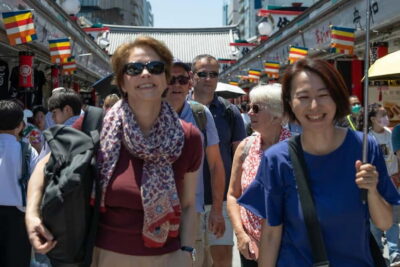
Asakusa Walking Tour with Sensoji Temple Visit
Read our review →
Tokyo Panoramic 1 Day: Meiji Shrine, Asakusa, Odaiba and SKYTREE®
Read our review →
Asakusa and Tokyo’s Oldest Temple Senso-ji Tour
Read our review →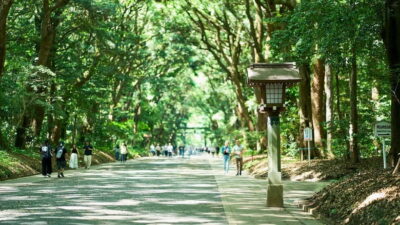
Meiji Shrine Walking Tour — Shinto & Imperial System
Read our review →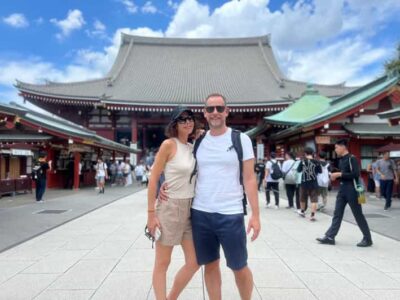
Meiji Jingu Shrine and Shinto Culture Walking Tour
Read our review →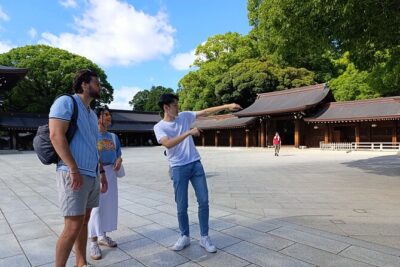
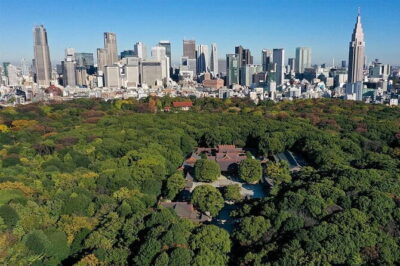
Meiji Shrine Walking Tour — Shintoism & Imperial System
Read our review →
1 Day Bus Tour with Meiji-Jingu,Odaiba,lunch&Skytree
Read our review →Browse the lists this tour appears in