
REVIEW · MEIJI SHRINE & SENSO-JI TOURS
From Asakusa: Old Tokyo, Temples, Gardens and Pop Culture
Tokyo’s old and new sides meet on this four-hour walk. You begin at Senso-ji in Asakusa, pass through Ueno and Okachimachi, see Akihabara’s electronics and anime culture, then finish at Koishikawa Korakuen Garden. Guides such as Taka, Ken, Yapi, Hiro, and Shizuko are praised for clear explanations and flexible pacing.
I like the small maximum of eight people, which makes it easier to ask questions and adjust the route. I also like the range: temple etiquette, markets, pop culture, local trains, and an Edo-period garden all fit into one outing. The main drawback is the pace. You cover a lot of ground, and one account reported a late start, trouble hearing the guide in crowded Asakusa, and paying separately for trains despite local rides being listed as included.
Key points to know before booking
- A four-hour route with unusual variety: Move from Buddhist temple grounds to market streets, anime shops, electric-town signs, and a formal Japanese garden.
- A small group capped at eight: The format allows more questions and may lead to a private or nearly private outing if others do not book.
- Guides can shape the experience: Taka, Ken, Yapi, Hiro, Katsu, Matt, and others are praised for history, culture, humor, and route changes.
- Senso-ji provides the cultural anchor: You learn temple manners, the purpose of statues, and details such as the giant sandals associated with warding off evil.
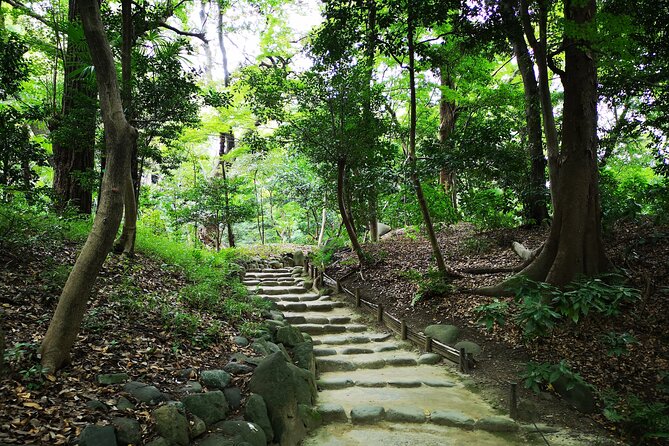
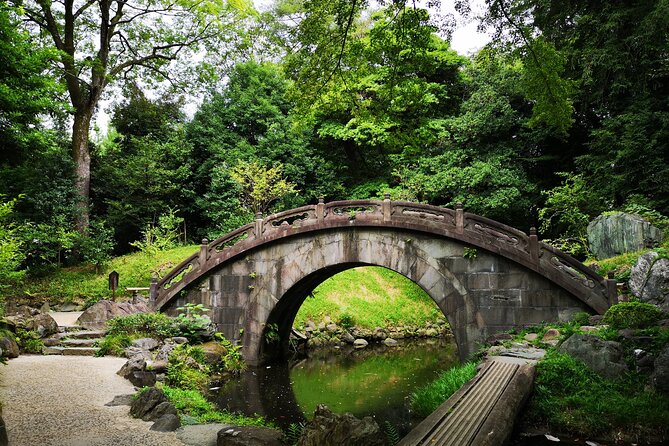
- Koishikawa Korakuen is the quiet finish: The garden offers a sharp change of mood after crowded Asakusa, Ueno, and Akihabara.
- Expect steady walking: A moderate fitness level is required, and food and drinks are not included.
Why this route works for a first Tokyo day
Tokyo can feel like several cities stitched together. One neighborhood gives you temple roofs and incense, another gives you market stalls, and the next fills the streets with electronics, gaming, and anime. This tour puts those contrasts into one clear route.
I especially like it for a first or second day in Tokyo. A guide can explain basic etiquette before you enter a temple, help you understand what you are seeing, and show you how local trains fit into the city. Several guides also help with the wider trip, offering suggestions for food, places to visit, and ways to use the train system.
The tour is not a slow museum visit. It is a brisk introduction to East Tokyo. You get context at each stop, but you do not spend hours inside one attraction. That makes the experience useful if your time is short or if you want a framework for exploring on your own afterward.
The small-group format matters here. Eight people is far easier to manage than a large flag-following crowd, especially in Asakusa. Some bookings may become private outings, and several participants received that kind of one-on-one attention. Do not count on having the guide to yourself, but the possibility is a welcome bonus.
More Meiji Shrine and Senso-ji Tours in Japan:
- Tokyo: Asakusa Walking Tour with Sensoji Temple Visit
★ 4.8 · 1,583 reviews - Tokyo Panoramic 1 Day: Meiji Shrine, Asakusa, Odaiba and SKYTREE®
★ 4.5 · 1,222 reviews - Asakusa Senso-ji Temple and Old Tokyo Walking Tour
★ 5.0 · 560 reviews
Starting with Senso-ji and Asakusa
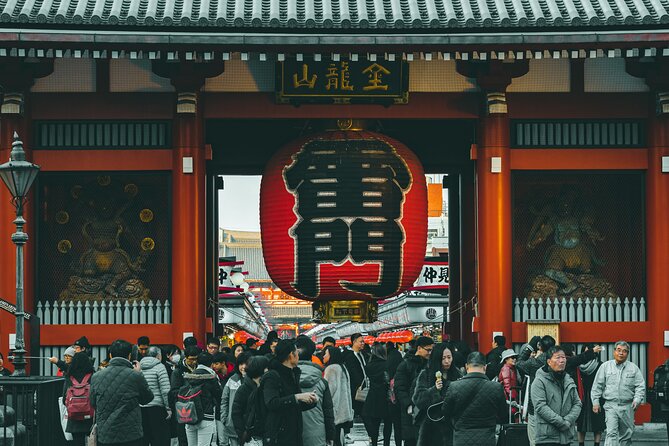
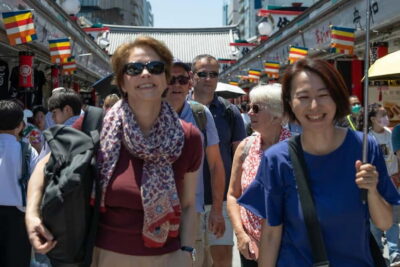
The meeting point is in Asakusa at 1-chome, near Senso-ji. This is a practical start because the neighborhood gives you an immediate lesson in old Tokyo. The area is also very busy, so arrive ready to stay close to the guide.
The first Asakusa visit lasts about 45 minutes, followed by a shorter 15-minute stop focused on Senso-ji itself. The timing may feel slightly repetitive on paper, but the two parts serve different purposes. The first introduces the neighborhood and temple setting. The second puts more attention on Senso-ji’s main features.
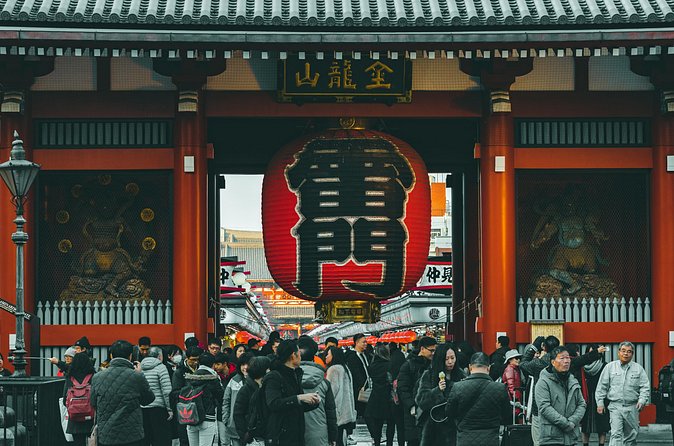
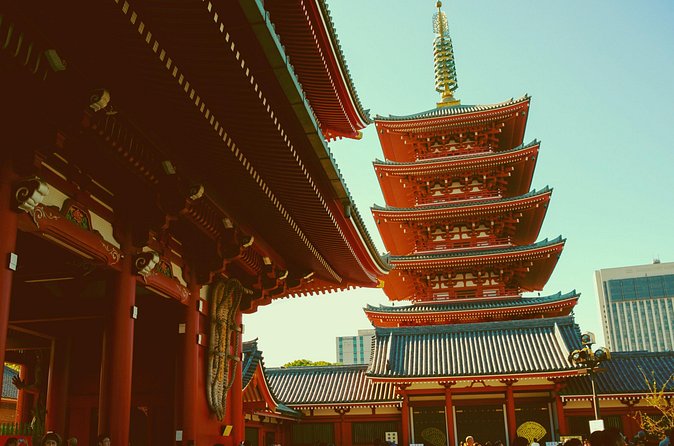
Senso-ji is Tokyo’s best-known Buddhist temple, and the guide explains its place in Japanese religious life and local history. You pass through Kaminarimon, the Thunder Gate, then approach Nakamise, the shopping street leading toward the temple grounds. This is where the tour’s etiquette lesson becomes useful.
You may learn how to behave at a temple, how statues and symbols fit into the setting, and what to notice before rushing toward the main hall. One guide explained the large sandals associated with driving away evil spirits, a detail easy to miss if you are only taking photographs.
Asakusa is also the most difficult part of the route for staying together. The streets can become packed, particularly around the temple and shopping street. One account describes the guide moving ahead in the crowd and speaking too softly to hear. That is worth keeping in mind. Stay near the guide, speak up if you lose the group, and ask for pauses when the street noise swallows the explanation.
Ueno and Okachimachi, Tokyo’s market side
From Asakusa, the route continues toward Ueno, with local train rides listed among the included costs. The Ueno stop lasts about 45 minutes and presents a different side of the city from the temple district.
Ueno and nearby Okachimachi have long been associated with street vendors, shops, and food sellers. You get a sense of Tokyo as a place where ordinary shopping and eating happen in busy public corridors, not only inside polished department stores.
This is one of the better places to ask practical questions. You can ask what certain foods are, how market shopping works, or where to return later for more time. One guide allowed time for shopping after showing the group the market area, which is helpful if you want souvenirs or small food items.
The drawback is that 45 minutes passes quickly. You are unlikely to browse every lane or shop at leisure. Think of Ueno as an introduction, not a full market expedition. If you already know you want to shop, note the location and return independently.
Akihabara, from electronics to anime culture
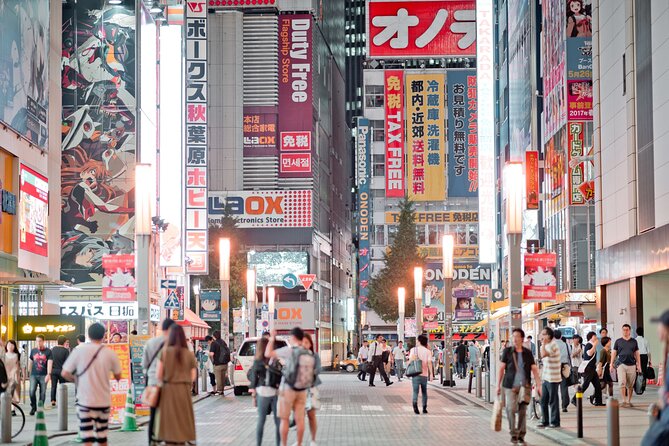
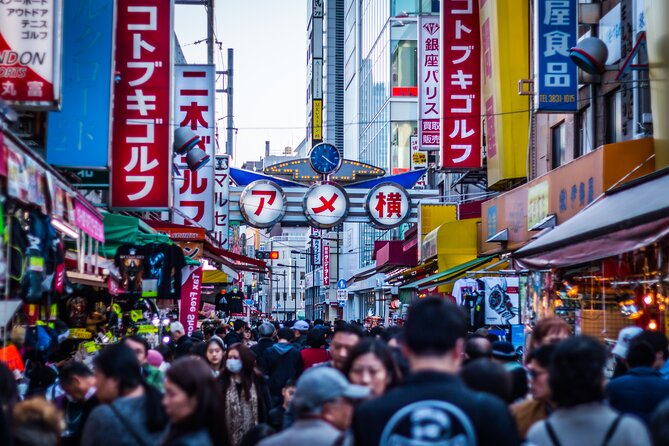
The route then shifts hard into modern Tokyo. Akihabara, often called Electric Town, grew as a center for electronics and later became closely linked with anime, manga, games, and maid cafes. The tour uses this neighborhood to show how Japanese pop culture fits into the city’s daily life.
This section lasts about 45 minutes. You may stop at anime and electronics stores, and the guide can explain parts of the district that are easy to miss when you simply wander beneath the signs. One participant valued learning about maid cafes, an aspect of Akihabara that many first-time visitors do not understand before arriving.
Still, set your expectations correctly. The pop culture part may be more of a guided orientation than a structured attraction visit. One dissatisfied account described it as being dropped at several anime shops. If you want a long shopping session, this tour is not the best use of your time. If you want help understanding what you are seeing and where to explore later, it is more useful.
I like the contrast with Asakusa. The route does not treat Tokyo as only temples and gardens. It shows a city that honors old customs while also producing new forms of entertainment and commerce. The transition from Senso-ji to Akihabara is one of the tour’s main strengths.
A few more temple visits around Japan worth a look
- Kyoto: Tea Ceremony Ju-An at Jotokuji Temple
★ 4.9 · 3,207 reviews - Nikko: Kegon Falls, Lake Chuzenji & Toshogu Temple
★ 4.6 · 1,577 reviews - Tokyo: Kamakura & Enoshima Day Trip including Temple Tickets
★ 4.5 · 1,375 reviews - Kyoto/Osaka: Nara, Fushimi Inari Taisha, Arashiyama Bus Tour
★ 4.7 · 1,275 reviews
Koishikawa Korakuen Garden as the quiet finish
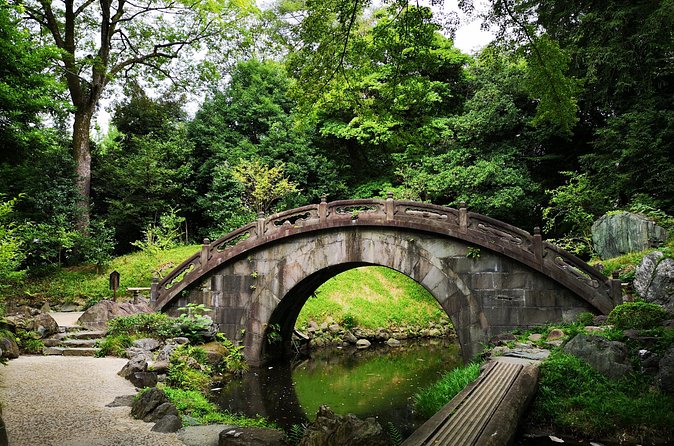
After Akihabara, the mood changes again at Koishikawa Korakuen Garden. Admission is included, and the visit lasts about 45 minutes.
The garden dates from the Edo period and draws on ideas from Confucian poetry. It is a strolling garden, designed to be viewed from changing paths and angles rather than understood from one fixed lookout. Water features and carefully arranged scenery give you a calmer ending after several crowded districts.
This is the part I would most want to protect in the schedule. Senso-ji gives you ritual and tradition. Akihabara gives you modern culture. Koishikawa Korakuen lets you slow down and look.
Several people especially enjoyed the garden and temples, and that makes sense. The garden offers a break from signs, traffic, market noise, and crowded pedestrian lanes. It is also a good place for photographs, though the exact time available depends on how smoothly the earlier stops go.
The garden visit does not turn the tour into a full botanical or historical study. You receive an introduction, not an exhaustive lecture. That balance works well for a half-day walk, but garden lovers may want to return later with more time.
Guides, language, and flexibility
The strongest part of this experience is the guide. Taka is praised for strong English, humor, area knowledge, and help with the train system. Ken is repeatedly described as patient, engaging, and able to adapt the route. Yapi is noted for detailed explanations and a calm approach. Hiro and Hiroshi are praised for local knowledge and for taking people to places they might not find alone.
Other named guides include Michelle, Johann, Matt, Shizuko, Toru, Andrew, Yeman, Katsu, and Katsu. The guiding style may vary, since this is not a single-guide operation. Some guides focus more on history, others on practical Tokyo life, shopping, family interests, or pop culture.
That variation can work in your favor. Several tours were adjusted around personal interests, comfortable walking speed, or nearby detours. Families found the explanations engaging, and one parent noted that children enjoyed the experience even though they were tired by the end.
You should still be direct about what you want. Tell the guide if you care most about temples, markets, anime, photography, shopping, or train advice. Ask the guide to speak louder in crowded areas. A small group makes those requests realistic.
Walking pace, trains, and what to bring
This is a walking tour with several neighborhood changes, not a gentle stroll around one site. The stated requirement is moderate physical fitness. Wear comfortable shoes and expect to remain on your feet for much of the four hours.
Local train rides are listed as included, along with admissions and standard tour costs. However, one account says the group had to pay for its own train fares. That conflicts with the stated inclusions, so I would confirm the transportation arrangement before setting out and carry a payment method as a backup.
Food and drinks are not included. The schedule is packed enough that you should eat beforehand or carry water and a small snack. Do not assume the Ueno market stop includes a meal.
The end point is Akihabara Station, at 1 Chome Sotokanda. That is convenient if you want to continue exploring Akihabara, though the route description also places Koishikawa Korakuen at the final sightseeing stop. Ask your guide to confirm the exact final handoff on the day, especially if you have a timed reservation afterward.
Is $70.49 a fair price?
At $70.49 per person, this is not a bargain transport pass. You are paying for a guide, a carefully linked route, admissions, and an efficient introduction to several parts of Tokyo.
The value is strongest if you are new to the city. In four hours, you receive cultural background at Senso-ji, a look at Ueno’s market district, an orientation to Akihabara, and entry to Koishikawa Korakuen. You also get help with basic manners and, depending on the guide, practical advice for the rest of your visit.
The price is less compelling if you are already comfortable using Tokyo trains and prefer to explore at your own speed. You could visit these districts independently, spend longer shopping, or devote a full afternoon to the garden. The tour earns its cost through explanation and structure rather than exclusive access.
The 98 percent recommendation rate and 4.9 rating from 47 ratings suggest a strong overall record, but the one poor experience highlights what can go wrong: a delayed start, weak communication in a crowd, a rushed pace, and confusion about train costs. Those are not minor points. The tour is best when the guide keeps the group together and protects the schedule.
Who should book this Tokyo walk?
I would choose this tour if you are visiting Tokyo for the first time, staying in a newer district such as Shibuya, or feeling unsure about temple manners and the train system. It is also a good fit for families and couples who want a guide but do not want to join a huge group.
It suits people who enjoy variety. You will not get a full historical study of Asakusa, a long shopping session in Akihabara, or a quiet garden visit lasting half a day. You will get a well-packed sample of each.
I would be more cautious if you have limited stamina, dislike crowded streets, or need every stop to run exactly on time. The route is active, and the Asakusa section can be hard to hear. Ask for a slower pace and clear meeting points if those issues matter to you.
Free cancellation is available up to 24 hours before the start time. Late cancellations and changes are not refunded, and poor weather may lead to a different date or a full refund.
FAQ
How long does the tour last?
The tour lasts approximately four hours.
What neighborhoods does the tour visit?
The route covers Asakusa, Senso-ji, Ueno, Okachimachi, Akihabara, and Koishikawa Korakuen Garden.
Is Senso-ji included?
Yes. The tour includes time in Asakusa and a separate stop at Senso-ji Temple. Admission is listed as free.
Is Koishikawa Korakuen Garden included?
Yes. Admission to Koishikawa Korakuen Garden is included.
How many people can join the tour?
The maximum group size is eight people.
Are local train rides included?
Local train rides are listed as included, along with standard admissions and tour costs. One account reported paying separately for trains, so confirm the arrangement before departure.
Are food and drinks included?
No. Food and drinks are not included.
Where does the tour start?
The stated meeting point is Japan, 111-0032 Tokyo, Taito City, Asakusa, 1-chome, near the listed address at Kamiy a Building.
Where does the tour end?
The stated end point is Akihabara Station in Sotokanda, Chiyoda City.
Can I cancel for a full refund?
You can cancel at least 24 hours before the start time for a full refund. Cancellations or changes made less than 24 hours in advance are not refunded, and poor weather may result in another date or a full refund.
Should you book it?
Book this walk if you want a guided first look at Tokyo’s contrasts and value a small group over total freedom. The best parts are the temple etiquette at Senso-ji, the shift from Ueno markets to Akihabara pop culture, the calm of Koishikawa Korakuen, and the chance to learn from guides such as Taka, Ken, Yapi, or Hiro.
Skip it if you want long, unhurried visits or already know these districts well. If you do book, wear good shoes, stay close in Asakusa, tell the guide your priorities, and confirm how train fares will be handled. With those points clear, the tour offers a useful and lively introduction to old and modern Tokyo in one half-day.
Just added around Japan
- Private guided tour: Mt. Aso volcano, grasslands, Aso Shrine★ 5.0 · 19 reviews
- Goshuin Collecting tour at Asakusa Local Temples & Shrines, Tokyo★ 5.0 · 8 reviews
- Tokyo:Nikko UNESCO World Heritage Sites Private 1-Day Tour★ 3.8 · 6 reviews
- Tokyo Yokohama Night View Tour With Kamakura And Enoshima★ 3.5 · 14 reviews
- Tokyo: Snow Monkey Park and Zenkoji Temple Private Day Tour★ 4.7 · 127 reviews
- Tokyo War History Tour: Yasukuni Shrine & War Museum★ 4.5 · 6 reviews
- Tokyo to Nikko: Exclusive Private Day Trip★ 4.8 · 6 reviews
- Tokyo: Sensoji Temple & Street Food: Private Tour with guide★ 4.6 · 8 reviews
Meiji Shrine & Senso-ji Tours, compared.
Asakusa Walking Tour with Sensoji Temple Visit
Read our review →
Tokyo Panoramic 1 Day: Meiji Shrine, Asakusa, Odaiba and SKYTREE®
Read our review →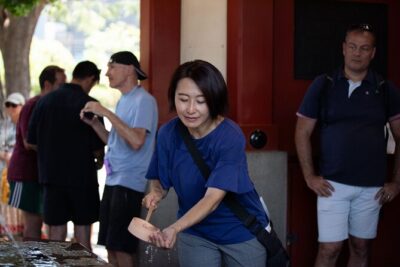
Asakusa Senso-ji Temple and Old Tokyo Walking Tour
Read our review →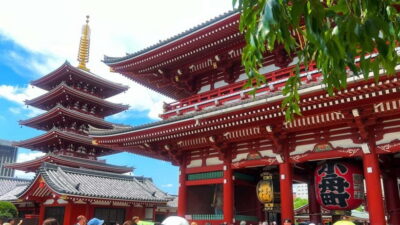
Asakusa and Tokyo’s Oldest Temple Senso-ji Tour
Read our review →
Meiji Shrine Walking Tour — Shinto & Imperial System
Read our review →
Meiji Jingu Shrine and Shinto Culture Walking Tour
Read our review →
Meiji Shrine Walking Tour — Shintoism & Imperial System
Read our review →Browse the lists this tour appears in