
REVIEW · MEIJI SHRINE & SENSO-JI TOURS
Tokyo Morning Tour : Meiji Shrine, Asakusa and Fish Market
Tokyo is at its most appealing early in the day, when a quiet forest shrine, a food market, and old Asakusa can fit into one well-planned morning. This four-hour tour gives you a quick look at three very different sides of the city, with food stops along the way.
I like the small group limit of eight, which gives you a better chance to ask questions and stay with your guide. I also like the mix of calm Meiji Shrine and hands-on market eating, especially the chance to try sushi, sashimi, mochi, sweet potato, and a savory cutlet.
The main consideration is speed. You cover several districts in four hours, and the roughly 550-yen public transportation fare is extra. If you want long shopping stops or a slow meal, this schedule may feel tight.
Key points to know before booking
- Three major Tokyo districts in one morning: Visit Meiji Shrine, Tsukiji Outer Market, and Senso-ji without giving up a full day.
- Food is part of the tour: Expect market sushi and sashimi, plus mochi, sweet potato, and a savory cutlet in Asakusa.
- A group capped at eight: The smaller format makes it easier to hear the guide and ask about customs.
- Strong guide-led experience: Shoma Sato and Yosuke are named guides associated with especially warm, helpful tours.
- Useful arrival and finish points: Meet near Harajuku and finish at Asakusa Station, a practical place to continue exploring.
- Budget for local transport: Public transportation costs about 550 yen and is not included in the $72.67 tour price.
A smart way to meet Tokyo before lunch
I like the shape of this tour because it avoids the usual problem with a short Tokyo visit: seeing famous places without understanding how they fit together. You begin with Shinto tradition at Meiji Shrine, move into the city’s food culture at Tsukiji, and finish with Buddhist sights and old shopping streets in Asakusa.
That range gives you useful contrast. Meiji Shrine is quiet and wooded. Tsukiji is practical, noisy, and centered on food. Senso-ji brings you into one of Tokyo’s best-known historic districts, where a major temple sits beside shops and street snacks.
The tour lasts about four hours, so it works best as an opening activity on your first or second day. You finish at Asakusa Station rather than returning to Harajuku. That is helpful if you want to keep sightseeing in Asakusa, visit the Tokyo Skytree area on your own, or simply use the station to reach another part of the city.
The group can include up to eight people. That is not the same as a fully private tour, but it is much more manageable than a large coach group. A guide can adjust explanations, help with food choices, and keep the pace together without shouting across a crowd.
More Temple Sunrise Tours in Japan
- Tokyo Morning Tour: Asakusa, Meiji Shrine and Tsukiji Fish Market
★ 5.0 · 128 reviews - Tokyo Early Morning Tour Asakusa Meiji Shrine (Private Opt)
★ 5.0 · 69 reviews - Tokyo Morning Tour: Meiji Shrine, Asakusa & Fish Market
★ 4.9 · 44 reviews
Starting at Meiji Shrine in Harajuku
The morning begins near the IKEA Swedish Cafe in Harajuku, at 1-14-29 Jingumae. The meeting address is specific, but it is worth checking the exact location carefully before you leave. The listed end point is Asakusa Station, so you should plan your day around a one-way route across Tokyo.
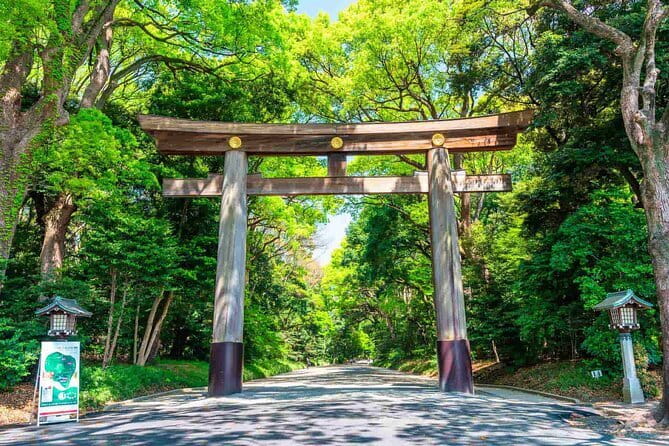
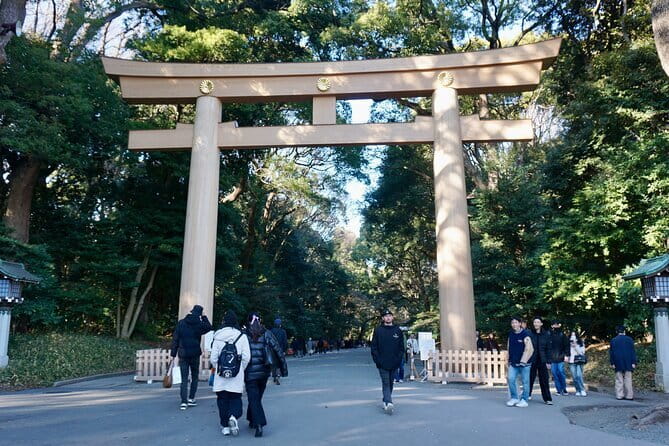
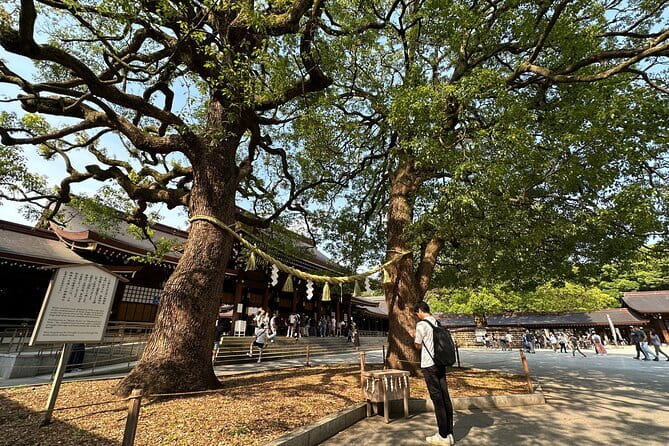
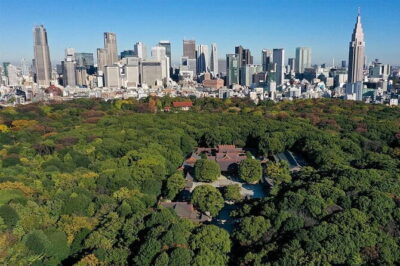
Meiji Jingu Shrine is dedicated to Emperor Meiji and Empress Shoken. You enter a large wooded setting through tall torii gates, then follow forested paths toward the shrine buildings. The area offers a calm first hour before the food and crowds of the later stops.
Your guide can explain the basic role of Shinto, shrine customs, and the meaning of what you see. That matters here because the setting can otherwise look like a pleasant walk with a large gate at the end. Simple details about how to behave at a shrine make the visit more useful.
Expect about one hour at Meiji Shrine. The attraction has no separate admission charge, and the tour includes entry. Still, this is not a museum visit with a long list of indoor exhibits. Its value comes from the setting, the rituals, and the change of pace from modern Tokyo.
I would wear comfortable shoes and keep your belongings light. You will visit more than one district, use public transportation, and spend time on foot. The tour information says most people can take part, but it does not provide a detailed accessibility assessment, so you should ask the operator about your own mobility needs before booking.
Tsukiji Outer Market and a Tokyo breakfast
From Meiji Shrine, the tour continues to Tsukiji Jogai Market. The former wholesale fish market moved its auction operation to Toyosu, but the outer market remains a food destination. It is important to understand that distinction before you go: this experience is about the public-facing market streets and food stalls, not a visit to the wholesale auction floor.
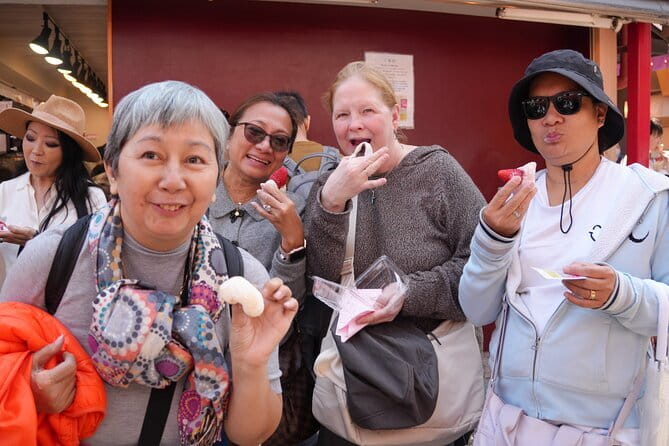
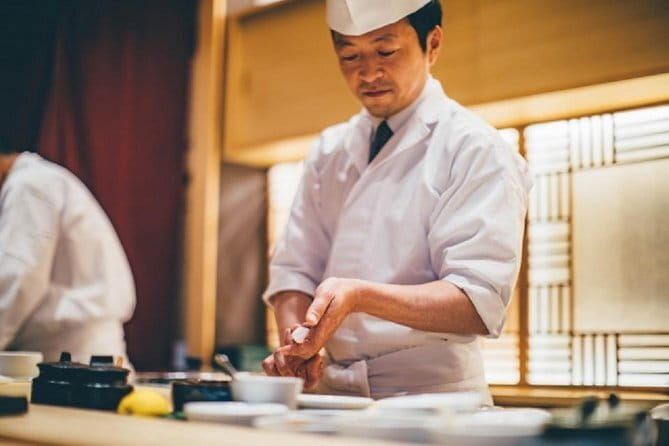
This is the most hands-on part of the morning. You can try fresh sushi and sashimi from market stalls, then sample other foods included in the route. The stated street foods include sweet mochi, sweet potato, and a savory cutlet. That combination gives you more than one taste of Japan, from soft rice sweets to a crisp, filling snack.
The market stop is planned for about an hour. That is enough time to sample food and hear some context, but it is not a leisurely food crawl. If you are hungry, this is a good point in the morning to pay attention to what is offered and ask your guide how the tasting works.
Food preferences matter here. Sushi and sashimi may not suit everyone, and the tour description does not give a full ingredient list or allergy policy. If you have allergies, avoid certain foods, or need a special diet, contact Goen Japan before booking rather than assuming substitutions will be available.
The guide adds value at Tsukiji by explaining the market’s role in Tokyo. You get a better sense of why the area still matters even though the wholesale center moved. You also avoid wandering without a plan, which can be useful when you have only an hour and want to sample several foods.
Senso-ji and the final hour in Asakusa
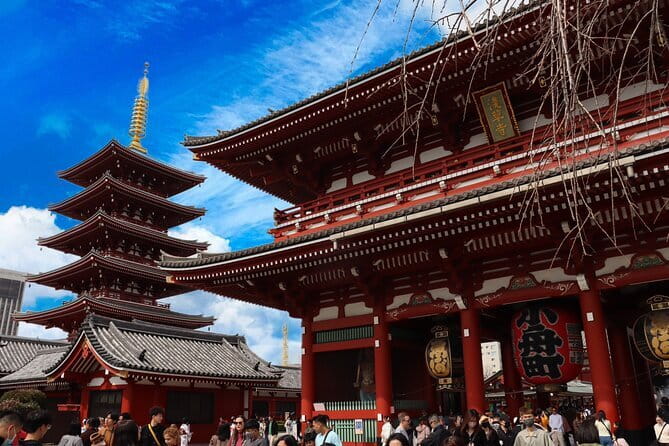
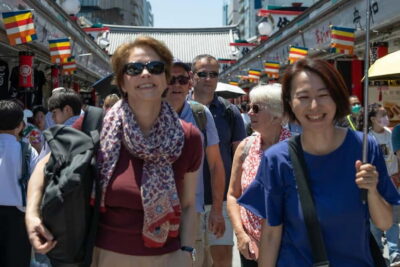
The tour ends at Senso-ji, Tokyo’s oldest Buddhist temple, in Asakusa. You approach through Kaminarimon, the Thunder Gate, then continue along Nakamise-dori toward the temple. The shopping street is lined with shops selling souvenirs, sweets, and traditional items.
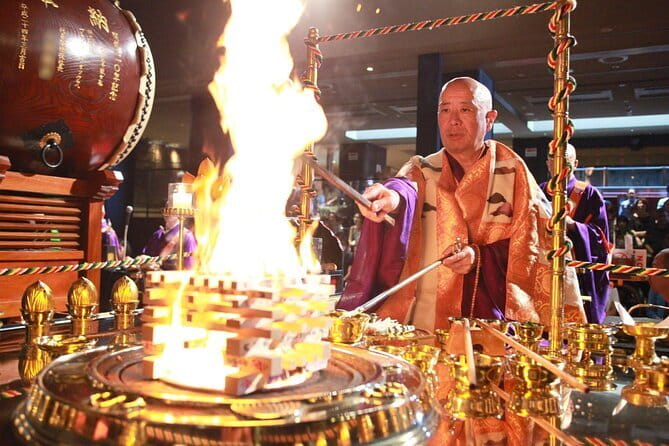
This final stop gives you the most familiar postcard view of the three. It is also the stop with the strongest sense of a busy public district, since the temple, shopping street, and station all sit within a popular part of eastern Tokyo. Your guide can explain the difference between the Buddhist temple and the Shinto shrine you saw earlier, which makes the pairing with Meiji Shrine especially worthwhile.
About one hour is planned at Senso-ji. That is enough for the main approach, temple grounds, and some explanation. It will not give you time to inspect every shop or explore all of Asakusa. I would treat the tour as an introduction, then return later if this district interests you.
Ending at Asakusa Station is practical. You do not have to travel back to the starting point, and you can continue your own day from there. The finish also lets you stay in the area for lunch, shopping, or more sightseeing without losing time on a return journey.
Same country, a different morning at the gates:
- Tokyo:Mt.Fuji,Kawaguchiko Oishi Park,Arakurayama Sengen Park
★ 4.4 · 2,682 reviews - Tokyo: Asakusa Walking Tour with Sensoji Temple Visit
★ 4.8 · 1,583 reviews - Nikko: Kegon Falls, Lake Chuzenji & Toshogu Temple
★ 4.6 · 1,577 reviews - Tokyo: Nikko Toshogu Shrine and Kegon Waterfall Tour
★ 4.5 · 1,266 reviews
What the guides add to a short route
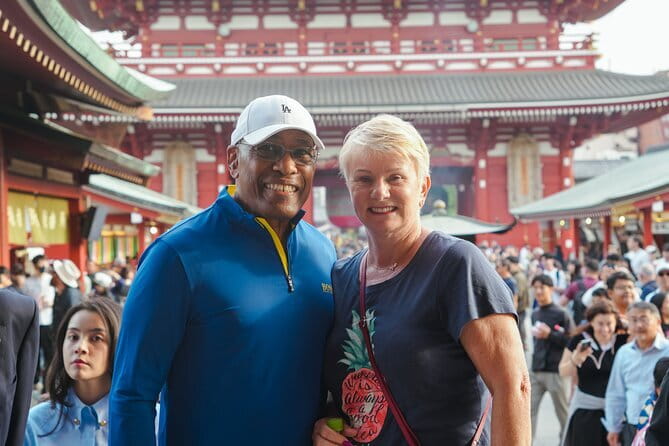
A compact Tokyo tour depends heavily on the guide. The route itself is good, but the difference between simply visiting these places and understanding them comes from the explanations between stops.
Shoma Sato is one guide associated with especially clear explanations and patience. Yosuke is another named guide praised for sharing history, philosophy, and customs while keeping the pace flexible. Since guide assignments can vary, you should not assume one particular person will lead your departure, but those names give you a useful sense of the tour’s intended style.
The best part of a small group is the chance to ask practical questions. You can ask why a shrine and temple use different customs, what to look for at the market, or how the districts changed over time. The included photos are another useful touch, since the guide takes pictures during the tour instead of leaving you to document every stop yourself.
The experience includes an English-speaking guide, historical context about the districts, and photos. Those inclusions make the $72.67 price easier to assess. You are paying not only for movement between three areas, but also for a planned food introduction and interpretation in places where a first-time visitor may not know what matters.
Is $72.67 a fair price?
At $72.67 per person, this is not the cheapest way to walk through Tokyo. You still pay about 550 yen for public transportation, and the tour does not list a full meal as included. Food portions and exact tasting arrangements are not described in detail, so you should not book it expecting an unlimited breakfast.
The value improves if you have only a short stay or want a structured first morning. You receive a guide, a small group setting, photos, historical explanations, and a route linking Harajuku, Tsukiji, and Asakusa. Arranging the same morning alone would cost less, but you would need to plan the connections, decide where to eat, and provide your own cultural context.
The tour is also useful for people who prefer a gentle introduction before exploring alone. After four hours, you will know which districts deserve more of your time. You may decide to return to Asakusa, seek out more market food, or spend a longer afternoon around Harajuku.
The price makes less sense if you already know Tokyo well, speak Japanese comfortably, or prefer to set your own pace. It may also disappoint you if your main goal is the Tsukiji auction, since the former inner wholesale operation is not part of this visit.
Timing, transport, and what to bring
The start is in Harajuku, while the end is at Asakusa Station. Public transportation is not included, and the stated cost is around 550 yen. Keep some room in your budget for that fare, along with any extra food or shopping you choose to buy.
The tour is mobile-ticket based, and booking confirmation is provided at the time of booking. I would save the meeting details on your phone and allow enough time to find the IKEA Swedish Cafe location near Harajuku. The meeting address includes Japanese text and a room number, so checking the map before the morning begins is sensible.
Four hours sounds generous, but Tokyo transfers and food stops can use time quickly. Arrive ready to start on time. Comfortable walking shoes, a charged phone, and a small amount of spending money will make the morning easier.
The tour has a minimum number of participants. If that minimum is not met and the experience is canceled, you are offered another date or experience, or a full refund. You can cancel for a full refund up to 24 hours before the start time. Within 24 hours, refunds and changes are not accepted.
Who will get the most from this morning?
I would recommend this tour to a first-time Tokyo visitor who wants orientation without giving up an entire day. It also suits couples, families, and solo visitors who prefer company and clear explanations, but do not want to join a large group.
It is a good fit if you care about food as much as monuments. The market tastings make the morning feel more local and practical, while the two religious sites provide the cultural frame.
You should think twice if you want a slow photography walk, a long temple visit, or detailed shopping time. Each major stop gets about an hour, and the route covers a lot of ground. The experience favors range over depth.
It may also be less suitable for someone with strict dietary needs unless the operator confirms what alternatives are possible. The available information says most people can participate, but it does not promise specific food substitutions or accessibility arrangements.
Should you book the Tokyo Morning Tour?
Book it if you want a well-shaped first morning with three major Tokyo settings, several food tastings, and an English-speaking guide. The small group cap, useful one-way finish, and guides such as Shoma Sato and Yosuke add real value to a short schedule.
Skip it if your priority is the Tsukiji auction, an unhurried meal, or independent wandering. For most first-time visitors with limited time, though, $72.67 is a reasonable price for a guided introduction to Meiji Shrine, Tsukiji Outer Market, and Senso-ji, as long as you budget for transport and accept the brisk pace.
FAQ
How long does the Tokyo morning tour last?
The tour lasts approximately four hours.
Where does the tour start?
It starts at the IKEA Swedish Cafe in Harajuku, at 1-14-29 Jingumae, Shibuya, Tokyo 150-0001.
Where does the tour end?
The tour finishes at Asakusa Station in Taito City.
How many people can join the tour?
The group has a maximum of eight participants.
Is public transportation included?
No. Public transportation costs around 550 yen and is paid separately.
Is an English-speaking guide included?
Yes. An English-speaking guide is included.
Which attractions are visited?
The route includes Meiji Jingu Shrine, Tsukiji Jogai Market, and Senso-ji Temple.
What food can you try?
The tour includes fresh sushi and sashimi at the fish market, plus sweet mochi, sweet potato, and a savory cutlet.
Are admission tickets included?
Entry to Meiji Jingu Shrine, the fish market, and Senso-ji Temple is included. The listed attractions do not have a separate admission charge stated for this tour.
Can I cancel for a full refund?
Yes. You can cancel at least 24 hours before the experience start time for a full refund. Cancellations or changes made less than 24 hours before the start time are not accepted.
More Temple Sunrise Tours in Tokyo
- Angkor Wat Sunrise or Sunset Tour with Guide from Siem Reap
★ 5.0 · 12,109 reviews - Siem Reap: Angkor Wat: Small-Group Sunrise or Sunset Tour
★ 5.0 · 9,444 reviews - Siem Reap: Angkor Wat 2-Day Tour with Sunrise and Sunset
★ 4.9 · 4,429 reviews - Angkor Wat Sunrise tour with Small – Group and Guide tours
★ 5.0 · 3,655 reviews
More Meiji Shrine and Senso-ji Tours in Tokyo
- Tokyo Panoramic 1 Day: Meiji Shrine, Asakusa, Odaiba and SKYTREE®
★ 4.5 · 1,222 reviews - Tokyo: Asakusa and Tokyo’s Oldest Temple Senso-ji Tour
★ 4.9 · 352 reviews - Tokyo: Meiji Shrine Walking Tour — Shinto & Imperial System
★ 4.9 · 266 reviews - Tokyo: Meiji Jingu Shrine and Shinto Culture Walking Tour
★ 5.0 · 245 reviews
Just added around Tokyo
- Tokyo:Nikko UNESCO World Heritage Sites Private 1-Day Tour★ 3.8 · 6 reviews
- Tokyo: Snow Monkey Park and Zenkoji Temple Private Day Tour★ 4.7 · 127 reviews
- Tokyo War History Tour: Yasukuni Shrine & War Museum★ 4.5 · 6 reviews
- Tokyo: Shibuya Sky, Harajuku & Meiji Shrine Highlights Tour★ 4.5 · 9 reviews
- Tokyo: Sensoji Temple & Street Food: Private Tour with guide★ 4.6 · 8 reviews
- Tokyo: Nikko Private Sightseeing Day Trip with Driver★ 5.0 · 10 reviews
- Tokyo → Nikko:Private Customizable Day Trip (English Driver)★ 4.9 · 26 reviews
- Tokyo’s Kitchen: Tsukiji Market Food & Culture Walk★ 4.7 · 74 reviews
Meiji Shrine & Senso-ji Tours, compared.
Asakusa Walking Tour with Sensoji Temple Visit
Read our review →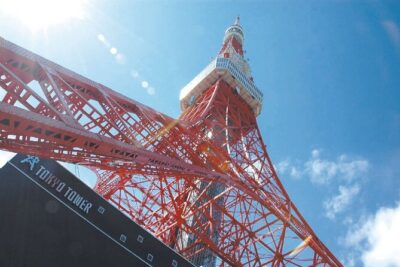
Tokyo Panoramic 1 Day: Meiji Shrine, Asakusa, Odaiba and SKYTREE®
Read our review →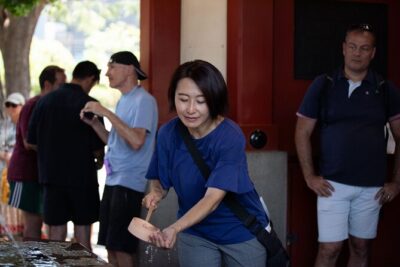
Asakusa Senso-ji Temple and Old Tokyo Walking Tour
Read our review →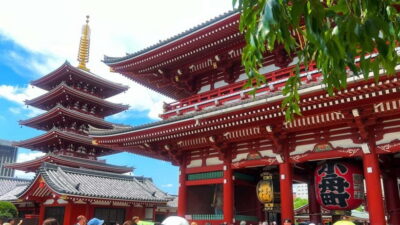
Asakusa and Tokyo’s Oldest Temple Senso-ji Tour
Read our review →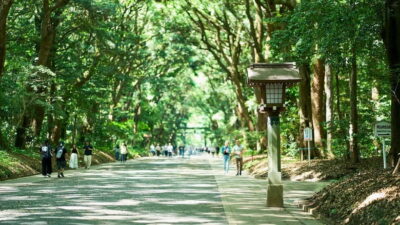
Meiji Shrine Walking Tour — Shinto & Imperial System
Read our review →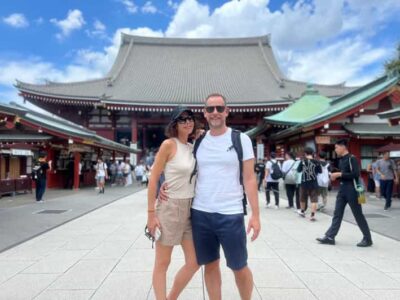
Meiji Jingu Shrine and Shinto Culture Walking Tour
Read our review →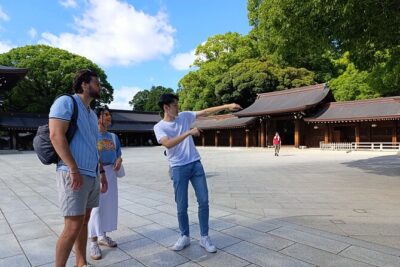
Meiji Shrine Walking Tour — Shintoism & Imperial System
Read our review →Browse the lists this tour appears in