
REVIEW · MEIJI SHRINE & SENSO-JI TOURS
Goshuin Collecting tour at Asakusa Local Temples & Shrines, Tokyo
Asakusa’s best moments are not all found beneath the giant red Kaminarimon gate. This private goshuin tour leads you from famous Sensō-ji into quieter corners, including a shrine known for lucky cats, a temple linked with daikon radishes, and a small Fuji mound made from volcanic lava.
I like the mix of major sights and small local stops, and I like that your group can ask questions at its own pace. The chance to see a ceremony at Asakusa Shrine or sit among cats at Imado Shrine adds real character. The tradeoff is simple: you will walk a lot, and one account found the guide’s explanations uneven and translation help limited.
Key points to know before you book
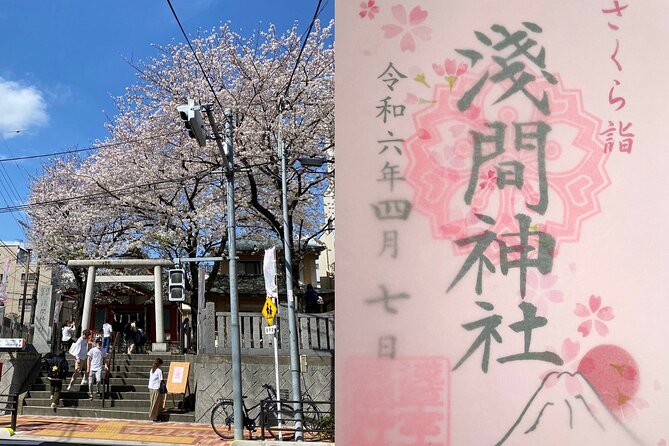
- Four very different sacred sites: Visit Sensō-ji, Imado Shrine, Matsuchiyama Shoden, and Asakusa Fuji Sengen-jinja in one three-hour route.
- Goshuin costs extra: Bring money for the stamps, a goshuin-cho stamp book, and any omamori you wish to buy.
- Private for up to three people: The $140 price covers your group, not each individual traveler.
- A strong cat connection: Imado Shrine features lucky-cat imagery and may have cats around the grounds.
- Small-group flexibility: Your guide can help with photos, explain local stories, and adjust attention to your questions.
- Walking is the main activity: Wear comfortable shoes, carry water, and bring rain gear.
Why this Asakusa walk feels different
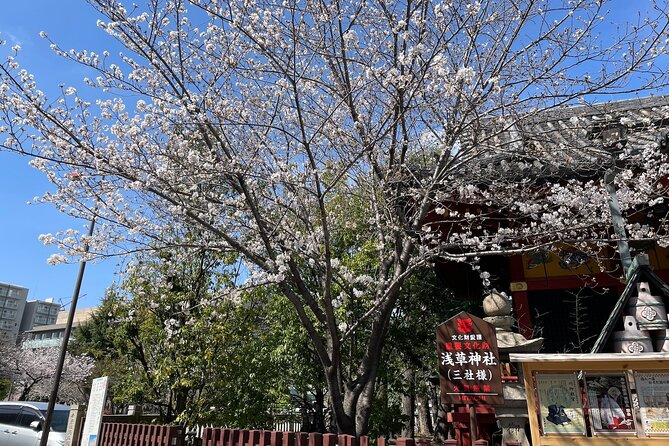
Many first visits to Asakusa follow a familiar line: Kaminarimon, Nakamise-dori, Sensō-ji, then a quick look at Asakusa Shrine. This experience begins with those essential sights but does not stop there. It uses Sensō-ji as the starting point for a more local-minded walk through nearby religious sites.
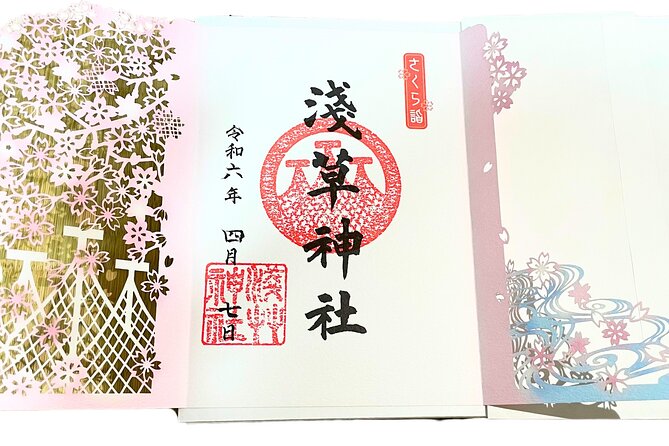
The central theme is goshuin, the calligraphic stamp and inscription collected at temples and shrines. You can bring your own goshuin-cho or purchase one during the outing. The stamps and books are not included in the tour price, so you should treat them as an additional expense.
I like this format because it gives you a clear purpose. You are not simply checking off buildings. You are looking for the correct place to receive each stamp, learning something about the site, and building a personal record of the morning or afternoon.
The private setup also matters. The tour is for your group of up to three people, so you are not sharing the guide with a large crowd. That makes it easier to stop for photographs, ask about a ceremony, or request help understanding a shrine detail.
More Meiji Shrine and Senso-ji Tours in Japan:
- Tokyo: Asakusa Walking Tour with Sensoji Temple Visit
★ 4.8 · 1,583 reviews - Tokyo Panoramic 1 Day: Meiji Shrine, Asakusa, Odaiba and SKYTREE®
★ 4.5 · 1,222 reviews - Asakusa Senso-ji Temple and Old Tokyo Walking Tour
★ 5.0 · 560 reviews
Sensō-ji begins with Asakusa’s big sights
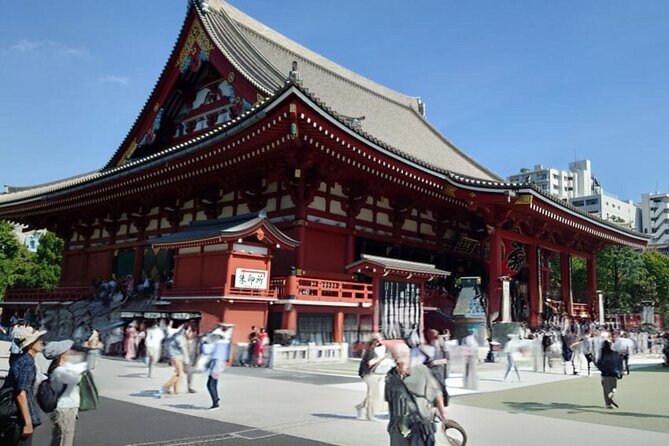
The first stop is Sensō-ji, with Asakusa Shrine and Nakamise-dori included in the area you explore. Plan on about an hour here, making it the clear anchor of the tour.
Sensō-ji is the place to get your bearings. The Kaminarimon gate gives you the famous first view, while Nakamise-dori leads toward the temple through a busy line of shops and food stalls. The route then brings you into the temple grounds, where the scale and formal design contrast with the smaller sites later in the walk.
The temple also has a connection with Tokugawa Ieyasu, who prayed here for victory. That detail gives the visit a useful historical angle, especially if you want more than photographs of the gate and pagoda.
Asakusa Shrine sits close by and adds another layer to the stop. If a ceremony happens during your visit, the experience can change from a standard sightseeing visit into a live look at local religious practice. Guide Kayukawa-san was specifically praised for explaining a ceremony clearly, which is the kind of moment when a local guide earns the fee.
Allow yourself to look up and around rather than rushing straight to the goshuin counter. The point of the tour is not only to gather stamps. It is also to understand how the famous temple, the nearby shrine, the shopping street, and the surrounding neighborhood fit together.
The drawback is that Sensō-ji can be the busiest part of your walk. If you prefer quiet temples from the first minute, the opening stop may feel crowded. The benefit is that the route starts with Asakusa’s major landmark before taking you to places many short visits miss.
Imado Shrine brings lucky cats and a calmer mood
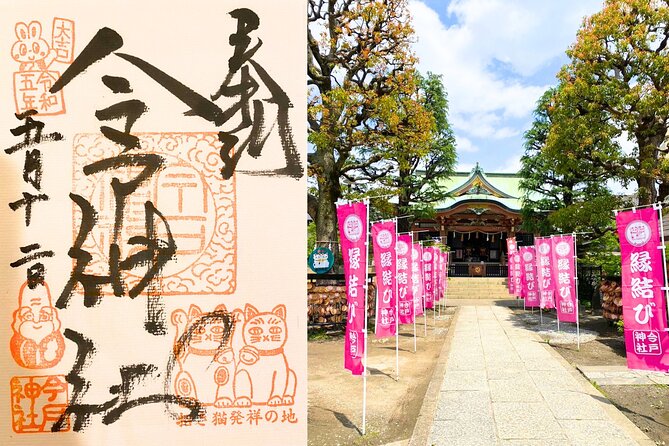
From Sensō-ji, the tour continues to Imado Shrine for about 15 minutes. This is a short stop, but it has a strong personality.
Imado is associated with lucky-cat imagery, including a cat connected with love. The grounds are also known for cat decorations, and you might find cats around the shrine itself. For people who enjoy cats, this adds a gentle, unusual note to a temple-and-shrine walk.
The shrine has also served as a filming location for a Japanese drama, giving it a connection with modern popular culture as well as local worship. That blend makes the site easy to remember. You get a traditional shrine setting, but the details are playful rather than solemn at every turn.
The short 15-minute visit means you should not expect a long formal lesson here. Instead, think of it as a focused stop for the shrine atmosphere, the cat symbols, photographs, and a goshuin if available.
A useful practical point is that the area can feel quiet despite being close to Asakusa’s main sights. Some accounts describe cats nearby and a peaceful natural setting. You should still treat the animals respectfully and avoid assuming you will see a particular number of them on the day.
Matsuchiyama Shoden and its daikon symbol
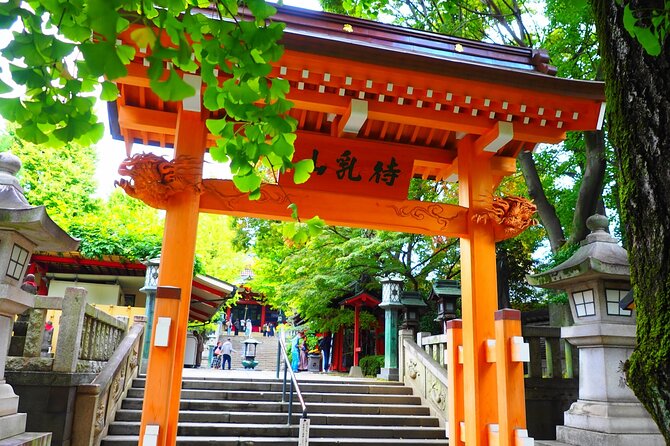
The next stop is Matsuchiyama Shoden Honryuin, with about 15 minutes set aside for the visit. Its distinctive feature is the daikon radish symbol.
Here, daikon represents family harmony and good health. That symbol gives your guide something concrete to explain and gives the temple a character you are unlikely to confuse with the other stops. The temple may also offer free daikon on occasion, so your guide can check whether that is happening during your visit.
This is a good example of why the tour works better with context. Without an explanation, a daikon image might seem like a curious decoration. With a short explanation, it becomes a way to notice how food, health, family life, and religious symbols can meet in a Japanese temple setting.
The stop is brief, so you will want to listen closely and ask your question while you are there. One account described the guide as patient when answering questions and helpful with photographs. That matters at a small site, where a little interpretation can turn a quick look into a meaningful visit.
Do not expect a large complex or a long list of attractions. This is a compact stop built around one memorable idea. It suits you if you enjoy small details and local customs more than grand architecture.
A few more temple visits around Japan worth a look
- Kyoto: Tea Ceremony Ju-An at Jotokuji Temple
★ 4.9 · 3,207 reviews - Nikko: Kegon Falls, Lake Chuzenji & Toshogu Temple
★ 4.6 · 1,577 reviews - Tokyo: Kamakura & Enoshima Day Trip including Temple Tickets
★ 4.5 · 1,375 reviews - Kyoto/Osaka: Nara, Fushimi Inari Taisha, Arashiyama Bus Tour
★ 4.7 · 1,275 reviews
Asakusa Fuji Sengen-jinja offers a symbolic mountain climb
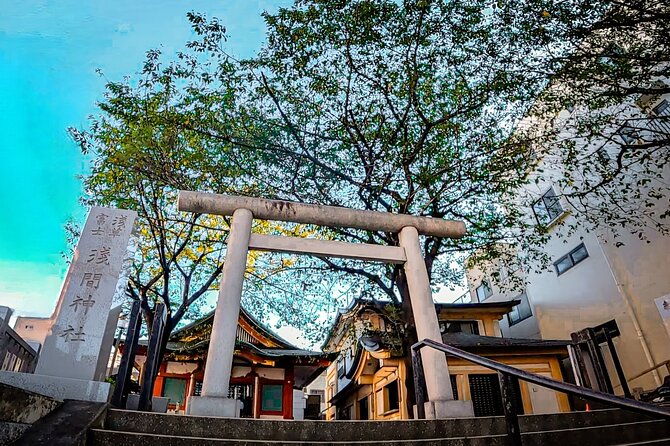
The final listed stop is Asakusa Fuji Sengen-jinja Shrine, another visit of about 15 minutes. Its special feature is a small Fuji-zuka, a mound made with lava from Mount Fuji.
Visitors can symbolically climb this small Fuji and receive the same blessings associated with reaching the real mountain. The idea gives the stop a clear purpose even though the site is much smaller than Mount Fuji itself. You get a taste of pilgrimage symbolism without setting aside a full day for a mountain excursion.
This stop also rounds out the tour nicely. Sensō-ji gives you a major urban temple, Imado gives you cat imagery and a love connection, Matsuchiyama Shoden gives you the daikon symbol, and Asakusa Fuji Sengen-jinja gives you the miniature mountain.
Again, 15 minutes is enough for a focused visit but not a leisurely exploration. If you want to spend long periods at each shrine, three hours may feel tight. If you prefer a sampler of several sites with a guide to connect the dots, the pace makes sense.
The route’s real value is its variety. Each place offers one or two details you can remember, rather than blending into a string of similar gates and halls.
What the goshuin part adds to the experience
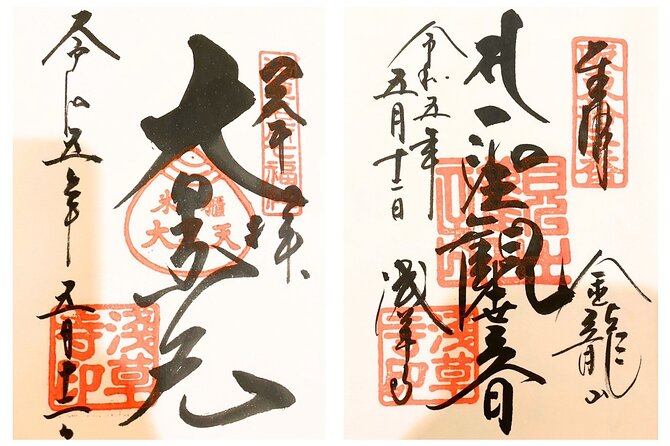
Goshuin collecting is the reason to choose this tour over a standard Asakusa sightseeing walk. The stamps give you a physical record of the places you visited, and the act of collecting them encourages you to pay attention to each temple or shrine as its own place.
You need to buy the stamps separately. A goshuin-cho, or stamp book, is also not included, and neither are omamori amulets. If you already own a book, bring it. If not, budget for one in addition to the $140 group price.
At up to three people, the price works out to about $46.67 per person when the group is full. That is a reasonable way to think about the cost, since you are paying for a private guide rather than joining a large shared walk. For one person, the same price feels much steeper. For three people interested in goshuin, the value is easier to defend.
The guide can also help you understand where to collect each stamp and explain what you are seeing. Do not treat the goshuin as a simple souvenir hunt. The religious setting calls for quiet behavior, attention to local rules, and respect when a ceremony or worship is taking place.
The guide can make or break the three hours
The strongest reports point to a friendly, helpful guide who can answer questions, take photographs, and explain stories along the route. Kayukawa-san was singled out for providing useful explanations during a ceremony at Asakusa Shrine.
There was also a less positive experience in which explanations felt basic, some questions went unanswered, and translation assistance was limited. That is worth keeping in mind if you want a specialist-level discussion of Japanese religion or expect detailed help with every language question.
Your best approach is to arrive with a few questions ready. Ask about the symbols at each shrine, the difference between a temple and shrine, and how to handle your goshuin book. A private tour gives you a better chance to get answers than a large group would, though the quality of the explanation can depend on the guide assigned that day.
The meeting point is at 1-chōme-1-3 Asakusa, Taito City, Tokyo 111-0032. One person had trouble finding it, but the guide contacted them and helped locate the group. I would still allow extra time for the meeting point, especially if you are arriving in Asakusa for the first time.
Walking, weather, and pace
The tour lasts about three hours and requires significant walking. The listed stops account for roughly one hour and 45 minutes, leaving time for the walk between sites, explanations, photographs, and goshuin collection.
Wear shoes you can walk in comfortably. Bring enough water, and carry rain gear because the experience depends on good weather. The operator may offer a different date or a full refund if poor weather forces cancellation.
You should have a moderate level of physical fitness. This is not a difficult hike, but it is not a seated cultural demonstration either. If your group includes someone who tires easily, the private format may help because you can speak directly with the guide about the pace.
The tour ends back at the starting point, which makes it easy to continue exploring Asakusa afterward. You can also treat the return to the meeting point as a convenient finish if you have dinner, shopping, or another Tokyo activity planned.
Who will get the most from this tour
I would choose this experience if you already know you want goshuin and prefer a guide to help connect the sites. It is especially suited to a small group of friends, a couple, or a family group of three who can share the fixed price.
It also fits cat lovers, visitors interested in Japanese symbols, and anyone who wants more than the usual Sensō-ji photograph. The lucky cats at Imado Shrine, the daikon at Matsuchiyama Shoden, and the Fuji-zuka at Asakusa Fuji Sengen-jinja give the route plenty of small talking points.
I would be more cautious if your main goal is a long, academic discussion of Buddhist and Shinto traditions. The stops are short, and the guide experience may vary. I would also skip it if you dislike walking in uncertain weather or want a slow visit with lots of time at each site.
The tour is near public transportation, and service animals are allowed. Confirmation is sent within 48 hours of booking, subject to availability. Free cancellation is available up to 24 hours before the start time, but late cancellations and late changes are not accepted.
Should you book the Asakusa goshuin walk?
Book it if you want a private, stamp-focused introduction to Asakusa that balances Sensō-ji with smaller temples and shrines. The route gives you four distinct stops, a chance to collect goshuin, and a guide who can help with photographs and local explanations.
Think twice if you want guaranteed expert-level translation, a relaxed pace, or a tour with all purchases included. The stamps, book, and amulets cost extra, and the three-hour route involves plenty of walking.
For a full group of three, the $140 price is easier to justify. You get a personal guide, a clear route, and access to lesser-known corners without having to plan the sequence yourself. If cats, shrine symbols, and goshuin appeal to you, this is a thoughtful way to see a more personal side of Asakusa.
FAQ
How long does the Goshuin Collecting tour last?
The tour lasts approximately three hours.
How many people can join the private tour?
The price covers one private group of up to three people.
What is the cost of the tour?
The listed price is $140 per group of up to three people.
Are goshuin included in the tour price?
No. Goshuin, goshuin-cho stamp books, and omamori amulets are not included.
Which temples and shrines are visited?
The route includes Sensō-ji, Asakusa Shrine, Nakamise-dori, Imado Shrine, Matsuchiyama Shoden Honryuin, and Asakusa Fuji Sengen-jinja Shrine.
Where does the tour start and finish?
The tour starts at 1-chōme-1-3 Asakusa, Taito City, Tokyo 111-0032, Japan, and ends back at the meeting point.
Do I need to be physically fit?
You should have a moderate level of physical fitness because the tour requires significant walking.
Can I cancel for a full refund?
Yes. You can cancel at least 24 hours before the experience start time for a full refund. Poor-weather cancellations may result in a different date or a full refund.
Just added around Japan
- From Asakusa: Old Tokyo, Temples, Gardens and Pop Culture★ 5.0 · 47 reviews
- Private guided tour: Mt. Aso volcano, grasslands, Aso Shrine★ 5.0 · 19 reviews
- Tokyo:Nikko UNESCO World Heritage Sites Private 1-Day Tour★ 3.8 · 6 reviews
- Tokyo Yokohama Night View Tour With Kamakura And Enoshima★ 3.5 · 14 reviews
- Tokyo: Snow Monkey Park and Zenkoji Temple Private Day Tour★ 4.7 · 127 reviews
- Tokyo War History Tour: Yasukuni Shrine & War Museum★ 4.5 · 6 reviews
- Tokyo to Nikko: Exclusive Private Day Trip★ 4.8 · 6 reviews
- Tokyo: Sensoji Temple & Street Food: Private Tour with guide★ 4.6 · 8 reviews
Meiji Shrine & Senso-ji Tours, compared.
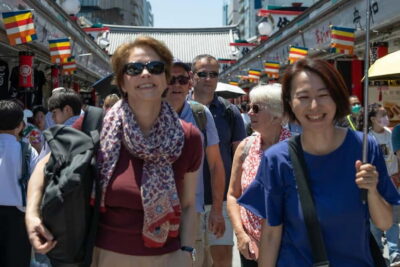
Asakusa Walking Tour with Sensoji Temple Visit
Read our review →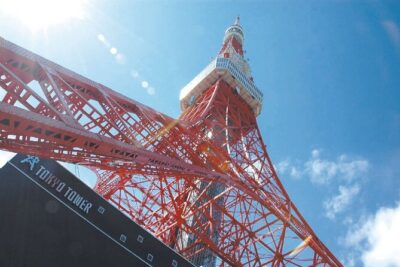
Tokyo Panoramic 1 Day: Meiji Shrine, Asakusa, Odaiba and SKYTREE®
Read our review →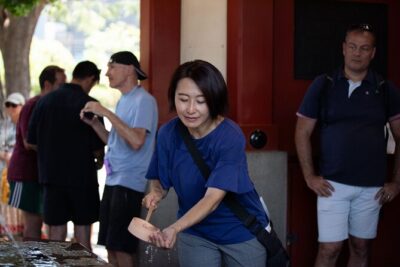
Asakusa Senso-ji Temple and Old Tokyo Walking Tour
Read our review →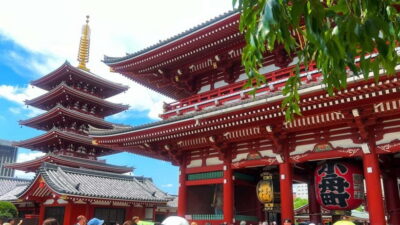
Asakusa and Tokyo’s Oldest Temple Senso-ji Tour
Read our review →
Meiji Shrine Walking Tour — Shinto & Imperial System
Read our review →
Meiji Jingu Shrine and Shinto Culture Walking Tour
Read our review →
Meiji Shrine Walking Tour — Shintoism & Imperial System
Read our review →Browse the lists this tour appears in