
REVIEW · KYOTO TEMPLE TOURS
Kyoto: Samurai Sword & Kimono Action Filming Experience
Inside Kyoto’s Myokaku-ji Temple, you learn sword tricks from actors who work in Japanese period films, then film a short samurai scene of your own. It is a playful, hands-on way to experience chambara, Japanese sword-action theater, without needing martial arts experience.
I like the small groups of up to six, which gives the instructors room to correct your movements and help with filming. I also like that the kimono rental, photo download service, and recording with your own camera are included in the $127 price. The main drawback is that 70 minutes passes quickly, especially once dressing and filming are included.
The practice swords are used for staged action, not real combat. You should also be ready to move, follow directions, and look a little silly on camera. That is part of the fun, but this is not a quiet temple visit or a formal kendo class.
Key points at a glance
- Train inside Myokaku-ji Temple: The setting connects the sword session with a temple where Sengoku-era warlords, including Oda Nobunaga, are said to have stayed.
- Learn named sword movements: Instructors introduce techniques such as makkogiri and kesagiri, adapted for safe choreographed action.
- Meet working samurai actors: Keisuke Irie and Kazuya Naito have appeared in Japanese movies and television productions.
- Wear a traditional kimono: The rental fee is included, adding costume and movement to the filmed scene.
- Leave with footage: You may record with your own camera, and a photo download service is included.
- Keep the group intimate: With no more than six participants, the session feels hands-on rather than like a stage show.
A samurai film set inside an old Kyoto temple
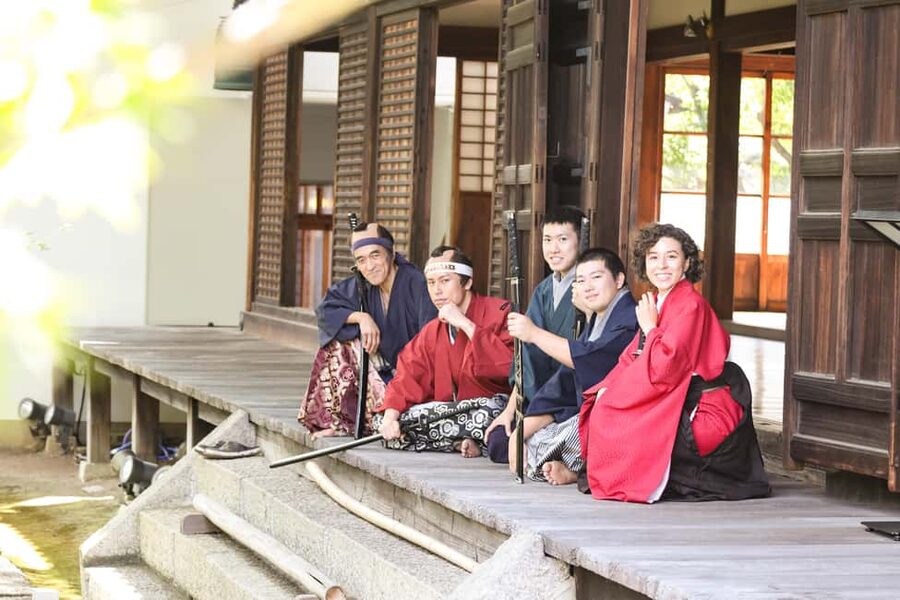
The unusual part of this activity is the location. You are not simply watching a staged sword show in a modern theater. You meet at the Myokaku-ji Dojo, just to the left after entering the temple’s main gate, and carry out the session inside a working religious site.
Myokaku-ji is also tied to Kyoto’s Sengoku-era past. The temple is described as a place where warlords such as Oda Nobunaga stayed around 400 years ago. That detail gives the lesson more atmosphere than a generic studio would provide, even though the main purpose is action filming rather than a formal temple tour.
The setting matters because the session asks you to act. A wooden practice space and temple surroundings give your short scene a sense of place. You are still taking part in a carefully guided activity, but the location helps the exercise feel less like a costume rental and more like a small period-drama shoot.
You should not expect a full historical lecture. The temple connection is part of the mood and context. If your priority is learning about Kyoto’s religious architecture, you will need a separate temple visit.
Other temples and shrines people visit around Kyoto:
- Kyoto: Tea Ceremony in a Traditional Tea House in Kiyomizu
★ 4.9 · 3,519 reviews - Kyoto: Tea Ceremony Ju-An at Jotokuji Temple
★ 4.9 · 3,207 reviews - Fushimi Inari Hidden Hiking Tour (Private Option Available)
★ 5.0 · 1,750 reviews
What the 70-minute session feels like
The experience is compact. In 70 minutes, you dress, learn basic sword handling, watch a professional performance, rehearse, and record your own action sequence.
That schedule keeps the activity lively, but it leaves little spare time. Arrive ready to begin, with comfortable clothing underneath your costume and your camera prepared. You are asked to bring a camera, and you may take photos and videos during the experience.
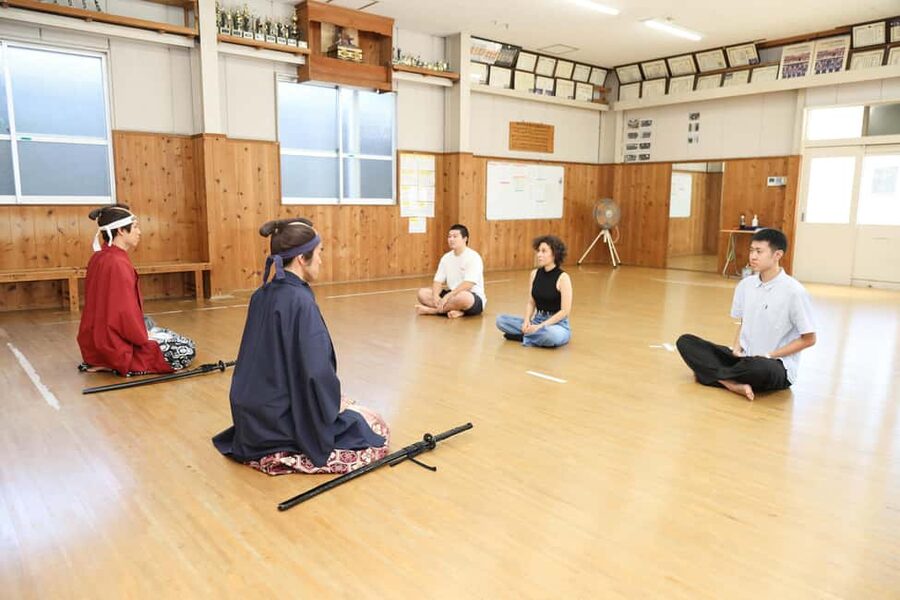
The small group size is a real advantage. With a maximum of six participants, the instructors can demonstrate a move, watch you try it, and adjust your position before moving on. This matters more than it might sound. Sword choreography depends on timing, arm position, footwork, and where you look, so individual help makes the final scene easier to perform.
The class is offered in Japanese and English. The instructors guide the action rather than expecting you to know Japanese martial arts terms beforehand. Still, you should listen closely. A filmed sequence works best when everyone follows the same timing.
Learning makkogiri and kesagiri
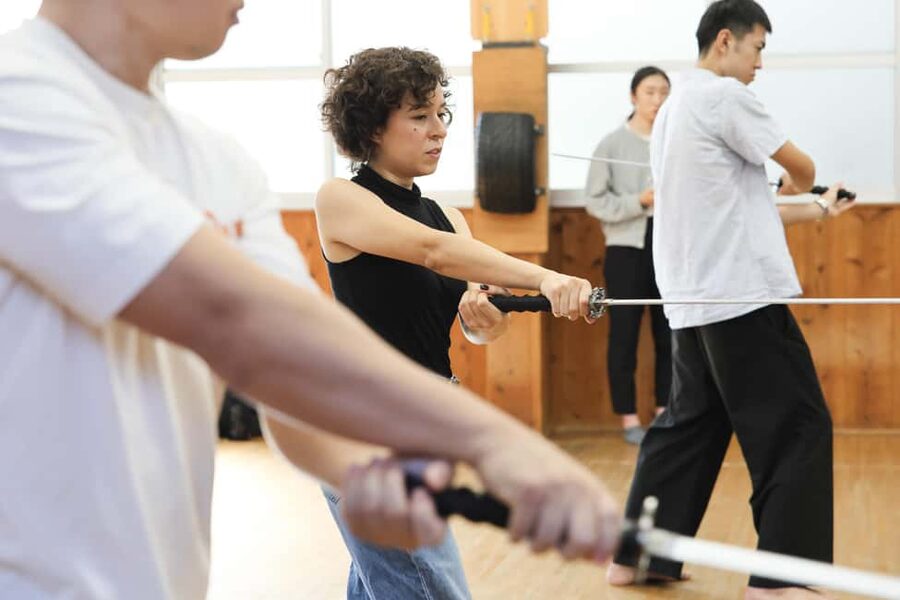
The sword lesson covers basic ways to hold and wield the sword, along with movements named makkogiri and kesagiri. These terms give the session a traditional structure, but you should think of the lesson as stage combat training rather than preparation for a real fight.
The swords used for the activity are fake practice swords, as one participant specifically noted. That is good news for a first-time performer. You can concentrate on the shape of each movement and your position in the scene without handling a live blade.
The instructors show you how to make a strike look clear and forceful while keeping it controlled. You will likely repeat movements until they look coordinated enough for filming. The goal is not speed or strength. The goal is a safe, readable action sequence that looks convincing on camera.
This part can be surprisingly physical. The activity information recommends comfortable clothes suitable for movement, and that advice should be taken seriously. You may need to bend, turn, extend your arms, and repeat the same action several times.
The session is not suitable for children under five, pregnant women, people with back problems, people with pre-existing medical conditions, or people over 95. If you have a health concern that is not listed, it is sensible to consider the physical demands before booking.
Getting dressed in a kimono
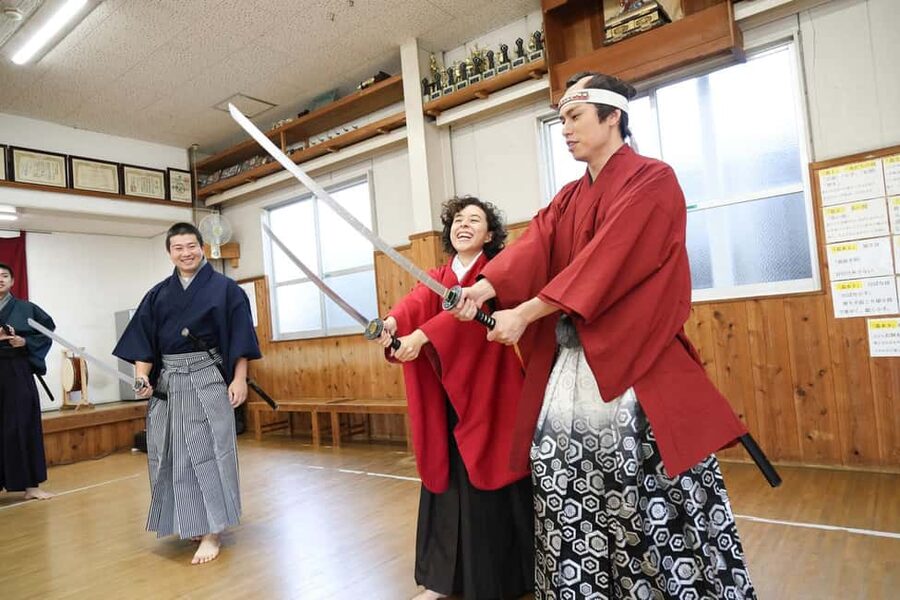
The kimono rental is included in the price, so you do not pay a separate costume fee. Dressing in traditional clothing changes the feel of the class. You are not only holding a prop sword. You are also learning how clothing affects posture and movement.
The activity includes learning about the traditional art of kimono dressing and then wearing one for the session. The costume helps create the visual effect needed for filming, though it can also make movement feel less natural at first.
Allow yourself time to adjust. A kimono is not gym clothing, and broad, careless movements may not work well in it. The instructors can show you how to move in a way that looks controlled and keeps the clothing in place.
This is one reason comfortable clothes matter. You will wear the kimono over what you bring, so choose clothing that allows you to move without discomfort. The supplied information does not specify footwear or changing-room arrangements, so do not assume details that have not been confirmed.
Same country, a different morning at the gates:
- Osaka/Kyoto:Kinkakuji,Arashiyama,FushimiInariShrine,NaraPark
★ 4.1 · 1,596 reviews - Kyoto/Osaka: Nara, Fushimi Inari Taisha, Arashiyama Bus Tour
★ 4.7 · 1,275 reviews - Kyoto Arashiyama Walking Tour: Bamboo, Monkeys, Gardens & Secrets
★ 5.0 · 1,216 reviews - Arashiyama Bamboo, Temple, Monkeys, or Secret Sake Brewery
★ 4.8 · 886 reviews
Watching professional samurai actors at work
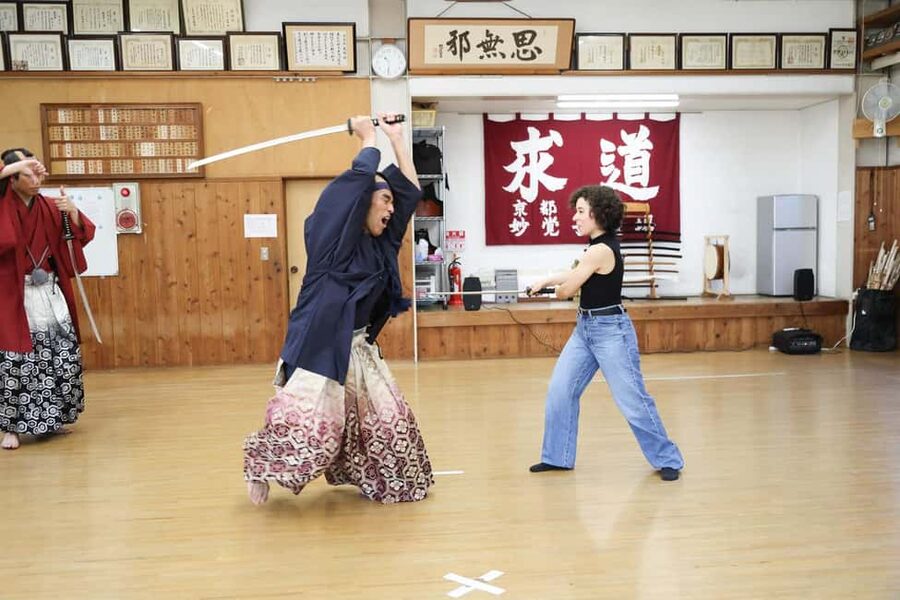
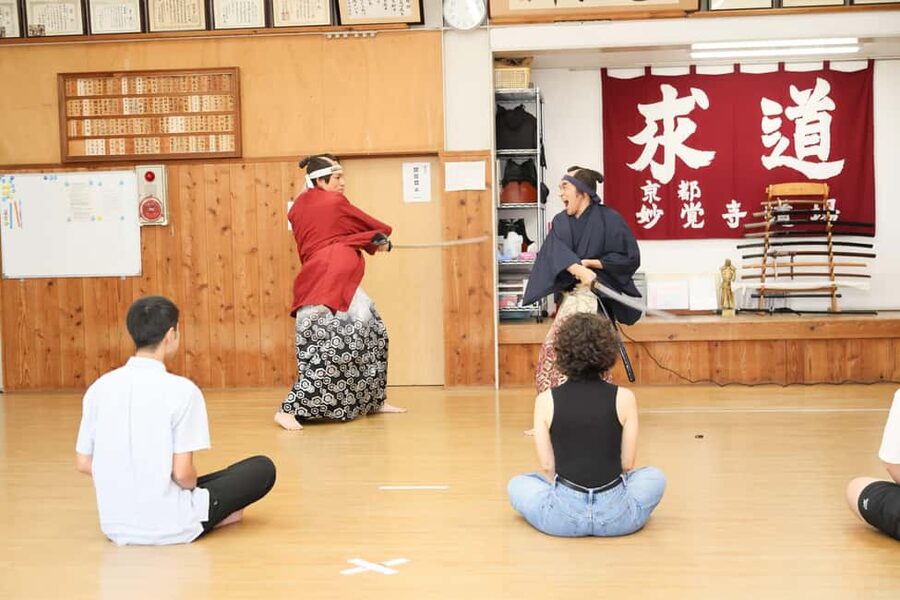
Before you film your own scene, you watch a chambara performance by the instructors. The guides are professional actors in period dramas, and Keisuke Irie and Kazuya Naito are identified as performers who have worked in Japanese movies and television shows.
This demonstration is more useful than a simple show. It lets you see how a sword move is presented for an audience. The actors bring timing, facial expression, and body position together in a way that is difficult for a beginner to copy immediately.
The performance also gives you a clear target. You can see that stage swordplay is not just waving a blade around. A short pause, a sharp turn, or a strong final pose may matter as much as the strike itself.
The instructors are part of the appeal. The strongest praise for this activity centers on their humor, patience, and encouragement. That is important because many people will feel awkward at first. A serious or impatient teacher could make the filming uncomfortable, while a playful teacher helps you commit to the role.
Your turn in front of the camera
After the lesson and demonstration, you perform the sword techniques in a choreographed scene. You may use your own camera to record the swordplay session, and the activity includes a photo download service.
This is where the experience changes from class to performance. You are no longer simply copying a movement. You are trying to remember the sequence, face the right direction, respond to the other performers, and make the action look clear.
The final scene may not look polished in the way a professional film does. That is not a flaw. The fun comes from seeing yourself attempt a samurai role with the help of actors who understand screen action.
You should be willing to commit to the performance. A half-hearted swing and a shy facial expression will make the footage less entertaining. The people who get the most from this activity are likely to be those who can laugh at themselves and give the scene some energy.
You can also record with your own phone or camera, which gives you immediate control over the footage. Bring enough storage and battery power, since the provider does not list charging equipment or storage as included. The photo download service gives you another way to keep the memory after the session.
Is $127 a fair price?
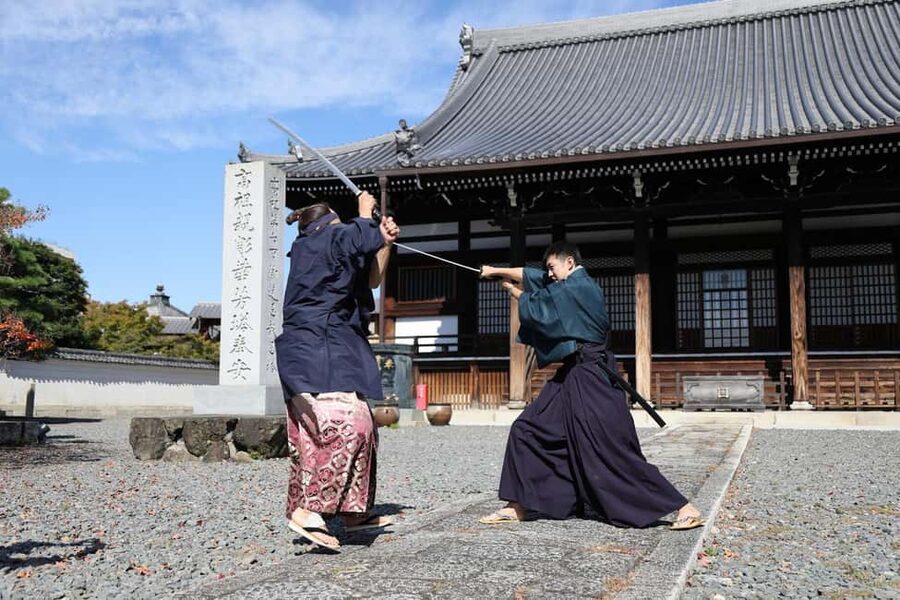
At $127 per person, this is not a bargain-priced sightseeing stop. It is also more than the cost of simply renting a kimono for photographs or watching a short cultural performance.
The value comes from the combination of elements. You receive kimono rental, instruction, a professional demonstration, a small-group session, recording with your own camera, a photo download service, and specified indemnity insurance. Transportation and meals are not included, but the activity lasts only 70 minutes, so it is easy to fit around other Kyoto plans.
The small group makes the price easier to justify. A larger class could offer the same costume and performance but less personal help. Here, the instructors have a better chance to guide your movements and help you prepare for the camera.
I would book this for the memory and participation, not for deep martial arts training. You are paying for a compact piece of samurai theater that you help create. If you want a serious multi-hour sword course, this is too short. If you want a well-organized activity with a finished visual souvenir, the price is more reasonable.
Who will enjoy this most
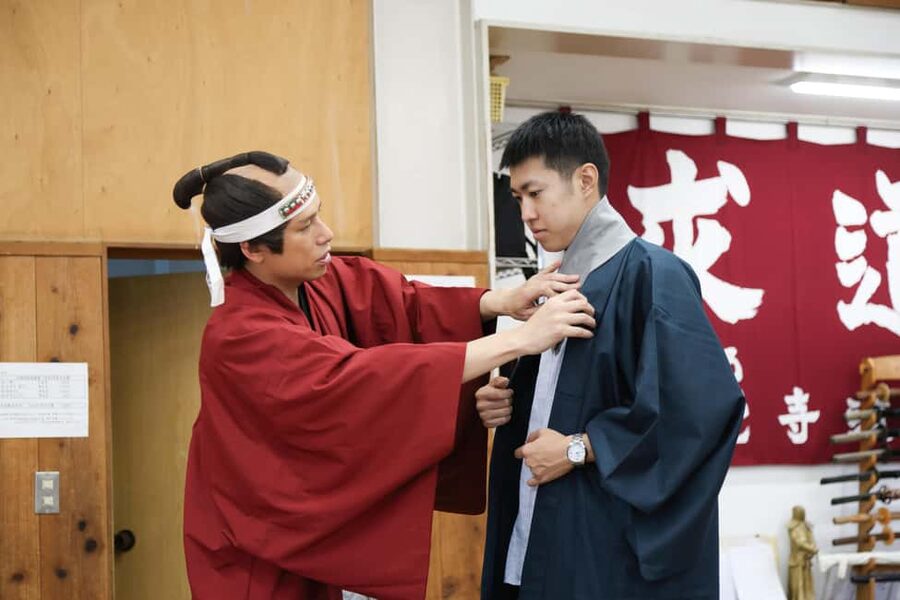
This suits adults, teenagers, couples, families with older children, and solo participants who like active cultural experiences. Teenagers in particular may enjoy having a role to play and footage to share afterward.
It also works well for people who have already seen Kyoto’s temples and want something more hands-on. You get a cultural setting, traditional clothing, Japanese performance, and a chance to create a short scene rather than simply looking at another building.
You do not need previous sword experience. The instructors teach the basic movements and guide the action. You do need enough mobility to take part in physical activity, and you should be comfortable following directions in a group.
This may not suit you if you dislike costumes, cameras, or public performance. Even a small group means other people will see you act. The activity information also rules out several health conditions, so check those restrictions carefully before paying.
Practical advice before you go
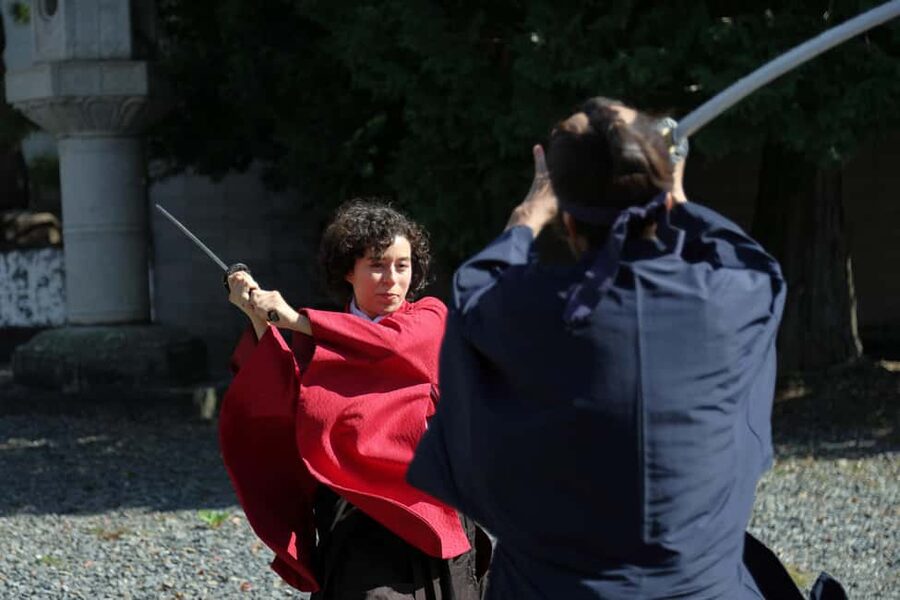
Find the Myokaku-ji Temple main gate first. The meeting point is the Myokaku-ji Dojo, on the left after you enter. Transportation to the temple is not included, so plan your route separately.
Wear comfortable clothes that work for movement and can be worn under a kimono. Bring your camera, make sure it is charged, and leave enough space for new files. You may take photos and videos during the experience.
Smoking, alcohol, and drugs are not allowed. The session includes indemnity insurance specified by the provider, but that does not remove the need to follow safety instructions.
English and Japanese are available. The group is limited to six participants, which helps, but language ability can vary by instructor and participant. Listen for movement cues and ask for a repeat if you are unsure.
The activity offers free cancellation up to 24 hours in advance for a full refund. You can also reserve now and pay later, which is useful if your Kyoto schedule is still changing.
Should you book this samurai experience?
Book it if you want an active Kyoto memory, enjoy playful performance, and like the idea of wearing a kimono while learning stage sword moves from working actors. The temple setting, small group, and downloadable photos give it more substance than a quick costume photograph.
I would especially recommend it for families with teenagers, couples, and anyone who wants a souvenir with more personality than a standard portrait. Keisuke Irie and Kazuya Naito bring the right mix of instruction and entertainment, according to the supplied experience details.
Skip it if you want a quiet temple visit, a detailed lesson in Japanese history, or serious martial arts certification. At 70 minutes, this is a focused entertainment experience with cultural flavor. Go ready to move, laugh, and perform, and the $127 fee can make sense.
FAQ
Where does the samurai sword experience take place?
It takes place at Myokaku-ji Temple in Kyoto, on Honshu, Japan. The meeting point is the Myokaku-ji Dojo, located to the left after entering the temple’s main gate.
How long does the activity last?
The experience lasts 70 minutes.
How many people can join the group?
The activity is limited to six participants.
Is kimono rental included?
Yes. The rental kimono is included in the activity price.
Can I take photos or videos?
Yes. You are welcome to take photos and videos during the experience, and photography and video recording with your own camera are included.
Do I need to bring a camera?
You should bring a camera if you want to record your own performance. A photo download service is included, but the supplied details do not specify the type or amount of downloadable content.
Is transportation to the temple included?
No. Transportation to and from Myokaku-ji Temple is not included.
Can I cancel for a refund?
Yes. You can cancel up to 24 hours in advance for a full refund. The activity also offers a reserve-now-and-pay-later option.
Just added around Kyoto
- Osaka/Kyoto: Katsuoji, Kinkakuji, Arashiyama 1-Day Bus Tour★ 4.6 · 33 reviews
- Kyoto:Kiyomizu-dera Temple Rent a kimono and ride a rickshaw★ 4.8 · 7 reviews
- Kyoto: Kimono/Yukata Rental 5 Minute from Kiyomizu-dera★ 4.7 · 89 reviews
- Kyoto: Wagashi (Japanese sweets) Cooking near Fushimiinari★ 5.0 · 40 reviews
- Kyoto Fushimiinari:Wagashi Making & Small Group Tea Ceremony★ 5.0 · 14 reviews
- KYOTO: Tempio Kiyomizu Pagode Gion “Geisya” (Guida Italiana)★ 4.7 · 17 reviews
- Best of Kyoto: Red Gates of Fushimi Inari & Kiyomizu Temple★ 4.8 · 36 reviews
- Kyoto: Sake Brewery and Tasting Tour in Fushimi★ 4.8 · 55 reviews
Kyoto Temple Tours, compared.
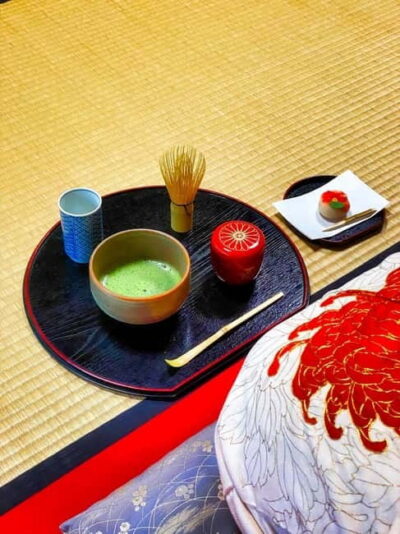
Tea Ceremony in a Traditional Tea House in Kiyomizu
Read our review →
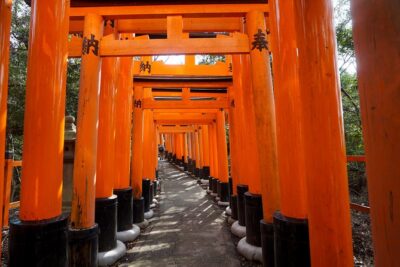
Fushimi Inari Hidden Hiking Tour (Private Option Available)
Read our review →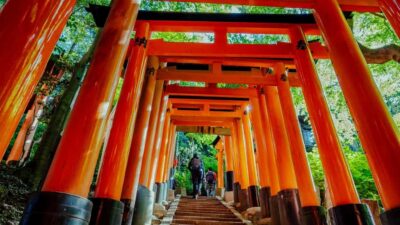
Osaka/Kyoto:Kinkakuji,Arashiyama,FushimiInariShrine,NaraPark
Read our review →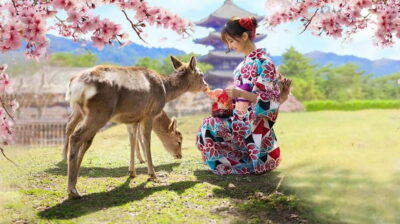
Kyoto/Osaka: Nara, Fushimi Inari Taisha, Arashiyama Bus Tour
Read our review →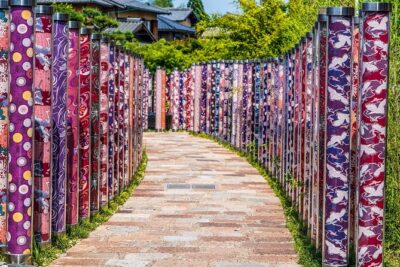
Kyoto Arashiyama Walking Tour: Bamboo, Monkeys, Gardens & Secrets
Read our review →
Arashiyama Bamboo, Temple, Monkeys, or Secret Sake Brewery
Read our review →
Arashiyama Bamboo Forest, Monkeys, Matcha & Temple Tour
Read our review →Browse the lists this tour appears in