
REVIEW · FUSHIMI INARI SHRINE TOURS
Osaka/Kyoto: Arashiyama, Nara Park, Fushimi Shrine Tour
Three of Kyoto and Nara’s biggest sights fit into one long day here: Arashiyama’s bamboo paths, Nara Park’s freely roaming deer, and Fushimi Inari’s endless red torii gates. For a first visit, that is a very useful sweep of famous Japan.
I like the efficient transport between Osaka, Kyoto, and Nara, and I like that each stop gives you time to explore on your own rather than keeping you in a tight guided group. The price also covers tolls, parking, fuel, and the bus, which matters on a day with several long road journeys.
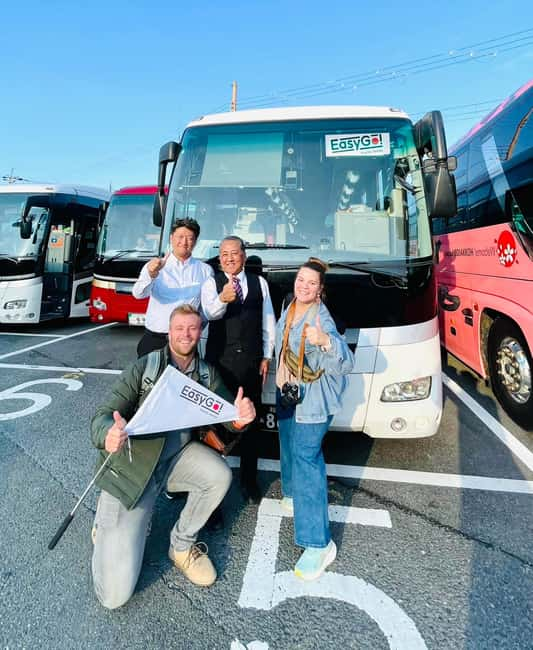
The tradeoff is clear: you spend a lot of the day on the road, and the guidance is light. One departure received a serious complaint about a missed pickup, so you need to arrive early, confirm the meeting point, and stay alert for the staff member in the EASY GO vest or holding the EASY GO flag.
Key points to know
- Three major sights in one day: Arashiyama, Nara Park, and Fushimi Inari are covered in roughly 10 hours.
- Two departure areas: You can begin at Kyoto Station’s Hachijo-guchi sightseeing bus area or near Dotonbori in Osaka, depending on your booking.
- Morning Arashiyama visit: The first stop lasts about two hours, giving you time for the bamboo forest and Togetsukyo Bridge.
- Short but useful Nara stop: You have about 80 to 90 minutes in Nara Park, enough for the deer and a walk, but not an in-depth temple visit.
- Basic rather than full guiding: Chinese is the main language, and English, Japanese, or Korean help may be available if requested.
- Good value for road transport: The $51 price includes the coach, fuel, parking, tolls, and guide or host service.
Three famous sights, one tightly packed day
This tour is built for efficiency. You start in Osaka at about 8:00 a.m., or in Kyoto at roughly 9:20 a.m., then reach Arashiyama around 10:00. After two hours there, the bus continues to Nara for about 80 to 90 minutes, then Fushimi Inari for roughly 1 hour and 20 minutes to 1.5 hours.
You return to Kyoto around 5:00 p.m. and Osaka around 6:00 p.m. The route looks simple on paper, but the road pattern matters. An Osaka departure goes from Osaka to Kyoto, then Nara, back to Kyoto, and finally Osaka. That creates useful coverage, but it also means a large share of the day is spent sitting on a coach.
I see this as a sightseeing sampler, not a slow cultural visit. You can see three essential places without arranging several train journeys, checking different stations, or working out local buses. You will not have time to explore every lane, temple, and garden in these areas.
More Fushimi Inari Shrine Tours in Osaka:
- Sagano Romantic Train & Arashiyama, Kiyomizudera, Fushimi Inari Taisha Day Tour
★ 4.5 · 171 reviews - Kyoto: Immersive Arashiyama & Fushimi Inari by Private Car
★ 5.0 · 35 reviews - From Osaka: Nara Deer & Kyoto Kiyomizudera Sightseeing Tour
★ 4.2 · 27 reviews
Starting in Arashiyama before the crowds build
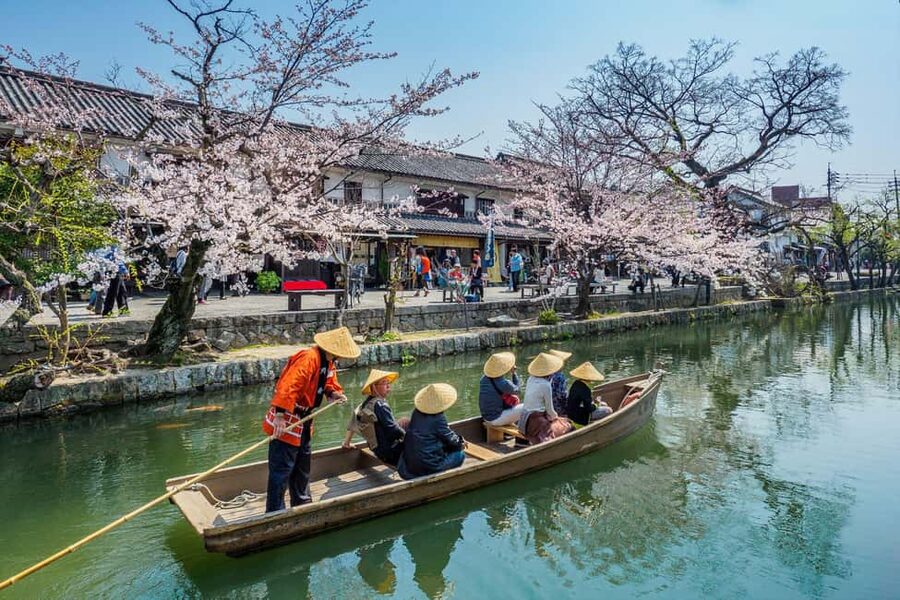
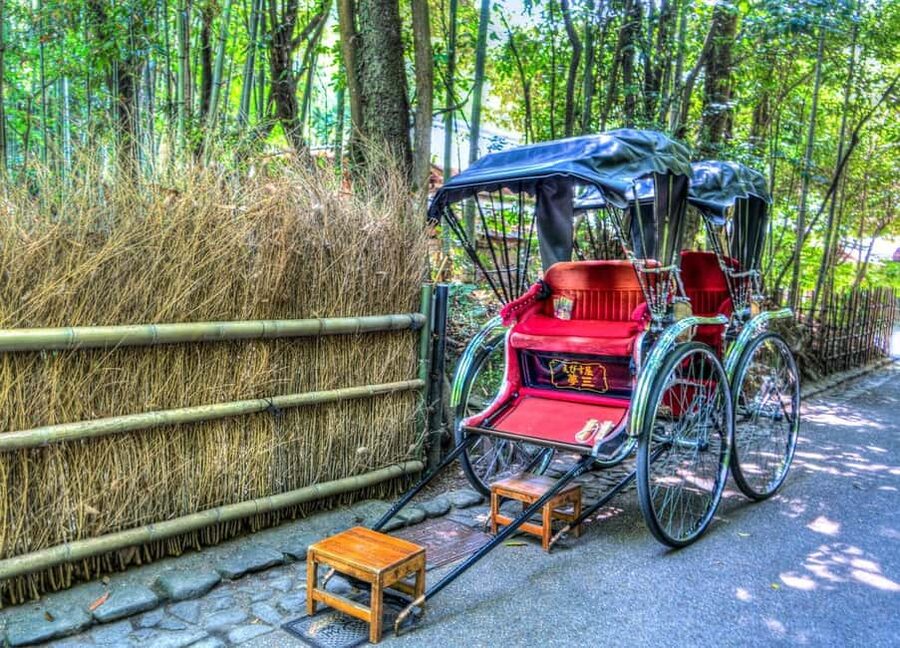
Arashiyama is the strongest opening stop because you arrive in the morning, when the bamboo area can feel calmer than later in the day. The tour allows about two hours, which gives you time to walk the famous bamboo forest trails and reach Togetsukyo Bridge.
The bamboo grove is not a huge hiking route, so two hours can work well if you keep moving. You can take photographs, walk among the tall green stalks, and then shift toward the bridge and the river scenery. The changing seasons give the area a different look, with the tour description specifically pointing to the scenery from Togetsukyo Bridge.
Do not expect a private walk or detailed interpretation from the guide. Arashiyama is mainly a self-guided stop. That is good news if you like setting your own pace, but less helpful if you want someone to explain the area’s temples, gardens, or religious traditions.
The main practical concern is time. If you spend too long taking photos in the bamboo grove, you may have little left for the bridge. I would make the bridge a priority, then use remaining minutes for the forest paths. Wear shoes that are comfortable for walking and keep track of the meeting time.
Nara Park and the deer that own the place
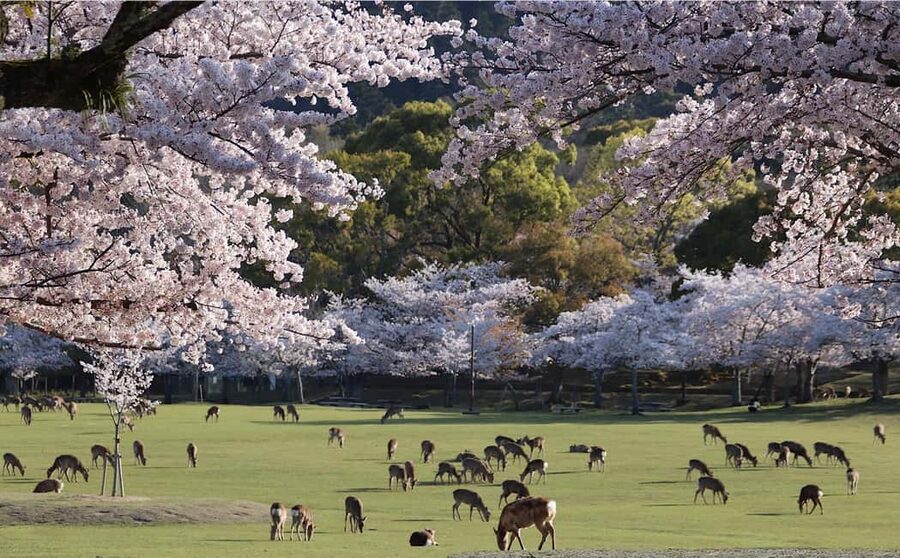
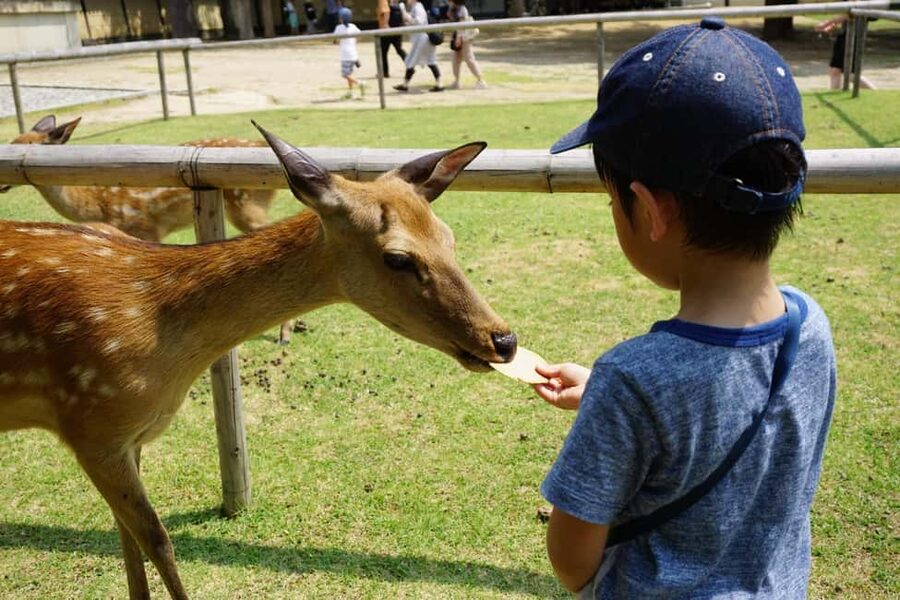
The Nara stop lasts about 80 minutes, sometimes described as 1 hour and 30 minutes. That is enough to see the park’s famous deer and enjoy its broad green setting, but it is not enough for a full tour of Nara’s major sights.
More than 1,000 deer roam freely around Nara Park. They are regarded as messengers of the gods and have a recorded connection with the area stretching back more than 1,300 years. The deer are also protected as a national natural monument, so this is not simply a wildlife photo stop. It is part of Nara’s religious and cultural identity.
The park sits beside Kasuga Taisha Shrine, but your free time is limited. You may be able to walk toward the shrine area, but you should not count on seeing every part of it before the bus leaves. The tour provides no meal, so this is a poor time for a long lunch. Bring your own water and plan to eat around the schedule, while remembering that food is not allowed inside the vehicle.
The deer are accustomed to people, but you still need to pay attention. Keep your belongings close, follow local instructions, and do not let the excitement of feeding or photographing them make you late. Nara is the most family-friendly stop in spirit, though younger children will need close supervision around free-roaming animals and the busy pickup schedule.
Fushimi Inari and the red torii tunnels
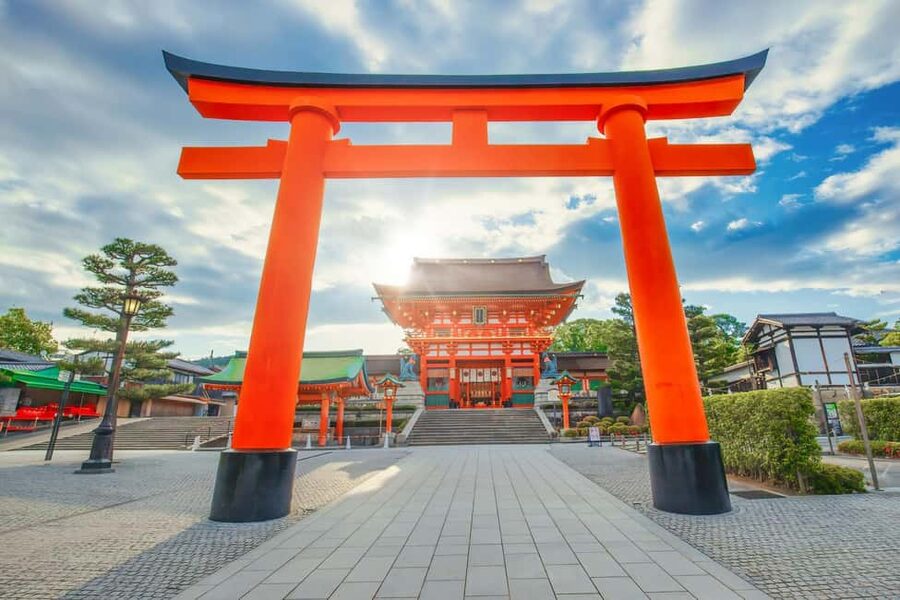
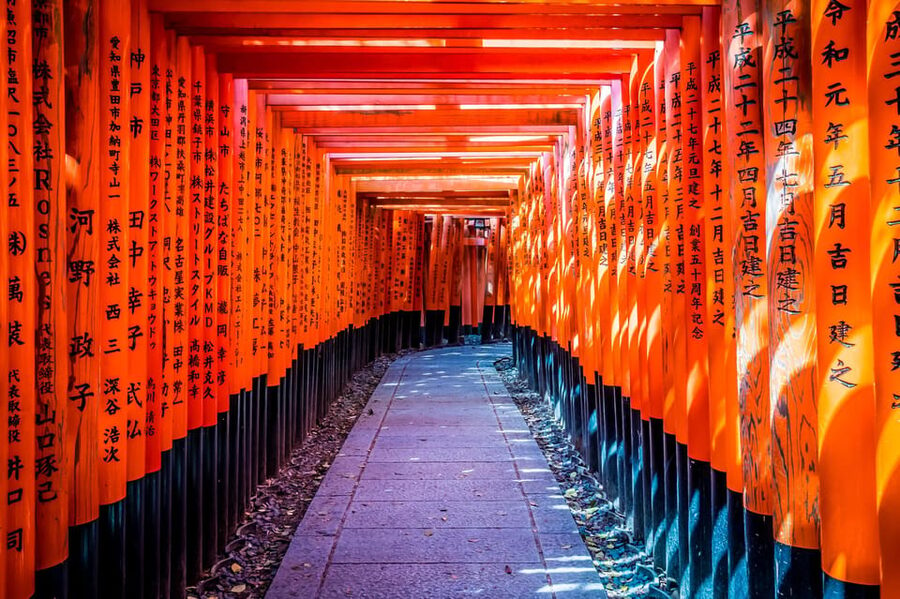
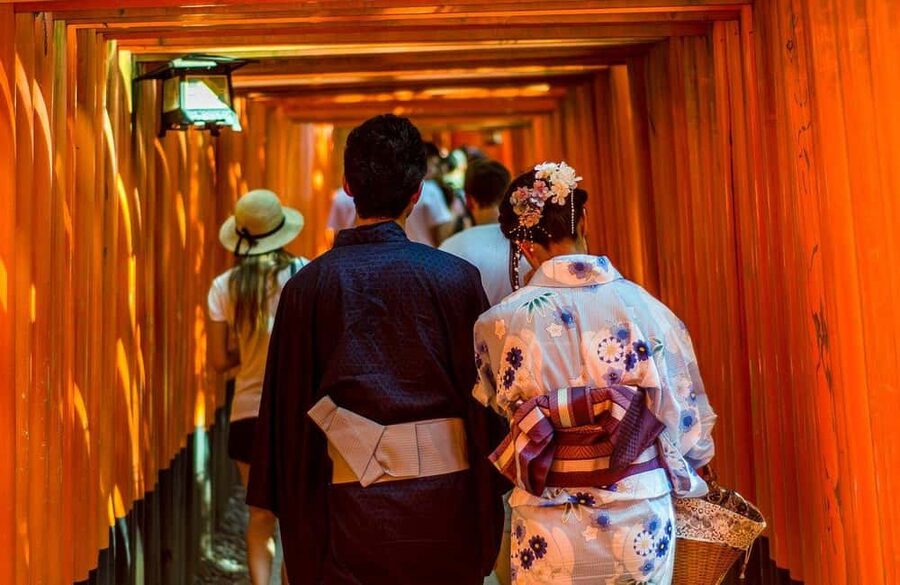
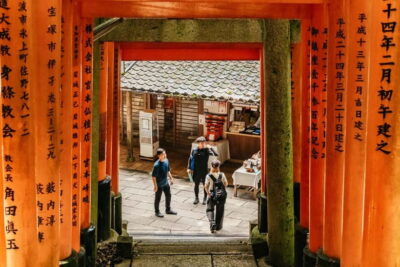
Fushimi Inari Taisha is the final major stop and likely the visual highlight of the day. The shrine is the headquarters of about 30,000 Inari shrines across Japan. Its gates climb through Mount Inari, creating the famous red corridors that seem to lead into the forest.
The site was founded in 711, and the entire mountain is treated as sacred space. Even with only about 80 to 90 minutes, you can get a strong sense of why this place is so memorable. The lower shrine grounds and first torii paths are the easiest section to reach within the allotted time.
You should not expect to walk the entire mountain route. Fushimi Inari rewards extra time, and a full climb would require a separate visit. Here, the goal is to enter the gate paths, take in the repeating red columns, and return to the bus on time.
This last stop also comes with a timing issue. By the afternoon, the site can be busy, and you may spend part of your visit moving around other people. Still, the scale of the shrine makes even a short visit worthwhile. If you want the quietest possible experience, you would be better off visiting independently at an unusual hour.
A few more temple visits around Osaka worth a look
- Kyoto and Nara Day Trip from Osaka
★ 4.0 · 175 reviews - Osaka: Minoh, Katsuoji Temple, & Minoh Falls Full-day Tour
★ 4.9 · 172 reviews - Osaka Temple Cool Foot Bath & Matcha Experience〈45min〉
★ 4.9 · 82 reviews - Osaka: Mind & Spirit Balance Temple Reiki Healing
★ 5.0 · 41 reviews
What the $51 price really covers
At $51 per person, the tour is priced as a transport service with sightseeing stops. You are paying for the coach, fuel, tolls, parking, and a host or guide. That can be fair value if you are starting in Osaka and want to avoid organizing several train connections and local transfers in one day.
The value is less obvious if you are already staying near Kyoto’s rail network and feel comfortable using public transportation. One person who took the route found that independent transport could be faster, cheaper, and less rushed. That is a fair criticism, especially because the bus must follow a fixed route and wait for road conditions.
Still, public transport has its own costs. You must plan the order of Arashiyama, Nara, and Fushimi Inari, allow for station transfers, and keep an eye on the clock. This bus removes much of that planning. For a first visit or a short stay, paying for convenience may be worth more than saving a modest amount.
The price does not include meals, drinks, or personal purchases. It also does not buy you a detailed private guide. Think of the $51 as a practical day of shared transportation with basic commentary, not as a fully guided cultural tour.
Basic guidance and language expectations
The tour is mainly conducted in Chinese. English, Japanese, and Korean-speaking staff may be available if you request that support when booking, but availability is not guaranteed. You should confirm your language needs before paying rather than assume an English-speaking guide will be present.
In smaller groups, the driver may also act as the guide. Commentary is basic, usually enough to explain the next stop and key facts, but not enough for a long lesson in Japanese history or religion. If you like independent sightseeing, this arrangement should be fine. If you want detailed explanations at each shrine and cultural site, it may feel thin.
Some departures have had helpful leaders, including Levi, CC, and HuaHua. Their role is best understood as practical assistance, directions, and basic information. The quality of the day can depend heavily on how clearly the pickup instructions are handled and how well the group keeps to time.
You should arrive early and look for the EASY GO vest or flag. The guide may not contact you in advance, and one especially poor experience involved a family arriving after the bus had gone. The published departure information was apparently unclear in that case, so do not cut it close. Confirm the exact meeting time shown for your booking, especially if you are coming from Osaka.
The coach ride and the risk of traffic
The bus is the central convenience and the central weakness. You avoid changing trains and carrying your plans through several stations, but you cannot escape traffic. The road journey can take about an hour at the start or end, and the Osaka route includes the back-and-forth movement through Kyoto.
Traffic, weather, group size, and road conditions can change the time at each stop. The operator may arrive early at a later attraction or finish earlier than planned if a site closes or has limited visiting hours. In severe weather or a natural disaster, the tour may be canceled.
Shared transport also means you need to respect the group. Food is not allowed in the vehicle, and late returns can affect everyone. The bus may include people from several countries, so instructions may be repeated in different languages and the pace may not always suit you perfectly.
On the positive side, the coach covers parking and toll fees, which are easy to overlook when comparing the price with an independent day. You also finish near Kyoto Station or Dotonbori, depending on your selected option, giving you a useful base for the evening.
Who will get the most from this tour
I would choose this trip if you have only one open day for Kyoto and Nara, want to see the headline sights, and prefer not to manage public transportation. It suits first-time visitors, couples who want a simple plan, and families who value a direct ride between stops.
It also works for visitors staying in Osaka who want to reach Arashiyama and Fushimi Inari without building a complicated route. The return to Osaka around 6:00 p.m. leaves the evening available, though traffic can affect that timing.
I would be more cautious if you have already seen these places or want a quiet, detailed visit. Arashiyama, Nara, and Fushimi Inari each deserve more time than this single day allows. The short stops also make the tour less suitable for anyone who dislikes fixed schedules or needs long breaks.
Wheelchair access is listed as available, but you should confirm the practical details for your specific booking and vehicle. The tour may be shared with international visitors, and the language service depends on the actual arrangement.
Should you book this Osaka and Kyoto day tour?
Book it if your priority is coverage and convenience. For $51, you get a full day of transport across Osaka, Kyoto, and Nara, plus time at three of Japan’s most recognizable sights. The best parts are the early Arashiyama visit, the memorable deer park, and the chance to see Fushimi Inari without arranging the route yourself.
Skip it if you prefer independent travel, want detailed guiding, or dislike spending long stretches on a bus. Public transportation may be faster and less expensive for confident planners, especially from Kyoto.
If you do book, treat it as a well-organized sampler. Arrive early, verify your exact pickup point, request your preferred language in advance, keep your phone available for directions, and return to the bus before the stated time. With those precautions, this is a practical way to see a lot in one day, as long as you accept that a lot also means a fairly brisk pace.
FAQ
How long does the tour last?
The advertised duration is 10 hours. The planned schedule leaves Osaka around 8:00 a.m. or Kyoto around 9:20 a.m., returning to Kyoto around 5:00 p.m. and Osaka around 6:00 p.m.
Where can I start the tour?
The two listed starting areas are Kyoto Station’s Hachijo-guchi sightseeing bus area and 1-chome-1-3 Dotonbori in Osaka. The exact meeting point depends on the option you book.
Which attractions are included?
The tour visits Arashiyama, Nara Park, and Fushimi Inari Taisha Shrine. Each stop includes free time or a self-guided visit.
How much time do I get at each stop?
Arashiyama receives about two hours. Nara Park receives about 80 minutes to 1 hour and 30 minutes. Fushimi Inari receives about 1 hour and 20 minutes to 1.5 hours.
Is a meal included?
No. Meals and beverages are not included. Food is also not allowed inside the vehicle.
What languages are available?
The tour is mainly conducted in Chinese. English, Japanese, and Korean-speaking staff may be available upon request, but language availability is not guaranteed.
Is the tour fully guided?
No. It includes basic guidance and commentary rather than professional, detailed guiding at every attraction. In smaller groups, the driver may also serve as the guide.
Is the tour wheelchair accessible?
The activity is listed as wheelchair accessible. You should confirm the details for your specific departure and vehicle when booking.
Can I cancel the booking?
You can cancel up to 24 hours in advance for a full refund. The tour also offers a reserve-now, pay-later option.
Just added around Osaka
- Osaka Temple :Warm Bamboo Oil Massage – Deep Restore〈60min〉★ 4.9 · 19 reviews
- Osaka/Kyoto: Kiyomizudera Fushimi Inari, Nara Tour w/ Pickup★ 4.5 · 8 reviews
- Osaka: Temple Tour and Traditional Calligraphy Lesson★ 4.9 · 24 reviews
- Osaka Temple :Warm Bamboo Oil Massage – Deep Restore〈90min〉★ 5.0 · 14 reviews
- Osaka Temple Head Spa &Matcha Facial – Refresh & Glow〈90min〉★ 5.0 · 24 reviews
- Osaka Temple Cool Foot Bath & Matcha Experience〈45min〉★ 4.9 · 82 reviews
- Osaka: Mind & Spirit Balance Temple Reiki Healing★ 5.0 · 41 reviews
- Osaka Morning Tour: Shitennoji Temple, Shinsekai &Doutonbori★ 5.0 · 23 reviews
Fushimi Inari Shrine Tours, compared.
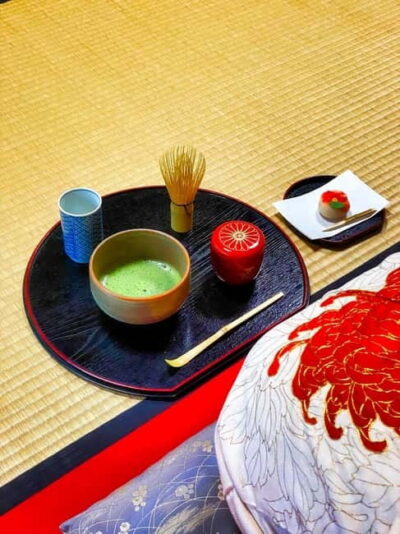
Tea Ceremony in a Traditional Tea House in Kiyomizu
Read our review →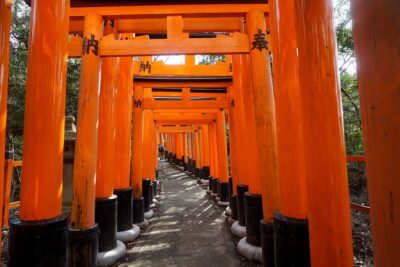
Fushimi Inari Hidden Hiking Tour (Private Option Available)
Read our review →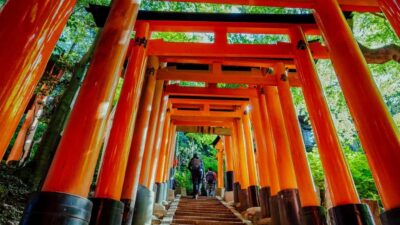
Osaka/Kyoto:Kinkakuji,Arashiyama,FushimiInariShrine,NaraPark
Read our review →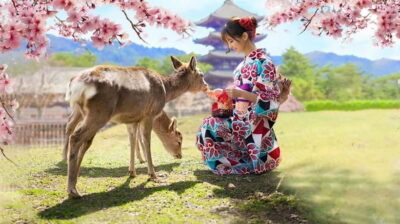
Kyoto/Osaka: Nara, Fushimi Inari Taisha, Arashiyama Bus Tour
Read our review →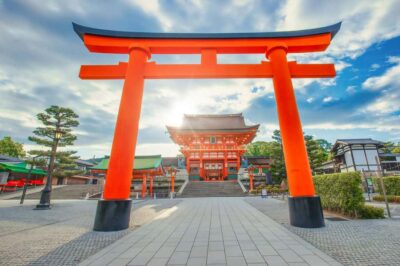
Osaka/Kyoto: Arashiyama, Nara & Fushimi Inari Shrine w/Lunch
Read our review →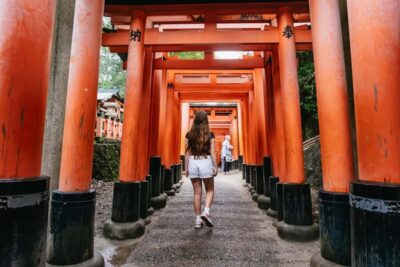
Nijo Castle, Kiyomizu & Fushimi Inari Guided Tour
Read our review →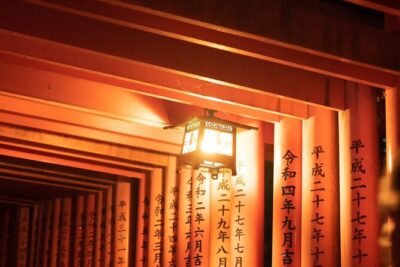
Browse the lists this tour appears in