
REVIEW · OSAKA TEMPLE TOURS
Kyoto and Nara Day Trip from Osaka
Kyoto’s gold-covered Kinkaku-ji, Nara’s deer, and the huge bronze Buddha at Todai-ji all appear in one very full day. This is the kind of tour that lets you see the headline sights quickly, without spending your limited Osaka time sorting out train routes, admission tickets, and city transfers.
I like the efficient route and the strong mix of places: a shogun’s castle, a famous Buddhist temple, the former imperial residence, a major Shinto shrine, and Nara Park. Guides such as Momo, KC, and Hatchi have been praised for keeping the day lively and informative. The trade-off is clear: the pace is fast, and some stops allow only 40 to 60 minutes.
Key points to know before booking
- Five major sights in about 11 hours: You visit Nijo Castle, Kinkaku-ji, Kyoto Imperial Palace, Kasuga Grand Shrine, and Todai-ji.
- Transport is handled for you: Trains or a coach connect Osaka, Kyoto, and Nara, though seats are non-reserved when trains are used.
- The morning is especially compressed: Kyoto includes three major stops before the move to Nara.
- Lunch is optional: Choose no lunch, a Western-style meal, or an Indian thali meal when booking. Changes are not allowed on the day.
- The return is to Osaka-Namba: The tour ends around 6:30 p.m., with no hotel drop-off.
- Closures can change the plan: Alternative sites replace the Imperial Palace, Nijo Castle, or Kasuga’s special visit area when needed.
One day, two former capitals
This excursion tries to solve a real Japan-planning problem. Kyoto and Nara are close to Osaka on a map, but their famous sights are spread out, and a first-time visitor can lose hours changing trains, finding bus stops, and queuing for tickets.
You meet at Hotel Granvia Osaka at 7:15 a.m. An English-speaking assistant helps get the group to the Sunrise Tours desk in Kyoto Avanti, in the basement of Kyoto Station. Depending on group size and operating conditions, the first leg uses a JR rapid or local train, a coach, or a combination that includes the Shinkansen between Shin-Osaka and Kyoto.
The transport details matter. Trains use non-reserved seating, so you are not guaranteed a seat. If you are traveling with an older family member or simply want a quiet ride, this is worth considering. The coach portion helps the group move between Kyoto sights, but traffic can change arrival times.
The tour is scheduled to finish at Osaka-Namba Station at about 6:30 p.m. You make your own way back to your hotel. Namba is a major station complex, and finding the right underground route can be confusing, particularly if you are staying near Osaka Station or Hotel Granvia. Allow extra time and keep your hotel address handy.
More Day Trips in Osaka:
- Athens: Cape Sounion & Poseidon Temple Sunset Half-Day Trip
★ 4.8 · 8,241 reviews - Athens: Meteora Monasteries Day Trip with Caves and Lunch
★ 4.7 · 4,670 reviews - From Aswan: Abu Simbel Temple Day Trip with Hotel Pickup
★ 4.4 · 2,807 reviews
Nijo Castle: shogun power in polished wood
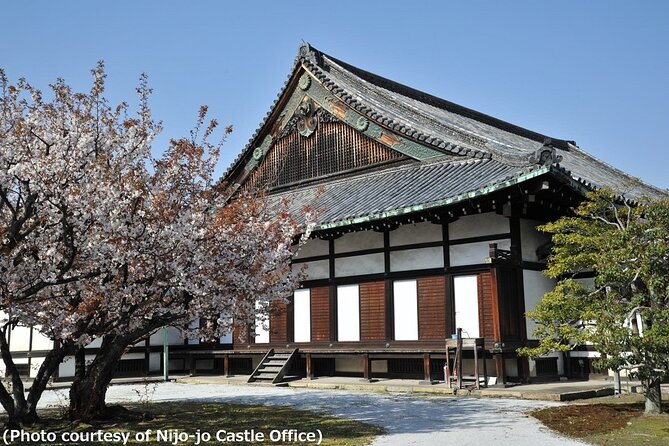
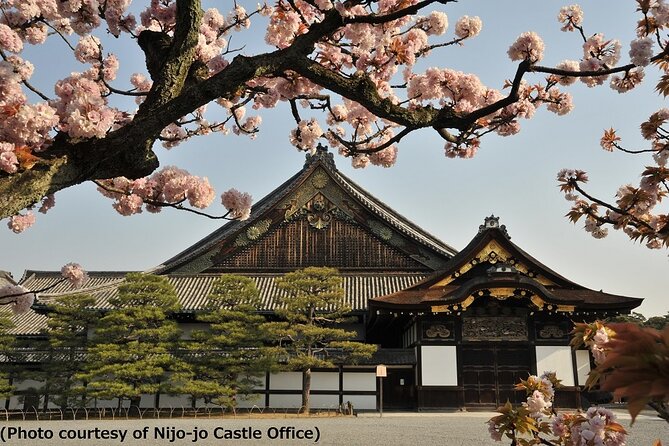
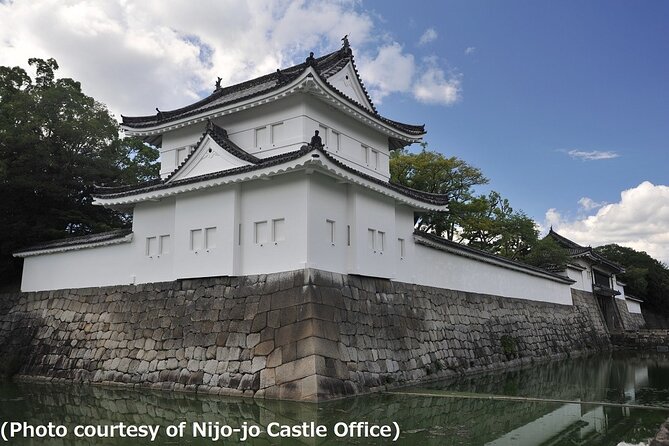
Nijo Castle is a fine place to begin because it gives the day a political and human setting. Completed in 1626, it was built for the Tokugawa shogun as a residence in Kyoto and as protection for the nearby Imperial Palace.
You have about 50 minutes, including admission. The exterior is formal and defensive, but the interior is the real draw. Elaborate carvings, painted rooms, and the famous nightingale floors connect the building to the world of shoguns, court ceremony, and careful security.
This is not a leisurely castle visit. You move with the guide through selected areas, and the group must stay on schedule. If you like architecture and want time to study each room, the visit may feel short. If you want a clear introduction to the Tokugawa period without spending half a day at one site, the tight timing works.
Wear comfortable shoes. The route includes walking through large grounds and historic interiors, and you will spend much of the morning on your feet.
Kinkaku-ji: Kyoto’s quick golden picture
Kinkaku-ji, the Golden Pavilion, is the tour’s most instantly recognizable stop. Its wooden upper stories are covered in gold leaf and reflected in a pond, with gardens surrounding the temple.
You get about 45 minutes. That is enough to reach the main viewing area, take photographs, and walk part of the garden route. It is not enough for a slow garden visit or a quiet search for less obvious details.
The setting is beautiful, but the site can be crowded, especially when Japanese school groups are visiting. Your best strategy is to stay close to the guide at first, hear the explanation, then use any remaining minutes for photographs. The gold pavilion is not a place where you need a complicated plan. The challenge is simply moving with the group through the crowds.
Kinkaku-ji is a Buddhist temple, but the present structure is a reconstruction. The tour’s value here is less about an extended religious visit and more about seeing one of Kyoto’s defining images in person.
Kyoto Imperial Palace and its possible substitutes
Kyoto Imperial Palace was the Emperor’s residence until about 150 years ago. The buildings favor restrained Japanese design, with broad open spaces, carefully arranged gardens, and a sense of ceremony rather than decoration for decoration’s sake.
The scheduled visit lasts about 40 minutes. Your guide explains the palace’s role and leads you through the areas open to the public. It is a useful contrast to Nijo Castle: both relate to political power, but the palace presents court life in a more formal and spare way.
The palace is closed on Mondays, on the following day when Monday is a holiday, and on dates affected by Imperial Household Agency events. When it is closed, the tour visits Kitano Tenmangu Shrine instead. If the closure falls on the 25th, the replacement is Nishi Hongan-ji Temple.
Nijo Castle also has seasonal Tuesday closures in January, July, August, and December, with the following day used when Tuesday is a holiday. Ryoan-ji Temple replaces it in those cases. There is no price reduction when an alternative is used, so check the calendar before you book if a particular monument is essential to you.
A few more temple visits around Osaka worth a look
- Osaka: Minoh, Katsuoji Temple, & Minoh Falls Full-day Tour
★ 4.9 · 172 reviews - Osaka Temple Cool Foot Bath & Matcha Experience〈45min〉
★ 4.9 · 82 reviews - Osaka: Mind & Spirit Balance Temple Reiki Healing
★ 5.0 · 41 reviews - Osaka: Minoh Waterfall & Katsuo-ji Temple Half-Day Tour
★ 4.7 · 27 reviews
Lunch: convenience over culinary adventure
Lunch depends on the option you select. You can choose no lunch, a Western-style set meal, or an Indian thali meal. The Indian option is vegetarian and includes several curries, vegetable pakora, yogurt, naan or roti, rice, salad, and a non-alcoholic drink.
The Western-style meal is described as a buffet or set-style meal, depending on the operating arrangement. It is practical, but do not book this tour expecting a carefully presented introduction to Kyoto cuisine. Some people find the meal ordinary, with fried chicken and standard buffet fare.
I would choose the no-lunch option if you prefer to control what you eat or want to use the Kyoto Station area for a meal. The downside is that your free time is limited, and you must stay aware of the meeting schedule. Vegetarian requests need to be made at booking. Halal, gluten-free, and other special meal requests are not available, and you cannot switch between lunch types on the day.
Kasuga Grand Shrine and Nara’s deer
The afternoon moves to Nara, where the mood changes. Kasuga Grand Shrine is a major Nara-period Shinto shrine, and its deer are traditionally regarded as messengers of the gods.
The visit lasts about an hour. You see the shrine grounds, lanterns, and forest setting, and the tour includes access to the Main Sanctuary special visit area when conditions allow. If an event or operational issue prevents entry, the Kasuga Taisha Museum or Todaiji Museum is used instead.
Nara’s deer are accustomed to people and may bow when offered deer crackers. They can also be pushy. Hold the crackers carefully, feed them promptly, and do not wave food around once you have decided not to give more. The deer are charming, but they are not stuffed animals.
Kasuga is one of the afternoon stops where the guide’s commentary can add real value. The symbols, lanterns, and relationship between the shrine and the deer are easier to understand with context. Stay near the guide, though. One criticism of the tour concerns guides speaking while walking ahead, making it difficult for people at the back to hear.
Todai-ji and the Great Buddha
Todai-ji is the day’s grand finish. Its main hall is one of the world’s largest wooden buildings, and inside sits the enormous bronze Great Buddha.
You have about 70 minutes here, including admission. That is more generous than the Kyoto palace stop, but the temple grounds are large and the approach can be crowded. You need time for the hall, the Buddha, photographs, and the walk back to the meeting point.
Todai-ji is not just a large statue in a large building. It expresses the scale and ambition of Nara when it served as Japan’s capital. The giant Buddha and the wooden hall make an immediate impression, even if you know little about Buddhist art or Japanese history.
The nearby deer and school groups can make this part of the day noisy and crowded. Keep track of the meeting time, especially if you stop to feed the deer or browse around the grounds. The tour has a firm schedule, and the group cannot wait for extended personal exploration.
How the guides shape the day
The quality of the guide matters more than usual on this itinerary because you cover so much ground. The English-speaking guides are expected to explain the sites, manage time, and help the group through transport changes and crowded entrances.
Guides named Momo, KC, and Hatchi have been singled out for friendly explanations, humor, quizzes, and practical help. The guide from Osaka to Kyoto and the assistant from Nara to Osaka may not be the same person as the main Kyoto and Nara guide.
The main weakness is hearing. At busy sites, a soft voice or a guide walking while speaking can leave people at the back missing details. The tour does not specify individual headsets, so move close when explanations begin. If you have hearing difficulties, this may not be the best way to absorb detailed commentary.
The published maximum is 40 people, although one departure was described as much larger. Group size can depend on the operating arrangement, so ask before booking if that point is important to you. A large group makes the schedule feel slower in stations and faster at the monuments.
Is $198.15 a fair price?
At $198.15 per person, this is not the cheapest way to visit Kyoto and Nara. You are paying for coordination, admission fees, an English-speaking guide, and the ability to see five major sites without building the route yourself.
The value is strongest if you have only one free day in Osaka, are visiting Japan for the first time, or feel uneasy handling several train and bus changes. The tour also removes the worry of buying separate tickets and figuring out which entrance to use.
The value is weaker if you already use Japanese trains confidently or want to spend an hour or two at each temple. Public transportation in Japan is efficient, and independent visitors can build a slower route around two or three sights. This tour gives you range, not depth.
A full day of transport and walking also has a cost in energy. The experience begins early, includes several transfers, and ends in the evening. It is a good introduction, but it is not a restful day.
Who should book this Kyoto and Nara trip?
I would choose this tour if you want a broad first look at Kyoto and Nara from an Osaka base. It suits couples, families with older children, and visitors who place a high value on convenience. It can also work well for a short Japan trip when you want to cover the most famous sights in one organized sweep.
I would hesitate if you dislike group schedules, need accessible seating, or want time for careful photography, shopping, and quiet temple visits. It is also a poor match for anyone hoping for a slow food-focused day.
Most people can participate, but you should expect substantial walking, standing, stairs, crowds, and quick transitions. Children under five may join free but do not receive bus seats or lunch unless booked at the child rate. Anyone under 18 needs written parental permission, and anyone under 15 or not yet in middle school must be accompanied by a parent or guardian.
Final verdict: a strong first look, not a deep visit
This tour delivers what it promises: the major Kyoto and Nara sights in one long day, with transport and tickets organized for you. Nijo Castle, Kinkaku-ji, the Imperial Palace, Kasuga Shrine, and Todai-ji give you a useful spread of Japanese architecture, religion, court life, and early capital history.
The price is high, lunch is unremarkable for some tastes, and the schedule leaves little room to wander. Still, if your priority is to see the big names efficiently, the route makes sense. Book it when time is short and convenience matters more than lingering. Skip it when you would rather choose two sites, travel independently, and give each one the attention it deserves.
FAQ
How long does the Kyoto and Nara day trip last?
The tour lasts approximately 11 hours and 15 minutes. It begins at 7:15 a.m. and ends at Osaka-Namba Station around 6:30 p.m.
Where does the tour begin?
You meet at Hotel Granvia Osaka, 3-chōme-1-1 Umeda, Kita Ward, Osaka. An assistant helps take the group toward the Sunrise Tours desk in Kyoto Avanti B1.
Where does the tour end?
The tour ends at Osaka-Namba Station. Hotel drop-off is not provided, so you must return to your accommodation independently.
Is lunch included?
Lunch is included only if you select a lunch option when booking. You can choose a Western-style meal, an Indian thali meal, or no lunch. No-lunch participants have free time to eat around Kyoto Station.
What happens if Kyoto Imperial Palace is closed?
The tour visits Kitano Tenmangu Shrine instead. If the closure falls on the 25th, Nishi Hongan-ji Temple is used as the alternative. No refund is provided for this change.
Are seats guaranteed on the trains?
No. Train seating is non-reserved, so a seat is not guaranteed. Depending on the number of participants and conditions, some transport may use a coach instead.
Can I cancel the tour?
You can receive a full refund if you cancel at least 24 hours before the experience start time. Cancellations or changes made less than 24 hours in advance are not accepted for a refund.
Just added around Osaka
- Osaka Temple :Warm Bamboo Oil Massage – Deep Restore〈60min〉★ 4.9 · 19 reviews
- Osaka/Kyoto: Kiyomizudera Fushimi Inari, Nara Tour w/ Pickup★ 4.5 · 8 reviews
- Osaka: Temple Tour and Traditional Calligraphy Lesson★ 4.9 · 24 reviews
- Osaka Temple :Warm Bamboo Oil Massage – Deep Restore〈90min〉★ 5.0 · 14 reviews
- Osaka Temple Head Spa &Matcha Facial – Refresh & Glow〈90min〉★ 5.0 · 24 reviews
- Osaka Temple Cool Foot Bath & Matcha Experience〈45min〉★ 4.9 · 82 reviews
- Osaka: Mind & Spirit Balance Temple Reiki Healing★ 5.0 · 41 reviews
- Osaka Morning Tour: Shitennoji Temple, Shinsekai &Doutonbori★ 5.0 · 23 reviews
Osaka Temple Tours, compared.
Full-Day English Guided Tour of Kyoto’s Highlights
Read our review →
Minoh, Katsuoji Temple, & Minoh Falls Full-day Tour
Read our review →
Sagano Romantic Train & Arashiyama, Kiyomizudera, Fushimi Inari Taisha Day Tour
Read our review →
Osaka Temple Cool Foot Bath & Matcha Experience〈45min〉
Read our review →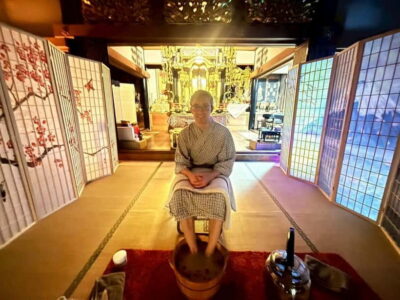
Immersive Arashiyama & Fushimi Inari by Private Car
Read our review →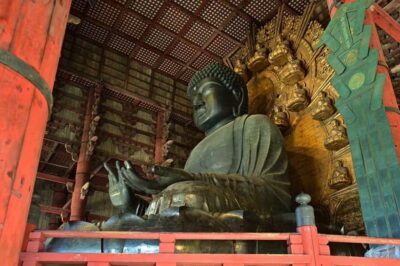
Minoh Waterfall & Katsuo-ji Temple Half-Day Tour
Read our review →Browse the lists this tour appears in