
REVIEW · PRIVATE TEMPLE TOURS IN JAPAN
Nara: Essential Private Tour with Deer Park and Temples
Nara’s best sights fit into a compact walking route, but the city is much easier to understand with someone who can explain what you’re seeing. This private tour links Tōdai-ji, Nara Park, and Kōfuku-ji with smaller stops that many visitors could easily pass by.
I like the personal attention of a private group, and I like that guide Masa adjusts his explanations to the people in front of him. His help can include translation, practical navigation, and advice on feeding the deer without getting swarmed. The main drawback is the pace: three hours is efficient but not leisurely, especially if you want lots of photos or a long look inside every site.
I also like the easy meeting point at Kintetsu Nara Station and the fact that temple and park admission is covered. You should be ready to walk, stand, and handle steps, and this tour is not suitable for wheelchair users, pregnant women, or people with animal allergies.
Key points to know before booking
- Masa is the guide to look for: He provides clear English, detailed explanations, and practical help with navigation and translation.
- The route covers Nara’s core sights: You visit Kōfuku-ji, Nara Park, Himuro Shrine, Tōdai-ji, and Yoshikien Garden.
- Deer etiquette is part of the experience: You’ll learn how to feed and approach the deer without attracting too many at once.
- This is a private walking tour: You can ask questions freely and receive more direct attention than on a large group outing.
- The tour begins and ends at Kintetsu Nara Station: That makes it simple to connect with the rest of your day.
- Plan for practical walking gear: Comfortable shoes, a hat, sunscreen, and a camera are sensible choices.
Why this three-hour Nara route works
Nara was Japan’s first permanent capital, and its historic center brings together temples, open parkland, gardens, and deer in a remarkably small area. That mix gives this tour a useful rhythm. You move from the busy approach near the station to temple grounds, then into the broad spaces of Nara Park before ending among quieter garden scenery.
I would choose this tour if you have only part of a day in Nara or if you want a clear introduction before exploring on your own. A guide can do more than point at a famous building. Masa’s explanations include the history of temples and statues, local customs, and small details that help you make sense of what you are seeing.
The private format matters here. Nara’s main sights can feel confusing at first, with several temple compounds, gates, paths, and deer wandering wherever they please. You can ask for a slower explanation, request help finding something, or spend a little longer at a place that catches your interest.
The trade-off is time. The advertised schedule adds up to three hours, so this is a focused orientation rather than a full-day cultural study. You will see the major stops, but you should not expect an extended meal, shopping session, or a long break at every temple.
More Private Temple Tours in Japan
- Fushimi Inari Hidden Hiking Tour (Private Option Available)
★ 5.0 · 1,750 reviews - Tokyo: Zen Meditation at a Private Temple with a Monk
★ 5.0 · 510 reviews - Nikko Full-Day Private Tour with Government-Licensed Guide
★ 5.0 · 259 reviews
Meeting Masa at Kintetsu Nara Station
The tour begins at Kintetsu Nara Station, a practical choice for visitors arriving by train. Exit through the East Gate and head toward Exit 3. At Exit 3, use the stairs or the escalator beside them, then look for the tourist information center.
Masa waits nearby with a sign showing the Get Your Guide logo. This is a useful detail because the station has several exits, and meeting directly at the correct one saves you from wandering around with your phone out.
The tour also finishes at Kintetsu Nara Station. That makes the route easy to fit into a day trip, though you should remember that the listed stops are visited on foot. Wear shoes that can handle several hours of walking and standing.
Masa’s strongest quality is his practical approach. He has helped visitors navigate the area, find an ATM, communicate in shops, and deal with small travel problems. Those services are not formal stops on the route, but they show why a private guide can be useful beyond historical commentary.
Higashimuki Shopping Street: a useful start
The first stop is Higashimuki Shopping Street, where you spend about 20 minutes with the guide. This covered shopping street gives you a quick look at the everyday side of Nara before the route turns toward temples and parkland.
Do not expect a long shopping session. The value of this stop is orientation. You can ask Masa about local food, souvenirs, and the area’s layout while getting your bearings near the station.
This is also a good point to raise practical questions. If you want to eat soba or need help with a purchase later, Masa has shown a willingness to help visitors choose a restaurant or translate when needed. One past itinerary included a good soba lunch, but food is not listed as part of this tour, so treat that as a possible suggestion rather than an included meal.
Kōfuku-ji and the first temple lesson
The route continues to Kōfuku-ji, with about 30 minutes for a guided visit. This is where Nara’s religious and political past begins to take shape.
A guide adds real value at temple sites because the buildings and statues can otherwise blur together. Masa explains the background of the temples and the meaning of the statues, giving you a framework for noticing more than roofs, courtyards, and large wooden structures.
Thirty minutes is enough for an introduction, but it is not a detailed art-history visit. If you want to study every architectural feature or spend a long time taking photographs, you may find the schedule brisk. The benefit is that you keep moving and still have time for the other major places ahead.
Same country, a different morning at the gates:
- Kyoto: Tea Ceremony in a Traditional Tea House in Kiyomizu
★ 4.9 · 3,519 reviews - Kyoto: Tea Ceremony Ju-An at Jotokuji Temple
★ 4.9 · 3,207 reviews - Tokyo:Mt.Fuji,Kawaguchiko Oishi Park,Arakurayama Sengen Park
★ 4.4 · 2,682 reviews - Osaka/Kyoto:Kinkakuji,Arashiyama,FushimiInariShrine,NaraPark
★ 4.1 · 1,596 reviews
Nara Park and handling the deer
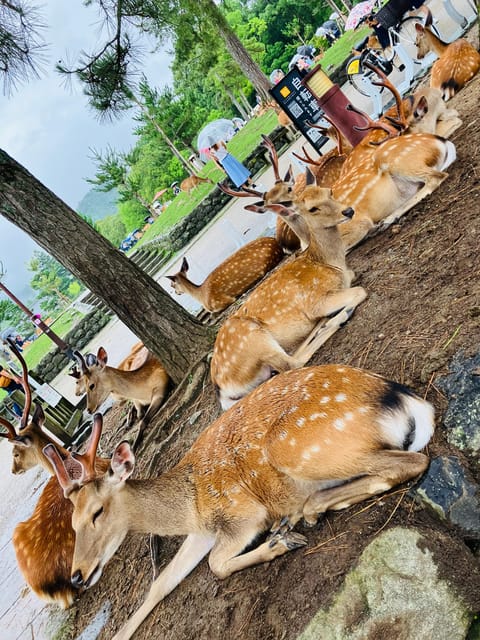
Next comes Nara Park, with around 30 minutes of guided time. The park is the point where Nara’s historic buildings meet its most famous living residents. Deer move through the grounds, and the encounter can be charming, funny, and slightly chaotic.
Masa can show you how to feed and approach the deer without attracting a large group at once. That advice matters. Feeding the deer is not simply a matter of holding out food and waiting for a gentle greeting. You need to pay attention to how many animals are nearby and to your own movements.
The park stop is also where the tour’s natural side balances the temple visits. You get open space, trees, and wildlife rather than another enclosed religious compound. If you have an animal allergy, though, this tour is not a good choice. The deer are a central part of the experience, not a distant backdrop.
Keep your camera ready, but follow the no-flash rule. You should also bring sunscreen and a hat, since the amount of shade may vary as you walk through the park. Personal expenses, including drinks and souvenirs, are not included.
Himuro Shrine, a quieter pause
Himuro Shrine receives about 20 minutes. Compared with Tōdai-ji and Nara Park, this is a shorter and quieter stop, which helps break up the main sights.
This is the sort of place where a guide’s explanation can make a difference. Without context, you might spend only a minute looking around. With Masa, you can ask questions about the shrine and its role within Nara’s religious setting.
The short visit also keeps the tour from becoming too heavy. Nara has a lot of history packed into a small area, and a brief pause at a less imposing site gives your attention a chance to reset before the biggest stop of the day.
Tōdai-ji and the great highlight
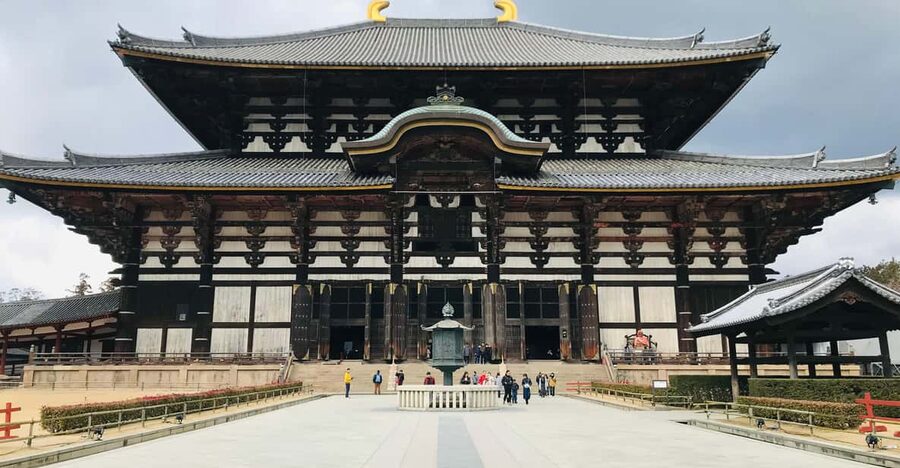
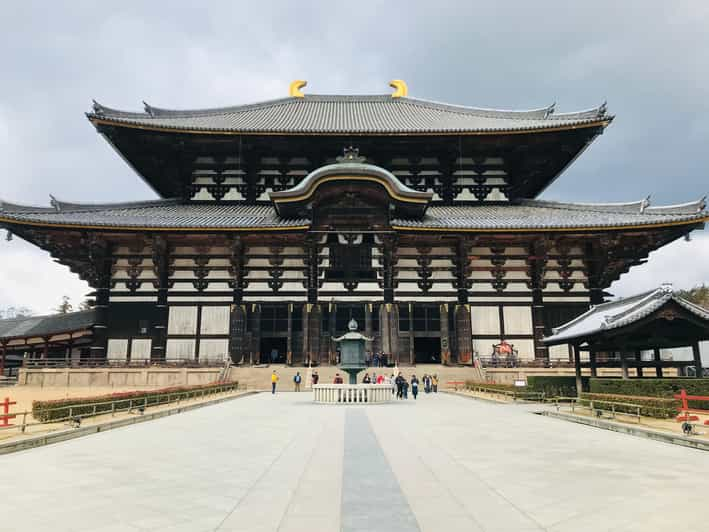
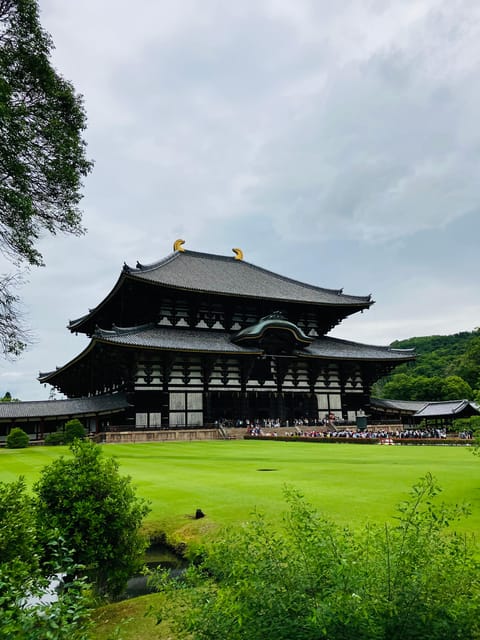
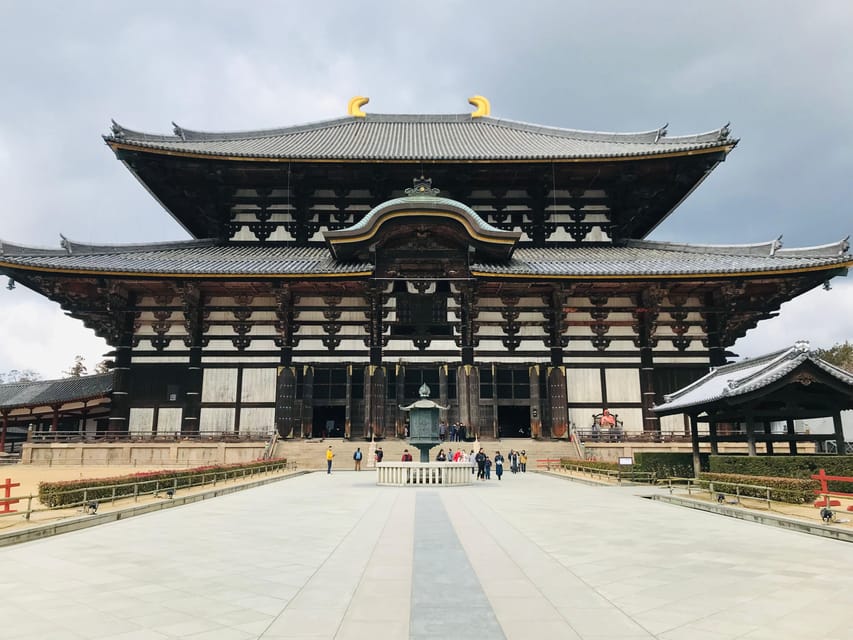
The longest visit is Tōdai-ji, with about one hour set aside. This is the centerpiece of the route and the place where the tour’s historical explanations matter most.
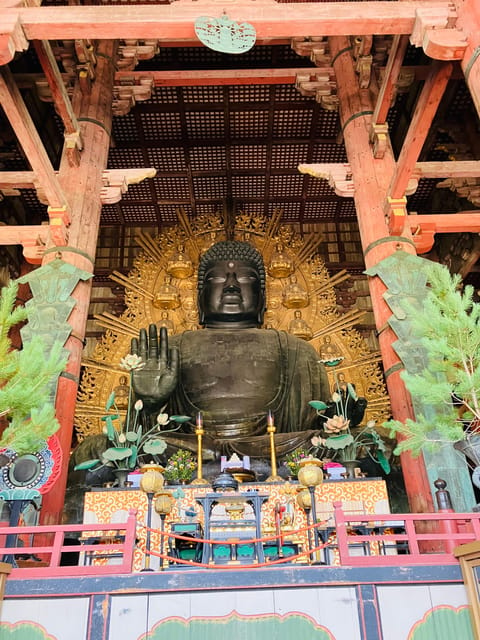
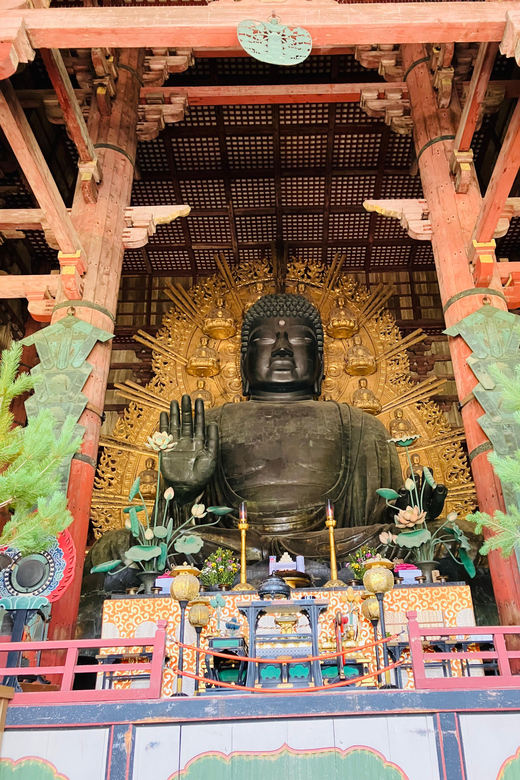
Tōdai-ji is known for its huge wooden temple hall and large Buddhist statue, but simply seeing the scale is only part of the experience. Masa can explain the history of the temple and the figures within it, helping you connect the physical size of the building with Nara’s importance as an early capital.
An hour gives you time to enter the temple area, listen to the guide, and take photographs without racing through. Even so, the exact amount of time available for each part depends on walking speed, crowding, and how many questions you ask.
Flash photography is not allowed. Follow the site rules and keep your camera ready for ordinary photos rather than relying on flash. If you care most about Nara’s major cultural landmark, this stop alone may justify choosing a guided route.
Yoshikien Garden and a softer finish
The final guided stop is Yoshikien Garden, with about 20 minutes. After the scale of Tōdai-ji and the movement of Nara Park, the garden provides a calmer finish.
The shorter visit means you should think of Yoshikien as a closing taste rather than a long garden walk. You can enjoy the setting, ask final questions, and let the day’s history settle before returning to the station.
I like the order of the route. It begins with an urban street, moves through major temple grounds, adds wildlife and a shrine, reaches the largest landmark, then ends with garden scenery. That variety makes the three-hour schedule feel more interesting than a route devoted only to temples.
What Masa adds to the experience
The guide is the part of this tour that most clearly affects its value. Masa is described as patient, friendly, prepared, and attentive. He has also prepared information in a visitor’s native language and translated materials into Korean for one participant.
His English is reported as clear, and he explains without hurrying people through the sights. That matters if you want to ask questions rather than listen to a fixed speech. You can also expect help with ordinary travel needs, such as navigating the area, translating in shops, or finding an ATM.
One useful detail is his care with small comfort issues. He has carried an extra umbrella for a visitor, which suggests a guide who pays attention to conditions rather than simply following the route. Still, optional gratuity is not included, and tipping is left to your judgment.
The tour is advertised in English. If you need another language, do not assume it is available simply because Masa has helped prepare translated materials for individual participants. Confirm language needs before booking.
Is $126 a fair price?
At $126 per person, this tour is not the cheapest way to see Nara. You can walk through parts of the city independently, and some public areas cost nothing. The price makes more sense if you value direct attention, historical explanation, temple admission, and help with the practical details of moving through Nara.
Because the group is private, you are paying for a personal route rather than a standard lecture delivered to a large crowd. That is especially useful if your group has different interests, if you are unsure how to approach the deer, or if you want help asking questions along the way.
The value is weaker if you already know Nara well, prefer to spend long stretches alone, or want a full day with extended time at each temple. Three hours gives you a strong first look, not unlimited time.
The price includes the English-speaking guide and admission to temples and parks. It does not include drinks, souvenirs, other personal expenses, or a guide gratuity. Hotel pickup and drop-off are also not included, but the station meeting point keeps the start and finish simple.
Who should book this private tour?
I would recommend it for first-time visitors who want to understand Nara rather than simply collect photographs. It also suits couples and small private groups that prefer to ask questions freely and move with a familiar guide.
Families and older visitors should consider the walking demands carefully. The tour is not suitable for wheelchair users, and pregnant women are advised not to book it. People with animal allergies should also skip it because deer are part of the central experience.
Bring comfortable shoes, a hat, sunscreen, and a camera. Smoking and flash photography are not allowed. You can cancel up to 24 hours before the tour for a full refund, and the reserve-now, pay-later option gives you some flexibility while arranging your Japan plans.
Should you book it?
Book this tour if you have three hours in Nara and want a well-organized introduction led by a patient English-speaking guide. Masa’s strengths are clear explanations, careful attention, practical assistance, and useful advice around the deer.
Skip it if you want a slow full-day visit, dislike walking, have animal allergies, or prefer to explore every temple at your own pace. For everyone else, $126 buys a focused route through Nara’s key sights with enough personal guidance to make the city easier to understand.
FAQ
How long does the Nara private tour last?
The tour lasts three hours.
Where does the tour begin?
It begins at Kintetsu Nara Station. After exiting through the East Gate, go toward Exit 3 and look near the tourist information center.
Where do I meet the guide?
The guide waits near Exit 3 with a sign displaying the Get Your Guide logo.
Where does the tour finish?
The tour returns to Kintetsu Nara Station.
Is the tour private?
Yes. It is arranged for a private group.
What language does the guide speak?
The listed tour language is English.
What sights are included?
The route includes Higashimuki Shopping Street, Kōfuku-ji, Nara Park, Himuro Shrine, Tōdai-ji, and Yoshikien Garden.
Is admission included?
Admission to the temples and parks is included.
Are hotel pickup and drop-off included?
No. Hotel pickup and drop-off are not included.
Can I cancel for a full refund?
Yes. You can cancel up to 24 hours in advance for a full refund.
Just added around Japan
- Private guided tour: Mt. Aso volcano, grasslands, Aso Shrine★ 5.0 · 19 reviews
- From Asakusa: Old Tokyo, Temples, Gardens and Pop Culture★ 5.0 · 47 reviews
- Goshuin Collecting tour at Asakusa Local Temples & Shrines, Tokyo★ 5.0 · 8 reviews
- Tokyo:Nikko UNESCO World Heritage Sites Private 1-Day Tour★ 3.8 · 6 reviews
- Tokyo Yokohama Night View Tour With Kamakura And Enoshima★ 3.5 · 14 reviews
- Tokyo: Snow Monkey Park and Zenkoji Temple Private Day Tour★ 4.7 · 127 reviews
- Tokyo War History Tour: Yasukuni Shrine & War Museum★ 4.5 · 6 reviews
- Tokyo to Nikko: Exclusive Private Day Trip★ 4.8 · 6 reviews
Private Temple Tours in Japan, compared.
Fushimi Inari Hidden Hiking Tour (Private Option Available)
Read our review →
Nikko Full-Day Private Tour with Government-Licensed Guide
Read our review →
Tokyo Zen Meditation at Private Temple with Monk
Read our review →
Browse the lists this tour appears in