
REVIEW · MEIJI SHRINE & SENSO-JI TOURS
Tokyo: Meiji Jingu Shrine & Inner Garden Guided Tour (2h)
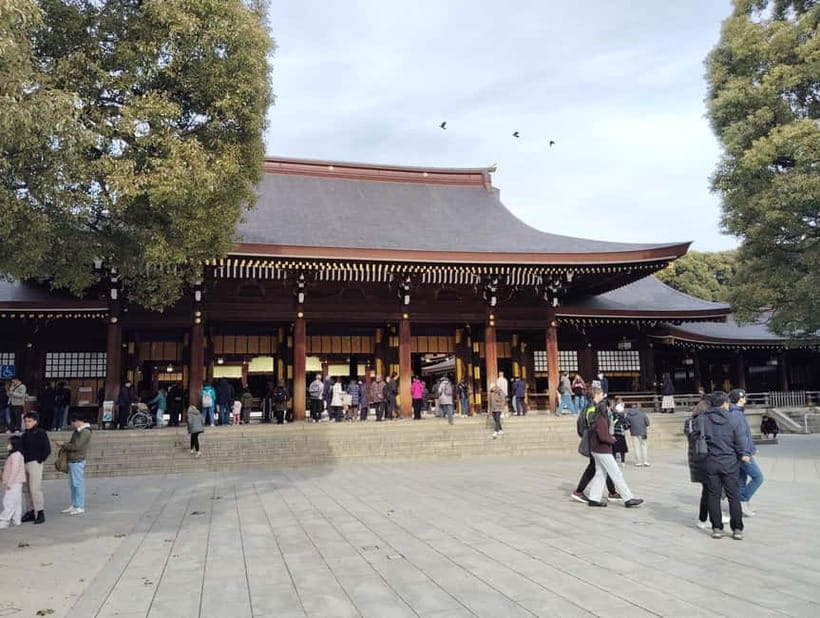
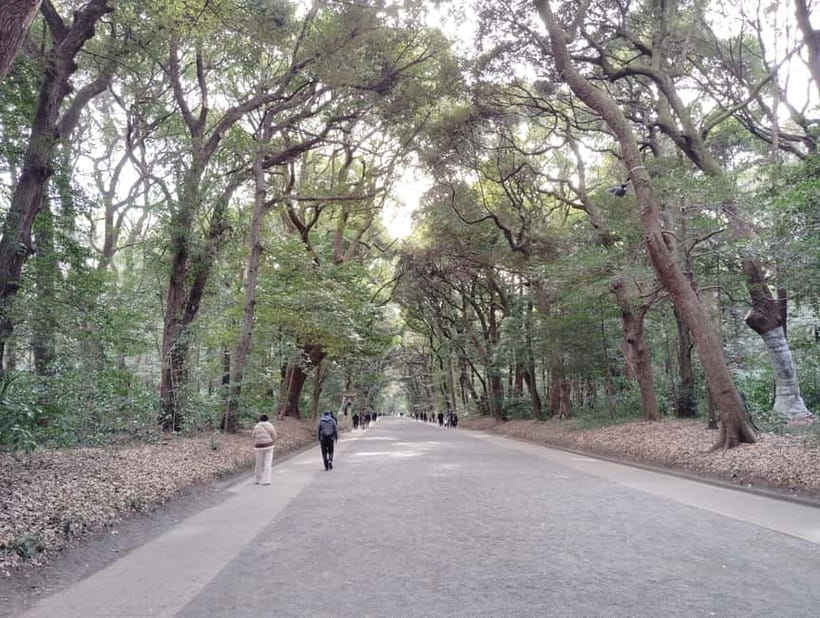
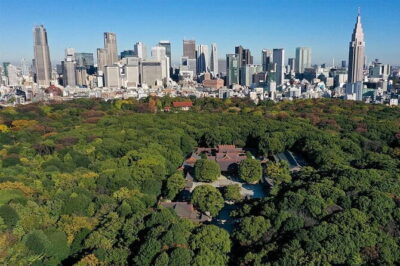
Meiji Jingu can feel like a quiet wilderness tucked inside Tokyo, and this tour gives that forest a meaning beyond its good looks. You’ll follow the long approach from the first torii, see the sake barrels offered to the shrine, and learn why the Eternal Forest matters before reaching the main shrine buildings.
I like the practical help here: your guide shows you how to wash your hands and pray, so you are not left guessing at the ritual. I also like the garden portion, especially South Pond and the possible visit to Kiyomasa’s Well. The main consideration is time. Two hours goes quickly, and Kiyomasa’s Well is visited only if the schedule allows.
Key points at a glance
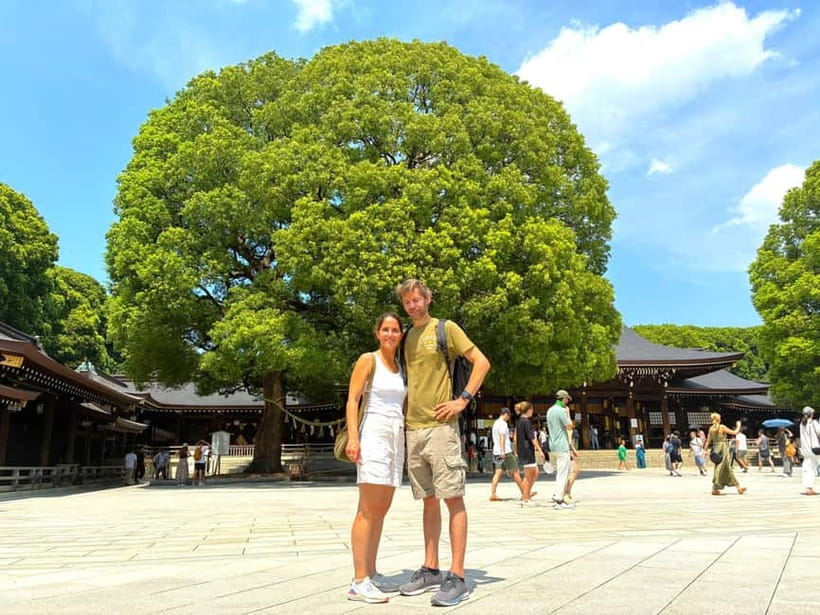
- The Eternal Forest: Learn why Meiji Jingu’s broad woodland is part of the shrine’s identity, not simply a pleasant park.
- A proper shrine visit: Practice the handwashing ritual and learn the accepted way to pray at Meiji Jingu.
- Sake barrels and photos: Pause at the offering display near the approach for an easy introduction to shrine customs.
- Shinen Garden included: Your ticket covers the garden, including the South Pond area and, when time permits, Kiyomasa’s Well.
- Personal guidance: Guides including Minoru, Kai, Kyo, and Takashi are praised for clear explanations, historical background, patience, and good humor.
- A compact two-hour outing: The tour begins and ends at the first torii, with no private transportation or meal included.
Why Meiji Jingu works so well with a guide
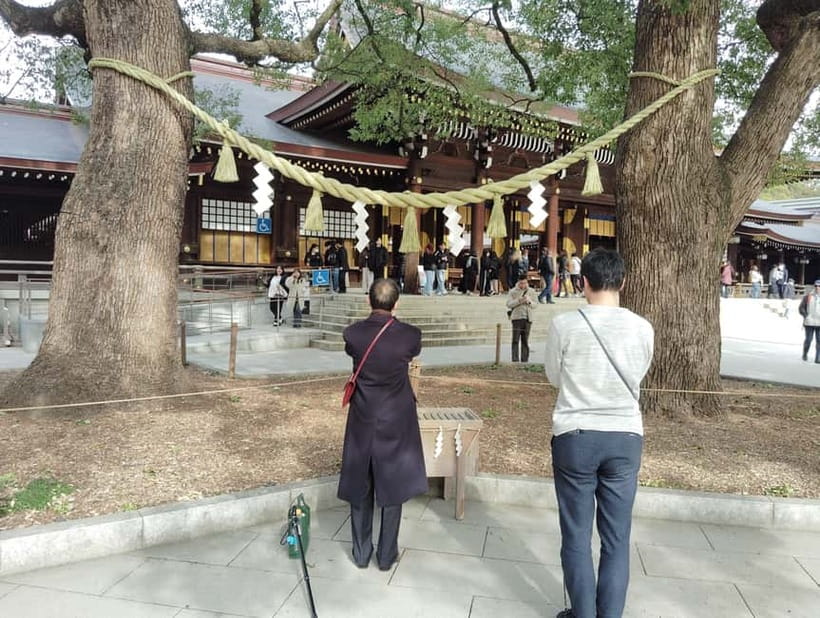
Meiji Jingu is easy to reach and easy to photograph, but its customs are less obvious. A guide turns a walk through the trees into a lesson in Japanese spiritual practice without making the visit feel like a classroom.
You’ll learn what to do before entering the shrine area, how to approach the worship hall, and how to take part respectfully. That is useful on your first shrine visit, and it still adds value if you have already seen temples and shrines elsewhere in Japan.
The guides bring different personalities to the same route. Minoru is described as kind and detailed, while Kai explains both the shrine and wider Japanese culture. Kyo is noted for an easygoing manner, fresh explanations, and patient help with a first konbini visit. Takashi is especially good for historical background and brings plenty of enthusiasm.
The exact guide is not guaranteed, so you should book this for the structure and subject rather than for one particular person. Still, the pattern is clear: the human side of the tour is one of its main strengths.
More Meiji Shrine and Senso-ji Tours in Tokyo:
- Tokyo: Asakusa Walking Tour with Sensoji Temple Visit
★ 4.8 · 1,583 reviews - Tokyo Panoramic 1 Day: Meiji Shrine, Asakusa, Odaiba and SKYTREE®
★ 4.5 · 1,222 reviews - Tokyo: Asakusa and Tokyo’s Oldest Temple Senso-ji Tour
★ 4.9 · 352 reviews
Meeting at the first torii
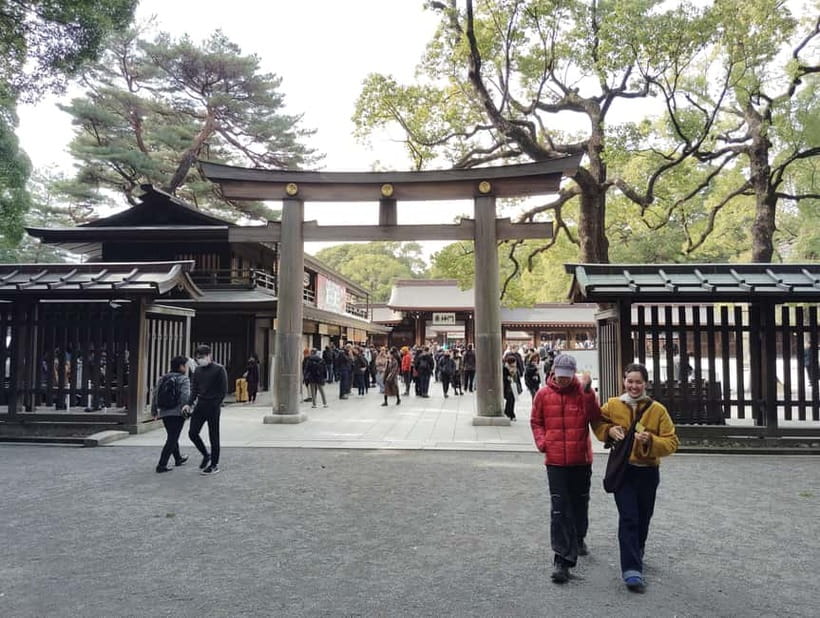
Your meeting point is in front of Ichinotorii, the first torii of Meiji Jingu. Look for the guide holding the yellow DeepExperience sign.
This is a sensible place to begin. The first torii marks a change from ordinary Tokyo streets to the shrine approach, and your guide gives a short introduction before you walk farther into the forest. Starting here also makes the route easy to understand. You begin at the entrance and return to the same spot at the end.
Allow a little time to locate the correct torii and guide. Meiji Jingu is a large site, and the meeting point is not the shrine’s main worship hall. The tour does not include private transport, but none is needed during the walk.
Sake barrels and the Eternal Forest
One of the first useful stops is the display of sake barrels offered to Meiji Jingu. The barrels make a strong photo, but the explanation is more important than the picture. Your guide connects the offering to shrine customs and gives you a starting point for understanding how religious practice appears in everyday Japanese culture.
This is also where you hear about the Eternal Forest. The woodland around Meiji Jingu was planned as a lasting forest, and the idea helps explain the feeling of distance from the city. You are still in central Tokyo, yet the trees soften the noise and hide much of the surrounding urban scene.
You’ll have time for photographs here. That sounds minor, but it keeps the tour from becoming a nonstop march. You can stop, look around, and ask questions before moving toward the grand torii.
The grand torii and handwashing ritual
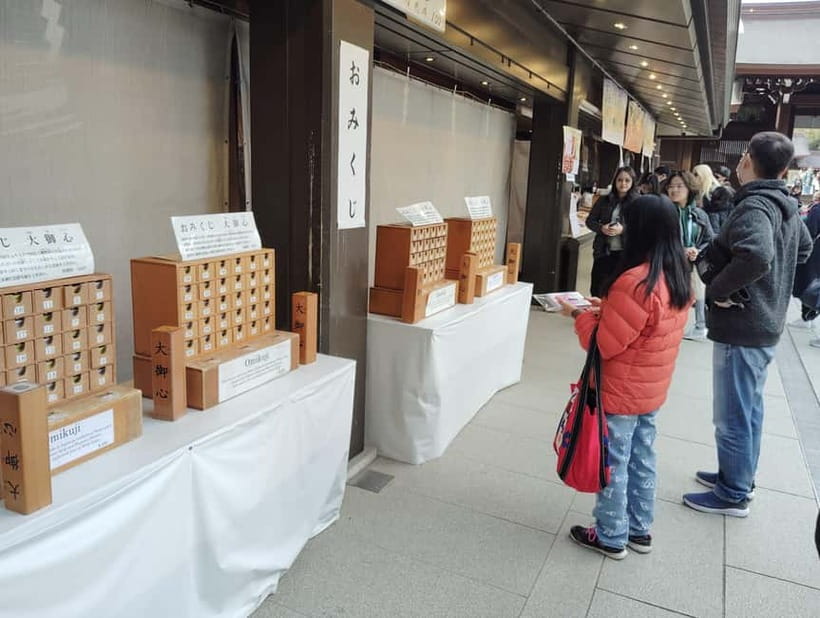
At the grand torii, your guide explains the proper way to pass into the shrine area and prepares you for the handwashing ritual. This is one of the tour’s most practical moments.
At the purification fountain, you’ll learn the sequence for rinsing your hands and mouth. You do not need to arrive with prior knowledge, and you do not need to worry about making a mistake while learning. The guide is there to explain the action and its purpose, not just point out the fountain.
This small ritual changes how you see the rest of the visit. Instead of treating the shrine as a backdrop for photos, you begin to understand that entering and praying follow a pattern. The tour keeps the explanation approachable, which is helpful if religious customs are unfamiliar to you.
More Two-Hour Trips in Tokyo:
- Private 2 Hour Guided Tour to Philae Temple from Aswan
★ 5.0 · 45 reviews - 2 Hours Tour in Philae Temple
★ 4.0 · 38 reviews - Ninh Binh Jeep tour:2 hours visit Bich Dong, Thai Vi temple
★ 3.8 · 38 reviews - Paestum: 2-Hour Greek Temples & Archaeological Museum
★ 4.8 · 19 reviews
Praying at Meiji Jingu
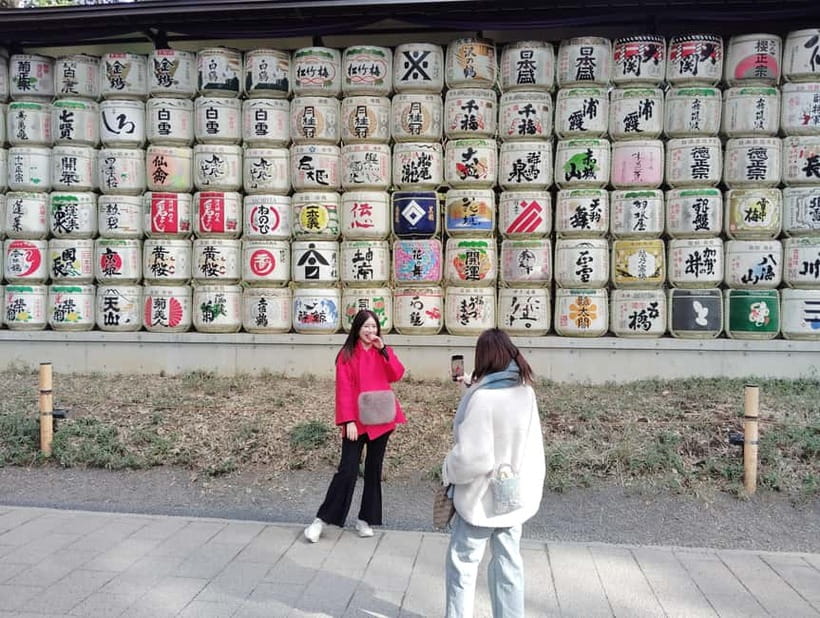
The next hour centers on Meiji Shrine itself. Your guide explains how to approach the worship area and how to pray. You’ll have time for a quiet moment rather than being rushed through the building for a quick photograph.
The value here is context. Meiji Jingu is not simply a famous stop between Harajuku and another Tokyo attraction. The guide helps connect the architecture, rituals, offerings, and surrounding forest so the visit feels like one complete experience.
I would not expect an extended private ceremony or a long period of silence. This is a guided sightseeing tour with a hands-on cultural element. Still, the pace gives you a better chance to pause than you would have on a self-guided walk with a crowded Tokyo schedule.
The guides also add modern context. Kyo, for example, is described as helping explain both the history and present-day Japanese life, including a first konbini visit. That kind of broad conversation can be useful if you want more than dates and building names.
Omikuji, fortune-telling, and protective charms
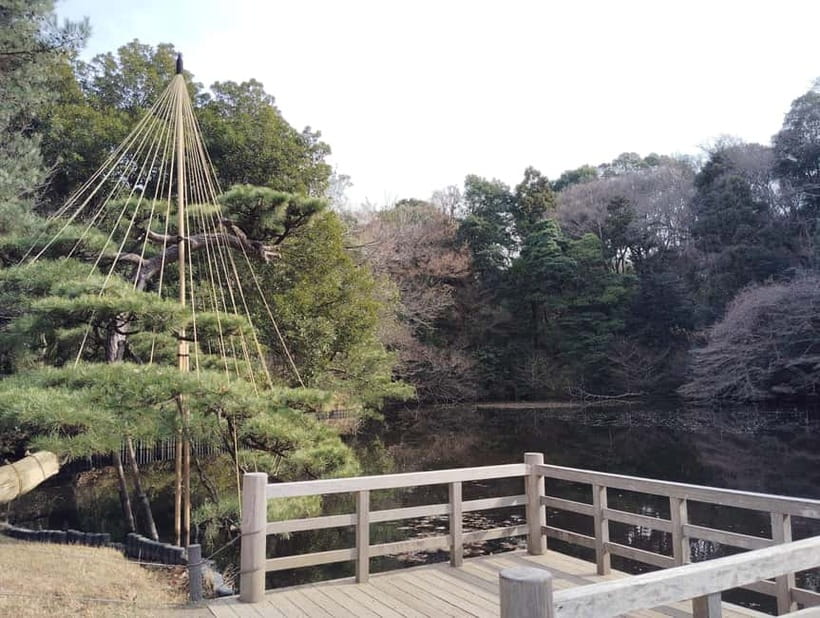
After the shrine visit, you can try fortune-telling through an omikuji experience. The fee is included, along with other listed experience costs, so you do not need to budget an extra charge for the basic activity.
You may also choose to receive a protective charm. The charm is optional, which is helpful if you prefer to observe rather than buy or carry religious items. Your guide can explain what you are doing and give the moment some cultural context.
This part adds a lighter touch after the more formal prayer instructions. It is also a good chance to ask questions about common shrine customs. Keep in mind that the tour offers an experience, not a personal spiritual reading or a guarantee about the future.
Shinen Garden and the South Pond
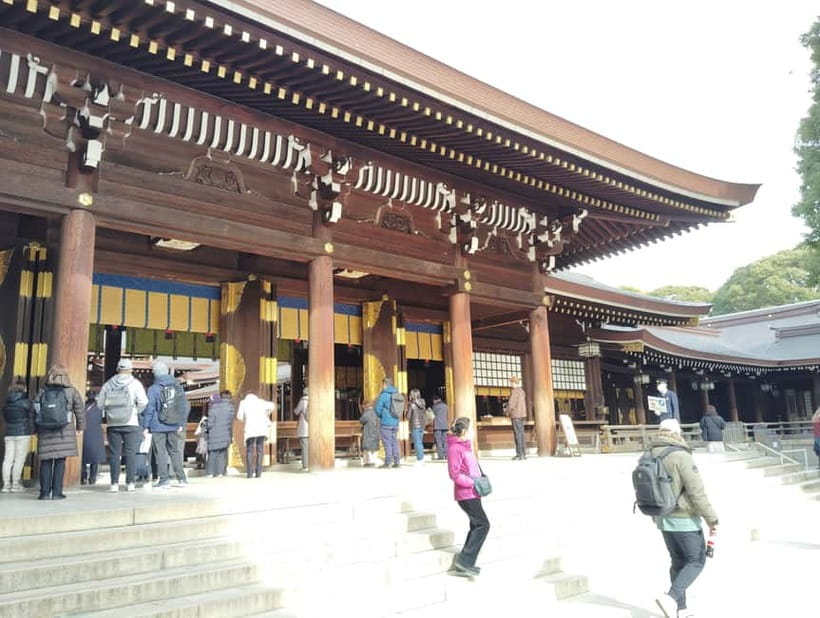
The route continues into Meiji Jingu’s Shinen Garden, also called Meiji Jingu Garden. Admission is included in the $48 price, which matters because the garden gives the tour a second setting and not just an extension of the shrine approach.
The South Pond area is the main focus. Here, the mood shifts from formal shrine practice to a slower walk through a garden setting. You’ll have time to notice the water, trees, and changing atmosphere, while your guide explains why this part of the grounds matters.
The garden makes the tour feel more rounded. The shrine teaches you how to take part in a ritual, while the garden gives you room to reflect on the forest and the setting. If you are trying to fit several major Tokyo sights into one day, this is a calmer two-hour block.
There is a practical tradeoff. The garden portion depends on the walking pace and the time spent at earlier stops. If you want to linger at every photo point, you may have less time for the final sights.
Kiyomasa’s Well, if time allows
Kiyomasa’s Well is the most conditional stop on the route. You may visit it if time allows, so do not book the tour assuming it is guaranteed.
That condition is worth taking seriously. The tour includes the shrine, ritual instruction, omikuji, and garden, all within two hours. A guide who spends more time answering questions may have to keep the final section shorter. If Kiyomasa’s Well is especially important to you, ask about the day’s timing at the start.
Even when the well is not reached, the walk through the forest and South Pond still forms a worthwhile second half. The sensible approach is to treat the well as a bonus rather than the main reason to book.
What the $48 price covers
At $48 per person, this is not the cheapest way to walk through Meiji Jingu. You can enter the shrine grounds without paying for a guided lesson, and independent visitors can take photographs and follow the approach on their own.
The price makes more sense if you want help with the details. It includes the guide, entrance to Meiji Jingu Garden, omikuji, and the other stated experience fees. You are paying for interpretation, ritual instruction, and a planned route, not simply admission.
I see good value for a first visit, especially if you are unsure how to behave at a shrine or want to understand the Eternal Forest and sake offerings. It is less compelling for someone who prefers complete freedom, wants to spend half a day taking photographs, or already knows Japanese shrine customs well.
Food and drinks are not included. Private transportation is also not included, though the activity begins and ends at the first torii and is built around walking.
How long the two-hour format feels
Two hours is long enough to cover the essential stops and short enough to fit before lunch, after breakfast, or between other Tokyo plans. The return to the first torii keeps the route tidy and avoids leaving you at an unfamiliar exit.
The schedule is not a rapid checklist, but it is not a leisurely half-day walk either. You’ll move from the first torii to the sake barrels, then to the grand torii, shrine, omikuji, and garden. Plan to walk at a steady pace and leave your most important questions for the guide as you go.
Sunlight through the trees is part of the appeal, but weather can affect the feel of the outing. The provided information does not specify a weather policy, so check the conditions and dress for a walk through forested grounds.
The activity is offered as a private or small-group experience. That can make questions easier and may give the guide more room to adjust the explanation to your interests, though the exact group arrangement should be checked when booking.
Who should book this Meiji Jingu walk
I would choose this tour if you are visiting Meiji Jingu for the first time and want to understand what you are seeing. It suits couples, families, and small groups who prefer a guide to explain customs rather than rely on signs or a phone.
It is also a good fit if you want a gentle cultural activity that does not take a full day. The route offers history, spiritual practice, photography, a garden walk, and a small fortune-telling experience in one compact outing.
You may prefer to go independently if your main goal is quiet solitude, detailed photography, or an unhurried visit to the garden. The two-hour limit means you must accept a set pace, and Kiyomasa’s Well may not fit.
The strongest reason to book is the guide’s role. Minoru, Kai, Kyo, and Takashi are each associated with clear explanations, cultural context, patience, or warmth. Since the guide makes the ritual and historical details easier to follow, the tour offers more than a simple walk through attractive grounds.
Should you book this tour?
Book it if you want a well-shaped introduction to Meiji Jingu, especially if shrine etiquette is new to you. The handwashing lesson, prayer guidance, omikuji, sake barrels, Eternal Forest, South Pond, and possible visit to Kiyomasa’s Well give you plenty for two hours.
Skip it if you want to set your own pace or spend most of your time taking photographs. For everyone else, $48 is a fair price when you value a live English-speaking guide and included garden and experience fees. Reserve at least 24 hours ahead if your plans may change, since cancellation is free up to that point and payment can be deferred when that option is available.
FAQ
How long does the Meiji Jingu guided tour last?
The tour lasts two hours, including the walk through Meiji Jingu, the shrine visit, omikuji experience, and Shinen Garden.
Where does the tour meet?
Meet in front of Ichinotorii, the first torii of Meiji Jingu Shrine. The guide will hold a yellow sign with the DeepExperience logo.
Where does the tour finish?
The tour returns to the first torii of Meiji Jingu, the same general location where it begins.
Is the Meiji Jingu Garden entrance included?
Yes. Entrance to Meiji Jingu Garden is included in the tour price.
Is an omikuji or fortune-telling experience included?
Yes. Omikuji and other stated experience fees are included.
What language does the guide speak?
The tour provides an in-person English-speaking guide. Japanese is also listed among the guide language options.
Can I cancel the tour for a full refund?
Yes. You can cancel up to 24 hours in advance for a full refund. A reserve now and pay later option is also available when offered for your booking.
Just added around Tokyo
- Tokyo:Nikko UNESCO World Heritage Sites Private 1-Day Tour★ 3.8 · 6 reviews
- Tokyo: Snow Monkey Park and Zenkoji Temple Private Day Tour★ 4.7 · 127 reviews
- Tokyo War History Tour: Yasukuni Shrine & War Museum★ 4.5 · 6 reviews
- Tokyo: Sensoji Temple & Street Food: Private Tour with guide★ 4.6 · 8 reviews
- Tokyo: Shibuya Sky, Harajuku & Meiji Shrine Highlights Tour★ 4.5 · 9 reviews
- Tokyo: Nikko Private Sightseeing Day Trip with Driver★ 5.0 · 10 reviews
- Tokyo → Nikko:Private Customizable Day Trip (English Driver)★ 4.9 · 26 reviews
- Tokyo’s Kitchen: Tsukiji Market Food & Culture Walk★ 4.7 · 74 reviews
Meiji Shrine & Senso-ji Tours, compared.
Asakusa Walking Tour with Sensoji Temple Visit
Read our review →
Tokyo Panoramic 1 Day: Meiji Shrine, Asakusa, Odaiba and SKYTREE®
Read our review →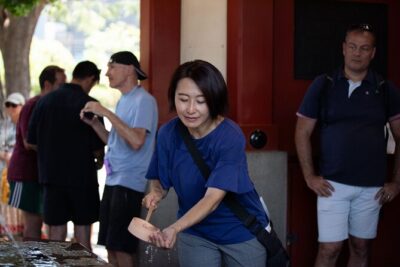
Asakusa Senso-ji Temple and Old Tokyo Walking Tour
Read our review →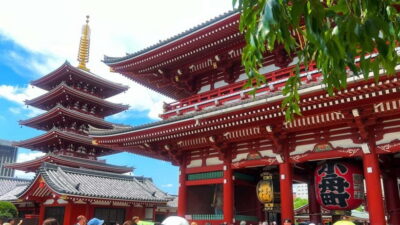
Asakusa and Tokyo’s Oldest Temple Senso-ji Tour
Read our review →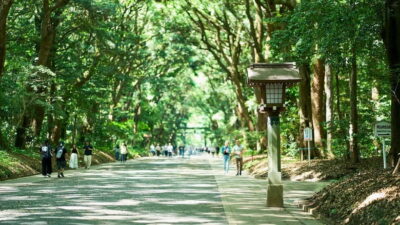
Meiji Shrine Walking Tour — Shinto & Imperial System
Read our review →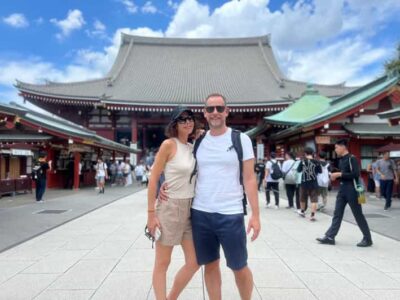
Meiji Jingu Shrine and Shinto Culture Walking Tour
Read our review →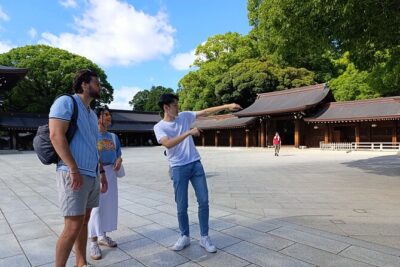
Meiji Shrine Walking Tour — Shintoism & Imperial System
Read our review →Browse the lists this tour appears in