
REVIEW · VALLEY OF THE TEMPLES TOURS
Paestum: 2-Hour Greek Temples & Archaeological Museum
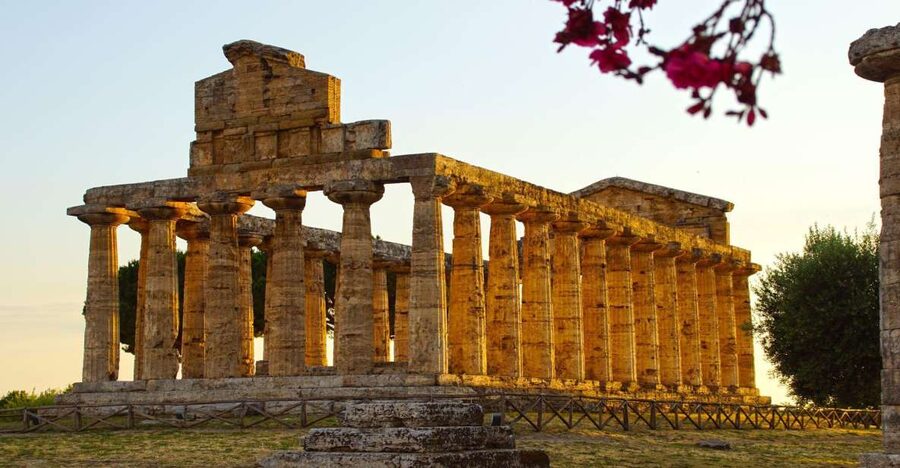
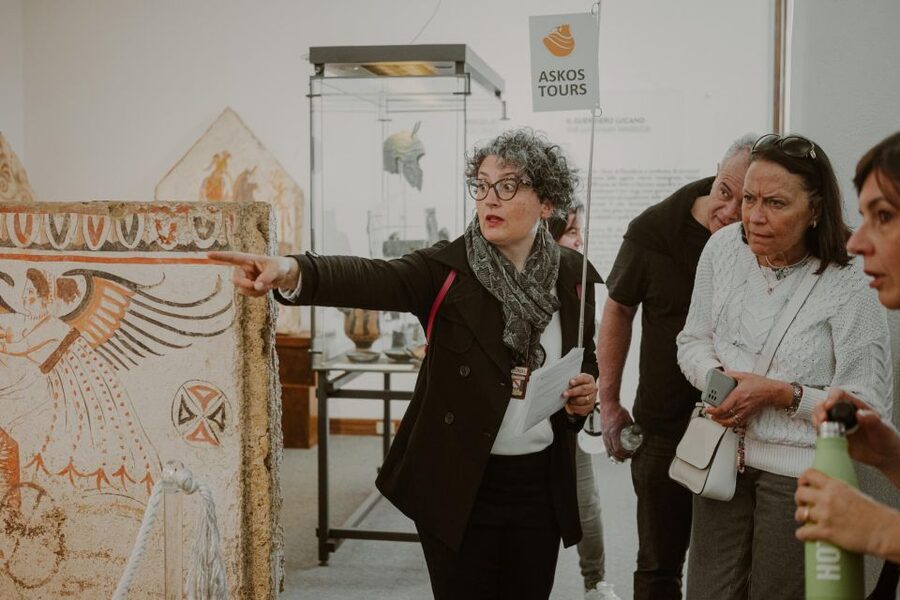
Paestum gives you something rare in Italy: three remarkably preserved Greek temples still standing in their original setting. I like the way this tour pairs the Temple of Neptune, Temple of Ceres, and Basilica with the National Archaeological Museum, where the famous Tomb of the Diver helps explain the people behind the stones. I also like the private group and certified archaeologist guide, since a good explanation can turn a field of ruins into a readable ancient city.
The main drawback is the tight schedule. The advertised duration is two hours, while the route includes the archaeological park and about 30 minutes in the museum. You will need comfortable walking shoes, and this experience is not suitable for wheelchair users or people with mobility impairments.
Key points to know before booking
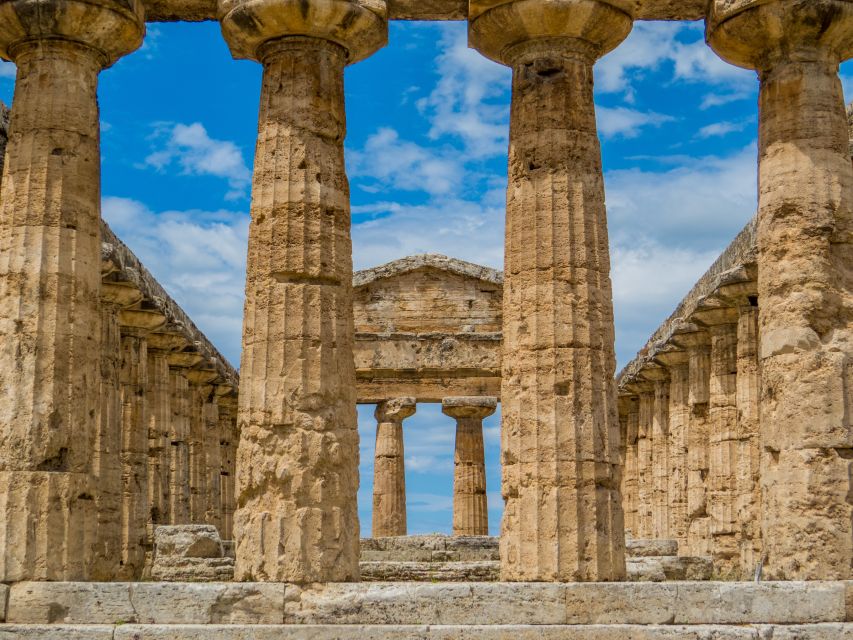
- Three Greek temples in one archaeological park: See the Temple of Neptune, Temple of Ceres, and the Basilica, all dating from the 6th century B.C.
- A private guided visit: Your certified archaeologist guide leads the group rather than leaving you to guess what each ruin once meant.
- The Tomb of the Diver: The museum’s best-known work is a painted Greek tomb with an unusual image that gives the site a human touch.
- Greek and Roman layers together: The route includes the forum, amphitheater, markets, city walls, and comitium.
- Meet directly at the Neptune Temple: There is no hotel pickup or drop-off, so you must arrange your own way to Paestum.
- Five guide languages: Tours are offered in English, Italian, Spanish, French, and German.
Why Paestum deserves time on your Campania trip
Paestum lies in the northern part of the Cilento region, near the Sele River and the Tyrrhenian coast. The Greek colonists who founded the town called it Poseidonia. Later, the Romans took control and gave it the name Paestum.
That change of name matters because you are not looking at a single-period ruin. The site shows Greek religious buildings beside Roman civic remains. You can move from monumental Doric temples to the forum, amphitheater, markets, and comitium within the same walk.
I find this combination more rewarding than a site made up of scattered columns alone. The city plan gives you a sense of how Paestum worked. Temples tell you about worship and power. The forum and political assembly hall point to public life. The amphitheater shows how Roman customs became part of the city.
The three temples are the main reason to come. They are often compared with the Parthenon in Athens because of their scale and proportions, but Paestum has its own setting and character. The columns are tall, the buildings remain unusually complete, and you can view them from close range along the archaeological paths.
More Valley of the Temples Tours in Italy:
- Agrigento: Valley of the Temples Skip-the-Line Sunset Tour
★ 4.5 · 1,512 reviews - Palermo: Agrigento and the Valley of the Temples Day Tour
★ 4.2 · 1,240 reviews - Agrigento: Valley of the Temples Ticket & App Audioguide
★ 4.3 · 1,160 reviews
Meeting your guide at the Temple of Neptune
The meeting point is the entrance to the Neptune Temple. Your guide will hold a sign with your name, which makes the start fairly simple once you reach the site.
This is an important practical detail. There is no hotel pickup or drop-off, and the tour does not include transportation, food, or drinks. You need to arrive at the archaeological park on your own and be ready to begin at the arranged time.
The opening location also puts you near one of Paestum’s major sights from the first minute. Instead of spending part of the tour getting oriented from a distant meeting point, you begin beside the most imposing temple area.
Ask your guide at the start how the two-hour timing will be divided. The stated route includes a guided visit through the archaeological park and a guided museum visit of about 30 minutes. Since the total duration is also listed as two hours, the exact balance may depend on the starting time and pace of the private group.
Walking among Paestum’s three Greek temples
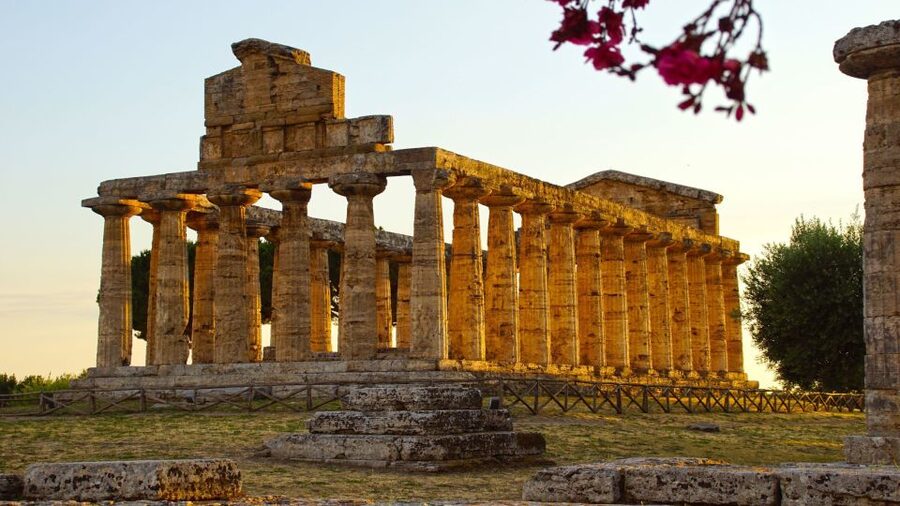
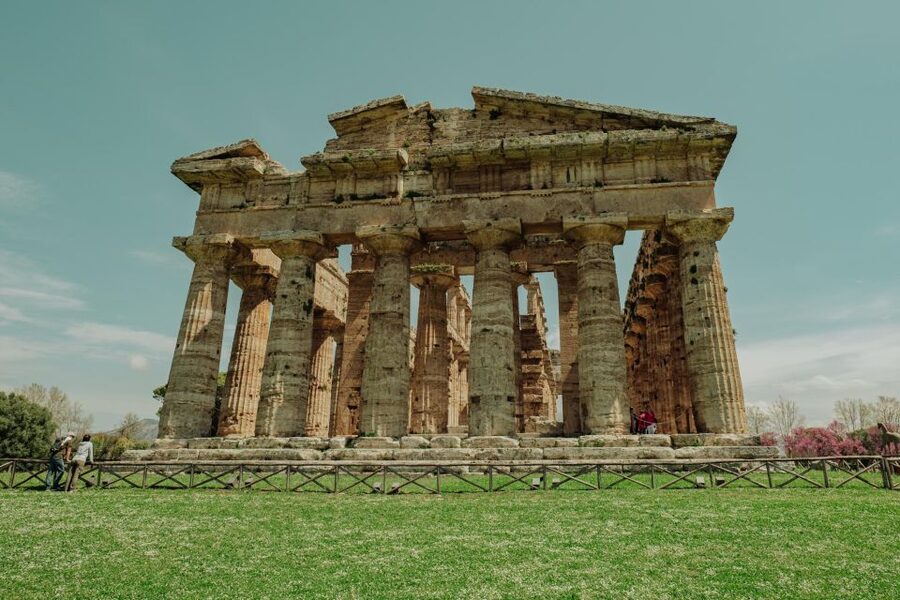
The Temple of Neptune is one of the clear highlights. It dates to the 6th century B.C. and is admired for its height, strong Doric columns, and excellent preservation. A guide can help you read the building as more than a fine photograph: look at the regular column rows, the heavy geometry, and the way the structure creates a sense of order.
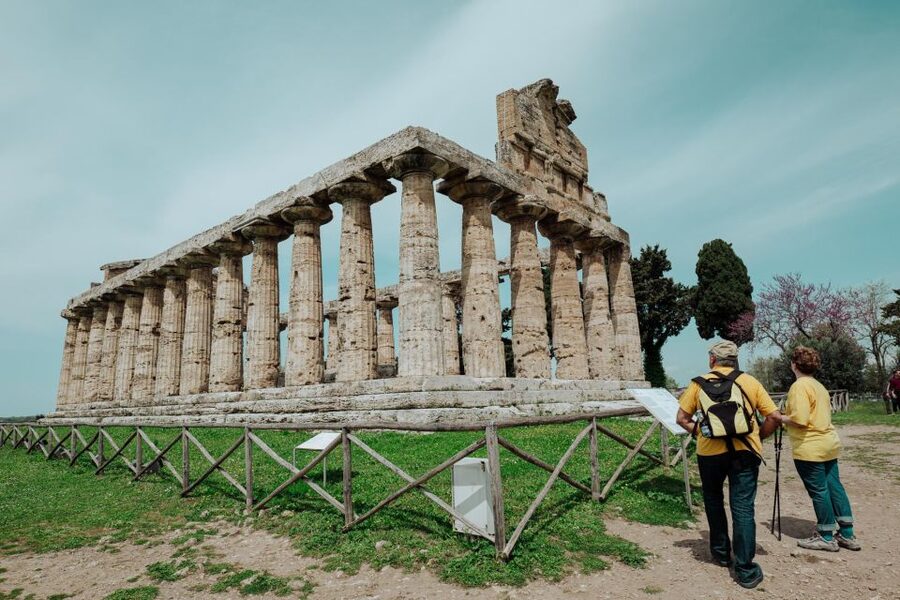
The Temple of Ceres is another Greek temple in the park. The name can cause some confusion because the building’s original dedication is not certain, but the tour description uses the familiar name. Your guide can explain what archaeologists know and what remains uncertain, which is exactly the sort of context that makes a guided visit useful.
The Basilica is the third major temple. Despite its modern-sounding name, this building was a Greek temple rather than a Christian church. Its surviving columns and broad footprint help you compare its design with the other two temples.
You will see these monuments within a relatively compact archaeological area, but do not mistake compact for effortless. The experience is a walking tour across ancient ruins, with uneven ground and time spent outdoors. Bring shoes that are comfortable on firm but irregular surfaces, and plan for a steady pace.
The temples reward a little quiet attention. You can photograph them quickly, but the better use of your time is to notice how much of the original form remains visible. Paestum is valuable precisely because the buildings are not reduced to a few isolated fragments.
Reading the Roman city around the temples
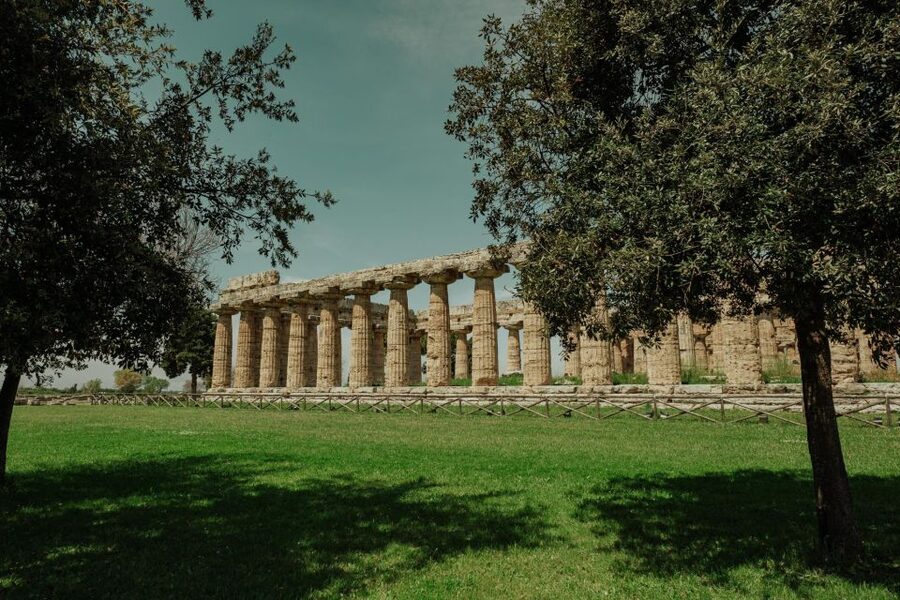
After the Greek monuments, the route moves into the Roman layer of Paestum. You will see the forum, the amphitheater, the markets, the comitium, and sections of the city walls.
The forum was the center of public life in the Roman city. The comitium, described as a political assembly hall, adds another clue to how civic decisions were organized. These remains may not have the instant visual impact of the temples, but they complete the picture.
The amphitheater helps you understand the city as a place where people gathered for public events. The markets point to everyday commerce, while the walls show the practical need to protect and define the urban center.
I like having an archaeologist guide for this section because Roman ruins can look like a collection of low foundations if you do not know what you are seeing. A guide can connect the surviving stones to their former use and explain the transition from Greek Poseidonia to Roman Paestum.
This part also keeps the visit from becoming temple-only sightseeing. You are not simply moving between three beautiful buildings. You are walking through the remains of a city with religious, political, commercial, and entertainment spaces.
More Museum Visits in Italy:
- Paestum: Temples and Museum Tour with Archaeologist Guide
★ 5.0 · 14 reviews - Montserrat Museum and Monastery Entry Ticket
★ 4.5 · 1,740 reviews - Lisbon: Belem, Jeronimos Monastery, and Coach Museum Tour
★ 4.8 · 478 reviews - From Sofia: Rila Monastery and Optional Museum, Cave or Spa
★ 4.6 · 270 reviews
The National Archaeological Museum and the Tomb of the Diver
The museum visit follows the archaeological park. It holds local Greek works dating from the 7th century B.C., along with objects connected to Paestum and Magna Graecia, the Greek-speaking area of southern Italy.
The museum is especially useful after the ruins. Outside, you see buildings and city plans. Inside, you encounter art and burial objects that reveal more about beliefs, skill, and daily life. The two parts of the tour work best together rather than as separate attractions.
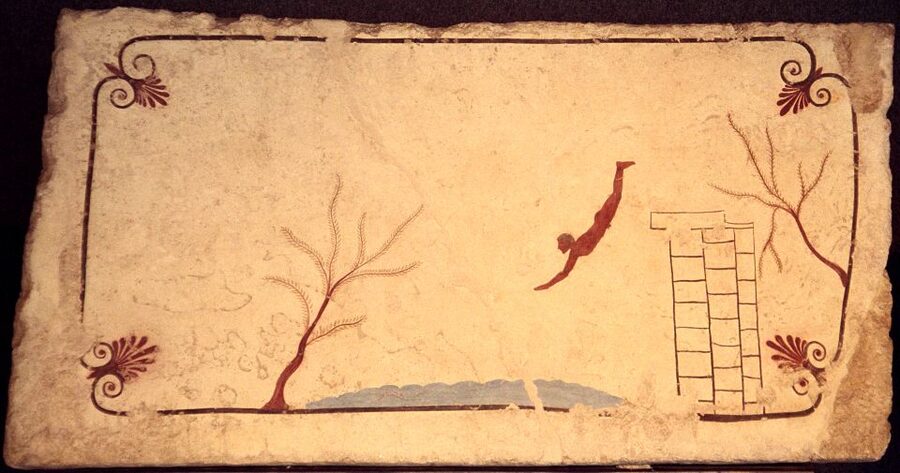
The museum’s main prize is the Tomb of the Diver. Its painted scenes include the image of a diver moving into water, an unusual and memorable subject in ancient funerary art. The work is often treated as the museum’s essential stop, and you should make sure it receives enough attention during the short visit.
The museum portion is listed as a guided visit of about 30 minutes. That is enough for the central works, especially with a guide directing you to the most important objects. It is not enough for a slow, independent look at every display.
If ancient art is your main interest, you may wish you had longer inside. On the other hand, the short museum visit keeps the whole experience focused and works well for someone who wants the major sights without spending a full day in the complex.
How much value do you get for $189.75?
At $189.75 per person, this is not a budget sightseeing stop. The price makes the most sense for someone who wants a private group, a specialist guide, and included entrance tickets without dealing with the ticket line.
You are paying for interpretation as much as admission. Paestum’s temples are impressive on their own, but the Roman remains and museum objects need explanation if you want to understand their place in the city. A certified archaeologist can help you connect the separate pieces.
The private-group format is another part of the value. You are not placed in a large crowd, and the guide can shape the explanation around the group’s interests and pace. The available languages are English, Italian, Spanish, French, and German.
The price is harder to justify if you are happy to walk through ruins independently or if you already have strong archaeological knowledge. It is also worth checking the available starting time before paying, since the experience is short and the meeting point is fixed.
Included skip-the-line tickets remove one small task from your day. They do not include transport, meals, drinks, or hotel transfers, so add those costs and planning needs when comparing this with a self-guided visit.
Timing, walking, and the practical limits
The official duration is two hours, with availability depending on the selected starting time. The route lists the archaeological park as the main guided visit and the museum as an additional 30-minute guided stop.
Because the park is outdoors and the tour involves ancient surfaces, you should be ready to walk. The experience is specifically not suitable for people with mobility impairments or wheelchair users. That is not a minor footnote here. The site’s archaeological paths and the pace of a guided route can make access difficult.
Wear comfortable shoes and avoid bringing a schedule that requires you to rush away immediately afterward. The exact amount of time spent at each temple, the Roman remains, and the museum can vary with the group.
You should also bring your own water and make your own food plans. Food and drinks are not included. Since there is no pickup service, leave enough time to reach the Neptune Temple entrance before the start.
Free cancellation is available up to 24 hours in advance for a full refund. You can also reserve now and pay later, which helps if your Campania plans are still changing.
Who will get the most from this Paestum tour?
This experience suits you best if you want the main archaeological sights explained in one compact visit. It is a strong choice for first-time visitors who do not want to spend hours working out the difference between Greek temples, Roman civic buildings, and later additions.
It also suits people who care about ancient art. The museum and Tomb of the Diver add meaning that you will not get from the outdoor ruins alone.
Families with older children may appreciate the mix of huge temples, city remains, and a painted tomb. The private format can make it easier to keep the pace suitable for your group, although the walking and access limits still matter.
History fans may prefer a longer independent visit if they want time to study every structure. The short schedule gives you the essentials, not an exhaustive examination of every corner.
The tour is less suitable if you need step-free access, dislike outdoor walking, or want a relaxed half-day with long museum time. It is also not the right fit if you are looking for transport from your hotel.
Should you book it?
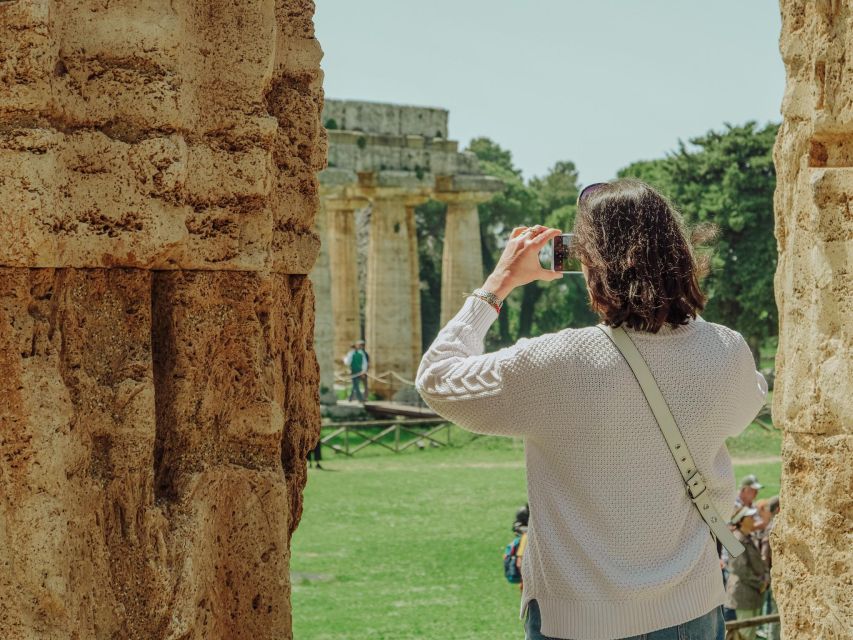
Book this Paestum tour if you want the three Greek temples, the Roman city, and the museum in one guided visit. The private group, certified archaeologist, included tickets, and five language options add real value for a focused introduction.
Think twice if the $189.75 price is difficult to fit into your budget, or if you want to explore slowly on your own. Also confirm the actual timing before booking, since the park and museum schedule is ambitious for the listed two-hour duration.
For a compact, guided look at Paestum’s best-known sights, this is a sensible choice. The temples provide the drama, the Roman ruins provide the city, and the Tomb of the Diver gives the visit a memorable human detail.
FAQ
How long does the Paestum tour last?
The activity is listed as lasting two hours. The archaeological park is the main guided visit, and the National Archaeological Museum is listed as a guided stop of about 30 minutes.
Where does the tour begin?
Your guide meets you at the entrance of the Neptune Temple. The guide will hold a sign with your name.
Where does the tour end?
The tour ends back at the meeting point at the Neptune Temple.
What languages are available?
The live guide is available in English, Italian, Spanish, French, and German.
Are entrance tickets included?
Yes. Skip-the-line tickets and all taxes are included in the tour price.
Is the tour suitable for wheelchair users?
No. The experience is not suitable for wheelchair users or people with mobility impairments.
More Two-Hour Trips in Italy
- Private 2 Hour Guided Tour to Philae Temple from Aswan
★ 5.0 · 45 reviews - 2 Hours Tour in Philae Temple
★ 4.0 · 38 reviews - Ninh Binh Jeep tour:2 hours visit Bich Dong, Thai Vi temple
★ 3.8 · 38 reviews - Bangkok: 2 Hours Grand Palace & Wat Pho Private Tour
★ 4.9 · 15 reviews
Just added around Italy
- Cooking Class in a former Artist Monastery in the Heart of Monopoli★ 5.0 · 18 reviews
- Agrigento Valley of the Temples Archaeological Area★ 4.0 · 33 reviews
- Private transportation to the Valley of the Temples + Agrigento★ 5.0 · 8 reviews
- Agrigento: Valley of the Temples Entry Ticket & Audio Guide★ 3.0 · 40 reviews
- Rome underground hidden temples, ruins, and secret basilicas★ 3.7 · 21 reviews
- Rome: Temples, Squares & Markets Guided Walking Tour★ 4.8 · 26 reviews
- Paestum: Temples and Museum Tour with Archaeologist Guide★ 5.0 · 14 reviews
- Paestum Tour: Best Preserved Temples in the World (UNESCO)★ 4.5 · 11 reviews
Valley of the Temples Tours, compared.
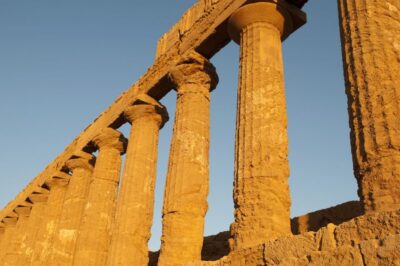
Agrigento: Valley of the Temples Skip-the-Line Sunset Tour
Read our review →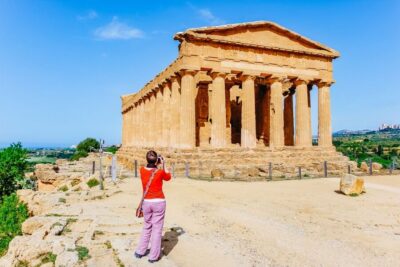
Palermo: Agrigento and the Valley of the Temples Day Tour
Read our review →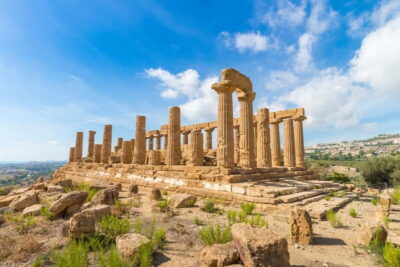
Agrigento: Valley of the Temples Ticket & App Audioguide
Read our review →
Agrigento: Valley of the Temples E-Scooter Tour
Read our review →
Palermo: Valley of the Temples and Scala dei Turchi Day Trip
Read our review →
Catania: Valley of the Temples and Turkish Steps with Snack
Read our review →
From Palermo: Villa Romana and Valley of the Temples Trip
Read our review →
Agrigento: Valley of the Temples Entry Ticket & Audio Guide
Read our review →Browse the lists this tour appears in