

REVIEW · TEMPLE WALKING TOURS
Rome: Temples, Squares & Markets Guided Walking Tour
Rome’s ancient center comes together nicely on this three-hour walk. You’ll move from Sant’Ignazio’s painted ceiling to the Pantheon, open-air markets, Roman temples, the Jewish Ghetto, and the ruins tied to Julius Caesar. The route ends with views of Circus Maximus, Palatine Hill, and Tiber Island.
I like the private format, since your guide can adjust the route instead of shepherding you through a fixed script. I also like the food stop: a taste of supplì gives you something more local than another photo of a monument. The main drawback is pace. Three hours covers a lot of ground, and attraction tickets are not included.
Key points to know before booking

- A private route through central Rome: You get your guide’s full attention and can ask for changes based on your interests.
- One Roman street-food tasting: The stop includes supplì and an introduction to everyday Italian food.
- A strong mix of famous and lesser-known sights: Expect the Pantheon and Piazza Navona alongside Portico d’Ottavia, Largo di Torre Argentina, and the Temple of Portunus.
- Ancient Rome without a Colosseum entrance: You see Circus Maximus, Palatine Hill, and the Imperial Palace remains from outside viewpoints.
- A useful first or second day in Rome: Your guide can suggest places to eat, shop, and continue exploring after the walk.
- A compact but active outing: The tour lasts three hours, is offered in English, Italian, and Spanish, and is wheelchair accessible.
Why this route works for first-time Rome visitors
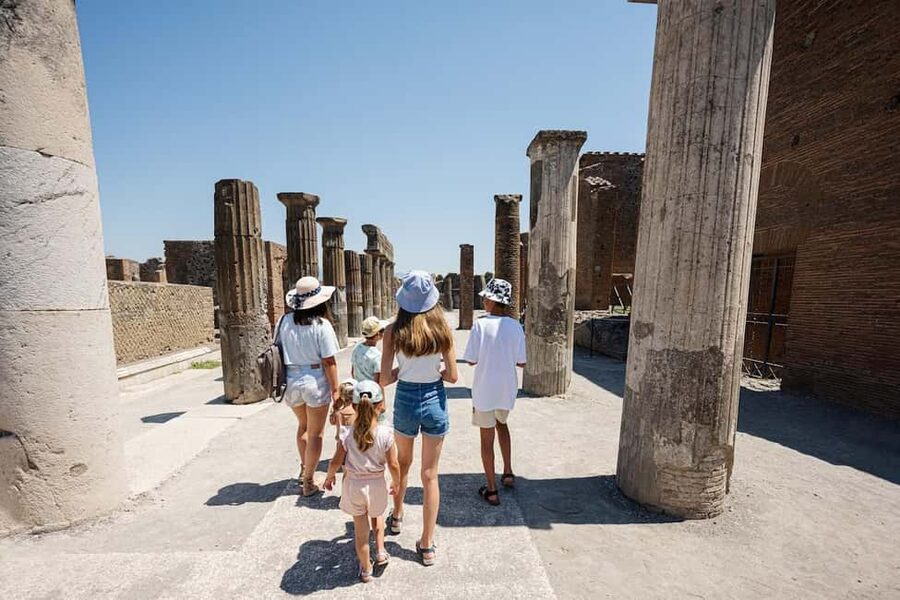
Rome can feel like a collection of separate museums, churches, piazzas, and ruins. This walk helps connect them. You begin in the historic center, pass through the commercial heart around Campo de’ Fiori, then move toward ancient Rome and the Tiber.
That change of scenery is the best feature of the route. You are not spending three hours on one subject. Instead, you get a sample of Rome’s religious art, imperial ruins, food traditions, Jewish heritage, and public squares.
I would consider this a good orientation tour early in your stay. You’ll see several places you may want to revisit, and your guide can point you toward restaurants, shops, and other sights. It also works well for a short visit when you want context without committing to a full-day tour.
The tradeoff is that many stops are guided from outside. The tour includes the Pantheon as a sight, but tickets to attractions are not included. The itinerary describes short guided visits at many locations, generally about 15 minutes, so this is a viewing and explanation tour rather than a series of long interior visits.
More Temple Walking Tours in Italy:
- Walking Guided Tour and Rome’s Iconic Temple Pantheon Entrance
★ 4.5 · 422 reviews - Bangkok: City Highlights Temple and Market Walking Tour
★ 4.5 · 3,990 reviews - Bangkok: Grand Palace and Wat Phra Kaew Guided Walking Tour
★ 4.4 · 2,417 reviews
Sant’Ignazio and the Pantheon: a strong artistic opening
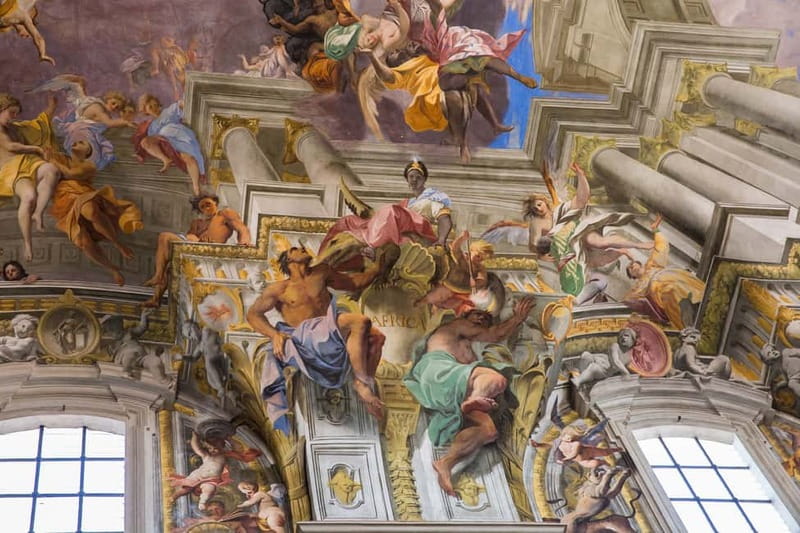
The meeting point is at the entrance of the Church of Sant’Ignazio di Loyola. The church is an excellent place to start because its ceiling creates an instant surprise. Frescoes use painted architecture to make the ceiling appear to open into the sky, giving the church its grand Baroque feel.
You have about 15 minutes here with the guide. That is enough time to look up, hear the basic story of the decoration, and get oriented before stepping into the busy streets.
From Sant’Ignazio, the group walks to the Pantheon. This is one of Rome’s most rewarding stops because the building’s exterior, massive entrance, and famous dome make sense only when you understand how old it is and how its purpose changed over time.
The guide also discusses Rome’s obelisks. These tall stone monuments came from Egypt, and some are thousands of years old. Their presence around churches and piazzas is one of the odd, memorable details of Rome: ancient Egyptian monuments were reused as part of the city’s later religious and civic design.
The Pantheon portion is scheduled for about 15 minutes. If you want to go inside, check ticket arrangements before booking. Entrance tickets are not part of the tour price, and the walk itself does not promise extended interior visits.
Piazza Navona and Campo de’ Fiori show Rome in public
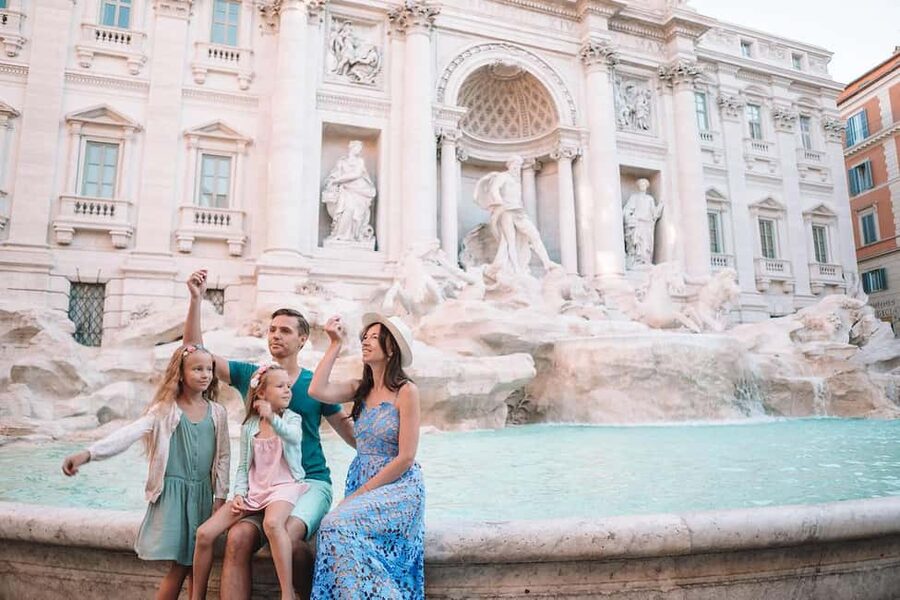
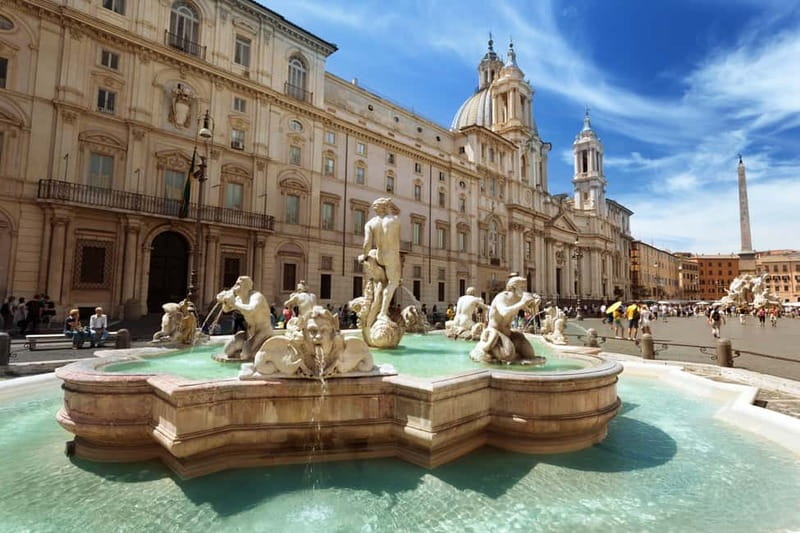
Piazza Navona is one of Rome’s most recognizable squares. The guide explains its design, fountains, and the city’s talking statues. These statues once served as places where Romans posted anonymous political comments, giving you a glimpse of Rome’s old habit of arguing in public.
The square can be crowded, especially at popular times. A private guide helps because you can ask questions without trying to keep up with a large group. Still, allow yourself a little patience. The stop is about 15 minutes, so this is a quick introduction rather than a detailed art tour.
Next comes Campo de’ Fiori, a market square with a very different feel. The guide introduces the local food market and the ingredients used in Roman cooking. The included tasting is traditional street food, with supplì as the featured example.
Supplì is a fried rice croquette, usually associated with Roman cooking. It is simple, portable, and very much part of the city’s everyday food culture. One tasting will not replace a food tour, but it adds a useful sensory break to a walk that otherwise centers on buildings and ruins.
I like this part because it gives you a practical food reference. Once you know what supplì is, you can recognize it in snack shops and casual eateries around Rome. The guide also discusses Italian food products, so you get more than a quick bite.
Food availability can vary, and the provided details do not specify the exact vendor or tasting size. If the food stop matters greatly to you, ask for current details when booking.
Largo di Torre Argentina connects food, politics, and Caesar
The route continues to Largo di Torre Argentina, an archaeological area surrounded by Rome’s modern streets. The ruins are linked to the story of Julius Caesar and the Ides of March, the date associated with his assassination.
This stop is especially useful with a guide because the remains can be difficult to interpret on your own. From street level, ancient walls and foundations can look like a jumble of stones. A good explanation gives the site a clear place in Rome’s political story.
The itinerary allows about 15 minutes here. That is enough for an overview and photographs, but not a long archaeological discussion. If Roman politics and the end of the Republic are your main interests, tell the guide at the start. The private format allows some adjustment.
The route then moves toward the Jewish Ghetto and Portico d’Ottavia. The portico is one of the walk’s more atmospheric ancient sites. It sits within the historic Jewish neighborhood, where Roman ruins, later buildings, narrow lanes, and food traditions occupy the same small area.
More Guided Tours in Italy:
- Pantheon Elite Guided Tour – Rome’s Iconic Ancient Temple
★ 5.0 · 1,447 reviews - Rome’s Iconic Temple: Pantheon Audio Guided Tour with Fast Access
★ 4.0 · 1,188 reviews - Benedictine Monastery of Catania – English Guided Tour
★ 4.8 · 434 reviews - Agrigento: Valley of the Temples Entry Ticket & Audio Guide
★ 4.1 · 268 reviews
The Jewish Ghetto and the Temple of Portunus
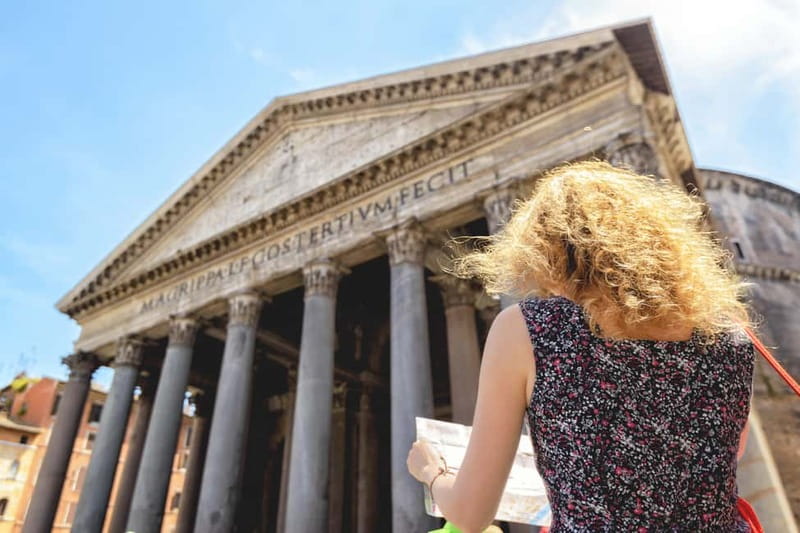
The Jewish Ghetto is presented as a distinct neighborhood with a strong sense of continuity and local character. You’ll walk through its lanes and hear about unusual street names and the area’s past.
This is where the tour moves beyond the usual first-time Rome checklist. Many visitors know the Pantheon and Piazza Navona, but fewer understand how the Jewish Ghetto fits into the city’s long story. The guide can also help you notice details that are easy to miss when you are walking alone.
The Portico d’Ottavia stop lasts about 20 minutes, making it one of the longer pauses on the route. That extra time is useful because the area brings together architecture, archaeology, and neighborhood history.
The walk also includes the so-called fake Colosseum, an ancient ruin that resembles the Colosseum. It is not the famous amphitheater, of course, but the comparison makes it a fun visual stop. Rome is full of these moments, where a smaller ruin suddenly helps you understand the scale and style of the city’s ancient buildings.
The Temple of Portunus is another strong sight. Its preserved form gives you a clearer idea of what an ancient Roman temple looked like than some larger but more fragmented ruins. The guide spends about 15 minutes here, explaining the building and its place in the ancient city.
The Mouth of Truth and a glimpse of everyday Roman legend
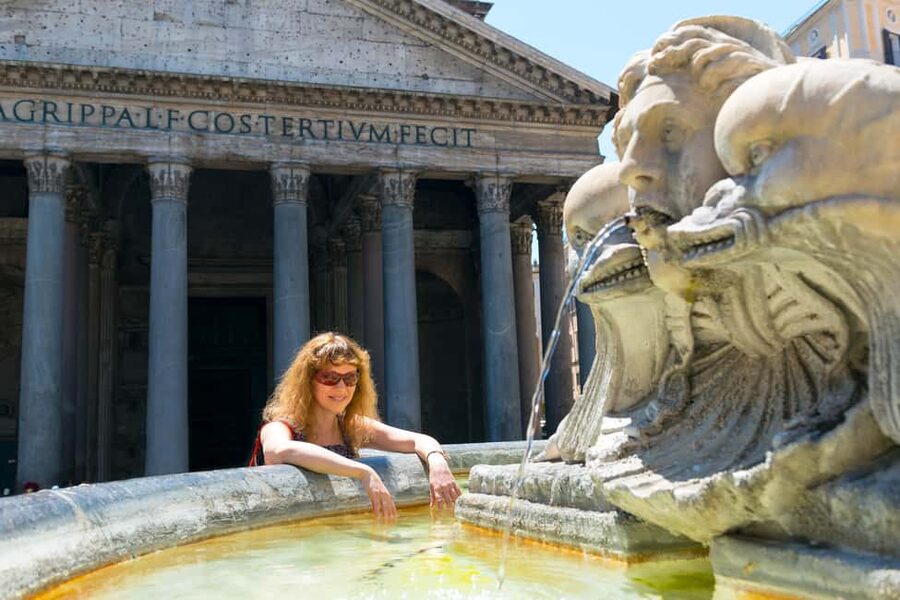
The Mouth of Truth is one of Rome’s most playful landmarks. The round stone face is linked to the old story that it would bite the hand of a liar. Its modern fame also comes from the film Roman Holiday, which brought the scene to a worldwide audience.
This stop is brief, about 15 minutes, but it adds a light moment after the heavier material about Caesar and ancient temples. You may have time for photographs, though the exact experience depends on the conditions at the site.
The route then heads toward Circus Maximus. The famous racecourse is now an enormous open area, and its size is easier to grasp from a viewpoint than from a small museum display. Your guide explains how it functioned as a place for public spectacles.
You also see Palatine Hill and the remains of the Imperial Palace. The Palatine was associated with Rome’s rulers, and the palace ruins help you picture the power concentrated above the racecourse. This is an outdoor view rather than a full archaeological-site visit, and tickets are not included.
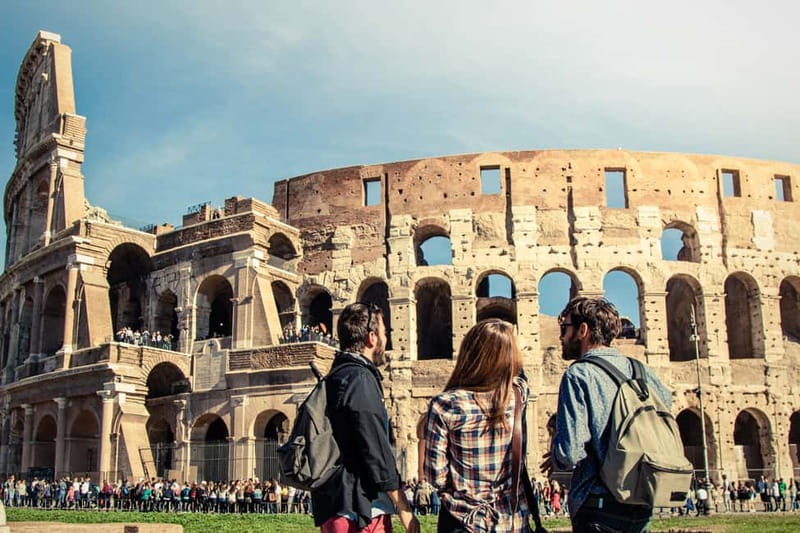
That distinction matters. If you want extensive time inside Palatine Hill, the Roman Forum, or the Colosseum, you’ll need a separate ticket and more time. This walking tour gives you the setting and the story, not a replacement for a dedicated ancient Rome admission.
Tiber Island provides a calm finish
The final section crosses toward Tiber Island. The island sits in the Tiber River and gives the route a natural closing point after the temples, markets, and imperial ruins.
The stated itinerary finishes at Tiber Island, while the meeting information also says the activity ends back at the meeting point. Those details do not fully match, so confirm the exact end point before you book, especially if you have a timed reservation, dinner booking, or hotel transfer afterward.
The walk’s final recommendation session can be useful. Ask your guide for places to eat, shops worth your time, and other Rome sights that fit your interests. This is one of the benefits of booking privately: you can ask practical questions about the rest of your stay rather than only hearing a standard farewell.
Private guiding and the value at $79.30
The listed price is $79.30 per person. For a three-hour private tour, the value depends heavily on the size of your party. One person or a couple pays more per head than a family or group sharing the guide, but you are buying personal attention rather than a large-group experience.
The private format also gives you some control over the balance of the tour. You might ask for more food discussion, more ancient history, more church art, or a route that avoids sights you have already covered. The tour description specifically allows customization.
Past guide examples include Juan and Daniele. Juan is described as warm, flexible, and able to add places that were not part of the original route. Daniele is described as punctual, thoughtful about route planning, and willing to finish near a guest’s hotel when possible. You should not assume either guide will be assigned, but you can ask about guide availability when reserving.
Those details point to the kind of service this tour aims to provide: not just a person reciting dates, but a host who can shape the walk around your plans. That is particularly useful if Rome is part of a longer Italy trip and you need advice beyond this one neighborhood.
The price does not include attraction tickets. Since the route is primarily an outdoor walking tour, this may not add much unless you want to enter the Pantheon or other paid sites. Plan for your own food beyond the single tasting, too.
Who should book this Rome walk?
This tour suits you best if you want a broad introduction to central Rome, prefer a private guide, and like the idea of mixing major sights with smaller archaeological stops.
It is a good match for:
- First-time Rome visitors who want to understand the city’s layout.
- Couples, families, or private groups who want a flexible pace.
- Visitors interested in food but not looking for a full food-only tour.
- People who enjoy ancient history but do not need long indoor museum visits.
- Anyone who wants restaurant and sightseeing advice for the rest of a Rome stay.
It may be less suitable if you want a slow visit inside every major attraction. The route covers many stops in three hours, and the short guided sections mean you’ll often see a site, hear its story, and keep moving.
Wear comfortable walking shoes and allow time for the route’s mix of paved streets, squares, and archaeological areas. The activity is listed as wheelchair accessible, but a private booking is still a good time to discuss any mobility needs and confirm the precise route.
Should you book the Temples, Squares & Markets tour?
Book it if you want Rome explained as a living city rather than a checklist of famous buildings. The combination of Sant’Ignazio, the Pantheon, Campo de’ Fiori, supplì, the Jewish Ghetto, ancient temples, Circus Maximus, and Tiber Island gives you a broad first look in a manageable three hours.
I would choose it early in a Rome visit, especially if you value personal advice and want to shape the day around your interests. At $79.30 per person, it is most compelling for a private group that will use the guide’s flexibility.
Skip it if your priority is entering the Colosseum, Roman Forum, or Palatine Hill with plenty of time. Those sites need a separate plan. For a compact, personal orientation with food, street life, and ancient ruins in the same walk, this is a well-rounded choice.
FAQ
How long is the Rome walking tour?
The tour lasts three hours.
How much does the tour cost?
The listed price is $79.30 per person.
Is the tour private?
Yes. It is offered as a private group experience.
Where does the tour start?
It starts at the entrance of the Church of Sant’Ignazio di Loyola.
Where does the tour end?
The itinerary lists Tiber Island as the finish. The meeting information also says the activity ends back at the meeting point, so confirm the exact end location before booking.
Is food included?
One street-food tasting is included. Supplì is identified as the Roman food you can expect to taste.
Are attraction tickets included?
No. Tickets to attractions are not included.
Which languages are available?
The live guide service is available in English, Italian, and Spanish.
Is the tour wheelchair accessible?
Yes, the activity is listed as wheelchair accessible.
Can the tour be canceled for a refund?
You can cancel up to 24 hours in advance for a full refund. The booking also offers a reserve-now, pay-later option.
Just added around Italy
- Cooking Class in a former Artist Monastery in the Heart of Monopoli★ 5.0 · 18 reviews
- Agrigento Valley of the Temples Archaeological Area★ 4.0 · 33 reviews
- Private transportation to the Valley of the Temples + Agrigento★ 5.0 · 8 reviews
- Agrigento: Valley of the Temples Entry Ticket & Audio Guide★ 3.0 · 40 reviews
- Rome underground hidden temples, ruins, and secret basilicas★ 3.7 · 21 reviews
- Paestum: 2-Hour Greek Temples & Archaeological Museum★ 4.8 · 19 reviews
- Paestum: Temples and Museum Tour with Archaeologist Guide★ 5.0 · 14 reviews
- Paestum Tour: Best Preserved Temples in the World (UNESCO)★ 4.5 · 11 reviews
Temple Walking Tours, compared.

City Highlights Temple and Market Walking Tour
Read our review →
Grand Palace and Wat Phra Kaew Guided Walking Tour
Read our review →

Asakusa Walking Tour with Sensoji Temple Visit
Read our review →
3 Hour Old City and Temples Guided Walking Tour
Read our review →
Kyoto Arashiyama Walking Tour: Bamboo, Monkeys, Gardens & Secrets
Read our review →
Belém Walking Tour with Jerónimos Monastery Ticket
Read our review →Browse the lists this tour appears in