
REVIEW · BANGKOK TEMPLE TOURS
Bangkok: City Highlights Temple and Market Walking Tour
Bangkok’s grandest sights come together in one compact outing: the Grand Palace and Emerald Buddha Temple, followed by the option to see Wat Pho and Wat Arun. I like the use of local transport, which adds a little riverfront and street-level Bangkok to the palace visit, and I like the small group size, capped at 10. The main drawback is heat: temple grounds involve plenty of walking, and the itinerary can feel brisk if you want to linger over every mosaic and mural.
I also like that the guide does more than point at golden roofs. Guides such as Air, Mina, Kiwi, Johnny, Mimi, Peter, and Tan have been praised for clear explanations, careful pacing, and help with onward transport. Dress rules are strict, though, and the basic palace visit does not automatically mean every optional stop is included, so check the package you choose.
Key points at a glance
- The Emerald Buddha Temple is the cultural centerpiece: See Thailand’s most sacred Buddhist temple inside the Grand Palace grounds.
- Local transport is part of the experience: The route includes public transport and may include a river boat or tuk-tuk, depending on the day and tour arrangements.
- Wat Pho adds more than a giant Buddha: Learn about traditional Thai massage, public medical education, and King Rama I’s rebuilding of the complex.
- Wat Arun gives you Bangkok’s river landmark: Its tall prang is covered with colored glass and Chinese porcelain.
- Small groups make a difference: With no more than 10 participants, the guide can answer questions and watch the group in busy areas.
- Temple clothing matters: Bare shoulders, exposed knees, and strapless-heel shoes are not allowed at the national shrine.
Why this Bangkok temple tour works
For a first visit to Bangkok, this is a sensible way to tackle the city’s central royal quarter. The sights are close together, but the heat, crowds, transport changes, and strict temple customs can make a do-it-yourself visit more tiring than it appears on a map.
You meet at the Big Country Experience office in River City Bangkok at about 9:00 AM. From there, the group heads toward the old city by public transport. The journey takes roughly 30 minutes, according to the planned schedule, and gives you a look at Bangkok beyond the polished temple courtyards.
The group is limited to 10 people. That is small enough for a guide to keep an eye on everyone while crossing streets, boarding boats, or moving through crowded gates. It also helps when you want to ask why a figure appears in a mural or why the Emerald Buddha has different seasonal robes.
The tour is offered with English or German guidance. The exact guide varies. Names associated with this experience include Air, Mina, Kiwi, Johnny, Mimi, Peter, Tan, Philips, and Ong. Their reported strengths differ slightly, but the recurring pattern is clear: expect a guide who explains the buildings, helps with practical matters, and keeps the group moving.
More Temple Walking Tours in Bangkok
- Bangkok: Grand Palace and Wat Phra Kaew Guided Walking Tour
★ 4.4 · 2,417 reviews - Bangkok: Wat Pho and Wat Arun Guided Walking Tour
★ 4.6 · 1,720 reviews - Bangkok: Grand Palace and Wat Arun Guided Walking Tour
★ 4.5 · 118 reviews
From River City Bangkok to the old city
River City Bangkok is the meeting point, with two listed starting location options at the same complex. It is worth arriving early enough to find the Big Country Experience office without rushing. The activity is not a private car tour, so you should expect some walking and shared local transport from the beginning.
The route passes the amulet market on Rattanakosin Island. This long-established market is tied to Bangkok’s religious life, with amulets bought and sold for protection, luck, and spiritual reasons. You may not get a long shopping stop here, but passing through adds useful context before the main temples.
That detail matters. The Grand Palace can look like a separate showpiece built for visitors, but the amulet market hints at the wider religious world around it. Bangkok’s old center is not only a collection of monuments. It is also a working district with food stalls, small shops, shrines, and daily rituals.
The transport itself can vary in feel. Several people have particularly enjoyed using a river boat, and some accounts also mention a tuk-tuk. These elements are not described as a guaranteed fixed sequence for every departure, so treat them as possible parts of the local transport plan rather than promises. Either way, the trip is more connected to Bangkok life than a direct air-conditioned transfer.
The Grand Palace and Emerald Buddha Temple
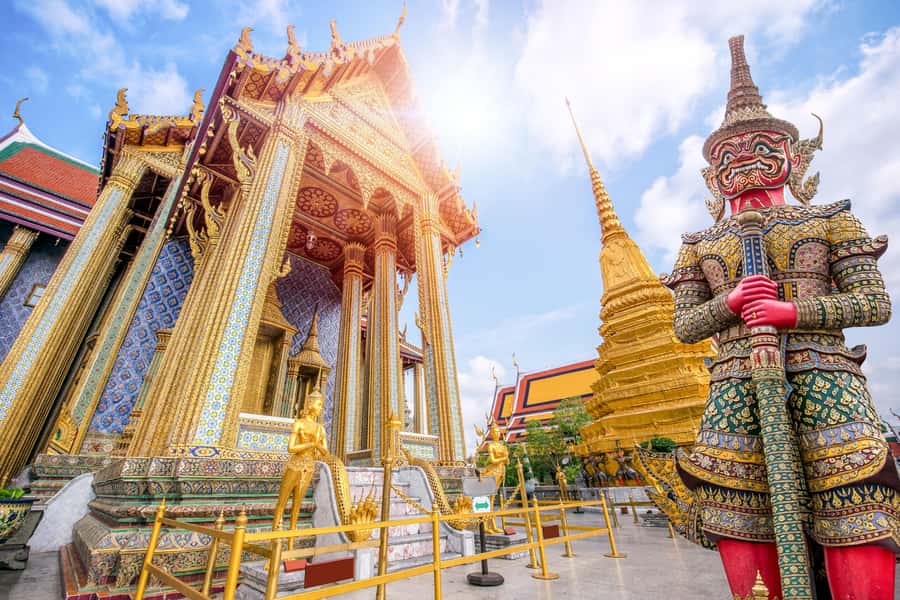
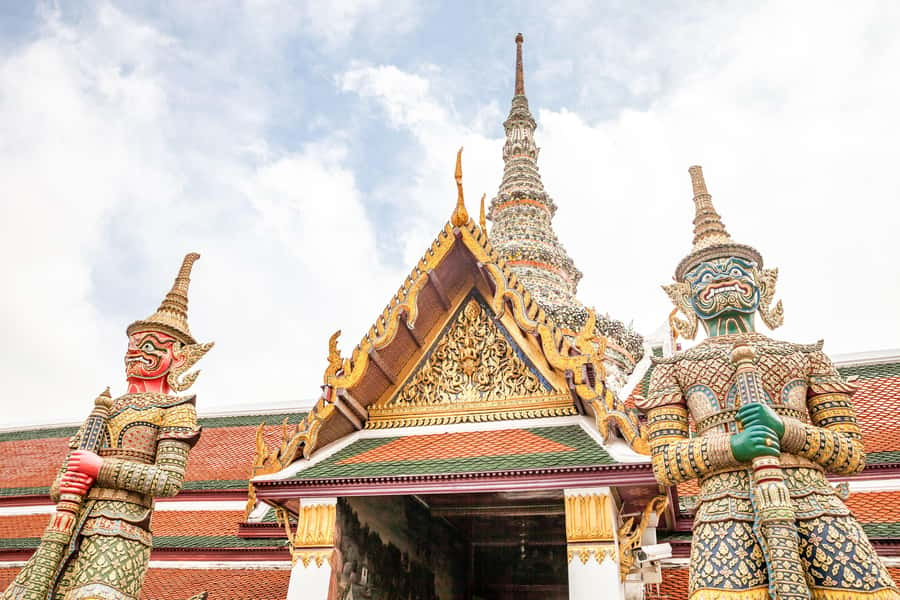
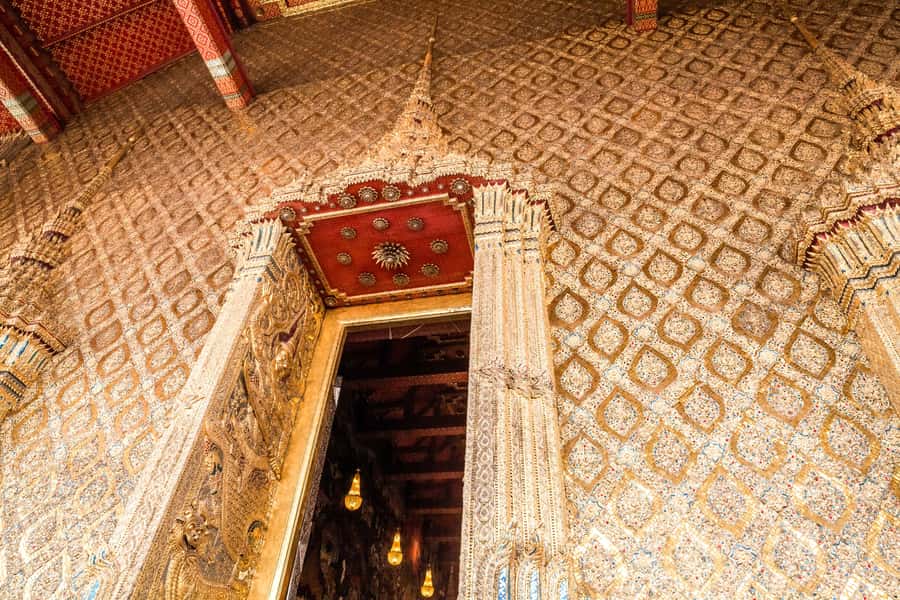
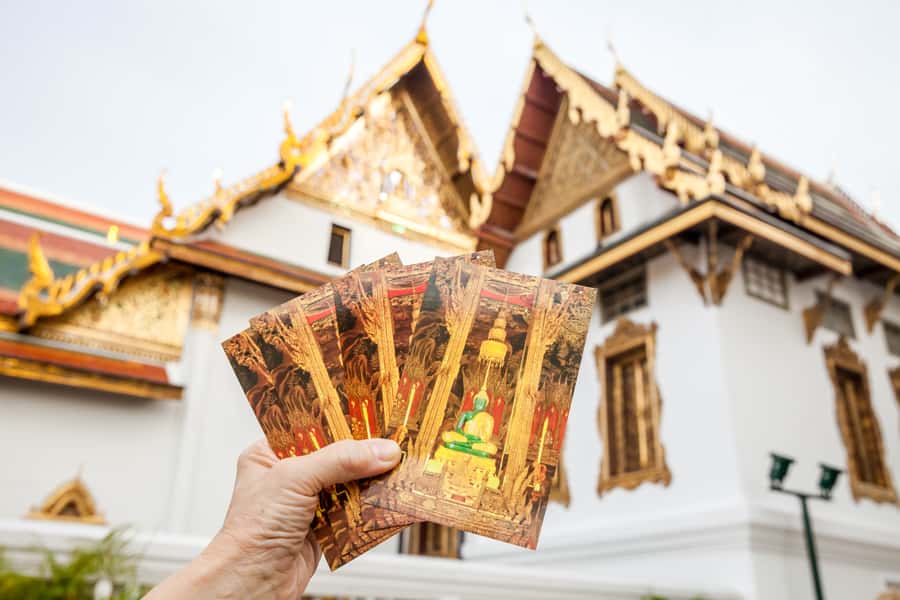
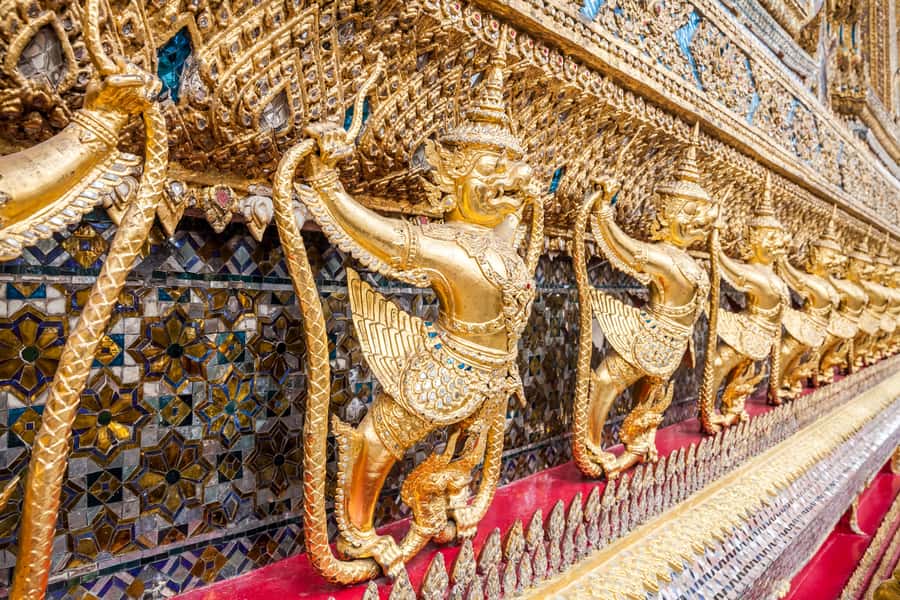
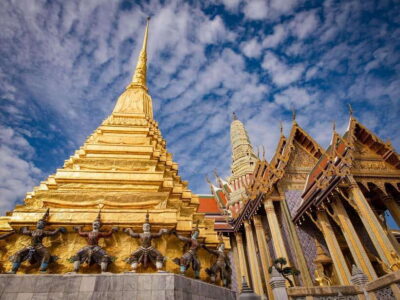
The main visit begins at Wat Phra Kaew, officially Wat Phra Si Rattana Satsadaram and usually called the Temple of the Emerald Buddha. It is regarded as Thailand’s most sacred Buddhist temple, and the setting explains why: bright painted buildings, gilded details, tall spires, and glittering mosaic work fill the grounds.
The Emerald Buddha itself is made of jade, despite its familiar name. You cannot photograph inside the chapel, but guides can explain the image and show photographs of the seasonal robes. The statue is dressed differently during the hot, rainy, and cool seasons, with the changing of the robes treated as an important royal and religious ceremony.
The chapel is a national shrine, so this is the point where clothing rules matter most. You need covered shoulders and knees. Sleeveless shirts are not allowed, and strapless-heel shoes are specifically listed as unsuitable. Shoes must be removed before entering temple buildings. Bring clothing that covers you properly rather than hoping a loose scarf will solve every problem.
Photography is allowed in the Royal Palace grounds and the Emerald Buddha compound, but not inside the buildings. I suggest taking a moment to put the phone away in the chapel. The interior visit is brief, and the value comes from understanding the ritual importance rather than collecting another photograph.
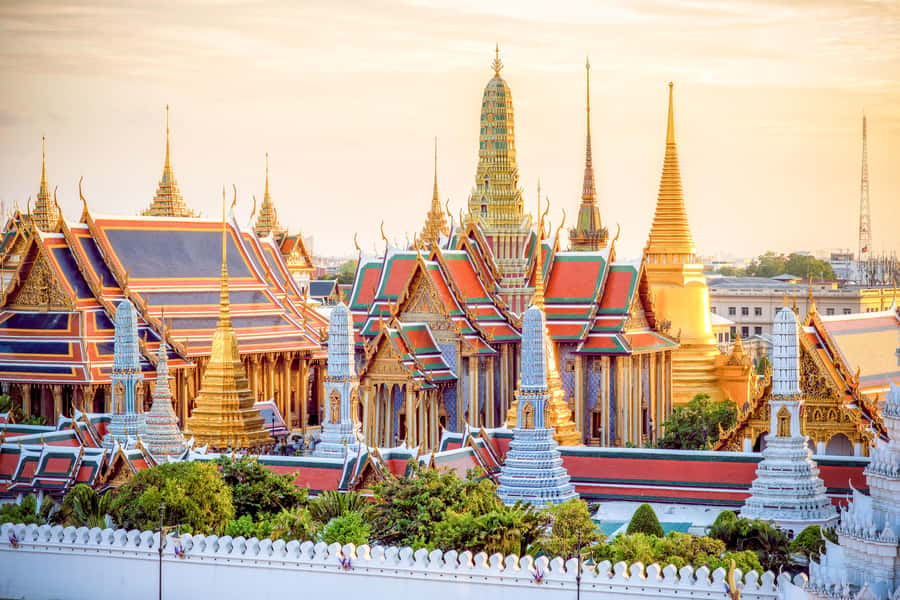
After Wat Phra Kaew, the route continues through the Grand Palace. The palace was the official residence of Thailand’s kings and remains a setting for royal ceremonies and state functions. The grounds include grand halls, ceremonial courtyards, walls, gates, and richly decorated buildings.
A good guide helps you separate royal architecture from temple architecture. The palace is a place of state and ceremony, while Wat Phra Kaew is a sacred shrine within the same larger complex. Without that distinction, the gold, red, green, and mirrored surfaces can blur into one impressive but confusing procession.
The planned visit here lasts about 1.5 hours, including guided touring, sightseeing, walking, and time for photographs. That is enough for the key buildings and an explanation of the main stories, but not enough to study every mural or architectural detail. If you prefer slow photography, this may feel quick.
The palace grounds can also be hot and exposed. Guides have been praised for adding water stops, shade breaks, and restroom pauses when needed. Drinking water is included, but you should still dress for heat and bring whatever sun protection you normally use.
Wat Pho, the Reclining Buddha, and Thai massage
If you select the option that includes Wat Pho, the tour continues after the palace. On the way, it passes Tha Thien Market, a food market known for dried and salted seafood and wholesale goods. This is a more ordinary, practical side of the old city, and it makes a useful contrast with the royal grounds.
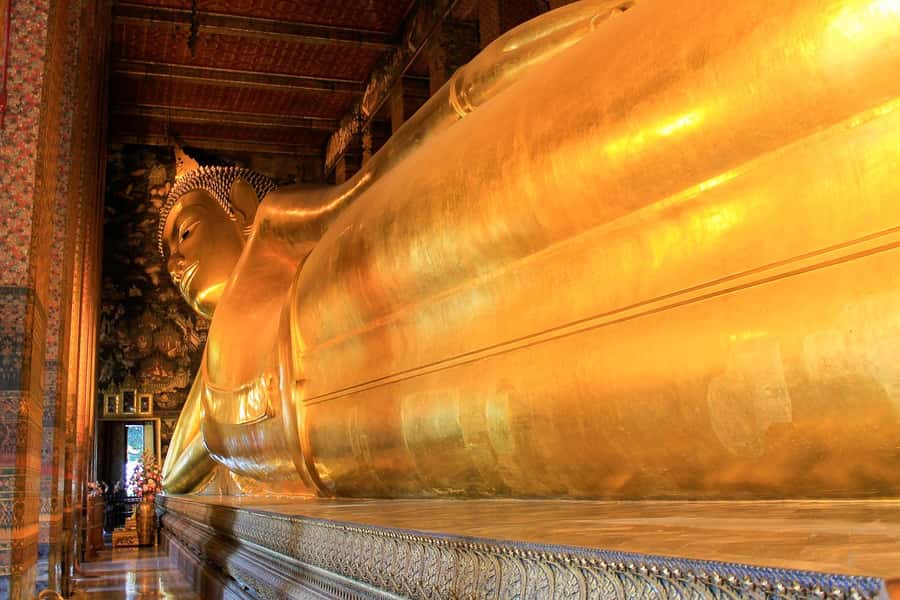
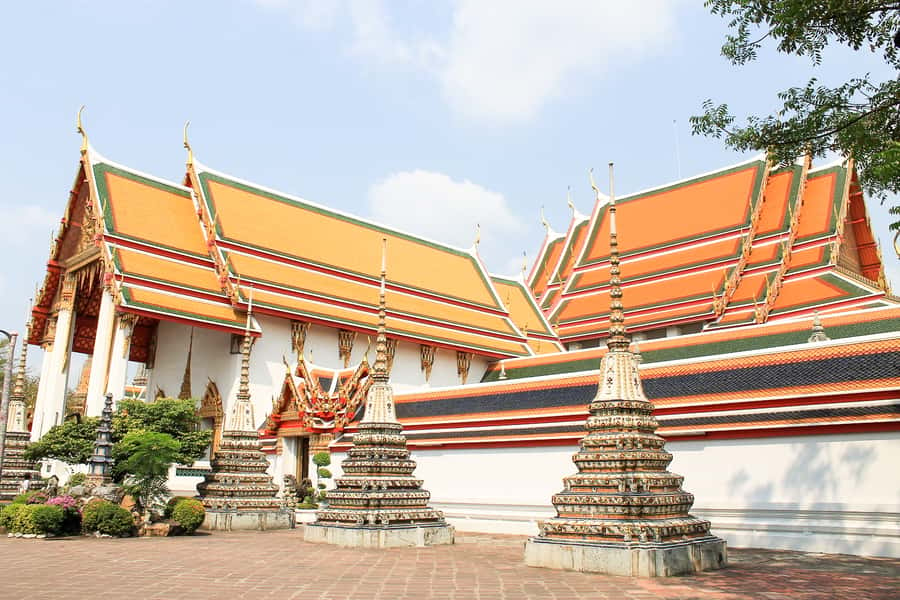
Wat Pho is widely known for its huge Reclining Buddha, but the temple complex deserves more time than a quick photograph. It is one of Bangkok’s oldest and largest temple compounds and is classed among Thailand’s highest-grade first-class royal temples.
The complex was rebuilt under King Rama I on the site of an earlier temple. It became his main temple, and some of his ashes are enshrined there. That connection gives Wat Pho a different tone from the Grand Palace. Here, royal patronage, public learning, religious practice, and traditional medicine all meet in one place.
Wat Pho is also linked to the early public teaching of medicine. Marble illustrations and inscriptions were placed around the compound as public lessons. The site has since been recognized through UNESCO’s Memory of the World Programme. It is also regarded as the birthplace of traditional Thai massage, which is still taught and practiced at the temple.
The Reclining Buddha is the obvious visual highlight, but listen for the details around it. The scale of the image, the posture, and the decorated feet are easier to appreciate when your guide explains what they represent. The temple grounds also reward a slower look at the tiled stupas and smaller courtyards.
Wat Pho is an optional part of the booking structure, so check that your chosen version includes its admission fee. The basic price begins at $42 per person, but the exact value depends on which temple package you select. Admission to the Grand Palace and Emerald Buddha Temple is included, while Wat Pho and Wat Arun are listed as included only when the relevant option is chosen.
More Temple Walking Tours in Thailand
- Bangkok: Grand Palace, Wat Pho, & Wat Arun Walking Tour
★ 4.6 · 116 reviews - 3-Hour Bangkok Walking Tour: Wat Pho and Wat Arun
★ 5.0 · 102 reviews - Grand Palace, Wat Phra Kaew, Wat Pho and Wat Arun Walking Tour From Bangkok
★ 4.5 · 88 reviews - Bangkok 3-Major Royal Temples Walking Tour
★ 4.6 · 59 reviews
Wat Arun beside the Chao Phraya River
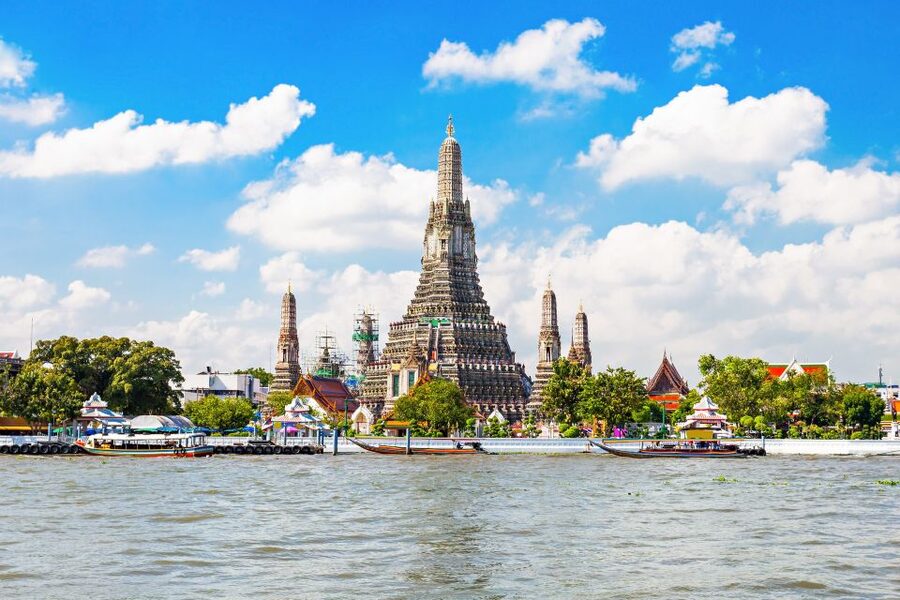
The final major temple is Wat Arun, the Temple of Dawn. Its central prang rises about 70 meters beside the Chao Phraya River, making it one of Bangkok’s most recognizable landmarks.
The tower is decorated with small pieces of colored glass and Chinese porcelain. Up close, the surface has a different character from the gold-heavy decoration at the Grand Palace. Instead of one broad field of gilding, you get a detailed skin of repeated patterns, color, and ceramic fragments.
Wat Arun is especially useful as a counterpoint to the other stops. The Grand Palace shows royal ceremony, Wat Phra Kaew focuses on the nation’s most sacred shrine, and Wat Pho combines religious life with learning and massage. Wat Arun gives you a riverfront landmark with its own strong visual identity.
The tour information lists admission to Wat Arun when that option is selected. Because the stated duration ranges from two to four hours, the exact length depends on the version you book and the number of stops included. Read the option details carefully if Wat Arun is a priority.
The river setting can also change the feel of the visit. Several guides have helped people continue by boat afterward, including onward journeys toward Iconsiam. That assistance is useful if you plan to use the tour as a morning introduction before spending the rest of the day along the Chao Phraya.
How much value do you get for $42?
At $42 per person, the tour makes the most sense if you want the Grand Palace explained rather than simply entered. Admission fees, a licensed guide, drinking water, and group organization are included. You are also paying for help with transport, temple etiquette, route planning, and the historical connections between the sites.
The price is less compelling if you already know Bangkok well, prefer to move at your own speed, or want to spend a long time photographing each building. A short guided visit naturally trades freedom for structure.
The small group improves the calculation. A group of up to 10 is more manageable than a large coach party, especially around temple gates and river transport. Guides have also helped with taxis, ferries, directions, and onward plans after the formal tour ends. That kind of practical help can save time on a first day in Bangkok.
Personal expenses are not included. Keep money available for food, market purchases, or any transport and activities beyond the stated tour arrangements. The end point is described as Tha Tien near the Grand Palace, while the activity information also refers to returning to the meeting point. Confirm the exact finish for your selected departure if you have a timed booking afterward.
What the guides add
The best part of this experience is likely to be the person leading it. The names and styles vary, but the strongest guide descriptions point to a mix of clear history, humor, and practical care.
Mina and Kiwi are associated with energetic explanations and close attention to the group. Johnny has been praised for being friendly, entertaining, and good at checking whether people need water or a restroom. Peter is noted for placing palace stories into a larger royal and mythological setting. Air is described as calm, prepared, and willing to give visitors time to look.
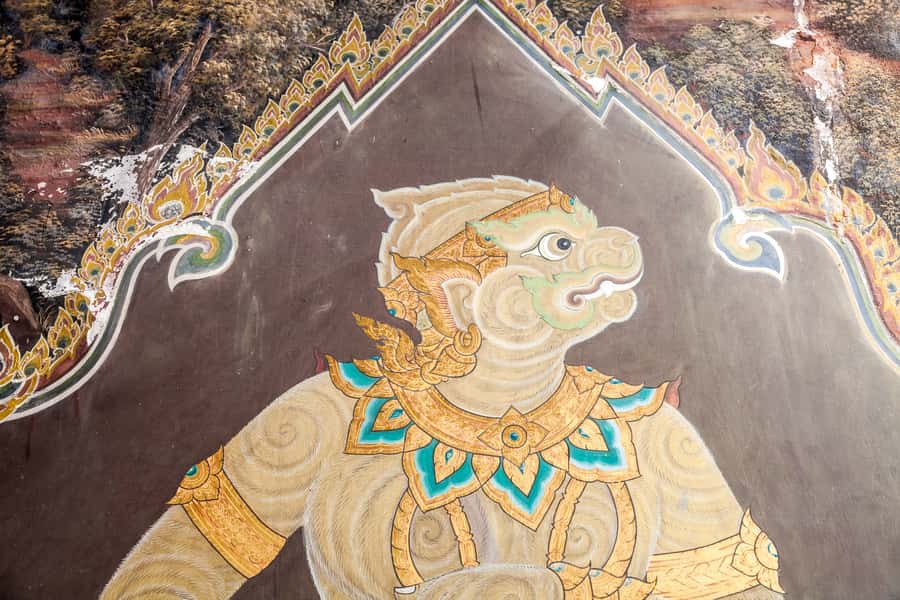
That variety matters because these sites can overwhelm you with surface detail. A guide who explains why a building matters, how royal rituals work, or what a mural depicts gives the visit shape. At the same time, you should remember that a guide-led route will have a set rhythm. You will not control every pause.
The guides have also helped people who needed to leave early, find a taxi, board the right ferry, or reach another attraction. If you have plans after the tour, tell your guide early. The group cannot guarantee an exact finish time, but clear communication gives the guide a chance to help.
Practical advice before you go
Wear light clothing that still covers your shoulders and knees. Loose trousers or a longer skirt, along with a shirt that covers the upper arms, is safer than relying on a wrap at the entrance.
Choose shoes you can remove and put back on easily. You will need to take them off before entering temple buildings, and complicated footwear becomes a nuisance in hot weather.
Bring water, although drinking water is included. You may also want sun protection and a small bag that is easy to carry while walking. Restrooms are available, and guides have made a point of building in breaks when conditions are hot.
Allow two to four hours, depending on the selected option and transport arrangements. Do not schedule an important appointment immediately afterward. The route includes public transport, walking, and major sights where delays can happen.
Cancellation is flexible up to 24 hours before the activity for a full refund, and you can reserve now and pay later. That is useful if your Bangkok plans are still changing.
Who should book this tour?
I would choose this tour for a first Bangkok visit, especially if you want the Grand Palace and Emerald Buddha explained without handling every ticket, route, and etiquette rule yourself. It also suits solo visitors who like meeting a few other people, couples who want a structured morning, and anyone who values a guide who can help with the next ferry or taxi.
Families and older visitors may appreciate the small group and regular water or restroom pauses, though the heat and walking still require reasonable stamina. The tour is not ideal for someone who dislikes fixed pacing, wants extensive photography time, or plans to see only one temple.
Before booking, check three things: the language, the included temple option, and the expected end point. If Wat Pho and Wat Arun are essential to your plan, select the package that includes both rather than assuming the base price covers every stop.
For $42, this is a good introduction to Bangkok’s royal and religious center. Book it if you want context, local transport, and practical help folded into the morning. Skip it if you already understand the old city and would rather wander slowly on your own.
FAQ
Where does the Bangkok temple tour start?
You meet the guide at the Big Country Experience office at River City Bangkok. The listed meeting time is 9:00 AM.
Which temples are included?
Admission to the Grand Palace and Emerald Buddha Temple is included. Wat Pho and Wat Arun are included when you select the option that contains those attractions.
How long does the activity last?
The duration is listed as two to four hours. The exact length depends on the selected option and starting time.
What languages are available?
Live guiding is available in English and German.
What should I wear to the temples?
You must cover your shoulders and knees. Sleeveless shirts and strapless-heel shoes are not allowed. Shoes must be removed before entering temple buildings.
Can I take photographs inside the temples?
Photography is allowed in the Royal Palace grounds and the Emerald Buddha Temple compounds. Photography is not allowed inside the buildings.
More Shopping Trips in Bangkok
- Private tour to Wat Pho,Wat Arun, Canal Tour,Flower Market
★ 5.0 · 42 reviews - Bangkok: Floating Market, Phra Pathom Pagoda & Cafes Tour
★ 4.4 · 35 reviews - PRIVATE Floating Market + DRAGON Temple + DO like a Local
★ 5.0 · 33 reviews - Ayutthaya Temples and Ayothaya Floating Market From Bangkok
★ 4.5 · 32 reviews
More Market Tours in Bangkok
- Bangkok: Railway and Floating Market Tour with Dragon Temple
★ 4.6 · 1,225 reviews - Bangkok: Night Bike Tour with Temples & Flower Market Visit
★ 4.8 · 751 reviews - Bangkok: Night Bike Tour with Temples & Flower Market Visit
★ 5.0 · 223 reviews - From Bangkok: Don Wai Market, Wat Samphran & Lotus Café Tour
★ 4.5 · 48 reviews
Just added around Bangkok
- Visit temples in and around Bangkok with a former monk of 10 years★ 5.0 · 30 reviews
- Visit Wat Pho and Wat Arun with Local Expert★ 4.0 · 14 reviews
- Top 3 Bangkok Temples: Multilingual Private Tour [EN,ES,DE,IT,FR]★ 5.0 · 9 reviews
- 3-Hour Bangkok Walking Tour: Wat Pho and Wat Arun★ 5.0 · 102 reviews
- Thai Dance Class at Wat Arun★ 5.0 · 30 reviews
- Grand Palace & Emerald Buddha Private Tour [Optional Luxury]★ 5.0 · 27 reviews
- Shore Excursion Laem Chabang Port : Grand Palace & Famous Temples★ 4.0 · 6 reviews
- Ancient City & Temples of Ayutthaya ( UNESCO ) by River Cruise with Buffet Lunch★ 4.0 · 11 reviews
Bangkok Temple Tours, compared.
Bangkok by Night: Temples, Markets and Food Tuk-Tuk Tour
Read our review →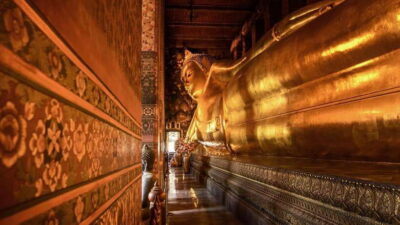
Grand Palace, Wat Pho, and Wat Arun Guided Tour
Read our review →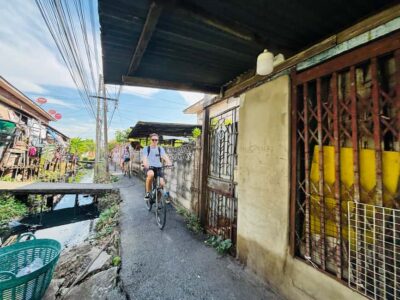
Grand Palace and Wat Phra Kaew Guided Walking Tour
Read our review →
Markets, Temples and Food Night Tour by Tuk Tuk
Read our review →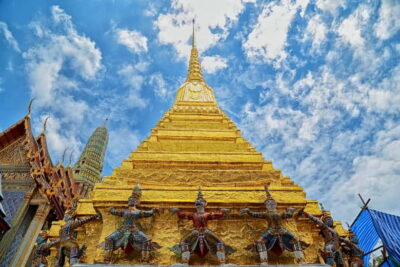
Grand Palace, Wat Pho, Wat Arun Sacred & Local Tour
Read our review →
Browse the lists this tour appears in