
REVIEW · TEMPLE WALKING TOURS
Lisbon: Belém Walking Tour with Jerónimos Monastery Ticket
Jerónimos Monastery is the star here, and the included entry ticket matters. Belém can draw long lines, while a guide takes you inside to explain the carved ropes, plants, ships, and religious symbols that are easy to miss on your own. I especially like the balance between the peaceful cloister and the grand Church of Belém, where Vasco da Gama is buried.
I also like the stop at the original Pastéis de Belém bakery, plus the guide’s practical help with the crowded entrance. Guides such as João and Renan are praised for clear storytelling, good pacing, and useful Lisbon tips. The main drawback is that the Belém Tower is closed for renovation, so you will see the area around it but not enter.
Key points to know before booking
- Jerónimos Monastery takes center stage: Allow about 90 minutes for the cloister, church, architecture, and stories of monastic life.
- The original Pastel de Belém is included: You stop at the historic bakery for a tasting, often with help getting through the busy queues.
- The guide turns stonework into history: João, Renan, and other guides explain the symbols, explorers, monks, and political events behind the monuments.
- The Monument to the Discoveries finishes the route: You reach the Tagus waterfront and examine Portugal’s seafaring story in stone.
- It is a small-group walking experience: Small groups are available, making it easier to hear the guide and ask questions.
- Plan for sun and uneven access: Bring sunscreen and an umbrella, and note that the tour is not suitable for wheelchair users.
Why Jerónimos Monastery is worth the three hours
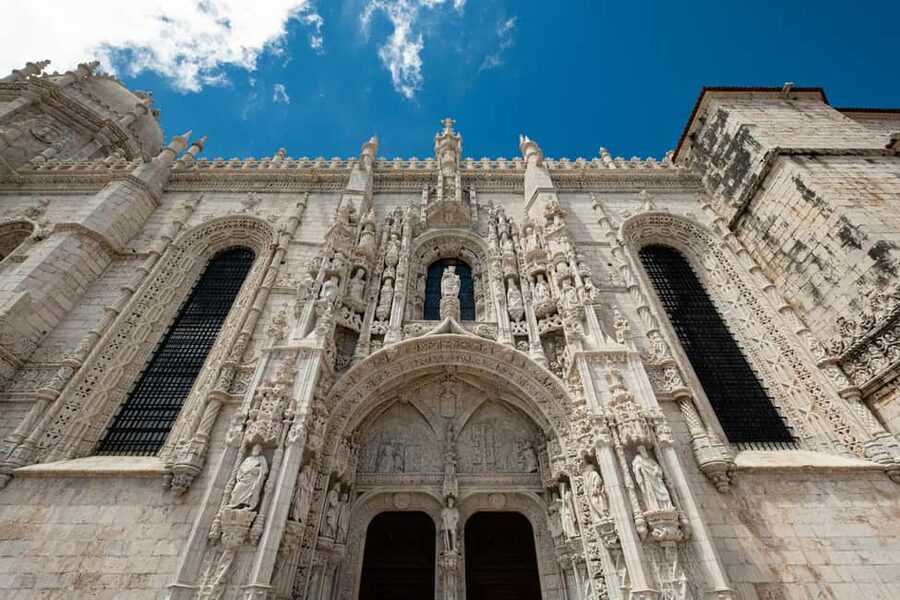
Belém is not a place to rush through with a checklist. Its monuments are large, ornate, and packed with references to Portugal’s voyages, faith, trade, and royal power. Without some explanation, the carved details can blur into decoration. With a good guide, the building becomes a visual record of the period.
The tour begins under the large pine tree in front of the Museu de Marinha coffee shop, near the Navy Planetarium. This is a useful meeting point because the museum and planetarium are easy landmarks in Praça do Império. Look for the guide wearing an identifying badge.
The first major stop is Jerónimos Monastery, officially the Monastery of the Hieronymites. The guided visit to the cloister lasts about 90 minutes, giving you enough time to see the main spaces without turning the visit into a hurried photo stop.
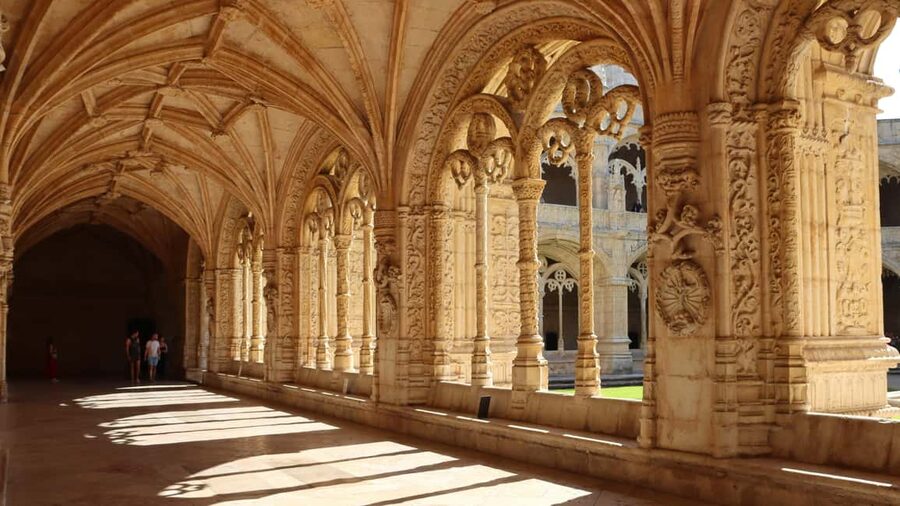
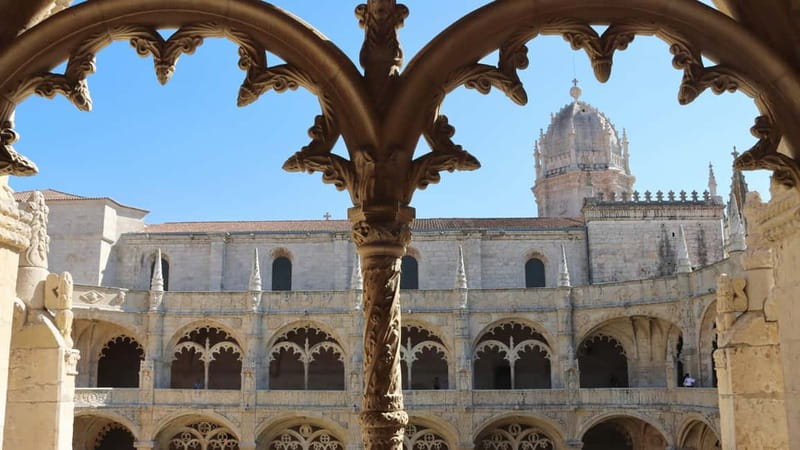
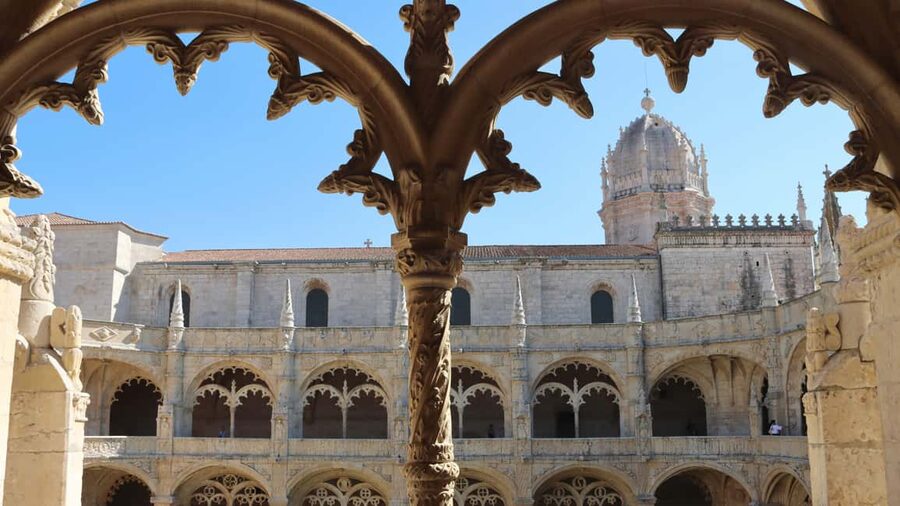
The cloister is the visual heart of the tour. Its pale stone arches are covered with delicate Manueline carving, including maritime forms, plants, ropes, and other details linked to Portugal’s seafaring era. I like having a guide point out these small features because they are placed high and low across the columns and walls. You can easily admire the overall design without noticing what the sculptors were trying to say.
Your guide also connects the monastery to the monks who prayed for the safe return of Portuguese sailors. That gives the building a human purpose. It was not only a royal monument or a beautiful church. It was also a religious home tied to the voyages leaving from the nearby Tagus River.
Guides such as João and Renan have received especially strong praise for explaining the iconography and monastic life in plain language. Their style appears to be interactive rather than a long speech delivered at the group. You may be asked to look closely at a carving, consider what it represents, or notice a detail you would otherwise pass.
That approach is valuable if you are interested in architecture but do not have a background in Portuguese history. You get the basic story first, then the smaller details that make the building memorable.
More Temple Walking Tours in Portugal:
- Lisbon: Belem Walking Tour with Jeronimos Monastery Ticket
★ 4.7 · 490 reviews - Belem and Jeronimos Monastery Guided Small Group Walking Tour
★ 5.0 · 410 reviews - Lisbon: Belem Walking Tour with Jeronimos Monastery Entry
★ 4.9 · 163 reviews
The Church of Belém and Vasco da Gama’s tomb
The Church of Santa Maria de Belém is part of the guided visit. Its connection with the monastery makes it more than an extra stop. The church helps explain the religious setting in which Portugal’s royal and maritime ambitions were presented.
The tomb of Vasco da Gama is one of the most important sights inside. He led the first Portuguese sea voyage to India, and his burial place links the church directly to the country’s overseas expansion. A guide can help you place him within the larger story instead of treating the tomb as an isolated object.
I appreciate that this portion is included rather than left as a quick exterior explanation. The church and tomb add weight to the visit, especially if you want to understand how faith, monarchy, and exploration were tied together in Portugal.
The interior can feel crowded, and the amount of information depends on the guide and the pace of the group. Still, the tour’s strongest feature is the human explanation. Guides are praised for making time for photographs and independent looking, so you are not expected to stare at one column while the group immediately moves on.
A Pastel de Belém stop with practical crowd help
After the monastery and church, the group walks to Pastéis de Belém, the bakery associated with the original Pastel de Belém. The tasting is included, so you do not need to budget separately for the advertised pastry.
This is a simple stop, but it works well in the middle of a walking tour. The sweet, flaky pastry gives you a break after a substantial historical visit, and the guide explains the story of the recipe and its connection to the former monastery. The tour description presents the recipe as a closely guarded tradition dating from the 19th century.
The practical advantage is the handling of the crowd. Several people specifically appreciated being guided through the line rather than having to work out the busy bakery on their own. Some groups have also seen parts of the baking operation, though you should not assume that will happen every time. One account notes that the kitchen was closed for a break during that visit.
You may receive one pastry or two depending on the group arrangement and guide, so I would treat the tasting as a sample rather than a full meal. It is also wise not to make this your only food plan for the afternoon.
The bakery is popular, and the stop can feel less peaceful than the monastery. That is part of the experience. You are visiting a famous working shop, not a quiet café. If you dislike queues or crowded interiors, the guide’s assistance is useful, but the setting will still be busy.
Walking toward the Tagus and the Discoveries Monument
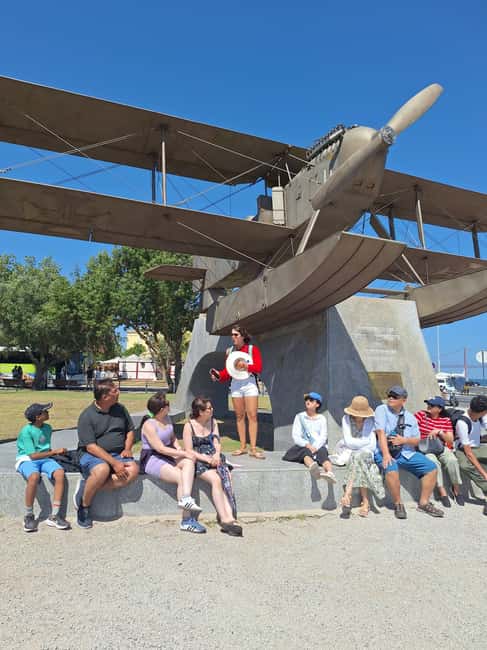
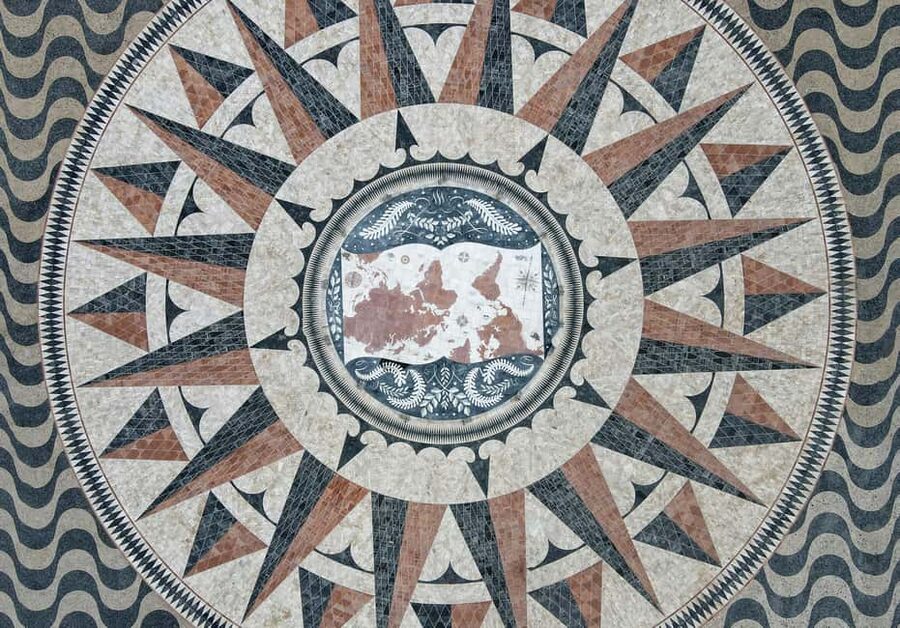
The route continues toward the waterfront and the Padrão dos Descobrimentos, usually called the Monument to the Discoveries in English. The monument is shaped like a ship’s prow and features major figures connected with Portugal’s voyages, including Prince Henry the Navigator and Vasco da Gama.
The guide’s role matters here because the monument can be read in several ways. It celebrates navigation, mapping, trade, and national ambition, but the story also involved conquest and major changes for societies beyond Europe. One guide was praised for adding African and Indian perspectives to the subject, which is a useful way to keep the visit from becoming a simple parade of heroic names.
You will hear about caravels, long sea routes, unknown waters, and the risks faced by sailors. The guide also explains who the stone figures represent and why the monument was built. This makes the stop more meaningful than a quick photograph by the river.
The visit lasts about 30 minutes and finishes at the monument. That ending works well because the riverfront gives you space to think about the earlier sights. The monastery showed the spiritual and artistic side of the period. The monument turns the same era outward toward voyages and empire.
The riverside can be exposed to sun and wind. Bring water, sunscreen, and an umbrella on hot days. Lisbon can be warm in summer, and the itinerary includes outdoor walking with limited shade.
More Entry Tickets in Portugal:
- Lisbon: Jerónimos Monastery Entrance Ticket
★ 4.1 · 14,164 reviews - Lisbon: Jerónimos Monastery E-Ticket and Audio Guide
★ 3.7 · 660 reviews - Batalha Monastery Entrance Ticket
★ 4.3 · 140 reviews - Belém: Jeronimos Monastery, Tickets and Guided tour
★ 4.9 · 30 reviews
What the closed Belém Tower means for your visit
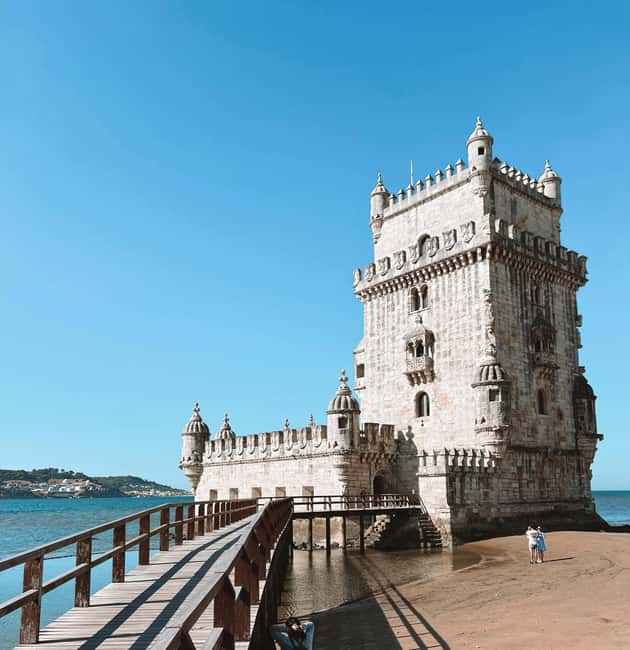
The Belém Tower is not included in this version of the tour because it is undergoing renovation and closed to the public. You may see the surrounding area, but you cannot count on entering the tower.
This matters if the tower is your main reason for choosing a Belém tour. The absence does not ruin the route, since the monastery, church, bakery, and Discoveries Monument make up a full three-hour visit. Still, the marketing and photos of Belém often feature the tower, so check its current status before booking.
The supplied information gives a renovation period extending through July and also says the tower remains closed until further notice. Since work schedules can change, ask for the current situation if the tower is essential to your plans.
Is $69 a fair price?
The cost is $69 per person. That is more than simply buying a monastery ticket and ordering a pastry, but you are paying for three hours of guiding, the monastery entry, the church visit, the pastry tasting, and the Discoveries Monument.
The biggest value is time. If the monastery has a long queue, the included entry and organized arrival can save a large part of your morning. Several people appreciated being taken straight inside while crowds waited outside. Queue conditions change, so this is an advantage rather than a guarantee of a completely empty entrance.
The second value is interpretation. A self-guided visit can show you the cloister, but it may not explain why a carved flower, rope, armillary sphere, or ship appears where it does. The guide helps connect the details to monastic life and Portugal’s seafaring past.
The price makes more sense for a first visit, a short stay, or anyone who wants a clear introduction to Belém. If you already know the monastery well and prefer wandering alone, you may find the cost harder to justify.
A guide’s quality is central. João is frequently praised for his clear English, organization, humor, photographs, and detailed explanations. Renan is also described as warm, interactive, and attentive to individual group members. Other guides may lead the tour, and languages include English, French, Italian, Spanish, and Portuguese.
Pace, group size, and physical demands
The tour lasts three hours and covers several outdoor sections. It is a walking experience, not a coach tour, so wear comfortable shoes and expect to move between the monastery, bakery, waterfront, and monument.
Small groups are available. That can make a major difference inside the cloister, where a large crowd makes it hard to hear. It also gives you a better chance to ask about a particular symbol or request help with a photograph.
The pace appears moderate. Guides allow time for photographs and independent viewing, while still keeping the group moving through a busy district. One practical strength is the guide’s ability to manage crowds at the monastery and bakery.
The tour is not suitable for wheelchair users. No special mobility details are provided, so you should contact the provider before booking if stairs, standing, or uneven surfaces are a concern.
The meeting point is outdoors under a tree. Arrive with enough time to find the Museu de Marinha coffee shop and Navy Planetarium. The guide will be wearing an identifying badge.
Who will get the most from this Belém tour?

I would choose this for a first-time Lisbon visit, especially if you want the history explained rather than simply photographed. It suits couples, solo visitors, families with older children, and small groups who enjoy asking questions.
It is also a good choice if you are interested in architecture. The guide draws attention to Manueline carvings and the symbols built into the monastery, details that can be easy to overlook.
Food-focused visitors will enjoy the pastry stop, but this is not primarily a cooking tour. The Pastel de Belém is a welcome part of the route, not the main event.
You should think twice if you want a slow, private visit with no schedule. The group must stay together, and the bakery can be crowded. You should also reconsider it if entering the Belém Tower is essential, since that is not currently possible.
Free cancellation is available up to 24 hours before the start, and you can reserve without paying immediately under the pay-later option. Those terms are useful if your Lisbon plans are still shifting.
Should you book the Belém walking tour?

I would book it if you want the Jerónimos Monastery explained in detail, help avoiding the worst entrance queues, and a compact introduction to Portugal’s maritime past. The combination of the cloister, church, Vasco da Gama’s tomb, original pastry, and Discoveries Monument gives you a well-shaped morning or afternoon.
The best reason to choose this tour is the guide. João and Renan are repeatedly praised for making history clear, personal, and lively, while still giving people time to look around. At $69, the tour is not the cheapest way to see Belém, but the included ticket and three hours of focused guidance make it reasonable for a first visit.
Skip it if you mainly want the Belém Tower, need wheelchair access, or prefer exploring monuments without a group. For everyone else, especially those facing a short Lisbon stay, this is a practical way to understand why Belém matters.
FAQ
How long does the Belém walking tour last?
The tour lasts three hours.
Where does the tour begin?
It begins under the tree in front of the Museu de Marinha coffee shop at Praça do Império in Belém. The Navy Planetarium next door is another useful landmark.
Where does the tour finish?
The tour finishes at the Monument to the Discoveries.
Is entry to Jerónimos Monastery included?
Yes. The tour includes the entry ticket and a guided visit to the monastery cloister.
Does the tour include the Church of Belém?
Yes. The guided visit includes the Church of Our Lady of Belém and the tomb of Vasco da Gama.
Is a Pastel de Belém included?
Yes. The tour includes a tasting at Pastéis de Belém, the original bakery in Belém.
Can I visit Belém Tower on this tour?
No. Belém Tower is closed for renovation and is not open for visits until the work is finished.
Which languages are available?
The tour is available in English, French, Italian, Spanish, and Portuguese.
Is this tour suitable for wheelchair users?
No. The activity is not suitable for wheelchair users.
Can I cancel the booking?
You can cancel up to 24 hours in advance for a full refund. A reserve-now, pay-later option is also available.
Just added around Portugal
- Belém: Jeronimos Monastery, Tickets and Guided tour★ 4.9 · 30 reviews
- Lisbon: Belem Walking Tour with Jeronimos Monastery Entry★ 4.9 · 163 reviews
- Lisbon: Belém Private Walking Tour & Jerónimos Monastery★ 4.5 · 83 reviews
- From Lisbon: Évora, Chapel of Bones, & Roman Temple Tour★ 5.0 · 8 reviews
- Fátima Private Tour: Shrine| Sacred Path |Shepherds House★ 5.0 · 81 reviews
- Lisbon: Belem Tour with Pastéis at Jerónimos Monastery★ 4.7 · 96 reviews
- Between Life & Death: Roman Temple, Cathedral & Bone Chapel★ 4.9 · 6 reviews
- Belém Walking Tour + Jerónimos Monastery Ticket★ 5.0 · 24 reviews
Temple Walking Tours, compared.
City Highlights Temple and Market Walking Tour
Read our review →
Grand Palace and Wat Phra Kaew Guided Walking Tour
Read our review →

Asakusa Walking Tour with Sensoji Temple Visit
Read our review →
3 Hour Old City and Temples Guided Walking Tour
Read our review →
Kyoto Arashiyama Walking Tour: Bamboo, Monkeys, Gardens & Secrets
Read our review →
Asakusa Senso-ji Temple and Old Tokyo Walking Tour
Read our review →Browse the lists this tour appears in