
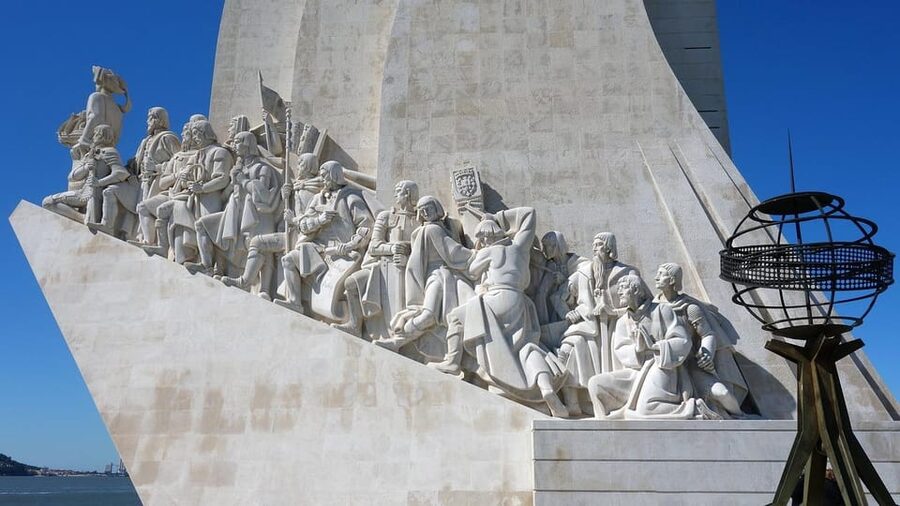
REVIEW · TEMPLE WALKING TOURS
Lisbon: Belem Walking Tour with Jeronimos Monastery Entry
The best part of this Belém tour is that it gives you context before the carved stone starts to blur together. You enter Jerónimos Monastery with tickets already arranged, then walk through the cloisters and church with a guide who explains the symbols, royal tombs, and Portuguese voyages that paid for this grand building.
I like two things in particular. First, the morning start helps you get into the monastery before the crowds become harder to manage. Second, the route connects the monastery to the original Pastel de Belém, the Monument to the Discoveries, and Belém Tower instead of treating each sight as a separate stop. The main drawback is clear: Belém Tower is currently closed for restoration, so you can see and discuss it from outside but cannot go in.
The tour costs $70 per person and lasts about three to three and a half hours. Guides have included Luis, Leonardo, Leo, Federico, Frederico, Daniel, Ricardo, and Renan Stein. Names vary by departure, but the strongest feature is consistent English commentary, especially for travelers who want history, architecture, and plenty of chances to ask questions.
The five details that matter most
- Jerónimos Monastery entry is included: Your ticket is purchased ahead of time, and you use a separate access arrangement rather than joining the regular ticket-buying line.
- The tour starts with the monastery: Plan to meet near the south entrance to the church and the queue area, not at Belém Tower.
- The original Pastel de Belém is part of the experience: The recipe is linked to the monastery’s monks, and the famous shop has sold it since the mid-19th century.
- Belém Tower is an exterior visit for now: Restoration work prevents entry, so the stop is mainly for views, photographs, and explanation.
- This is a real walking tour: You move between the monastery, Empire Square Garden, the Discoveries monument, the pastry shop, and the tower. Comfortable shoes matter.
- Small groups can make a difference: The tour is offered as a private group, and some departures have been small enough for easy questions and a relaxed pace.
Why Belém deserves a guided morning
Belém is Lisbon’s grand historical district by the river, but its sights are spread out. You can visit them independently, yet the story makes more sense when someone links them together.
Jerónimos Monastery, the church, the Monument to the Discoveries, and Belém Tower all point back to Portugal’s maritime expansion during the 15th and 16th centuries. That period brought wealth and influence to Portugal, but it also shaped the country’s relationship with the wider world in complicated ways. A good guide helps you understand the buildings as products of their time rather than just pretty backdrops.
The tour begins at about 9:30 in the morning, though you need to check the selected departure time when booking. This early start is useful because the monastery is the one place where waiting can eat into your morning. Some independent visitors face a long line to buy or use tickets, while this tour has the admission arranged in advance.
You should still arrive early. The meeting point is in front of the monastery, near where access queues form and close to the church’s south entrance. This area can be confusing, especially if you are looking for a guide among several groups. Save the meeting-point photo and allow extra time for traffic. One visitor nearly missed the start after a slow ride and heavy traffic, so Lisbon’s travel time deserves more respect than a map might suggest.
More Temple Walking Tours in Portugal:
- Lisbon: Belém Walking Tour with Jerónimos Monastery Ticket
★ 4.9 · 637 reviews - Lisbon: Belem Walking Tour with Jeronimos Monastery Ticket
★ 4.7 · 490 reviews - Belem and Jeronimos Monastery Guided Small Group Walking Tour
★ 5.0 · 410 reviews
Jerónimos Monastery: the main reason to book
The monastery receives about an hour and a half of guided attention. That is the heart of the experience, and it is where the guide adds the most value.
You begin in the upper cloister, where the architecture opens up around you. The carved arches, columns, and stone details are impressive on their own, but the guide explains what the construction meant to Portuguese society and how it related to the Age of Discovery.
The style is Manueline, a Portuguese form of architecture that grew in the early 16th century. It combines late Gothic structures with Renaissance elements, along with maritime and royal decoration. Without explanation, you might notice the ornate carvings but miss why ropes, plants, crosses, ships, and other details appear so often.
The upper level also gives you broad views into the central courtyard and lets you see how carefully the monastery is composed. This is a place where a live guide can point out small features while you are standing in front of them. Several guides have used pictures during the explanation, which can help you connect a modern view with a historical scene or figure.
You then move to the lower cloister. The Chapter Room and old Refectory add a more practical side to the complex. These spaces show that the monastery was not only a ceremonial monument. It was also a working religious community with rooms designed for daily life, prayer, meals, and administration.
The tomb of Fernando Pessoa is another unusual detail. Pessoa, one of Portugal’s best-known poets, was moved here in the 20th century. His presence connects the monastery to a much later chapter of Portuguese culture, long after the building’s original religious and royal role.
The guides are especially helpful inside because there are few signs explaining every carving or room. You can walk through the building alone, but you may leave with only a general impression. With a guide, the stonework becomes easier to read. Luis has been praised for explaining complex subjects at a manageable pace, while Leo and Federico have been noted for making the stories lively rather than school-like.
One caution: the amount of information can be substantial. If you prefer a quiet visit with only a little commentary, this tour may feel too full. If you like history and ask questions, the format works much better.
Santa Maria de Belém Church and royal tombs
The church visit follows the cloisters. Officially known as Santa Maria de Belém Church, it is one of the monastery’s most important spaces.
The church is a strong example of Manueline design, with a tall, majestic interior and detailed stonework. The guide explains how the church fits into the monastery and points out the prominent burials.
King Manuel I and his son, João III, are buried here, linking the church to the Avis dynasty. The navigation era is also represented by the tombs of Vasco da Gama and Luiz Vaz de Camões. Vasco da Gama’s connection is especially fitting, since the monastery is tied so closely to Portugal’s sea voyages.
This stop is more rewarding when you understand the difference between seeing a tomb and understanding why that person matters in the building. The guide can connect the monarchs, explorers, writers, and religious community without forcing you to piece together the story afterward.
Photography and quiet behavior matter here. Alcohol and drugs are not allowed, and visitors are asked not to make noise. Wear clothing and shoes that let you move comfortably through a historic religious building and then continue walking outdoors.
Pastéis de Belém: a tasty historical pause
After the monastery and church, the tour stops at Pastéis de Belém. The included treat is the original custard tart associated with Lisbon.
The recipe was created by monks from Jerónimos Monastery. It has been sold at the same establishment since the mid-19th century, making the pastry stop more than a quick snack. It is a small, edible link between the monastery and the commercial life that grew around it.
You receive an original Pastel de Belém as part of the tour. Reviews describe the tarts as a highlight, and one visitor considered them the best Portuguese tarts of their trip. Keep your expectations sensible: this is a tasting stop, not lunch. Food and drink beyond the included tart are not specified, and lunch is not included.
The timing also breaks up the walking. Belém can be hot, especially in summer, and the pastry stop gives you a natural pause before the outdoor monuments. If you want a full meal afterward, plan for it separately.
A few more temple visits around Portugal worth a look
- Lisbon: Jerónimos Monastery Entrance Ticket
★ 4.1 · 14,164 reviews - Lisbon: Jerónimos Monastery E-Ticket and Audio Guide
★ 3.7 · 660 reviews - Lisbon: Belem, Jeronimos Monastery, and Coach Museum Tour
★ 4.8 · 478 reviews - “Porto: Fado Show with Guided Tour in a Historic Monastery”
★ 4.9 · 164 reviews
Empire Square Garden and the walk toward the river
The route includes about 15 minutes through Empire Square Garden. This is not a long formal garden tour, but it helps you move from the monastery toward the monuments near the river.
The walk gives you time to look back at the monastery from outside and understand its scale in relation to the surrounding district. It also changes the rhythm of the morning. Instead of spending the entire tour indoors, you get a mix of cloisters, church interiors, open space, pastry, and riverside landmarks.
This section is easy for most reasonably fit walkers, but the tour is not suitable for people with mobility impairments or wheelchair users. You should also prepare for sun, wind, and rain. The tour runs rain or shine, so bring sunscreen, a sun hat, and an umbrella when the forecast calls for it.
Monument to the Discoveries and Portugal’s maritime story
The Monument to the Discoveries is the next major stop. It was built in 1960 to mark the 500th anniversary of the death of Infante D. Henrique, also called Henry the Navigator.
The monument represents Henry and other important figures connected with Portugal’s maritime expansion. A guide gives the figures and the monument’s purpose some useful context. You are not simply looking at a large stone structure by the water. You are being shown how Portugal chose to remember the people who helped expand its influence across the world.
This is also a good point to think critically about the language of discovery. The monument celebrates Portuguese navigation and cultural expansion, but those voyages also affected societies far beyond Portugal. The supplied information focuses on the monument’s historical role, so the guide’s explanation may be particularly useful if you want more than a patriotic landmark photograph.
The guided stop lasts about 20 minutes. That is enough time for sightseeing and explanation without turning the entire morning into a lecture. It also leaves room for the final walk toward Belém Tower.
Belém Tower: a landmark seen from outside
After roughly 15 minutes of walking, you reach Belém Tower. Together with Jerónimos Monastery, it has UNESCO World Heritage status.
The tower is another example of Manueline architecture. It was built as a defensive point against invaders approaching Lisbon, which gives it a different purpose from the monastery. The monastery represents religious, royal, and cultural power. The tower represents defense and control of access to the capital.
At present, restoration work means you cannot enter Belém Tower. The guide takes you to the outside, explains its history, and allows time for sightseeing. This is the clearest limitation of the tour, especially if you expected to climb inside or explore the rooms.
Still, the stop is worthwhile if you understand it as an exterior visit. You get the landmark, the setting, and the historical explanation. Just do not book this experience expecting an interior tower tour.
The tour finishes at Torre de Belém. That is practical if you want to continue exploring the riverfront on your own, but transportation back is not included.
How much value do you get for $70?
At $70 per person, the price is not the cheapest way to look at Belém. The value comes from three things: the monastery ticket, the time saved at entry, and the guide’s explanation.
If you visit independently, you can avoid the guide fee, but you still need to manage tickets, queues, directions, and the connections between the sights. Inside the monastery, limited signs may leave you wondering what you are seeing. The tour removes much of that uncertainty.
The price also includes the original custard tart. That is not a major financial saving, but it makes the package feel more complete. You receive a guided visit to the main interior, a local food stop, and an outdoor route through Belém’s best-known monuments.
I see the price as fair for travelers who value structure and historical detail. It is less compelling for someone who only wants photographs or already knows Portuguese history well. The private group option may also suit families or friends who want more control over questions and pace, though the exact private-group price is not provided.
The tour has received a 4.9 rating from 163 reviews, with repeated praise for English, timing, clear explanations, and guides such as Luis and Leonardo. One four-star assessment found the information almost too much to follow, which is a useful reminder that this is an educational tour, not a silent stroll.
Practical advice for a smoother morning
Meet at the monastery, not at the tower. Look for the guide near the entrance where the queues form and close to the south entrance of the church. Use the provided meeting-point image carefully.
Arrive early. The tour asks you not to be late because the group moves according to the monastery entry time. Lisbon traffic can be slow, and a late arrival may be difficult to fix once the group has entered.
Wear comfortable shoes and light, practical clothing. You will spend about three to three and a half hours walking, standing, and moving between indoor and outdoor sites.
Bring sunscreen, a sun hat, and an umbrella. The tour operates in rain or sunshine, and summer heat can make the open sections tiring. There is no lunch or transportation included, so plan those separately.
English is the stated tour language. The experience can be canceled if the minimum number of participants is not reached. You can cancel up to 24 hours in advance for a full refund, and the reserve-now, pay-later option allows you to hold a place without paying immediately.
Who should book this Belém tour?
I would book this for a first visit to Lisbon, especially if Jerónimos Monastery is high on your list. It suits you if you want an English-speaking guide to explain architecture, royal history, religious spaces, and Portugal’s maritime era in one connected morning.
It is also a good choice if you dislike queue management. The pre-purchased monastery ticket and separate access arrangement are probably the tour’s most practical benefits.
Families, couples, and small groups who enjoy asking questions should get the most from it. The guides have been praised for humor, clear English, prompt communication, and the ability to adjust the amount of detail. Luis, Leo, Leonardo, and Federico have all been singled out for making the history accessible.
You should think twice if you need step-free access, use a wheelchair, dislike walking, or want to enter Belém Tower. The tower remains closed for restoration, and the route is not designed for visitors with mobility impairments.
Should you book it?
Book this tour if you want Jerónimos Monastery to make sense, not just look beautiful. The morning entry, strong English guidance, original Pastel de Belém, and connected route offer good value for a first-time visitor.
Skip it if you prefer to wander independently, already understand the main history, or mainly want access inside Belém Tower. Since the tower is closed, the tour’s real focus is Jerónimos Monastery and the guide’s storytelling. For most visitors, that is the right emphasis, and the pastry and monuments make a pleasant finish.
FAQ
What does the Belém walking tour include?
It includes entry to Jerónimos Monastery, an English-speaking guide, and an original Pastel de Belém. The tour also includes guided sightseeing at the Monument to the Discoveries and Belém Tower from the outside.
How long does the tour last?
The tour lasts about three to three and a half hours. The guided visit inside Jerónimos Monastery takes about one and a half hours.
Where does the tour meet?
The meeting point is in front of Jerónimos Monastery, near the access queues and close to the south entrance to the church. Check the provided meeting-point photo carefully to avoid confusion.
Does the tour enter Belém Tower?
No. Belém Tower is currently undergoing restoration and cannot be visited inside. The guide takes you to the exterior and explains the tower’s history.
Is the monastery ticket included?
Yes. Your entrance ticket to Jerónimos Monastery is included and purchased in advance.
Is lunch included?
No. Lunch is not included. The tour does include an original custard tart at Pastéis de Belém.
Can I cancel the booking?
Yes. You can cancel up to 24 hours in advance for a full refund. A reserve-now, pay-later option is also available.
Is the tour suitable for wheelchair users?
No. The tour is not suitable for people with mobility impairments or wheelchair users.
Just added around Portugal
- Belém: Jeronimos Monastery, Tickets and Guided tour★ 4.9 · 30 reviews
- Lisbon: Belém Private Walking Tour & Jerónimos Monastery★ 4.5 · 83 reviews
- From Lisbon: Évora, Chapel of Bones, & Roman Temple Tour★ 5.0 · 8 reviews
- Fátima Private Tour: Shrine| Sacred Path |Shepherds House★ 5.0 · 81 reviews
- Lisbon: Belem Tour with Pastéis at Jerónimos Monastery★ 4.7 · 96 reviews
- Between Life & Death: Roman Temple, Cathedral & Bone Chapel★ 4.9 · 6 reviews
- Belém Walking Tour + Jerónimos Monastery Ticket★ 5.0 · 24 reviews
- Batalha Monastery Entrance Ticket★ 4.3 · 140 reviews
Temple Walking Tours, compared.
City Highlights Temple and Market Walking Tour
Read our review →
Grand Palace and Wat Phra Kaew Guided Walking Tour
Read our review →

Asakusa Walking Tour with Sensoji Temple Visit
Read our review →
3 Hour Old City and Temples Guided Walking Tour
Read our review →
Kyoto Arashiyama Walking Tour: Bamboo, Monkeys, Gardens & Secrets
Read our review →
Belém Walking Tour with Jerónimos Monastery Ticket
Read our review →Browse the lists this tour appears in