
REVIEW · ITALY TEMPLE TOURS
Benedictine Monastery of Catania – English Guided Tour
The most surprising thing about this tour is how much history is packed inside a building that now functions as part of the University of Catania. Beneath the late baroque halls, you’ll find Roman remains, old monastic work areas, a cellar built over lava, and student study spaces. It is less a quiet, frozen monument than a living place layered across 2,000 years.
I like the access to areas you would likely miss on your own, especially the Roman house under the library mezzanine and the former kitchens. I also like the guides’ style. Carmen, Giovanni, and Nicola are praised for clear English, humor, and good answers to questions. The main consideration is that a 75-minute tour moves at a steady pace, and access to features such as the viewing platform may depend on the tour time.
Key points to know before you go
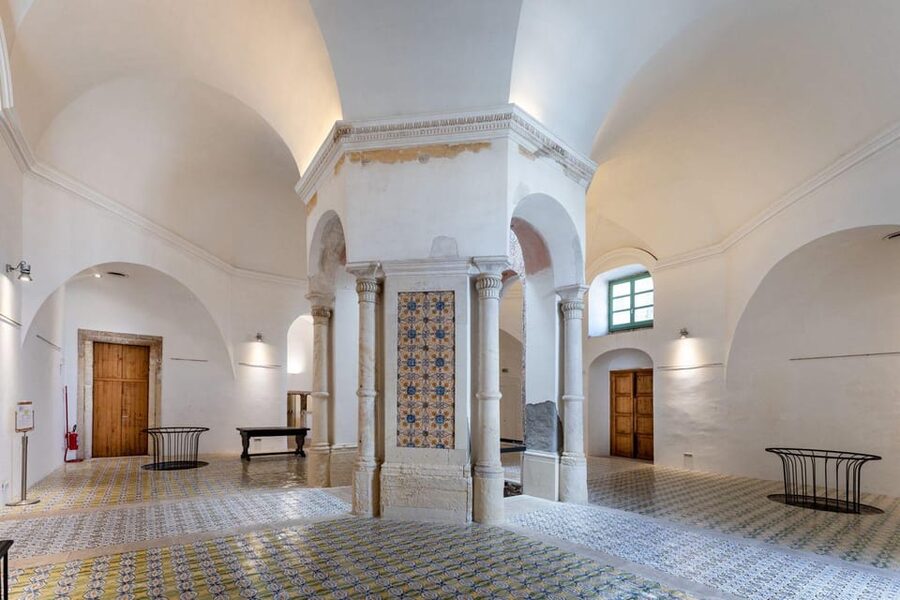
- Roman remains beneath a modern library: See an ancient Roman house directly below a mezzanine used by university students.
- A working university inside a former monastery: The building is not simply preserved for display. Parts of it still serve the University of Catania.
- Baroque grandeur with practical monastic spaces: The route includes monumental stairs, cloisters, dining rooms, kitchens, gardens, and cellars.
- A restoration lasting more than 30 years: The modern work by architect Giancarlo De Carlo helped make the historic complex usable today.
- Strong English-language guiding: Guides including Carmen, Giovanni, and Nicola are especially good at mixing facts with stories and humor.
- Good value at $11: For 75 minutes and access to normally restricted areas, this is one of Catania’s better-priced cultural visits.
Entering through Piazza Dante
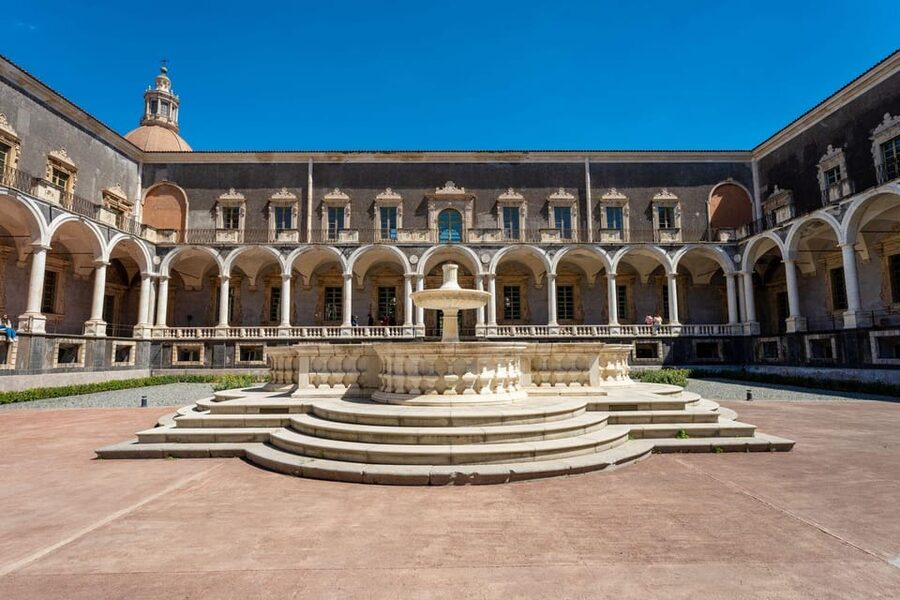
The Benedictine Monastery of San Nicolò l’Arena sits on Piazza Dante, a short distance from Catania’s main central sights. You enter through the main gate and find the information point in the courtyard on the right. That detail matters because the complex is large, and the correct meeting point is not necessarily obvious from the square.
The tour returns to the same monastery entrance after 75 minutes. Baggage storage is available at the meeting point, which is useful if you are carrying day bags or have checked out of your accommodation.
The experience includes skip-the-line access and a live English-speaking guide. At $11 per person, the price is modest for Catania, especially because you are not paying simply to walk through one decorated room. The guide takes you into sections that are not normally accessible and explains how the building changed from a religious institution into part of a modern university.
The monastery is wheelchair accessible, though the route includes a large historic complex with corridors, stairways, and old architectural spaces. If you need specific information about the route, it is sensible to ask at the information point before the tour begins.
More Guided Tours in Italy:
- Pantheon Elite Guided Tour – Rome’s Iconic Ancient Temple
★ 5.0 · 1,447 reviews - Rome’s Iconic Temple: Pantheon Audio Guided Tour with Fast Access
★ 4.0 · 1,188 reviews - Walking Guided Tour and Rome’s Iconic Temple Pantheon Entrance
★ 4.5 · 422 reviews
Two cloisters that reveal the monastery’s scale
The first strong impression is size. San Nicolò l’Arena is one of Europe’s biggest monasteries, and the two cloisters make that scale easy to understand. These open courtyards organize the surrounding rooms and give you a sense of how the monastic community once moved through daily life.
A cloister can look simple when seen without context: columns, walls, open sky, and long passages. Here, the guide helps connect the spaces to the people who used them. The route gives you a picture of a large religious institution with rooms for prayer, meals, study, work, storage, and administration.
The architecture also shows how the monastery developed over time. You are not seeing one perfectly unified building from one period. You are moving through layers of construction and repair, with older remains fitted into later plans.
The cloisters are among the calmer parts of the tour. You get time to look around, but this is not a long photography stop. The guide’s explanation remains central, so keep an eye on the group and save detailed photography for moments when the party pauses.
Roman houses under the university library
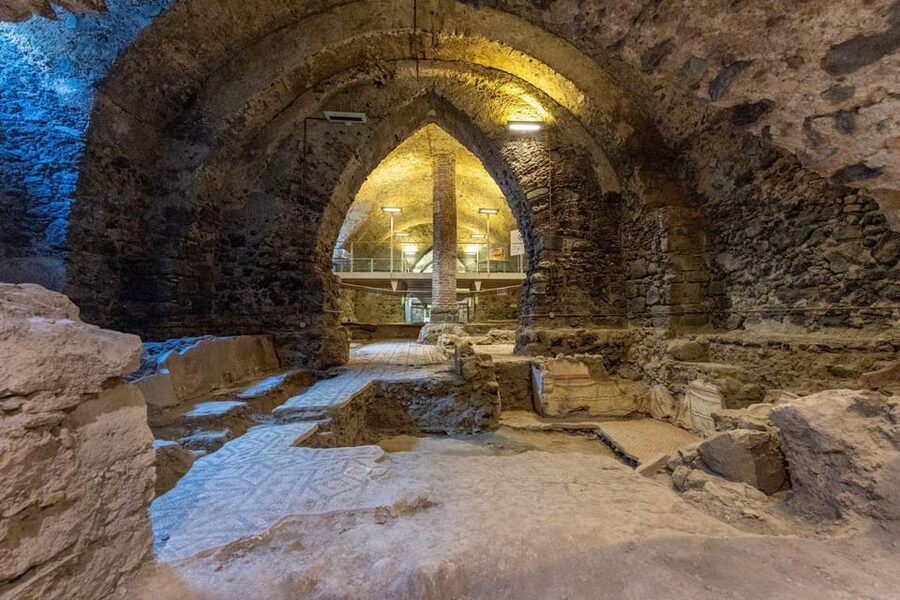
One of the tour’s best surprises is the Roman house visible below a modern mezzanine used by students in the Department of Humanities library. Ancient remains and contemporary study tables occupy the same vertical space.
That arrangement tells you more about Catania than a polished museum display could. The city has repeatedly built over its own past, and the monastery is a clear example. You can look at Roman construction while also seeing the practical needs of a present-day university.
The library occupies a 16th-century cellar that is now used by the university. This is one of the tour’s most useful stops because it shows how preservation can work in daily life. Historic fabric has not simply been sealed away. It has been adapted for students and research.
The modern additions may not appeal to visitors who want an untouched medieval or baroque interior. I see that contrast as part of the point, though. The monastery’s story continues, and the contemporary design helps you understand the building rather than pretending that time stopped there.
The novices’ garden and everyday monastic life
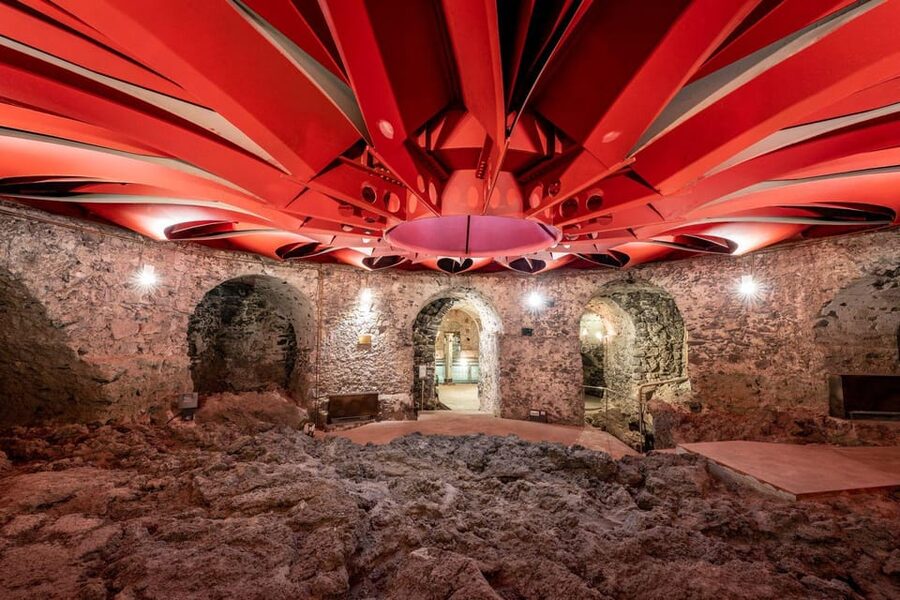
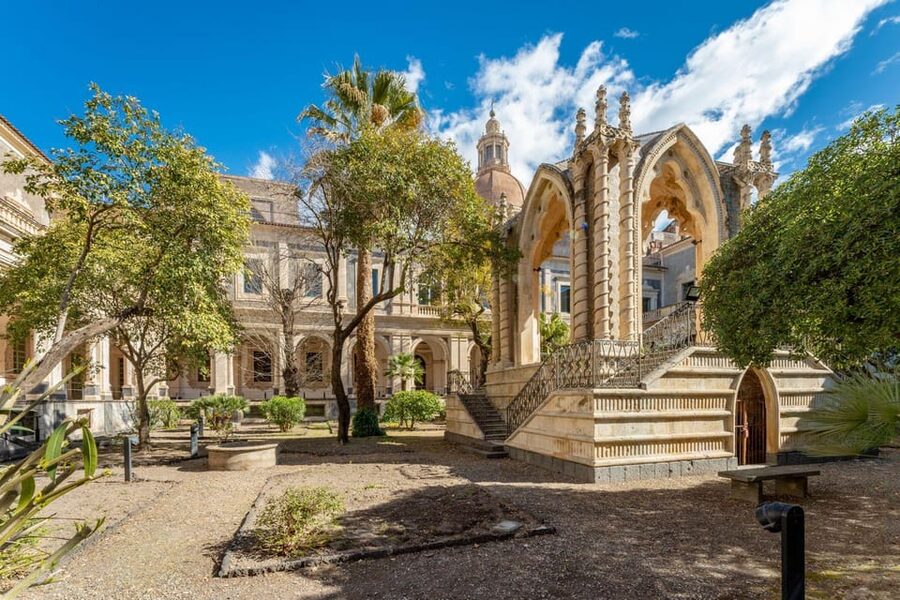
The Garden of the Novices adds a different note to the grand architecture. After seeing the large courtyards and formal rooms, you get a closer look at a space linked to the training and daily life of new members of the order.
The tour is particularly useful here because the monastery is so large that it can be hard to imagine how it functioned. A garden, dining area, kitchen, and cellar make the institution feel practical. The monks needed food, storage, work areas, and places for instruction, not just chapels and ceremonial rooms.
The guide also places these spaces within the wider story of Catania. Several participants have valued the way the tour connects the monastery to the city and to Italian history, rather than treating the building as an isolated attraction. You get a local history lesson along with the architectural visit.
The garden may not be the most visually dramatic part of the route, but it helps balance the grand rooms. It is a good reminder that religious communities depended on routine and labor as much as ceremony.
A few more temple visits around Italy worth a look
- Agrigento: Valley of the Temples Skip-the-Line Sunset Tour
★ 4.5 · 1,512 reviews - Palermo: Agrigento and the Valley of the Temples Day Tour
★ 4.2 · 1,240 reviews - Agrigento: Valley of the Temples Ticket & App Audioguide
★ 4.3 · 1,160 reviews - Colosseum Special Access Tour, with Ancient Temples & Tombs
★ 4.8 · 747 reviews
Vaccarini’s kitchens and the lava-built cellar
The 18th-century kitchens are among the most memorable stops. They show the practical side of the monastery and hint at the wealth available to the Benedictine order. The scale and quality of the complex are not accidental. This was a powerful institution with the means to build and maintain an imposing home.
The kitchens also make the tour more physical and understandable. Instead of hearing only about patrons, architects, and religious authority, you see where food preparation took place and how a large community operated.
From there, the cellar adds a distinctly Catanian detail. It was built on lava, a reminder that volcanic material is part of the city’s foundations. The underground setting can also offer a cooler break in hot weather, though the tour is not designed as a climate-controlled escape.
The route through the lower areas is one reason I would not skip the guide. Without an explanation, an old cellar or exposed foundation can be easy to pass over. With context, it becomes evidence of how Catania was repeatedly rebuilt around its volcanic ground and ancient remains.
Monumental stairs and late baroque design
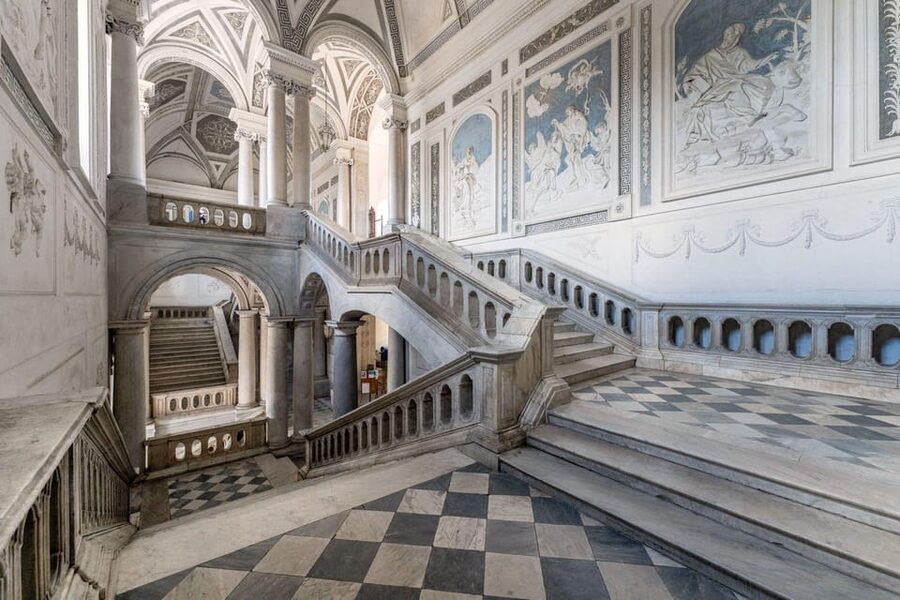
The work of architect Vaccarini appears in the monastery’s grander architectural features, including the monumental staircase. This is where the tour shifts from daily monastic life to public display and design.
Late baroque architecture favors movement, decoration, and theatrical scale. You will notice that the monastery was meant to impress. The large stairway and formal spaces communicate status, money, and institutional power before the guide even explains them.
That display is useful historical evidence. The monastery was not merely a retreat for a small group of monks. It was a major institution whose buildings reflected the wealth enjoyed by the Benedictine order.
At the same time, the building is not presented as pure baroque decoration. Earlier structures, Roman remains, modern library fittings, and restoration work all appear along the route. The result is visually busy, but that is also what makes the visit worthwhile.
Thirty years of restoration and a modern solution
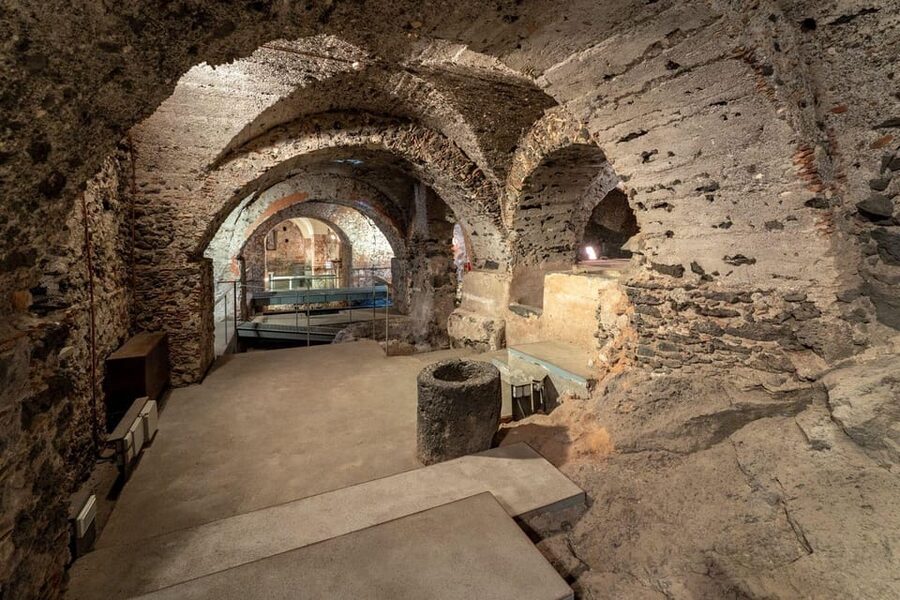
A major part of the story is the restoration, which lasted more than 30 years. Architect Giancarlo De Carlo led a contemporary refurbishment project that made it possible to use the monastery as a university complex while preserving its historic layers.
This is not a minor technical detail. It explains why you see modern mezzanines, student areas, old walls, archaeological remains, and monumental interiors in such close proximity. The design had to solve a practical problem: how do you keep a huge historic building active without erasing its past?
I like this aspect because it gives the tour a present-day purpose. You are not only looking backward at monks and aristocratic building projects. You are seeing how Catania decided to keep the complex useful.
The modern work may divide opinion. If you want every historic room to look untouched, the university installations can feel intrusive. If you care about preservation that supports real use, the combination is one of the monastery’s strengths.
What the English guide adds
The English guiding is one of the most consistently successful parts of the experience. Carmen is praised for a clear presentation and a good sense of humor. Giovanni is described as lively, patient, and strong at answering questions. Nicola is also noted for engaging explanations and entertaining stories.
The guide names matter because this is not a visit where a printed panel can replace a human explanation. The monastery is labyrinthine, and many of its best details are not immediately obvious. A guide helps you understand what is original, what was adapted, and why the university now occupies these rooms.
The best style here is conversational rather than academic. You can expect historical information mixed with anecdotes about the building, Catania, and the people who lived or studied there. Several guides have also added wider context about Italy and the city, which makes the 75 minutes feel more useful than a narrow architectural lecture.
English is the main tour language. If English is not your first language, written translations in French or Spanish can be provided. The guide-led format also allows you to ask questions, though the pace means you may need to save longer discussions for the end.
How the 75-minute route feels
The tour covers a lot in a short period. You move from the entrance and cloisters through the library and Roman house, then on to the novices’ garden, kitchens, cellars, and monumental areas. The route is full enough to keep your attention, but it is not a half-day visit.
That length works well if you are building a day around Catania’s historic center. You can fit it between other sights without giving up an entire afternoon. It also suits anyone who wants a strong introduction before deciding if they want to spend more time around the university and monastery area.
The drawback is that you cannot linger everywhere. Visitors who like to study architectural details, sketch, or take many photographs may find the group pace brisk. One useful tip is to look carefully as you walk, then return to your favorite exterior spaces after the tour if you have time.
Access to the viewing platform may vary by departure time. One experience included a note that the platform was available only on a later tour, so do not book an early time solely for that feature. Ask about it when you arrive if the view is important to you.
Who will get the most from this visit
I would recommend this tour to first-time visitors who want more than Catania’s main streets and churches. It is also a good choice for anyone interested in archaeology, architecture, university life, or the practical workings of religious institutions.
Families with older children may find the Roman remains, underground spaces, and stories about the kitchens easier to enjoy than a formal art museum. The guide’s humor helps keep the history moving.
It suits visitors who prefer context over a silent walk through rooms. If you want to explore at your own speed, read every plaque, and stop for photographs whenever you wish, the guided format may feel restrictive. The trade-off is access and understanding. You see more of the building and learn why the unusual details matter.
The monastery also makes sense for repeat visitors to Sicily. You may already know Catania’s volcanic setting and baroque center, but this tour connects those subjects inside one complex. Roman construction, lava foundations, baroque rebuilding, and modern restoration all appear in one route.
Is $11 good value?
At $11, this is an easy cultural purchase to justify. The fee includes entry, a 75-minute English tour, access to sections not normally open to the public, and baggage storage at the meeting point.
The value is not only the number of rooms. The guide saves you from wandering through a huge complex without understanding its purpose. The Roman house, cellar, library, kitchens, and restoration project all become parts of one story.
The low price also makes this a useful choice on a tight Catania schedule. You do not need to commit to a long excursion or expensive private guide. Just be realistic about what 75 minutes can cover. You get a well-shaped introduction, not an exhaustive examination of every corner.
Free cancellation is available up to 24 hours before the tour, and you can reserve now and pay later. Those terms are useful if your Catania plans may shift, though the core decision is simple: book it if you want access and explanation, skip it only if you strongly prefer independent wandering.
Should you book the Benedictine Monastery tour?
Yes, if you want to understand how Catania’s past survives inside a working modern building. The strongest reasons are the Roman remains, the lava-built cellar, the two cloisters, and the chance to see a university library inside a former monastic complex.
Book it especially if you enjoy guides who tell stories rather than recite dates. Carmen, Giovanni, and Nicola have each been praised for clear English, humor, and a relaxed way of handling questions.
I would not choose it for a completely unstructured visit or if the viewing platform is your main goal. For almost everyone else, $11 buys a focused, interesting hour and a quarter in one of Catania’s most unusual historic buildings.
FAQ
Where does the tour begin?
Enter the main gate of the Benedictine Monastery of San Nicolò l’Arena on Piazza Dante. The information point is in the courtyard on the right.
How long does the tour last?
The guided visit lasts 75 minutes and returns to the Benedictine Monastery.
What language is the tour in?
The live tour is in English. Written translations in French or Spanish can be provided if English is not your main language.
How much does the tour cost?
The listed price is $11 per person.
What parts of the monastery can I see?
The route includes the two cloisters, the 16th-century cellar now used as a university library, the Roman house, the novices’ garden, the 18th-century kitchens, dining areas, cellars, monumental staircase, and other areas of the complex.
Is the monastery still used today?
Yes. Parts of the former monastery are used by the University of Catania, including library and student study areas.
Is the tour wheelchair accessible?
Yes, the activity is listed as wheelchair accessible.
Can I store my baggage during the visit?
Yes. Baggage storage is available at the meeting point.
Can I cancel the booking?
You can cancel up to 24 hours in advance for a full refund. The activity also allows you to reserve now and pay later.
Just added around Italy
- Villa Romana Del Casale in Piazza Armerina and Valley Of Temples in Agrigento★ 4.5 · 38 reviews
- Private Tour to the Villa Romana del Casale and the Valley of the Temples★ 4.5 · 19 reviews
- Agrigento and Piazza Armerina: Valley of the Temples and Villa Romana del Casale★ 4.5 · 121 reviews
- Cooking Class in a former Artist Monastery in the Heart of Monopoli★ 5.0 · 18 reviews
- Agrigento Valley of the Temples Archaeological Area★ 4.0 · 33 reviews
- Private transportation to the Valley of the Temples + Agrigento★ 5.0 · 8 reviews
- Agrigento: Valley of the Temples Entry Ticket & Audio Guide★ 3.0 · 40 reviews
- Rome underground hidden temples, ruins, and secret basilicas★ 3.7 · 21 reviews
Italy Temple Tours, compared.
Agrigento: Valley of the Temples Skip-the-Line Sunset Tour
Read our review →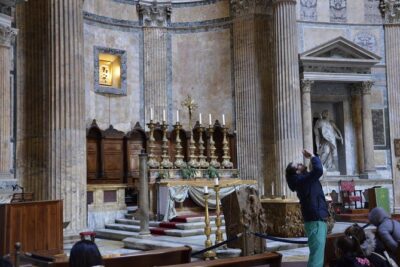
Pantheon Elite Guided Tour – Rome’s Iconic Ancient Temple
Read our review →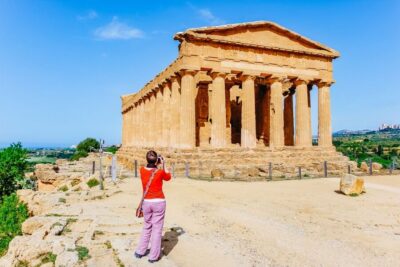
Palermo: Agrigento and the Valley of the Temples Day Tour
Read our review →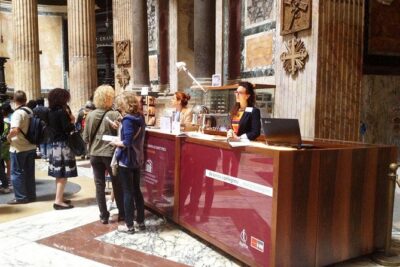
Rome’s Iconic Temple: Pantheon Audio Guided Tour with Fast Access
Read our review →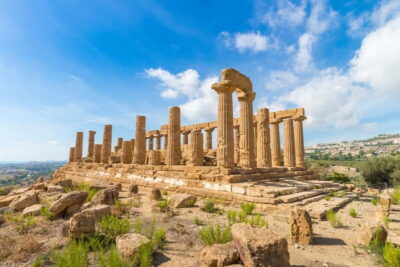
Agrigento: Valley of the Temples Ticket & App Audioguide
Read our review →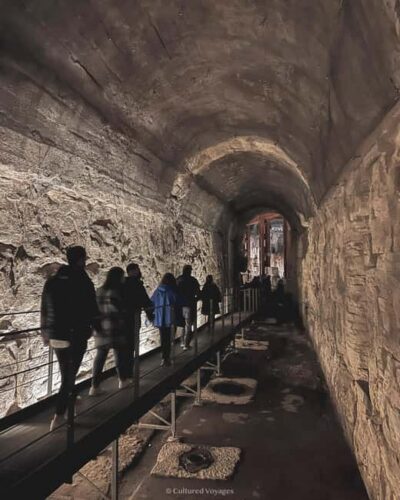
Colosseum Special Access Tour, with Ancient Temples & Tombs
Read our review →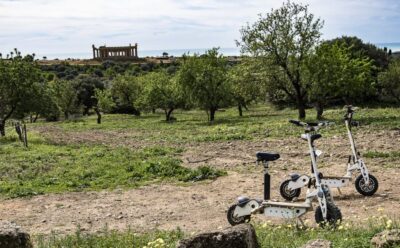
Agrigento: Valley of the Temples E-Scooter Tour
Read our review →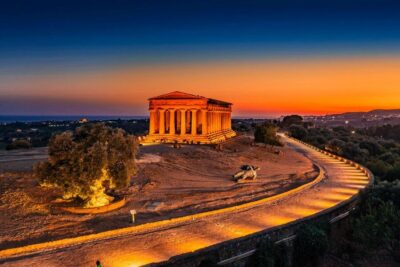
Palermo: Valley of the Temples and Scala dei Turchi Day Trip
Read our review →Browse the lists this tour appears in