
REVIEW · MEIJI SHRINE & SENSO-JI TOURS
Tokyo: Meiji Jingu, Harajuku, Shibuya, and Shijuku Tour
Tokyo packs several different moods into this four-hour outing: a forest shrine, youth fashion, designer shopping, giant screens, and late-night alleyways. The best part is the private guide, who can explain what you are seeing and adjust the route as your interests become clear.
I like the calm start at Meiji Shrine and the practical use of trains between districts. I also like that guides such as Maruf, Emir, Joe, Ayoub, and Erica have helped families and first-time visitors shape the tour around their interests. The main drawback is pace: four hours is enough for an introduction, but not enough for long shopping stops, a full meal, and every optional attraction.
Key points to know before booking
- A four-district introduction: Move from Meiji Shrine to Harajuku, Shibuya, and Shinjuku in one compact outing.
- Private and flexible: Your guide can adjust the focus for fashion, food, family interests, photography, shopping, or Tokyo customs.
- Mostly on foot and by train: Expect walking between major stops and subway rides between neighborhoods.
- Useful first-day tour: Guides can help you understand train travel, local manners, and where to continue exploring afterward.
- Extra stops are possible: Pokémon Center, Don Quijote, Omoide Yokocho, and Golden Gai are included in the planned experience, while animal cafes cost extra.
- Strong guide feedback: The most praised qualities are patience, cultural explanation, photography help, and the ability to tailor the route.
Why this West Tokyo route works
Many Tokyo tours try to cover too much by car. This one uses the city as locals do, with trains and walking. That matters because Meiji Shrine, Harajuku, Shibuya, and Shinjuku feel very different, and the changes between them are part of the lesson.
You begin in a wooded shrine precinct, walk into the colorful streets around Harajuku, cross through stylish Cat Street, then reach the enormous pedestrian movement at Shibuya. The final stop, Shinjuku, shifts the mood again toward shopping, food, nightlife, and narrow entertainment lanes.
I see this as a get your bearings fast tour rather than a slow, specialist visit. You will see a lot, hear useful explanations, and collect ideas for the rest of your Tokyo stay. You will not have time to inspect every shop or spend an hour at each shrine feature.
The experience costs $103 per person. For a private four-hour tour, that can be fair value if you want personal help using public transportation and a route shaped around your group. It is less appealing if you are comfortable navigating Tokyo alone and mainly want admission to attractions, since most of the stops are public areas with no major entry charge.
More Meiji Shrine and Senso-ji Tours in Tokyo:
- Tokyo: Asakusa Walking Tour with Sensoji Temple Visit
★ 4.8 · 1,583 reviews - Tokyo Panoramic 1 Day: Meiji Shrine, Asakusa, Odaiba and SKYTREE®
★ 4.5 · 1,222 reviews - Tokyo: Asakusa and Tokyo’s Oldest Temple Senso-ji Tour
★ 4.9 · 352 reviews
Starting quietly at Meiji Shrine
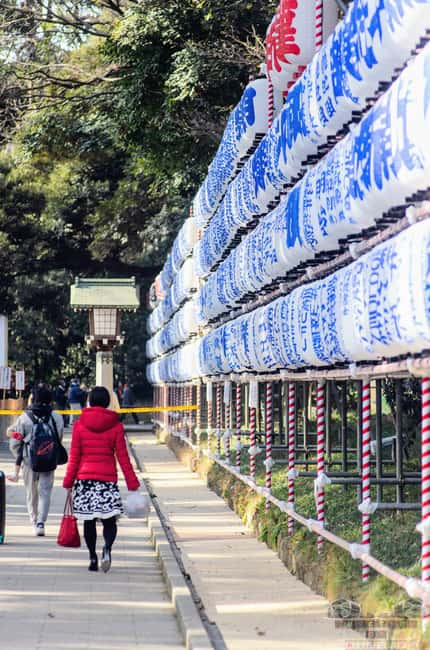
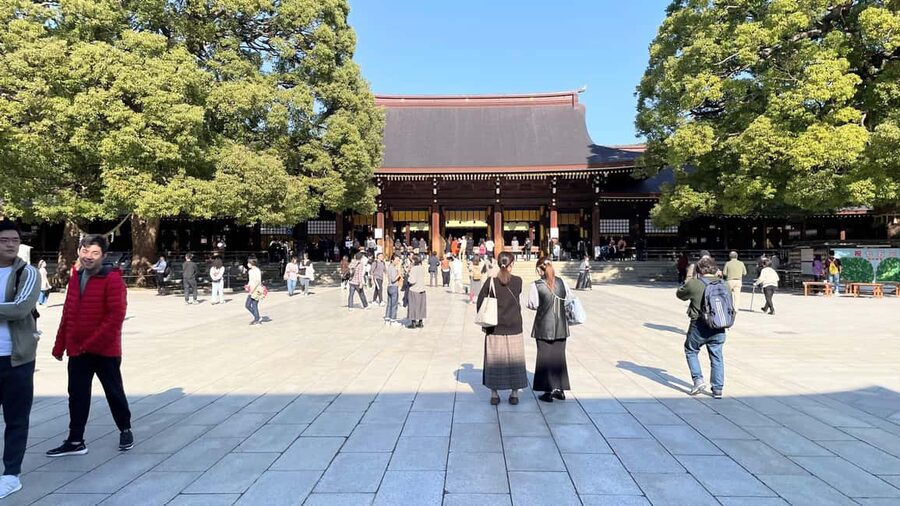
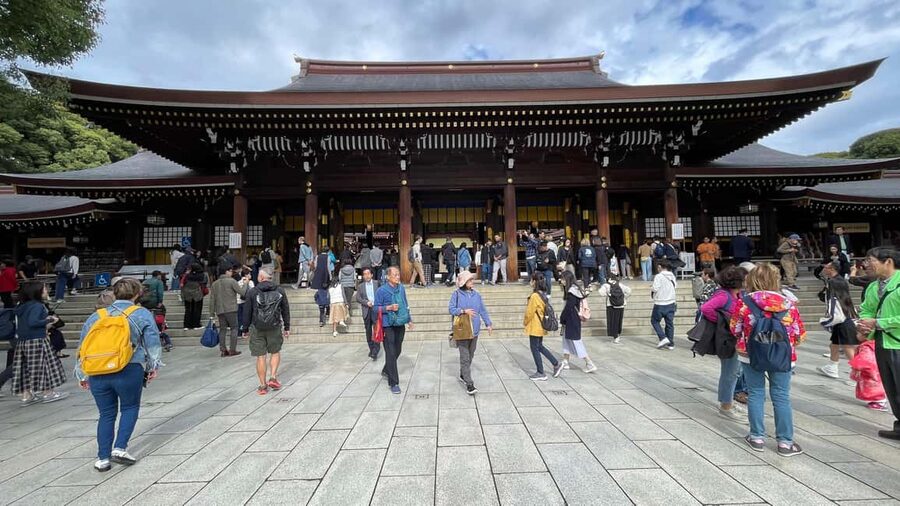
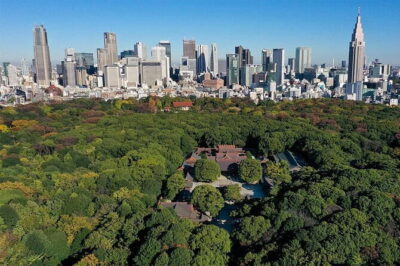
Meiji Shrine, or Meiji Jingu, gives the tour a welcome pause. Its forested grounds feel far removed from the traffic and signs of central Tokyo, even though the city is close by. The shrine is dedicated to Emperor Meiji and Empress Shoken, and your guide explains its place in Japanese religious and national life.
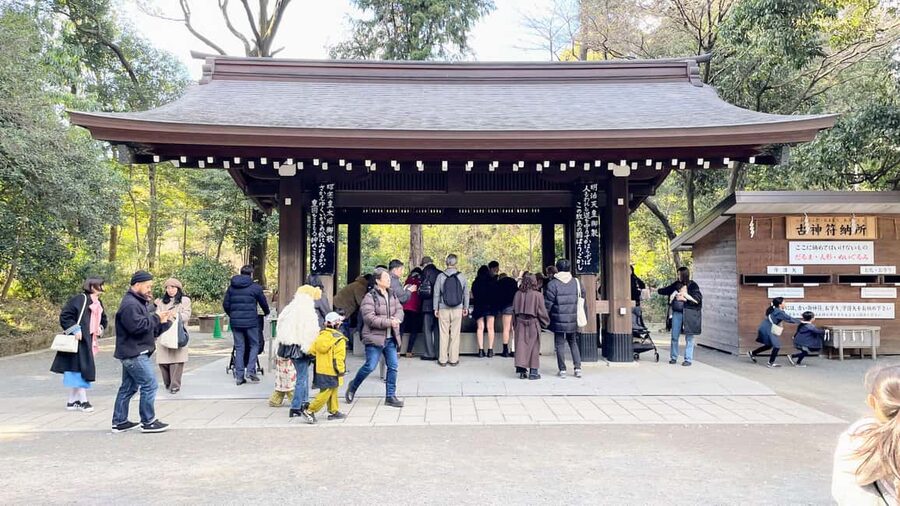
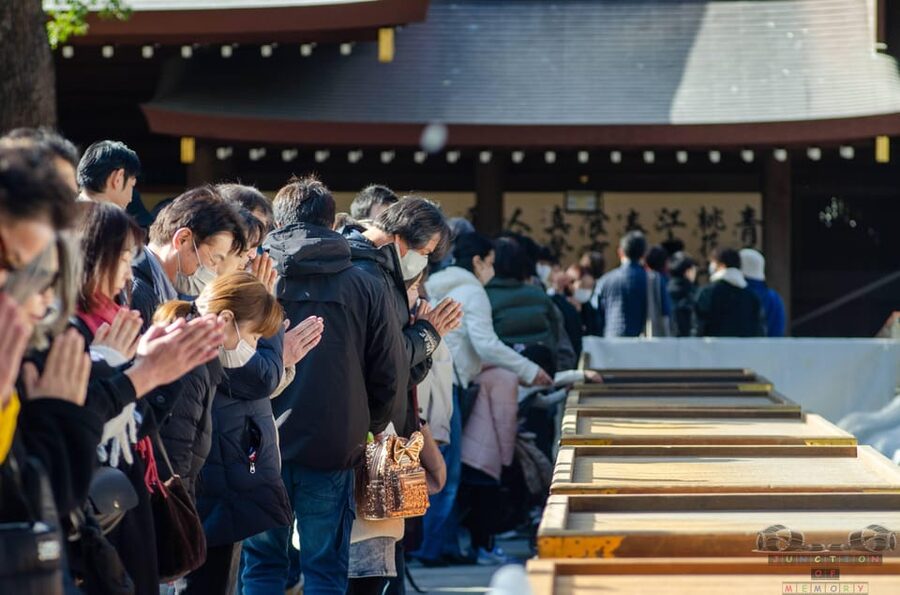
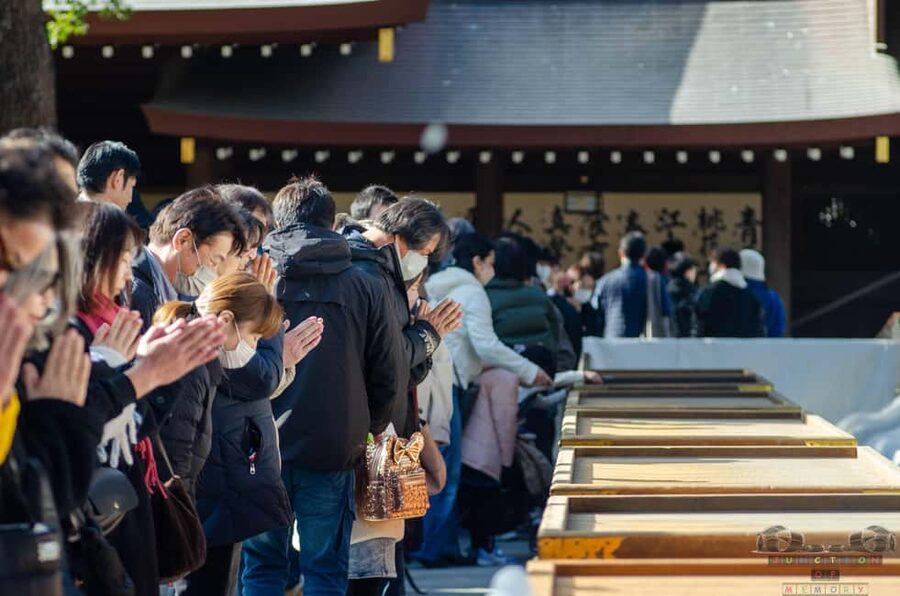
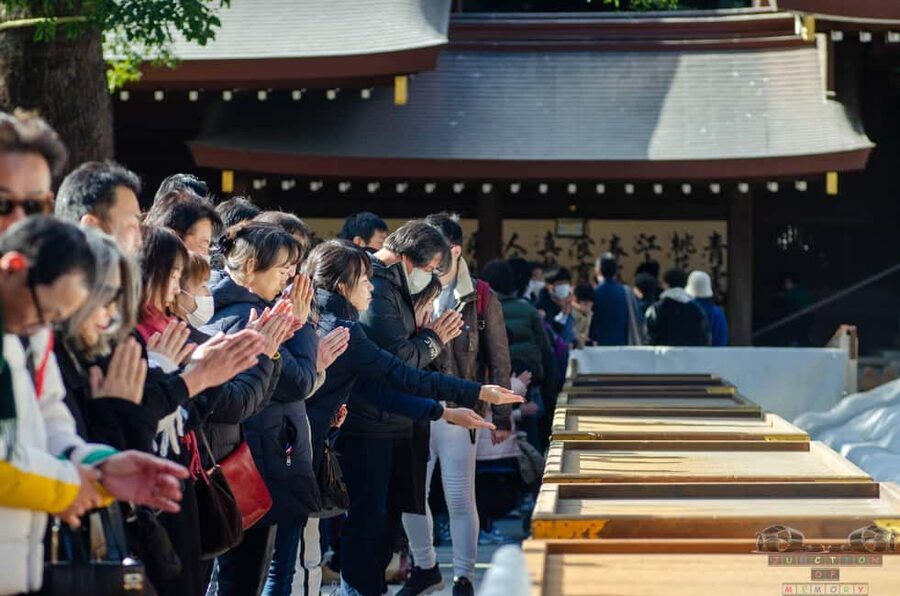
You can take part in simple Shinto customs here. At the water pavilion, you may purify your hands and mouth before approaching the shrine. You can also write a wish on an ema, a wooden plaque, if you want a small personal ritual to remember the visit.
The value of having a guide is clearest at a site like this. Without explanation, you might see a large gate, a quiet path, and a shrine building. With context, you can better understand why people pause, bow, offer a prayer, or write a wish.
Give yourself practical room for the setting. The shrine portion is not a quick photo stop, and the walk through the grounds contributes to the peaceful mood. Comfortable shoes are important for the whole outing, since the day soon changes to sidewalks, station passages, and shopping streets.
Takeshita Street and Harajuku’s youth culture
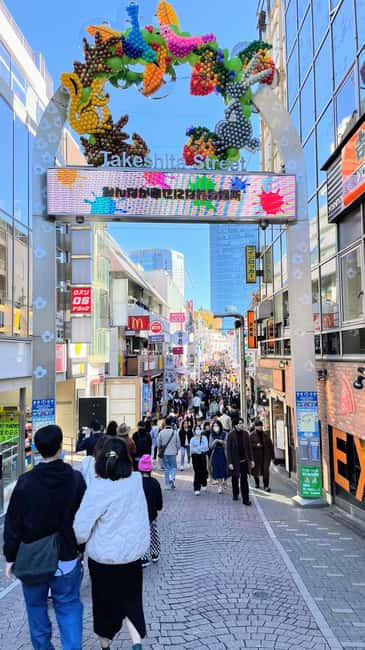
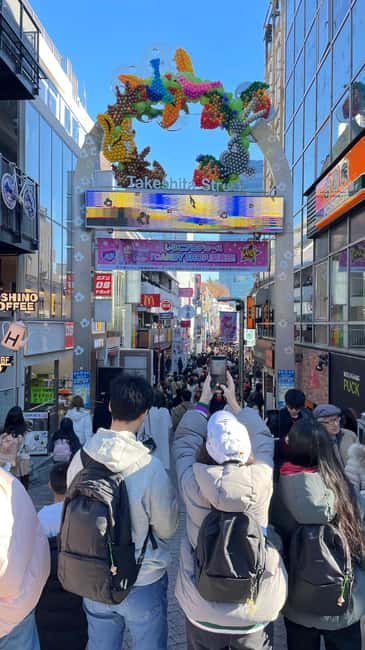
After Meiji Shrine, the route continues on foot toward Takeshita Street. The walk takes about 15 minutes, then you have roughly 30 minutes for photos, browsing, and a guided look at this famous Harajuku thoroughfare.
Takeshita Street is loud, colorful, and aimed at youth fashion. You will find quirky shops, trend-driven clothing, sweets, and snack foods such as crepes and rainbow-colored cotton candy. It is a good place to see how Tokyo turns fashion and food into entertainment.
This is one of the tour’s more energetic sections, but it also has a clear limit. Thirty minutes gives you a taste, not a serious shopping session. If you stop for food, you may need to shorten your time in another area, so tell your guide what matters most.
The wider Harajuku area adds more variety. Boutiques, cafes, cultural spots, street art, and stores such as Kiddy Land help explain why the neighborhood has influenced youth style far beyond Japan. Your guide can connect the clothing, shops, and street scenes to Harajuku’s growth as a cultural center.
Families may find this part especially useful. One guide, Erica, was praised for shaping the day around a 12-year-old visitor, while other guides have helped first-time visitors understand what to buy, where to pause, and how to manage the busy streets.
A slower walk along Cat Street
The route then heads toward Cat Street, a 22-minute walk from the Takeshita Street section. This is a useful contrast. Takeshita Street is concentrated and highly charged, while Cat Street offers a more relaxed shopping walk with vintage stores, fashionable boutiques, and higher-end labels.
I like this change of pace because it keeps Harajuku from feeling like one long crush of people and storefronts. You can compare two sides of the neighborhood: playful youth culture on Takeshita Street and a more polished style along Cat Street.
The walking time is worth noting. If you have mobility concerns, ask about the route at the start, even though the activity is listed as wheelchair accessible. Public streets, station connections, and the pace of a private group can affect how comfortable the day feels.
Cat Street is also a good place to tell your guide what you want from the rest of the tour. You might prefer fashion, character goods, snacks, photos, or neighborhood history. The private format allows the guide to make those choices with you rather than following a fixed group schedule.
Same country, a different morning at the gates:
- Tokyo:Mt.Fuji,Kawaguchiko Oishi Park,Arakurayama Sengen Park
★ 4.4 · 2,682 reviews - Nikko: Kegon Falls, Lake Chuzenji & Toshogu Temple
★ 4.6 · 1,577 reviews - Tokyo: Nikko Toshogu Shrine and Kegon Waterfall Tour
★ 4.5 · 1,266 reviews - Tokyo: Mt. Fuji, Kamakura, Big Buddha, & Lake Ashi Day Trip
★ 4.5 · 867 reviews
Shibuya Crossing and practical Tokyo shopping
A subway ride of about 10 minutes takes you to Shibuya. The area receives about an hour, including a break, photos, sightseeing, free time, and shopping.
Shibuya Crossing is the headline moment. When the signals stop traffic, people move across the intersection from several directions at once. It is a simple event, but the scale makes it memorable. Your guide can help you find a useful viewpoint and explain how the crossing fits into Shibuya’s image as a meeting point and entertainment center.
The crossing itself is brief, so do not expect it to fill the entire hour. The rest of the time can be used for nearby shopping and stops chosen for your group. The included visit to the Pokémon Center suits families and fans of Japanese character culture. Don Quijote offers a different look at Tokyo shopping, with a famous discount-store format and plenty of souvenirs and everyday goods.
These stops are valuable because they turn a landmark visit into a practical neighborhood introduction. You can ask your guide what is worth buying, how the store works, and which items are better saved for later. Personal purchases are not included, so keep your shopping budget separate from the tour price.
An optional animal or snake cafe can also be arranged in Shibuya. You need to mention this at the beginning, and extra fees apply. This is not essential to the tour, but it gives you a way to replace some ordinary shopping time with a more unusual Tokyo activity.
Shinjuku after dark, from Godzilla to narrow lanes
The final subway ride takes about 15 minutes, followed by roughly an hour in Shinjuku. This district brings a different side of Tokyo, with department stores, neon signs, nightlife, entertainment, restaurants, and busy pedestrian streets.
The route may include the Godzilla Head, a recognizable pop-culture landmark, along with Omoide Yokocho, also called Memory Lane, and Golden Gai. These compact areas offer a closer look at the city’s small bars, food counters, and nightlife streets than the wide commercial avenues do.
Omoide Yokocho and Golden Gai are best treated as places to look, listen, and ask questions. The lanes can be tight, and one hour disappears quickly. If you want to eat dinner or enter a bar, say so early, because a sit-down stop will reduce the amount of ground you cover.
The tour can finish with sunset and free time in Shinjuku, which is handy if you want to continue on your own. Your guide can point you toward places to eat, shop, or explore later. That final advice may be one of the most useful parts of the day, especially if Tokyo is new to you.
What the private guide adds
The guide is the main reason to choose this experience over a self-guided route. The tour is not built around a single famous attraction. Its value comes from connecting several districts and explaining what makes each one different.
Past guide assignments have included Maruf, Emir, Joe, Ayoub, Erica, and Amir. The strongest patterns in the feedback are patience, cultural explanation, personal attention, and flexibility. Emir was praised for making history and local life easier to understand, while Maruf was noted for organizing the route around places a group had not yet seen and for taking photographs.
That flexibility is especially useful on a first full day in Japan. A guide can help you handle the train system, understand shrine customs, spot a good snack stop, and avoid wasting time on a shop that does not match your interests.
You should still be clear at the beginning. Tell the guide if you have children, limited walking tolerance, strong shopping goals, food interests, or a preference for photography. The tour allows customization, but the four-hour clock does not.
Walking, trains, timing, and comfort
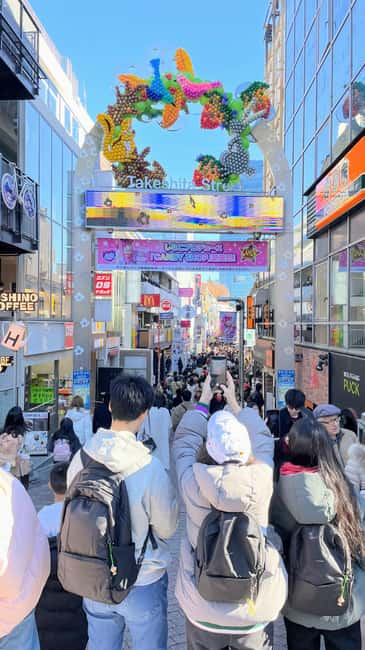
The advertised schedule includes about 15 minutes on foot to Takeshita Street, 22 minutes toward Harajuku and Cat Street, a 10-minute subway trip to Shibuya, and another 15-minute subway ride to Shinjuku. The exact rhythm can change with your choices, but this is not a sit-back sightseeing tour.
Wear shoes you can walk in for several hours. You will move through shrine paths, sidewalks, station areas, and commercial streets. Tokyo public transportation is efficient, but stations can involve walking, stairs, and busy passages, so ask your guide about the most comfortable route.
The private format helps with group control and questions. It also means the experience can be more personal than a large bus outing. The tradeoff is that your $103 per-person price pays for guide time and coordination rather than a long list of ticketed attractions.
The activity is listed as wheelchair accessible, and public transportation is included within Tokyo. Still, the detailed route involves walking between neighborhoods and through public areas. If accessibility is central to your plans, discuss the preferred route with the guide at the start.
Who will get the most from this tour
I would choose this for a first or second day in Tokyo, especially if you want a strong overview of West Tokyo without spending your own time planning train connections. It also suits families, couples, and private groups with different interests.
You will get the most from it if you enjoy asking questions and changing plans as you go. The guide can make the day about fashion, Japanese customs, character shopping, photos, food suggestions, or nightlife districts.
It is less suited to a specialist shopper who needs hours in one store, or to someone who already knows Harajuku, Shibuya, and Shinjuku well. It is also not the right pick if your priority is a long meal or a relaxed shrine visit with no schedule pressure.
The strong rating of 4.7 from 42 reviews fits the experience’s main strength: personal service. The praise is not centered on a luxury vehicle or a major included attraction. It centers on guides who are patient, friendly, helpful with photographs, and willing to adjust the day.
Should you book this four-hour Tokyo tour?
Book it if you want a private introduction to West Tokyo and would rather learn the city while moving through it than follow a fixed sightseeing script. The combination of Meiji Shrine, Harajuku, Shibuya, and Shinjuku gives you four very different impressions in one morning or afternoon.
The price makes the most sense for a private group that values local explanation, train help, and a custom route. Tell your guide your top two priorities before setting off, since four hours is short. If you want the animal cafe, mention it immediately and plan for the extra cost.
Skip it if you already navigate Tokyo confidently and prefer to spend half a day shopping or eating in one district. For first-time visitors, families, and anyone who wants cultural context without a large group, this is a practical and well-shaped choice.
FAQ
How long is the Tokyo West Tokyo tour?
The tour lasts four hours.
Which neighborhoods does the tour visit?
It visits Meiji Shrine, Takeshita Street, Harajuku, Shibuya, and Shinjuku. The route can also include Cat Street and specific shopping or entertainment areas.
Is the tour private?
Yes. It is offered for a private group with a private English-speaking guide.
What language does the guide speak?
The live tour guide speaks English.
Is public transportation included?
Yes. Public transportation fees within Tokyo are included, and the route uses subway or metro travel between some neighborhoods.
Are meals included?
No. Meals and beverages are not included unless they are specifically stated in the itinerary.
Can I visit an animal or snake cafe?
Yes, this can be requested in Shibuya. You must tell the guide at the beginning, and additional fees may apply.
What is included at the shopping stops?
The experience includes visits to the Pokémon Center in Shibuya and Don Quijote, along with shopping and exploration time. Your personal purchases are not included.
Just added around Tokyo
- Tokyo:Nikko UNESCO World Heritage Sites Private 1-Day Tour★ 3.8 · 6 reviews
- Tokyo: Snow Monkey Park and Zenkoji Temple Private Day Tour★ 4.7 · 127 reviews
- Tokyo War History Tour: Yasukuni Shrine & War Museum★ 4.5 · 6 reviews
- Tokyo: Sensoji Temple & Street Food: Private Tour with guide★ 4.6 · 8 reviews
- Tokyo: Shibuya Sky, Harajuku & Meiji Shrine Highlights Tour★ 4.5 · 9 reviews
- Tokyo: Nikko Private Sightseeing Day Trip with Driver★ 5.0 · 10 reviews
- Tokyo → Nikko:Private Customizable Day Trip (English Driver)★ 4.9 · 26 reviews
- Tokyo’s Kitchen: Tsukiji Market Food & Culture Walk★ 4.7 · 74 reviews
Meiji Shrine & Senso-ji Tours, compared.
Asakusa Walking Tour with Sensoji Temple Visit
Read our review →
Tokyo Panoramic 1 Day: Meiji Shrine, Asakusa, Odaiba and SKYTREE®
Read our review →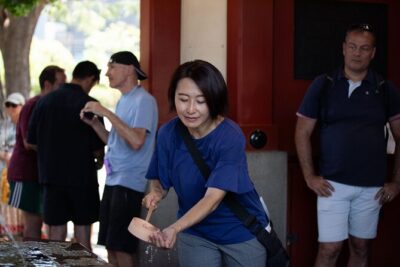
Asakusa Senso-ji Temple and Old Tokyo Walking Tour
Read our review →
Asakusa and Tokyo’s Oldest Temple Senso-ji Tour
Read our review →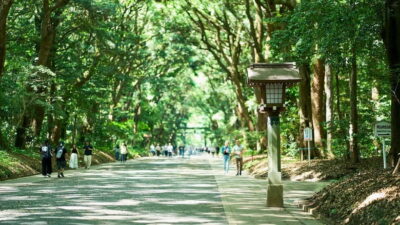
Meiji Shrine Walking Tour — Shinto & Imperial System
Read our review →
Meiji Jingu Shrine and Shinto Culture Walking Tour
Read our review →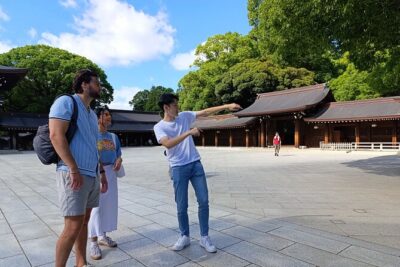
Meiji Shrine Walking Tour — Shintoism & Imperial System
Read our review →Browse the lists this tour appears in