
REVIEW · AZERBAIJAN TEMPLE TOURS
Baku: Atashgah Fire Temple & Burning Mountain Half-Day Tour
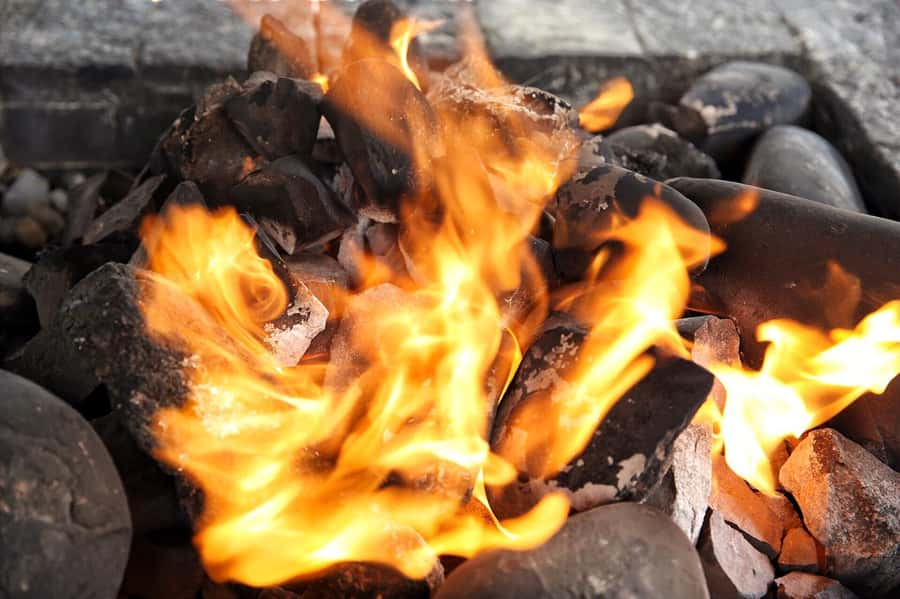
The most striking part of this Absheron outing is the chance to see two different kinds of natural fire in one afternoon. At Ateshgah, flames once fed a place of worship built by Indian merchants. At Yanardag, gas still escapes from the earth and burns along a hillside.
I like the low $23 price, which covers transport, entry tickets, and a guide. I also like the compact route: you can see two unusual sites outside Baku without giving up a full day. The main concern is organization, since some half-day bookings have been folded into longer group tours, causing long waits and an unexpected lunch stop.
Key points to know before booking
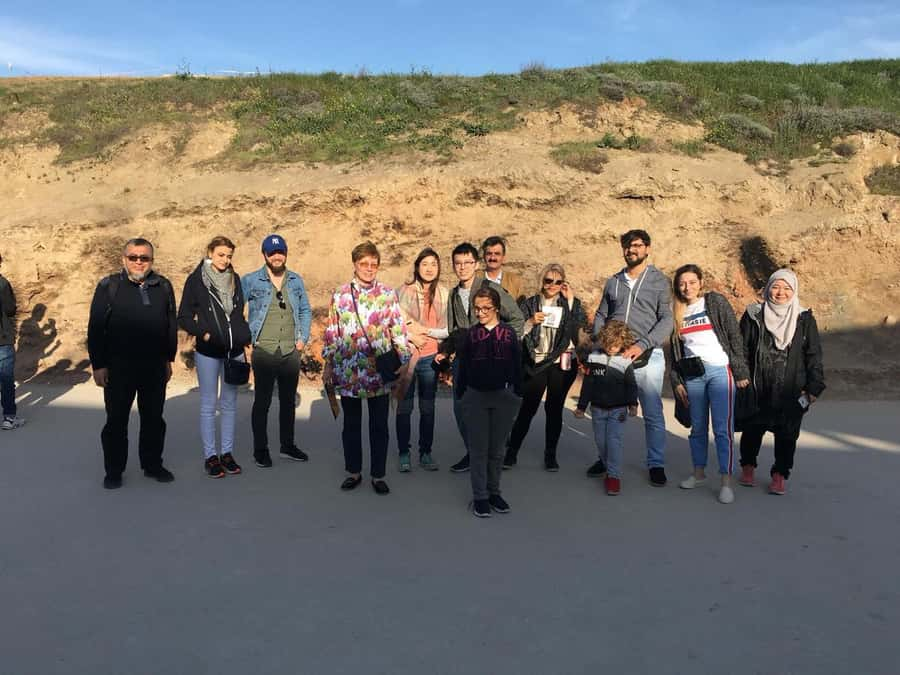
- Two fire sites in one outing: Visit Ateshgah Fire Temple and Yanardag State Historical, Cultural and Natural Reserve.
- Ateshgah is more than a flame: Its fortress-like courtyard contains small cells, a central fireplace, and traces of fire-worship rituals.
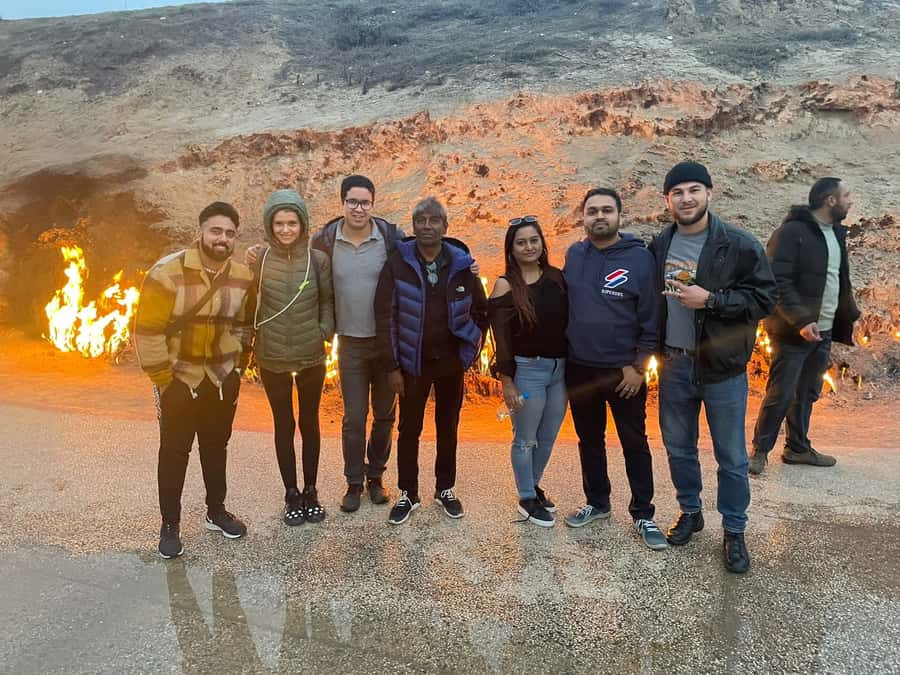
- Yanardag is a natural phenomenon: Gas leaking through rock creates a wall of flames on the burning mountain.
- Three hours is the advertised duration: Shared departures may take longer if they join a full-day group.
- Transport and entry are included: You travel by minivan or van with an English or Russian-speaking guide.
- Private groups are available: This may be the better choice if you need tighter control over timing.
Why these two fires matter outside Baku
This is not a standard city sightseeing trip. The Absheron Peninsula has long been linked with fire, natural gas, and religious traditions shaped by flames rising from the ground.
Ateshgah and Yanardag show two sides of that story. Ateshgah is a built site, shaped by worshippers and pilgrims around a natural gas source. Yanardag is a raw geological spectacle, where gas still burns from the rocks. Put together, the stops give you a clearer sense of why fire became such a powerful symbol in this part of Azerbaijan.
I find the contrast useful. At the temple, you look at architecture and human ritual. At the burning mountain, you watch nature do the work. Neither stop takes hours to understand, which makes the pair a good fit for a short stay in Baku.
The tour costs $23 per person. For that price, the package is appealing because transport, admission, and guiding are included. A taxi to both sites plus separate entry fees could be less convenient, even if a fully independent visit might give you more time.
The value depends heavily on the day’s operation. If the three-hour schedule works as planned, this is an inexpensive way to reach both places. If you are held for lunch or asked to wait for a longer group, the price becomes less attractive because your limited sightseeing time gets eaten by logistics.
More Half-Day Trips in Baku:
- Athens: Cape Sounion & Poseidon Temple Sunset Half-Day Trip
★ 4.8 · 8,241 reviews - Cape Sounion and Temple of Poseidon Half-Day Small-Group Tour from Athens
★ 4.5 · 3,205 reviews - From Athens: Temple of Poseidon & Cape Sounion Half-Day Tour
★ 4.3 · 1,082 reviews
Ateshgah Fire Temple and its courtyard of flames
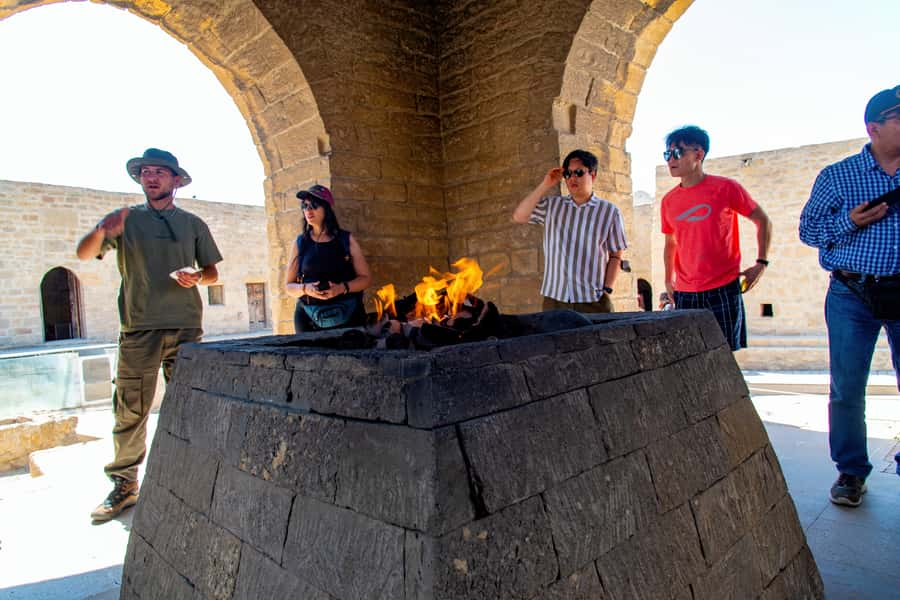
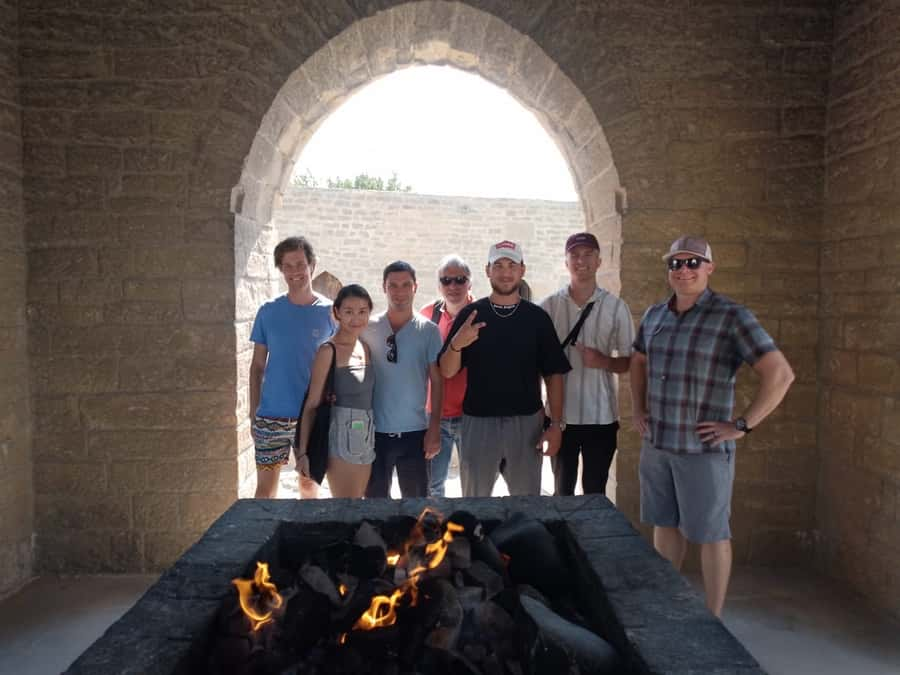
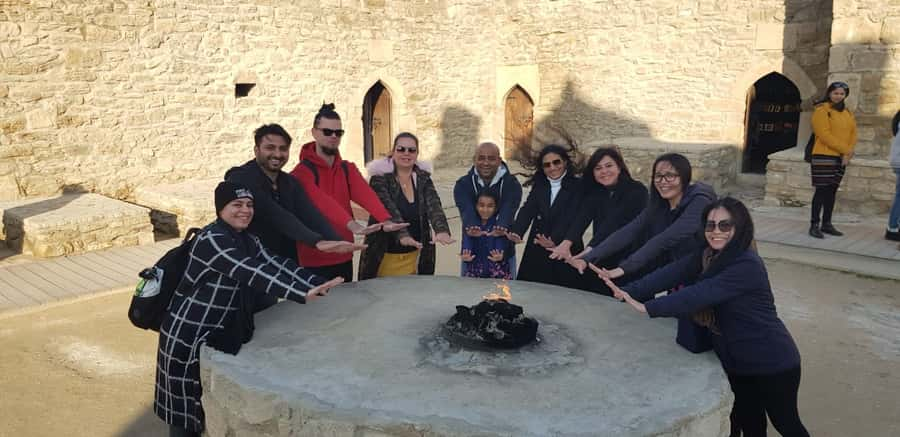
The first stop is Ateshgah Fire Temple, about 21 kilometers east of Baku. The site has the shape of a small stone fortress, with a walled courtyard and rooms arranged around the central fireplace.
Natural gas once flowed from below the ground here. Indian merchants built the temple in the 18th century, creating a place connected with fire worship. The site also recalls older religious traditions linked with sacred flames, ascetic practice, and pilgrimage.
As you walk through the courtyard, look for the small cells around the main fireplace. These rooms held ascetic believers and pilgrims. They help you picture the site as more than a pretty ruin with a flame in the center. It was a place where people stayed, prayed, and lived close to the fire.
The central fireplace is the focus of the visit. Natural gas ventilation feeds the flame, and the temple design also includes four smaller fires at the corners of the pavilion roof. That arrangement gives the courtyard a distinct visual rhythm, with the main fire below and smaller flames above.
Your guide should help explain the rituals connected with the site. English and Russian guidance is offered, so check your preferred language when booking. The strongest part of the stop is the explanation of how a natural feature became the center of a religious complex.
Ateshgah is also the stop where a guide adds the most value. Without context, you may simply see a stone enclosure and a fire. With a good explanation, the cells, courtyard, merchants, and ritual use fit together.
One limitation is that the visit is fairly compact. A half-day tour has to move on, so you may not have unlimited time to study every room or linger around the fireplace. One particularly positive review praised the guide for being friendly and informative, while another suggested that more free exploration time would improve the outing.
That advice is worth taking seriously. When you arrive, listen to the main explanation first, then use any free minutes to look closely at the cells and courtyard rather than spending the entire stop taking photos from one position.
The 35 to 40 minute ride to Yanardag
The trip from Ateshgah to Yanardag takes about 35 to 40 minutes. This transfer is part of the appeal of using organized transport, since the two sites are outside central Baku and are not next door to each other.
You travel by minivan or van. The vehicle type may vary, and a shared departure can include people on a longer itinerary. That matters because the ride itself may be simple, but delays before departure or at group stops can change the shape of the afternoon.
A planned transfer of 35 to 40 minutes is reasonable for a half-day route. The problem is not the distance. It is the possibility of waiting for other people, particularly if your booking is attached to a full-day tour.
Bring a little patience and avoid scheduling an important timed activity immediately after this experience. The advertised duration is three hours, but some bookings have taken substantially longer because of lunch and group coordination.
Yanardag, the burning mountain
Yanardag means burning mountain. At the Yanardag State Historical, Cultural and Natural Reserve, the main sight is a hillside where a wall of flames burns continually as natural gas escapes through the rock.
The fire comes from gas beneath the surface, linked with tectonic shifts and volcanic material. Here, the spectacle feels less formal than Ateshgah. You are not entering a temple arranged around a central flame. You are looking at fire coming directly from the earth.
This is the tour’s quickest-to-grasp sight. Even without a long explanation, the burning hillside is memorable. The guide can add the geological background and explain why the flames continue, while also connecting the site to the older fire traditions of the Absheron Peninsula.
The flames have attracted attention for centuries. Marco Polo is said to have described burning places around Baku during his travels. The supplied information also places the fire at Yanardag far back in local memory, although the exact age of the present flame is not given.
Do not expect a mountain hike. The attraction is the burning section of the hill, not a long trek across open country. That makes Yanardag suitable for a short organized visit and potentially useful for people who want an unusual stop without a demanding walk.
The contrast with Ateshgah is the point. At Ateshgah, people built around fire and gave it religious meaning. At Yanardag, the flame remains a direct natural event. Seeing both on the same route helps you understand the connection between Azerbaijan’s geology and its fire-related traditions.
A few more temple visits around Baku worth a look
- Baku: Gobustan, Mud Volcano, Fire Mount, Temple Lunch Entry
★ 4.9 · 3,246 reviews - Baku: Gobustan, Volcanoes, Fire Temple and Yanardag Day Trip
★ 4.7 · 433 reviews - Gobustan & Mud, Fire Temple, Burning Mountain (Group & Private)
★ 4.5 · 418 reviews - Gobustan-Mud Volcan-Fire Temple and Mountain Tour/Entrance inc
★ 5.0 · 267 reviews
The guide can make or break the afternoon
The tour includes a live guide in English or Russian. At its best, the guide turns two brief stops into a connected story about natural gas, worship, pilgrimage, and the Absheron Peninsula.
One highly positive account singled out the guide as friendly and informative. That is exactly what you need here. The sites are unusual, but their meaning is not always obvious from the stones and flames alone.
A guide should point out the cells at Ateshgah, explain the central fireplace, describe the role of Indian merchants, and connect the temple’s rituals with the broader history of fire worship. At Yanardag, the guide should explain the gas escaping from the rocks and the geological forces beneath the hill.
No guide names are provided for this departure, so you cannot select a particular person. Guide quality can also vary by date and language. If you want the most personal experience, a private group is available and may give you more room to ask questions.
The important catch: half-day timing is not always simple
The advertised duration is three hours. That is enough time for the two sites and the drive between them if the schedule runs cleanly.
The largest risk is that the half-day option may be combined with a full-day tour. In that setup, you could wait for people finishing or beginning another part of the route. A lunch stop has also appeared in the operating plan, even though it was not expected by everyone booking the half-day option.
One booking began with a long delay. The pickup details and start time were not confirmed as expected, and the person was directed to an office before being transferred by taxi to another meeting point. The total delay reached about two and a half hours, a serious problem on a tour advertised to last only three hours.
Another booking involved waiting roughly an hour and 20 minutes while a larger group ate lunch. The guide was described as friendly, but the organization meant the tour began much later and ended more than an hour after the expected time.
These are not small details. If you have a museum booking, dinner reservation, airport transfer, or evening performance, leave a generous gap after the tour. I would also confirm the pickup point and exact departure time before the day of travel.
The overall rating is 4 out of 5 from 35 reviews, but the comments show a clear split. The strongest praise goes to the sites and the guides. The sharpest criticism concerns communication, pickup arrangements, waiting, and the blending of half-day and full-day groups.
Who will get the most from this tour
I would choose this tour if you have limited time in Baku and want to see both fire sites without arranging separate transport. It suits first-time visitors who prefer a guide to explain what they are seeing rather than simply arriving at the entrance.
It is also a good match for solo visitors. One recent booking described the outing as smooth and suitable for someone traveling alone, although the same person wanted more time to explore independently.
You should consider the private option if you care about a fixed schedule, want to ask many questions, or dislike waiting for a larger group. The supplied information confirms that private groups are available, though it does not give a separate private price.
This may be less suitable if you want a slow archaeological visit. The route is short, and the program is built around two main sights. You get an introduction to each place, not an entire day of close study.
It is also not ideal for anyone with a tight afternoon schedule unless the operator confirms the timing clearly. The attraction of a three-hour tour disappears if a long wait consumes much of your day.
Price, transport, and practical value
At $23 per person, the tour is priced for convenience rather than luxury. You receive transport by minivan or van, admission to both attractions, and an English or Russian-speaking guide.
That is a fair deal when the departure is on time. You avoid figuring out how to reach two sites outside Baku, and you get explanations at places where signs alone may not tell the full story.
The price does not guarantee a private vehicle or a perfectly controlled timetable. Private groups are available, but the standard arrangement may involve a shared vehicle and people on different tour lengths.
Wheelchair accessibility is listed, which is useful to know before booking. Exact conditions at each fire site are not described, so if you need detailed mobility information, ask the operator before paying.
Free cancellation is available up to 24 hours before departure for a full refund. You can also reserve now and pay later, which gives you some flexibility while building a Baku itinerary.
Should you book the Ateshgah and Yanardag tour?
I would book it for the sites, price, and included transport, especially if this is your first visit to Baku and you want a short introduction to the Absheron Peninsula.
I would not book it with a tight schedule unless you first confirm the pickup time, meeting point, group arrangement, and whether lunch is included. The experience can be excellent when the guide and transport work well, but the reported delays are too serious to ignore.
For the best chance of a smooth outing, choose a private group if the extra cost fits your budget. If you book the shared version, keep the rest of the day open and treat the three-hour length as an estimate rather than a promise.
FAQ
Where does the tour take place?
The tour visits Ateshgah Fire Temple and Yanardag State Historical, Cultural and Natural Reserve on the Absheron Peninsula outside Baku.
How long does the tour last?
The advertised duration is three hours. Some departures may run longer if the half-day group joins a full-day tour or waits during a lunch stop.
What is included in the price?
The price includes an English or Russian-speaking guide, transport by minivan or van, and entry tickets.
What languages are available?
Guiding is available in English and Russian.
Is the tour private?
A private group option is available. The standard arrangement may involve shared transport and a larger group.
How far is Ateshgah from Baku?
Ateshgah Fire Temple is about 21 kilometers east of Baku.
How long is the journey from Ateshgah to Yanardag?
The transfer to Yanardag takes around 35 to 40 minutes.
Can I cancel the booking?
You can cancel up to 24 hours in advance for a full refund. The activity also offers a reserve-now-and-pay-later option.
Just added around Baku
- Qobustan rock arts, Mud Volcanoes, Fire temple Ateshgah, Yanardag★ 5.0 · 30 reviews
- Gobustan, Mud volcanoes, Fire temple, Fire mountain GROUP TOUR★ 4.5 · 19 reviews
- Gobustan, Mud Volcano, Burning Mountain and Fire Temple Tour★ 5.0 · 12 reviews
- Gobustan, Mud volcanoes, Fire temple, Fire mountain PRIVATE TOUR★ 5.0 · 47 reviews
- Gobustan, Mud volcanoes, Fire temple, Fire mountain PRIVATE TOUR★ 5.0 · 28 reviews
- Baku: Gobustan, Mud Volcano, Fire Temple & Burning Mountain★ 4.0 · 9 reviews
- Fire Temple and Fire Mountain Tour★ 5.0 · 22 reviews
- Ateshgah Fire Temple & Yanar Dag mountain (Group & Private)★ 4.5 · 7 reviews
Azerbaijan Temple Tours, compared.
Gobustan, Mud Volcano, Fire Mount, Temple Lunch Entry
Read our review →
Gobustan, Volcanoes, Fire Temple and Yanardag Day Trip
Read our review →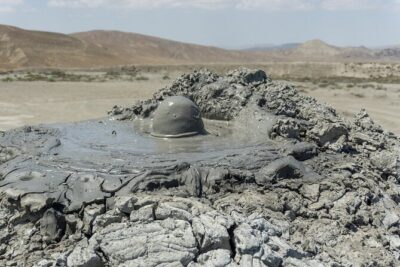
Gobustan & Mud, Fire Temple, Burning Mountain (Group & Private)
Read our review →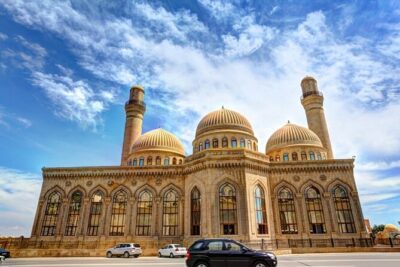
Gobustan-Mud Volcan-Fire Temple and Mountain Tour/Entrance inc
Read our review →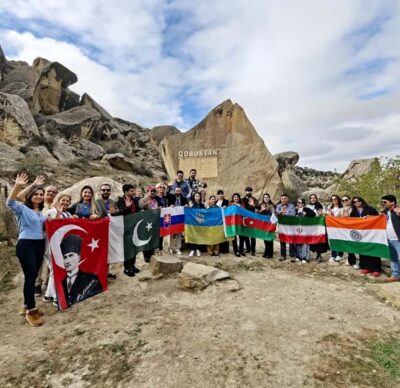
Gobustan Mud Volcanoes Temple & Entry tickets included
Read our review →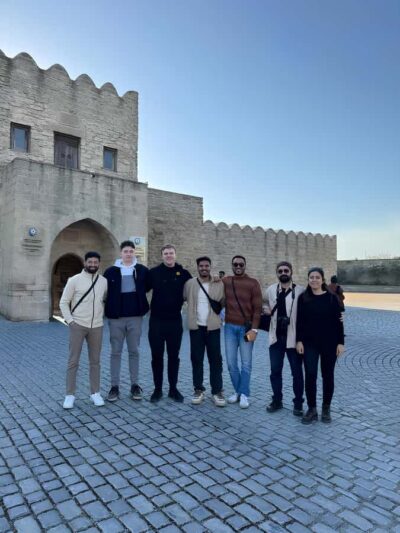
Gobustan/Absheron guided tour with lunch and tickets
Read our review →
Gobustan, Mud volcanoes, Fire temple, Fire mountain PRIVATE TOUR
Read our review →
Gobustan & Mud, Fire Temple, Burning Mountain, H.A. Center
Read our review →Browse the lists this tour appears in