
REVIEW · AZERBAIJAN TEMPLE TOURS
Baku: Gobustan, Volcanoes, Fire Temple and Yanardag Day Trip
The strangest stop comes first in spirit: mud volcanoes bubbling from Azerbaijan’s dry coast, reached after seeing prehistoric rock art and one of the world’s earliest industrial oil wells. By afternoon, the theme shifts from oil and geology to Zoroastrian fire at Ateshgah and Yanardag. It is a packed day, but it links several parts of Azerbaijan’s story in one sweep.
I like the no-shopping-stop promise, since your time goes to actual sights rather than carpet or souvenir sales. I also like the range: Gobustan gives you archaeology, the volcanoes provide a bit of rough adventure, and the fire sites explain why Azerbaijan is known as the Land of Fire.
The main drawback is the schedule. Six to eight hours covers a lot of ground, and some stops can feel brief. Rain may also cancel the mud volcano visit for safety, so you should treat that part as weather-dependent rather than guaranteed.
Key points to know before booking
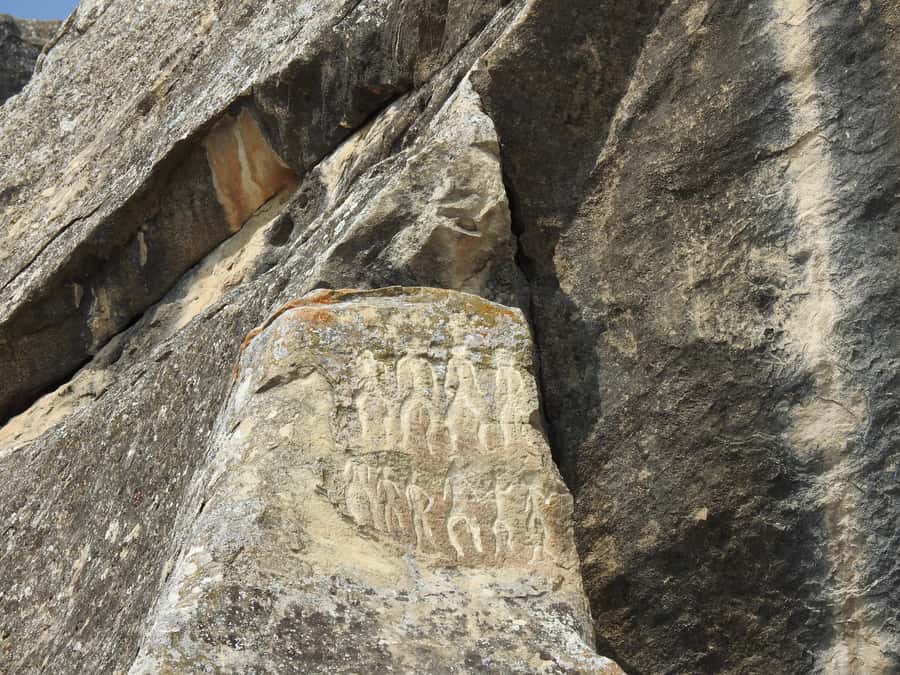
- Gobustan is about 70 kilometers from Baku, with an indoor museum and outdoor rock-art area.
- A Soviet-era Lada ride may take you to the mud volcanoes, depending on the day’s transport arrangements.
- The trip avoids shopping stops, giving the day a stronger focus on history, geology, and religion.
- Lunch costs extra, usually around $8 to $12 at a buffet-style local restaurant.
- Guides such as Sayed, Leyla, Mahabat, Musa, and Elcan are praised for clear explanations and friendly service.
- Mud volcanoes are skipped in rainy weather, while the other attractions can still go ahead.
Why this Baku day trip works so well
Baku is easy to enjoy from the city center, but its most unusual sights sit well beyond the polished waterfront. This outing gives you a practical way to reach Gobustan and the Absheron Peninsula without arranging several separate taxis or trying to connect remote sites by public transport.
At $29 per person, the price is strong if the listed entrance fees are included in the option you choose. You are paying for transport, a guide, hotel pickup and return, and access to several major sights. Lunch is not included, so set aside another $8 to $12. That still makes this one of the more useful full-day excursions from Baku.
I would choose this trip for a first visit when I wanted context, not just photographs. It explains why Azerbaijan has such a striking mix of ancient carvings, oil wells, mud volcanoes, sacred fire, and modern Baku.
The tour is available in English or Russian, with private and small-group options. A small group is worth considering if you want easier conversations with the guide and a little more flexibility at each stop. Larger groups may cost less, but the day already has a tight rhythm.
More Day Trips in Baku:
- Athens: Cape Sounion & Poseidon Temple Sunset Half-Day Trip
★ 4.8 · 8,241 reviews - Athens: Meteora Monasteries Day Trip with Caves and Lunch
★ 4.7 · 4,670 reviews - From Aswan: Abu Simbel Temple Day Trip with Hotel Pickup
★ 4.4 · 2,807 reviews
Bibi-Heybat and the story of oil
The first scheduled sightseeing stop is Bibi-Heybat, near the mosque of the same name. The focus here is an industrialized oil well described as the first of its kind in the world.
This is not just a quick photo beside old machinery. It gives you a useful introduction to Baku’s oil story before you reach the more remote sites. Oil shaped the city’s wealth, industry, and appearance, and the well helps connect the modern capital with the natural resources below the Absheron Peninsula.
The stop lasts about 30 minutes. That is enough for an explanation and photographs, though not enough for an extended look at the whole Bibi-Heybat area. If you are especially interested in oil history, listen closely to the guide here because this short stop sets up the rest of the day.
The mosque itself adds visual interest, but the main purpose of the visit is the oil heritage. The excursion does not treat Bibi-Heybat as a long religious-site tour, so keep your expectations focused.
Gobustan’s petroglyphs and Stone Age record
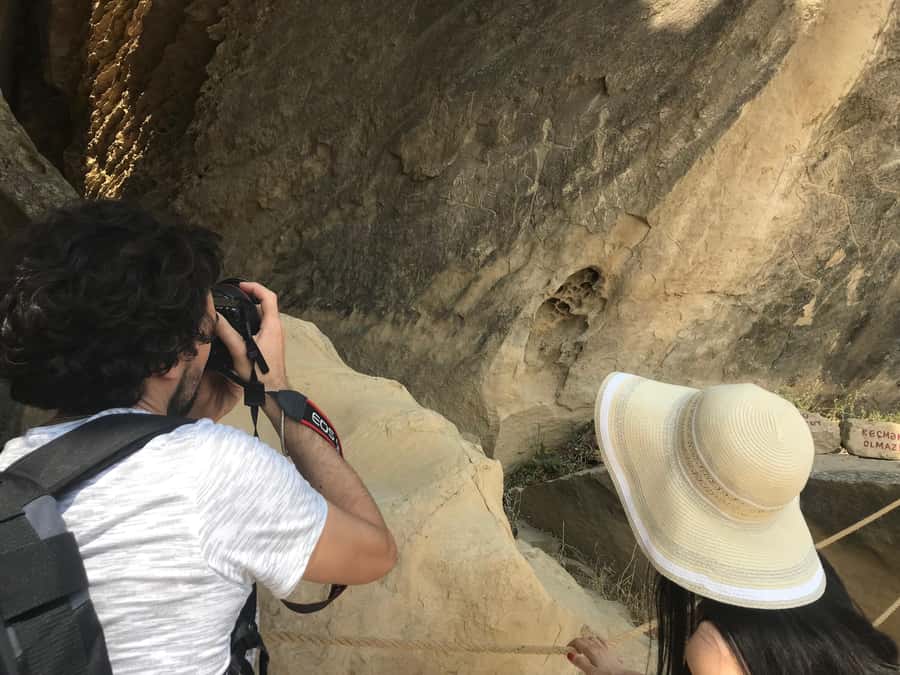
Gobustan is the day’s major archaeological stop. The museum sits roughly 70 kilometers from Baku and combines an indoor presentation with an outdoor area of ancient carvings and rock formations.
Inside, you get background on the people who lived in this region and on the meaning of the images. Outside, you see petroglyphs cut into cave walls and rock surfaces. The drawings show scenes tied to daily life, hunting, animals, movement, and ritual. They are valuable not only because they are old, but because they reveal how people understood their surroundings.
I find Gobustan most rewarding when you slow down and let the guide explain what you are looking at. On your own, some carvings can appear faint or easy to miss. A good guide helps you separate clear figures from natural cracks in the stone and explains how the site reflects the economy and beliefs of early Azeri communities.
Plan on about an hour with a guided visit. That is enough to get a proper introduction, but the schedule may feel brisk if you want to inspect every rock panel. The site is outdoors, so comfortable shoes and protection from sun or wind are sensible choices.
Crowds can affect the experience, especially around the most accessible parts of the park. A confident guide can help keep the group moving and make sure you do not miss the key carvings. Mahabat, Sayed, Musa, Leyla, and other guides have been singled out for keeping explanations clear and engaging, which matters most at a site that needs interpretation.
Mud volcanoes on Azerbaijan’s rough coast
After Gobustan, the trip heads toward the coastal area known for its large number of mud volcanoes. Azerbaijan is home to around 400 of them, and this is one of the day’s most unusual sights.
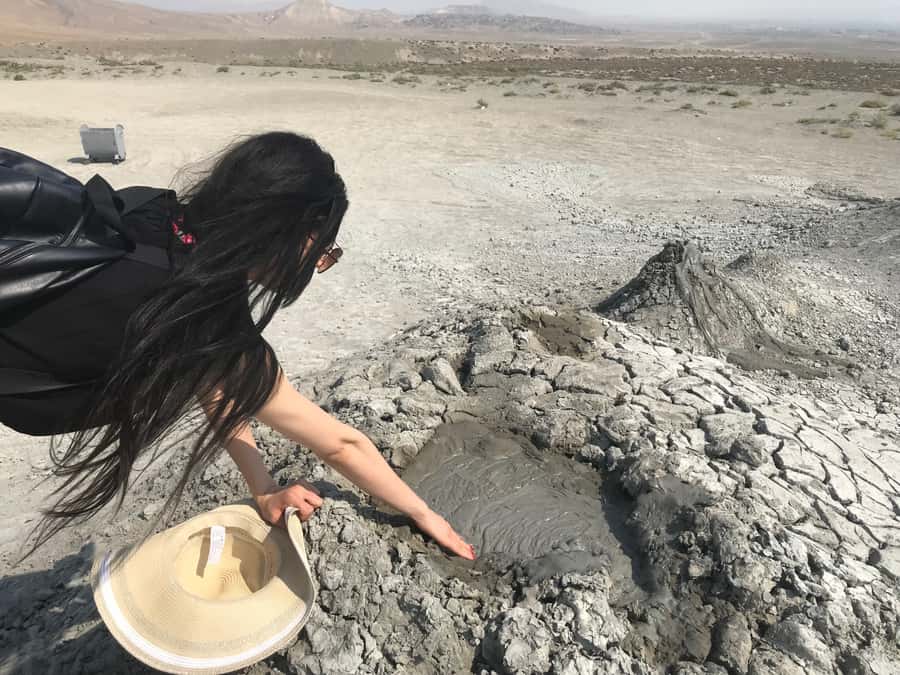
A mud volcano is not the same as a fiery volcano. Here, underground gas pushes mud and water toward the surface. You may see bubbling pools, small cones, cracked earth, and fresh mud around the openings. The scene feels more geological than scenic, but that is precisely the appeal. It is odd, raw, and unlike the usual stops on a city tour.
The visit itself lasts about 20 minutes, though the total time depends on the road and transport conditions. The final approach can be rough. Some groups use old Soviet Lada vehicles for the off-road section, turning a short geological stop into one of the day’s most memorable rides. That vehicle arrangement can vary, so do not book expecting a guaranteed Lada adventure.
This is also the least dependable stop. On rainy days, the mud volcano visit is skipped for safety. Heavy rain has caused that change for some departures, and the decision makes sense because unpaved routes can become difficult or unsafe. If the volcanoes are your main reason for booking, check the forecast and keep your expectations flexible.
You will likely want shoes that can handle dust or mud. Do not wear your best footwear, and keep phones and cameras secure during any rough vehicle transfer.
A few more temple visits around Baku worth a look
- Baku: Gobustan, Mud Volcano, Fire Mount, Temple Lunch Entry
★ 4.9 · 3,246 reviews - Gobustan & Mud, Fire Temple, Burning Mountain (Group & Private)
★ 4.5 · 418 reviews - Gobustan-Mud Volcan-Fire Temple and Mountain Tour/Entrance inc
★ 5.0 · 267 reviews - Baku:Gobustan Mud Volcanoes Temple & Entry tickets included
★ 4.8 · 178 reviews
Lunch and the rhythm of the day
Lunch comes at a buffet-style local restaurant and is not part of the tour price. You can expect to pay about $8 to $12, depending on what you choose.
A buffet is practical on a schedule like this. You can select food quickly rather than wait for a long restaurant service, and Azerbaijani dishes give you a chance to try more than one flavor. Past departures have included a broad food selection, though lunch quality can vary more than the main sightseeing.
This is the point where the day’s timing matters. Some people have found the schedule tight, particularly when there is a lot to see and only a short time at each stop. You should treat lunch as a useful break, not a leisurely dining experience.
If you have dietary needs, it is wise to ask the guide what is available when you arrive. The provided information does not promise special menus, so do not assume every preference can be handled.
Ateshgah, the fire temple
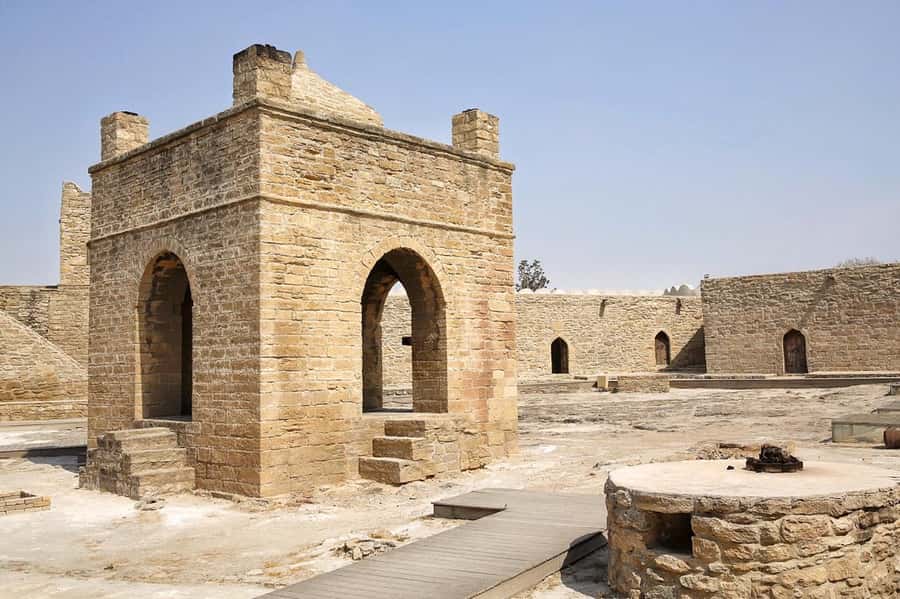
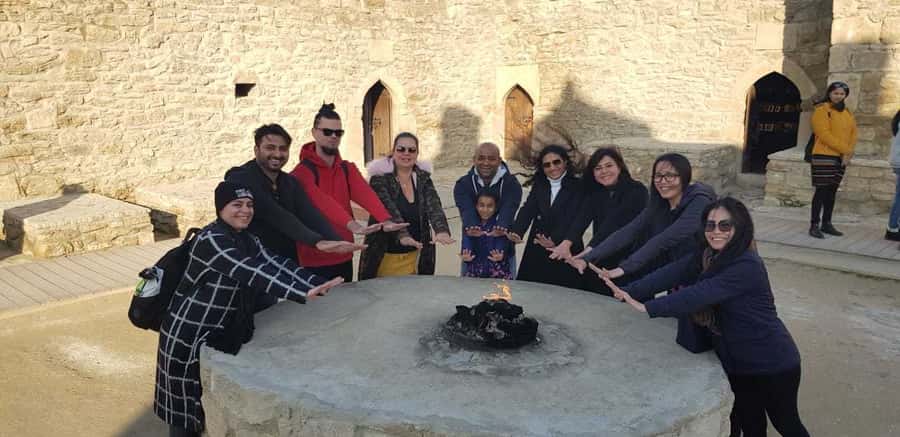
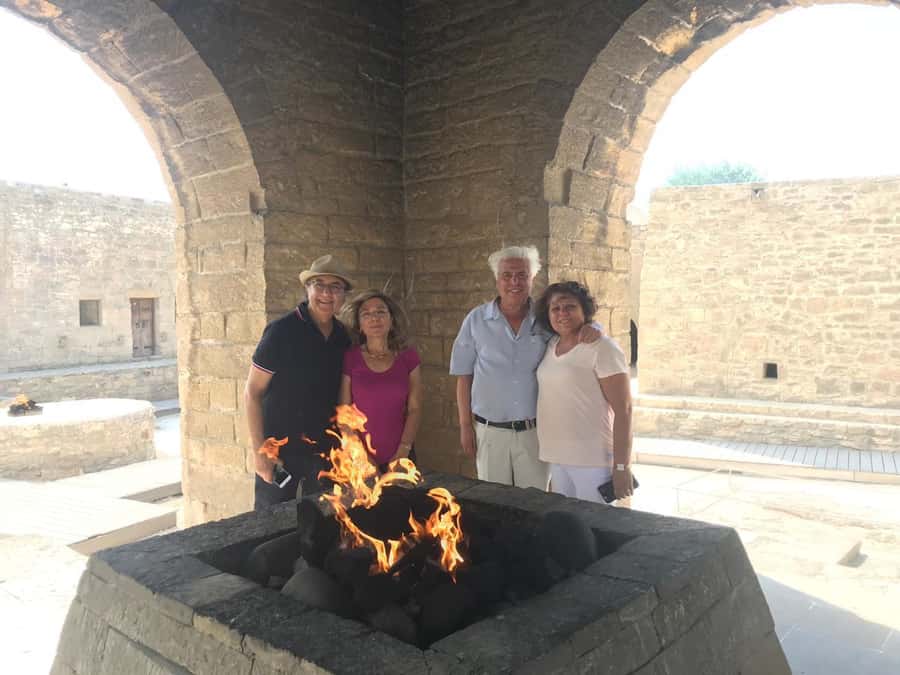
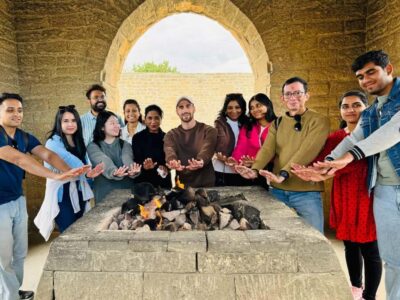
Ateshgah is the religious and cultural heart of the afternoon. This former Zoroastrian fire-worship site was built around natural gas flames and became a place of worship for fire devotees.
The temple’s stone courtyard and surrounding cells help you understand how pilgrims and religious communities used the site. The most important point is the connection between the underground gas of the Absheron Peninsula and the sacred fires that once burned here.
Today, the temple is presented as a historic site rather than a functioning ancient sanctuary. Your guide adds the context that turns the courtyard from a collection of stone rooms into a place linked to trade routes, belief, and the natural fires of the region.
The guided visit lasts about 40 minutes. That gives you enough time to walk through the main area, hear the explanation, and take photographs. It is one of the stops where a strong guide makes a real difference. Sayed, Elcan, Leyla, and others have been praised for explaining Azerbaijan’s religious past in a clear, approachable way.
Ateshgah can feel especially atmospheric after the mud volcanoes. The morning has shown you unusual geology, and the temple shows how people gave spiritual meaning to the same natural forces.
Yanardag and the burning hillside
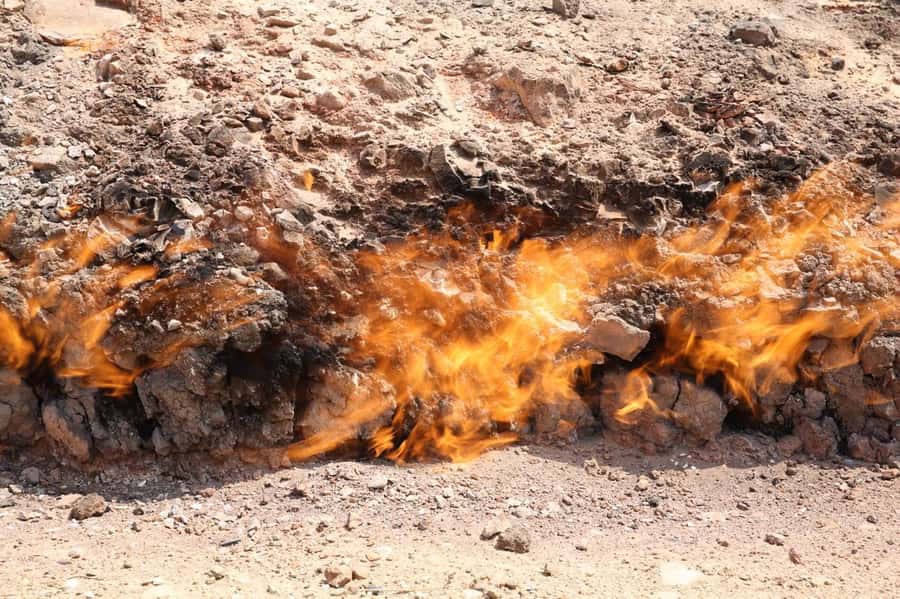
Yanardag, or Burning Mountain, provides the final dramatic image. Natural gas burns continuously on a hillside on the Absheron Peninsula, producing a line of flame against the earth.
The site is smaller than some people expect. You are not walking across a huge mountain covered in fire. Instead, you stand near a burning slope and watch the flames rise from the ground. Wind and weather can affect how strong the fire appears, but the sight remains unusual and easy to understand.
The visit takes about 30 minutes. That is enough for photographs and a short explanation of the geology and the old beliefs connected with eternal fire. The stop works well near the end of the day because it brings together the themes you have seen earlier: gas beneath the ground, sacred flame, and the long cultural importance of fire in Azerbaijan.
The order of the final stops can vary. The scheduled route places Yanardag before Ateshgah, while the general description presents the temple before the burning mountain. Either way, both sites are included when conditions and timing allow.
Guides, vehicles, and the feel of the day
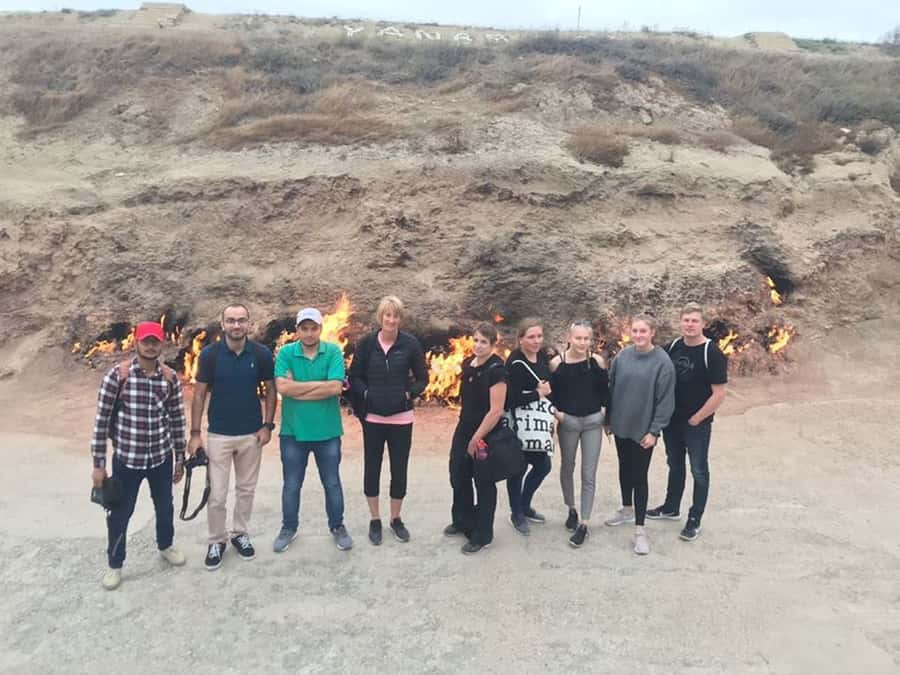
The guide is central to this excursion. The sites are spread out, and several need explanation. Without a guide, Gobustan’s carvings can be hard to read, the oil stop can feel random, and Ateshgah can lose much of its religious meaning.
The strongest guide names associated with this experience include Sayed, Leyla, Mahabat, Elcan, Musa, Ughur, Samir, and Aqil. Guide assignments can change, so you cannot select a particular person unless the operator confirms it. Still, the repeated praise for clear English, friendly conversation, patience, and help with photographs gives you a useful idea of the service style to expect.
Pickup and drop-off are available at a range of hotels, hostels, restaurants, and listed city locations. You meet the guide in your hotel lobby, and the provider contacts you the day before to confirm the pickup time. The transport is included, and past departures have used comfortable vans or buses. One departure had only four people, while other groups were larger, so the exact group size can vary.
The day lasts six to eight hours. Traffic, crowd levels, weather, and the mud volcano road can push the timing toward the longer end. Keep your evening fairly open rather than booking a fixed dinner reservation immediately after the advertised finish.
Who should book it, and who should skip it?
I would book this trip if you want to see the main historical and geological sights outside Baku in one day. It suits first-time visitors, families who prefer a guided route, and anyone interested in archaeology, oil, geology, or fire worship.
It also suits you if avoiding shopping stops matters. The route is built around sights, not sales pitches, and that makes the $29 base price feel particularly fair.
I would hesitate if you prefer slow travel. Gobustan, mud volcanoes, Ateshgah, and Yanardag each deserve more time than a single day can provide. The schedule is efficient rather than leisurely, and some stops may feel short.
I would also think twice if your main goal is guaranteed mud volcano access. Rain can remove that stop, and the route to the site may be rough. In that case, book only if the rest of the itinerary still appeals to you.
For most people spending a few days in Baku, this is a smart use of one day. You get a broad view of the region, reliable transport, a guide to connect the pieces, and a memorable collection of places that you could not easily combine on your own.
FAQ
How long does the Baku day trip last?
The tour lasts about six to eight hours, depending on the starting time, traffic, weather, group pace, and road conditions.
What sights are included?
The route includes Bibi-Heybat, Gobustan National Park Museum, the mud volcano area, Yanardag, and Ateshgah Fire Temple.
Is lunch included in the price?
No. Lunch is purchased separately at a buffet-style restaurant, with an expected cost of about $8 to $12.
Can the mud volcano visit be canceled?
Yes. The mud volcano stop is skipped on rainy days for safety reasons.
What languages are available?
The tour is available with a live guide speaking English or Russian.
Is hotel pickup included?
Yes. Pickup and drop-off are included at the listed hotels and meeting locations. You meet the guide in your hotel lobby, and the provider contacts you the day before to confirm the pickup time.
Just added around Baku
- Qobustan rock arts, Mud Volcanoes, Fire temple Ateshgah, Yanardag★ 5.0 · 30 reviews
- Gobustan, Mud volcanoes, Fire temple, Fire mountain GROUP TOUR★ 4.5 · 19 reviews
- Gobustan, Mud Volcano, Burning Mountain and Fire Temple Tour★ 5.0 · 12 reviews
- Gobustan, Mud volcanoes, Fire temple, Fire mountain PRIVATE TOUR★ 5.0 · 47 reviews
- Gobustan, Mud volcanoes, Fire temple, Fire mountain PRIVATE TOUR★ 5.0 · 28 reviews
- Baku: Gobustan, Mud Volcano, Fire Temple & Burning Mountain★ 4.0 · 9 reviews
- Fire Temple and Fire Mountain Tour★ 5.0 · 22 reviews
- Ateshgah Fire Temple & Yanar Dag mountain (Group & Private)★ 4.5 · 7 reviews
Azerbaijan Temple Tours, compared.
Gobustan, Mud Volcano, Fire Mount, Temple Lunch Entry
Read our review →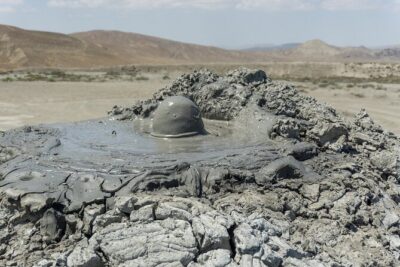
Gobustan & Mud, Fire Temple, Burning Mountain (Group & Private)
Read our review →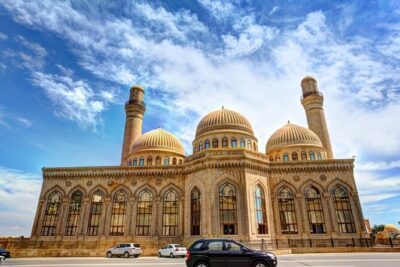
Gobustan-Mud Volcan-Fire Temple and Mountain Tour/Entrance inc
Read our review →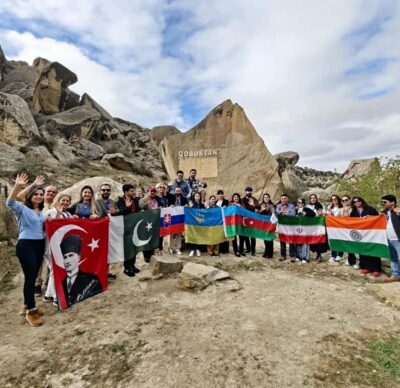
Gobustan Mud Volcanoes Temple & Entry tickets included
Read our review →
Gobustan/Absheron guided tour with lunch and tickets
Read our review →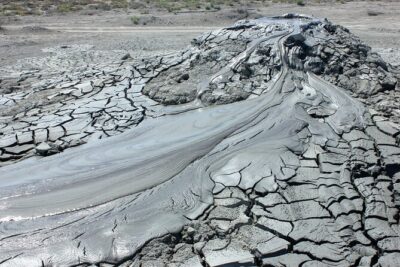
Gobustan, Mud volcanoes, Fire temple, Fire mountain PRIVATE TOUR
Read our review →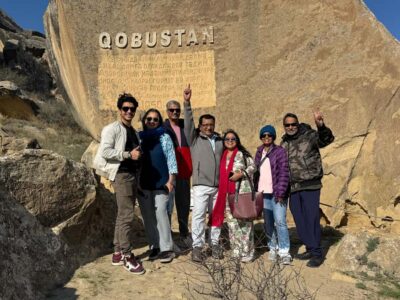
Gobustan & Mud, Fire Temple, Burning Mountain, H.A. Center
Read our review →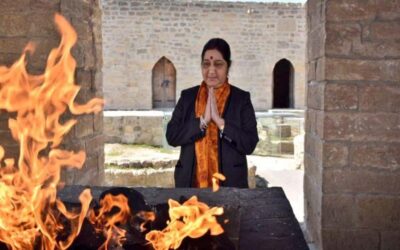
Browse the lists this tour appears in