
REVIEW · AZERBAIJAN TEMPLE TOURS
Gobustan-Mud Volcan-Fire Temple and Mountain Tour/Entrance inc
Gobustan’s bubbling mud volcanoes and ancient rock carvings make this more than a standard city outing. In one long day, you move from a peaceful mosque beside the Caspian Sea to prehistoric drawings, natural flames, and Zaha Hadid’s curving cultural center.
I like the variety, especially the rough off-road ride to the mud volcanoes and the chance to see Ateshgah and Yanardag together, two places that explain Azerbaijan’s old fire-worship traditions. I also like the small-group format, with a maximum of 15 people, hotel pickup, and guides such as Elshad, Rosi, and Dinara known for keeping the day lively.
The main drawback is time. You may spend two to three hours in the vehicle, and traffic between Gobustan and the Absheron sites can stretch a planned day by several hours. Check the ticket option carefully, since entrance fees are included only when the appropriate option is selected.
Key points to know before booking
- Six very different stops: You see a mosque, mud volcanoes, prehistoric carvings, a fire temple, a natural gas flame, and a modern cultural center.
- The mud volcano ride is part of the adventure: Reaching Gobustan often involves a rough off-road transfer in a Lada-style vehicle.
- Small groups keep the day personal: The maximum group size is 15 people, with pickup and drop-off at your hotel.
- Expect a full day on the road: The advertised duration is 7 to 8 hours, but traffic and late finishes can add time.
- Tickets need checking: Gobustan, Ateshgah, and Yanardag entrance is included only with the selected ticket option.
- Lunch is not included: You will need to pay for food separately, and one stop may offer a nearby café or lunch venue.
Why this Baku day trip works
Baku is easy to enjoy within the city, but Azerbaijan’s most unusual sights sit outside the center. This outing links the country’s ancient rock art, unusual geology, sacred fire sites, and modern architecture in a single route.
That variety is the strongest reason to book it. You do not spend the whole day looking at similar monuments. One hour you are walking around a mosque, and later you are watching mud bubble from the ground or standing beside a natural flame.
The price is listed at $30 per person, which is attractive for a full-day outing with air-conditioned transport, hotel pickup, hotel drop-off, bottled water, a guide, and selected entrance tickets. The value depends on the option you choose. A ticket-inclusive booking is much easier to budget than a cheaper-looking option that adds fees at several stops.
You should also factor in the time. This is not a relaxed half-day trip. You may be away for seven to eight hours, and the remaining travel between stops can take two to three hours overall. That is a fair trade for seeing distant sites, but it is tiring if you prefer slow museum visits.
A few more temple visits around Baku worth a look
- Baku: Gobustan, Mud Volcano, Fire Mount, Temple Lunch Entry
★ 4.9 · 3,246 reviews - Baku: Gobustan, Volcanoes, Fire Temple and Yanardag Day Trip
★ 4.7 · 433 reviews - Gobustan & Mud, Fire Temple, Burning Mountain (Group & Private)
★ 4.5 · 418 reviews
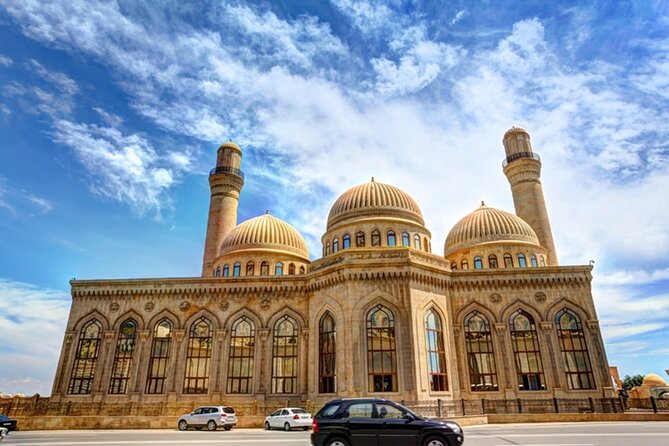
Bibi-Heybat Mosque and the Caspian opening
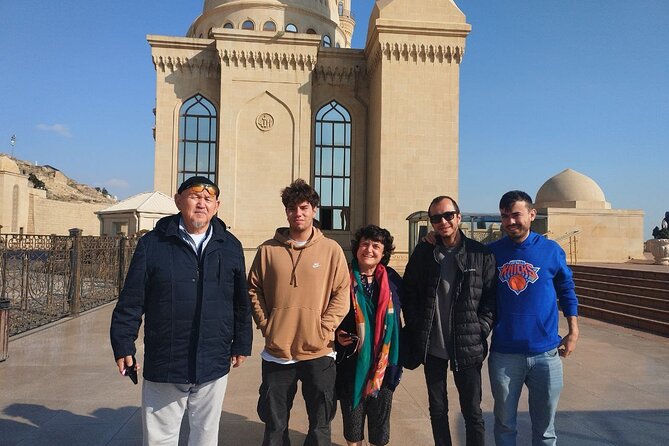
The day begins with Bibi-Heybat Mosque, a useful first stop because it introduces Azerbaijan’s religious and architectural traditions before the more unusual sights begin.
You have about 30 minutes here. Use it to look at the exterior design, visit the interior if permitted, and walk around the gardens. The setting near the Caspian Sea gives the stop a calm feel, and the guide can explain why the mosque matters in local culture.
This is not a long guided visit, so do not expect an extended architectural tour. Still, it gives you a quiet start and a chance to take photographs before the road portion of the day.
Dress respectfully for a mosque visit. The tour information does not specify a dress code, so conservative clothing is the sensible choice. Your guide can explain the customs on the day.
Gobustan’s mud volcanoes and the roughest ride
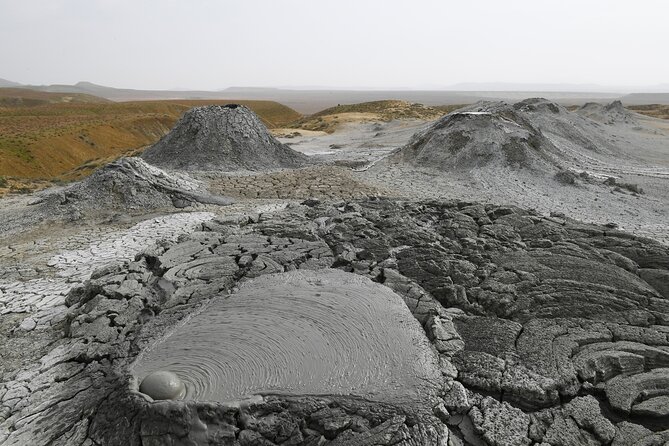
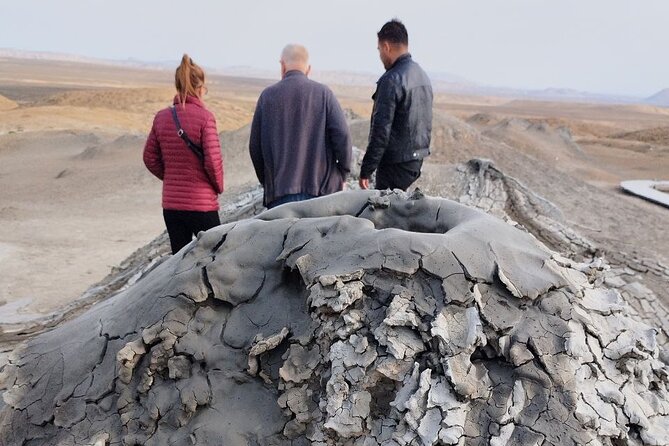
Gobustan is home to an unusually large share of the world’s mud volcanoes. The region and the Caspian area contain an estimated 300 of the planet’s roughly 700 mud volcanoes, making this one of Azerbaijan’s most distinctive natural sights.
The volcanoes are not mountains of fire. They are low cones and muddy vents that push gases and cool mud toward the surface. The result can look strange and otherworldly, especially against Gobustan’s dry, open ground.
Getting there may be more memorable than the volcanoes themselves. The final approach uses an off-road vehicle, often described as a Lada rally ride. Expect a bumpy transfer rather than a smooth coach journey. If you have back problems or dislike rough roads, this is the part of the day to consider carefully.
Some people bathe in the mud because of its supposed medicinal qualities. The tour information does not promise a mud bath, and you should not assume one is provided. Treat the area as a viewing stop unless your guide tells you otherwise.
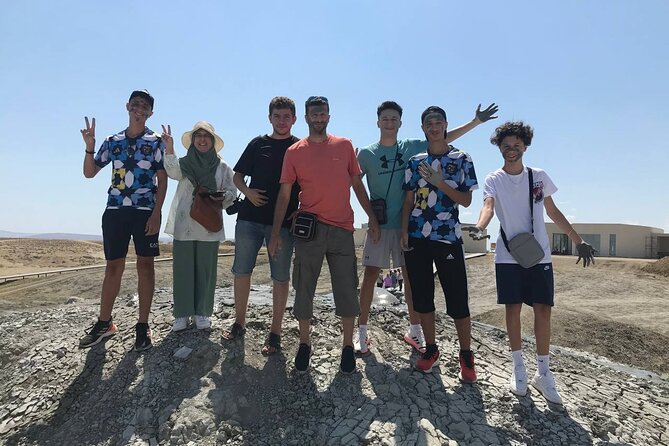
The standard timing is about one hour. Wear shoes that can handle dirt and uneven ground, and bring sun protection if the weather is bright. The off-road car fee is listed as included in the group tour, but the notes also say it may be paid in cash, so confirm this before setting out.
Gobustan Rock Art and life thousands of years ago
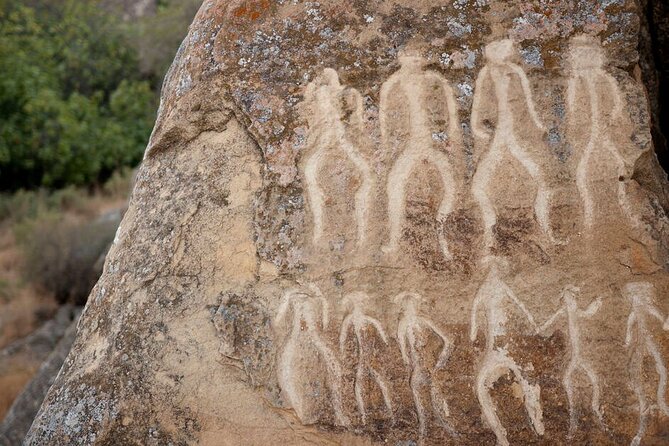
The Gobustan rock art area gives the day its strongest link to the distant past. Petroglyphs show human figures, animals, hunting scenes, and everyday activity carved into stone over thousands of years.
A guide makes a real difference here. Without context, the carvings can look like scattered marks on rock. With an explanation, you begin to see scenes and patterns that suggest how early communities lived and represented the world around them.
You have about an hour at the rock art site. Wear comfortable shoes, since the visit involves walking around an outdoor archaeological area. The site is more about close observation and interpretation than dramatic buildings, so give yourself time to look carefully.
Entrance is included only when you select the appropriate ticket option. The tour information lists the rock art ticket among the included admissions for that choice, but the basic itinerary also says admission is not included. I would verify the exact booking option before paying.
Same country, a different morning at the gates:
- Baku:Gobustan Mud Volcanoes Temple & Entry tickets included
★ 4.8 · 178 reviews - Baku: Gobustan/Absheron guided tour with lunch and tickets
★ 4.8 · 158 reviews - Gobustan, Mud volcanoes, Fire temple, Fire mountain PRIVATE TOUR
★ 5.0 · 47 reviews - Gobustan & Mud, Fire Temple, Burning Mountain, H.A. Center
★ 4.6 · 46 reviews
Ateshgah Fire Temple and old sacred flames
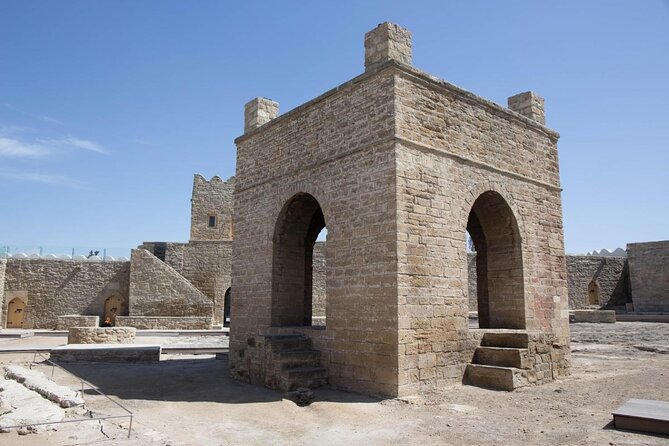
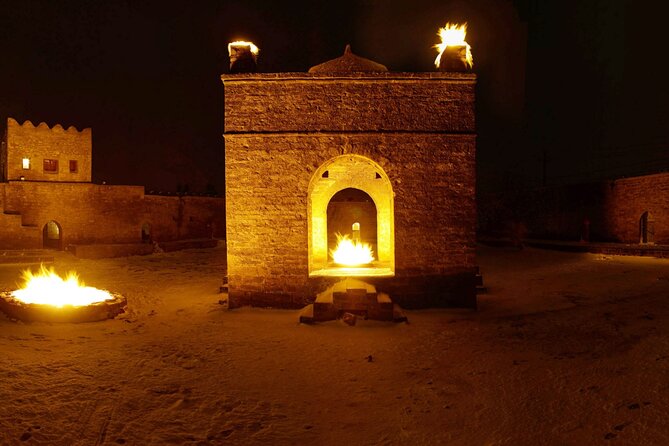
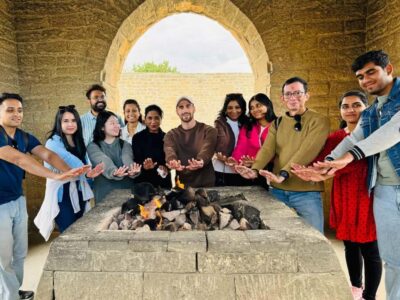
Ateshgah, commonly called the Fire Temple, is one of the day’s main cultural stops. The complex was built around a natural gas vent and is linked with Hindu, Sikh, and Zoroastrian worship.
The central fire connection explains why this place matters. Natural gas once escaping from the ground helped create a sacred setting, and the temple’s design reflects the religious communities that used it. You will have roughly an hour to walk through the complex and hear how fire shaped local belief.
This stop is especially useful when paired with Yanardag later. Ateshgah shows a built religious site connected to fire, while Yanardag gives you the natural phenomenon itself. Together, they make more sense than either stop alone.
The temple is outside central Baku, so the visit adds driving time. That is part of the bargain with this tour. You trade independent flexibility for a route that links several distant places in one day.
The entrance fee is included with the selected ticket package. Lunch is not included, though a meal may be arranged nearby depending on the day’s timing. Bring some cash or another accepted payment method for food and personal purchases.
Yanardag, where the ground burns
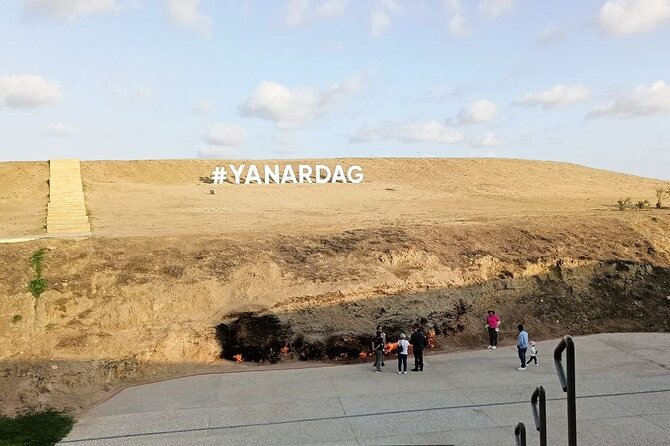
Yanardag means burning mountain, though the site is better understood as a natural gas fire along the ground. Gas escapes from the earth and burns continuously, creating a long wall or line of flame at the hillside.
The fire has burned for centuries. It was reportedly larger before extensive gas extraction reduced the available supply, but it remains an unusual sight. You have about an hour here, including time for a short break at a nearby café with a view of the flames.
Yanardag often works better than people expect because it is simple. There is no elaborate monument to distract you. You are looking directly at gas coming from the ground and catching fire.
The flame may look different depending on daylight and weather. Do not expect a huge blaze covering an entire mountain. The appeal is the natural oddity and the connection to the fire traditions you saw at Ateshgah.
As with the temple, check that your booking includes the entrance ticket. The ticket-inclusive option covers Yanardag, while the basic details also list admission as an additional cost.
Heydar Aliyev Center and modern Baku
The final listed stop changes the tone completely. The Heydar Aliyev Center is a sweeping white building designed by Zaha Hadid, with broad curves and almost no right angles.
You have about an hour here. The exterior is the main attraction on this schedule, so use the time for photographs and a walk around the building. The center hosts exhibitions, concerts, and other cultural events, but this tour does not guarantee time for an interior visit or a specific exhibition.
That limitation matters. One past departure left little time to go inside, because reaching the center late would have required starting the day earlier. If the interior program is important to you, ask the operator whether the schedule allows it on your date.
Even a short exterior visit is worthwhile because it shows a very different side of Azerbaijan. After mosques, rock carvings, mud, and natural fire, the center brings you back to modern Baku and its ambitious architecture.
Guides, vehicles, and the pace of the day
The tour offers English, Arabic, Russian, Spanish, and Turkish guiding. Named guides from past departures include Elshad, Rosi, and Dinara. Your assigned guide may be different, so the experience can vary with language ability and guiding style.
The best guides turn the long drives into useful travel time with stories about the sites and the country. This matters here because transport takes a large part of the day. A good explanation can make the journey feel like part of the tour instead of dead time.
Transport is by air-conditioned vehicle, with hotel pickup and drop-off. The group maximum is 15 people, which is small enough for questions without promising a fully private experience.
Vehicle comfort may vary. One departure involved a less comfortable bus, while another used the rough Lada transfer for the volcanoes. If comfort is your top concern, a private vehicle may sound appealing, but one private booking led to complaints about weak English communication, missing water, and extra entrance fees. Confirm exactly what is included before choosing a private arrangement.
The schedule can also run late. One day began 30 minutes behind schedule and finished about three hours later than expected, largely because the fire sites require crossing Baku traffic again. Keep your evening free.
What the $30 price really covers
At $30 per person, the group tour is priced well for a full day outside Baku. You receive transport, hotel pickup and drop-off, a guide, bottled water, and photo stops. That removes the need to arrange several separate transfers.
The important detail is the entrance package. The tour information lists tickets for Gobustan rock art, Ateshgah, and Yanardag when the selected option includes them. Elsewhere, those admissions are shown as not included. Do not assume the lowest displayed price covers everything.
Lunch is always excluded. The day is long, and you should plan to buy food separately. A café near Yanardag and a lunch venue near the fire temple may be available, but the details can vary.
Group discounts are offered, and free cancellation is available if you cancel at least 24 hours before the start time. Changes made inside that window are not accepted, and poor weather or failure to reach the minimum group size can lead to a new date or full refund.
Who should book this tour
I would choose this trip if you have limited time in Baku and want to see the major sights outside the city without arranging separate transport. It is also a good fit if you like unusual geology, archaeology, religious sites, and modern design in equal measure.
You should be comfortable with a long day, several vehicle transfers, and a bumpy off-road ride. Families and most able-bodied visitors can participate, but the tour is not designed around leisurely pacing or long stays at one attraction.
Independent visitors who want to linger at Gobustan or spend hours inside the Heydar Aliyev Center may prefer separate day trips. This route gives you breadth rather than depth.
Should you book it?
Book it if you want a practical, good-value introduction to the Baku region, especially with the ticket-inclusive option. The mix of mud volcanoes, ancient carvings, fire sites, and striking architecture is hard to reproduce on your own in one day.
Skip it if you dislike long drives, rough roads, uncertain finish times, or quick visits. Before booking, confirm the entrance package, the off-road fee, pickup time, and whether you can visit the Heydar Aliyev Center interior. With those details clear, this is one of the more efficient ways to see Azerbaijan’s most unusual sights around Baku.
FAQ
How long does the tour last?
The planned duration is approximately 7 to 8 hours, though traffic, delays, and the distance between sites can make the day longer.
Where does the tour begin and end?
Hotel pickup and hotel drop-off in Baku are included.
What is the maximum group size?
The tour has a maximum of 15 people.
Is lunch included?
No. Lunch is not included in the tour price.
Are entrance tickets included?
Tickets for Gobustan rock art, Ateshgah, and Yanardag are included if you select the appropriate ticket option. Check the exact option before booking.
Is the mud volcano off-road fee included?
The information says the fee is included in the group tour, but it also notes that a cash payment may be required. Confirm this with the operator.
Which languages are available?
Guiding is offered in English, Arabic, Russian, Spanish, and Turkish.
Does the tour include transportation?
Yes. An air-conditioned vehicle, hotel pickup, hotel drop-off, and bottled water are included.
What happens if the weather is poor?
The tour may be canceled because of poor weather. You will then be offered another date or a full refund.
Can I cancel for a full refund?
Yes, if you cancel at least 24 hours before the experience starts. Cancellations within 24 hours are not refunded.
Just added around Baku
- Qobustan rock arts, Mud Volcanoes, Fire temple Ateshgah, Yanardag★ 5.0 · 30 reviews
- Gobustan, Mud volcanoes, Fire temple, Fire mountain GROUP TOUR★ 4.5 · 19 reviews
- Gobustan, Mud Volcano, Burning Mountain and Fire Temple Tour★ 5.0 · 12 reviews
- Gobustan, Mud volcanoes, Fire temple, Fire mountain PRIVATE TOUR★ 5.0 · 47 reviews
- Gobustan, Mud volcanoes, Fire temple, Fire mountain PRIVATE TOUR★ 5.0 · 28 reviews
- Baku: Gobustan, Mud Volcano, Fire Temple & Burning Mountain★ 4.0 · 9 reviews
- Fire Temple and Fire Mountain Tour★ 5.0 · 22 reviews
- Ateshgah Fire Temple & Yanar Dag mountain (Group & Private)★ 4.5 · 7 reviews
Azerbaijan Temple Tours, compared.
Gobustan, Mud Volcano, Fire Mount, Temple Lunch Entry
Read our review →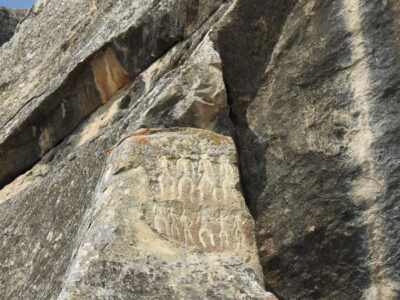
Gobustan, Volcanoes, Fire Temple and Yanardag Day Trip
Read our review →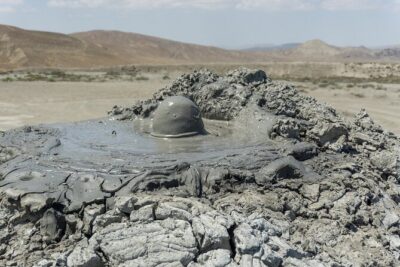
Gobustan & Mud, Fire Temple, Burning Mountain (Group & Private)
Read our review →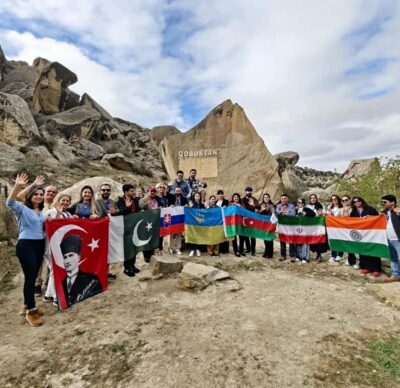
Gobustan Mud Volcanoes Temple & Entry tickets included
Read our review →
Gobustan/Absheron guided tour with lunch and tickets
Read our review →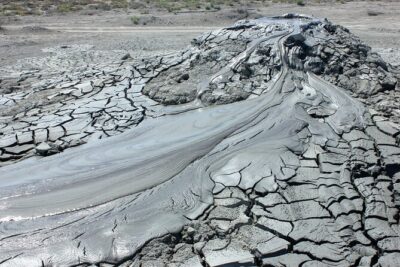
Gobustan, Mud volcanoes, Fire temple, Fire mountain PRIVATE TOUR
Read our review →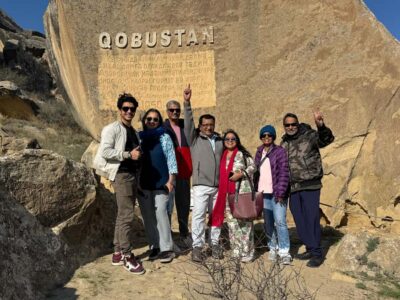
Gobustan & Mud, Fire Temple, Burning Mountain, H.A. Center
Read our review →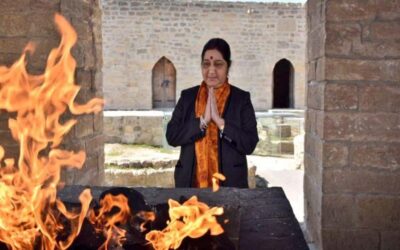
Browse the lists this tour appears in