
REVIEW · AZERBAIJAN TEMPLE TOURS
Gobustan, Mud volcanoes, Fire temple, Fire mountain PRIVATE TOUR
Gobustan’s ancient rock drawings and Absheron’s natural flames give you a quick lesson in why Azerbaijan is called the Land of Fire. I like that this private day joins four very different sights, from 6,000-plus petroglyphs to bubbling mud and a hillside fire, without making you change vehicles or follow a large group. I also like the flexible pace and the chance to ask your guide questions as the scenery changes.
The catch is the long day and the extra admission cost. The tour lasts about nine hours, and the listed ticket fees add up to $23 per person. Some stops feel polished for tourism, but if you have only a few days in Baku, this is an efficient way to see the main sights outside the city.
Key points to know before booking
- More than 6,000 rock drawings at Gobustan: See scenes carved into stone and learn how people lived thousands of years ago.
- A genuinely private day out: Your group has its own vehicle and guide, with room to spend longer at a site when the schedule allows.
- Four very different stops: Ancient art, mud volcanoes, a worship site, and a natural gas fire make the day varied.
- Strong guide experience: Guides including Rajab, Nigar, Mahmed, and Valah have been praised for clear English, local insight, and a friendly approach.
- Hotel pickup and central drop-off: Start from your location in Baku at about 9:30 a.m. and finish at Fountain Square.
- Plan for extra fees: Transportation and an accredited guide are included, but admission tickets and lunch are not.
Why this private Baku day trip works
This tour is built around contrast. In the morning, you are looking at marks made by early humans. Later, you are watching mud bubble from the earth, walking through a former fire-worship site, and standing before flames fed by underground gas.
That range is the real strength of the day. Each stop answers a different question about Azerbaijan. Gobustan shows how people recorded daily life. The mud volcanoes reveal the region’s active geology. Ateshgah explains the religious meaning once attached to natural fire. Yanardag shows that the fire is not only part of old stories. It still burns.
A private vehicle matters here. These sights are spread outside Baku, so a fixed public transport route would be awkward. You can sit back between stops, ask for explanations, and avoid spending the day gathering a large group. The tour normally begins around 9:30 a.m. and ends at Fountain Square, giving you a useful central finish for an evening in the city.
I would choose this outing early in a Baku stay. It gives you local context before you spend more time exploring the capital, and the guide can offer suggestions for places to see afterward. Rajab, Nigar, Mahmed, and Valah are among the guides associated with especially strong guest experiences, though the guide assigned to your booking may be different.
More Private Temple Tours in Baku:
- Gobustan & Mud, Fire Temple, Burning Mountain (Group & Private)
★ 4.5 · 418 reviews - Baku: Burning Mountain & Zorastrian Temple Private Tour
★ 4.9 · 34 reviews - Gobustan, Mud volcanoes, Fire temple, Fire mountain PRIVATE TOUR
★ 5.0 · 28 reviews
Gobustan’s rock drawings and interactive museum
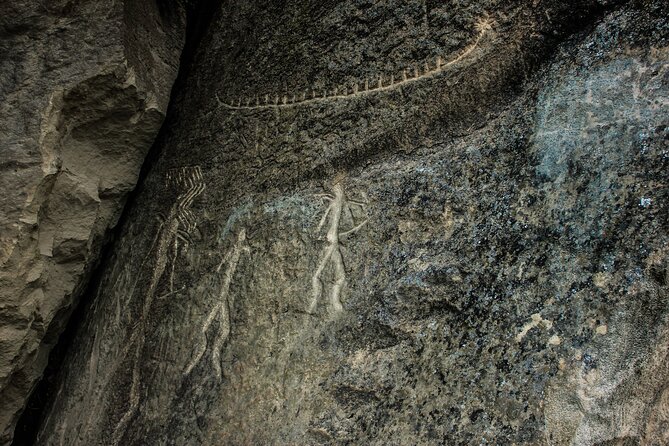
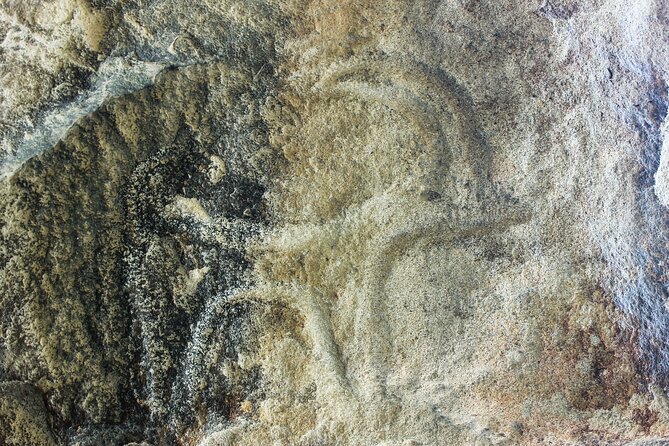
Gobustan is the intellectual center of the day. The area contains more than 6,000 rock drawings, many showing people, animals, boats, dancing, hunting, and daily activities. You are not simply looking at old scratches in stone. You are seeing a record of how people understood and used this area over a very long period.
Start inside the interactive museum. Touch screens and 3D panoramas help explain the natural setting, population, cultural development, and archaeological work carried out at Gobustan. The displays show how people lived between roughly 5,000 and 20,000 years ago, while artifacts in the museum date from about the fourth to second millennium BC.
That indoor stop is useful because the outdoor rocks can otherwise be hard to read. A guide can point out forms and scenes you might miss on your own. Valah, for example, was praised for tying the rock art to early human life and later religious practice, making the visit feel more like a short archaeology lesson than a quick photo stop.
After the museum, you go to the open-air rock area. Allow about two hours for Gobustan as a whole. The site is the longest stop, and it deserves the time because the museum gives you the background while the rocks provide the physical evidence.
The drawback is that rock art takes attention. If you rush from panel to panel, the marks can blur together. Listen closely to the guide, and take a moment to compare the carved scenes rather than treating the site as a single viewpoint. Comfortable shoes and sun protection are sensible choices, though the tour information does not specify a required dress code or walking distance.
Mud volcanoes and the rougher side of Absheron
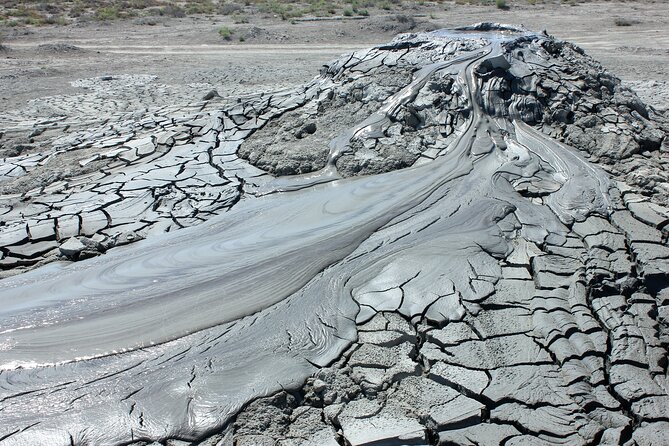
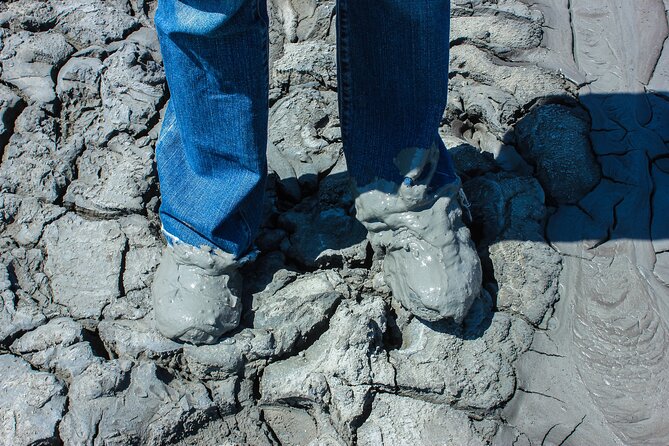
The mud volcanoes provide the day’s oddest sight. Instead of lava and glowing rock, you see cool mud pushed up by underground gases. Small cones, pools, and eruptions create a strange, almost otherworldly setting.
This stop lasts about an hour. It is less about a long explanation and more about seeing a natural process at close range. Your guide can connect the volcanoes to the geology of the Absheron region, then give you time to watch the mud shift and bubble.
Road conditions may be less polished than at the main museums. One account described the ride in vintage Ladas as part of the fun, but you should not assume that this is guaranteed or included as a separate feature. The important point is that this stop feels more rustic than Gobustan’s museum or Ateshgah’s reconstructed rooms.
Families can find the mud volcanoes especially engaging. Mahmed was praised for involving toddlers in the day, and the bubbling mud offers an easy visual hook for children. Still, keep young children close and follow the guide’s instructions around the active mud areas.
Some people may find this stop less impressive than the photographs suggest. The volcanoes are low and earthy rather than dramatic mountains. If you enjoy unusual geology, the stop is worthwhile. If you need a grand viewpoint at every location, this may be the least polished part of the route.
Ateshgah Fire Temple and the stories of sacred flame
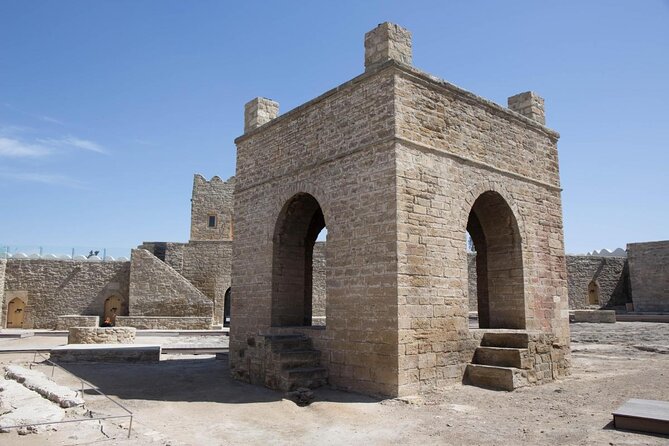
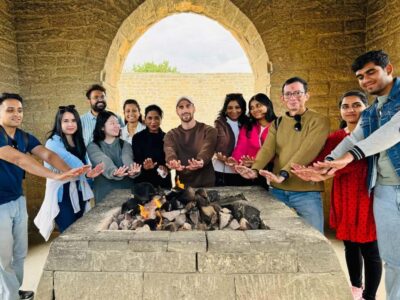
Ateshgah, or the Fire Temple of Baku, shifts the day from geology to religion. Based on Persian and Indian inscriptions, the temple served Hindu and Zoroastrian worshippers. Its first recorded mention dates to the seventh century AD.
The complex is arranged around a central fire area, with cells where fire worshippers stayed. Archaeological finds include cookware, stone slabs with inscriptions, clothing elements, and other historic objects. These details help you picture the temple as a working religious site rather than a bare monument.
The temple is especially valuable with a good guide. Zoroastrian stories can sound abstract if you encounter them only on a wall panel. A guide can explain why naturally burning gas became sacred and how the site connected with visitors from Iran and India.
Allow roughly one hour here. The stop is compact enough to explore without fatigue, but it contains enough religious and architectural detail to reward a careful visit. I would ask your guide to explain which features are original, reconstructed, or displayed from archaeological work, since the tour includes historical exhibits and an interpretation of the site.
Ateshgah can feel more formal and tourist-oriented than the mud volcanoes. That is not a flaw, but it changes the mood. You are visiting an arranged historic complex, not stumbling across an untouched ruin. The benefit is that the setting is easier to understand, especially when the guide links it to the fire at Yanardag later in the day.
A few more temple visits around Baku worth a look
- Baku: Gobustan, Mud Volcano, Fire Mount, Temple Lunch Entry
★ 4.9 · 3,246 reviews - Baku: Gobustan, Volcanoes, Fire Temple and Yanardag Day Trip
★ 4.7 · 433 reviews - Gobustan-Mud Volcan-Fire Temple and Mountain Tour/Entrance inc
★ 5.0 · 267 reviews - Baku:Gobustan Mud Volcanoes Temple & Entry tickets included
★ 4.8 · 178 reviews
Yanardag, the burning mountain near Baku
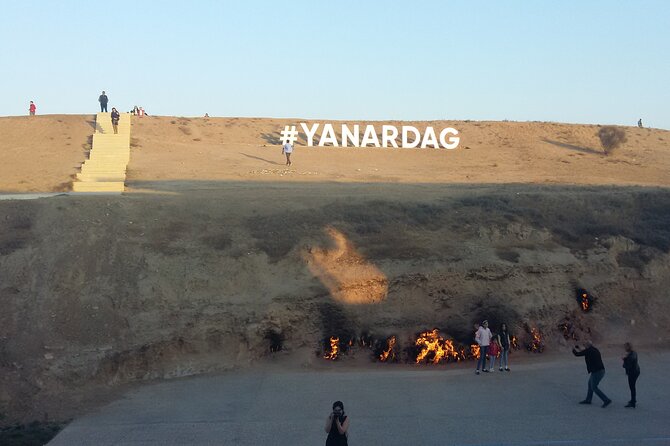
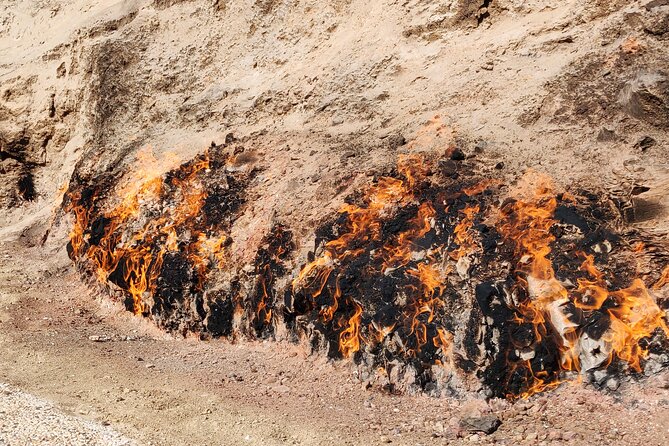
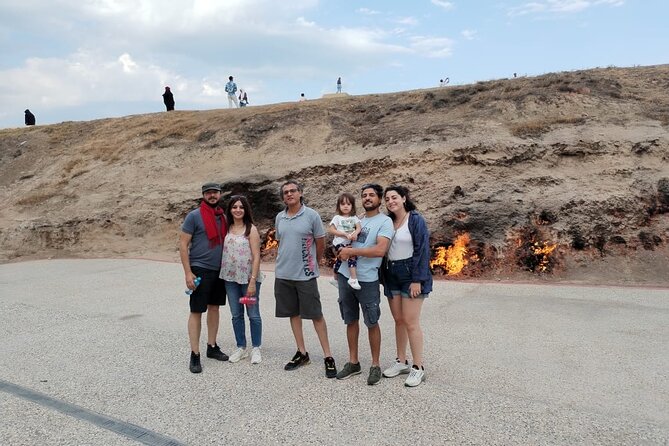
Yanardag means Burning Mountain, and the name is plain and accurate. Natural gas flames burn along a hillside on the Absheron Peninsula, a short but memorable finale to the route.
The fire has burned since ancient times, and the site remains tied to pilgrimage from Iran and India. You have about 40 minutes here. That is enough time to see the flames, take photographs, and hear how natural gas shaped the religious identity of the region.
Yanardag works best when you connect it to the previous stop. Ateshgah shows how people built a place of worship around sacred fire. Yanardag shows the natural source that made such beliefs possible. The two sites are stronger together than either would be alone.
Do not expect a huge mountain fire. The attraction is a burning hillside, not a towering wall of flame. Wind, daylight, and weather can affect how dramatic it looks. The tour requires good weather, so poor conditions can lead to a new date or a full refund.
What the $89 price really includes
The listed price is $89 per person. For a private nine-hour excursion, that can be fair value, particularly if you are traveling with family or friends and can benefit from the private format and any group discount available.
Your price includes an air-conditioned vehicle and an accredited guide. Pickup is offered from your location within Baku, and the day finishes at Fountain Square. Having transport arranged is important because the four stops are outside the city and are not equally simple to reach independently.
You must budget another $23 for admission tickets. Lunch is also excluded. That makes the practical cost higher than the headline figure, so calculate the full amount before booking.
The private format is the main value argument. You are not paying only for a driver between attractions. You get an assigned guide who can explain the rock art, translate the religious story, answer questions, and adjust the pace for your group. Rajab was praised for setting expectations about driving times and explaining the options at each place. That kind of communication matters on a full-day route.
Solo visitors should compare the price with a shared outing before deciding. Couples and small groups may find the private vehicle much easier to justify, especially if they care about photography, have children, or prefer not to wait for other people.
Timing, comfort, and the pace of the day
Nine hours is a substantial commitment. The route covers several sights, and driving between them takes up part of the day. Your guide should explain the travel times and the choices at each stop, but you should still expect a full excursion rather than a relaxed half-day.
The air-conditioned vehicle is a major comfort feature, especially when moving between open outdoor sites. The clean vehicle and punctual pickup were specifically praised in one experience. Pickup problems can happen in a busy city, so keep your phone available at the start of the day. The tour team has handled pickup confusion by phone, which is useful if your hotel entrance is difficult to find.
The itinerary gives Gobustan the most time, followed by the mud volcanoes and Ateshgah. Yanardag is shorter at 40 minutes. That division makes sense: Gobustan has the most to interpret, while Yanardag is a focused viewing stop.
The day is described as suitable for most people, and families with toddlers have completed it successfully. Still, the tour includes outdoor rock areas and a rougher volcano stop. If you have mobility concerns, ask the provider for current details before booking, since the supplied information does not describe surfaces, stairs, or accessible facilities.
Who should book this private tour
I would recommend it to first-time visitors who want the major sights outside Baku without arranging separate transport. It is also a good fit for anyone interested in archaeology, ancient religion, geology, or unusual natural attractions.
Families may appreciate the private setup. You can keep children engaged at the museum and mud volcanoes without worrying about holding up a large group. The guide can also shape explanations to suit different ages. Mahmed was especially praised for involving young children.
The tour suits English-speaking visitors who want a guide-led experience. Rajab was praised for excellent English, and other guides were described as friendly and clear. The exact guide is not guaranteed, so treat those names as examples of the team rather than a promise.
You may want to skip it if you dislike long road days, prefer to explore one site in great depth, or have already visited Gobustan and the fire sites. You should also think twice if your schedule is too tight to absorb a nine-hour outing. This is a broad introduction, not a specialist archaeological field trip.
Should you book the Gobustan and fire sites tour?
Book it if you want an efficient, private introduction to the sights beyond Baku. The mix is unusually strong: ancient drawings, strange geology, sacred architecture, and a living gas fire. The private vehicle, hotel pickup, central drop-off, and flexible pace make the long route easier.
Before confirming, add the $23 ticket cost and lunch to your budget. Check the weather forecast, keep your phone available for pickup, and wear shoes suited to outdoor ground. If you can accept a full day and some sites that feel arranged for tourism, this tour gives you a clear and varied picture of Azerbaijan’s archaeology, religion, and natural fire.
FAQ
How long does the tour last?
The tour lasts approximately nine hours.
What time does the tour start?
Pickup begins at about 9:30 a.m. from your location within Baku.
Where does the tour end?
The tour ends at Fountain Square in Baku.
Is this a private tour?
Yes. Only your group participates in the private activity.
What sites does the tour visit?
It visits Gobustan Rock Art, the mud volcanoes, Ateshgah Fire Temple, and Yanardag, also called Burning Mountain.
How many rock drawings can I see at Gobustan?
Gobustan contains more than 6,000 rock drawings.
Are admission tickets included?
No. Admission fees are not included. The listed ticket cost is $23.
Is lunch included?
No. Lunch is not included in the tour price.
What is included in the tour?
An air-conditioned vehicle and an accredited tour guide are included. Pickup is also offered.
Can I cancel for a full refund?
Yes, if you cancel at least 24 hours before the experience starts. Cancellations within 24 hours are not refunded. If poor weather or the minimum number of participants causes the tour to be canceled, you are offered a different date or a full refund.
Just added around Baku
- Qobustan rock arts, Mud Volcanoes, Fire temple Ateshgah, Yanardag★ 5.0 · 30 reviews
- Gobustan, Mud volcanoes, Fire temple, Fire mountain GROUP TOUR★ 4.5 · 19 reviews
- Gobustan, Mud Volcano, Burning Mountain and Fire Temple Tour★ 5.0 · 12 reviews
- Gobustan, Mud volcanoes, Fire temple, Fire mountain PRIVATE TOUR★ 5.0 · 28 reviews
- Baku: Gobustan, Mud Volcano, Fire Temple & Burning Mountain★ 4.0 · 9 reviews
- Fire Temple and Fire Mountain Tour★ 5.0 · 22 reviews
- Ateshgah Fire Temple & Yanar Dag mountain (Group & Private)★ 4.5 · 7 reviews
- Ateshgah Fire Temple and Yanardag Fire Mountain Private Tour★ 5.0 · 6 reviews
Azerbaijan Temple Tours, compared.
Gobustan, Mud Volcano, Fire Mount, Temple Lunch Entry
Read our review →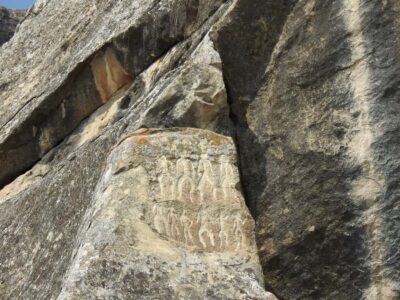
Gobustan, Volcanoes, Fire Temple and Yanardag Day Trip
Read our review →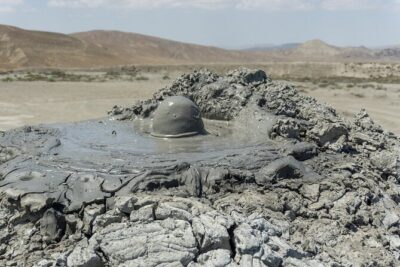
Gobustan & Mud, Fire Temple, Burning Mountain (Group & Private)
Read our review →
Gobustan-Mud Volcan-Fire Temple and Mountain Tour/Entrance inc
Read our review →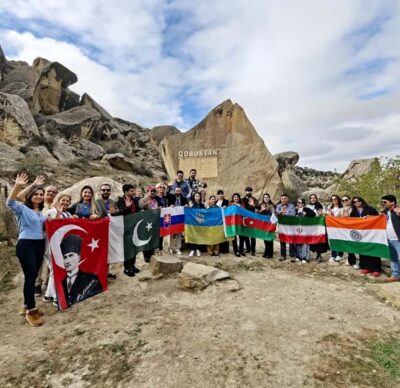
Gobustan Mud Volcanoes Temple & Entry tickets included
Read our review →
Gobustan/Absheron guided tour with lunch and tickets
Read our review →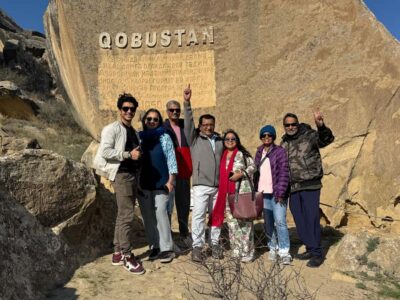
Gobustan & Mud, Fire Temple, Burning Mountain, H.A. Center
Read our review →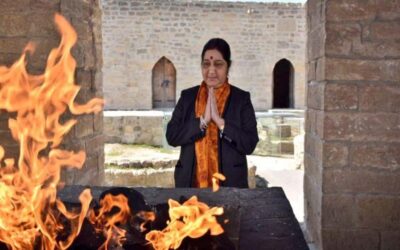
Browse the lists this tour appears in