
REVIEW · AZERBAIJAN TEMPLE TOURS
Qobustan rock arts, Mud Volcanoes, Fire temple Ateshgah, Yanardag
Azerbaijan’s land of fire makes sense once you see gas flames burning from a hillside, visit a temple built around sacred fire, and watch mud bubble from the earth. This private day tour links those unusual sights with Qobustan’s ancient rock carvings, giving you a quick but substantial look at the country beyond Baku.
I like the private vehicle for up to seven people, since the long day is easier when you are not tied to a large group. I also like the mix of ancient art, Zoroastrian tradition, geology, and modern oil-country connections. The main drawback is the pace: nine hours covers a lot of ground, and the mud volcano stop can be basic rather than polished.
Key points to know before booking
- Four very different stops: You move from prehistoric rock art to Hindu and Zoroastrian worship sites, natural gas flames, and active mud volcanoes.
- Qobustan is the cultural centerpiece: The preserve contains more than 6,000 rock drawings spread across about 1,000 rocks.
- Private transport adds value: The $250 price covers the whole group, up to seven people, rather than charging each person separately.
- Budget extra for museum entry: Museum tickets are listed at about $15 per person, and lunch is not included.
- The fire sites are brief visits: Ateshgah receives about 30 minutes and Yanar Dag about 15 minutes, so expect focused stops rather than long visits.
- Weather matters: The experience requires good weather, with a different date or full refund offered if poor conditions force cancellation.
Why this tour explains Azerbaijan so well
Many day trips from Baku give you one theme and one destination. This one gives you several pieces of Azerbaijan’s story in a single outing.
At Qobustan, you see evidence of ancient people recording animals, daily life, and symbols on stone. At Ateshgah, you learn how naturally occurring fire shaped religious practice. At Yanar Dag, fire appears in its simplest form, burning directly from the ground. The mud volcanoes add a scientific and slightly strange final note, linking Azerbaijan’s geology to its oil and gas deposits.
That variety is the tour’s main strength. You are not simply visiting four photo stops. You are tracing a connection between the earth beneath Azerbaijan and the people who have lived above it.
The day lasts about nine hours, so this is best treated as a major day out rather than a short side trip. Pickup is offered, and the tour uses private, air-conditioned transportation with WiFi on board. A local multilingual guide accompanies you, explaining the sites as you go.
A few more temple visits around Baku worth a look
- Baku: Gobustan, Mud Volcano, Fire Mount, Temple Lunch Entry
★ 4.9 · 3,246 reviews - Baku: Gobustan, Volcanoes, Fire Temple and Yanardag Day Trip
★ 4.7 · 433 reviews - Gobustan & Mud, Fire Temple, Burning Mountain (Group & Private)
★ 4.5 · 418 reviews
Ateshgah Fire Temple and the story of sacred flame
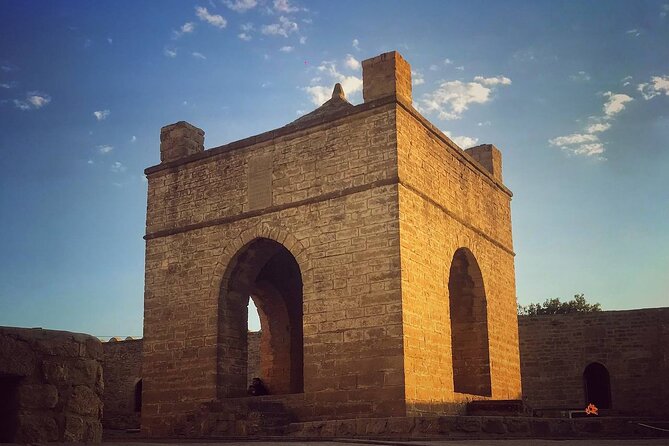
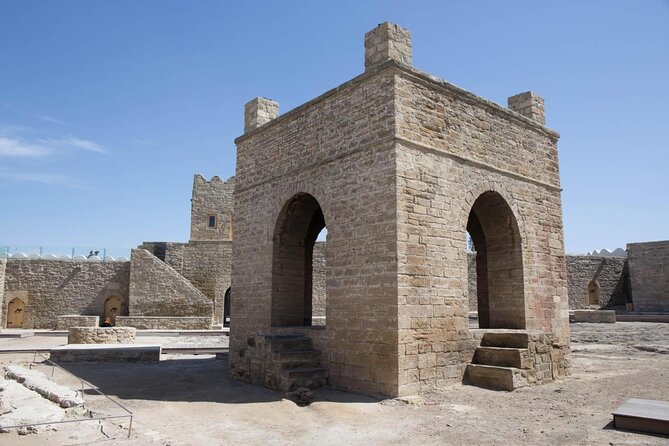
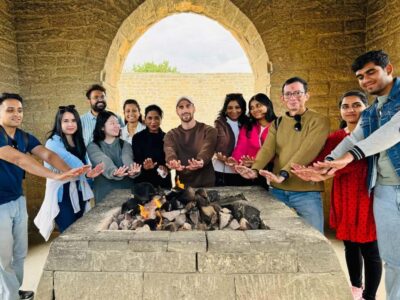
Ateshgah, often called the Fire Temple, is the first stop and usually takes about 30 minutes. Its central idea is easy to grasp: natural gas once reached the surface, met oxygen, and caught fire. In a time before modern geology, a flame that seemed to come from nowhere naturally gained religious meaning.
The site is linked with Zoroastrian fire worship, which was practiced in this region from around the beginning of the Common Era. The temple in its current form was built during the 17th and 18th centuries by a Hindu community in Baku associated with Sikhs.
That combination makes Ateshgah more interesting than a simple old temple. You are seeing a place shaped by local geology, Zoroastrian belief, and later religious communities connected to trade across Asia. The name Azerbaijan is often associated with fire, and Ateshgah helps explain why that image became so powerful.
Allowing only 30 minutes means your visit will be compact. You should expect a guided introduction and time to look around, not a slow architectural study. If religious history interests you, listen closely to the explanation of how the site changed over time.
The tour information lists admission as free at the stop, but museum tickets are also described as about $15 per person for the day. Since the details are not perfectly consistent, I would confirm exactly which entries are covered when booking.
Yanar Dag, a flame that still burns
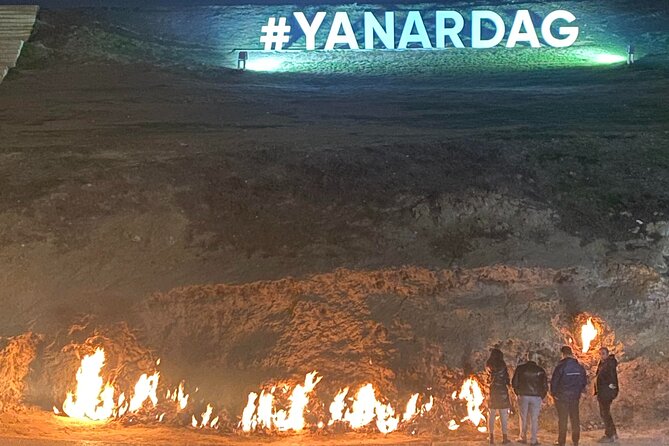
Yanar Dag means burning mountain, though it is better understood as a fire on a slope than a towering mountain. Natural gas escaping through the ground feeds a flame that has made the site one of Azerbaijan’s best-known fire attractions.
The visit is planned for about 15 minutes. That sounds short, but it fits the nature of the stop. You walk up, see the fire, take photographs, and hear how older communities interpreted such flames as signs of divine power.
Yanar Dag also gives useful context for Ateshgah. At the temple, people built a religious setting around natural fire. Here, the flame is more direct and elemental. You can see the physical reason fire worship took hold in this part of the country.
Do not expect a large complex or a long activity. The value comes from seeing a natural phenomenon that is central to Azerbaijan’s identity. If you want time for careful photographs or a long explanation, the 15-minute schedule may feel tight.
Mud volcanoes and Azerbaijan’s unusual geology
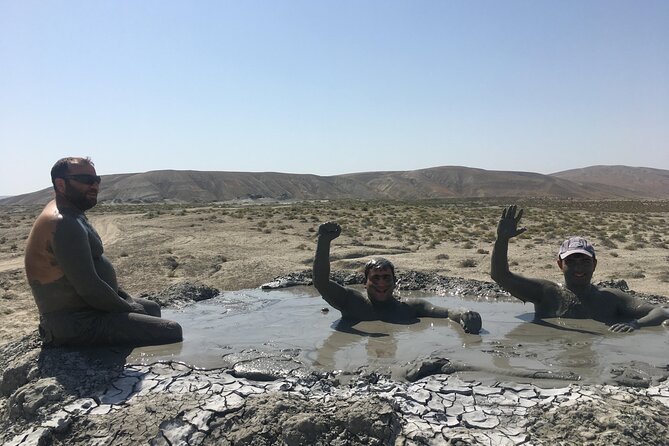
The mud volcano stop lasts about an hour, making it one of the longer outdoor visits. Azerbaijan has about 350 of the world’s roughly 800 mud volcanoes, according to the tour information. These formations are connected with oil and gas fields, which helps explain why they are so common here.
A mud volcano does not erupt molten rock like a conventional volcano. It pushes up mud, gas, and liquid from below. You may see small cones, wet patches, or bubbling mud, depending on conditions at the site and the weather.
This is the tour’s most unusual stop. The setting can feel rough and undeveloped compared with a formal museum, and that is part of the appeal. You are seeing the ground behave in a strange way rather than viewing a display behind glass.
The connection with oil is important. Major oil and gas areas such as Lokbatan, Garadagh, Neft Dashlari, and Mishovdagh are associated with mud volcano activity. Materials from these eruptions are also used in chemical and construction industries and in pharmacology.
The tour information also notes that NASA geologists have studied Azerbaijan’s mud volcanoes in relation to Mars research. The comparison is easy to understand: both places have formations created by gases and mud moving through the ground. You should not expect a space exhibit, but the idea adds a memorable scientific angle to the stop.
Wear shoes that can handle outdoor ground and keep your expectations practical. The tour does not promise paved paths or a visitor center at the volcanoes. Weather can affect the experience, which is why the activity requires good conditions.
Same country, a different morning at the gates:
- Gobustan-Mud Volcan-Fire Temple and Mountain Tour/Entrance inc
★ 5.0 · 267 reviews - Baku:Gobustan Mud Volcanoes Temple & Entry tickets included
★ 4.8 · 178 reviews - Baku: Gobustan/Absheron guided tour with lunch and tickets
★ 4.8 · 158 reviews - Gobustan, Mud volcanoes, Fire temple, Fire mountain PRIVATE TOUR
★ 5.0 · 47 reviews
Qobustan National Historical-Artistic Preserve
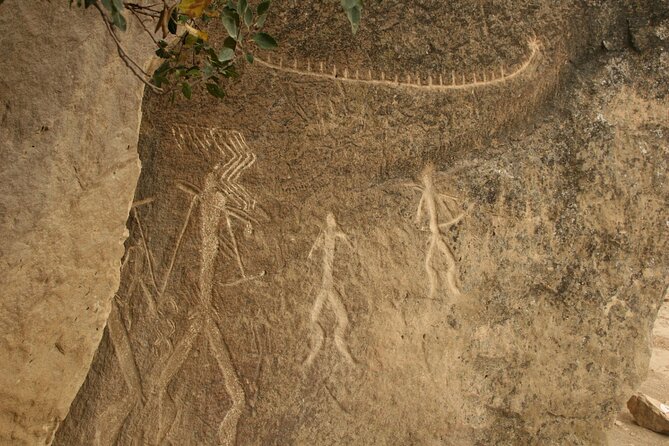
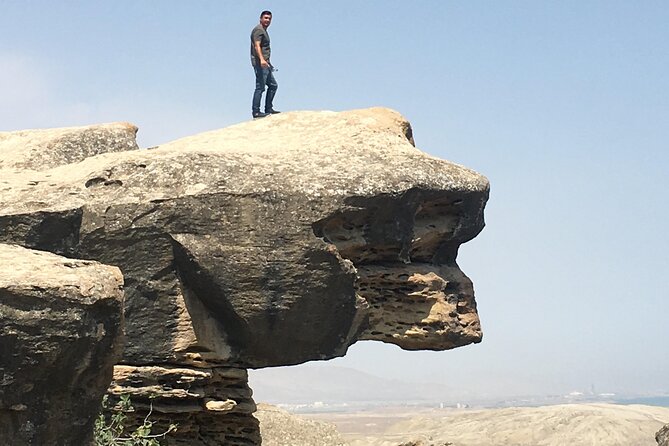
Qobustan is the cultural heart of the day. Located about 60 kilometers from Baku, it combines a museum with an open-air preserve filled with ancient rock art.
The numbers are striking: more than 6,000 drawings are spread across about 1,000 rocks, along with more than 100,000 artifacts. The site is listed by UNESCO for the quality and concentration of its rock engravings.
The museum gives you background before you see the rocks. That matters because the carvings can be easy to overlook if you do not know what you are looking at. Your guide can explain the subjects and show how the drawings help reveal the lives of people who lived in this area long ago.
You may see images of animals, people, boats, hunting scenes, and symbolic marks. The tour description specifically presents Qobustan as a place to learn about ancient humans and their petroglyphs, so expect interpretation rather than a simple scenic drive.
The planned visit is about one hour. That is enough for a useful introduction, but not enough to inspect every drawing or explore the entire preserve at leisure. If Qobustan is your main reason for visiting Azerbaijan, you may want a separate, slower visit. If you have limited time in Baku, this tour gives you a strong first look.
Qobustan also balances the fire stops nicely. Ateshgah and Yanar Dag focus on belief and natural gas. Qobustan shows how people recorded their world long before written history. Together, the sites create a clearer picture of Azerbaijan than any one stop could provide.
What the $250 group price really means
The price is $250 per group of up to seven people. That makes the value quite good for a full group. At seven people, the transport and guide cost works out to about $36 per person before museum tickets and lunch.
For two people, the same tour costs about $125 each. For a solo visitor, the price is much harder to justify unless private transport and a tailored day are especially important to you.
The price includes an air-conditioned vehicle, private transportation, a professional multilingual guide, WiFi on board, and pickup. Those inclusions matter because the four stops are spread out, and public transport would not provide the same easy connection between them.
Lunch is not included. You should also allow about $15 per person for museum tickets based on the supplied pricing information. Because admission details are presented in two different ways, ask the provider what the ticket charge covers before the day begins.
This is not the cheapest way to see Qobustan and the fire sites. It is priced as a private day trip, not a basic shared transfer. The value improves sharply when you are traveling with family or friends and can divide the group cost.
The pace, transport, and guide experience
Nine hours is a long day, but the private vehicle makes it more manageable. You can spend the road time listening to the guide, looking out at the changing surroundings, or simply resting between stops.
The guide is a major part of the experience. The tour promises a local, professional, multilingual guide who explains ancient settlement, petroglyphs, Zoroastrianism, and Azerbaijan’s natural gas features. One available French-language comment praises the guide’s kindness and clear explanations, so language support and communication appear to be important strengths.
No individual guide name is provided, so you cannot request a particular person based on the available information. Still, the private format gives you a better chance to ask questions than a large coach tour would.
The day is best for people who want context. You will get more from the sites if you are curious about how religion, geology, and early human life connect. If you prefer long walks, extensive photography, or one site explored in depth, the schedule may feel too compressed.
Who should book this day out?
I would recommend it to a first-time visitor staying in Baku for a short visit. It covers several major sights that are difficult to combine efficiently without a car.
It also suits families and small groups. The vehicle holds up to seven people, and the private price becomes more reasonable as more people join. Pickup and air conditioning are useful on a nine-hour outing, especially when the day includes outdoor stops.
History fans will appreciate Qobustan and Ateshgah. Science-minded visitors will enjoy the mud volcanoes and the links to oil and gas geology. Photographers get unusual subjects at every stop, from carved stone to open flames and bubbling mud.
You may want to skip it if your main goal is a relaxed day with long meals and plenty of unplanned time. Lunch is not included, and the schedule is built around reaching four separate sights. It is also less suitable if bad weather is likely, since outdoor conditions affect the experience.
Cancellation is free if you cancel at least 24 hours before the start time. Changes made inside that period are not accepted, and poor weather can lead to a new date or a full refund.
Should you book this tour?
Book it if you want the most efficient private introduction to Azerbaijan’s ancient art, fire traditions, and unusual geology. The strongest reason is the combination: Qobustan gives you human history, Ateshgah and Yanar Dag explain the fire theme, and the mud volcanoes add a rare natural feature.
The tour is best value for a group of four to seven people. Add the museum tickets and lunch to your budget, and confirm the exact admission arrangements before you go. If you are traveling alone or want a slow visit to Qobustan, compare the price with a smaller or shared option.
For a short stay in Baku, this is a practical choice. It is a busy day, but it gives you a memorable answer to a basic question: why has fire mattered so much in Azerbaijan?
FAQ
How long does the tour last?
The tour lasts approximately nine hours.
How many people can join the private tour?
The $250 group price covers up to seven people. Only your group participates in the private activity.
Is pickup included?
Yes. Pickup is offered, and private transportation in an air-conditioned vehicle is included.
Are museum tickets included?
Museum tickets are not included in the stated inclusions. The ticket cost is listed as about $15 per person, so confirm the exact entry charges with the provider.
Is lunch included?
No. Lunch is not included in the tour price.
What happens if the weather is poor?
The experience requires good weather. If it is canceled because of poor weather, you can choose another date or receive a full refund.
Just added around Baku
- Gobustan, Mud volcanoes, Fire temple, Fire mountain GROUP TOUR★ 4.5 · 19 reviews
- Gobustan, Mud Volcano, Burning Mountain and Fire Temple Tour★ 5.0 · 12 reviews
- Gobustan, Mud volcanoes, Fire temple, Fire mountain PRIVATE TOUR★ 5.0 · 47 reviews
- Gobustan, Mud volcanoes, Fire temple, Fire mountain PRIVATE TOUR★ 5.0 · 28 reviews
- Baku: Gobustan, Mud Volcano, Fire Temple & Burning Mountain★ 4.0 · 9 reviews
- Fire Temple and Fire Mountain Tour★ 5.0 · 22 reviews
- Ateshgah Fire Temple & Yanar Dag mountain (Group & Private)★ 4.5 · 7 reviews
- Ateshgah Fire Temple and Yanardag Fire Mountain Private Tour★ 5.0 · 6 reviews
Azerbaijan Temple Tours, compared.
Gobustan, Mud Volcano, Fire Mount, Temple Lunch Entry
Read our review →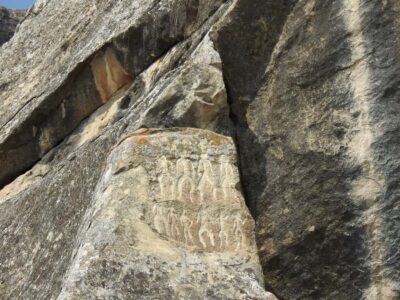
Gobustan, Volcanoes, Fire Temple and Yanardag Day Trip
Read our review →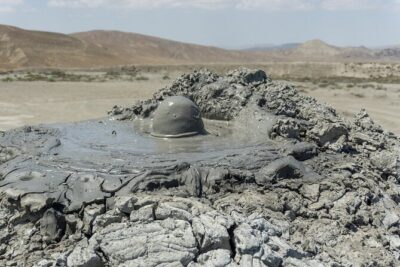
Gobustan & Mud, Fire Temple, Burning Mountain (Group & Private)
Read our review →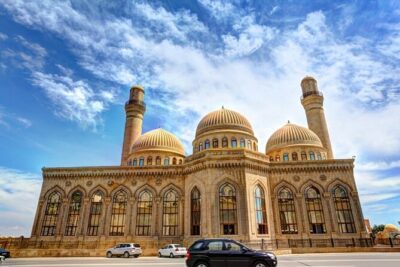
Gobustan-Mud Volcan-Fire Temple and Mountain Tour/Entrance inc
Read our review →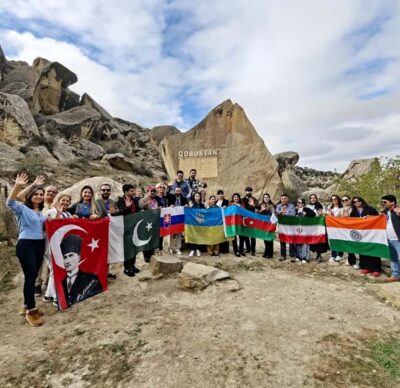
Gobustan Mud Volcanoes Temple & Entry tickets included
Read our review →
Gobustan/Absheron guided tour with lunch and tickets
Read our review →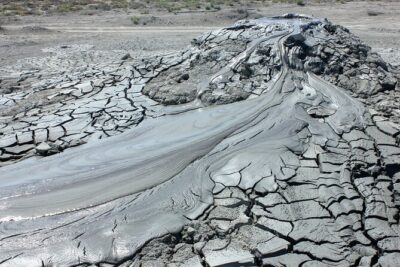
Gobustan, Mud volcanoes, Fire temple, Fire mountain PRIVATE TOUR
Read our review →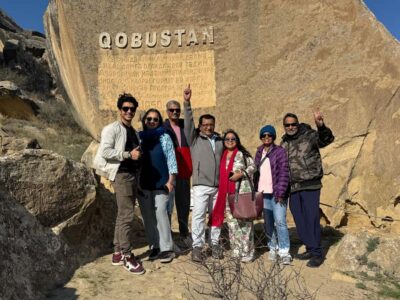
Gobustan & Mud, Fire Temple, Burning Mountain, H.A. Center
Read our review →Browse the lists this tour appears in