
REVIEW · MEIJI SHRINE & SENSO-JI TOURS
Tokyo: Asakusa & Tokyo’s Oldest Temple Senso-ji Walking Tour
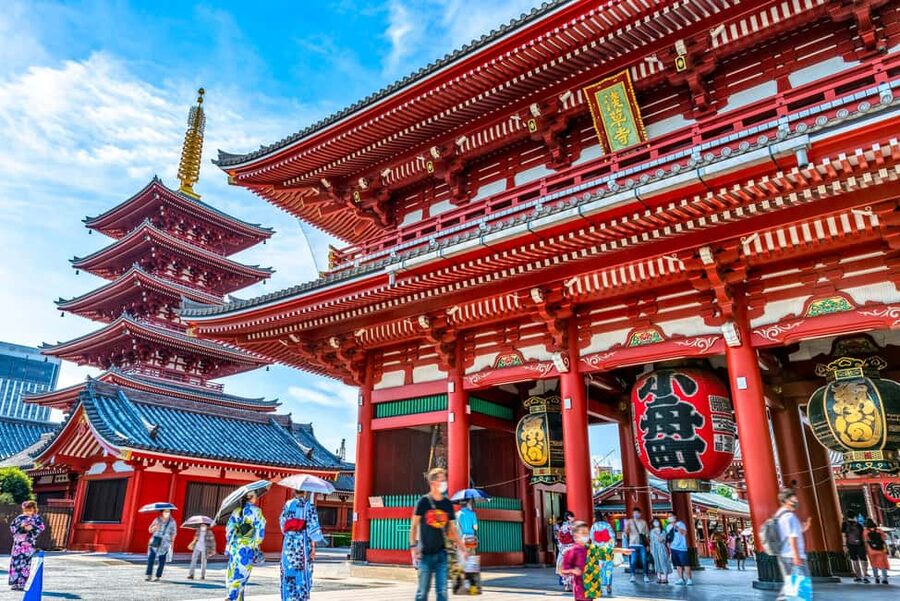
Asakusa gives you Tokyo’s past in one compact walk. You pass beneath the huge Kaminarimon Gate, follow Nakamise Street toward Senso-ji, and hear how this temple district changed from Edo-era center to modern Tokyo neighborhood. I like the small group of up to 10 and the chance to ask questions rather than trail behind a large crowd.
I also like the low $11 price, which makes the tour an easy first look at Asakusa. Guides Lax and Shoma have earned especially warm praise for their English, friendliness, and cultural explanations. The main caution is that the route stays around one district, so the quality depends heavily on the guide’s storytelling. One review found the walk more like a route than a connected story.
Key points to know before you book
- Senso-ji is the centerpiece: See Tokyo’s oldest and best-known temple, along with its famous gates, incense-filled approach, and shopping street.
- Nakamise Street adds flavor: You get time for traditional snacks, small gifts, and photographs on the route toward the temple.
- The guide makes the difference: Lax and Shoma receive the strongest praise for clear English, warmth, and cultural insight.
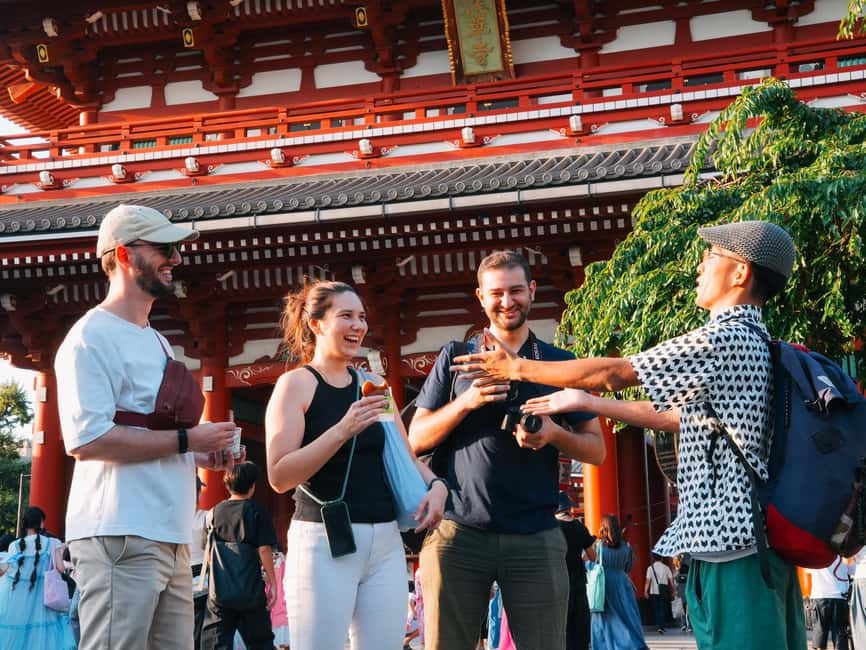
- Small groups keep it personal: The group is limited to 10 people, a useful size for questions and conversation.
- The walk is tightly focused: You explore Asakusa rather than covering several parts of Tokyo.
- At $11, the risk is low: This is a budget-friendly orientation, not a full-day cultural tour.
Why Asakusa is a smart place to start in Tokyo
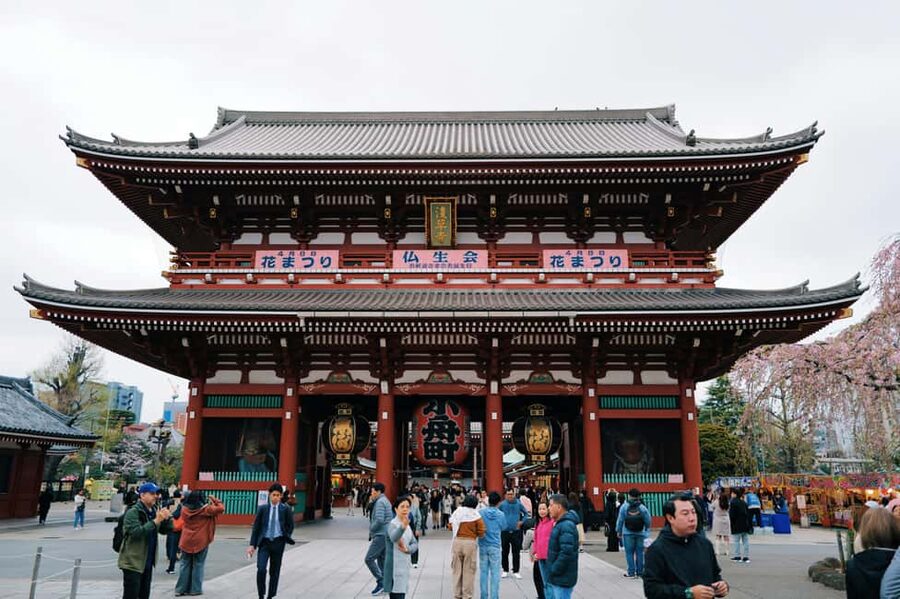
Tokyo can feel enormous at first. Asakusa gives you a manageable beginning. In a short stretch, you see a major Buddhist temple, an old shopping lane, traditional gates, and streets linked to the city’s Edo-period past.
I like this part of Tokyo because it does not ask you to understand the whole city at once. You can focus on one neighborhood and watch the details change as you walk. Modern Tokyo remains close by, but Asakusa keeps a strong sense of older customs and local identity.
The tour begins at Kaminarimon Police Station, written in Japanese as 雷門交番. That meeting point is practical because it places you near Kaminarimon Gate, the main visual entrance to the Senso-ji area. Confirm the exact meeting instructions when you book, especially if you are arriving by train or navigating Tokyo for the first time.
The walk lasts two hours and is conducted in English. Since the group can include no more than 10 people, you should have a fair chance to hear the guide and ask about details that catch your eye.
More Temple Walking Tours in Japan
- Tokyo: Asakusa Walking Tour with Sensoji Temple Visit
★ 4.8 · 1,583 reviews - Tokyo: Meiji Shrine Walking Tour — Shinto & Imperial System
★ 4.9 · 266 reviews - Tokyo: Meiji Jingu Shrine and Shinto Culture Walking Tour
★ 5.0 · 245 reviews
Walking under Kaminarimon Gate
Kaminarimon Gate is the natural opening scene. Its dramatic scale and large lantern make it one of Asakusa’s best-known photo spots. From here, the route leads toward Nakamise Shopping Street and the temple grounds.
This is where a good guide can quickly give you context. Instead of only pointing out a gate, the guide can connect what you see to Asakusa’s religious role, its past as an Edo-era district, and its place in present-day Tokyo.
You should expect the area to be visually busy, especially around the main approach. That is part of the appeal, but it also means you may need to stay close to your guide. A small group helps here. Ten people are easier to keep together than a large coach group, and you can stop for photographs without creating a long line.
The guide’s approach matters at this first stop. Lax has been praised for making the walk fun while explaining the city with energy. Shoma has been praised for clear English, a wide vocabulary, and useful comparisons between Japanese and Anglo culture. If your guide has that same approach, the gate becomes more than a backdrop for photographs.
Nakamise Street, snacks, and small purchases
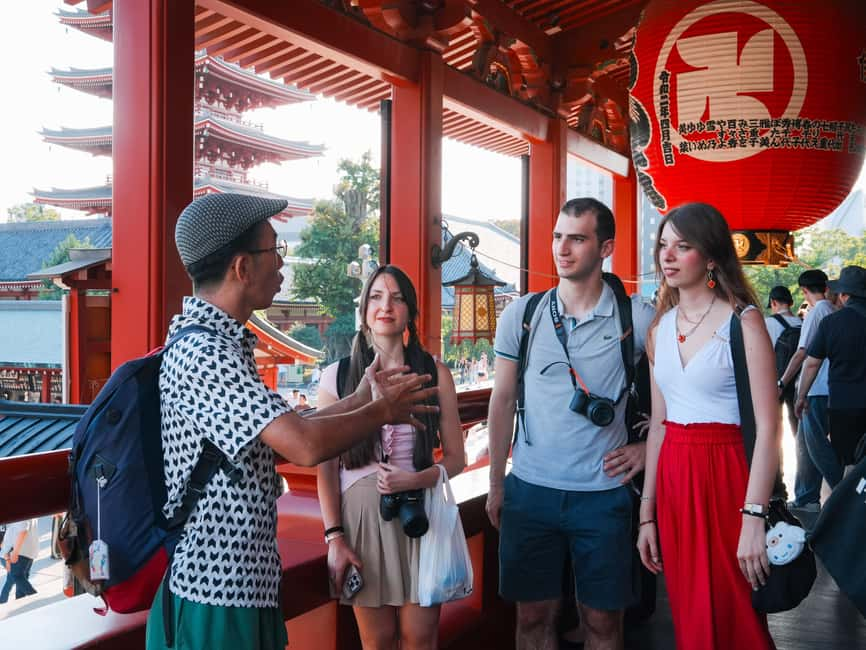
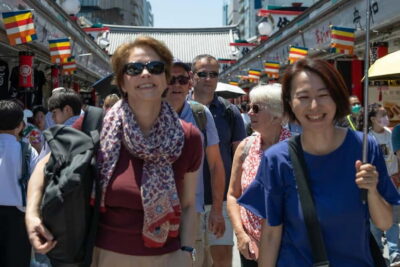
The walk gives about an hour to Nakamise Shopping Street as part of the route. This long approach toward Senso-ji is lined with traditional-style shops, lanterns, sweets, and street snacks.
I like Nakamise because it lets you see how a temple visit works as a social and commercial occasion. You are not simply walking from one monument to another. You are moving through a living shopping lane where food, souvenirs, and religious surroundings share the same space.
The street is also useful for first-time visitors who want a few easy purchases. You might find traditional sweets, small gifts, and Japanese-themed items, but the supplied details do not identify particular shops or products. Treat the stop as a chance to look and sample rather than as a scheduled food tour.
The guide can help you understand what you are seeing, but shopping time can affect the pace. If you stop to browse every shop, you may have less time for questions or temple explanations. I would keep your first visit focused: take photographs, note anything you want to revisit, and save larger purchases for later if the guide is still moving.
There is one practical limit here. Nakamise is a well-known route, not a quiet side street. You should expect other people, active shops, and a steady flow toward the temple. The reward is atmosphere and convenience. The tradeoff is that this section may feel more commercial than local.
Senso-ji, Tokyo’s oldest temple
Senso-ji is the tour’s main stop. The temple dates to the 7th century and is described as Tokyo’s oldest and most celebrated temple. The visit includes sightseeing, photographs, and time for shopping around the temple area.
The value of a guide is clearest here. A temple can be beautiful but confusing if you do not know what you are looking at. Your guide can explain the setting, the customs connected with a Buddhist temple, and the stories and legends tied to Asakusa.
The tour also brings in the district’s wider past. You may hear about geisha quarters, lesser-known shrines, samurai-era connections, and the neighborhood’s post-war revival. These subjects help you see Asakusa as more than a single religious site. The district has changed through several eras, and the walk is designed to connect those periods.
The temple visit is also the best part of the tour for photographs. Gates, lanterns, the approach, and the surrounding shopping lane give you several different views within a short distance. I would not rush this section. Listen first, then take your photographs once the guide finishes an explanation.
A small point about the included admission: the activity lists admission to Senso-ji, Asakusa, and Nakamise Shopping Street. Since the walk takes place in public district spaces and temple grounds, the listing does not identify a separate ticketed interior attraction. You should understand the inclusion as access connected with the guided visit, not as a promise of entry to a special exhibition or private area.
More Temple Walking Tours in Tokyo
- Tokyo: Meiji Shrine and Shinto Culture Walking Tour
★ 5.0 · 225 reviews - Tokyo: Meiji Shrine Walking Tour — Shintoism & Imperial System
★ 5.0 · 209 reviews - Tokyo: Asakusa Temple & Shrine Walking Tour with Local Guide
★ 5.0 · 105 reviews - Tokyo’s Kitchen: Tsukiji Market Food & Culture Walk
★ 4.7 · 74 reviews
Asakusa beyond the main approach
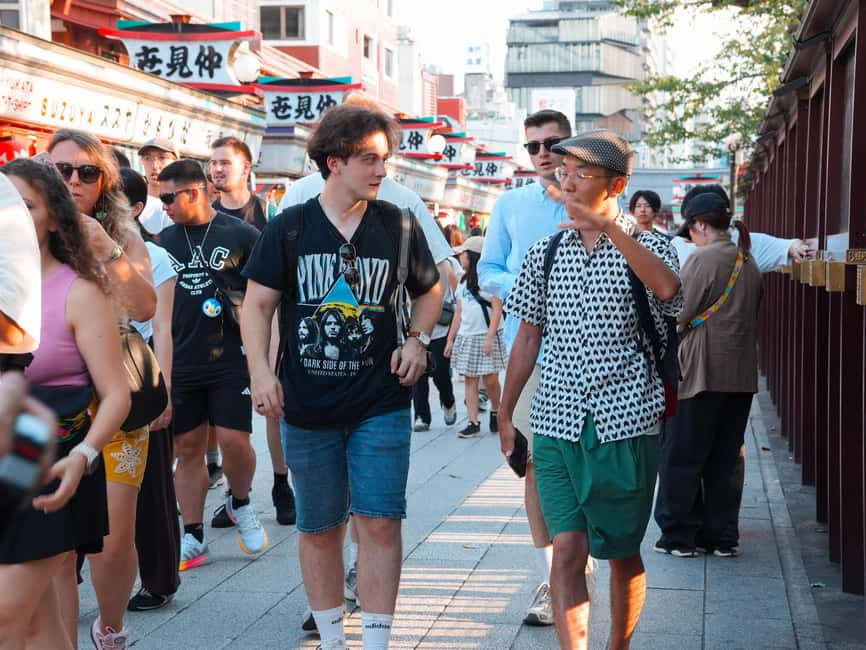
The broader Asakusa portion is listed as an 80-minute visit, while the overall tour duration is two hours. Those time figures overlap in the practical sense, since Nakamise and Senso-ji are both within Asakusa. Think of the itinerary as a compact two-hour route through several connected parts of the same district, not as three separate 60-minute, 60-minute, and 80-minute sessions.
That focus is both the strength and the limitation. You get time to notice details without spending the day crossing Tokyo. You also do not receive a broad city tour covering Shibuya, Ueno, the Imperial Palace, or other districts.
The guide is expected to bring in stories that are easy to miss if you walk alone. The activity specifically highlights old shrines, geisha quarters, legends, and the district’s transformation over time. I value this kind of explanation because Asakusa’s appeal is not only visual. Its character comes from how religion, entertainment, commerce, and neighborhood life have occupied the same area.
Still, the tour’s quality may vary with the guide. One guide received praise for being warm and clear but was also described as needing more practice in building a connected story. That is fair advice for a route with many sights close together. If the guide only identifies each stop, the two hours may feel like a checklist. If the guide links the stops into one story, the same route becomes much more memorable.
What the strongest guide feedback tells you
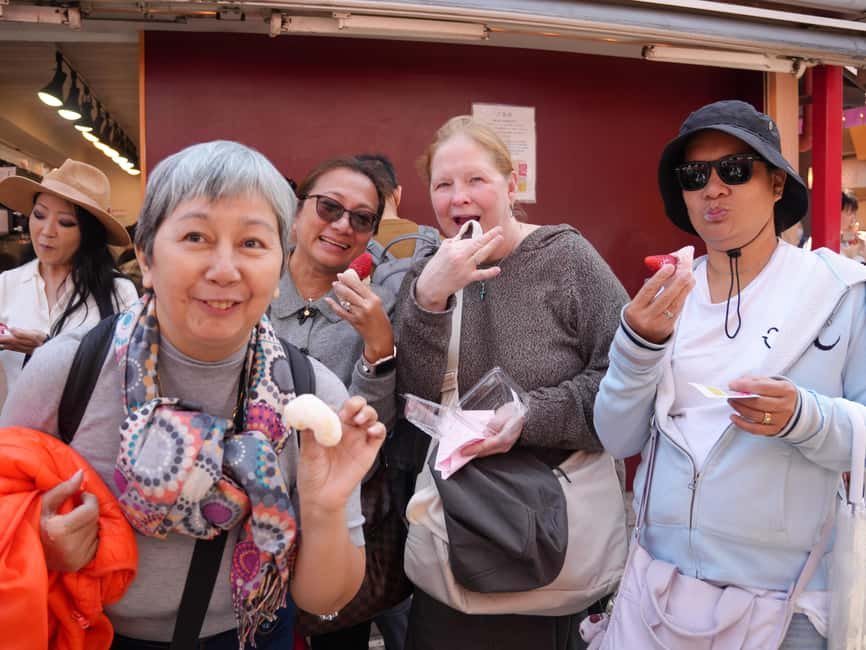
The most consistent positive detail is the human side of the tour. Lax is described as fun, friendly, passionate, and generous with his knowledge of Tokyo. One guest had the guide almost entirely to themselves, which made the visit feel more personal. That kind of experience depends on the day’s group size, so it cannot be guaranteed, but the 10-person limit gives you a better chance of direct contact.
Shoma is praised for being punctual, kind, helpful, and especially strong in English. The cultural comparisons are useful if you are new to Japan and want more than a list of dates and names.
There is also a useful warning in the feedback. A guide may be pleasant and well prepared but still need time to develop a stronger narrative. If you book, help the conversation along. Ask why a custom matters, how the neighborhood changed, or which part of the district the guide finds most meaningful. Your questions can make a short tour more engaging.
The overall rating is 4.6 from 21 reviews, which suggests a strong experience with some variation. I would read that as a good sign for a low-cost introductory walk, not as a guarantee of a polished private tour every time.
Is $11 good value for two hours?
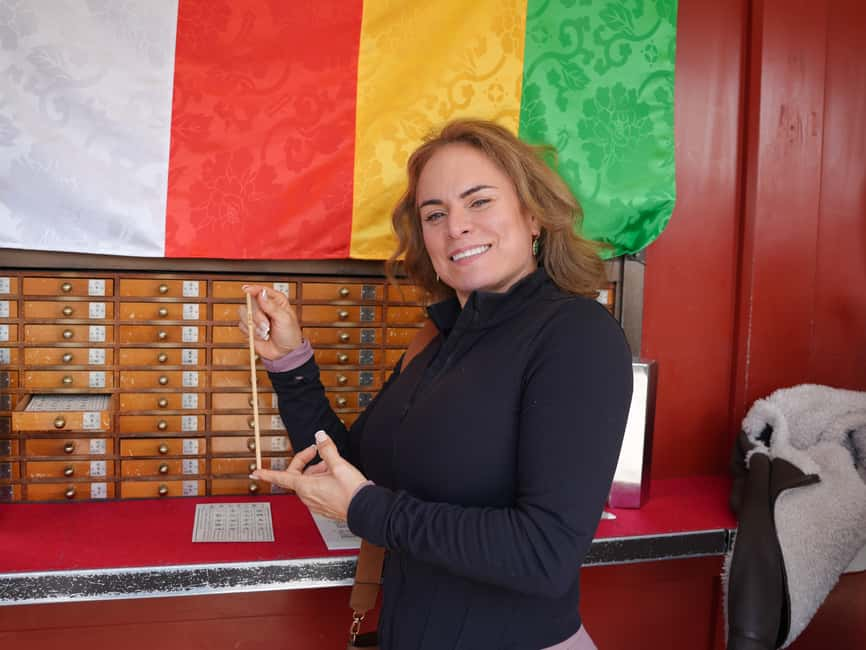
At $11 per person, this is inexpensive for a guided introduction to one of Tokyo’s most important historic districts. The price includes the walking tour, an English-speaking guide, and the stated admissions connected with Asakusa, Senso-ji, and Nakamise Street.
The value comes from orientation and interpretation. You can walk through the same streets alone for no tour fee, but you would need to supply your own background about Senso-ji, Edo-era Asakusa, local legends, and the district’s revival after the war.
I would not book this expecting a food crawl, a private tour, or a full explanation of every part of Japanese religion. It is a short group walk. At this price, it works best as a first introduction that helps you decide where to spend more time afterward.
There is no hotel pickup or drop-off, so you make your own way to Kaminarimon Police Station. That is normal for a central walking tour, but allow enough time to find the meeting point. The activity offers free cancellation up to 24 hours before the start and lets you reserve now and pay later, useful if your Tokyo plans are still shifting.
Who will get the most from this walk?
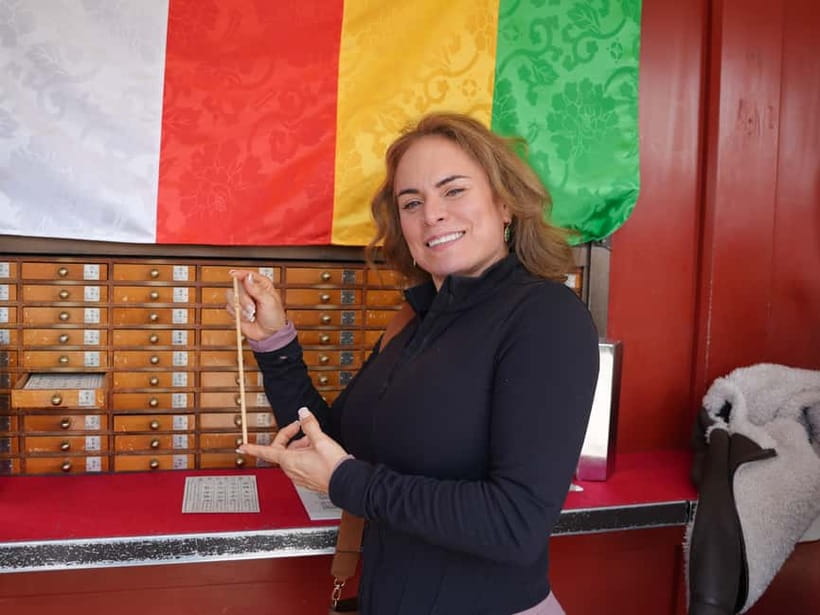
I would recommend it to first-time Tokyo visitors, history fans, and anyone who wants an easy cultural start without committing to a full-day tour. It also suits people who prefer walking and conversation to a bus-based overview.
Families may appreciate the short duration and the mix of gates, shops, snacks, and temple scenery. The small group can make questions easier, though the supplied details do not specify a children’s program or special family arrangements.
It is a good choice if you want a guide who can explain Japanese culture in plain English. Lax and Shoma appear to be especially strong choices when available, based on the praise for their warmth and communication. You cannot assume a particular guide will lead your departure, so treat those names as useful indications of the company’s strongest reported guides rather than a guarantee.
I would look elsewhere if you want a quiet, highly detailed religious tour, extensive time inside a temple building, or a broad survey of Tokyo. I would also think twice if you dislike busy shopping lanes or prefer exploring at your own speed.
Final verdict: book it for a low-risk Asakusa introduction
I would book this tour if you want a friendly, affordable way to understand Senso-ji and Asakusa before exploring on your own. The route is focused, the meeting point is central to the sights, and the $11 cost keeps the decision simple.
Book it with realistic expectations. The route stays around one district, and the experience can depend on how well the guide turns separate sights into one story. If you get Lax or Shoma, expect a particularly warm and clear presentation based on their strong feedback. If not, bring a few questions and take an active role.
For a first morning or afternoon in old Tokyo, this is good value. It gives you the landmarks, the setting, and enough cultural background to make your later walks through Asakusa more rewarding.
FAQ
Where does the tour meet?
The meeting point is Kaminarimon Police Station, written as 雷門交番.
How long does the tour last?
The advertised duration is two hours.
What language is the tour conducted in?
The tour is conducted in English with a live English-speaking guide.
How many people can join the group?
The group is limited to 10 participants.
What places does the tour visit?
The route includes Nakamise Shopping Street, Senso-ji Temple, and the wider Asakusa area, returning to the Kaminarimon Police Station meeting point.
Is hotel transportation included?
No. Hotel pickup and drop-off are not included.
More Meiji Shrine and Senso-ji Tours in Tokyo
- Tokyo Panoramic 1 Day: Meiji Shrine, Asakusa, Odaiba and SKYTREE®
★ 4.5 · 1,222 reviews - Tokyo: Asakusa and Tokyo’s Oldest Temple Senso-ji Tour
★ 4.9 · 352 reviews - Tokyo: 1 Day Bus Tour with Meiji-Jingu,Odaiba,lunch&Skytree
★ 4.6 · 156 reviews - Tokyo Morning Tour: Asakusa, Meiji Shrine and Tsukiji Fish Market
★ 5.0 · 128 reviews
Just added around Tokyo
- Tokyo:Nikko UNESCO World Heritage Sites Private 1-Day Tour★ 3.8 · 6 reviews
- Tokyo: Snow Monkey Park and Zenkoji Temple Private Day Tour★ 4.7 · 127 reviews
- Tokyo War History Tour: Yasukuni Shrine & War Museum★ 4.5 · 6 reviews
- Tokyo: Sensoji Temple & Street Food: Private Tour with guide★ 4.6 · 8 reviews
- Tokyo: Shibuya Sky, Harajuku & Meiji Shrine Highlights Tour★ 4.5 · 9 reviews
- Tokyo: Nikko Private Sightseeing Day Trip with Driver★ 5.0 · 10 reviews
- Tokyo → Nikko:Private Customizable Day Trip (English Driver)★ 4.9 · 26 reviews
- Tokyo’s Kitchen: Tsukiji Market Food & Culture Walk★ 4.7 · 74 reviews
Meiji Shrine & Senso-ji Tours, compared.
Asakusa Walking Tour with Sensoji Temple Visit
Read our review →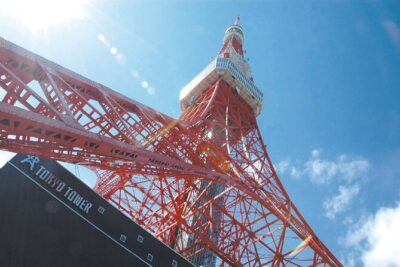
Tokyo Panoramic 1 Day: Meiji Shrine, Asakusa, Odaiba and SKYTREE®
Read our review →
Asakusa Senso-ji Temple and Old Tokyo Walking Tour
Read our review →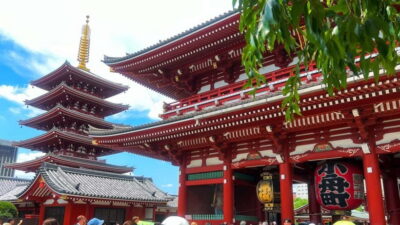
Asakusa and Tokyo’s Oldest Temple Senso-ji Tour
Read our review →
Meiji Shrine Walking Tour — Shinto & Imperial System
Read our review →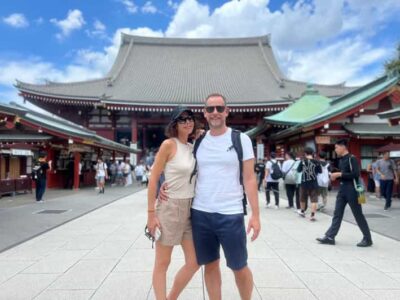
Meiji Jingu Shrine and Shinto Culture Walking Tour
Read our review →
Meiji Shrine Walking Tour — Shintoism & Imperial System
Read our review →Browse the lists this tour appears in