
REVIEW · MEIJI SHRINE & SENSO-JI TOURS
Tokyo: Asakusa Temple & Shrine Walking Tour with Local Guide
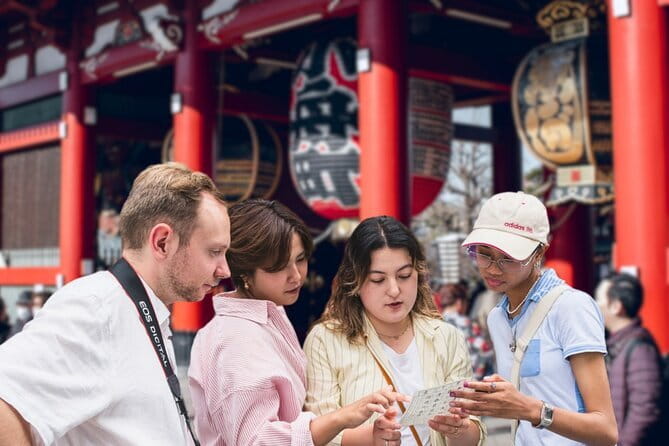
Asakusa is where Tokyo’s old soul is easiest to see, and this tour gets beyond the giant red lantern. You’ll begin with the Tokyo Skytree across the Sumida River, then move through Kaminarimon Gate, Nakamise Street, Sensoji Temple, Asakusa Shrine, and several quieter religious sites. The guide explains what you’re seeing and shows you how to take part respectfully.
I especially like the small group of up to eight and the hands-on rituals. Learning temizu purification, incense customs, omikuji fortune telling, and the different prayer styles makes the temples far more meaningful. I also like the high viewpoint at the Asakusa Culture Tourist Information Center, a smart early stop for seeing how the whole temple district fits together.
The main drawback is physical rather than cultural. You’ll walk for two hours through crowded streets and temple grounds, often standing during explanations, so this is not suitable for wheelchair users, people with mobility impairments, or anyone with a low fitness level. Hot weather, rain, and heavy crowds can also slow the pace.
Key points at a glance
- See Asakusa from above: The Asakusa Culture Tourist Information Center provides a useful view over the temple grounds and surrounding streets.
- Learn the rituals by doing them: You can practice hand washing, incense customs, omikuji fortune telling, and Buddhist and Shinto prayer methods.
- Compare two traditions in one visit: Sensoji Temple and Asakusa Shrine sit close together, making the difference between Buddhism and Shinto easy to understand.
- Start with a memorable river view: Azuma Bridge offers a look toward Tokyo Skytree and the unusual golden sculpture locals call the golden poop.
- Ask for practical help: Guides can explain souvenirs and snacks, help with translations, suggest photo spots, and answer wider Tokyo questions.
- Expect a personal feel: Guides including Nicolas, Erik, Lino, Nana, Diane, Ayaka, and Arief have been praised for friendly, patient, adaptable service.
Why Asakusa is the right place for a temple tour
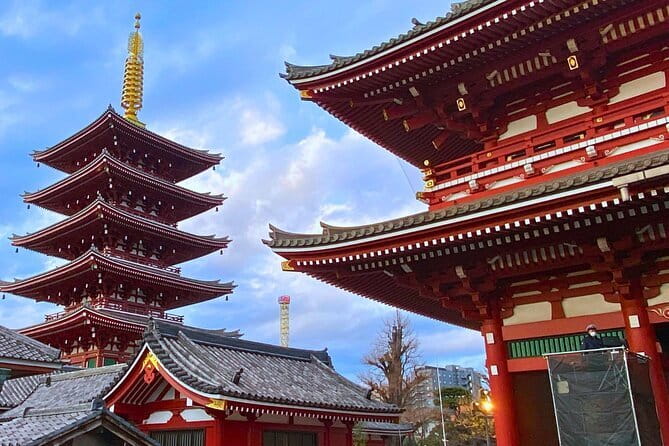
Tokyo can feel all neon, trains, department stores, and high-rise streets. Asakusa gives you a different rhythm. Its lanes lead toward one of Japan’s best-known Buddhist temples, but the area also shows how modern Tokyo lives alongside older religious customs.
The value of a guide here is not simply getting from one gate to another. The main sights are easy to find on your own. The harder part is understanding what people are doing, where to stand, which gestures matter, and why a Buddhist temple and Shinto shrine can share the same district.
This tour puts those details at the center. You will not just photograph Sensoji’s Kaminarimon Gate. You’ll hear why it is called the Thunder Gate, what the huge red lantern represents, and how the temple’s surrounding streets developed as a place of worship, shopping, and local life.
The group size matters. With a limit of eight people, you can ask questions without shouting across a crowd. That is useful in Asakusa, where the main approach can be packed, especially during festivals or peak sightseeing hours.
More Temple Walking Tours in Japan
- Tokyo: Asakusa Walking Tour with Sensoji Temple Visit
★ 4.8 · 1,583 reviews - Tokyo: Meiji Shrine Walking Tour — Shinto & Imperial System
★ 4.9 · 266 reviews - Tokyo: Meiji Jingu Shrine and Shinto Culture Walking Tour
★ 5.0 · 245 reviews
Azuma Bridge and the golden poop view
The meeting point is at or near Burger King Asakusa Azumabashi, depending on the option you book. From there, the tour heads toward Azuma Bridge for a short riverside stop.
This opening view helps you get your bearings. You’ll see the Sumida River, Tokyo Skytree, and the distinctive golden sculpture on the Asahi Beer Hall across the water. Locals have given the sculpture the blunt nickname the golden poop, and the guide uses this light opening to introduce Tokyo’s sense of humor.
The stop lasts about 10 minutes. It is mainly for photos and orientation, not a long river walk. Keep your camera ready, but do not expect a peaceful waterfront stroll. The point is to connect the modern skyline with the older Asakusa district you are about to enter.
The best early view from the Tourist Information Center
The Asakusa Culture Tourist Information Center is an excellent second stop. The tour uses its upper viewpoint to look across the temple district, rather than plunging straight into the crowds.
This perspective gives you a useful visual map. You can see the broad route toward Sensoji, the busy approach, nearby rooftops, and the contrast between low traditional buildings and Tokyo’s taller modern structures. It also makes later explanations easier because you can picture the whole area at once.
Plan for about 15 minutes here, including photos and commentary. This is one of the tour’s most practical features. Many people rush directly to Kaminarimon and Nakamise Street, but the high view lets you understand the layout before the details begin.
Kaminarimon Gate and its 700-kilogram lantern
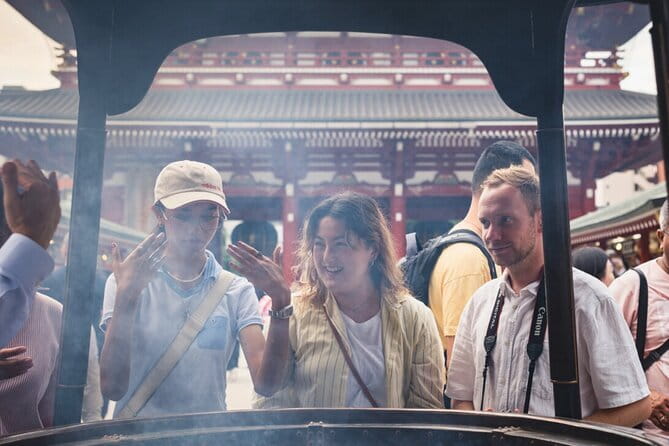
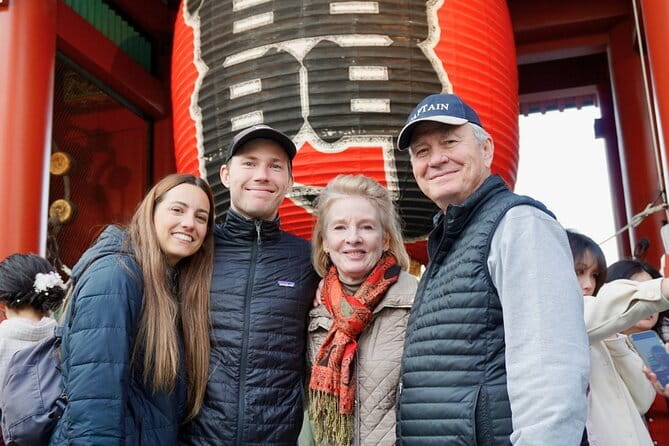
Kaminarimon means Thunder Gate, and its giant red lantern is the first famous symbol of Sensoji that most people see. The lantern weighs about 700 kilograms, so it is more than a decorative photo prop.
Your guide explains the gate’s name, the figures associated with it, and the role the entrance plays in leading worshippers toward the temple grounds. You’ll have time for photos and sightseeing, but the tour also helps you avoid treating the gate as just a backdrop.
This is a crowded area. You may need patience when taking a picture beneath the lantern, and the group must stay together around the flow of people. A small group helps, but it cannot remove the crowds entirely.
More Temple Walking Tours in Tokyo
- Tokyo: Meiji Shrine and Shinto Culture Walking Tour
★ 5.0 · 225 reviews - Tokyo: Meiji Shrine Walking Tour — Shintoism & Imperial System
★ 5.0 · 209 reviews - Tokyo’s Kitchen: Tsukiji Market Food & Culture Walk
★ 4.7 · 74 reviews - Tokyo Asakusa & Senso-Ji Walking tour With A Guide
★ 4.5 · 40 reviews
Nakamise Street, snacks, souvenirs, and translation help
From Kaminarimon, you continue along Nakamise Shopping Street. This long approach is lined with shops selling snacks, small gifts, traditional goods, and temple-related souvenirs.
The guide explains the cultural role of the street and can point out where to look for worthwhile treats and gifts. That advice is useful because the choices can feel endless, especially if this is your first time in Japan. You can also ask for help with translations while shopping.
The tour includes sightseeing rather than a dedicated shopping session, so keep purchases modest if you want to stay with the group. You’ll have roughly 15 minutes here, with the main focus still on reaching the temple grounds.
Families may appreciate this section most. It breaks up the history with food, colorful shop displays, and small discoveries for children. One guide, Erik, was especially praised for keeping children interested while recommending shopping stops.
Hozomon Gate and the transition into Sensoji
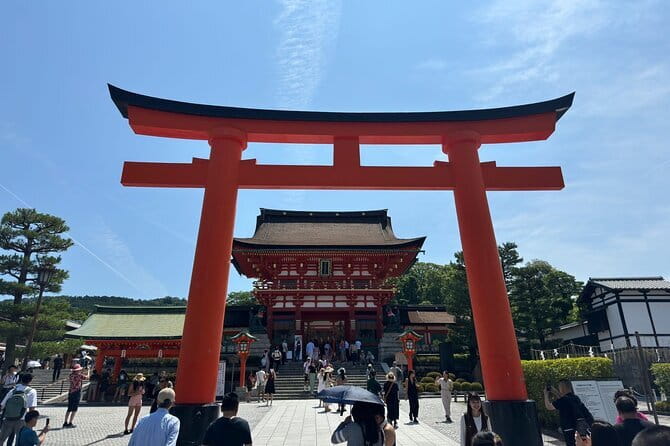
Hozomon Gate marks another major entrance to the Sensoji complex. It is larger and more imposing than Kaminarimon, with a strong sense of ceremony as you move deeper into the grounds.
The tour spends about 10 minutes here for photos, sightseeing, and explanation. You’ll learn to notice the relationship between gates, the approach to the main hall, and the way movement through the complex becomes part of the religious experience.
Asakusa can be noisy and crowded, yet the sequence of gates gives the visit structure. Your guide can also adjust the pace when crowds become thick. One guide was praised for changing the route to avoid the worst congestion, which is a useful skill in this part of Tokyo.
The small temples and shrines most people miss
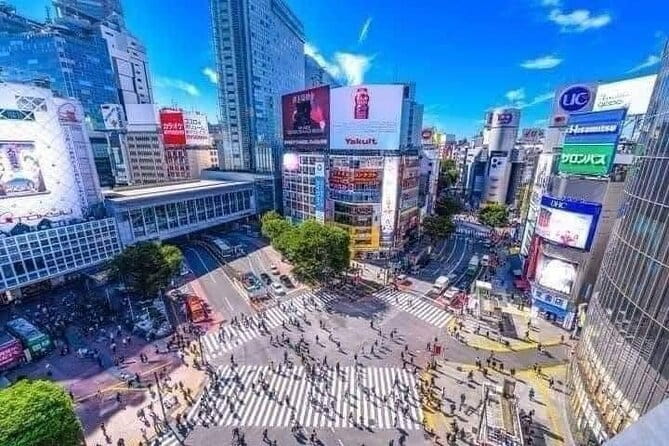
The tour’s less obvious stops are its strongest feature. Sensoji receives most of the attention, but nearby religious sites reveal that Asakusa is not just one temple with a shopping street attached.
You’ll visit smaller temple and shrine locations along the way, with explanations of how Buddhism and Shinto coexist in Japan. This is more useful than a simple definition. You begin to see the customs in place: gates, washing areas, incense, offerings, bows, and different ways of praying.
The guide also explains where you should walk through torii gates and how to behave inside religious grounds. These details help you visit other Japanese temples and shrines with more confidence later in your trip.
The supplied route lists two additional 10-minute stops without naming them. That gives the guide some flexibility, but it also means the exact small sites can vary. The experience is less about ticking off a fixed list and more about seeing parts of Asakusa you might otherwise pass without noticing.
Sensoji Temple and the rituals you can try
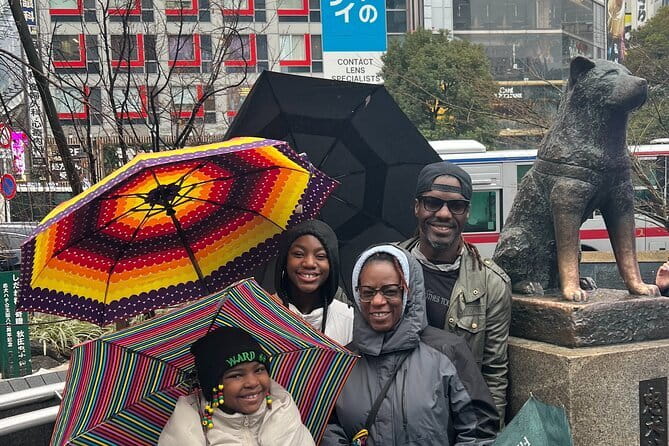
Sensoji is the heart of the visit. It is Tokyo’s oldest temple and one of the city’s essential sights. The tour allows about 30 minutes here, giving your guide enough time to explain the architecture, history, customs, and prayer procedure.
Before approaching the main hall, you may learn temizu, the hand and mouth purification ritual. The purpose is to prepare yourself before prayer, not simply to wash your hands. Your guide demonstrates the process so you can take part without guessing.
You can also try the incense ritual. Visitors waft smoke toward themselves for healing, both physical and mental, according to the custom explained on the tour. It is a simple act, but it becomes more meaningful when you know why people do it.
Omikuji fortune telling is another interactive element. You’ll learn how the fortune system works and what to do with the result. These activities make the tour feel less like a lecture. You are given a chance to participate, while the guide explains the meaning behind each step.
The Buddhist prayer method is different from what you do at a Shinto shrine. Your guide shows you how to pray at Sensoji and how to bow correctly. This is especially useful if you plan to visit Kyoto, Nara, or other religious sites later.
Asakusa Shrine and the difference between Buddhism and Shinto
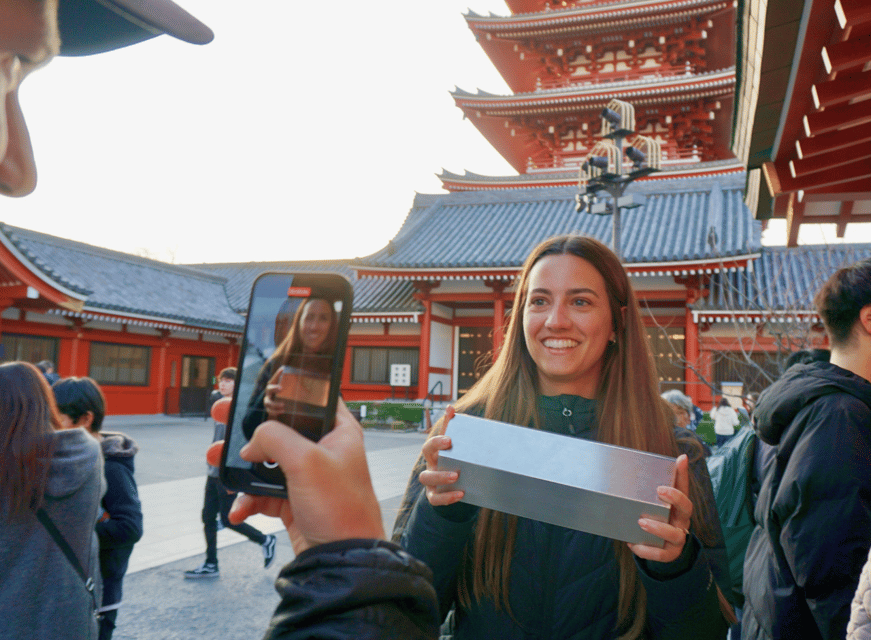
Asakusa Shrine is next to Sensoji, which makes this an unusually clear place to compare the two traditions. You do not need a long train ride or a separate day to see the contrast.
At the Buddhist temple, the prayer process differs from the Shinto method at the shrine. You’ll learn how to approach the torii, where to walk, how to bow, and how the rituals differ. The guide also explains how Buddhism and Shinto have shared space in Japan over many centuries.
This is where the tour moves beyond surface sightseeing. Many people can recognize a torii or incense burner, but fewer understand how the customs fit together. The explanations are designed for first-time visitors, yet the subject can still interest people who have already seen Japanese temples.
The shrine stop lasts about 15 minutes. It is short enough to keep the tour moving, but long enough for instruction, photos, and questions.
The guides make the format personal
The provider uses several guides, so your exact experience depends on who leads the group. Nicolas has been praised for his clear explanations of Shinto and Buddhism, his personal connection to Asakusa, and his willingness to answer questions. He also helped one group find its way toward Kappabashi Street after the tour and accompanied another group to lunch.
Erik has been singled out for his historical commentary, shopping advice, and ability to keep children engaged. Lino was described as friendly, confident, and easy to follow, with a relaxed style that felt more like exploring with a local friend. Nana worked especially well with children aged 5 and 8, explaining things in ways they could understand and taking family photos.
Other guides named in the feedback include Diane, Ayaka, Arief, Ariel, Somi, and Joe. Joe kept a group moving through rain and helped them make the most of a festival around Sensoji. Ayaka maintained a slow pace during heavy rain, while Arief was praised for helping a last-minute booking run smoothly.
The common strength is not a single scripted performance. It is the guides’ readiness to answer questions and adapt. You can ask about Tokyo transport, food, shopping, customs, or places to visit next, even when the question is not directly tied to the tour.
Is $30 good value for two hours?
At $30 per person, this is reasonably priced for a two-hour guided experience in central Tokyo, especially with a group capped at eight. You are paying for interpretation, not entrance tickets or a meal. Personal purchases such as snacks and souvenirs cost extra.
You can walk through Sensoji for free on your own. The question is how much you want to understand. If you already know Japanese temple and shrine etiquette, a self-guided visit may be enough. If you want clear explanations, help with rituals, photo guidance, and shopping advice, the price is easier to justify.
The small group adds value. A large tour can make temple instruction hard to hear and questions awkward. Here, the guide can slow down, take photos, explain a confusing sign, or help you practice a ritual.
The flexible cancellation policy also helps if your Tokyo plans are still changing. You can cancel up to 24 hours in advance for a full refund, and you can reserve now and pay later.
Practical details before you book
Wear comfortable walking shoes. The route lasts two hours and includes streets, gates, temple grounds, and standing stops. Bring water, especially in hot weather, although vending machines are available during the tour.
Dress for the forecast because the tour operates in rain or shine. There is no dress code, and tattoos are welcome. Smoking, drones, alcohol, and drugs are not allowed.
The tour is offered in English and French. Meeting and ending points are listed at or near Burger King Asakusa Azumabashi, but the exact meeting option can vary, so check your booking details carefully.
You may also ask about kimono rental. The provider works with a kimono shop about two minutes from the meeting point, making it possible to combine the tour with a traditional outfit experience if that interests you.
This is not a good choice for wheelchair users, people with mobility impairments, or people with a low fitness level. The tour involves walking and standing, and the crowded temple district can make movement harder.
Who should book this Asakusa tour?
I would recommend it to first-time visitors who want a clear introduction to Japanese religious customs without spending half a day in a classroom. Couples and solo visitors should find the small group easy to manage, while families can benefit from the interactive rituals and shopping street.
It is also a smart first or second-day activity in Tokyo. After learning how temples and shrines work, you’ll get more from later visits elsewhere in Japan. You’ll know how to wash your hands, where to stand, how to pray, and what not to do.
You may want to skip it if you prefer to wander alone, dislike scheduled walking tours, or already have a strong understanding of Japanese Buddhism and Shinto. The tour covers famous sights, so repeat visitors seeking obscure parts of Tokyo may want a more specialized neighborhood walk.
For most people, though, the combination is well judged: major sights, smaller religious sites, practical etiquette, good viewpoints, and time for questions. Book it if you want Asakusa to make sense, not simply appear in your camera roll.
FAQ
How long does the Asakusa Temple and Shrine Walking Tour last?
The tour lasts two hours.
How many people are in the group?
The group is limited to eight participants.
What languages are available?
The tour is offered in English and French.
Which major sights are included?
The route includes Azuma Bridge, the Asakusa Culture Tourist Information Center viewpoint, Kaminarimon Gate, Nakamise Shopping Street, Hozomon Gate, Sensoji Temple, Asakusa Shrine, and smaller local temple or shrine sites.
Can I take part in Japanese religious rituals?
Yes. The guide explains and demonstrates temizu hand washing, omikuji fortune telling, incense customs, Buddhist prayer, Shinto prayer, and appropriate bows.
Is there a dress code?
No. You can wear what you like, and tattoos are welcome.
What should I bring?
Bring comfortable walking shoes and water. Vending machines are available during the tour.
Does the tour operate in bad weather?
The tour takes place in rain or shine, so dress for the weather.
Is the tour suitable for wheelchair users?
No. It is not suitable for wheelchair users, people with mobility impairments, or people with a low level of fitness.
Can I cancel the booking?
You can cancel up to 24 hours in advance for a full refund. The activity also offers a reserve-now, pay-later option.
More Meiji Shrine and Senso-ji Tours in Tokyo
- Tokyo Panoramic 1 Day: Meiji Shrine, Asakusa, Odaiba and SKYTREE®
★ 4.5 · 1,222 reviews - Tokyo: Asakusa and Tokyo’s Oldest Temple Senso-ji Tour
★ 4.9 · 352 reviews - Tokyo: 1 Day Bus Tour with Meiji-Jingu,Odaiba,lunch&Skytree
★ 4.6 · 156 reviews - Tokyo Morning Tour: Asakusa, Meiji Shrine and Tsukiji Fish Market
★ 5.0 · 128 reviews
Just added around Tokyo
- Tokyo:Nikko UNESCO World Heritage Sites Private 1-Day Tour★ 3.8 · 6 reviews
- Tokyo War History Tour: Yasukuni Shrine & War Museum★ 4.5 · 6 reviews
- Tokyo: Snow Monkey Park and Zenkoji Temple Private Day Tour★ 4.7 · 127 reviews
- Tokyo: Sensoji Temple & Street Food: Private Tour with guide★ 4.6 · 8 reviews
- Tokyo: Shibuya Sky, Harajuku & Meiji Shrine Highlights Tour★ 4.5 · 9 reviews
- Tokyo: Nikko Private Sightseeing Day Trip with Driver★ 5.0 · 10 reviews
- Tokyo → Nikko:Private Customizable Day Trip (English Driver)★ 4.9 · 26 reviews
- Tokyo’s Kitchen: Tsukiji Market Food & Culture Walk★ 4.7 · 74 reviews
Meiji Shrine & Senso-ji Tours, compared.
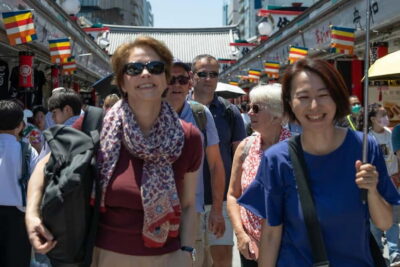
Asakusa Walking Tour with Sensoji Temple Visit
Read our review →
Tokyo Panoramic 1 Day: Meiji Shrine, Asakusa, Odaiba and SKYTREE®
Read our review →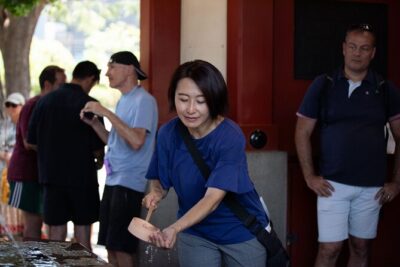
Asakusa Senso-ji Temple and Old Tokyo Walking Tour
Read our review →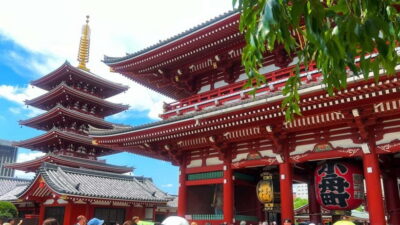
Asakusa and Tokyo’s Oldest Temple Senso-ji Tour
Read our review →
Meiji Shrine Walking Tour — Shinto & Imperial System
Read our review →
Meiji Jingu Shrine and Shinto Culture Walking Tour
Read our review →
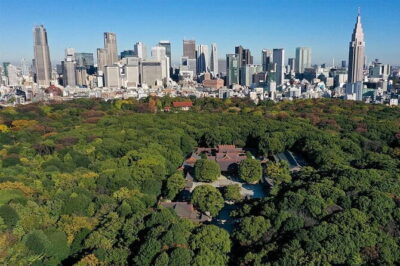
Meiji Shrine Walking Tour — Shintoism & Imperial System
Read our review →Browse the lists this tour appears in