
REVIEW · JAPAN TEMPLE TOURS
Try Mindful Calligraphy Near Kanazawa’s Ninja Temple
The best part of this Kanazawa activity is that you practice calligraphy in an actual classroom inside a 100-year-old traditional house, not on a stage built for tourists. You learn how brushes, ink, and strokes work, then make a finished piece you can carry home.
I like the quiet pace and the personal guidance from instructors such as Naomi and Daiki. I also like the choice of writing your own word, rather than copying one fixed design. The main drawback is time: one hour passes quickly, especially if you want plenty of practice before making your final artwork.
Key points to know
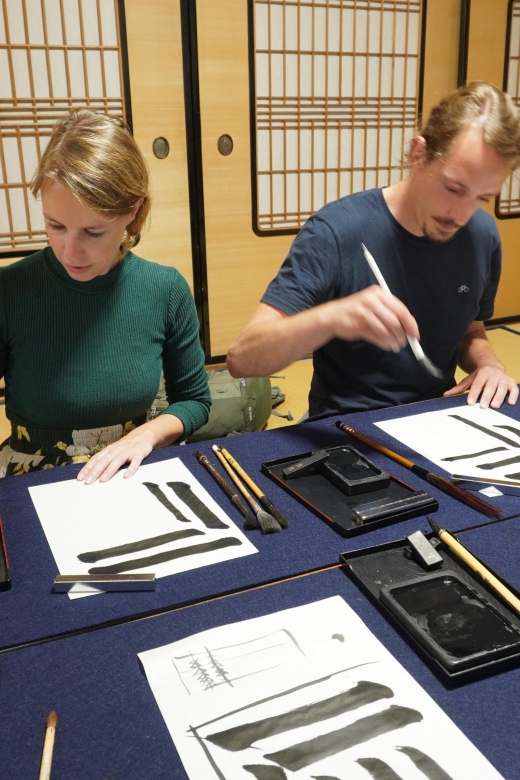
- Practice before your final piece: You work through basic strokes and brush handling before writing on the scroll or fan.
- A real local classroom: The lesson takes place in a historic house used for calligraphy instruction.
- English-friendly teaching: Naomi and Daiki can explain the tools, techniques, and cultural background in English.
- Your choice of word: You select a word you like and create a personal souvenir.
- A calm break from sightseeing: The focused brushwork gives you an hour away from busy streets and packed schedules.
- Private group format: Your group receives direct attention, though local children may also be present on Thursdays and Saturdays after 3:00 PM.
Why this calligraphy lesson feels different
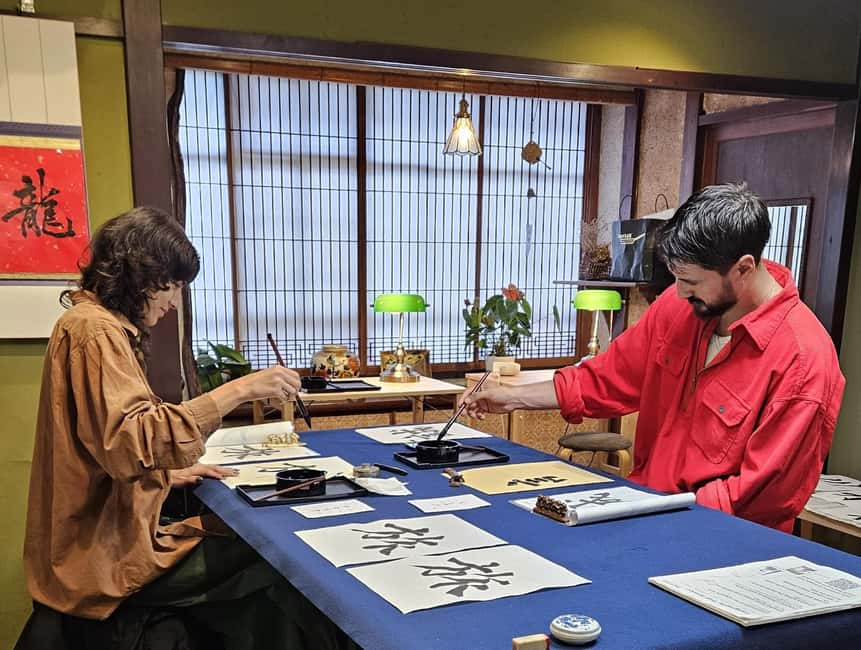
Kanazawa is famous for traditional crafts, so calligraphy fits the city naturally. This is not simply a quick brush-and-ink photo opportunity. You sit down, learn the basic movements, and discover why a single character requires control, rhythm, and practice.
The lesson takes place at Culture Lab Nomachi, in a traditional house said to be around 100 years old. Calligraphy works are visible from outside, which makes the building easier to identify. That small detail matters in Kanazawa, where a quiet residential street can look much like the next one.
I like the setting because it gives the activity a sense of place without asking you to spend half a day on it. One hour is enough to learn the essentials and produce something personal, yet short enough to fit beside temple visits, gardens, or a walking route through the Nomachi area.
The class is private for your group. That makes it a good choice for couples, families with older children, or friends who want an activity together rather than a large workshop. The teaching style is supportive, and beginners are expected. You do not need prior experience with Japanese writing or art.
A few more temple visits around Japan worth a look
- Kyoto: Tea Ceremony Ju-An at Jotokuji Temple
★ 4.9 · 3,207 reviews - Tokyo: Asakusa Walking Tour with Sensoji Temple Visit
★ 4.8 · 1,583 reviews - Nikko: Kegon Falls, Lake Chuzenji & Toshogu Temple
★ 4.6 · 1,577 reviews
Arriving near Kanazawa’s Ninja Temple
The address is 1-1-26 Nomachi, Kanazawa, Ishikawa 921-8031. A Kanazawa Loop Bus stop is nearby, so the lesson can fit into a day using public transportation.
You should look for calligraphy displayed outside the building. That is the most useful arrival tip, since the activity takes place in a working studio and not in a large attraction with a prominent sign. Check your map before setting out and allow enough time to find the entrance.
The setting is close to the area known for Myoryuji, commonly called Kanazawa’s Ninja Temple. The activity title makes it easy to pair the lesson with that part of the city, but you should plan the timing of both stops carefully. The class lasts one hour, and the available starting times vary.
I would schedule calligraphy after a morning of sightseeing or between nearby visits. The quiet classroom provides a useful change of pace. You are not rushing through another display or trying to absorb one more explanation while standing. You sit down and work with your hands.
The first lesson: brush, ink, and basic strokes
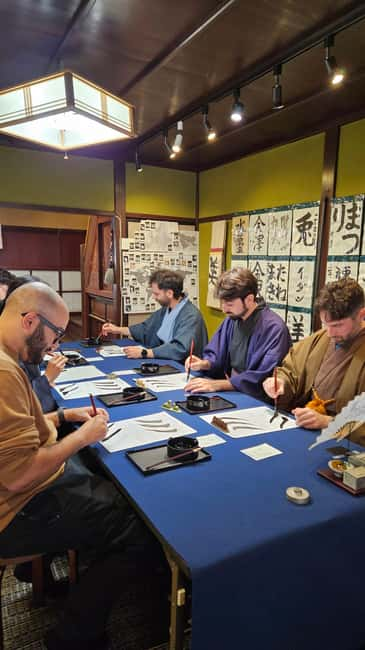
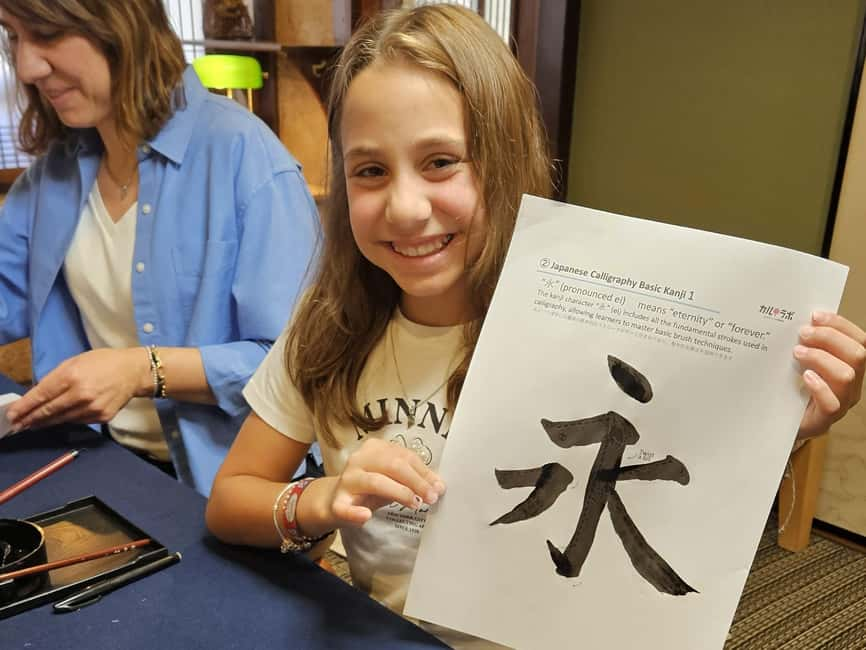
The class begins with an explanation of the tools. You learn what the brush and ink are for, and how to hold and move the brush. The instructor then guides you through basic strokes using practice sheets.
This first stage is more important than it may sound. Japanese calligraphy is not just handwriting with a different alphabet. The pressure of the brush, the direction of each stroke, and the pause at the beginning or end all affect the result. A beginner can see the difference immediately after trying a few examples.
The instructor explains the three writing systems used in Japanese:
- Kanji: Ideographic characters associated with specific meanings.
- Hiragana: A flowing phonetic script used in Japanese writing.
- Katakana: Another phonetic script, often used for particular words and names.
You also hear about the cultural background of these forms and their connection to Chinese characters. This gives the lesson more substance than a simple craft session. You are not only producing an attractive mark. You are learning why the mark has a particular shape and meaning.
English support is available throughout the lesson. Naomi is known for a patient, encouraging approach, while Daiki has also taught the class in English. The instruction is designed to help you understand what to do without needing to read Japanese.
Choosing a word with personal meaning
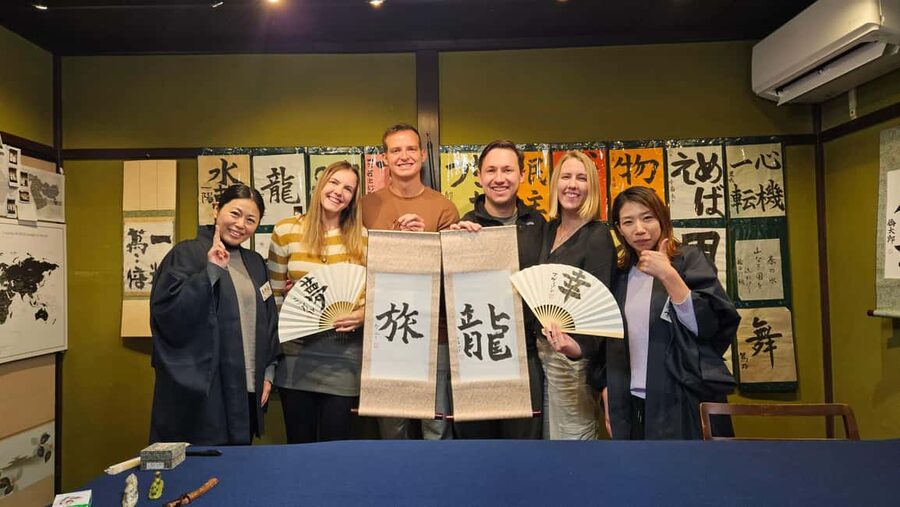
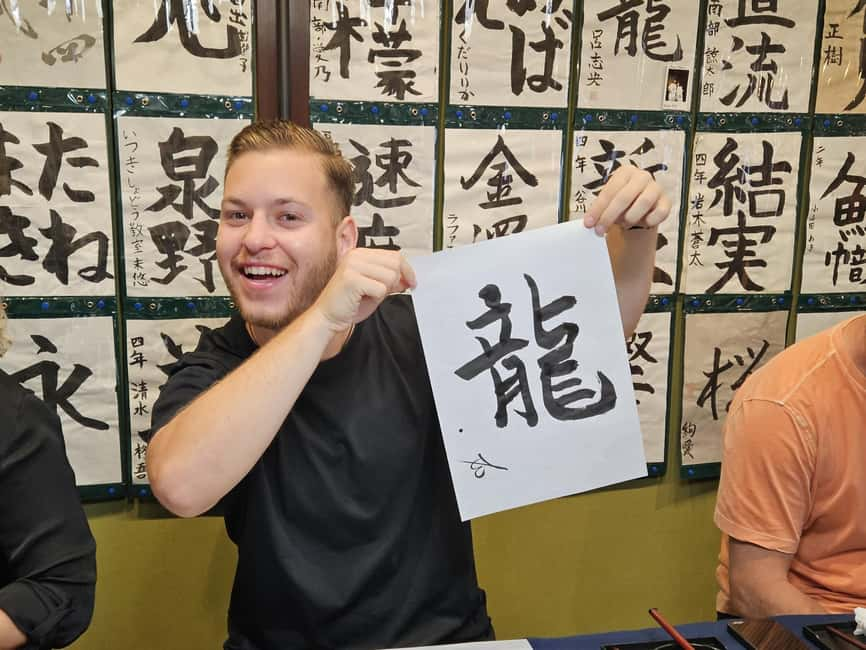
After practicing, you choose the word you want to write. This is one of the strongest parts of the experience because your final piece does not have to look like everyone else’s.
You might choose a word connected to your trip, a value you care about, or a character whose shape appeals to you. The instructors can help explain the meaning behind Japanese characters, which is useful if you are unsure what to select.
This choice also gives the activity a small personal ritual. You pause, consider what you want to take home, and then work toward putting it on paper. The process is simple, but it feels more memorable than buying a ready-made souvenir in a shop.
Do not expect perfect results on the first attempt. The class is built around practice, and the instructors are patient when your strokes wobble or your proportions seem uneven. Several people have appreciated receiving full guidance, including groups of six. That suggests the teachers are used to giving individual help even when more than two people attend.
Same country, a different morning at the gates:
- Kyoto: Tea Ceremony in a Traditional Tea House in Kiyomizu
★ 4.9 · 3,519 reviews - Tokyo:Mt.Fuji,Kawaguchiko Oishi Park,Arakurayama Sengen Park
★ 4.4 · 2,682 reviews - Fushimi Inari Hidden Hiking Tour (Private Option Available)
★ 5.0 · 1,750 reviews - Osaka/Kyoto:Kinkakuji,Arashiyama,FushimiInariShrine,NaraPark
★ 4.1 · 1,596 reviews
Creating the scroll or folding fan
Your finished work is made directly on a hanging scroll or folding fan. You can take it home as a souvenir, which gives the class a clear result beyond the hour spent in the studio.
The scroll is especially appealing if you want something that feels connected to Japanese decoration. The fan offers a different shape and a practical keepsake. The available format may depend on the activity setup, so ask the instructor if you have a strong preference.
The final writing can feel slightly nerve-racking because the surface is more permanent than the practice paper. That is part of the fun, but it is also why the early exercises matter. You get a chance to understand the brush before making the final attempt.
I like this structure: explanation, practice, choice, final piece. It gives the hour a clear rhythm and prevents the class from becoming an unstructured craft table. You leave with an object you made yourself, not simply a certificate or a photograph.
The calm side of Japanese calligraphy
Calligraphy rewards concentration. You watch the tip of the brush, control your breathing, and try to complete one stroke without rushing. For an hour, that can feel pleasantly removed from a busy sightseeing day.
Several parts of Japan travel involve crowds, schedules, transport changes, and constant decisions. This lesson asks for something different. You sit quietly and focus on a small number of movements. The activity is not presented as formal meditation, but it has a similar calming quality.
I would recommend it if you want a creative pause rather than another sightseeing stop. It also works well for people who enjoy learning through their hands. You may not produce a professional-looking character, but you will understand more about the discipline behind the art.
The class is also a good shared activity. Couples can choose separate words, parents and older children can practice side by side, and friends can compare their finished pieces without turning the lesson into a competition. The instructors’ patient manner helps keep the mood relaxed.
What the hour is really worth at $44
At $44 per person, this is not the cheapest souvenir activity in Kanazawa. The value comes from the combination of instruction, a private group setting, a historic venue, and a finished scroll or fan.
You are paying for more than access to brushes and ink. The lesson includes guided practice, explanations of the writing systems, help choosing a word, and support while making the final piece. The completed artwork gives you something tangible to take home.
I think the price makes the most sense if you care about hands-on cultural activities and want a souvenir with a story behind it. If you only want a quick introduction to calligraphy or a simple photo, you may find the hour more involved than necessary.
The private format adds value for small groups. You can ask questions and receive corrections without waiting behind a large class. One group of six received full attention, but a larger group may naturally make the hour feel shorter for each person.
The main value question is time. One hour is enough for a satisfying introduction, but not enough for extensive study. One participant felt that a little more time would have been useful. I agree that serious students should see this as a first lesson, not a full course.
Who should book this activity
This lesson suits first-time visitors who want a cultural activity that is easy to fit into a Kanazawa itinerary. You do not need artistic skill, Japanese language ability, or previous calligraphy experience.
I would especially suggest it for:
- Couples looking for a quiet activity they can do together.
- Families with children aged five and older.
- Small groups who want direct instruction.
- Visitors who prefer making a souvenir to buying one.
- Anyone who wants a calm break after walking and sightseeing.
- People interested in the difference between kanji, hiragana, and katakana.
Children under five are not accepted. Younger children may also find the careful brush control difficult, so families should consider the child’s patience as well as the stated age limit.
Vegans should not book this activity. The traditional brushes and ink tools can contain animal-derived materials. This is an important point to check before reserving.
Timing, group atmosphere, and practical limits
The class lasts one hour, with starting times based on availability. That makes it easy to place beside other plans, but you should not assume that every desired time will be open.
On Thursdays and Saturdays after 3:00 PM, the local calligraphy school is also in session. You may see local children working in the studio. Some people will enjoy seeing an active school rather than an empty demonstration room, while others may prefer the quieter private setting at another time.
The activity is offered in English and Japanese. English guidance covers the tools, brush technique, writing systems, and cultural explanations. If you want to ask about the precise meaning of a particular character, prepare to ask directly so the instructor can help you choose carefully.
Cancellation is free up to 24 hours before the activity for a full refund. You can also reserve and pay later, which helps if your Kanazawa schedule is still changing.
My advice for getting the most from the lesson
Arrive ready to try several practice strokes without worrying about looking artistic. The point is not to produce a perfect character immediately. It is to understand how the brush responds.
Think about your chosen word before class, but keep an open mind. The instructor can explain the meaning and help you decide if a character fits your idea. A word that looks attractive may have a meaning you did not expect.
Wear something you can sit comfortably in for an hour. The supplied information does not specify a dress code, but calligraphy involves ink and brushwork, so sensible clothing is a good idea.
If you are traveling with a partner or friend, consider choosing different words. You will get two souvenirs with separate stories, and the contrast can make the finished pieces more interesting.
Finally, leave room in your day for the activity to be a pause. If you schedule it between two tightly timed visits, you may focus on the clock instead of the brush. The best reason to book it is the chance to slow down.
Should you book this Kanazawa calligraphy class?
Book it if you want an authentic, beginner-friendly craft lesson in a real local setting, especially if making your own souvenir appeals to you. The English-speaking instructors, patient teaching, and private group format make the class approachable.
Think twice if you want a long workshop, dislike quiet focused activities, or are vegan. The one-hour format offers a polished introduction, not advanced training, and traditional animal-derived materials are used.
For most visitors, the strongest case is simple: you learn something about Japanese writing, spend an hour in a historic house, and leave with a scroll or fan that carries your own brushwork. That is a fair exchange for $44, particularly when you want your Kanazawa memories to include something you made rather than something you only purchased.
FAQ
How long does the calligraphy activity last?
The activity lasts one hour.
How much does the experience cost?
The price is $44 per person.
Where does the class take place?
It takes place at Culture Lab Nomachi, at 1-1-26 Nomachi, Kanazawa, Ishikawa 921-8031.
How can I find the meeting point?
Calligraphy works are visible from outside the building. A Kanazawa Loop Bus stop is also nearby.
Is the class taught in English?
Yes. The instructors provide guidance in English and Japanese.
Do I need previous calligraphy experience?
No. The lesson includes explanations of the tools, basic stroke practice, and guidance for creating your final artwork.
What do I take home?
You create artwork directly on a hanging scroll or folding fan, which you can take home as a souvenir.
Can children join the activity?
Children under five cannot participate. Children aged five and older may join.
Is the activity suitable for vegans?
No. Traditional calligraphy tools such as brushes and ink can contain animal-derived materials.
Can I cancel my booking?
You can cancel up to 24 hours in advance for a full refund. You can also reserve now and pay later.
Just added around Japan
- From Asakusa: Old Tokyo, Temples, Gardens and Pop Culture★ 5.0 · 47 reviews
- Private guided tour: Mt. Aso volcano, grasslands, Aso Shrine★ 5.0 · 19 reviews
- Goshuin Collecting tour at Asakusa Local Temples & Shrines, Tokyo★ 5.0 · 8 reviews
- Tokyo:Nikko UNESCO World Heritage Sites Private 1-Day Tour★ 3.8 · 6 reviews
- Tokyo Yokohama Night View Tour With Kamakura And Enoshima★ 3.5 · 14 reviews
- Tokyo: Snow Monkey Park and Zenkoji Temple Private Day Tour★ 4.7 · 127 reviews
- Tokyo War History Tour: Yasukuni Shrine & War Museum★ 4.5 · 6 reviews
- Tokyo to Nikko: Exclusive Private Day Trip★ 4.8 · 6 reviews
Japan Temple Tours, compared.
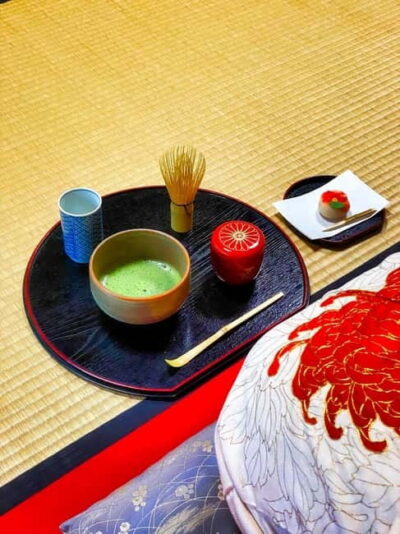
Tea Ceremony in a Traditional Tea House in Kiyomizu
Read our review →

Mt.Fuji,Kawaguchiko Oishi Park,Arakurayama Sengen Park
Read our review →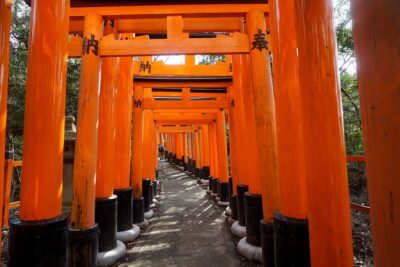
Fushimi Inari Hidden Hiking Tour (Private Option Available)
Read our review →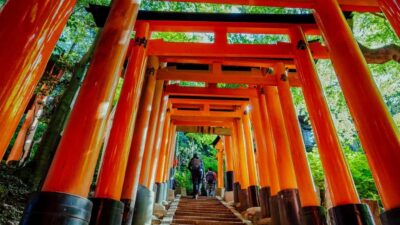
Osaka/Kyoto:Kinkakuji,Arashiyama,FushimiInariShrine,NaraPark
Read our review →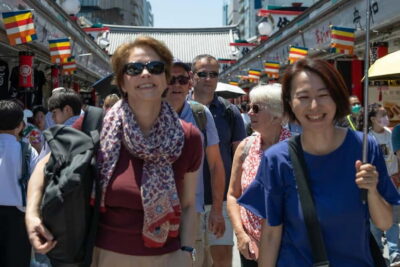
Asakusa Walking Tour with Sensoji Temple Visit
Read our review →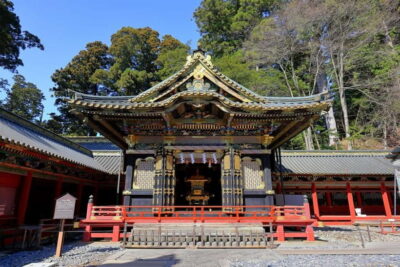
Kamakura & Enoshima Day Trip including Temple Tickets
Read our review →Browse the lists this tour appears in