
REVIEW · TOKYO TEMPLE TOURS
Tokyo: Samurai Entertainment Night Show in Kanda Shrine
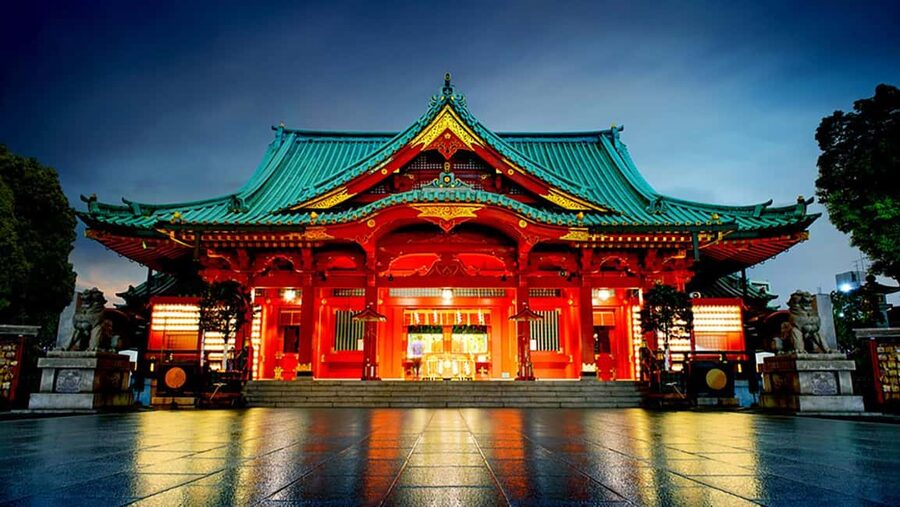
Tokyo’s samurai night show puts you in an unusual setting: a theater below the grounds of Kanda Myojin, one of Tokyo’s best-known shrines. The production follows the legend of Taira no Masakado through swordplay, dance, music, costumes, lighting, and theatrical movement. It is less a historical lecture than a fast-moving stage spectacle with Japanese folklore at its core.
I like two things right away. First, the small venue keeps the action close, so you can see the performers’ expressions and movement without the distance of a large theater. Second, the evening includes time to meet the cast and take photos after the show, a friendly touch that turns a performance into a more personal cultural outing.
The main consideration is that the food is not included in every booking, and the story may feel unclear if you expect a spoken, word-heavy drama. The show relies heavily on music, movement, visual effects, and a printed outline, so read the story guide while you eat before the curtain time.
Key points to know before booking
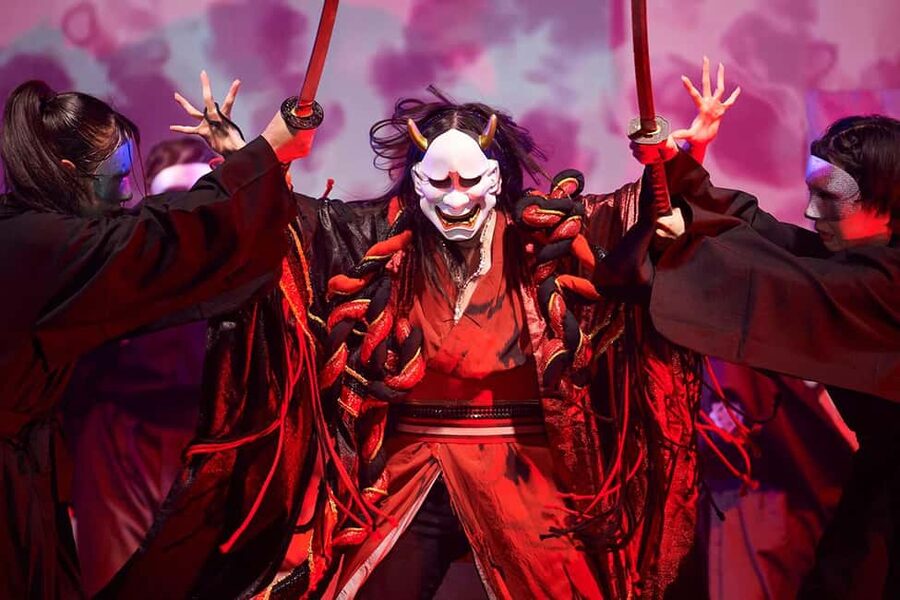
- Taira no Masakado takes center stage: The story presents the legendary warrior and rebel through theatrical scenes, folklore, and dramatic movement.
- Kanda Myojin adds atmosphere: You enter through the historic shrine grounds before heading to the Show restaurant in the basement of Kanda-Myojin Bunka-Koryu-kan.
- The evening runs from 7 PM to 10 PM: Food and drinks come first, the main performance runs from 8:15 to 9:15 PM, and photos follow until closing.
- The show favors visual theater: Expect swordplay, dance, costumes, sound, lighting, and expressive acting rather than long spoken scenes.
- Cast interaction is part of the program: After the performance, you can speak with the actors and take photos with them at no extra charge.
- Book carefully if dinner matters: A drink is included, or unlimited drinks if you select that option, while food is ordered separately from the menu unless your chosen package says otherwise.
Arriving at Kanda Myojin after dark
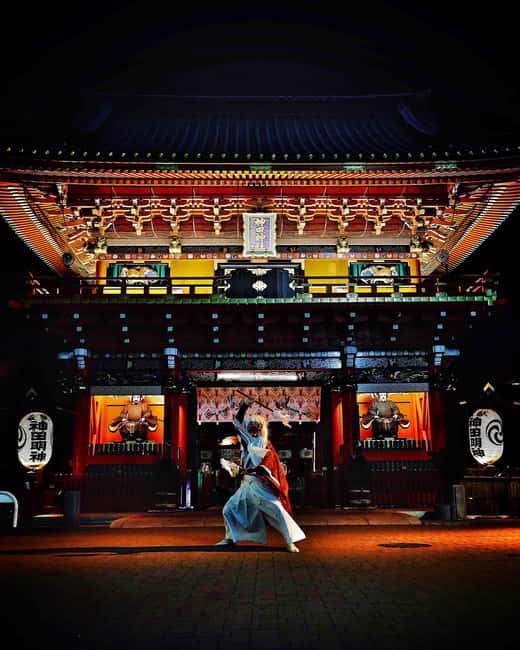
Kanda Myojin is not just a convenient address. It gives the night a sense of place before the performance even begins. The shrine is associated with prosperity in business and love, and its grounds look especially atmospheric when lit after sunset.
Allow extra time to find the correct entrance. The meeting point is not simply the shrine gate. You need to reach the Show restaurant in the basement of Kanda-Myojin Bunka-Koryu-kan, where staff will welcome you. One useful detail from past attendance is that the approach can be confusing, especially if you are walking in from the surrounding streets.
Doors open at 7 PM. You should aim to arrive well before 8 PM, since entry is not allowed after 8:15 PM. That deadline matters because the pre-show meal and drink period is part of the evening, not an optional waiting room.
The route from ordinary Tokyo streets into the shrine grounds can be part of the pleasure. You move from city views to the illuminated shrine, then into an intimate restaurant theater below the cultural building. It is a compact change of scene, but it helps this feel different from a standard dinner show in a hotel or shopping district.
More Temple Sunset Tours in Japan
- Tokyo: Asakusa Sensoji Night Walk with a Local Brandy
★ 4.7 · 7 reviews - Tokyo: Evening Tour – Temples, Neon Streets & Culture
★ 4.6 · 6 reviews - Kyoto Fushimi-Inari Night Walking Tour
★ 5.0 · 320 reviews
The 7 PM dining period and drink choices
From 7 PM until the show begins, you have time to settle in, order drinks, and eat. The exact drink arrangement depends on the package you choose. Some bookings include one drink, while others include unlimited drinks. Check this carefully before paying, since the difference affects the value.
Food is ordered from an à la carte menu unless your option includes dinner. The menu has included a chicken hot pot course, and the setup gives you a hands-on introduction to a familiar Japanese style of eating. Each person receives an individual pot with seasonal vegetables and broth. You add the chicken yourself, wait until the meat changes color, then dip it into sauce.
The hot pot is practical theater food because it arrives before the performance and gives you something to do while you learn the basic story. Some menu items are more familiar to international diners, including fried chicken, French fries, gyoza, soup, udon, and dessert. Portions have been described as filling, and vegetarian udon has also been available.
I would not book this mainly as a fine-dining event. The food is best understood as a casual meal attached to the show. It can be tasty and reasonably priced, but the production is the real reason to come. If you are particular about dinner, look over the available menu and package details before booking.
Place your food and drink orders before showtime. Once the performance starts, you will want to watch the stage rather than wait for service. One practical lesson is to avoid ordering a final drink at the last second unless you are sure you will have time to finish it. The action begins quickly and can pull your attention away from the table.
The restaurant layout also makes it easy to speak with people around you. It is a small-group setting, and solo visitors can still enjoy the evening without needing a large party. Staff have been able to assist international visitors in English, which helps with ordering and understanding the program.
A visual story about Taira no Masakado
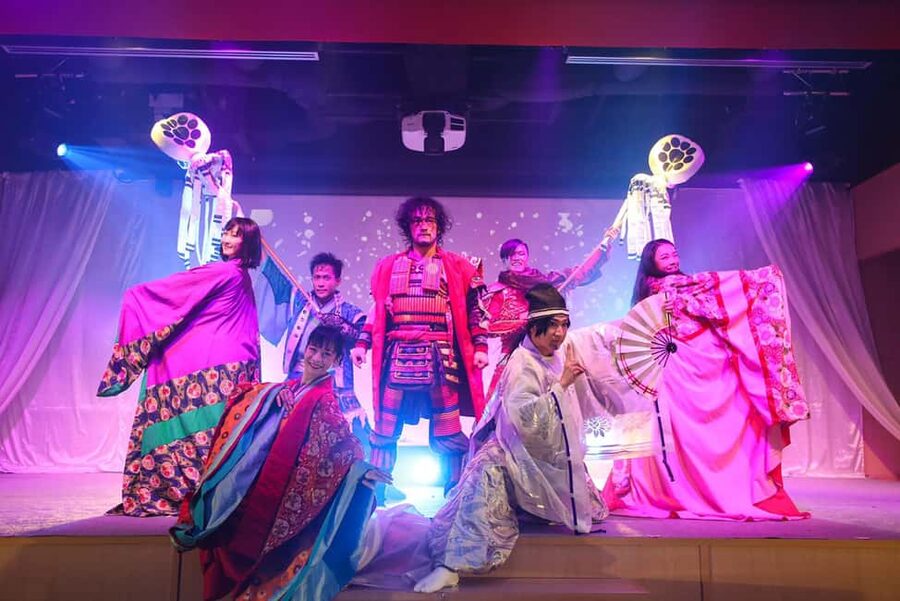
The main performance runs from 8:15 to 9:15 PM. Its central figure is Taira no Masakado, a legendary warrior whose story has taken on a larger place in Japanese folklore. The show presents him not as a dry historical figure, but as part of a world of loyalty, conflict, spirits, and dramatic legend.
You receive a printed outline that explains what happens in each section. Read it during the dining period. The production does not depend on long English explanations, and the outline gives you enough structure to follow the action once the music and movement begin.
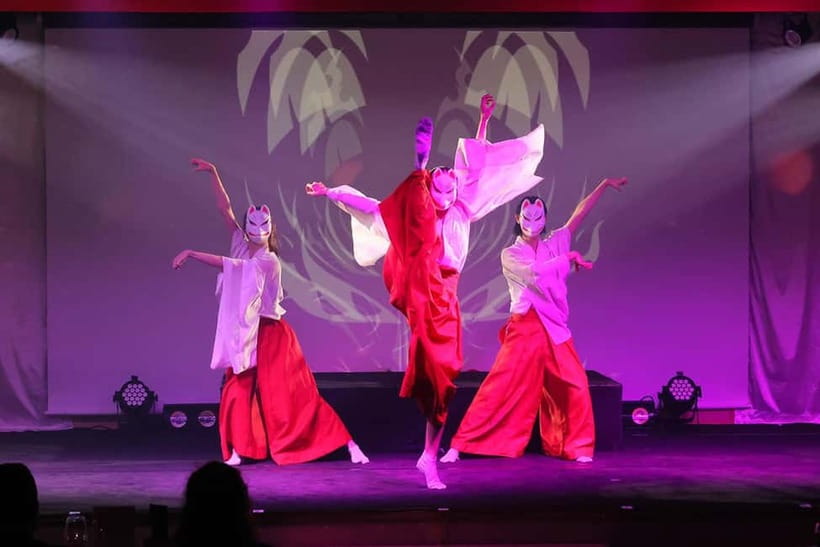
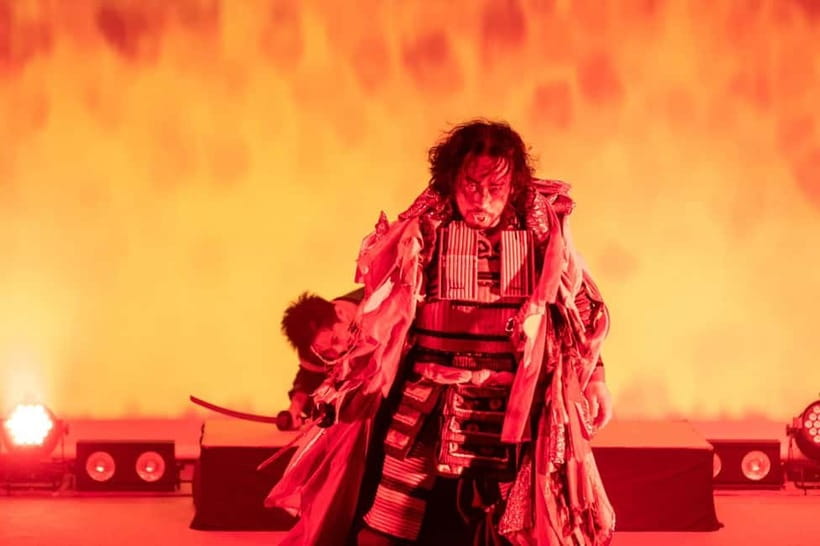
The storytelling is highly physical. Expect swordplay, dance-like choreography, bold costumes, sound effects, lighting, and expressive faces. The cast uses the full stage, and some action may happen away from the central performance area. This helps keep the hour moving, but it also means you should avoid assuming that every important moment will happen directly in front of you.
The show mixes traditional material with modern stage tools. Music and lighting give the performance a contemporary rhythm, while the costumes, legends, and combat imagery point back to older Japanese culture. The result is closer to visual theater or live-action anime than to a museum-style reenactment.
That comparison is useful because it sets the right expectation. If you want a precise account of samurai warfare, this may feel stylized. If you want an energetic introduction to Japanese legends presented through theater, it works much better.
There is not always a great deal of spoken dialogue. The performers communicate through posture, gestures, expression, choreography, and sound. That makes the show accessible if you do not speak Japanese, though it can also make the plot harder to follow without reading the printed guide first.
Swordplay, dance, costumes, and close-up theater
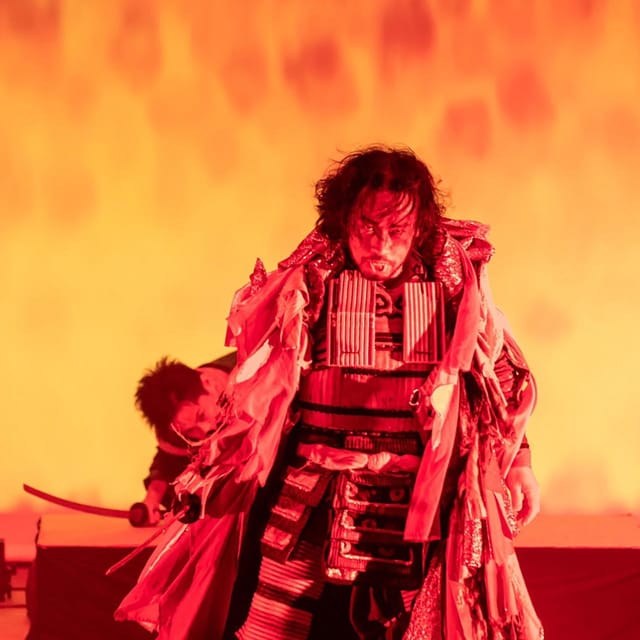
The most praised element is the cast. The performers bring strong energy to the stage and stay in character through the scenes. Their movement is the main storytelling tool, so the quality of the acting is visible even when you do not understand every word.
The choreography also gives the performance its pace. Swordplay is present, but this is not a nonstop fencing demonstration. Some scenes focus more on movement, character, music, and visual drama than on extended combat. If you are booking specifically for technical sword fighting, keep that balance in mind.
Costumes do a great deal of work. They help separate characters and give the stage a bold visual identity. Lighting and sound effects then push the action toward fantasy, creating a production that feels larger than the intimate room.
The compact venue is a real advantage. You are close enough to notice small facial expressions and individual gestures. The setting also lets the audience feel connected to the performers, which becomes especially useful after the show when the cast comes out to speak with you.
Seat assignments are decided by the restaurant, so you cannot request a particular seat. Front seating is listed as rows one through four. If being close matters to you, booking a front-seat option, when available, is worth checking. Still, the small room means even a non-front seat may provide a good view.
One past visitor wished for a clearer development of sword skills, while praising the performers’ expressions and movement. That is a fair way to view the show. It is a dramatic stage performance built around samurai imagery, not a formal martial arts lesson.
More Temple Sunset Tours in Tokyo:
- Angkor Wat Sunrise or Sunset Tour with Guide from Siem Reap
★ 5.0 · 12,109 reviews - Siem Reap: Angkor Wat: Small-Group Sunrise or Sunset Tour
★ 5.0 · 9,444 reviews - Athens: Cape Sounion & Poseidon Temple Sunset Half-Day Trip
★ 4.8 · 8,241 reviews - Siem Reap: Angkor Wat 2-Day Tour with Sunrise and Sunset
★ 4.9 · 4,429 reviews
Meeting the performers from 9:15 to 10 PM
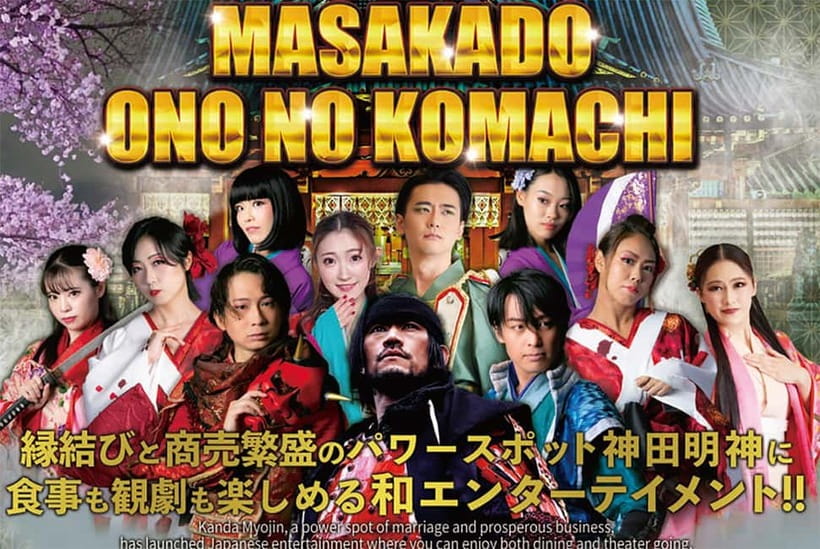
After the main show, the evening changes tone. From 9:15 to 10 PM, the performers come out to interact with the audience. You can take photos with the cast without an additional charge and speak with them before the venue closes.
This is one of the strongest reasons to choose this experience over a distant theater production. You do not simply watch the actors disappear backstage. They make time for photos and conversation, and many can communicate in English.
Bring your camera for this part, but keep it put away during the performance. Photography, video, and audio recording are not allowed while the show is running. The final photo period is the proper time for pictures, and there may also be an encore moment where photography is permitted.
The photo line can move quickly, especially if the room is full. Have your phone ready and decide in advance if you want an individual shot, a group photo, or both. Some attendees also choose to offer a tip to performers, though tipping is not a standard Japanese custom and is not required.
The cast’s friendliness is a major part of the evening’s appeal. You can ask about the characters, thank them for the performance, and take a photo in costume. For families, this creates a clear ending that children can understand and enjoy.
The $41 price and what you receive
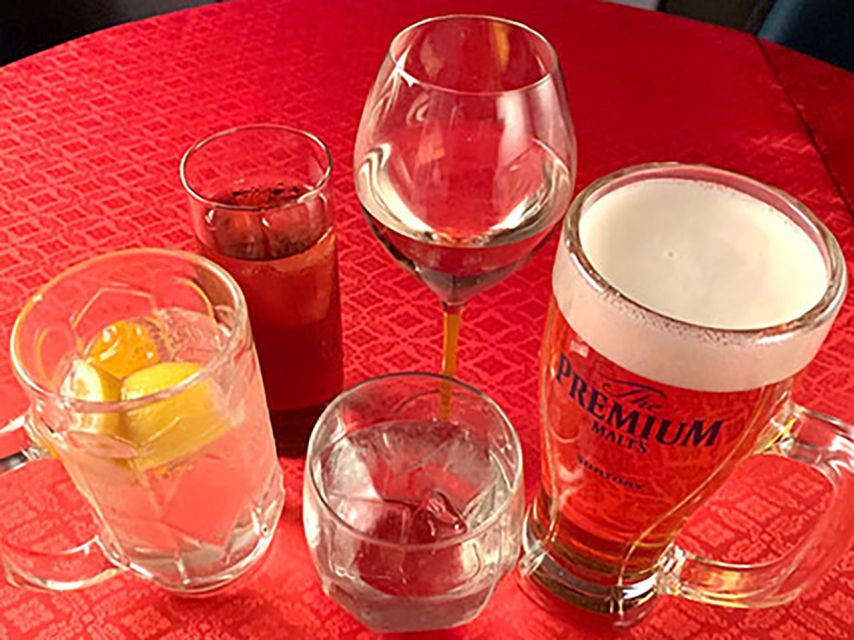
At about $41 per person, the basic price is reasonable for a two to three-hour evening that includes a full stage show, a drink, access to the shrine setting, and cast photos. It becomes stronger value if you choose the unlimited-drinks option and plan to use the pre-show dining period.
The calculation changes if you add a full meal and several drinks. Food is separate on many bookings, so check the exact package instead of assuming dinner is part of the advertised price. The show itself is the main included attraction, while the meal works as an optional addition.
You are also paying for convenience. The evening combines a shrine visit, dinner theater, live music, costumes, storytelling, and a cast meet-and-greet in one place. That saves you from arranging several separate activities, though it also means the experience is structured around fixed times.
Free cancellation is available up to 24 hours in advance, and a reserve-now, pay-later option may be offered. Wheelchair access is listed, but one visitor described getting back to a hotel with a wheelchair as challenging, so anyone with mobility needs should confirm the exact access and transport plan before booking.
Who will enjoy this show most
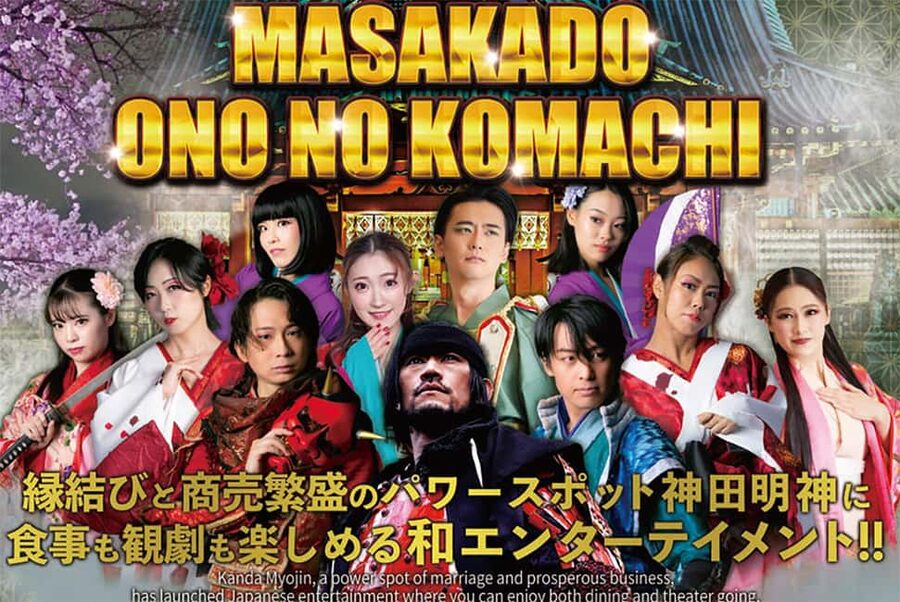
I would recommend this for adults who want a theatrical night connected to Japanese culture without committing to a formal lecture. It also suits older children. The energy, costumes, clear physical action, and photo session can work well for families, and children around ten to twelve have enjoyed the performance.
Solo visitors should feel comfortable booking. The dining setup and cast interaction give you natural points of contact, and the venue is small enough that you will not feel lost in a huge crowd.
It is also a good choice for people who like modern stage production. The combination of traditional stories with music, lighting, sound effects, and choreographed movement gives the show a polished entertainment feel.
I would be more cautious if you want a fully explained historical narrative, extended sword demonstrations, or a quiet meal. The story can be confusing, the combat is only one part of the production, and the dining period is timed around the show.
Practical advice for a smoother evening
Arrive early, especially if you are walking to Kanda Myojin or using a wheelchair. Give yourself time to locate the basement restaurant rather than arriving at 8:10 PM and searching for the entrance.
Read the story outline while you eat. This small step makes the later scenes easier to follow and lets you enjoy the visual action without trying to work out every plot point.
Choose your drink package carefully. If you select unlimited drinks, arrive near the 7 PM opening so you have time to order before the performance. All food and drinks should be arranged before the show begins.
Do not bring the expectation that you can film the production. Cameras, video, and audio recording are not allowed during the performance. Save your phone for the official photo period at the end.
For the best view, check if a front-seat option is available. Seats are assigned by the restaurant, and rows one through four count as the front section. Since the venue is small, other seats can still offer a close view.
Should you book the Kanda Myojin samurai show?
Book it if you want a lively, visually driven Japanese theater experience with a memorable setting and real contact with the cast. The combination of shrine grounds, samurai legend, music, costumes, food, drinks, and post-show photos gives you a full evening rather than a one-hour performance alone.
I would especially choose it for a first Tokyo visit, a family night, or an evening when you want something beyond temples and observation decks. Just treat the meal as a casual add-on, read the story guide first, and arrive early enough to find the venue without stress.
Skip it if your main goal is a historically exact account of the samurai or a long, realistic sword-fighting demonstration. For most visitors who enjoy energetic theater and Japanese folklore, the $41 starting price offers a good night out, particularly when the cast interaction matters to you.
FAQ
Where does the samurai show take place?
The show takes place at the Show restaurant in the basement of Kanda-Myojin Bunka-Koryu-kan at Kanda Myojin Shrine in Tokyo.
What time should I arrive?
Doors open at 7 PM. You should arrive at the restaurant by 8 PM, and entry is not possible after 8:15 PM.
When does the performance run?
The main show runs from 8:15 PM to 9:15 PM.
Is food included in the ticket?
Food is not included in the standard information provided, though an à la carte menu is available. Some options may include a meal, so check the package you select.
Are drinks included?
The booking includes either one drink or unlimited drinks, depending on the option chosen.
Can I take photos during the show?
No. Cameras, video recording, and audio recording are not allowed during the performance. You can take photos with the performers from 9:15 PM to 10 PM.
Can I meet the samurai performers?
Yes. After the show, the performers join the audience for conversation and photos at no additional charge.
Is the experience wheelchair accessible?
The activity is listed as wheelchair accessible. If you use a wheelchair, confirm the access details and your transport plans in advance.
More Shows in Tokyo
- Bali: Uluwatu Kecak and Fire Dance Show Entry Ticket
★ 4.2 · 5,189 reviews - Bali: Kecak Fire Dance Show & Uluwatu Temple Entry Ticket
★ 4.2 · 3,023 reviews - Madrid: Flamenco Show at Tablao Sala Temple with Drink
★ 4.8 · 1,206 reviews - New Delhi: Akshardham Temple Tour with Water and Light Show
★ 4.8 · 313 reviews
Just added around Tokyo
- Tokyo:Nikko UNESCO World Heritage Sites Private 1-Day Tour★ 3.8 · 6 reviews
- Tokyo: Snow Monkey Park and Zenkoji Temple Private Day Tour★ 4.7 · 127 reviews
- Tokyo War History Tour: Yasukuni Shrine & War Museum★ 4.5 · 6 reviews
- Tokyo: Sensoji Temple & Street Food: Private Tour with guide★ 4.6 · 8 reviews
- Tokyo: Shibuya Sky, Harajuku & Meiji Shrine Highlights Tour★ 4.5 · 9 reviews
- Tokyo: Nikko Private Sightseeing Day Trip with Driver★ 5.0 · 10 reviews
- Tokyo → Nikko:Private Customizable Day Trip (English Driver)★ 4.9 · 26 reviews
- Tokyo’s Kitchen: Tsukiji Market Food & Culture Walk★ 4.7 · 74 reviews
Tokyo Temple Tours, compared.
Mt.Fuji,Kawaguchiko Oishi Park,Arakurayama Sengen Park
Read our review →
Asakusa Walking Tour with Sensoji Temple Visit
Read our review →
Nikko Toshogu Shrine and Kegon Waterfall Tour
Read our review →
Tokyo Panoramic 1 Day: Meiji Shrine, Asakusa, Odaiba and SKYTREE®
Read our review →
Mt. Fuji, Kamakura, Big Buddha, & Lake Ashi Day Trip
Read our review →
Mt. Fuji Heritage Tour: Traditional Villages, Lakes & Shrine
Read our review →Browse the lists this tour appears in