
REVIEW · TOKYO TEMPLE TOURS
Tokyo: Evening Tour – Temples, Neon Streets & Culture
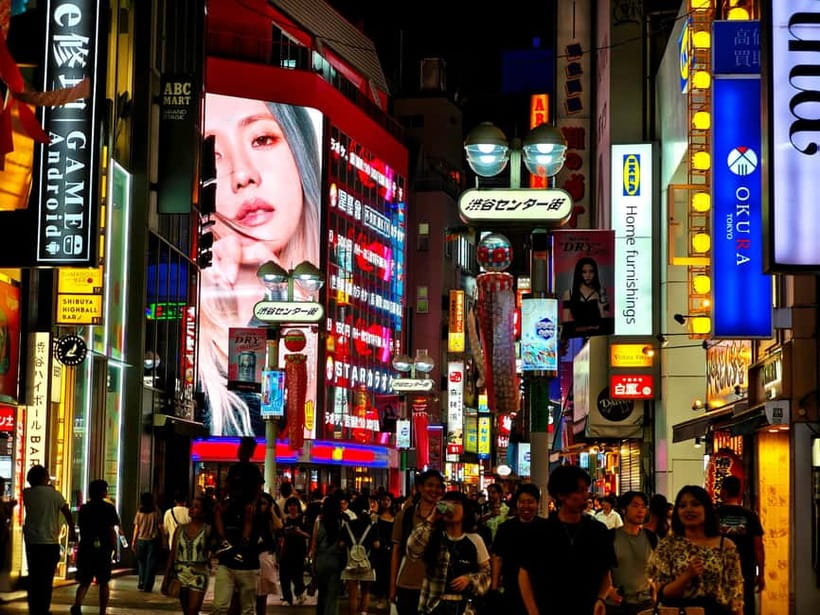
Tokyo changes character after sunset. Temple lanterns glow, giant signs take over the sky, and the city feels cooler and easier to handle than it does at midday. This private walking tour lets you shape the evening around places such as Asakusa, Shibuya, Shinjuku, and Akihabara, rather than following a fixed group route.
I especially like the flexible pacing and the chance to see Tokyo through a local guide’s eyes. Guides such as Deen and Sofia have adjusted routes for a guest recovering from knee surgery, helped with souvenir shopping, and built tours around personal interests. The main drawback is that public transit fares, food, and any entrance fees are extra, and three hours can pass quickly if you want to cover several districts.
Key points to know before booking
- Tokyo after dark: See Asakusa’s temple atmosphere, Shibuya’s famous crossing, or Shinjuku’s neon streets when the city is at its most photogenic.
- Private, flexible format: Your guide can adjust the route, pace, and focus to match your interests and energy.
- Local transit included in the plan, not the price: You move between districts by Tokyo’s excellent public transportation, but fares are not included.
- Useful for first-time visitors: A guide can help you make sense of crowded night districts, especially Shinjuku’s alleys and Kabukicho.
- Good summer timing: Starting after 4 PM helps you avoid the worst daytime heat and some of the heaviest daytime crowds.
- Family and accessibility details: Children under 12 join free when included in the booking, and the activity is listed as wheelchair accessible.
Why an evening walk works so well in Tokyo
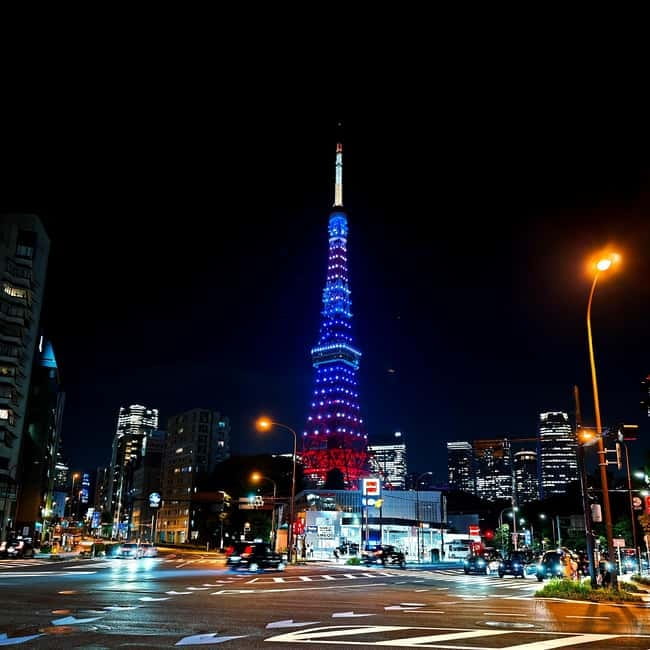
Tokyo is huge, and its best-known neighborhoods are spread across the city. During the day, you may spend a lot of time in heat, crowds, and bright sunlight simply getting from one district to the next. This tour uses the evening to turn those conditions in your favor.
You can start any time after 4 PM, with tours generally lasting three to four hours and ending as late as 11 PM. That gives you a useful range of choices. Start near 4 PM for temple grounds and early evening light, or begin later if you want the full neon effect in Shinjuku or Akihabara.
I would not treat this as a standard point-to-point sightseeing walk. The real value is the guide’s ability to decide what fits. If you care about photography, the route can favor illuminated temples and dramatic streets. If you want shopping advice, your guide can help you find suitable gifts. If your knees or energy are a concern, the walking distance can be reduced.
You should still expect a real walking outing. Wear comfortable shoes, bring a charged phone, and carry a camera if night photography matters to you. Tokyo’s streets are generally easy to navigate, but crowded stations and long transfers can make the evening tiring.
More Temple Sunset Tours in Japan
- Tokyo: Samurai Entertainment Night Show in Kanda Shrine
★ 4.6 · 417 reviews - Tokyo: Asakusa Sensoji Night Walk with a Local Brandy
★ 4.7 · 7 reviews - Kyoto Fushimi-Inari Night Walking Tour
★ 5.0 · 320 reviews
Asakusa after sunset, Tokyo’s quieter side
Asakusa gives the tour a strong opening if you want ancient Tokyo before the neon districts take over. The area is home to Tokyo’s oldest temple, and evening light changes the mood completely. Lanterns come on, the day crowds thin, and the temple grounds can feel more peaceful than they do during daylight hours.
This is a good place to ask your guide about the connection between Tokyo’s modern city life and its older religious traditions. You are not just looking at a temple facade. You are seeing how a working spiritual site fits inside one of the world’s largest cities.
The photographic rewards are clear. Soft illumination and darkening skies can make the temple details easier to appreciate than harsh midday sun. Your guide may also take photos during the tour if available, and a professional photographer may be available depending on the arrangement.
The limitation is time. If you spend too long around Asakusa, you may have less time for Shibuya or Shinjuku. I would tell your guide early if the temple district is your main priority. The private format makes that kind of choice possible.
Shibuya Crossing under the billboards
Shibuya offers a sharp contrast with Asakusa. Here, the focus is modern Tokyo: huge screens, bright signs, crowds moving in every direction, and one of the world’s best-known pedestrian crossings.
The crossing itself does not take long to experience, but the setting around it is the point. Your guide can help you understand how to approach the area, where to pause, and how to take in the scene without getting swallowed by it. At night, the signs and city lights create the dramatic photographs many people associate with Tokyo.
Shibuya is also a useful test of the private-tour format. A large group could easily become separated in the crowd. With a private guide, you can move at your own pace and spend more time on the details that interest you.
Still, do not expect a quiet stop. Shibuya is noisy and crowded, even after dark. If you want a calm evening, ask for more time in Asakusa or the backstreets instead. If you want a snapshot of Tokyo’s modern energy, Shibuya belongs on the route.
Shinjuku’s late-night maze
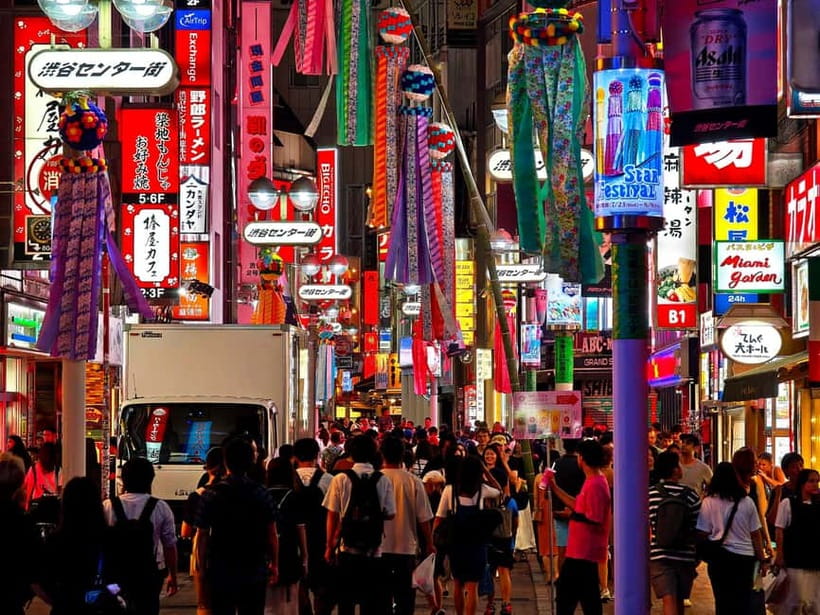
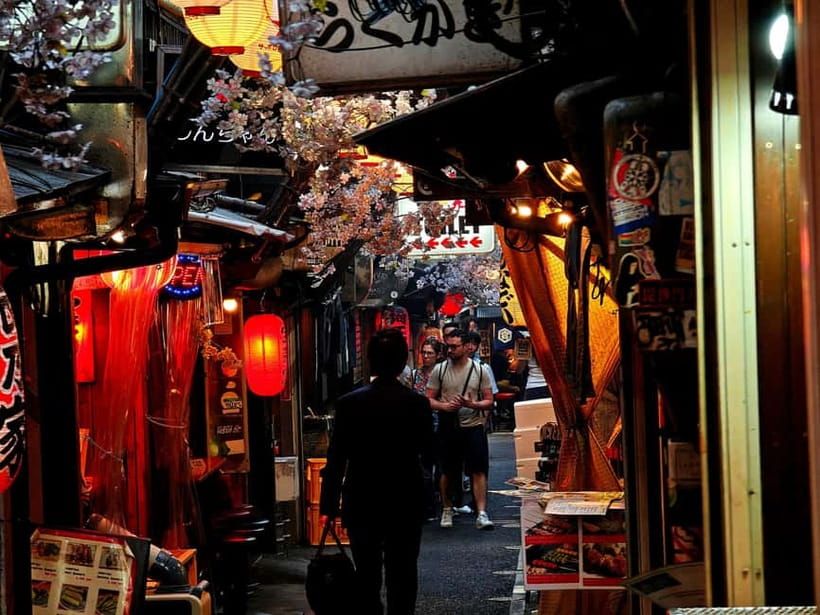
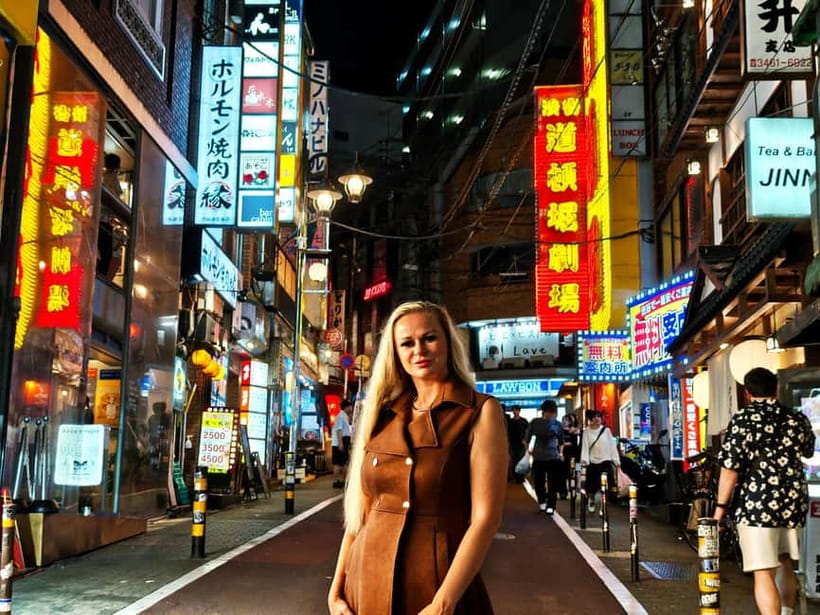
Shinjuku is the most substantial night district listed for this tour. Your route may include Omoide Yokocho, a narrow area known for small izakayas, and Kabukicho, the neon-filled entertainment district.
Omoide Yokocho gives you a close look at Tokyo’s compact food culture. The lanes are tight, the signs glow overhead, and the small restaurants create a very different feel from the wide streets around major stations. Your guide can help you navigate the area and explain what you are seeing.
Kabukicho brings a bigger, louder version of nightlife. You will find karaoke bars, game arcades, glowing signs, and a steady flow of people. It is an interesting place to walk through, but it is not necessarily the best stop for a quiet meal or a slow conversation.
Food is not included, so plan to pay for anything you eat or drink. That is useful to remember when comparing the price of this tour with a food tour. This outing is mainly about neighborhoods, stories, photos, and orientation. You can stop for a snack if the timing and route allow, but you pay separately.
Shinjuku also shows why a local guide can add practical value. The district can feel like a maze, especially at night. A guide who knows the area can help you move between major streets and lesser-known lanes without wasting your limited evening.
More Temple Sunset Tours in Tokyo:
- Angkor Wat Sunrise or Sunset Tour with Guide from Siem Reap
★ 5.0 · 12,109 reviews - Siem Reap: Angkor Wat: Small-Group Sunrise or Sunset Tour
★ 5.0 · 9,444 reviews - Athens: Cape Sounion & Poseidon Temple Sunset Half-Day Trip
★ 4.8 · 8,241 reviews - Siem Reap: Angkor Wat 2-Day Tour with Sunrise and Sunset
★ 4.9 · 4,429 reviews
Akihabara after dark, from anime to technology
Akihabara gives the tour another distinct mood. It is the place to focus on anime, gaming, electronics, and modern Japanese pop culture. After dark, the district’s signs and storefronts create a colorful setting that is especially appealing to fans, though you do not need to be an expert to enjoy it.
I would choose Akihabara if you have a clear interest in Japanese games, animation, or technology. It is also a good choice if you have already seen the major temples and want a more current side of Tokyo.
The guide’s role matters here. A short walk through Akihabara can become a string of bright signs without much context. A local guide can help you understand what different streets and shops represent and can adjust the focus for someone who is curious but not deeply familiar with the culture.
As with Shibuya, the downside is that the district can compete for your attention. There is a lot to look at, but three hours is not enough to cover every neighborhood in detail. Pick one or two priorities before you start.
The best part is the route you do not expect
The tour is not limited to the four headline districts. Depending on the day, your guide may take you through lesser-known alleys, photogenic backstreets, or rooftop viewpoints. These additions can make the evening feel more personal than a checklist of famous sights.
The wording matters here: these stops depend on the day, your interests, and your guide. You should not book expecting one guaranteed rooftop or one exact alley. Instead, think of these options as room for local judgment.
That flexibility was particularly useful for guests with different needs. Deen adjusted a route on the fly for a member of one party recovering from knee surgery. Sofia tailored an evening to a guest’s interests and abilities, including help choosing gifts to take back to the United States.
Those details tell you what this tour does best. It is not just about knowing facts. It is about noticing when a person needs a shorter walk, a different kind of stop, or practical help with shopping. If you want a rigid itinerary with every minute fixed, this may feel too loose. If you want a guide who can respond to the evening as it develops, the format makes sense.
Using Tokyo’s trains and walking streets
You use public transportation between neighborhoods, just as residents do. Private car or bus transport is not included, and neither are train or subway fares. That keeps the tour tied to normal Tokyo life, but you need to budget for those costs.
The transit element has two benefits. First, you can reach several very different parts of the city in one evening. Second, you learn how Tokyo’s neighborhoods connect, which can help you explore independently later in your trip.
It also adds some work. Stations can be large, transfers may require attention, and a walking tour combined with trains can be tiring. Tell your guide about your energy level at the start. The route can be adjusted, but the activity still involves moving through public spaces.
Hotel or location pickup on foot is available as an optional add-on. Your exact meeting time and location are confirmed after booking, so do not assume the guide will meet you at your hotel unless that arrangement is confirmed.
What $83 means for the value
At $83 per person, the price is easiest to justify for a private group that wants personal attention and route flexibility. You are paying for a local guide, planning help, and the chance to shape the evening around your interests rather than joining a large fixed group.
The value is stronger if this is your first night in Tokyo. A guide can help you understand the city’s layout, point out areas worth returning to, and reduce the stress of choosing among several major districts. It is also useful if you have limited time and want to see more than one side of Tokyo in a single evening.
The value is weaker if you are comfortable using trains, already know the neighborhoods, and mainly want a simple walk. You will need to pay separately for transportation, food, shopping, and any entrance tickets. The tour also does not promise admission to a specific attraction.
Children under 12 join free, but you must include them in the booking. For families, that can improve the price calculation, especially when a private route is easier than managing a large group.
Who will get the most from this tour
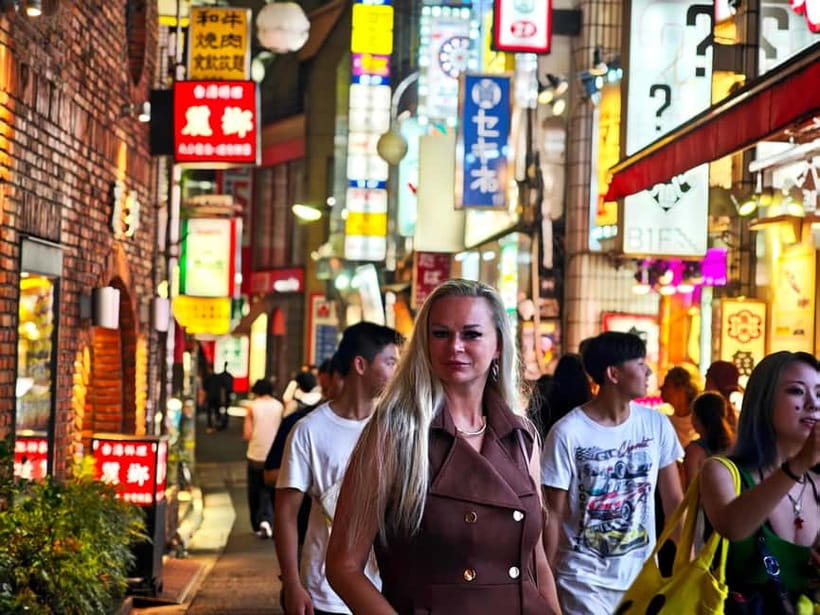
I would recommend it most strongly to first-time visitors who want help making sense of Tokyo at night. It also suits couples, families, and small private groups with different interests.
Choose it if you want:
- A night-focused introduction to Tokyo
- A route adapted to photography, shopping, anime, temples, or nightlife
- Help managing a busy district such as Shinjuku
- A slower or shorter route because of mobility needs
- A private guide instead of a large group
- A practical introduction to using public transit between major areas
I would think twice if you want a food-centered tour, a fixed list of guaranteed attractions, or private vehicle transport. I would also avoid packing too many districts into your wish list. Asakusa, Shibuya, Shinjuku, and Akihabara are each worth more time than a three-hour evening can provide.
The tour is listed as wheelchair accessible, but it remains a walking activity that uses public transportation. If you have specific mobility requirements, share them when arranging the tour so the route can be planned appropriately.
Booking and language details
English and Spanish are listed tour languages, and Italian is also noted as an available option in the activity information. The group is private, so you are not sharing the guide with a large crowd.
You can cancel up to 24 hours before the tour for a full refund, and you can reserve now and pay later. Those terms help if your Tokyo plans are still shifting.
The overall activity usually runs three to four hours. Since it can continue until 11 PM, think about your return route, especially if you are staying far from the final neighborhood. Bring comfortable clothes, good walking shoes, and a charged smartphone. Your guide may take photos if available, but you should still bring your own camera if photography is important to you.
Should you book this Tokyo night walk?
Book it if you want a personal introduction to Tokyo after dark, especially on your first visit. The best reason to choose it is not simply the list of districts. It is the guide’s ability to adjust the evening, from helping someone with a knee injury to shaping a route around shopping interests and personal energy.
Choose your priorities before you start. Ask for Asakusa and fewer transfers if temple atmosphere matters most. Favor Shibuya and Shinjuku for neon, nightlife, and photographs. Pick Akihabara if anime, games, and technology are your main interests.
At $83, this is a fair choice for a private, flexible orientation tour, but not the cheapest way to see Tokyo’s streets. Budget extra for trains and food, keep your expectations realistic about how much fits into three hours, and you will get the most from the experience.
FAQ
When can the tour start?
You can start any time after 4 PM. The exact meeting time and location are confirmed after booking.
How long does the tour last?
The stated duration is three hours, while tours typically last three to four hours and may continue until 11 PM at the latest.
Which Tokyo neighborhoods might the tour visit?
Possible areas include Asakusa, Shibuya, Shinjuku, and Akihabara. Depending on the day, the route may also include lesser-known alleys, backstreets, or rooftop viewpoints.
Are transportation costs included?
No. Public transportation fees are not included, and private bus or car transport is not provided as part of the activity.
Is the tour private?
Yes. This is a private group tour, allowing the guide to adjust the route, pace, and interests for your group.
What languages are available?
English and Spanish are listed as tour languages. Italian is also noted as available in the activity information.
Can children join the tour?
Yes. Children under 12 can join free, but they must be included in the booking.
Just added around Tokyo
- Tokyo:Nikko UNESCO World Heritage Sites Private 1-Day Tour★ 3.8 · 6 reviews
- Tokyo: Snow Monkey Park and Zenkoji Temple Private Day Tour★ 4.7 · 127 reviews
- Tokyo War History Tour: Yasukuni Shrine & War Museum★ 4.5 · 6 reviews
- Tokyo: Sensoji Temple & Street Food: Private Tour with guide★ 4.6 · 8 reviews
- Tokyo: Shibuya Sky, Harajuku & Meiji Shrine Highlights Tour★ 4.5 · 9 reviews
- Tokyo: Nikko Private Sightseeing Day Trip with Driver★ 5.0 · 10 reviews
- Tokyo → Nikko:Private Customizable Day Trip (English Driver)★ 4.9 · 26 reviews
- Tokyo’s Kitchen: Tsukiji Market Food & Culture Walk★ 4.7 · 74 reviews
Tokyo Temple Tours, compared.
Mt.Fuji,Kawaguchiko Oishi Park,Arakurayama Sengen Park
Read our review →
Asakusa Walking Tour with Sensoji Temple Visit
Read our review →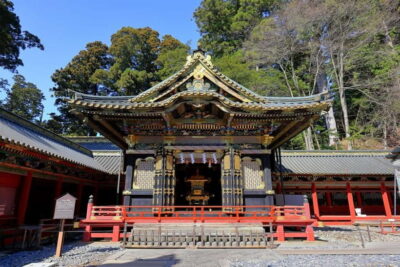
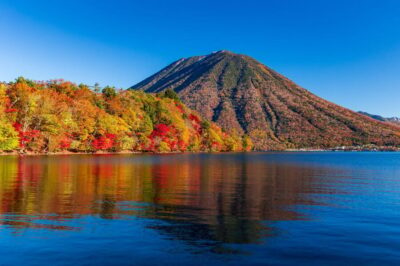
Nikko Toshogu Shrine and Kegon Waterfall Tour
Read our review →
Tokyo Panoramic 1 Day: Meiji Shrine, Asakusa, Odaiba and SKYTREE®
Read our review →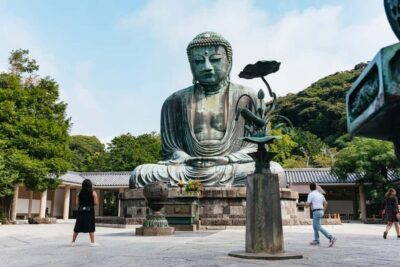
Mt. Fuji, Kamakura, Big Buddha, & Lake Ashi Day Trip
Read our review →
Mt. Fuji Heritage Tour: Traditional Villages, Lakes & Shrine
Read our review →Browse the lists this tour appears in