
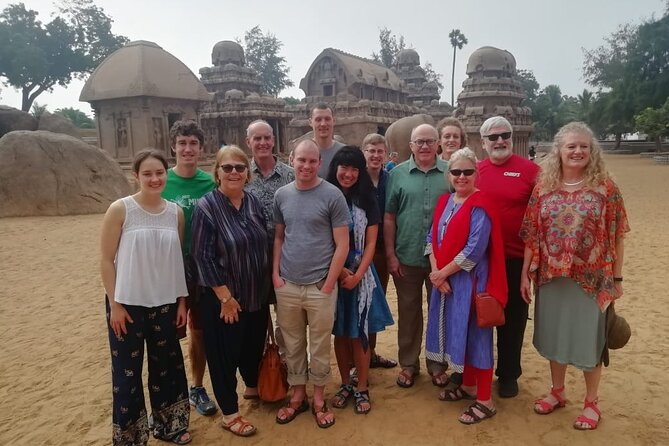
REVIEW · SOUTH INDIAN TEMPLE TOURS
Mahabalipuram walking tour by tourism ministry approved company
Mahabalipuram is less a single monument than a whole stone gallery spread across a historic port town. This three-hour tour links its finest Pallava temples, caves, carvings, and granite oddities, with enough explanation to make the sculptures readable rather than just photogenic.
I like the small group limit of 15 and the choice between walking and autorickshaw. Guide Ramesh is often singled out for clear storytelling, patience, and flexibility. The main drawback is time: ten stops in about three hours means several visits are brief, and the meeting-point information deserves a quick check before you set out.
Key points at a glance
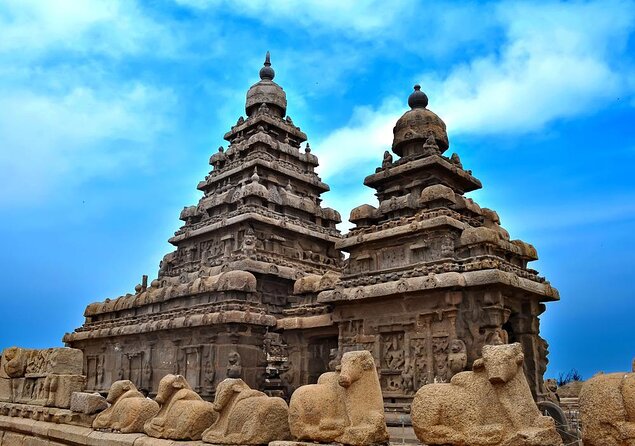
- See ten major monuments: The route covers Pancha Rathas, Arjuna’s Penance, several cave temples, Krishna’s Butter Ball, the Old Lighthouse, and Shore Temple.
- Learn the Pallava story: Your guide explains the 7th-century kings, stone-cutting methods, religious figures, and Mahabalipuram’s role as a port.
- Choose your pace: The experience can be done on foot or with autorickshaw transport between sights.
- Keep the group manageable: A maximum of 15 people gives you a better chance to hear the guide and ask questions.
- Expect strong guiding: Ramesh is named as a particularly engaging guide, with a gift for turning sculpture into a story.
- Plan for an active visit: You will move between outdoor monuments, caves, paved areas, and exposed stone in warm coastal weather.
Why Mahabalipuram rewards a guided visit
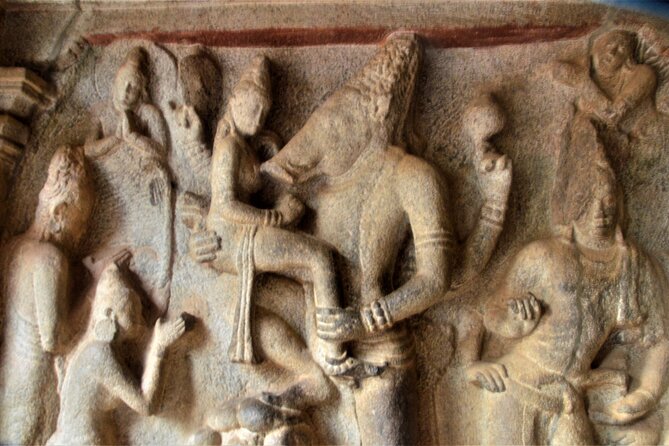
Mahabalipuram, also called Mamallapuram, can look confusing at first. Monuments sit in separate parts of town, and the carvings are packed with gods, animals, royal symbols, and scenes from Hindu epics. A guide helps you see the design behind the disorder.
The Pallavas created many of these works in the 7th century, carving directly into granite or shaping entire boulders into temple forms. That distinction matters. Some monuments are cut from living rock, some are free-standing structures, and others are vast reliefs spread across a cliff face.
I like this tour because it does not stop at the famous Shore Temple. It includes the less obvious caves and reliefs that reveal how the Pallava artists worked. You also get a useful connection between religion, royal power, engineering, and Mahabalipuram’s position on the Bay of Bengal.
The listed price is $50 per person. That is a reasonable value if you want a guide, entry to the included sites, and a planned route through ten monuments. It is less compelling if you already know Pallava art and prefer to wander alone. The real value comes from interpretation and transport flexibility, not from the length of the tour.
More Temple Walking Tours in India
- Mahabalipuram walking tour by certified travel company
★ 5.0 · 10 reviews - Private Guided Spiritual Walk in Banganga Hindu Temples
★ 5.0 · 271 reviews - Tipu Palace + Koté Vishnu + Fort + KR Market + Jain Temple = Bengaluru Pété Walk
★ 5.0 · 150 reviews
Pancha Rathas: five temples carved from stone
The Pancha Rathas, or Five Chariots, provide a strong opening because each monument is carved from a single block of granite. They look like small temples, but they were not designed as ordinary working shrines. Their varied shapes give you a quick lesson in Pallava architectural experiments.
The name connects them with the five Pandava brothers from the Mahabharata, although the buildings are better understood as royal and religious stone models than as actual chariots. Your guide can help sort out those layers of legend and history.
You have about 20 minutes here. That is enough to see the main forms and hear the basic explanation, but not enough for a slow study of every carving. The site is outdoors and exposed, so this is a good place to begin before the heat builds.
Pancha Pandava Cave and the Pallava use of granite
The Pancha Pandava Cave is described as the largest cave temple at Mahabalipuram. Its roof is carried by six pillars and two pilasters, with mythical yali creatures carved into the supports.
A yali is a stylized animal often shown with a lion-like body. These figures are not decoration added at random. They help create a sense of guarded strength around the temple space.
The planned stop lasts about 15 minutes. That short visit works if your guide points out the important details quickly. If you love architectural drawing or sculpture, you may wish you had more time here, but the tour has ten stops to fit into its schedule.
Arjuna’s Penance and India’s great stone reliefs
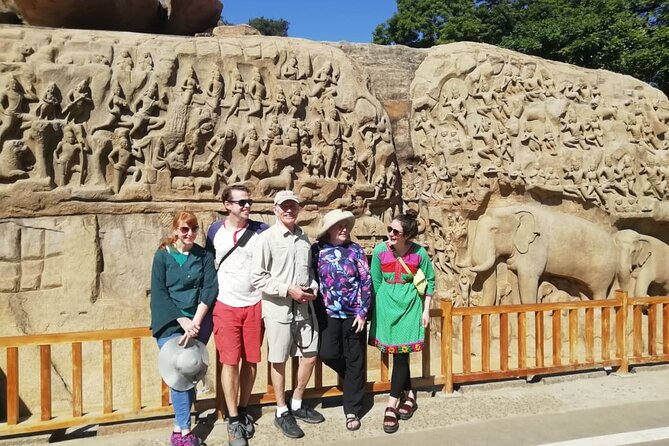
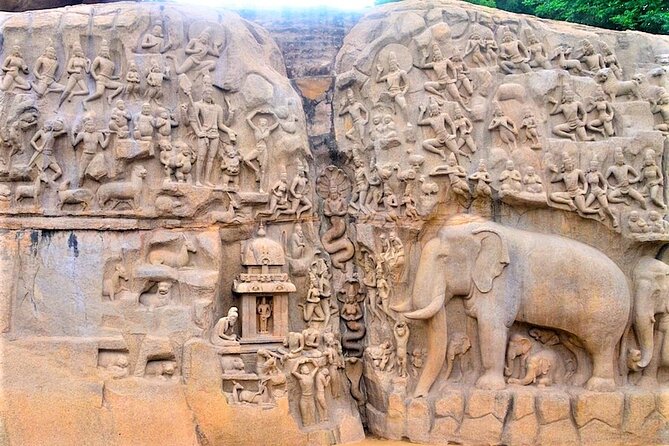
Arjuna’s Penance is one of the visual centerpieces of the visit. The bas-relief stretches about 100 feet long and 45 feet high, filling a broad rock surface with figures from the Mahabharata and scenes from the natural world.
The carving can be difficult to read without help. Your guide can direct your eye to the main characters, animals, and central divisions in the rock. Look for the way the sculptors used the natural split in the granite as part of the composition.
You have roughly 20 minutes here. That is enough for an explanation and photographs, though serious art lovers may want to return later for a quieter look. This is one of the places where a clear guide adds real value, since the scale makes it easy to miss the smaller figures.
More South Indian Temple Tours in Chennai:
- Mahabalipuram tour by Tourism Ministry approved company
★ 5.0 · 405 reviews - Mahabalipuram & Kanchipuram by tourism ministry approved company
★ 5.0 · 264 reviews - Mahabalipuram Private tour from Chennai by car with guide and lunch by Wonder
★ 5.0 · 137 reviews - Full-Day Private Tour to the Kanchipuram Temples from Chennai
★ 5.0 · 73 reviews
Krishna’s Butter Ball: a simple rock with a big effect
Krishna’s Butter Ball is a huge granite boulder balanced on a sloping rock surface. It appears ready to roll, yet it has remained in place, giving the formation its playful name.
This is a shorter 15-minute stop, and it changes the mood of the tour. After temples and sacred reliefs, you get a natural curiosity linked to local legend and popular memory. It is also an easy photo stop.
Do not expect a long historical talk here. The value is visual: the boulder’s position seems impossible when you first see it. It is a useful reminder that Mahabalipuram is not only a collection of formal temples. The town’s granite outcrops shaped the entire artistic tradition.
Varaha Cave: compact carvings with careful detail
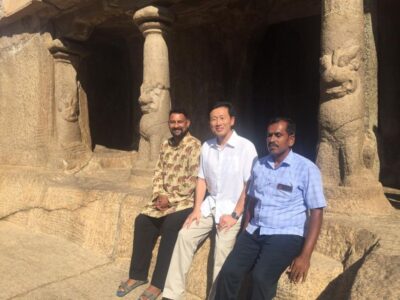
The Varaha Cave Temple dates from the 7th century and was carved into a large piece of granite. Squatting lions support the pillars, giving the entrance a strong Pallava character.
The cave is dedicated to Varaha, the boar incarnation of Vishnu. The sculptures reward close attention because the space is smaller than the open-air reliefs. Your guide can explain how the figures fit into the wider Hindu story and how the sculptors used the cave’s limited surface.
The stop lasts about 20 minutes. That is a useful amount of time for a short cave temple. Since the cave is carved from rock rather than assembled from separate blocks, you get a direct sense of the labor involved.
Trimurti Cave and three major Hindu gods
Trimurti Cave presents Brahma, Vishnu, and Shiva, the Hindu trinity named in the site description. The cave also includes elephant carvings, which add a more animated touch to the solemn religious setting.
This stop helps you compare different approaches to Pallava sculpture. Instead of one large open relief, you are looking at separate sacred chambers cut into the rock. The columns, figures, and recessed spaces show how temple design could be created without building upward with stone blocks.
You have around 20 minutes here. Listen for the differences between the three gods and the symbols associated with each. Without guidance, the figures can blend together, especially if you are visiting several caves in one morning.
Ganesh Ratha and a temple with a changed dedication
Ganesh Ratha is another temple carved from a single stone. It was built in the 7th century under King Mahendravarman I and was originally dedicated to Shiva. It now houses an image of his son, Ganesh.
That change gives the monument an interesting human history. Sacred buildings can continue in use while their religious focus changes. The structure’s chariot-like form also connects it visually with the Pancha Rathas, although each monument has its own design.
The scheduled visit is about 15 minutes. It is enough to see the exterior and hear the story, but you will not have time for a long architectural study. This is one reason the group size matters. A smaller party makes it easier to gather around the guide without blocking the approach.
The Old Lighthouse and Mahabalipuram as a port
The Old Lighthouse is dated to 640 and is described as India’s oldest lighthouse and one of the oldest in the world. Its presence adds an important piece to the usual temple story.
Mahabalipuram was a busy port from the 7th century, so the lighthouse served a practical purpose for ships approaching the coast. The site reminds you that this was not an isolated religious center. It was also connected to maritime trade and royal power.
The stop lasts approximately 20 minutes. Views and access details can vary, but the key point is its setting within a former port town. If you have been focusing only on gods and kings, this stop widens the picture.
Mahishasura Mardini Cave: two dramatic panels
Mahishasura Mardini Cave contains two major bas-reliefs. One shows Vishnu reclining on the coils of a serpent. The other depicts the goddess Durga fighting the demon Mahishasura while riding a lion.
These panels offer a direct contrast in mood. Vishnu’s scene is calm and measured, while Durga’s battle is full of movement and force. Your guide can help you follow the stories and notice how the sculptors created action within a confined stone wall.
The scheduled time is about 15 minutes. This is another short cave visit, so do not expect to examine every figure at leisure. Still, the pairing makes the stop worthwhile, especially if you want to see how Pallava artists handled both peaceful and dramatic subjects.
Shore Temple beside the Bay of Bengal
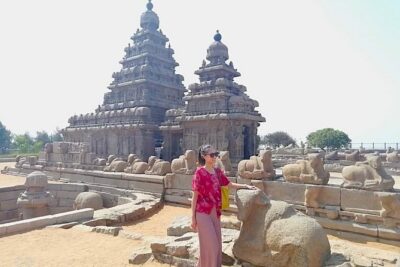
Shore Temple is the grand closing sight, with the Bay of Bengal behind it. The temple was an important center during the Pallava period, when Mahabalipuram served as the kingdom’s main port.
Its coastal position gives it an immediate visual power. The earlier caves and rock carvings feel protected within the town, while Shore Temple faces the sea and the wider world. That setting helps explain why it has become Mahabalipuram’s best-known image.
The listed visit lasts about 20 minutes. This is enough for the guide to explain its role and point out the main features, but the tour may leave you wanting more time for photographs. If the route truly begins at Shore Temple and finishes at Pancha Rathas, as the meeting details indicate, confirm the exact starting arrangement before booking. The stop order provided for the experience runs in the opposite direction, with Shore Temple last.
Walking, autorickshaws, and the pace of the day
The experience is advertised as a walking tour, but you can choose to visit on foot or by autorickshaw. That flexibility matters in Mahabalipuram, where heat, distance, and uneven outdoor surfaces can make a full walking route tiring.
A tuk-tuk can save energy without removing the local character of the visit. One account also highlights buggy rides as a thoughtful option for older visitors. Since the exact transport arrangement can depend on the day, ask the provider how the choice works when you arrive.
The group maximum is 15 people. That is not a private tour, but it is small enough for a guide to answer questions and keep the explanation audible. Ramesh is specifically praised for being friendly, flexible, and more like a storyteller than a person simply reciting dates.
You should allow for sun, outdoor walking, and several short stops. Comfortable shoes and protection from the sun are sensible, though the supplied details do not specify what is provided. The tour is described as suitable for most people and is near public transportation.
Who should book this Mahabalipuram tour?
I would choose this experience if you want the main monuments explained in plain language and you have only a few hours in town. It suits anyone interested in architecture, Hindu sculpture, the Mahabharata, or the Pallava period.
It is also a good fit if you are arranging your own transport from Chennai and do not want to work out the monument sequence yourself. One useful local tip is to arrange vehicle pickup and drop-off a little away from the busiest temple approaches, since traffic can be difficult near the major sites.
You may prefer an independent visit if you want long, quiet periods at each monument. Ten stops in three hours is an ambitious schedule. The guide gives you breadth and context, but you will sometimes move on just as you begin to settle into a site.
The operator, 5 Senses Walks, is identified as a tourism ministry approved company. The tour has a perfect 5 rating from 102 submitted ratings and is recommended by 100 percent of those respondents, with particular praise for Ramesh and the option of tuk-tuk transport. Those figures suggest a strong record, but the practical question remains your preferred pace.
Booking details worth knowing
The price is $50 per person, with group discounts available. Admission is included at each listed stop, which makes the cost easier to judge. You are paying for the route, site access, and a guide who can connect monuments that might otherwise feel scattered.
Mobile tickets are available, and confirmation is issued when you book. The experience requires good weather. You can cancel for a full refund up to 24 hours before the start time, but cancellations or changes inside that window are not refunded or accepted. If poor weather cancels the tour, you are offered another date or a full refund.
The supplied meeting information names Mahabalipuram Shore Temple on Beach Road as the start and Five Rathas on W Raja Street as the end, while also saying the walk ends at Five Rathas. Because the stop sequence lists Pancha Rathas first and Shore Temple last, check the current meeting instructions carefully before the day of your visit.
Should you book it?
Book this tour if you want a guided introduction to Mahabalipuram’s major monuments, especially if Ramesh is leading it or if you value the option of an autorickshaw. The strongest parts are the range of sites, the Pallava context, and the guide’s reported storytelling.
Skip it if you want to spend an hour at one relief or temple. The schedule is tight, and the tour favors coverage over lingering. For most first-time visitors with limited time, though, $50 is fair for ten significant sites, included admission, and help making sense of one of Tamil Nadu’s most remarkable historic areas.
FAQ
How long does the Mahabalipuram walking tour last?
The tour lasts approximately three hours.
How many people can join the tour?
The group has a maximum of 15 participants.
Can I use an autorickshaw instead of walking?
Yes. You can choose to visit the monuments on foot or by autorickshaw.
Where does the tour start and end?
The meeting information gives Mahabalipuram Shore Temple on Beach Road as the start and Five Rathas on W Raja Street as the end. It also says the walk ends at Five Rathas, so confirm the current meeting details before departure.
Are admission tickets included?
Yes. Admission is listed as included for each of the ten stops.
What happens if bad weather cancels the tour?
You can choose another date or receive a full refund. For normal cancellations, cancel at least 24 hours before the start time to receive a full refund.
More Temple Walking Tours in Chennai
- Bangkok: City Highlights Temple and Market Walking Tour
★ 4.5 · 3,990 reviews - Bangkok: Grand Palace and Wat Phra Kaew Guided Walking Tour
★ 4.4 · 2,417 reviews - Bangkok: Wat Pho and Wat Arun Guided Walking Tour
★ 4.6 · 1,720 reviews - Tokyo: Asakusa Walking Tour with Sensoji Temple Visit
★ 4.8 · 1,583 reviews
Just added around Chennai
- South India Tour- Temple Architecture and Backwaters★ 5.0 · 7 reviews
- Chennai City Highlights – Government Museum & Temple Discovery★ 4.0 · 7 reviews
- Private Day Trip to Mahabalipuram from Chennai with Expert Guide★ 5.0 · 29 reviews
- Full-Day Private Tour to the Kanchipuram Temples from Chennai★ 5.0 · 73 reviews
- Chennai & Mahabalipuram day trip with private car, Lunch & Guide★ 5.0 · 10 reviews
- Explore Mahabalipuram & Kanchipuram: A Day Trip from Chennai!★ 5.0 · 9 reviews
- Mahabalipuram and Kanchipuram Day trip from Chennai by Private car with Guide★ 5.0 · 34 reviews
- Mahabalipuram walking tour by certified travel company★ 5.0 · 10 reviews
South Indian Temple Tours, compared.
Mahabalipuram tour by Tourism Ministry approved company
Read our review →
Mahabalipuram & Kanchipuram by tourism ministry approved company
Read our review →
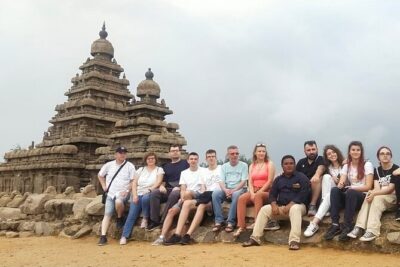
Mahabalipuram Private tour from Chennai by car with guide and lunch by Wonder
Read our review →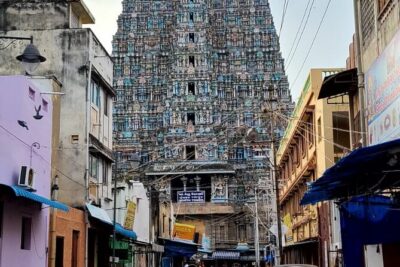
Madurai Walks : City Highlights Temple and Market Tour
Read our review →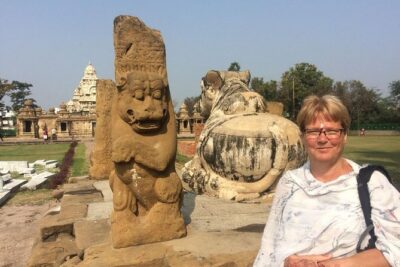
Full-Day Private Tour to the Kanchipuram Temples from Chennai
Read our review →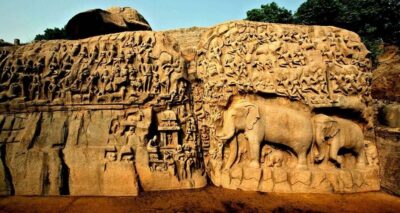
Mahabalipuram: Private Guided tour from Chennai with lunch
Read our review →Browse the lists this tour appears in