
REVIEW · SOUTH INDIAN TEMPLE TOURS
Mahabalipuram tour by Tourism Ministry approved company
Mahabalipuram is one of the best day trips from Chennai for seeing India’s ancient stonework without wrestling with transport or entrance queues on your own. In about seven hours, you visit Pallava temples, open-air carvings, rock-cut caves, the Old Lighthouse, and the Shore Temple beside the Bay of Bengal. The five chariots and Shore Temple are the big sights, but the smaller caves reward careful looking.
I like the private car and flexible pace, since you can stop for photos or spend longer at a carving instead of following a large group. I also like the lunch and all-inclusive price, which removes the usual small decisions during a busy sightseeing day. The main drawback is that the itinerary packs in many short stops, so this is a broad introduction rather than a slow archaeological study. The drive from Chennai can also take roughly an hour each way.
Key points to know before booking
- Nine major sites in one day: The route covers monolithic temples, caves, reliefs, a lighthouse, and the Shore Temple.
- Private transport from Chennai: Hotel pickup and drop-off are included, with your own group in the vehicle.
- Guides who add real context: Guides such as Kannan, Ramesh, Hareesh, and others explain the carvings, myths, and Pallava building methods.
- Lunch and entry fees are covered: You pay $115 per person for the listed inclusions, with drinks extra.
- A flexible, no-pressure format: The day can move at your pace, and several accounts praise the lack of forced souvenir shopping.
- Best for first-time visitors: You see a lot in one day, but you should expect brief visits at several stops.
Why Mahabalipuram makes a strong Chennai day trip
Mahabalipuram, also called Mamallapuram, was an important Pallava port and artistic center. Its monuments were cut directly into granite or carved from single blocks of stone. That gives the town a special character: temples here are not just buildings placed on stone foundations. Some were shaped out of the rock itself.
The Pallava period is especially important for the development of South Indian temple architecture. At Mahabalipuram, you can see several stages of that work in a compact area. There are free-standing monoliths, cave temples with carved columns, a huge relief crowded with figures, and a structural temple built from separate blocks.
That range is why I think a guide matters here. Without explanation, you may see a group of weathered figures and move on. With a good guide, you can understand the difference between a cave temple and a monolithic ratha, identify the gods in a relief, and see how mythical animals were used in Pallava design.
The private format also helps with the practical side. Chennai traffic can be tiring, and arranging a car, driver, tickets, lunch, and a local guide separately would take time. This tour brings those pieces together in one booking.
More South Indian Temple Tours in Chennai:
- Mahabalipuram & Kanchipuram by tourism ministry approved company
★ 5.0 · 264 reviews - Mahabalipuram Private tour from Chennai by car with guide and lunch by Wonder
★ 5.0 · 137 reviews - Mahabalipuram walking tour by tourism ministry approved company
★ 5.0 · 102 reviews
A private ride from Chennai, with the day arranged for you
The tour lasts about seven hours and includes pickup and drop-off at your Chennai hotel. A private car means only your party takes part, so the day is not built around the needs of a busload of strangers.
The drive to Mahabalipuram is part of the day, not a minor transfer. One account described roughly an hour each way, though traffic and your pickup location can affect the timing. I would avoid scheduling a tight evening flight or another fixed appointment after the tour.
The route includes many stops, usually with 15 to 25 minutes at the shorter sites. That rhythm works well if you want an overview and plenty of photographs. It is less suitable if you hope to sketch every carving, read every plaque, or spend an hour at each monument.
Guides named in the supplied information include Kannan, Ramesh, Hareesh, Nivi, Ganesh, and others. You may not receive a particular guide, but the strongest praise centers on clear explanations, patience, help with photographs, and the ability to adjust the pace. Several accounts also describe polite service without pressure to buy souvenirs.
Pancha Rathas: five temples carved from single blocks
The first major stop is Pancha Rathas, or the Five Chariots. These are not chariots in the usual sense. They are monolithic temple forms, each cut from one piece of granite during the seventh century.
The five structures differ in shape and size. Their names come from the five Pandava brothers and Draupadi, although the link is traditional rather than a simple record of their original purpose. Your guide can help you compare the roofs, columns, animal sculptures, and plans.
I find this stop useful at the start because it gives you a visual primer for the rest of the day. Look closely at how the builders tested different temple forms in stone. The site can feel like a stone workshop frozen in time.
The scheduled visit is about 25 minutes. That is enough for an overview and photographs, but not for detailed study of every surface. Wear shoes that are comfortable for walking over uneven ground and bring sun protection.
Arjuna’s Penance and the giant open-air relief
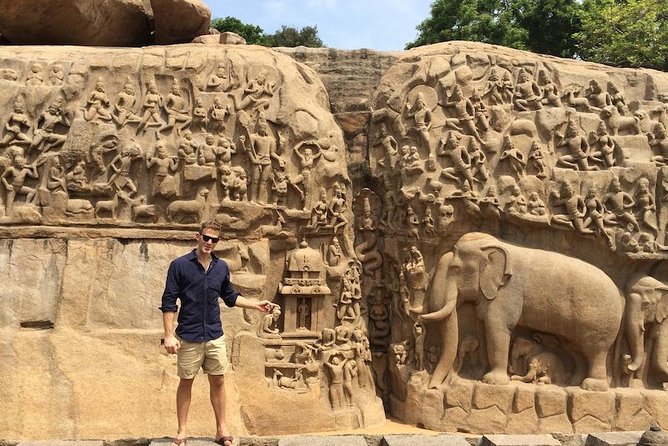
Arjuna’s Penance is one of Mahabalipuram’s most striking works. The bas-relief measures about 100 feet long and 45 feet high, with gods, animals, humans, and other figures spread across a natural cleft in the rock.
The title connects the scene with Arjuna from the Mahabharata, but the carving has also been interpreted as the descent of the Ganges. A guide is valuable here because the meaning is not obvious at a glance. You can look for elephants, ascetics, celestial beings, and the vertical split that helps organize the scene.
This is an open-air monument, so the way light falls across the granite affects what you notice. Give yourself a moment to scan from side to side rather than focusing only on the central figures.
The planned visit is about 20 minutes. That may sound short for such a large work, but a focused explanation makes the time useful. If you are especially interested in sculpture, ask your guide for a little extra time here.
Same country, a different morning at the gates:
- Full-Day Private Tour to the Kanchipuram Temples from Chennai
★ 5.0 · 73 reviews - From Chennai: Private Kanchipuram and Mahabalipuram Day Tour
★ 4.6 · 55 reviews - Mahabalipuram and Kanchipuram Day trip from Chennai by Private car with Guide
★ 5.0 · 34 reviews - Private Day Trip to Mahabalipuram from Chennai with Expert Guide
★ 5.0 · 29 reviews
Pandava Cave, Varaha Cave, and Trimurti Cave
The cave temples show a different side of Pallava work. Instead of cutting a separate monument from a boulder, artisans carved inward into a granite face and shaped a sheltered temple space.
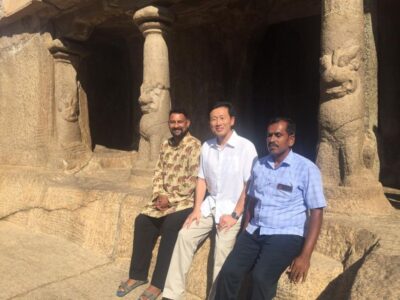
Pandava Cave is described as the largest cave temple at Mahabalipuram. Six pillars and two pilasters support the front, while yali figures decorate the columns. Yalis are mythical creatures, often shown with lion-like features, and they give the architecture a strong, watchful look.
The visit is around 15 minutes. That is enough to see the layout and major carvings, but the cave is best approached slowly. Notice how the pillars create a transition from open rock to sacred interior.
Varaha Cave dates to the seventh century and includes carved pillars decorated with squatting lions. The cave is linked with Varaha, the boar incarnation of Vishnu. The scale is smaller than the Shore Temple, but that is part of its appeal. You are looking at close, detailed carving rather than a large silhouette against the sea.
Trimurti Cave is dedicated to Brahma, Vishnu, and Shiva, the Hindu trinity. Elephant carvings add another point of interest. This stop helps you see how Pallava artists combined religious imagery with architectural rhythm.
The cave visits are short, so listen closely when the guide identifies the figures. In dim or shaded areas, details can be easy to miss.
Krishna’s Butterball and Ganesha Ratha
Krishna’s Butterball is the day’s most playful stop. This huge granite boulder rests on a sloping stone surface and appears ready to roll, yet it has remained in place. It is an excellent photo stop and a welcome change after several temples and caves.
The planned visit is about 15 minutes. You do not need a long explanation to appreciate the sight, though your guide may add local stories and point out the way the boulder balances against the slope. It is also one of the easier places to pause and take a group photograph.
Ganesha Ratha returns you to Pallava monolithic architecture. The temple was carved from a single stone and was originally dedicated to Shiva. It is now associated with his son Ganesha. The building is linked with King Mahendravarman I and dates to the seventh century.
Compare it with the Five Chariots. The two stops help you see that these monoliths were not identical copies. Their proportions, roof forms, and decorative details differ.
The Old Lighthouse and Mahishasuramardini Cave
The Old Lighthouse was built around 640 and served ships approaching Mahabalipuram, an important port during the Pallava period. Its presence adds a useful maritime layer to the day. The monuments were not isolated religious works. They belonged to a coastal center connected with trade and travel.
The lighthouse stop is scheduled for about 15 minutes. You may find the view and the connection with the old port more interesting than the structure itself. Ask your guide how the port shaped Mahabalipuram’s importance if that subject interests you.
Mahishasuramardini Cave contains two major reliefs. One shows Vishnu reclining on the coils of a serpent. The other presents the goddess Mahishasuramardini battling the buffalo demon Mahishasura.
These carvings reward a close look at movement. The figures are not simply arranged in a row. Their poses and gestures create a sense of action within the hard granite. The cave is another 15-minute stop, and the guide’s explanation can help you distinguish the stories.
Shore Temple: the day’s grand coastal finish
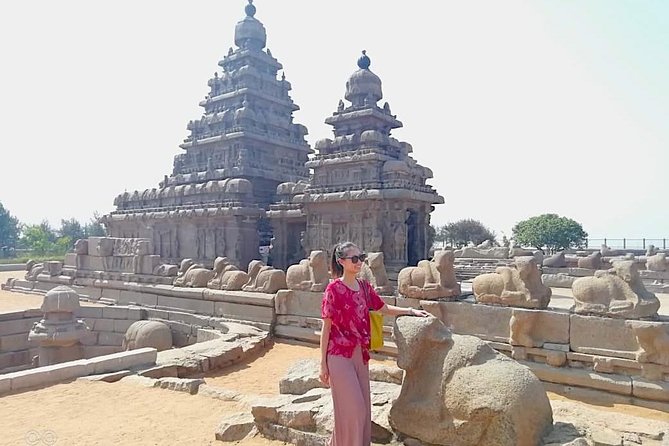
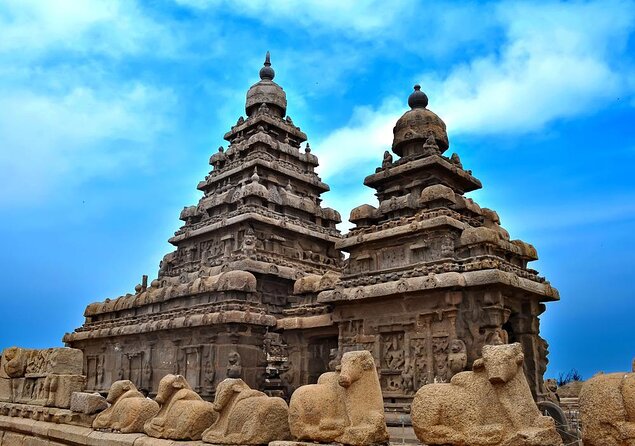
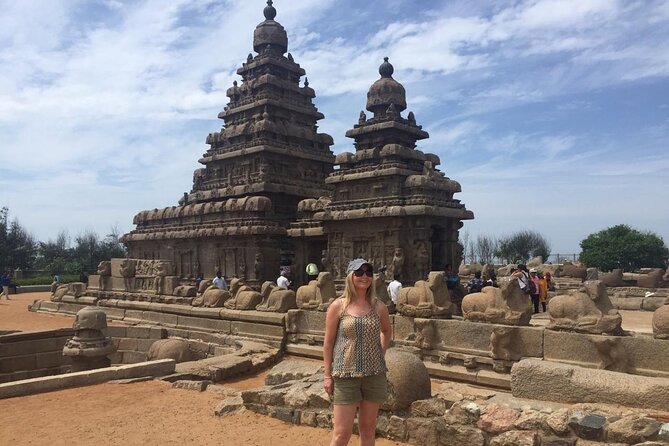
The Shore Temple is the final listed stop and the monument most closely tied to Mahabalipuram’s image. It overlooks the Bay of Bengal and represents a different building method from the earlier caves and monoliths. Here, the temple was constructed from separate stone blocks.
Its coastal position gives the visit a strong sense of place. You are not only looking at a temple but also at a monument built for a port city facing the sea. The setting makes this a natural finale after seeing the inland rock-cut sites.
Allow time to take in the whole structure before focusing on details. Look at the layered profile, the stone figures, and the way the temple sits against the coastal horizon. The exact time at this stop is not listed, so the pace may depend on traffic, opening conditions, and how long you spend at earlier sites.
The Shore Temple can also be busy and exposed to sun. A hat, water, and comfortable walking shoes will make the final visit easier. Be prepared for the possibility that the seven-hour schedule leaves less time here than you would like if earlier stops run long.
Lunch, thali, and the value of the all-inclusive price
Lunch is included, along with entrance charges. Beverages are not included, so keep some money available for water, tea, or other drinks.
The meal is more than a convenient break. One account singled out the chance to learn how to eat a South Indian thali, which can be useful if you are unfamiliar with the meal’s rice, vegetables, sauces, and accompaniments. A separate account described lunch at a restaurant with an ocean view, though you should not assume that every departure uses the same restaurant.
At $115 per person, the price makes the most sense if you value convenience. You are paying for a private vehicle, hotel transport, a professional guide, entrance tickets, and lunch. If you are traveling alone, it is a substantial day-trip cost. For two or more people, the private format becomes easier to justify, especially when you consider the time saved arranging each part separately.
The group discount feature may improve the value for larger parties. Confirm the exact price for your group before paying, since the listed rate is per person.
Flexibility, extra stops, and what you should clarify
The tour is described as private and tailored to your interests. That should give you room to ask for more time at a favorite monument or to move faster through a stop that interests you less.
Some accounts describe additional stops, including a Jain temple, DakshinaChitra, and a stone-carving shop. These should be treated as possible additions rather than guaranteed parts of the standard route. If you have a particular extra stop in mind, ask before the day begins.
The stone-carving connection can be interesting because Mahabalipuram still has a strong carving tradition. At the same time, a shop visit may not appeal to everyone. Make your preference clear. One of the strongest practical positives of this experience is the sense that the guides do not push souvenir purchases, so you should feel comfortable stating that you want more monument time.
Photography help is another small but useful benefit. Kannan is specifically praised for being willing to take pictures, and other guides are described as patient with photo stops. Tell the guide early if photography is a priority.
Who should book this Mahabalipuram tour?
I would choose this experience if you are staying in Chennai and want a structured first look at Mahabalipuram without managing transport, tickets, and lunch yourself. It is especially suitable for couples, families, solo visitors who prefer support, and small groups who want a private vehicle.
It also suits anyone who likes history explained in plain language. The temples and carvings can be confusing without context, and guides such as Kannan and Ramesh are repeatedly praised for explaining the sites clearly and adjusting the pace.
You may want a different arrangement if you are an archaeologist, architectural photographer, or very slow museum-style visitor. Nine sites in about seven hours means movement. You will see a lot, but you will not study every carving at length.
The tour has a perfect five-star rating from 405 reviews and a 100 percent recommendation rate, which points to very strong customer satisfaction. I would still focus on the practical fit: the long drive, warm outdoor sites, short scheduled visits, and extra cost for drinks.
Should you book it?
Book this tour if you want the easiest, most organized way to see Mahabalipuram from Chennai in one day. The combination of private transport, local guiding, lunch, and included admission gives you a clear value advantage over arranging the pieces separately.
Choose it with realistic expectations. This is a carefully packed introduction, not an unhurried day at one temple. If you tell the guide what matters most, use the private format well, and bring water and sun protection, you should come away with a strong sense of why Mahabalipuram is one of Tamil Nadu’s essential cultural stops.
Free cancellation is available up to 24 hours before the start time. Changes or cancellations made less than 24 hours ahead are not accepted for a refund.
FAQ
How long is the Mahabalipuram tour from Chennai?
The tour lasts approximately seven hours, including transport, sightseeing, and lunch.
Is hotel pickup and drop-off included?
Yes. Pickup and drop-off at a Chennai hotel are included.
Is this a private tour?
Yes. Only your group participates, and transport is provided by private car.
Are entrance fees included?
Yes. Entrance charges for the listed sites are included in the tour price.
Is lunch included?
Yes. Lunch is included, but beverages are not included.
What happens if I need to cancel?
You can cancel up to 24 hours before the experience start time for a full refund. Cancellations or changes made less than 24 hours before the start time are not accepted.
Just added around Chennai
- South India Tour- Temple Architecture and Backwaters★ 5.0 · 7 reviews
- Chennai City Highlights – Government Museum & Temple Discovery★ 4.0 · 7 reviews
- Private Day Trip to Mahabalipuram from Chennai with Expert Guide★ 5.0 · 29 reviews
- Full-Day Private Tour to the Kanchipuram Temples from Chennai★ 5.0 · 73 reviews
- Chennai & Mahabalipuram day trip with private car, Lunch & Guide★ 5.0 · 10 reviews
- Explore Mahabalipuram & Kanchipuram: A Day Trip from Chennai!★ 5.0 · 9 reviews
- Mahabalipuram and Kanchipuram Day trip from Chennai by Private car with Guide★ 5.0 · 34 reviews
- Mahabalipuram walking tour by certified travel company★ 5.0 · 10 reviews
South Indian Temple Tours, compared.
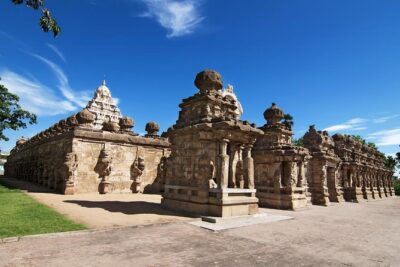
Mahabalipuram & Kanchipuram by tourism ministry approved company
Read our review →
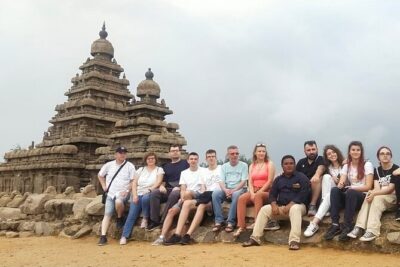
Mahabalipuram Private tour from Chennai by car with guide and lunch by Wonder
Read our review →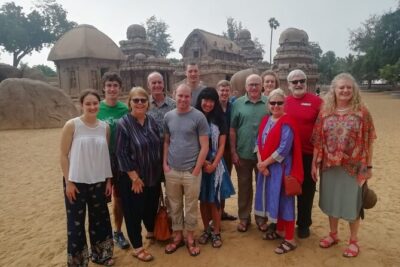
Mahabalipuram walking tour by tourism ministry approved company
Read our review →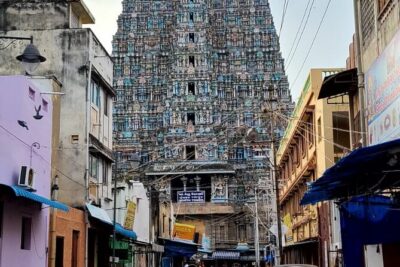
Madurai Walks : City Highlights Temple and Market Tour
Read our review →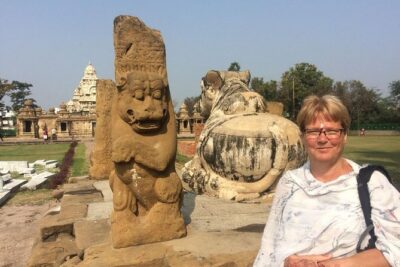
Full-Day Private Tour to the Kanchipuram Temples from Chennai
Read our review →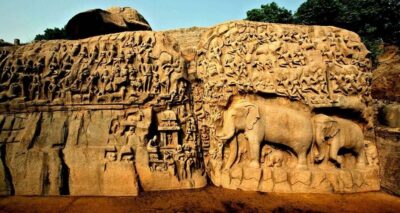
Mahabalipuram: Private Guided tour from Chennai with lunch
Read our review →Browse the lists this tour appears in