
REVIEW · TEMPLE WALKING TOURS
Tipu Palace + Koté Vishnu + Fort + KR Market + Jain Temple = Bengaluru Pété Walk
Bengaluru’s old city comes at you in layers: a painted palace, carved temple stone, a damaged fort, flower sellers, traffic, incense, and the fast-moving business of KR Market. This Bengaluru Pété Walk links those pieces on foot, giving you a sharp look at the city beyond its modern office districts.
I like the mix of historic sights and daily life, especially the flower and produce market. I also like the compact route and the guides’ practical help, from explaining temple customs to walking visitors toward the metro afterward. The main drawback is the pace and setting: you’ll cover busy streets for up to three hours, and the Hindu temple may be closed on an afternoon departure.
Key points to know before you book
- Five very different stops: Tipu Sultan’s Summer Palace, Kote Venkataramana Temple, Bangalore Fort, KR Market, and a Jain temple.
- A small-group walk: The maximum group size is 10, which helps the guide manage market crossings and questions.
- A strong market visit: KR Market brings you close to flowers, vendors, workers, carts, animals, noise, and dense foot traffic.
- A useful introduction to Bengaluru: Guides such as Vijay, Vanaja, Raghu, Vasuki, and Phaneesh have been praised for history, local advice, and patient pacing.
- Dress rules matter: Cover your legs and shoulders for the temples, and women should carry a scarf. An extra pair of socks can be useful.
- Good for a short stay: The walk takes about 2 hours 30 minutes to 3 hours and ends near Chickpet Metro station.
Why this Bengaluru walking tour works
I see this as an orientation walk rather than a grand monument tour. You won’t spend hours inside one palace or museum. Instead, you move through the old center and watch Bengaluru change from royal architecture to religious spaces, then to one of its busiest commercial areas.
That variety is the point. In a single half-day, you get a taste of Islamic architecture, Hindu worship, the remains of a military fort, wholesale trade, and Jain traditions. The transitions can feel abrupt, but that is also an honest picture of the Pété, the historic old quarters of Bengaluru.
The group is capped at 10 people. That is small enough for a guide to answer questions and keep everyone together in the market, though you should still expect a street walk rather than a quiet private outing.
The price is $33.55 per person. Since admission to the palace and fort is included, the cost is reasonable if you value a guide who can explain what you are seeing and help you handle the market. Lunch, tips, and transport are extra, so the final cost depends on whether you add hotel pickup or stop for food afterward.
More Temple Walking Tours in India
- Bangalore: Palace, Temples, Fort & Markets Walking Tour
★ 4.9 · 97 reviews - Old Bangalore Historical Walk thro Palace, Temples, Fort & Market
★ 5.0 · 60 reviews - Bull temple layout Heritage walk
★ 5.0 · 13 reviews
Starting at Tipu Sultan’s 230-year-old palace
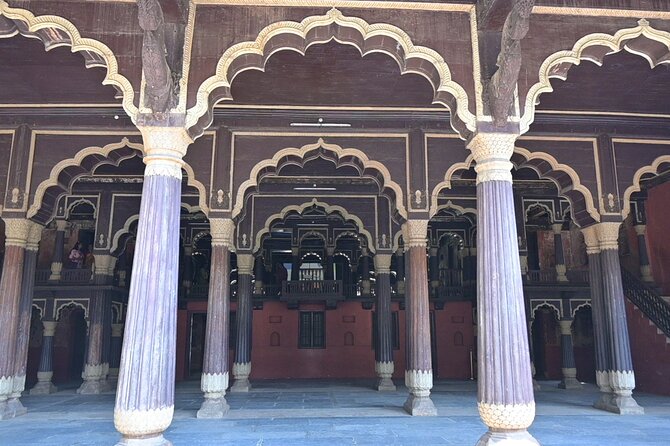
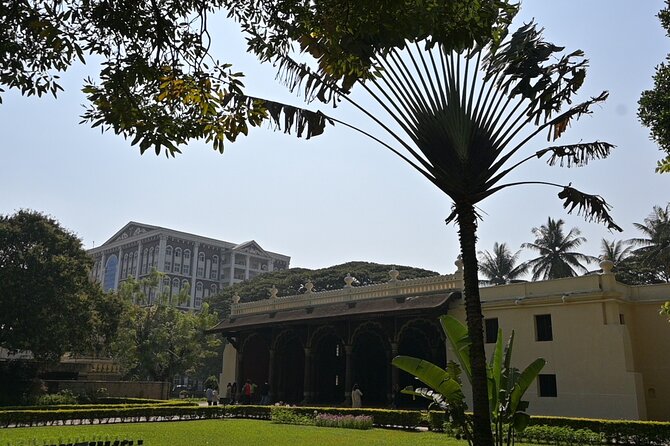
The walk begins at Tipu Sultan’s Summer Palace on Tippu Sultan Palace Road in Chamrajpet. The palace is about 230 years old and built mainly from teak wood, with an Islamic architectural style that feels different from the stone temples coming later in the route.
Give yourself a moment here before rushing on. The palace is not huge, so its value comes from the craftsmanship, age, and the chance to place Tipu Sultan’s period within Bengaluru’s story. The guide can help you notice the structure and explain why this wooden building matters.
Admission is included. The stop lasts about 30 minutes, which is enough for an introduction but not a long architectural study.
This is a useful opening because it gives the walk a historical anchor. You begin with royal power and military-era Bengaluru, then move straight into the religious buildings and commercial streets that grew around it.
Kote Venkataramana Temple and its carved stone walls
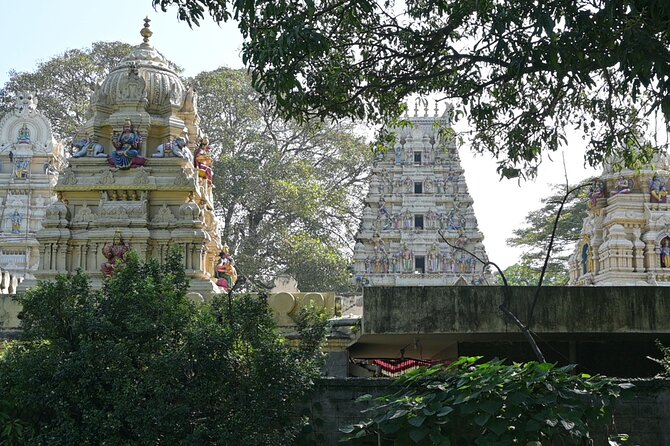
Next door is Kote Venkataramana Temple, built in 1690 by Chikkadevaraja Wodeyar. Its walls carry carved figures from Indian mythology, and the stonework gives you a closer look at a very different artistic tradition from the palace.
The temple is free to enter, but opening hours can change with working schedules and seasonal variations. This is the stop most likely to be affected by the time of day, and an afternoon walk may find the Hindu temple closed.
If the doors are open, dress respectfully and follow the guide’s instructions. Temple visits are not simply photo stops. You may see worship taking place, and you need to move with care around the religious space rather than treating it like a museum.
Several guides, including Vijay and Phaneesh, have been praised for explaining the myths and customs connected with the temples. That sort of context makes the carvings easier to understand than they would be on your own.
Bangalore Fort and the small remains of a larger past
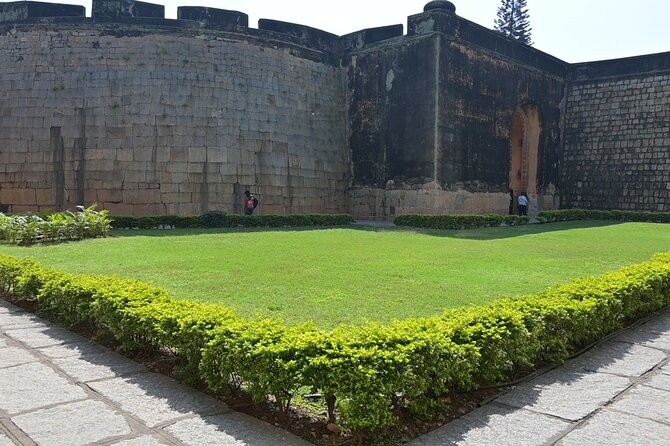
Bangalore Fort began as a mud fort built by Kempegowda, the founder of Bengaluru, in the 16th century. Hyder Ali rebuilt it in stone during the 1760s.
Only about 5 percent of the original fort remains. That fact shapes the visit. You are not entering a complete defensive complex, but examining a surviving fragment and imagining how much of old Bengaluru has disappeared around it.
The site is described as neatly maintained and open to visitors without an additional admission charge. The stop lasts about 30 minutes, giving the guide time to explain the fort’s changes without turning the visit into a long lecture.
I like this part because it corrects a common expectation. The fort is not the visual centerpiece of the walk. Its importance is historical, and the contrast between a partial ruin and the crowded city around it makes the old and new sides of Bengaluru visible at once.
More Temple Walking Tours in Bangalore:
- Bangalore: Basavanagudi Walking Tour with Bull Temple
★ 4.9 · 12 reviews - Bangalore City Tour: Walking, Palace & Temples
★ 3.6 · 7 reviews - Bangkok: City Highlights Temple and Market Walking Tour
★ 4.5 · 3,990 reviews - Bangkok: Grand Palace and Wat Phra Kaew Guided Walking Tour
★ 4.4 · 2,417 reviews
KR Market, where Bengaluru gets loud and colorful
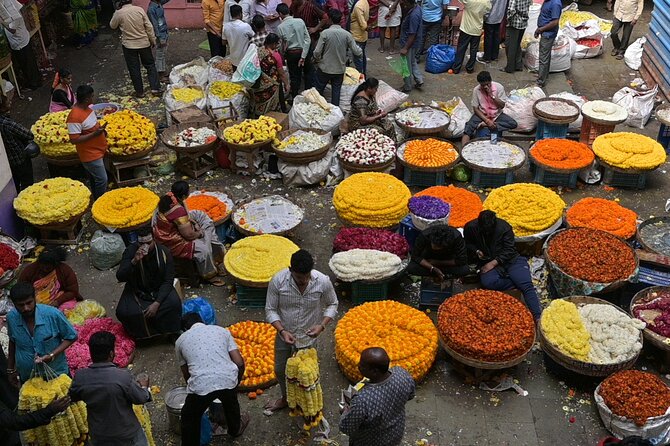
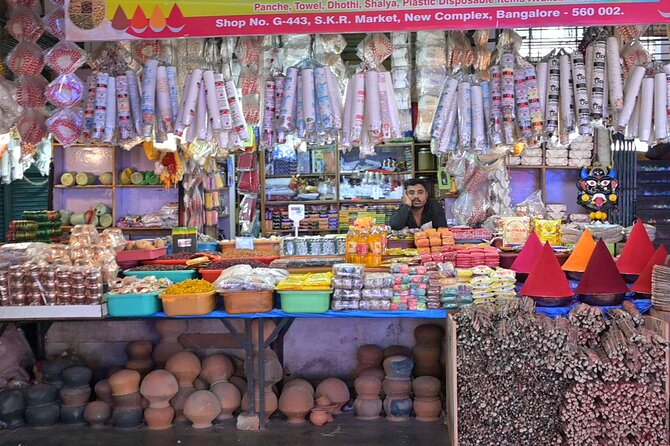
The market is the liveliest part of the walk. Sri Krishnarajendra Market, usually called KR Market, is not a polished shopping hall. You move through vendors, workers, porters, hawkers, buyers, cycles, cows, and dogs, with goods moving in every direction.
The flower market is a particular highlight. The colors and smells can be intense, and the wholesale activity gives you a view of Bengaluru’s working economy rather than a staged cultural display.
This is where a local guide earns the fee. The market can be difficult to read on your own, especially if you are watching traffic, trying not to block workers, and keeping track of a group. Vijay and other guides have helped visitors navigate the lanes, point out what is happening, and lead the group safely through the crowd.
Bring a mask if strong smells or dusty market air bother you. Wear shoes with a secure sole, keep your belongings close, and expect uneven movement rather than a smooth stroll.
You may also want to save your appetite for afterward. Lunch is not included, but guides have offered restaurant suggestions, and one guide recommended places for a post-tour meal. The walk itself is focused on seeing the market, not sitting down for a full food experience.
Ending at the Shri Adinath Jain Shwetamber Mandir
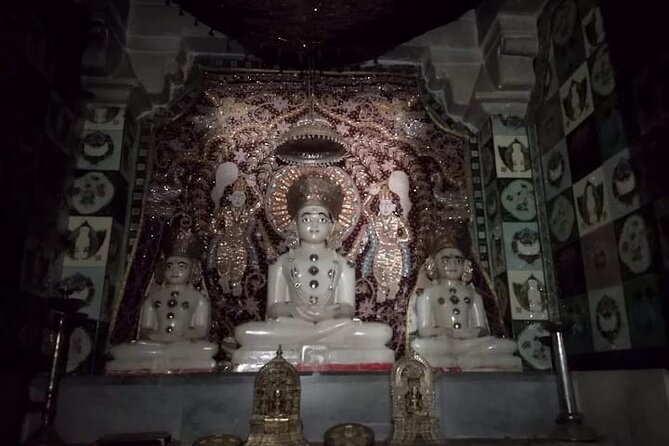
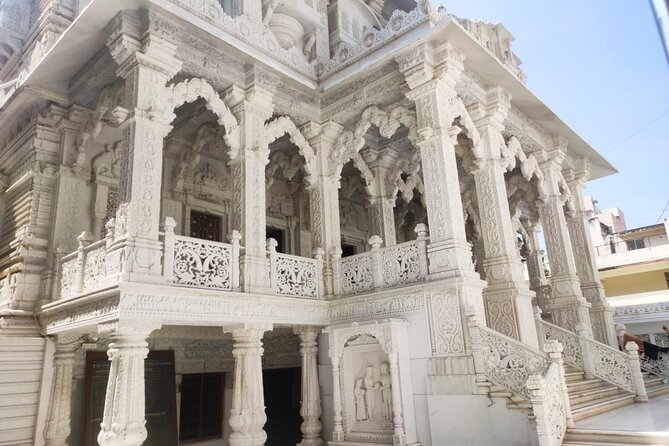
The final stop is Shri Adinath Jain Shwetamber Mandir on Chickpet Road. Jainism originated in India and has a history of at least 2,500 years. Its central principles include non-violence and vegetarian practice, and this visit adds a different religious perspective after the Hindu temple.
The temple is a quieter finish to the noisy market. Its value is not only architectural. You get a chance to see how a Jain place of worship differs from the Hindu temple earlier in the route, with the guide providing the basic religious background.
Temple dress rules apply here. Your legs and shoulders should be covered, and women should carry a scarf because one may be required. An extra pair of socks can come in handy if footwear must be removed or if you prefer a clean pair after walking through the market.
The tour ends close to Chickpet Metro station. That is useful if you want to continue exploring Bengaluru without arranging a separate ride immediately after the walk.
What the guides add to the experience
The guide is central to this tour. The route itself is easy to describe, but the meaning of the places, the market’s movement, and the temple etiquette are much harder to grasp without local help.
Vijay is one guide you may be assigned, though guide allocation is not guaranteed. He has helped people with questions, photography, metro directions, and practical advice after the walk. Vanaja has been praised for careful pacing and for making adjustments when someone in the group needed a pause.
Raghu has been noted for strong explanations of the city’s past and for offering tea when the group became tired. Vasuki has been described as considerate, clear in English, and attentive to the group’s pace. Phaneesh has provided detailed explanations of Bengaluru and India, including the religious side of the route.
These details matter because the walk includes several moments when you may need help, not just facts. You may want to know where to go next, how to reach the metro, where to shop for silk, or where to eat. The operator also invites you to ask for advice on shopping and further sightseeing after the tour.
French, Italian, and German-speaking guides may be available, but this is subject to availability. English is the language most clearly represented in the guide descriptions.
Timing, fitness, and practical comfort
The advertised duration is about 2 hours 30 minutes to 3 hours. That makes it a good half-day activity, but do not read the short duration as an easy indoor tour. You will walk through streets, temples, and a crowded market, so a moderate level of physical fitness is expected.
A morning departure is the safer choice if you want the best chance of entering the Hindu temple and prefer cooler conditions and smaller crowds. An afternoon departure can still work well, but temple hours may prevent entry, and the market may feel more tiring later in the day.
There is no listed hotel transport included. You can provide your Bangalore hotel details, and a transfer to and from the meeting point may be available for a small additional fee. This could be useful if you are staying far from Chamrajpet or do not want to work out the first connection yourself.
The meeting point is Tipu Sultan’s Summer Palace. The end point is the Jain temple near Chickpet Metro station, so the route is not a round trip. Plan your onward journey from the end rather than returning to your hotel before continuing.
Dress for both comfort and temple access. Light clothing that still covers the shoulders and knees is the simplest choice. Carry water, a scarf, and possibly a mask for the flower market.
Who will get the most from this walk
I would choose this for a first visit to Bengaluru, especially if you have limited time and want more than a single palace or temple. It gives you a compact introduction to the old center and lets you see the city in motion.
It also suits solo visitors who want local help in the market. One guide has escorted a visitor toward a place where an Uber could be found, and guides have helped people use the metro after the walk.
History and architecture fans will appreciate the palace, temple carvings, and fort. But the strongest appeal is the combination of formal sights with ordinary workaday scenes. If you only want quiet monuments, the market may feel overwhelming. If you want to see how the old city functions, it is the part you should not skip.
Families with older children may enjoy the variety, but the narrow, noisy market requires attention. Anyone uncomfortable with crowds, strong smells, or walking on busy streets should consider a slower private visit instead.
Should you book the Bengaluru Pété Walk?
Book it if you want a fast, guided introduction to central Bengaluru and value context more than long visits at individual monuments. The strongest reasons are the five-stop variety, the market access, the small group size, and the practical help available from guides such as Vijay, Vanaja, Raghu, and Vasuki.
Choose a morning departure if the Hindu temple is important to you. Wear suitable clothing, prepare for a noisy market, and remember that lunch, tips, and optional transport cost extra.
At $33.55, I consider it good value for a short stay or a first day in the city. Skip it only if you dislike busy walking routes or want a polished, slow-paced sightseeing experience. For seeing Bengaluru’s old quarters as working places rather than stage sets, this is a strong choice.
FAQ
How long does the Bengaluru Pété Walk take?
The walk lasts approximately 2 hours 30 minutes to 3 hours.
Where does the walk begin?
It begins at Tipu Sultan’s Summer Palace, 42 Tippu Sultan Palace Road, Kamalanagar, Chamrajpet, Bengaluru.
Where does the walk end?
It ends at Shri Adinath Jain Shwetamber Mandir on Chickpet Road, near Chickpet Metro station.
What places are included?
The route includes Tipu Sultan’s Summer Palace, Kote Venkataramana Temple, Bangalore Fort, Sri Krishnarajendra Market, and Shri Adinath Jain Shwetamber Mandir.
Is admission included?
Entry fees for the monuments are included. Entry to the temples and monuments can depend on working hours and seasonal variations.
What should I wear?
Your clothing should cover your legs and shoulders for the temples. Women should carry a scarf, and an extra pair of socks may be useful.
Is transport from my hotel included?
No. Transport is not included, but hotel pickup and return transport may be available for a small additional fee. You should provide your Bangalore hotel details when booking.
Is lunch included?
No. Lunch is not included in the tour price.
How many people can join the walk?
The group can include a maximum of 10 travelers.
More Shopping Trips in Bangalore
- Seoul: Palace, Temple and Market Guided Foodie Tour at Night
★ 4.9 · 750 reviews - 1-Day Mekong Delta Cai Rang Floating Market-Ancient House-Pancake
★ 5.0 · 653 reviews - Old Delhi Food-Spice Market-Temples Tour Soon Featured on NETFLIX
★ 5.0 · 304 reviews - Seoul Night Palace & Market Food Tour with Vehicle
★ 5.0 · 275 reviews
More Market Tours in Bangalore
- Lalbagh+Bull Temple+Tipu Palace+Market+Lunch=Bangalore City Tour
★ 5.0 · 9 reviews - Mini Group Xian Day Tour to Terracotta Army, City Wall, Pagoda and Muslim Bazaar
★ 5.0 · 1,320 reviews - Bangkok: Railway and Floating Market Tour with Dragon Temple
★ 4.6 · 1,225 reviews - Bangkok: Night Bike Tour with Temples & Flower Market Visit
★ 4.8 · 751 reviews
Just added around Bangalore
- Bandipur Tiger Reserve with Somnathpur Temple Tour★ 5.0 · 21 reviews
- Bull temple layout Heritage walk★ 5.0 · 13 reviews
- Lalbagh+Bull Temple+Tipu Palace+Market+Lunch=Bangalore City Tour★ 5.0 · 9 reviews
- World heritage site of Belur & Halebid with temple sculptures★ 5.0 · 24 reviews
- Day trip from Bangalore to Lepakshi for Temple architecture & paintings★ 5.0 · 15 reviews
- Old Bangalore Historical Walk thro Palace, Temples, Fort & Market★ 5.0 · 60 reviews
- 4 days tour from Bangalore to Hampi, Badami, Aihole & Pattadakal★ 5.0 · 23 reviews
- From Bangalore: Lepakshi Temple and Adiyogi Statue Day Trip★ 5.0 · 9 reviews
Temple Walking Tours, compared.
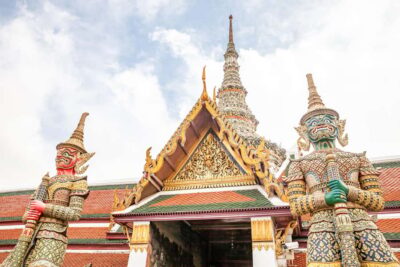
City Highlights Temple and Market Walking Tour
Read our review →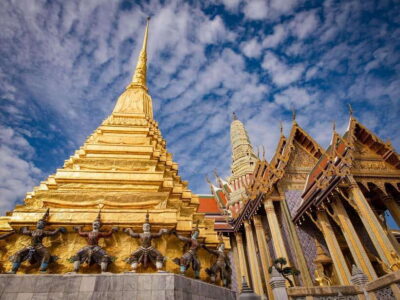
Grand Palace and Wat Phra Kaew Guided Walking Tour
Read our review →

Asakusa Walking Tour with Sensoji Temple Visit
Read our review →
3 Hour Old City and Temples Guided Walking Tour
Read our review →
Kyoto Arashiyama Walking Tour: Bamboo, Monkeys, Gardens & Secrets
Read our review →
Belém Walking Tour with Jerónimos Monastery Ticket
Read our review →Browse the lists this tour appears in