
REVIEW · TEMPLE WALKING TOURS
Madrid: Guided Walking Tour of Monasterio de las Descalzas
Madrid’s Descalzas Reales is not a grand palace you simply walk through and photograph. It is a working monastery with a quiet, enclosed character, where royal connections, religious life, paintings, murals, and old legends all meet inside a surprisingly compact building. The main staircase, with its painted walls and ceiling, is the visual high point.
I like the 75-minute length, which gives you a focused look without eating half your day. I also like the guide-led format, especially since the stories behind the convent matter as much as the rooms themselves. The main caution is simple: photography is not allowed inside, and there are no public restrooms in the monument.
Key points to know before you go
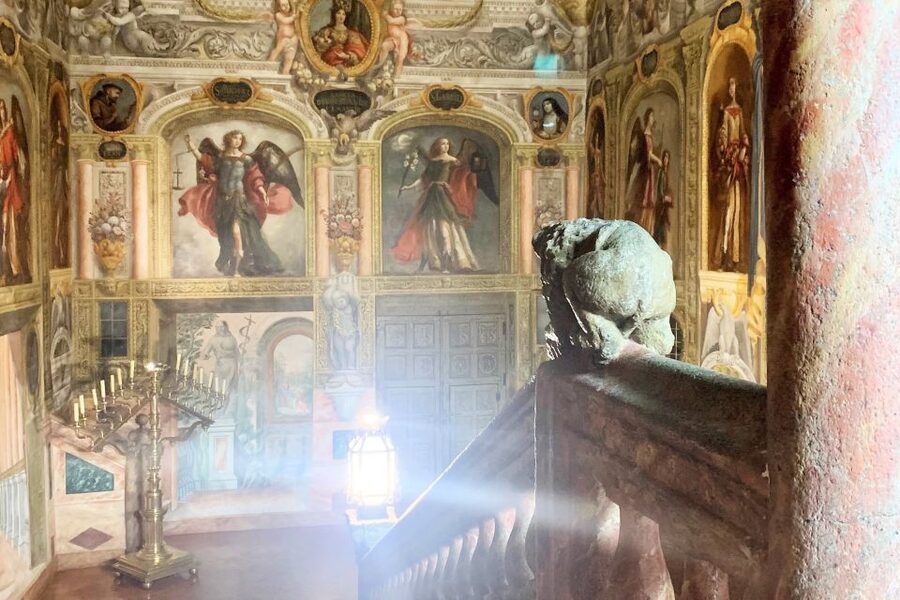
- The main staircase is the visual centerpiece, with mural paintings and a ceiling work attributed to Claudio Coello.
- The cloister still carries religious meaning, including the route used for Madrid’s Good Friday Holy Burial procession.
- The art collection is unusually strong, with works linked to Zurbarán, Antonio Moro, Luca Giordano, and other major painters.
- You meet at Plaza de las Descalzas, 3, next to benches and statues, and look for an IBE TOURS sign or umbrella.
- The tour lasts 75 minutes and includes skip-the-line admission, but it needs at least seven passengers to operate.
- Clear, friendly guiding is a major part of the experience, with tours offered in English, French, and Spanish.
Why Descalzas Reales feels different from Madrid’s larger monuments
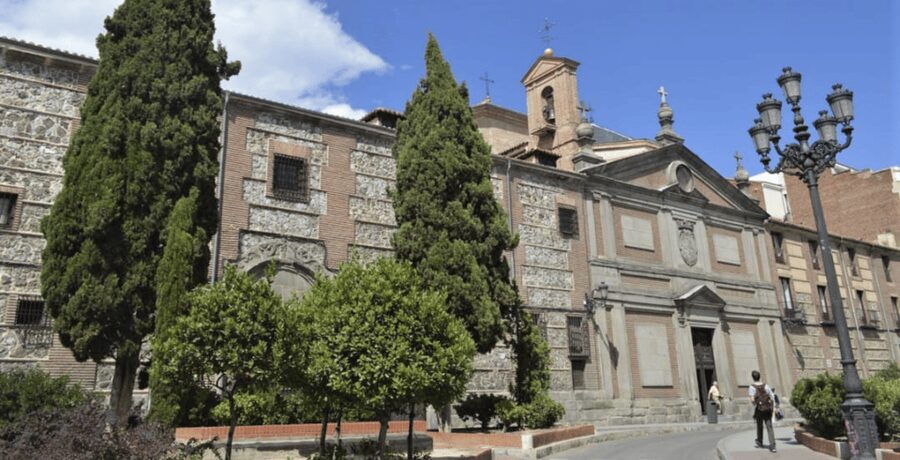
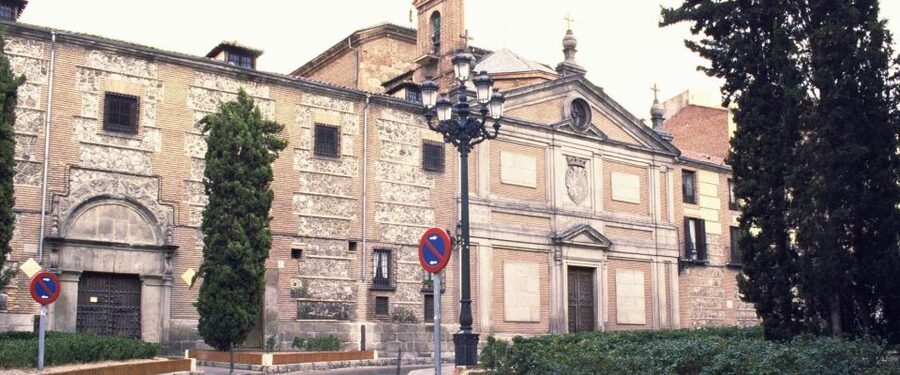
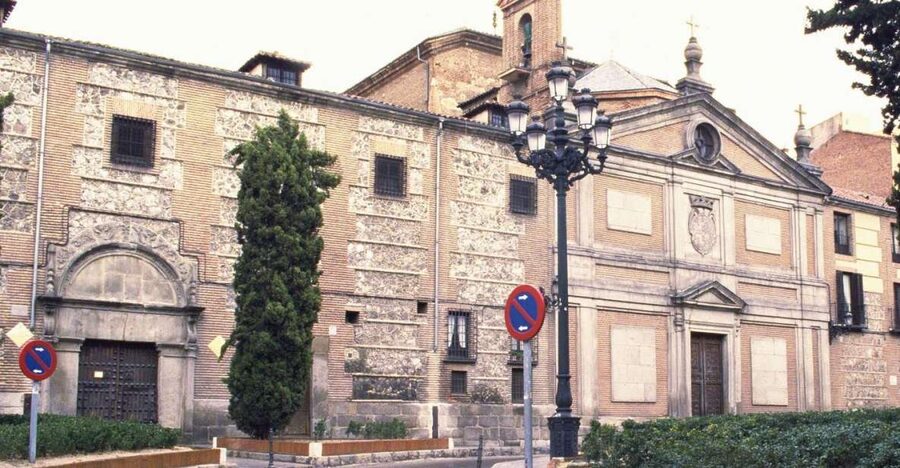
The Monastery of Descalzas Reales sits in the center of Madrid, close to Puerta del Sol and the Royal Palace area, yet its atmosphere changes quickly once you reach Plaza de las Descalzas. The outside may look restrained compared with Madrid’s grand civic buildings, but the interior holds layers of royal wealth, convent life, and religious art.
The monastery was once linked to the Spanish royal family and became one of the wealthiest convents in Europe. That background helps explain why a building for cloistered nuns contains such an impressive collection of paintings, doors, murals, and ceremonial spaces.
I find this context important because the visit is not just about admiring pretty rooms. You are seeing how powerful families used religious foundations, how valuable art entered convent walls, and how a cloistered community lived behind those walls. A good guide makes those connections clear instead of leaving you to guess what you are looking at.
The tour begins outside, at Plaza de las Descalzas, 3. Meet directly in front of the monastery entrance, near benches and statues. The guide should be holding an IBE TOURS sign or umbrella, so you do not need to search through the square for a tiny meeting point.
More Temple Walking Tours in Spain:
- Semi-Private Montserrat Monastery, Funicular & Scenic Nature Walk
★ 5.0 · 172 reviews - Montserrat Nature Walk, Monastery and Museum from Barcelona
★ 5.0 · 58 reviews - Montserrat Monastery Horse Riding & Walk – Small Group (Max 8)
★ 5.0 · 45 reviews
Starting at the facade and entrance
The first part of the visit covers the monastery’s exterior. This is useful because the facade gives you a visual introduction before you enter. Your guide explains what you are seeing and sets up the building’s place in Madrid’s religious and royal past.
Do not expect a long exterior walk. The experience is centered on the inside, and the outside introduction is brief. Still, it helps you notice the contrast between the plain public face of the monastery and the art-filled spaces beyond it.
The skip-the-line admission is valuable here. At $28 per person, the cost is higher than simply looking at a building from the square, but admission and a live guide are included. You are paying for access plus interpretation, not just a ticket.
The minimum group size is seven passengers. That condition matters if you are planning around a tight schedule, since the tour operates only when that minimum is met. The booking terms also allow you to reserve now and pay later, with free cancellation up to 24 hours before the activity.
The cloister and the Good Friday procession route
Inside, the cloister offers one of the clearest ways to understand the monastery’s layout. A cloister is not just a pretty courtyard. It is a space shaped by routine, prayer, and movement, with the surrounding rooms connected to this central area.
The cloister is also part of Madrid’s annual Good Friday Holy Burial procession. Knowing this gives the space a sense of public religious purpose, even though the monastery itself is associated with enclosure and quiet. You can picture the solemn procession passing through an area usually separated from ordinary city life.
Your guide helps turn the cloister from an empty architectural space into a working part of the building. That is one reason I would choose this tour over entering without commentary. The physical setting is attractive, but the details about its use make it easier to understand.
The pace here should feel measured rather than rushed. The tour lasts only 75 minutes, so you will not linger over every artwork. If you like to study individual paintings for a long time, you may want to return independently if that is possible during your Madrid visit. This guided visit is better for getting the story and seeing the major rooms in one compact session.
The main staircase, the monastery’s great reveal
The main staircase is widely regarded as the finest part of the monument, and it is easy to see why. It combines architecture and painting in a way that rewards looking upward, outward, and across the walls rather than simply climbing from one floor to another.
Mural paintings from different periods cover the walls. The ceiling includes an impressive work attributed to Claudio Coello. This is the kind of room where a guide’s pointing hand matters. You might notice the broad composition on your own, but you could miss the authorship, changes over time, or the visual details that give the staircase its importance.
I would advise you to slow down here and use the time well. Since photography is forbidden inside, you cannot rely on your phone to record the ceiling for later study. Look carefully while you are there, and let the guide explain what makes the staircase special.
This restriction may disappoint anyone who collects interior photographs from every stop. On the other hand, it keeps the visit quieter and encourages you to pay attention. You will need to accept that the memory of the room, rather than a gallery of images, is what you take away.
More Guided Tours in Spain:
- From Palma: Serra Tramuntana and Lluc Monastery Guided Tour
★ 4.5 · 146 reviews - San Lorenzo de El Escorial: Monastery and Site Guided Tour
★ 4.8 · 127 reviews - Barcelona: Montserrat Monastery and Natural Park Guided Tour
★ 5.0 · 56 reviews - Almería: Cathedral and Monastery of Las Puras Guided Tour
★ 4.7 · 25 reviews
Paintings by Zurbarán, Antonio Moro, and Luca Giordano
The monastery contains works associated with major painters, including Francisco de Zurbarán, Antonio Moro, and Luca Giordano. Their presence gives the visit real weight for anyone interested in Spanish and European art.
You should not expect a museum-style tour with every wall label explained in detail. The guide’s job is to lead you through the building and highlight important works within the larger story of the convent. That format suits you if you want context and a clear route, rather than a long specialist lecture about one artist.
The range of art also reflects the monastery’s former wealth. Religious houses supported by royal or noble families could receive important paintings and decorative objects. Here, the art is not separate from the building’s purpose. It forms part of the setting in which prayer, ceremony, and community life took place.
The guide can also point out Plateresque doors and other details that are easy to pass without notice. These are small features, but they help show how carefully the building was made and decorated. I like this kind of close looking because it makes the visit feel less like a fast march from one famous room to the next.
The Tapestry Room and Choir Room
The tour also enters the Tapestry Room and the Choir Room. These rooms add variety after the staircase and cloister, and they give you a broader sense of how many different functions were packed into the monastery.
The Tapestry Room reflects the level of decoration associated with the convent’s former status. You will see it as part of a larger sequence of artistic rooms rather than as an isolated display. The guide’s explanation helps connect the decoration to the people who lived in and supported the monastery.
The Choir Room brings the focus back to religious practice. Its name alone points to the role of music and worship in convent life, though the supplied information does not specify how much time is spent there or which objects are displayed. You can expect it to be one of the named interior stops, not a separate performance or concert.
These rooms matter because they prevent the visit from becoming only an art tour. You are also seeing how the building supported ceremony and daily religious life. That blend is what gives Descalzas Reales its character.
What the guide adds to the visit
The strongest part of this experience is the live explanation. The guide covers legends and stories tied to what was once the wealthiest convent in Europe, while also explaining the facade, rooms, paintings, and architectural details.
The guiding style appears to be friendly and clear. You should expect a human explanation rather than an audio recording, and the tour can be conducted in English, French, or Spanish. If you book in a language you understand well, you will get more from the art references and historical details.
Some groups may be very small. A two-person booking, for example, can feel almost private when numbers are low. That can be a real benefit, since you may have more room to hear the guide and ask a question. The tradeoff is that the tour requires at least seven passengers to operate, so the minimum-group rule remains important.
I would not book this experience expecting a dramatic show or theatrical performance. Its appeal is quieter. You get a guide who explains why the rooms matter and adds the legends that are difficult to pick up from the architecture alone.
Is $28 good value for 75 minutes?
At $28, this is a mid-priced short tour. The value depends on how you like to visit historic buildings.
If you are comfortable reading signs, moving at your own pace, and arranging admission yourself, a guided visit may feel less essential. But the ticket includes skip-the-line entry and a live guide, and the monastery contains enough art and symbolism that context makes a clear difference.
The 75-minute duration is also practical. You can fit the monastery between other central Madrid sights without giving up an entire morning or afternoon. The tour is long enough to cover the cloister, staircase, Tapestry Room, Choir Room, and major artworks, but short enough for a city itinerary with several stops.
I see the best value here for someone who wants a concise introduction to a less obvious Madrid monument. You are not paying for hours inside a huge complex. You are paying for a structured visit to a small, specialized place that is easy to misunderstand without help.
Practical details that can shape your visit
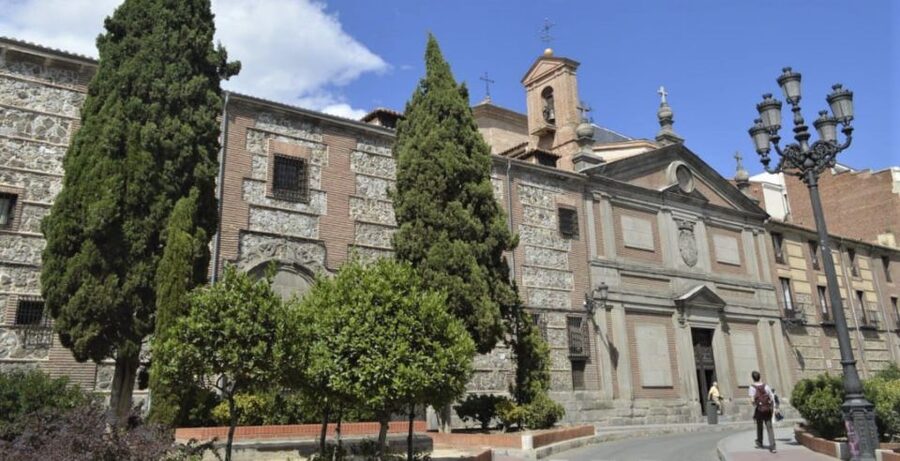
Plan to arrive at the meeting point in front of the monastery, not at a nearby cafe or hotel. Look for the IBE TOURS sign or umbrella beside the benches and statues in Plaza de las Descalzas.
The tour runs in rain or sunshine. Since the visit is mainly indoors, weather should not spoil the monastery portion, but you still need to reach the square comfortably.
There are no public restrooms inside the monument. Use facilities before meeting the guide, since the 75-minute visit does not include a scheduled restroom stop.
Food and drinks are not included, and hotel pickup and drop-off are not provided. The central meeting point makes this a simple walk-up city activity, but you need to arrange your own route to the plaza.
Photography is not allowed inside. Bring your eyes, not your camera plan. If you enjoy taking pictures of ceilings, murals, and old doors, this rule is worth knowing before you commit.
Who should book this monastery tour?
I would recommend it to you if you enjoy art, religious buildings, royal history, and guided storytelling. It works especially well for first-time visitors to Madrid who want a short cultural stop near the city center.
It also suits people who prefer a clear route through a historic building. The guide leads you from the exterior to the cloister, staircase, art-filled rooms, and choir area without asking you to work out the layout alone.
Families with older children may find the legends and visual details more engaging than a long museum visit. Art lovers will appreciate the named painters and the painted staircase. You should be comfortable standing and walking for 75 minutes, although no special physical requirements are provided.
I would think twice if your priority is photography, a long look at every painting, or complete control over your pace. The no-photo rule and fixed schedule are real limits. So is the minimum of seven passengers if your Madrid plans are very tight.
Should you book Descalzas Reales?
Book this tour if you want to see an important Madrid monastery without spending half a day, and if you value a guide who can explain the stories behind the art. The main staircase, cloister, and strong collection of paintings make the $28 cost reasonable for many visitors.
Skip it if you only want exterior sights, need to photograph every interior, or prefer exploring alone. For everyone else, this is a focused way to see a quiet, unusual side of central Madrid, with a friendly guide, skip-the-line entry, and enough history to make the rooms stick with you.
FAQ
Where does the tour meet?
Meet at Plaza de las Descalzas, 3, directly in front of the monastery entrance, near some benches and statues. Look for an IBE TOURS guide holding a sign or umbrella.
How long does the tour last?
The guided visit lasts 75 minutes.
What languages are available?
The tour is offered in English, French, and Spanish.
Is admission included?
Yes. Skip-the-line tickets to the Descalzas Reales Monastery are included.
Can I take photographs inside?
No. Photography is not allowed inside the monument.
Are restrooms available inside the monastery?
No. There are no public restrooms in the monument.
Does the tour operate in bad weather?
Yes. The tour takes place rain or shine.
Just added around Spain
- Montserrat Monastery Horse Riding & Walk – Small Group (Max 8)★ 5.0 · 45 reviews
- Montserrat & beyond private from Barcelona with different options★ 5.0 · 32 reviews
- Montserrat Nature Walk, Monastery and Museum from Barcelona★ 5.0 · 58 reviews
- Montserrat Tour with Cogwheel Train, Monastery & Black Madonna★ 4.0 · 10 reviews
- Full-Day Trip Barcelona to Montserrat Monastery & Cava Winery★ 5.0 · 158 reviews
- Transfer to Montserrat Monastery from Barcelona★ 4.5 · 94 reviews
- Montserrat Land of Shrines – One Day Small Group Hiking Tour from Barcelona★ 5.0 · 38 reviews
- Montserrat Horseback Riding & Monastery – Small Group (Max 8)★ 5.0 · 45 reviews
Temple Walking Tours, compared.
City Highlights Temple and Market Walking Tour
Read our review →
Grand Palace and Wat Phra Kaew Guided Walking Tour
Read our review →
Asakusa Walking Tour with Sensoji Temple Visit
Read our review →
3 Hour Old City and Temples Guided Walking Tour
Read our review →
Kyoto Arashiyama Walking Tour: Bamboo, Monkeys, Gardens & Secrets
Read our review →
Belém Walking Tour with Jerónimos Monastery Ticket
Read our review →Browse the lists this tour appears in