
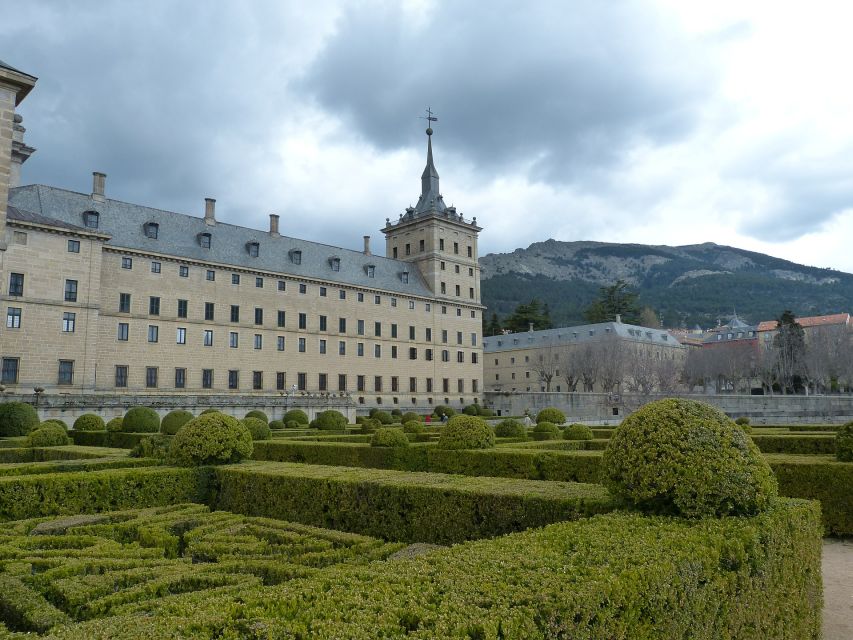
REVIEW · SPAIN TEMPLE TOURS
San Lorenzo de El Escorial: Monastery and Site Guided Tour
San Lorenzo de El Escorial is not just a grand palace. It is a royal monastery, basilica, library, burial place, and political statement packed into one severe Renaissance complex. This two-hour guided tour helps you make sense of the building instead of wandering through its long corridors without a clue where you are.
I like the clear route through the basilica, Battle Hall, pantheon, palace rooms, and Royal Library. I also like the focus on Philip II and the Spanish Golden Age, which gives the architecture a purpose beyond its size. The main drawback is that the tour is listed in Spanish, and two hours can feel brisk in a place with this much to see.
Key points at a glance
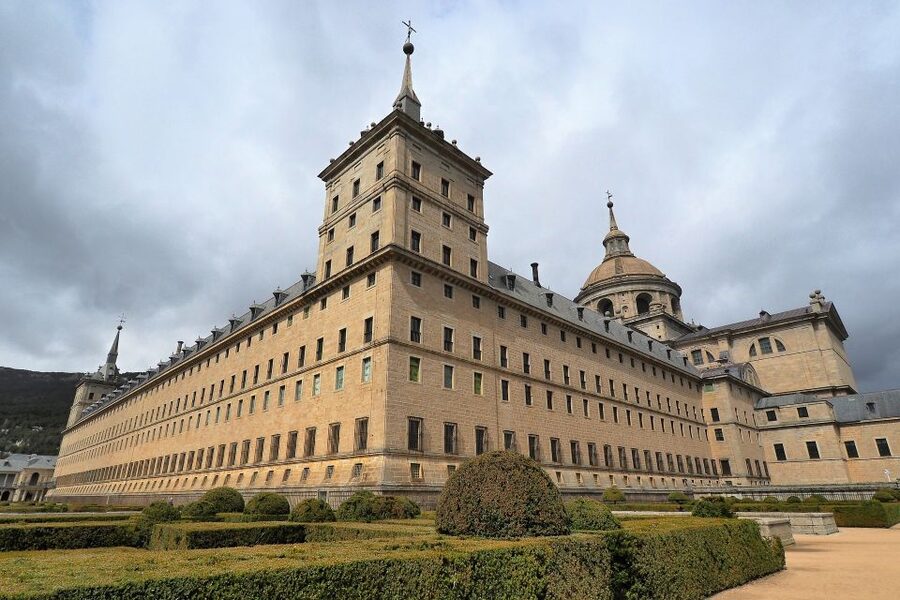
- Philip II’s grand project: See how religion, royal power, learning, and military memory meet inside one 16th-century complex.
- The Royal Library: Visit a room created to display the king’s humanistic interests and his desire to gather books and knowledge.
- A carefully planned route: The tour covers the basilica, Battle Hall, pantheon, palatial rooms, and other principal spaces without leaving you to find your own way.
- Spanish-speaking guidance: Guides including Alejandro, Isabella, and Marta have been praised for clear explanations, humor, and enthusiasm.
- A strict meeting point: Arrive 15 minutes early and look for a blue Todo Tour umbrella at the monastery’s main entrance, beneath the Spanish flag.
- Good practical value: At $47 per person, you receive admission and two hours with a live guide, with free cancellation up to 24 hours before the start.
Why El Escorial deserves your time
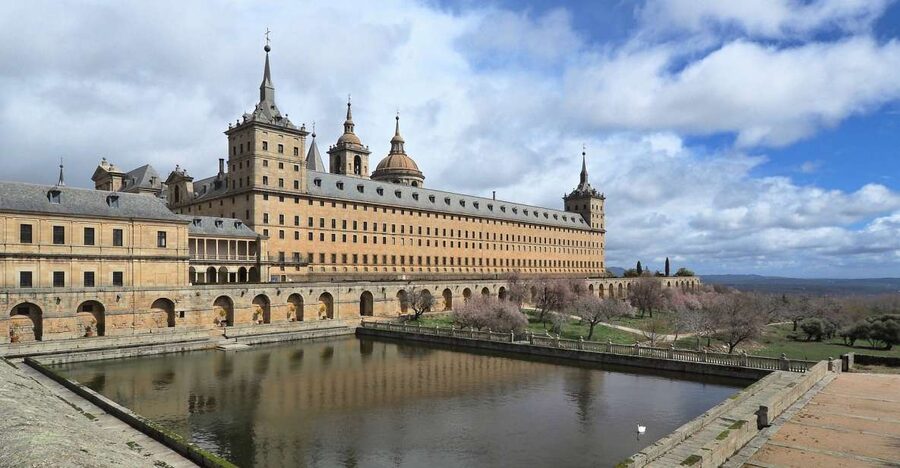
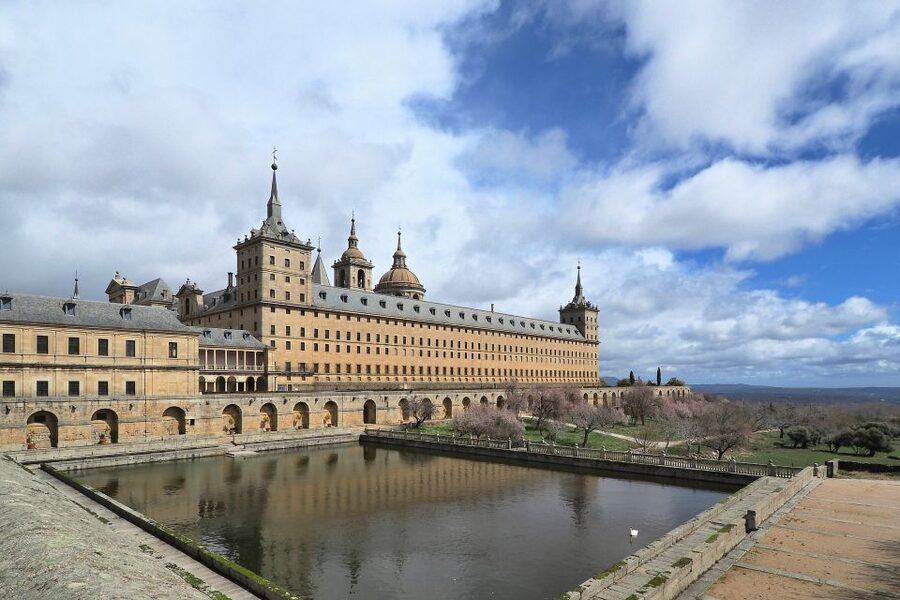
You can see the outline of El Escorial from a distance, but its real impact comes once you understand what Philip II wanted it to be. This was not simply a comfortable royal residence. It combined a monastery, a royal palace, a church, a school of thought, a burial place, and a library in one enormous building.
The complex is often described as grill-shaped, a reference to its plan and to Saint Lawrence, the monastery’s patron. That unusual design is one reason the building feels less like a conventional palace and more like a carefully ordered machine for royal and religious life.
I find the place most interesting when I stop treating it as a collection of rooms. The basilica tells you about Catholic power. The royal spaces point to monarchy and ceremony. The Battle Hall recalls Spain’s military victories. The pantheon connects the building to the succession of Spanish kings. The library shows Philip II as a collector and student, not only a ruler.
A guide helps connect those parts. Without context, you can admire the stonework and still miss the argument the building is making. This tour is aimed at giving you that context as you move through the interior.
More Guided Tours in Spain:
- From Palma: Serra Tramuntana and Lluc Monastery Guided Tour
★ 4.5 · 146 reviews - Madrid: Guided Walking Tour of Monasterio de las Descalzas
★ 4.5 · 102 reviews - Barcelona: Montserrat Monastery and Natural Park Guided Tour
★ 5.0 · 56 reviews
Entering through the main door
Your practical start matters. The meeting point is at the monastery’s main entrance, the access door with the Spanish flag above it. You should arrive 15 minutes before the activity begins, exchange your voucher, and look for the guide holding a blue Todo Tour umbrella.
That blue umbrella is useful, but it is worth paying attention at the entrance. One participant specifically wished the guide had carried a clearer sign identifying the meeting point. I would save the meeting instructions on your phone, arrive early, and avoid assuming that any guide near the door is yours.
The operator is Todo Tours Gestion SL. Admission to the Monastery is included, along with the live guide. You do not need to arrange a separate entry ticket for the tour itself.
The building has rules that affect how you dress and what you bring. Short skirts, sleeveless shirts, and swimwear are not allowed. Large bags and luggage are also prohibited, and noise is not permitted inside. Bring a passport or identity card, since it is listed among the required items.
The basilica and the religious heart of the complex
The basilica is one of the essential stops, and it gives you the clearest sense of the site’s religious purpose. Your guide places the church within the period of Philip II and the Spanish Golden Age, rather than treating it as a decorative stop on a palace tour.
I like having the basilica early in the route because it establishes the tone of El Escorial. The building is imposing, formal, and tied closely to the king’s religious aims. You can look at the architecture with a better sense of why a monarch would devote such effort to a monastery complex.
The tour is not presented as a private visit or a slow architectural study. You are moving with a group and listening to a live explanation, so you should expect a structured visit rather than unlimited time in each room.
That tradeoff works well for a first visit. You get an organized introduction to the main spaces, although anyone who likes to linger over every detail may want extra time at the end, if permitted, or a separate return visit.
The Battle Hall and Spain’s military memory
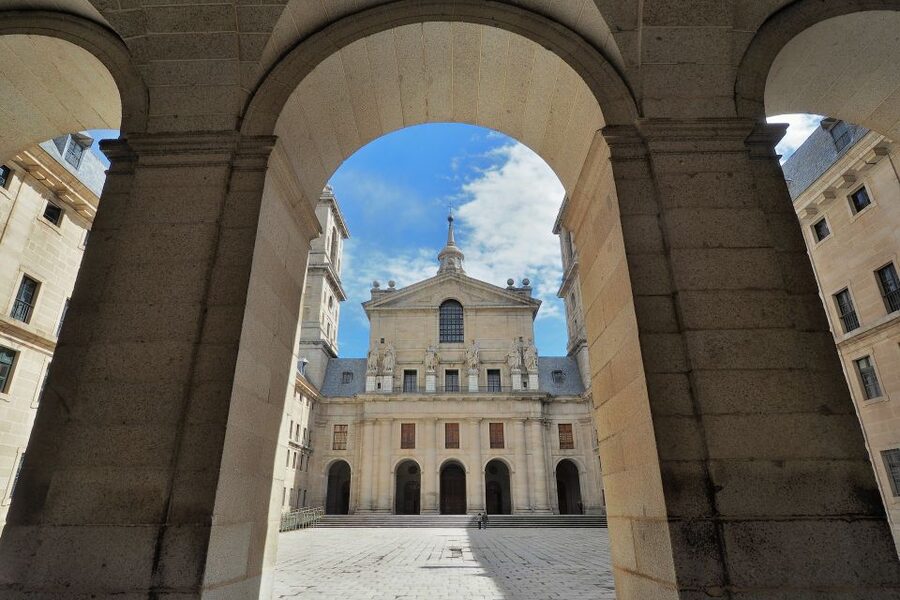
The Battle Hall brings a different side of the building into view. Here, the emphasis shifts from prayer and royal ceremony to the military story connected with Spanish power.
This stop matters because El Escorial was built during a period when Spain’s political and religious ambitions reached far beyond the monastery itself. The guide uses the room to explain the ideological aims of the age and the way Philip II presented his reign.
You do not need to arrive with a detailed knowledge of 16th-century Spain to follow the tour. One of the strongest features of the guiding style described by past participants is the ability to explain historical facts in a clear, easy-to-follow way. Alejandro was singled out for being witty, friendly, and professional, while Marta was praised for sticking to facts and adding a good sense of humor.
That kind of presentation makes a difference in a room tied to military history. Dates and royal names can blur together, but a good explanation gives the space a place in the larger story.
A few more temple visits around Spain worth a look
- Montserrat Monastery Half Day Experience from Barcelona
★ 5.0 · 6,014 reviews - Montserrat Monastery Small Group or Private Tour Hotel pick-up
★ 5.0 · 5,144 reviews - Escorial Monastery and the Valley of the Fallen Tour from Madrid
★ 5.0 · 2,494 reviews - Montserrat Museum and Monastery Entry Ticket
★ 4.5 · 1,740 reviews
The pantheon and Spain’s royal succession
The pantheon is among the most memorable stops because it links the monastery directly to the Spanish crown. Many Spanish kings are buried here, and the space makes the building’s role as a royal memorial plain.
Your guide explains why the tombs belong inside this religious and royal complex. The pantheon is not just a final resting place. It reinforces the connection between dynasty, faith, and political authority that runs through El Escorial.
I would give this part your full attention. The site can feel overwhelming because every room carries a different purpose. The pantheon narrows the focus to the people who shaped the monarchy and to the long succession that the building was meant to honor.
The route may feel fast here if you want time for quiet reflection. One person who had visited El Escorial before found this visit a little more rushed. That is a fair warning, especially if you prefer to stop for several minutes in each room rather than keep moving with the guide.
Palatial rooms and the private side of power
The palatial rooms show that El Escorial was also a royal residence. Their value lies in the contrast with the basilica and monastery areas. Philip II’s world was not limited to public ceremony or religious duty. The complex also housed the spaces connected with royal life.
The guide’s job here is to explain how the rooms fit into the building’s wider plan. A palace room can look impressive but still leave you wondering who used it and why it was placed there. The historical framing turns these interiors into part of the working royal complex.
Do not expect a tour focused only on decoration. The stated emphasis is on architecture, culture, ideology, and the aspirations of the Spanish Golden Age. If you want a list of furniture and palace gossip, this may not be your ideal format. If you want to understand how a 16th-century king joined royal residence with religious and intellectual aims, it should suit you well.
Philip II’s Royal Library
The Royal Library is the tour’s most distinctive stop. Philip II collected its books to expand his humanistic knowledge, so the room represents a different kind of royal power. The basilica shows spiritual authority, the Battle Hall recalls military authority, and the library shows the importance of learning and collecting.
I especially like this part because it gives the building an intellectual side. Philip II is often remembered mainly as a stern monarch, but the library points to a ruler who wanted access to books and humanist study. The room was also a Renaissance statement: a king could display power through the control and presentation of knowledge.
The library is not treated as an optional add-on. It is one of the highlights, and it gives the tour a strong finish before you continue through the remaining essential areas.
You should listen closely here, since the significance can be easy to miss if you focus only on the appearance of the room. The guide connects the books to Philip II’s aims and to the wider culture of the Spanish Golden Age. That context is what makes the library more than a beautiful interior.
What the guide adds to a two-hour visit
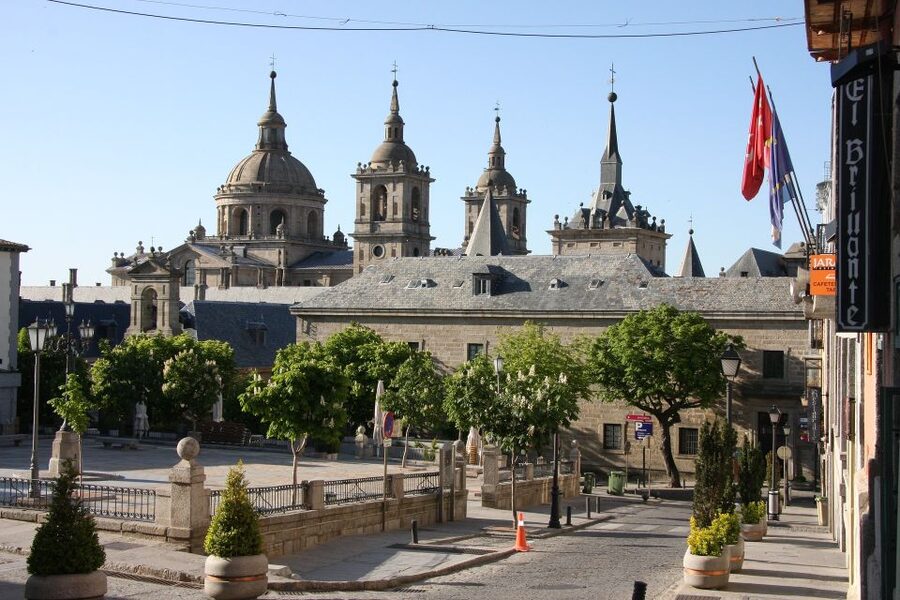
A self-guided visit can work, but El Escorial is large and its purpose is not obvious at every turn. One participant compared a guided visit with friends who used an electronic guide and found themselves confused, lost in the complex, and walking farther than necessary.
That is the strongest argument for booking this experience. The guide gives you a route, points out the principal spaces, and keeps the story moving. You spend less energy deciding where to go next and more time understanding what you are seeing.
The highly praised guides bring different strengths. Alejandro was described as witty and friendly. Isabella was praised for enthusiasm, energy, and excellent English on one past visit. Marta was noted for careful preparation, factual explanations, passion, and humor. The activity itself is listed as Spanish-language, so you should not book it expecting an English tour, even though Isabella’s English was praised in a previous experience.
The group size is not fixed in the information provided. One past English-speaking group had only four people, but you should not assume every departure will be that small. A compact group would make it easier to hear and ask questions, while a larger group may feel less personal.
Is $47 a fair price?
The price is $47 per person for two hours, including the monastery entry ticket and a live guide. I see the value in the combination rather than in the length alone. You are paying for access plus an organized explanation of a complicated monument.
If you are already familiar with Philip II, Renaissance Spain, and the building’s plan, you may prefer to visit independently. But if this is your first time at El Escorial, the guide can prevent the site from becoming a sequence of grand rooms without a clear connection.
The tour also saves you the trouble of planning a route through the basilica, Battle Hall, pantheon, palatial rooms, library, and other key areas. Since one past participant found an electronic guide confusing and inefficient, that structure may be worth the cost.
I would be less enthusiastic if the tour lasted only one hour, but two hours gives the guide room to explain the major parts of the complex. It is still not enough for an exhaustive visit, so think of it as a well-organized introduction rather than the final word on El Escorial.
Who should book this tour?
I would recommend it to first-time visitors who want the building explained in historical and cultural terms. It is also a good fit if you dislike audio guides, worry about missing the main rooms, or prefer having a clear route through a large monument.
It suits people interested in:
- Philip II and the Spanish Golden Age
- Renaissance architecture
- Royal burial places
- The relationship between religion and monarchy
- Libraries, books, and humanist learning
- A guided visit lasting two hours
You should think twice if you need an English-language tour, want to move entirely at your own pace, or hope to bring large luggage inside. The activity is listed in Spanish, has clothing restrictions, and may feel rushed if you want extended time in every room.
The site is wheelchair accessible, which is useful for visitors who need step-free access. The information provided does not give further details about specific routes or facilities, so you may want to confirm those points before booking if you have detailed mobility needs.
Cancellation is flexible: you can cancel up to 24 hours before the activity for a full refund. You can also reserve now and pay later, which helps if your Madrid plans are still shifting.
My verdict on San Lorenzo de El Escorial
Book this tour if you want El Escorial to make sense, not merely look impressive. The guide-led route brings together the basilica, Battle Hall, pantheon, royal rooms, and Royal Library, then explains how they served Philip II’s religious, political, military, and intellectual goals.
I would choose it over wandering alone for a first visit, especially at $47 with entry included. Just confirm that Spanish guidance works for you, dress appropriately, leave large bags behind, and arrive early at the entrance with the Spanish flag and blue Todo Tour umbrella.
The tour is brief for such a large monument, but that is also its strength. In two hours, you get a focused introduction and a usable sense of the place. If El Escorial is high on your Madrid list, this is a practical way to see its most important spaces without getting lost in the royal maze.
FAQ
How long does the San Lorenzo de El Escorial tour last?
The guided tour lasts two hours.
What is included in the price?
The price includes a tour guide and the entry ticket to the Monastery of San Lorenzo de El Escorial.
What language is the tour conducted in?
The activity is listed with a live Spanish-speaking guide.
Where is the meeting point?
Meet at the access door to the monastery, which is the main entrance with the Spanish flag above it. Look for the guide holding a blue Todo Tour umbrella.
How early should I arrive?
Arrive 15 minutes before the activity begins so you can exchange your voucher and locate the guide.
Is the monastery wheelchair accessible?
Yes, the activity is listed as wheelchair accessible.
What identification should I bring?
Bring your passport or identity card.
Can I cancel the booking?
Yes. You can cancel up to 24 hours before the activity for a full refund. You can also reserve now and pay later.
Just added around Spain
- Montserrat Monastery Horse Riding & Walk – Small Group (Max 8)★ 5.0 · 45 reviews
- Montserrat & beyond private from Barcelona with different options★ 5.0 · 32 reviews
- Montserrat Nature Walk, Monastery and Museum from Barcelona★ 5.0 · 58 reviews
- Montserrat Tour with Cogwheel Train, Monastery & Black Madonna★ 4.0 · 10 reviews
- Full-Day Trip Barcelona to Montserrat Monastery & Cava Winery★ 5.0 · 158 reviews
- Transfer to Montserrat Monastery from Barcelona★ 4.5 · 94 reviews
- Montserrat Land of Shrines – One Day Small Group Hiking Tour from Barcelona★ 5.0 · 38 reviews
- Montserrat Horseback Riding & Monastery – Small Group (Max 8)★ 5.0 · 45 reviews
Spain Temple Tours, compared.
Montserrat Monastery Half Day Experience from Barcelona
Read our review →
Montserrat Monastery Small Group or Private Tour Hotel pick-up
Read our review →
Escorial Monastery and the Valley of the Fallen Tour from Madrid
Read our review →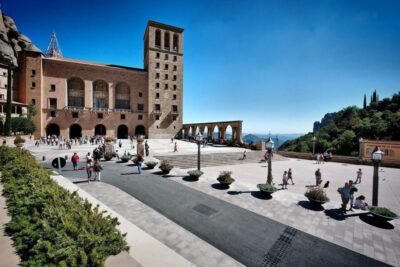
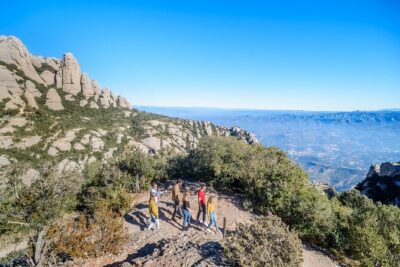
Montserrat Small Group: Monastery, Black Madonna & Natural Park
Read our review →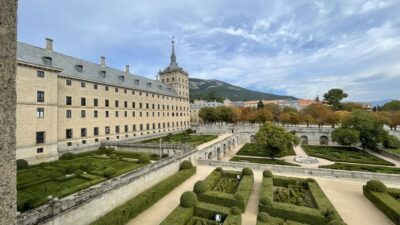
Escorial Monastery and the Valley of the Fallen
Read our review →
Flamenco Show at Tablao Sala Temple with Drink
Read our review →
From Seville: Italica Roman City & Medieval Monastery Tour
Read our review →Browse the lists this tour appears in