
REVIEW · SIGIRIYA & DAMBULLA TEMPLE TOURS
Delve Into Ancient Anuradhapura with Optional Visit to Mihintale
Anuradhapura is easiest to understand when someone connects its scattered ruins into one story, and this private tour does exactly that. Guide Lucky takes you from an ancient forest monastery and a puzzling stone Star Gate to stupas, royal buildings, bathing ponds, and the sacred Bodhi Tree. The range of sites is impressive, especially for a six-hour outing.
I like the freedom to ask questions at every stop, and I like that the route includes less obvious places such as the Janthagara steam bath and enormous Elephant Pond. The main catch is price: the advertised $30 covers the guide and refreshments, but you must add a $30 UNESCO site admission fee per person, plus private transport.
Key points to know before booking
- A private route with guide Lucky: Your group receives one guide rather than joining a large shared party, making it easier to ask questions and adjust the pace.
- Twelve stops in about six hours: The schedule covers sacred sites, royal ruins, water engineering, sculpture, and monastic life.
- Unusual archaeological details: The Star Gate, Janthagara steam bath, granite refectory trough, and Elephant Pond give the tour more character than a standard stupa circuit.
- The Sri Maha Bodhi Tree anchors the visit: This sacred fig tree is regarded as Anuradhapura’s first major sacred place.
- Budget for extra costs: Entry to the UNESCO World Heritage sites is listed at $30 per person, and transportation is not included.
- A morning start is required: The stated operating window is Monday through Sunday, from 7:30 AM to 10:30 AM.
Why Anuradhapura works best with a guide
Anuradhapura is not one compact monument. It is a huge archaeological area filled with sacred compounds, scattered foundations, restored stupas, reservoirs, ponds, and fragments of royal buildings. Without context, a row of stone pillars can look like nothing more than a row of stone pillars.
With Lucky, those fragments become part of a working city. You learn where monks lived, where they ate, how they bathed, how water was managed, and why certain carvings matter. The private format also helps if you want to stop and ask about Buddhist practice, ancient engineering, or the difference between a shrine and a monastic building.
The route is busy but not rushed on paper. Several stops last only 10 to 15 minutes, while Vessagiriya receives 90 minutes and the Star Gate 35 minutes. That tells you what kind of tour this is: broad coverage first, with extra time at the places that need more explanation.
You should still expect a full morning of moving between sites. The tour does not include private transportation, so confirm how your group will travel between stops before paying. The meeting point is Pothanagama Junction, at 2 Kanuwa Junction on D. S. Senanayake Mawatha, and the activity ends back there.
More Sigiriya and Dambulla Temple Tours in Anuradhapura:
- Private City Day Tour in Anuradhapura
★ 5.0 · 383 reviews - Explore & Ride the history of anuradhapura with Vogel Tours
★ 5.0 · 62 reviews - Anuradhapura Private Ancient City Day Tour
★ 5.0 · 39 reviews
Vessagiriya begins with monastic life
The first stop is Vessagiriya Forest Monastery, where the tour begins with the idea of Rajarata, the ancient King’s Country. This was one of the island’s earliest Buddhist monastic living areas, and its rocks and ruins offer a quieter opening than a major stupa.
The listed visit lasts about 90 minutes, by far the longest stop. That is useful because Vessagiriya needs time. You are not simply looking at one polished monument. You are reading the remains of a community built around religious life, study, and shelter.
This is also a good moment to ask Lucky to explain how a Buddhist monastery functioned. The experience is strongest when you focus on the practical side: where monks lived, how the site fitted into the wider city, and what the surviving stones can and cannot tell you.
The Star Gate adds a note of mystery
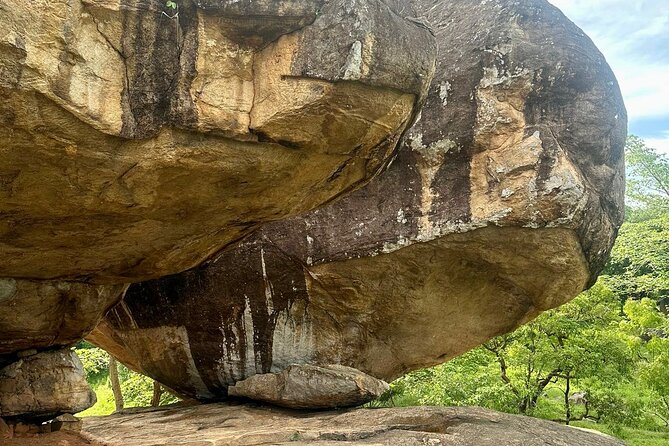
Sakwala Chakraya, also called the Star Gate, sits beside a boulder at Ran Masu Uyana, the Royal Goldfish Park. It is located between Tissa Wewa and Isurumuniya Rock Temple, and the tour allows about 35 minutes here.
The unusual carving has inspired plenty of speculation. A good guide should separate what is visible from what remains uncertain, and this is one of the best places to ask direct questions. The attraction is not only the object itself, but also its setting beside the rock and royal garden area.
Do not expect a huge monument. The Star Gate is a relatively small archaeological feature, and its appeal comes from the questions it raises. The stop works well for visitors who enjoy unusual details rather than only grand buildings.
The Sri Maha Bodhi Tree brings the sacred center into view
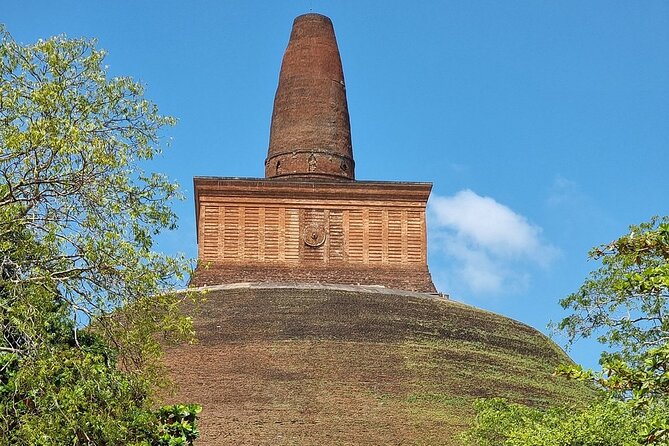
The Sri Maha Bodhi Tree is regarded as the first of Anuradhapura’s eight sacred places. It is a fig, or pipal, tree, scientifically known as Ficus religiosa, and it carries enormous religious importance in Sri Lanka.
The scheduled visit is only 20 minutes, so do not treat this as a long, quiet garden visit. It is a focused stop in an active religious setting. Dress respectfully, follow local instructions, and allow the site to set its own pace.
I like this part of the route because it shifts the focus from ruins to living worship. Anuradhapura is not only an archaeological park. It remains a place of devotion, and the Bodhi Tree makes that clear.
Same country, a different morning at the gates:
- Anuradhapura Heritage Mountain bike / bicycle Tour
★ 5.0 · 34 reviews - Half day tour – in Sacred city of Anuradhapura Or sacred city of Mihintale.
★ 4.5 · 24 reviews - Anuradhapura: Full-Day Wilpattu All Inclusive Private Safari
★ 4.5 · 24 reviews - One Day Tour – Sacred city of Anuradhapura & Sacred city of Mihintale. (Sunset)
★ 4.5 · 23 reviews
Lovamahapaya shows the scale of royal ambition
North of the Bodhi Tree, you see the granite pillars of Lovamahapaya, known as the Brazen Palace. The building is now largely gone, but the surviving columns suggest the size and order of the former structure.
The scheduled visit is 15 minutes. That is enough for a clear explanation and photographs, but not enough for a long architectural study. The important point is to imagine the pillars as part of a large royal and monastic complex rather than as an isolated ruin.
This stop pairs naturally with the Bodhi Tree. One represents a living sacred tradition; the other shows the scale of the buildings once created to support religious institutions.
Ruwanwelisaya is the tour’s grand visual moment
Ruwanwelisaya, also called Ratnamali or the Mahathupa, was built under King Gamini Abhaya in the second century BC. Its large white stupa is likely to be one of the most immediately striking sights of the morning.
The visit lasts about 25 minutes. That gives you time to take in the shape, walk around part of the site, and hear why stupas matter in Buddhist practice. The structure is not simply a photo stop. Its form and setting express the importance of relics, worship, and royal patronage.
This is one place where a private guide adds real value. Ask Lucky to explain how the stupa fits into Anuradhapura’s religious center, and how its purpose differs from a residence, refectory, or bathing complex.
Gedige and the alms hall reveal the city behind the monuments
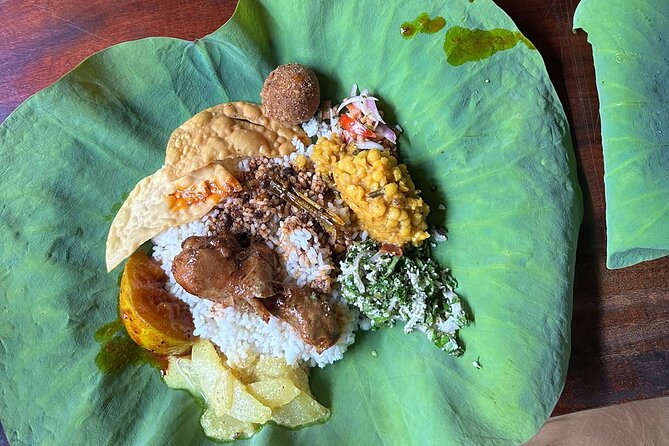
At the Mahapali Alms Hall, the route reaches the remains of several buildings. The largest is identified as the Mahapali Refectory, where meals were supplied to Buddhist monks through royal support.
The scheduled stop is 25 minutes. I find this sort of site especially helpful because it moves beyond famous monuments. A great religious center needs food, kitchens, storage, and systems of service. These ruins show how daily life supported the ceremonies and learning that receive most of the attention.
The name Gedige refers to ruins in this area, and Lucky can help you sort out the different building remains. Pay attention to the scale of the granite elements. They hint at an organized institution, not an isolated shrine.
Twin Baths show ancient water engineering
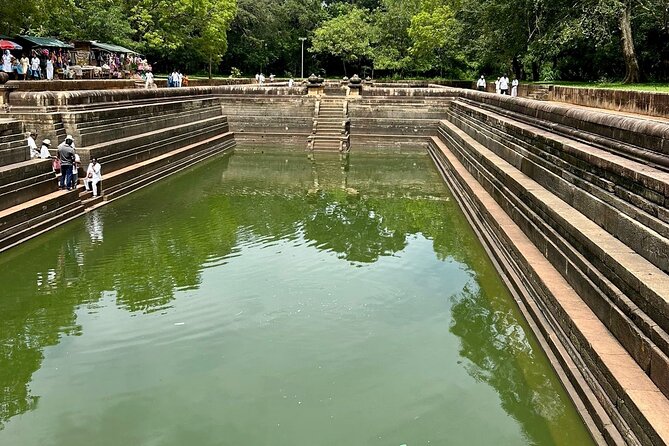
The Twin Baths, or Kuttam Pokuna, are two carefully built ponds set at a lower level. They are admired for their design and their hydraulic system, and they are among the most attractive stops on the route.
You receive about 15 minutes here. That is enough to see the paired arrangement and appreciate the stonework, though anyone fascinated by ancient water systems may wish for more time.
The admission fee is listed as not included at this stop, so keep the extra entry cost in mind. The baths are a good example of why Anuradhapura should not be reduced to stupas. Its builders also created sophisticated systems for water, hygiene, and monastic life.
Janthagara connects bathing with medicine
The Janthagara building is described as an ancient steam bath. Its purpose went beyond comfort. It was connected with a developed Sinhalese medical practice used from around the fourth century AD onward.
The visit lasts 15 minutes, but the subject deserves careful attention. This is a chance to ask how bathing, heat, and treatment may have worked together in a monastic setting. The remains may not look dramatic at first glance, so explanation matters here.
The stop is also a reminder that ancient religious centers dealt with ordinary human needs. Health, food, water, and rest were all part of sustaining a large monastic population.
Abhayagiri’s refectory makes scale easy to picture
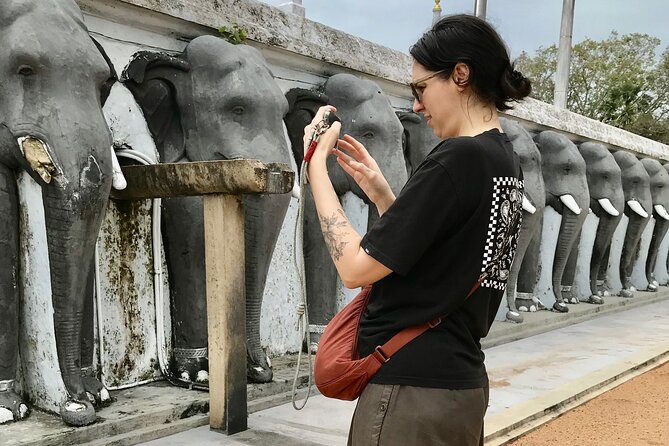
The main refectory of Abhayagiri Monastery contains a large granite trough shaped like a canoe. Its size gives you a quick sense of how many people the institution served.
The account of the Chinese monk Fa-hsien, who studied in the area, adds an important human link to the ruins. His presence points to the wider connections of Anuradhapura as a place of Buddhist learning.
The stop is scheduled for 15 minutes. Look closely at the trough and ask Lucky to explain how food service may have operated. It is a simple object, but it makes the monastery easier to picture than a bare foundation does.
Rathna Prasadaya rewards close attention
Rathna Prasadaya and its guardstone are scheduled for only 10 minutes, the shortest stop on the route. The guardstone is identified as an eighth-century work and is considered one of Sri Lanka’s finest examples of ancient art.
This is not a place to rush past while looking only at large ruins. The value lies in the carving and the details around the entrance. A guardstone can tell you about artistic skill, symbolism, and the care given to a threshold.
If sculpture interests you, use your private format well. Ask Lucky to point out what makes the carving important rather than trying to absorb it from a quick glance.
Eth Pokuna is an enormous man-made pond
Eth Pokuna, or Elephant Pond, lies southwest of the refectory. It is described as perhaps the largest man-made pond in Asia and was built in the third century AD.
The visit lasts about 15 minutes. The pond’s scale is the main lesson. After seeing smaller bathing pools and service areas, you can appreciate how much planning and labor went into supplying water to a major complex.
The name may suggest a decorative garden feature, but this was part of the practical infrastructure of the monastic center. It is another stop where the ancient city feels organized and highly managed.
The moonstone closes the route with fine detail
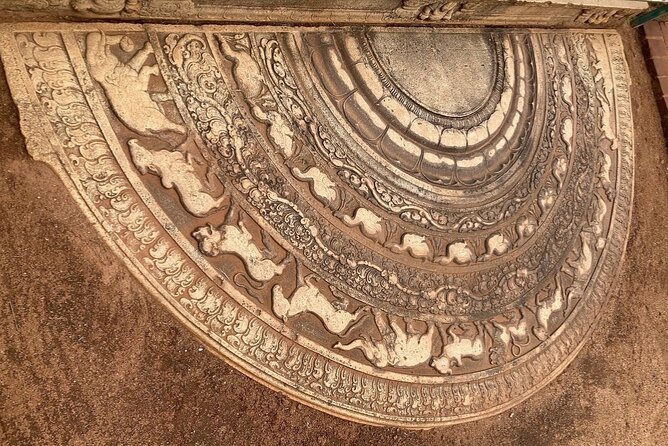
The final listed stop is the moonstone, or Sandakada pahana. It is a carved stone placed at the foot of steps leading to a Buddhist shrine. Though it served as a threshold, ancient sculptors transformed it into a carefully designed work of art.
The visit lasts about 15 minutes. Look at the curved shape and the patterning rather than treating it as a simple doormat. This small feature is a fitting end to a route that moves from huge stupas and ponds to fine carved detail.
It also gives you a chance to review the range of what you have seen: forest monastery, sacred tree, royal palace remains, waterworks, medical building, refectory, guardstone, and sculpture.
What the $30 price really covers
The listed price is $30 per person. That is fair for a private guide covering this many sites, especially if you value explanation and the chance to ask questions without waiting for a large group.
But the headline price is not the full cost. UNESCO World Heritage site admission is listed separately at $30 per person. Private transportation is also not included, and the schedule involves moving between many sites.
Bottled water and king coconut soda are included. Group discounts are available, which may improve the value if you are traveling with family or friends. Before booking, ask for a clear total that includes entry fees and transport.
Who will get the most from this tour
I would choose this tour if you want a concentrated introduction to Anuradhapura and prefer a guide who explains what you are seeing. It suits visitors who enjoy archaeology, Buddhist sites, ancient engineering, and smaller details that are easy to miss.
It is also a good match for an independent group that does not want a fixed large-party commentary. Lucky is described as enthusiastic, direct, and willing to discuss the reality behind the sites rather than simply recite facts.
You may want another arrangement if you prefer to wander slowly, spend long periods photographing one monument, or avoid extra entry and transport costs. The schedule is broad, and several stops are short.
The title refers to an optional visit to Mihintale, but the supplied stop schedule does not provide timing, transport details, or a price for that addition. Confirm whether Mihintale is available, how much extra time it requires, and whether it changes the meeting or ending point.
Booking and cancellation details
The activity runs Monday through Sunday, with listed start times between 7:30 AM and 10:30 AM. It lasts about six hours and returns to the meeting point at Pothanagama Junction.
Confirmation is provided at booking. The activity is private, and only your group participates. It is near public transportation, and the information says most people can take part.
Free cancellation is available up to 24 hours before the start time for a full refund. Changes or cancellations made within 24 hours are not accepted for a refund. Poor weather may lead to a different date or a full refund.
Should you book it?
Book this tour if you want Anuradhapura explained rather than simply photographed. The combination of Lucky’s private guidance, broad site coverage, living Buddhist places, and less obvious ruins gives you a useful picture of how the ancient city worked.
Just treat $30 as the guide portion, not the final bill. Add the $30 entry fee per person, arrange transport, and clarify the Mihintale option before confirming. If you are comfortable with that cost and a brisk six-hour route, this is a strong way to make sense of Anuradhapura in one morning.
FAQ
How long does the Anuradhapura tour last?
The tour lasts approximately six hours.
Is this a private tour?
Yes. Only your group participates in the activity.
Who is the tour guide?
The guide is identified in the tour information and guest responses as Lucky. The experience includes a professional, licensed tour guide.
What is included in the price?
The price includes the professional licensed guide, bottled water, and soda or king coconut.
Is the UNESCO admission fee included?
No. Entry admission to the UNESCO World Heritage sites is listed separately at $30 per person.
Is private transportation included?
No. Private transportation is not included.
Where does the tour start and finish?
It starts at Pothanagama Junction, 2 Kanuwa Junction, D. S. Senanayake Mawatha, Anuradhapura, and ends back at the meeting point.
What are the operating hours?
The listed operating window is Monday through Sunday, from 7:30 AM to 10:30 AM.
Can I cancel for a full refund?
Yes. You can cancel at least 24 hours before the start time for a full refund. Cancellations or changes made less than 24 hours before the start time are not refunded.
Just added around Anuradhapura
- One Day Tour – Sacred city of Anuradhapura & Sacred city of Mihintale. (Sunset)★ 4.5 · 23 reviews
- Visiting the Historical Polonnaruwa Ruins and Minneriya Safari★ 5.0 · 16 reviews
- Day tour trips from Anuradhapura to multiple cities as your choice★ 5.0 · 14 reviews
- Day Tour from dambulla to Sigiriya & Polonnaruwa★ 5.0 · 13 reviews
- Private Day Trip to Sigiriya , Dambulla and Pidurangala Rock★ 4.5 · 14 reviews
- Anuradhapura ancient city tour with Travandgo tours★ 5.0 · 7 reviews
- Anuradhapura Heritage Mountain bike / bicycle Tour★ 5.0 · 34 reviews
- Anuradhapura: 14 Ancient City Sites Tuk Tuk Tour★ 5.0 · 8 reviews
Sigiriya & Dambulla Temple Tours, compared.

Kandy to Sigiriya Day Tour and Dambulla cave temple with private vehicle
Read our review →
Private Day Trip to Sigiriya & Dambulla from Kandy – Aaliya Tours
Read our review →
Private Dambulla Sigiriya Tour from Kandy with Lunch
Read our review →
Browse the lists this tour appears in