
REVIEW · SIGIRIYA & DAMBULLA TEMPLE TOURS
Anuradhapura: 14 Ancient City Sites Tuk Tuk Tour
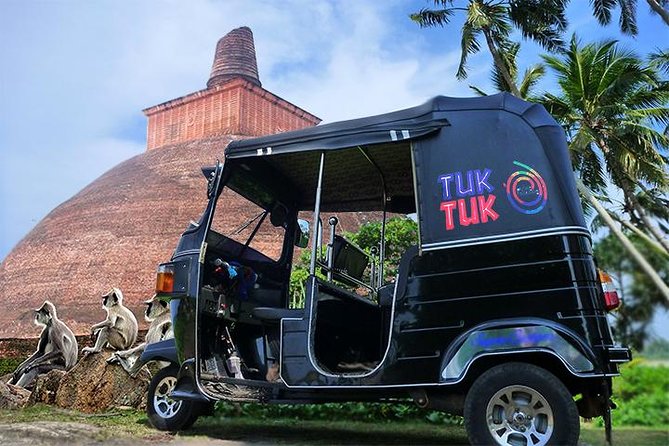
Anuradhapura is too spread out for a pleasant walking tour, and this private tuk-tuk outing solves that problem neatly. In four to six hours, you move between sacred trees, enormous stupas, monastery ruins, bathing pools, and finely carved stones without spending your day arranging separate rides.
I like the private format, especially for a small group of up to three people. I also like the digital audio guide, which gives you background at each stop instead of leaving you to stare at piles of ancient stone with no sense of what you are seeing.
The main point to watch is cost. The tour is $46.40 per group, but entry tickets are separate, with the listed charge for all eight UNESCO World Heritage sites given as $30 per person. You also visit many stupas in one morning or afternoon, so the experience suits history fans who want broad coverage more than a slow, deeply guided look at one monument.
Key points at a glance
- Four to six hours across 14 sites: The route covers the major sacred and monastic areas of Anuradhapura in a compact half-day.
- A tuk-tuk makes the city practical: Hotel or railway-station pickup saves you from finding transport between widely separated ruins.
- The audio guide fills in the story: You receive digital commentary for all the stops, including the major stupas, ancient pools, and carved stones.
- The strongest stops are Sri Maha Bodhi and Ruwanwelisaya: These are among the most important religious places on the route.
- Bring socks: Bare feet on hot sand and stone can be painful, particularly around temple areas.
- Budget for admission: Entry tickets are not included, and the listed fee for the eight UNESCO World Heritage sites is $30 per person.
Why a tuk-tuk is the right way to see Anuradhapura
Anuradhapura was once a major capital and religious center, but its ancient sites are scattered across a large area. Walking between Isurumuniya Temple, Sri Maha Bodhi, Abhayagiri, and Jetavanaramaya would take far longer than most half-day schedules allow.
The tuk-tuk keeps the day moving. You are picked up at your hotel or railway station, ride between the monuments with a private driver, and return to your starting point at the end. This is much easier than flagging down vehicles at each stop or bargaining for every short ride.
The vehicle is also useful for a small party. The price covers up to three people, so a couple or trio gets the best value. A solo visitor pays the same group price, which makes this less attractive unless the convenience matters more than keeping costs low.
The tour is listed at about four to six hours. The scheduled stop times add up to roughly four hours and ten minutes, before allowing for driving between sites. That gives you a fair idea of the pace: this is a brisk survey of the ancient city, not a full-day archaeological study.
More Sigiriya and Dambulla Temple Tours in Anuradhapura:
- Private City Day Tour in Anuradhapura
★ 5.0 · 383 reviews - Explore & Ride the history of anuradhapura with Vogel Tours
★ 5.0 · 62 reviews - Delve Into Ancient Anuradhapura with Optional Visit to Mihintale
★ 5.0 · 42 reviews
Isurumuniya, Ranmasu Uyana, and the city’s early religious art
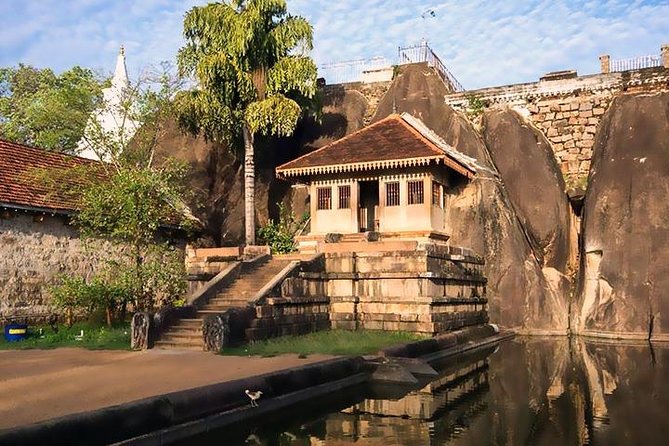
The first stop is Isurumuniya Temple, near Tissa Wewa. The temple is known for several carvings, including the Isurumuniya Lovers, the Elephant Pond, and the Royal Family. You have about 20 minutes here, enough to see the key features and listen to the audio explanation, but not enough for an unhurried study of every carving.
Next comes Ranmasu Uyana, also called Magul Uyana. This ancient park covers about 40 acres and sits close to Isurumuniya and Tissa Wewa. The scheduled 40 minutes here is one of the longer pauses on the route, which makes sense. The site is more than a single monument, and you need time to appreciate its old park setting and stone remains.
These first two stops give the tour a useful start. You see art, water management, and royal or monastic spaces before moving into the huge stupas and major pilgrimage sites. I would pay close attention to the audio here, since smaller ruins can be hard to understand without context.
Mirisaveti Stupa and Sri Maha Bodhi
Mirisaveti Stupa receives a short 10-minute visit. King Dutugamunu built it after defeating King Elara, placing Buddha relics in his scepter before construction began. Ten minutes is enough for a quick look and photographs, but this is one stop where the schedule leaves little room to linger.
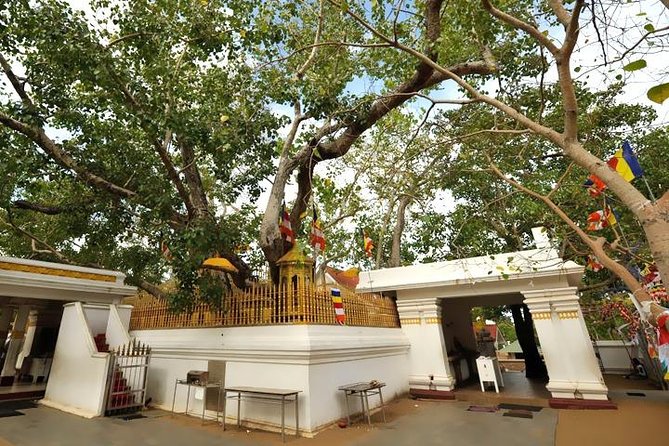
Sri Maha Bodhi is a more important pause. The sacred fig tree is said to be about 2,300 years old and is described as the oldest tree known to have been planted by a human rather than growing from natural seeding. The tour allows 20 minutes.
This is one of the places where you should slow down mentally, even if the timetable cannot slow down much physically. Sri Maha Bodhi is not simply an old tree. It is a living focus of Buddhist devotion, and the audio guide can help explain why this particular tree matters.
Temple etiquette matters here. The supplied advice to wear socks is worth taking seriously. You may need to walk over hot sand or sun-heated stone with bare feet, and the ground can be uncomfortable. Dress and behave respectfully at religious sites, and follow local instructions about footwear.
Ruwanwelisaya and Thuparama
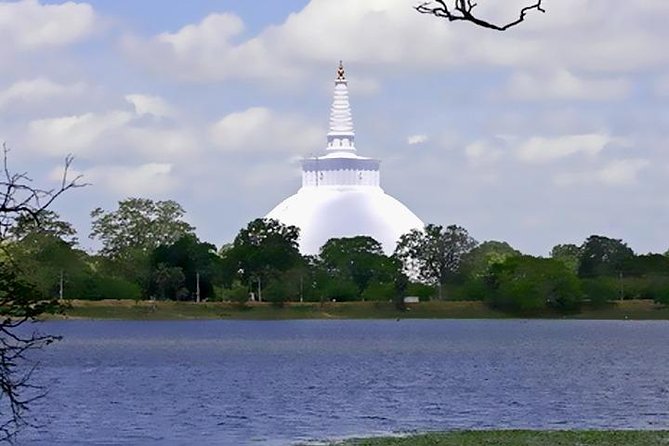
Ruwanwelisaya is one of the visual anchors of the day. This large hemispherical stupa was built by King Dutugemunu around 140 BC and is sacred to Buddhists around the world. The stop lasts about 20 minutes.
The scale of the monument is difficult to absorb in a quick visit. I would use the tuk-tuk ride before arrival to listen to the audio guide, then spend your time looking closely at the structure and observing the religious activity around it. You do not need to rush through every stop, but the major stupas deserve your best attention.
Thuparama Dagoba follows with only 10 minutes. It has a bell shape and has been destroyed and restored several times, including a complete restoration during the reign of King Agbo II. This is a short stop, so think of it as a focused introduction rather than a full visit.
The pattern becomes clear here: the tour takes you to the main monuments, but the time at each one varies. You get a broad picture of Anuradhapura’s sacred center. If you want detailed architectural study, you will probably wish for more time at some locations.
More Temple Tuk-Tuk Tours in Anuradhapura:
- Anuradhapura: Tuk Tuk Tour – Ancient City with Audio Guide
★ 4.1 · 13 reviews - Bangkok by Night: Temples, Markets and Food Tuk-Tuk Tour
★ 5.0 · 3,752 reviews - Bangkok: Markets, Temples and Food Night Tour by Tuk Tuk
★ 4.9 · 2,371 reviews - Siem Reap: Angkor Wat Private Tuk-Tuk Tour
★ 4.9 · 2,222 reviews
Lankarama and the meaning of a moonstone
Lankarama Stupa was built by King Valagamba at Galhebakada. The route allows 10 minutes, making this another compact stop. It adds a different royal and religious site to the morning without taking too much time from the larger monuments.
The next stop, the moonstone or Sandakada Pahana, is especially worthwhile for visitors who enjoy small details. These semicircular stone slabs commonly feature a half lotus in the center, surrounded by several carved bands. The design is easy to pass without noticing, but the audio guide can direct your attention to the pattern and symbolism.
This is the kind of stop that improves when you know what to look for. Rather than treating every ruin as another large mound, look at the entrance stones, carved borders, and protective figures. Anuradhapura’s achievement is not only its giant stupas. It is also in the careful stonework around ordinary movement through monasteries and temple grounds.
Guardstones and the Abhayagiri monastery complex
Rathna Prasadaya and its guardstone receive about 10 minutes. Early guardstones were plain supports for heavy stone balustrades. Over time, they became carved symbols associated with protection and prosperity.
The main refectory of Abhayagiri Monastery gets 20 minutes. This ruined building served as the monastery’s main alms hall, where daily meals were provided. It gives you a practical glimpse of monastic life. Ancient religious centers were not only places for prayer and meditation. They needed kitchens, dining spaces, water systems, and large communities to function.
Abhayagiri Dagoba deserves 30 minutes, one of the longer stops on the schedule. Abhayagiri was a major monastic center and royal capital, with large monasteries that once rose several stories and had roofs covered in materials including gilded bronze or brightly glazed tiles.
I find this section of the route particularly useful because it moves beyond the best-known pilgrimage sights. The refectory and monastery grounds help you imagine how the ancient city worked. The audio guide is important here, since the ruins may not explain themselves at first glance.
Samadhi Statue and the Twin Baths
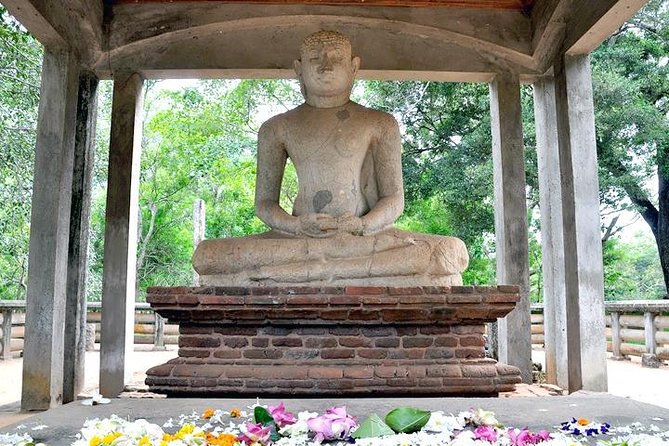
The Samadhi Statue shows the Buddha seated in the Dhyana Mudra, the meditation posture associated with his first enlightenment. The visit lasts about 10 minutes.
This is a brief, quiet stop rather than a large complex. Look closely at the posture and expression, then use the audio guide for the religious context. The statue is part of Mahamevnawa Park, and its importance comes from both the image itself and the meaning attached to the meditation pose.
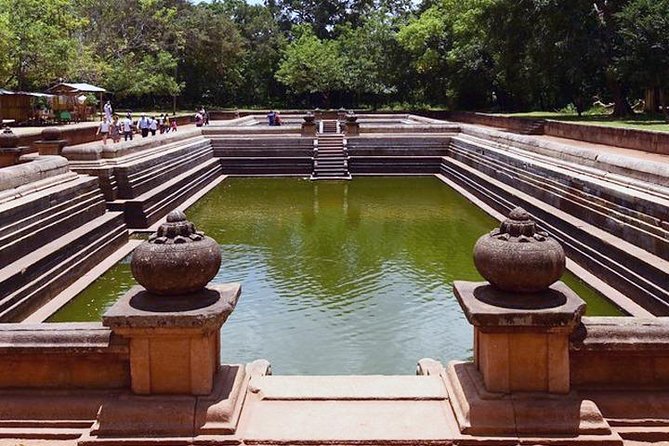
The Twin Baths, or Kuttam Pokuna, receive 20 minutes. These paired bathing pools are among the finest examples of ancient bathing tanks in Sri Lanka. Their design shows the practical side of the monastic city, including the need for bathing and water management.
The pools also provide a welcome change after a run of stupas. If you are beginning to feel that the route has too many similar monuments, Kuttam Pokuna gives you a different shape, purpose, and subject to consider.
Jetavanaramaya closes the route
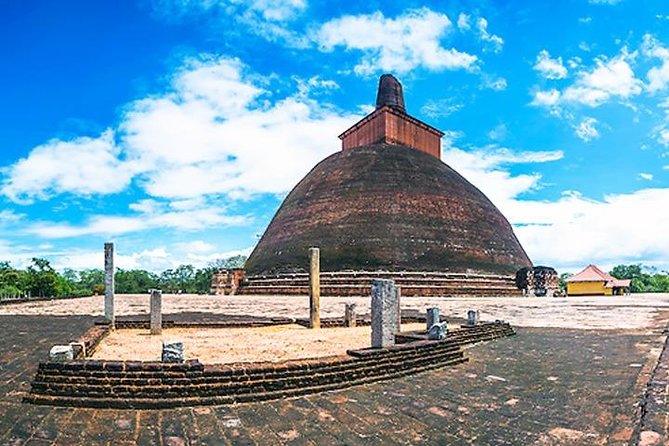
The final stop is Jetavanaramaya, a stupa in the ruins of Jetavana Monastery. At 122 meters, or about 400 feet, it was once the world’s tallest stupa.
The scheduled visit is 20 minutes. That is enough to see the monument and understand its scale, though you may want to spend longer if monumental architecture is your main interest. Ending here works well because the stupa provides a final reminder of the engineering and religious ambition behind Anuradhapura.
By this point, you will have seen sacred trees, carvings, royal stupas, monastery facilities, meditation art, and sophisticated bathing pools. The route is not built around one single showpiece. It is a connected picture of an ancient capital.
Audio guide, driver, and pace
The experience includes a digital audio guide for all sites. This is not the same as having a live historian beside you, so I would set your expectations accordingly. You receive structure and background while keeping the privacy of a private vehicle.
The audio guide is most useful at smaller stops such as the moonstone, guardstones, refectory, and Ranmasu Uyana. At the large stupas, the monuments are immediately impressive. At less obvious ruins, clear explanation helps you see why the site matters.
The driver handles the route, parking, and transfers. Parking fees and bottled water are included. Since the activity is private, you can focus on your own pace within the limits of the half-day schedule. The supplied details do not name an individual guide, so you should not book this expecting a particular named guide.
A five-star rating from eight submitted reviews suggests a strong early record, with the organization of the city tour receiving particular praise. I would still treat the small number of ratings as limited evidence. The format is clearly well suited to convenience and coverage, but personal enjoyment will depend on how much time you want at each monument.
Price, admission, and practical value
At $46.40 per group of up to three, the tour is good value for a couple or small family that wants transport, a planned route, parking, water, and audio commentary in one package. Split between three people, the transport and organization cost is modest.
The separate admission charge changes the total. Entry tickets for the eight UNESCO World Heritage sites are listed at $30 per person, and all site admission tickets are excluded from the tour price. Check the total cost for your group before booking so the low headline price does not surprise you later.
Pickup is offered from surrounding hotels and the railway station, which is useful if you have only a short stay in Anuradhapura. Mobile tickets and confirmation at booking also keep the arrangements simple.
The activity requires good weather. If poor weather causes cancellation, you are offered another date or a full refund. You can cancel for a full refund up to 24 hours before the start time. Changes or cancellations inside 24 hours are not refunded.
Most people can participate, and service animals are allowed. The tour is near public transportation, but the central benefit is that you do not need to use public transport between the ancient sites.
Who should book this Anuradhapura tour?
I would choose this tour if you have one half-day in Anuradhapura and want to see the major sites without sorting out local transport. It is especially practical for couples, small groups, railway arrivals, and anyone who wants a fixed route with commentary.
It also suits first-time visitors who want an overview before deciding which parts deserve a longer return visit. The combination of large stupas and smaller architectural details gives you a sound first look at the old city.
I would hesitate if you want a slow archaeological visit, long meditation time at religious sites, or a live guide who can answer questions on the spot. Fourteen stops is a lot. Some visits last only 10 minutes, and the day includes several stupas that may feel similar if your interest is limited to one type of monument.
Should you book it?
Book this Anuradhapura tuk-tuk tour if convenience, broad coverage, and private transport are your priorities. The strongest reasons are the hotel or railway-station pickup, the sensible route through 14 sites, and the audio guide that gives smaller ruins useful context.
Before committing, add the separate admission cost and decide if a brisk half-day pace suits you. Wear socks, carry a respectful attitude at religious sites, and give extra attention to Sri Maha Bodhi, Ruwanwelisaya, Abhayagiri, Kuttam Pokuna, and Jetavanaramaya. For a first visit, it is an efficient way to get your bearings in a very spread-out ancient city.
FAQ
How long does the Anuradhapura tuk-tuk tour take?
The tour lasts approximately four to six hours. The listed visits total about four hours and ten minutes, with additional time needed for travel between sites.
How many sites does the tour visit?
The route includes 14 named sites across Anuradhapura’s ancient city area.
Is the tour private?
Yes. Only your group participates, and the price covers up to three people.
Is hotel pickup available?
Yes. Pickup and drop-off are offered from surrounding hotels. Pickup is also available from the Anuradhapura railway station.
Is an audio guide included?
Yes. A digital audio guide is provided for all the listed sites through an audio guide app.
Are entrance tickets included?
No. Admission tickets are not included. The listed charge for all eight UNESCO World Heritage sites is $30 per person.
What is included in the tour price?
The price includes the private tuk-tuk tour, digital audio guide, bottled water, parking fees, and pickup and drop-off from the stated locations.
Should I wear socks?
Yes. Socks are strongly practical because some temple areas have hot sand and stone or tile surfaces where you may need to go barefoot.
Is the tour suitable for most people?
The tour information says most people can participate. Service animals are allowed, and the activity is near public transportation.
Can I cancel for a refund?
You can receive a full refund if you cancel at least 24 hours before the local start time. Cancellations or changes made less than 24 hours before the start time are not refunded. If bad weather cancels the tour, you are offered a different date or a full refund.
Just added around Anuradhapura
- One Day Tour – Sacred city of Anuradhapura & Sacred city of Mihintale. (Sunset)★ 4.5 · 23 reviews
- Visiting the Historical Polonnaruwa Ruins and Minneriya Safari★ 5.0 · 16 reviews
- Day Tour from dambulla to Sigiriya & Polonnaruwa★ 5.0 · 13 reviews
- Private Day Trip to Sigiriya , Dambulla and Pidurangala Rock★ 4.5 · 14 reviews
- Day tour trips from Anuradhapura to multiple cities as your choice★ 5.0 · 14 reviews
- Anuradhapura Heritage Mountain bike / bicycle Tour★ 5.0 · 34 reviews
- Anuradhapura ancient city tour with Travandgo tours★ 5.0 · 7 reviews
- Half day tour – in Sacred city of Anuradhapura Or sacred city of Mihintale.★ 4.5 · 24 reviews
Sigiriya & Dambulla Temple Tours, compared.

Kandy to Sigiriya Day Tour and Dambulla cave temple with private vehicle
Read our review →
Private Day Trip to Sigiriya & Dambulla from Kandy – Aaliya Tours
Read our review →
Private Dambulla Sigiriya Tour from Kandy with Lunch
Read our review →
Browse the lists this tour appears in