
REVIEW · METEORA MONASTERY TOURS
Meteora Small Group Hiking tour with Transfer and Monastery Visit
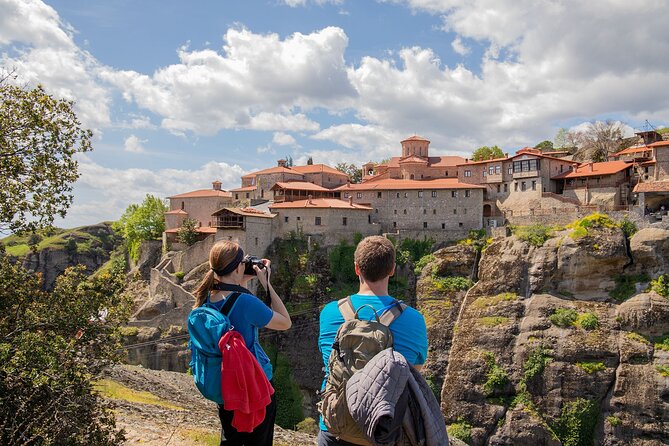
Meteora is best understood on foot, where forest paths lead beneath towering rock pillars and the monasteries appear above you in stages. This tour combines that quieter side of the area with visits to Great Meteoro and the unusual Ypapanti Monastery, built inside a rock cavity.
I like the small group, limited to 12 people, and the hotel pickup from Kalambaka or Kastraki. I also like the guides’ mix of local history, geology, plants, and animal life. The main caution is fitness: the route is manageable for active walkers, but some sections become harder after the monastery visit, especially in heat or if you are not used to hills.
Key points to know before you book
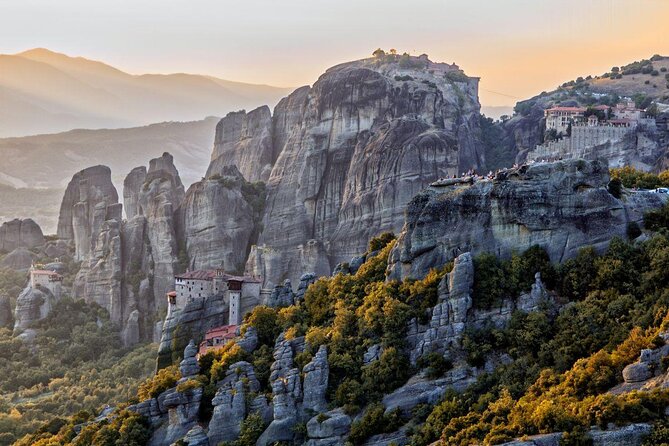
- Hidden paths beyond the bus roads: Walk through wooded trails and the Natura 2000 area for views that feel very different from a roadside stop.
- Two very different monasteries: Great Meteoro is the grand historic foundation, while Ypapanti sits inside a rock hollow and feels far more secluded.
- Strong local guiding: Chris, Christos, Evan, Kristos, and Dimitris are repeatedly praised for clear storytelling, friendly pacing, and knowledge of nature as well as history.
- Small-group transport included: A minivan collects you at your Kalambaka or Kastraki hotel or apartment and returns you afterward.
- Plan for real walking: The hike is not extreme, but it is more than a gentle stroll. Comfortable hiking shoes and moderate fitness are important.
- Budget-friendly value: At $36.28 per person, the tour includes transport, a guide, water, and the walk, though monastery admission costs an additional €5.
Why walking Meteora changes the experience
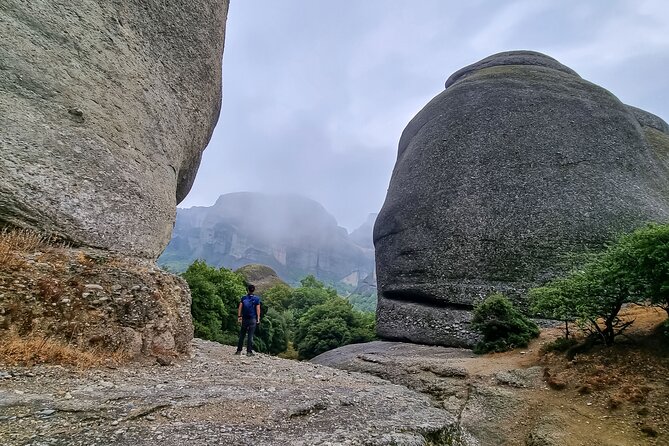
From a vehicle, Meteora can seem like a collection of dramatic rocks with monasteries perched on top. On foot, the place makes more sense. You move through the trees, look up at the cliffs, and gradually understand why monks chose these hard-to-reach ledges more than 15 centuries ago.
The area covers only a few square kilometers, but it packs in geology, religious history, archaeology, and living monastic tradition. Kalambaka and Kastraki sit at the foot of the rocks, making either town a practical base for this morning outing.
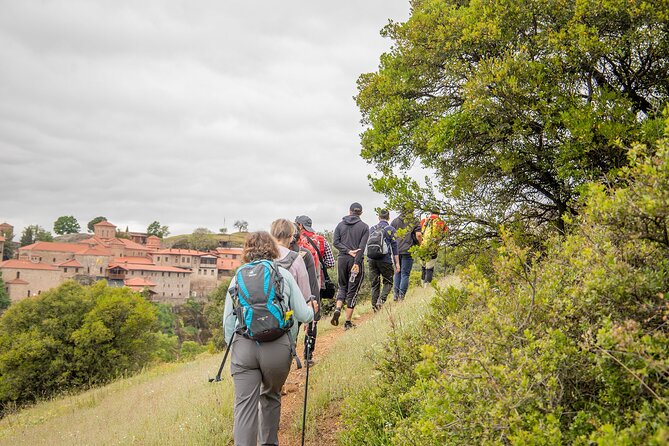
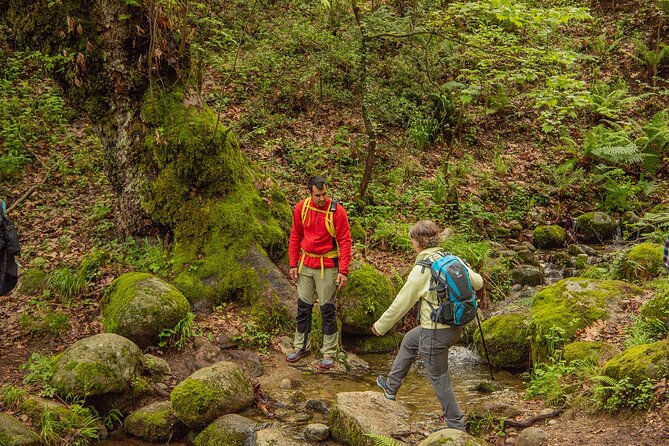
The route uses less obvious paths known to local guides. That matters because the main monastery roads can feel busy, while a wooded trail gives you space to notice smaller things: rock formations, plants, tortoises, and changing views between the trees.
Your guide is an important part of the experience. Chris and Christos are especially noted for their calm manner, humor, and ability to explain both the region’s past and its natural life. Evan is praised for his easy storytelling and careful pacing, while Kristos and Dimitris bring strong local knowledge and a personable style.
Names may vary by departure, but the guiding approach is consistent: history is mixed with practical help, short pauses, picture stops, and explanations of the land around you.
More Meteora Monastery Tours in Greece:
- Athens: Meteora Monasteries Day Trip with Caves and Lunch
★ 4.7 · 4,670 reviews - Athens to Meteora: Monasteries, Caves & Seaside Stopovers
★ 4.7 · 2,958 reviews - Athens: Meteora Monasteries, Caves & Coastal Stopovers with Lunch
★ 4.5 · 1,432 reviews
The morning begins with a simple hotel pickup
The tour starts at about 8:30 a.m. Pickup and drop-off are offered at hotels and Airbnbs in Kalambaka and Kastraki. Transport is by air-conditioned minivan, which saves you the trouble of arranging a taxi or finding a parking place near the monastery roads.
The small vehicle also keeps the morning personal. With a maximum of 12 people, the guide can usually keep an eye on the group and answer questions without turning the walk into a large procession.
Bring water, although bottled water is supplied, and wear shoes with a firm sole. The trail is natural rather than a paved promenade, and the ground can feel more demanding after the first portion of the walk.
The early start is useful in warm weather. The hike has been comfortable for people in their 40s, 60s, and beyond, but age alone is not the deciding factor. Your walking habits, knees, balance, and tolerance for slopes matter more. Several breaks are built into the pace, and guides may pause to explain plants, local stories, or a view, but this remains an active outing.
Walking through Meteora’s rock forest
The first major part lasts about two hours. You hike among the giant stone pillars, following paths through the forest and around the monastery area.
The phrase rock forest is apt. The stone towers rise in clusters, and the route lets you see them from changing angles rather than from one fixed viewpoint. One bend may frame a monastery high above; another may reveal the plain of Thessaly beyond the trees.
This is where the tour earns its price. You are not simply driven from one photo stop to another. You spend time moving through the setting that made Meteora sacred in the first place.
The guides also add details that are easy to miss alone. You may learn about local plants and animals, the formation of the sandstone pillars, or the early monks who sought solitude in the caves and cliffs. The natural side of Meteora is not treated as background scenery. It is part of the story.
Still, do not mistake the word hiking for a flat country walk. One person may find it an easy outing, while another may find the later section quite demanding. The route has been described as roughly five miles by one participant, so allow for a substantial morning on your feet. If you have knee trouble or have not hiked for years, tell the guide early and use the rest stops.
Cloud and fog can also change the views. On a clear day, the rock towers and monasteries provide the big visual reward. In mist, the guide’s stories and nature commentary become even more important, and the atmosphere can feel quieter and more mysterious.
Great Meteoro, the largest monastery
Great Meteoro, also called the Great Meteoron Monastery, is the largest and oldest of Meteora’s monasteries. It sits on top of one of the enormous rock formations, which explains the name Meteoro, meaning suspended in the air.
The monastery was founded by Saint Athanasios the Meteorite, who organized a more structured monastic community here. That makes Great Meteoro a key point in the development of organized monastic life at Meteora, not just a spectacular building on a cliff.
Allow about an hour for this part of the visit. The entrance fee is not included in the tour price, and the additional charge is €5 per person. The tour information also notes that monastery admission is separate, so carry a little cash or confirm the current payment arrangement before setting out.
Great Meteoro is the grand stop, with the strongest sense of scale and historical importance. It can also be the busier part of the morning. The reward is the chance to connect the dramatic views with the religious community that shaped the site.
Dress properly. Men need trousers and long sleeves, while women need a long skirt. If you arrive in shorts or unsuitable clothing, trousers and skirts are provided, but dressing correctly from the start is more comfortable and respectful.
The monastery visit also changes the rhythm of the tour. You move from open trail and natural viewpoints into a functioning holy place with its own rules. Keep your voice low, follow directions, and remember that this is not simply a scenic attraction.
More Temple Tours with Hotel Transfer in Greece:
- Meteora: Monasteries Tour, Lunch, and Athens Transfer Option
★ 4.8 · 102 reviews - From Halkidiki: Meteora & Monasteries Day Trip with Transfer
★ 4.2 · 15 reviews - From Aswan: Abu Simbel Temple Day Trip with Hotel Pickup
★ 4.4 · 2,807 reviews - Full Day Abu Dhabi City Tour + BAPS Mandir Visit, guide transfer
★ 4.5 · 963 reviews
Ypapanti, the monastery inside the rock
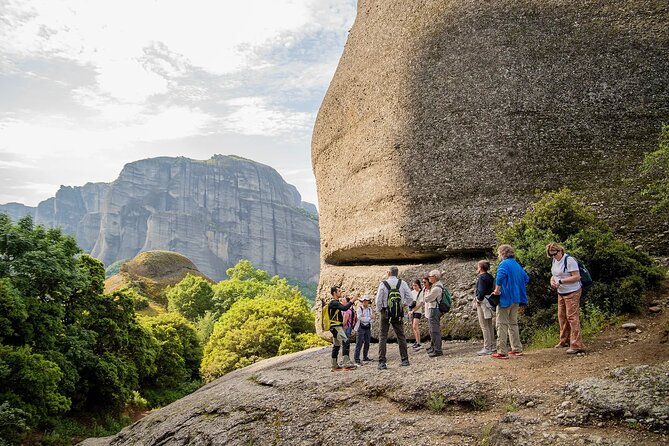
Ypapanti is one of the most distinctive stops. Instead of sitting prominently on a rock summit, it was built inside a large cavity in the stone.
Two monks, Nilos and Cyprianus, founded the monastery in 1367. It was later destroyed in 1809, when the local rebel Papathymios Vlahavas was arrested there by the forces of Ali Pasha. That history gives the site a different character from Great Meteoro. It feels less like a monumental destination and more like a place tucked into the rock itself.
The approach takes about 30 minutes and is described as a simple, pleasant path. Even so, this is a worthwhile inclusion because many quick visits to Meteora focus only on the major monasteries visible from the road.
Ypapanti is the kind of place where a local guide adds real value. Without context, you might simply see an opening in the cliff. With the story of its founders, destruction, and setting, the monastery becomes part of the long human history of people using these rocks for worship, refuge, and solitude.
The tour includes the visit to Ypapanti, while admission is listed as free. Access and opening arrangements can vary at religious sites, so your guide will direct the timing on the day.
Varlaam and Saint Nicholas from the route
The route also brings you into the orbit of other important monasteries, including Varlaam and Saint Nicholas of Anapafsas.
Varlaam is the second largest monastery and sits opposite Great Meteoro. It was founded in the mid-14th century by the ascetic Hosios Varlaam. Its main church, or catholicon, was built in 1541 and 1542 by two priest-monks from Ioannina, Theophanes and Nectarios Apsarades. The wall paintings were completed in 1548 and are linked by style to the painter Frago Catelano of Thebes.
Saint Nicholas of Anapafsas is the first monastery encountered on the route toward Meteora. It was founded at the end of the 14th century. The name is explained in two ways: it may come from a benefactor, or from the monastery’s position as a resting point for pilgrims before they continued uphill.
Do not book this outing expecting to enter every monastery. The tour gives you a broad look at the area, one substantial monastery visit, and the special stop at Ypapanti. If you want to see the interiors of several monasteries, add a separate visit by car or minivan on another day.
That combination works well. Use this hike to understand the setting and reach the quieter paths, then visit individual monasteries when you can give them more time.
What the $36.28 price really covers
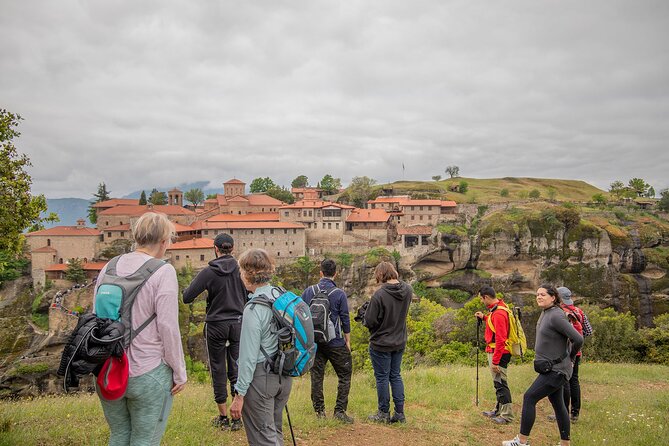
At $36.28 per person, this is a strong-value half-day outing. The price includes round-trip transport from Kalambaka or Kastraki, an English-speaking mountain guide, bottled water, and the guided hike. You are paying for local transport and interpretation as well as for access to the trails.
The €5 entrance fee is the main extra cost. The tour is therefore not completely all-inclusive, but the added fee is modest and clearly separate.
A larger bus tour may cover more monasteries in the same amount of time, especially if bad weather makes hiking impossible. One departure was changed to a bus tour because of rain, and that alternative allowed the group to see more monasteries. The tradeoff is simple: the bus is better for coverage, while this tour is better for walking, quiet trails, and a closer feel for the rocks.
Free cancellation is available up to 24 hours before the start time. Changes or cancellations inside that window are not accepted for a refund.
Who should book this Meteora hike?
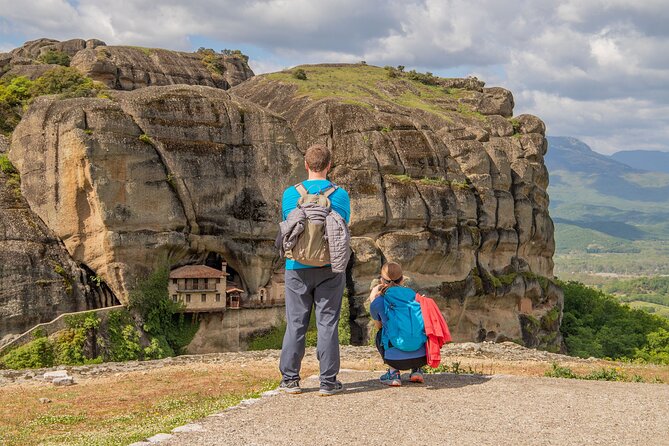
Book it if you want to feel the ground beneath you rather than spend the morning looking through a minivan window. It suits active couples, families with older children, solo visitors, and anyone who wants a guide to explain geology, monastic life, plants, and local history in one outing.
It is also a good choice if you have only one morning in Meteora. The transfer removes transport worries, Great Meteoro provides the major monastery experience, and Ypapanti adds something less predictable.
Think twice if you want a completely gentle walk, dislike uneven paths, or need to avoid slopes. The hike is often described as manageable, but not effortless. Heat, fog, rain, and your own fitness can change the feel of the route.
Should you book it?
I would book this tour if your main goal is to understand Meteora as a place, not merely collect monastery photographs. The best parts are the changing views, the quieter trails, the small group, and guides such as Chris, Christos, Evan, and Dimitris, who bring both local facts and a friendly human touch.
Choose a bus-based outing instead if you need to visit as many monasteries as possible or if walking is not comfortable for you. For everyone else, this is a well-priced and active introduction to Meteora, with enough history to give the scenery meaning and enough trail time to make the morning feel like an adventure.
FAQ
How long does the Meteora hiking tour last?
The tour lasts approximately four hours, beginning at about 8:30 a.m.
Where does pickup take place?
Pickup and drop-off are available from hotels and Airbnbs located in Kalambaka and Kastraki village.
Is transportation included?
Yes. The tour includes round-trip transport in an air-conditioned minivan.
Which monasteries are visited?
The route includes Great Meteoro Monastery and the Holy Monastery of Ypapanti. Varlaam and Saint Nicholas of Anapafsas are also part of the wider monastery area seen during the outing, but the tour does not promise entry into every monastery.
What should I wear?
Wear comfortable hiking shoes and clothing suitable for walking. Monasteries require men to wear trousers and long sleeves, and women to wear a long skirt. Clothing can be provided if needed.
Is the tour suitable for all fitness levels?
No. You need moderate physical fitness and should be comfortable with a real hike on natural trails. Breaks are provided, but some sections can feel more challenging, especially after the monastery visit.
More Hikes and Treks in Greece
- Kalabaka: Meteora Small-Group Hiking Tour w/ Monastery Visit
★ 4.9 · 205 reviews - Meteora: Hiking Tour with Local Guide and Monastery Visit
★ 4.8 · 20 reviews - Fushimi Inari Hidden Hiking Tour (Private Option Available)
★ 5.0 · 1,750 reviews - From Barcelona: Montserrat Monastery, Easy Hike, Cable Car
★ 4.9 · 1,021 reviews
Just added around Greece
- Monastery, Elafonissi and Winery Tour from Chania★ 5.0 · 8 reviews
- Chania Private Tour: Monastery, Scenic Gorge & Mountain Views★ 5.0 · 12 reviews
- Shore Explore Chania: City Charm, Beach, Monastery & Winetasting★ 5.0 · 13 reviews
- Chania Old Town, Public Market and Chrisopigi Monastery Tour★ 4.5 · 6 reviews
- Rethymno: Arkadi Monastery, Margarites Village & Melidoni Cave.★ 4.5 · 12 reviews
- Private Half-day Tour: Antisamos beach Swim, Melissani Lake, Agrilia Monastery★ 5.0 · 8 reviews
- Meteora Monasteries & Caves Unesco Wonder in Greece Day Trip★ 5.0 · 15 reviews
- Mercedes Private Tour to Classical Athens and Temple of Poseidon★ 5.0 · 13 reviews
Meteora Monastery Tours, compared.
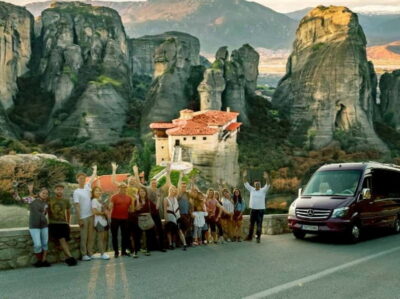
Meteora Monasteries Day Trip with Caves and Lunch
Read our review →
Athens to Meteora: Monasteries, Caves & Seaside Stopovers
Read our review →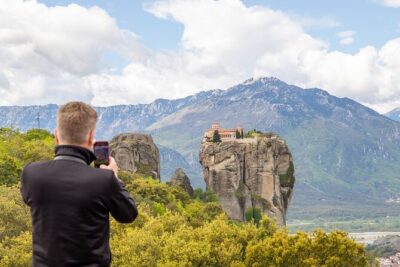
Meteora Monasteries, Caves & Coastal Stopovers with Lunch
Read our review →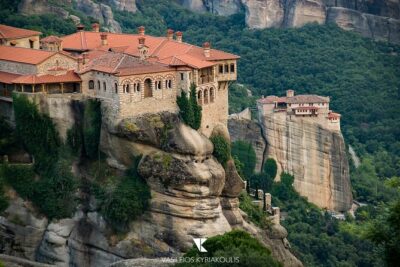
Meteora Monasteries & Caves DayTrip from Athens with Greek Lunch
Read our review →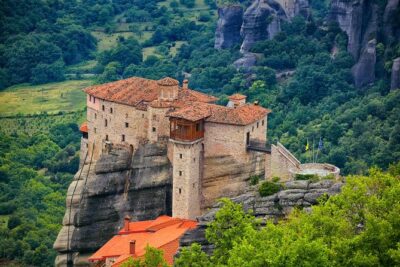
Meteora Monasteries, Hermit Caves Tour with Pickup
Read our review →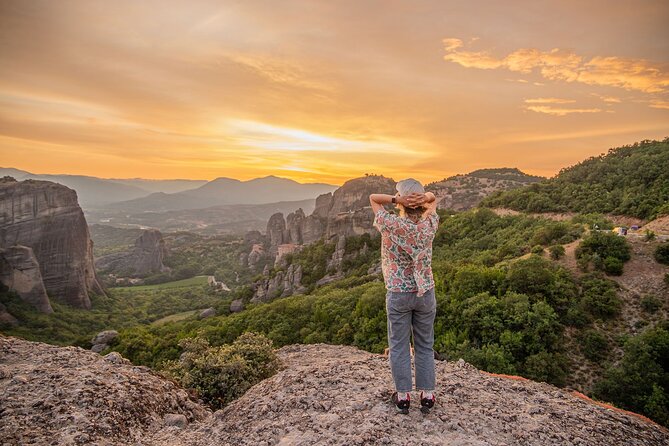
Meteora Sunset with Monastery & Hermit Caves Tour in Small Group
Read our review →
Meteora Monasteries, Hermit Caves & Seaside Escapes
Read our review →
Meteora: Morning Half Day Sightseeing and Monasteries Tour
Read our review →Browse the lists this tour appears in