
REVIEW · METEORA MONASTERY TOURS
Meteora Sunset with Monastery & Hermit Caves Tour in Small Group
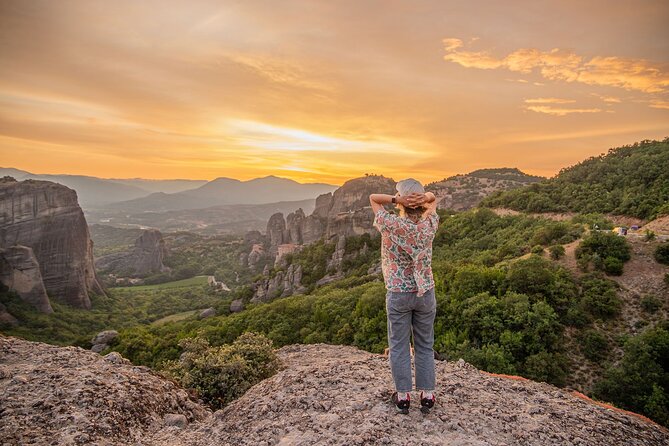
Meteora is at its best when the sun drops behind its giant stone pillars and the monasteries turn warm and gold. This four-hour tour combines that view with St. Stephen’s Monastery, a Byzantine church, old hermit caves, and several photo stops, so you get more than a quick sunset drive.
I like the easy hotel pickup from Kalambaka or Kastraki, and I like the way the route mixes famous sights with places many people would miss alone. Guides such as Lina, Jim, Maria, Dimitri, and Apostle have been praised for lively storytelling, local history, and good photo advice.
The main catch is timing. A four-hour estimate can stretch later in summer, when sunset comes late. One June tour returned around 9:30 p.m., so check the sunset time before booking and do not plan a tight evening connection.
Key points to know before you book
- St. Stephen’s is the monastery you enter: It is reached by a small bridge rather than a long flight of steps.
- The hermit caves add a different side of Meteora: You see where solitary monks lived before organized monasteries took shape.
- The Byzantine church is in Kalambaka: Its walls include stones from an ancient temple, and older floor mosaics appear beneath the present floor.
- The sunset stop is away from the busiest viewpoints: The exact appeal is the broad view of the rocks in evening light.
- The group is capped at 18 people: Transport is by minibus, with pickup and drop-off at hotels and Airbnbs in Kalambaka and Kastraki.
- Bring cash and proper clothing: The monastery admission fee is listed as €7 per booking, and monastery dress rules are strict.
Why this four-hour Meteora tour works
Meteora is not just a collection of monasteries. It is a small area where huge rock pillars, active religious sites, old caves, villages, and a long monastic tradition sit close together. The setting can feel strange and almost unreal, but a good guide helps you connect the cliffs with the people who chose to live on them.
This tour gives you that context without asking you to climb stairs to several monasteries. You see one monastery from inside, learn about other monasteries from the road and viewpoints, visit a working Byzantine church, and walk to the hermit caves. Then you finish with sunset.
That balance is the strongest reason to choose it. If you have only one afternoon in Meteora, you get history, religion, geology, photography, and a little local storytelling in one outing.
The minibus also matters. Meteora’s roads connect Kalambaka, Kastraki, the monasteries, and scattered viewpoints, but arranging all those stops yourself can take time. Pickup from your accommodation removes the need to find the meeting point at Patriarchou Dimitriou 2, although you should still watch for the vehicle and confirm your pickup details.
The advertised maximum is 18 people. That is not a private tour, but it is small enough for a guide to keep the group together and help with photos. Several guides have been singled out for a relaxed manner, humor, and stories rather than a stream of dates and names.
More Temple Sunset Tours in Greece
- Athens: Cape Sounion & Poseidon Temple Sunset Half-Day Trip
★ 4.8 · 8,241 reviews - Athens: Cape Sounion & Temple of Poseidon Sunset Experience
★ 4.3 · 1,338 reviews - Temple of Poseidon and Cape Sounion Sunset Tour with Audio Guide
★ 4.5 · 542 reviews
Starting among Meteora’s rocks and villages
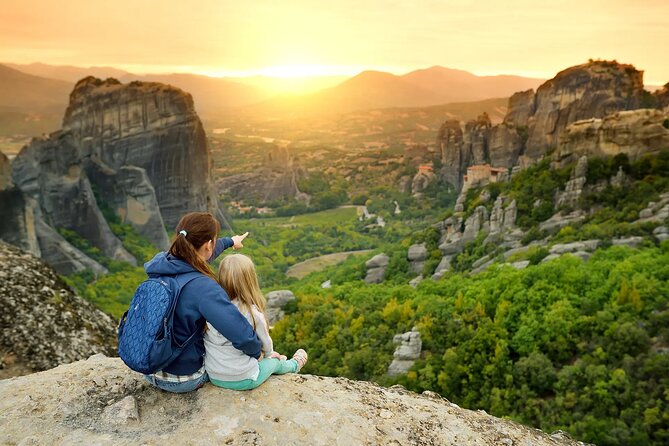
The tour begins in the Meteora area, with Kalambaka and Kastraki at the foot of the rocks. This opening part helps you understand the setting before the religious sites begin.
The rock pillars are the star here. They rise sharply from the plain, and the monasteries seem to cling to their tops and ledges. The guide explains how the area became both a UNESCO World Heritage Site and an officially recognized holy place.
This first stretch is also useful if you arrived in Meteora late in the day. You get your bearings quickly, learn where the major monasteries sit, and hear how monastic life developed from isolated hermits into organized communities.
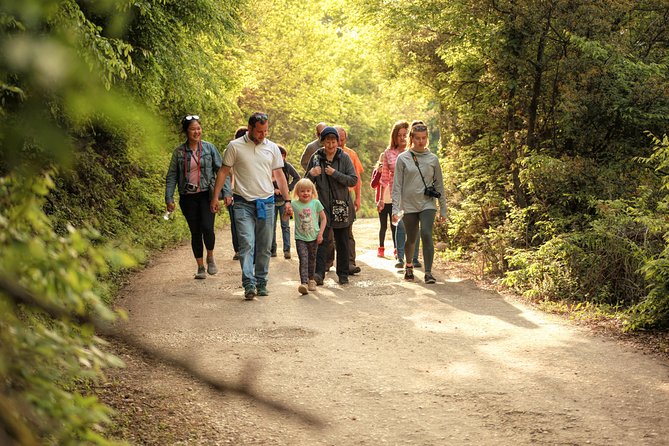
The tour is not a strenuous hike, but you will still walk at several stops. Wear shoes that feel steady on uneven ground, especially near the caves and viewpoints. The exact amount of walking depends on the group and the day’s conditions.
The Byzantine Church of the Assumption of the Virgin Mary
In Kalambaka, the tour visits the Byzantine Church of the Assumption of the Virgin Mary. This is one of the most unusual stops because the building itself contains layers of local history.
Look closely at the walls. Stones from an ancient Greek temple dedicated to Apollo have been built into the church. Inside, parts of an older mosaic floor show beneath the current floor in selected places, and 11th-century Byzantine frescoes add another layer.
The church remains active for local worship, which gives the visit a more grounded feel than a stop at a site preserved only for sightseeing. You are seeing a living church with artwork and construction details that reach back well before the monasteries became Meteora’s main attraction.
The scheduled visit is about 30 minutes, though one person found this stop too long. That is worth keeping in mind if you prefer a fast-moving tour focused mainly on cliffs and sunset photography. If you like religious art and archaeology, the time makes more sense.
Admission is not included in the tour price. The supplied details list an admission fee of €7 per booking, and the payment is handled by the site. Bring cash. Cards may not be accepted at the religious sites.
Entering St. Stephen’s without a stair climb
St. Stephen’s Monastery is the main monastery visit. It is the best choice on this route for anyone who wants to enter a Meteora monastery but would rather avoid a long stairway.
Instead of climbing directly up the rock, you cross a small bridge to the entrance. That makes St. Stephen’s especially useful for people with limited comfort on stairs, though you should still expect some walking and check your own mobility needs.
The monastery’s roots reach back to the early 12th century. Its present church is linked with Hosios Philotheos, who rebuilt the earlier structure in 1545. The setting is quieter and more approachable than the largest monastery complexes, yet it still gives you a clear sense of how religious life took hold on these rocks.
You should dress for the visit, not for a hot Greek afternoon. Men need trousers and long sleeves. Women need a long skirt. If your clothing does not meet the rules, trousers and skirts are provided at the site, but it is easier to arrive prepared.
The tour includes entry inside St. Stephen’s, but a state-licensed guide inside the monastery is not included. Your tour guide provides commentary as part of the wider route, while the monastery itself may have its own rules and arrangements.
St. Stephen’s is closed on Mondays. On that day, the tour substitutes St. Nicholas or Roussanou Monastery. That change is important if a particular monastery matters to you.
More Meteora Monastery Tours in Greece:
- Athens: Meteora Monasteries Day Trip with Caves and Lunch
★ 4.7 · 4,670 reviews - Athens to Meteora: Monasteries, Caves & Seaside Stopovers
★ 4.7 · 2,958 reviews - Athens: Meteora Monasteries, Caves & Coastal Stopovers with Lunch
★ 4.5 · 1,432 reviews - Meteora Monasteries & Caves DayTrip from Athens with Greek Lunch
★ 4.5 · 879 reviews
Seeing the other monasteries from the road
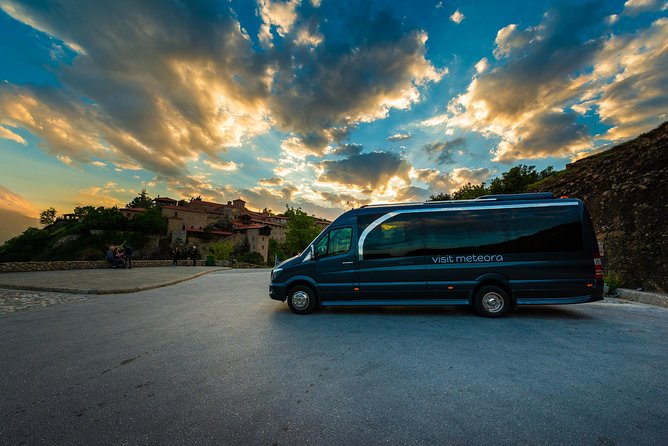
The route also brings you near the Great Meteoron, Roussanou, and Varlaam monasteries. The itinerary describes their setting and history, but the included interior visit is St. Stephen’s, not a tour inside all of them.
Great Meteoron is the largest and oldest monastery in Meteora. Its name refers to the idea of being suspended in the air, a fitting description for a monastery built high on one of the giant rocks. It was founded by Saint Athanasios the Meteorite and helped establish organized monastic life in the area.
Varlaam is the second-largest monastery and sits opposite Great Meteoron. Its main church was built in the 16th century and decorated with striking wall paintings. Roussanou occupies a lower rock, which makes it more accessible than some of the others. It began as a monastery and became a convent in 1988.
This background helps you read the views. You are not simply looking at dramatic buildings. You are seeing a pattern of religious communities placed on separate rocks, each with its own access, age, and story.
If you want to enter several monasteries, plan another visit in the morning or on the following day. One useful way to divide your time is to visit the interiors independently earlier, then use this tour for the church, caves, local explanations, and sunset.
The hermit caves and the earliest way of life
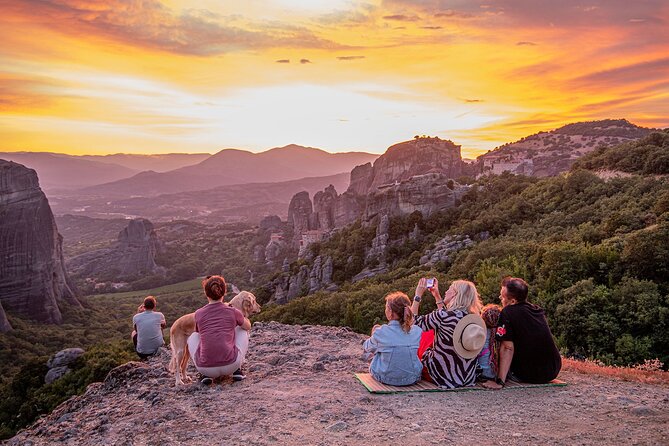
The hermit caves are one of the tour’s most worthwhile additions. They show the earlier, more solitary phase of Meteora’s religious life, before the larger monasteries became the center of the community.
Your guide explains where individual hermits lived in the rock and forest. The caves are not polished museum spaces. Their value comes from imagining the demands of daily life in such exposed places, with little comfort and a strong desire for isolation.
This is where a good guide can make a major difference. Guides such as Lina and Jim have been praised for telling stories in a way that helps you picture the monks and nuns who lived around Meteora. The history covers the Byzantine and Ottoman periods, the Second World War, and the rebuilding that followed.
The caves also change the mood of the tour. The monasteries can look grand and formal, while the hermit sites feel spare and personal. Together, they give you a fuller picture of why Meteora became a spiritual center.
Finishing at a lesser-known sunset viewpoint
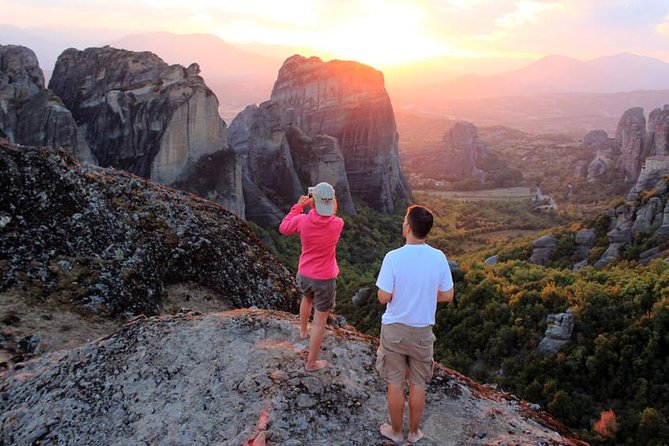
The final stop is a sunset viewpoint selected away from the most familiar crowds. You will have time to take photographs and watch the light change across the rocks.
Sunset timing depends heavily on the season. In summer, the sun sets late, and the tour may finish well after the advertised four-hour estimate. In other seasons, the schedule can feel closer to the stated duration. Clouds and rain can also change the view, but a broken sky may produce striking color.
One useful detail is that the tour is not only a sunset excursion. The sunset is the finale, not the whole product. You spend much of the outing learning about Meteora and visiting sites, so book it for the mix of history and scenery rather than for a short ride to a viewpoint.
Take a light layer, even in warm weather. One tour was described as cold, and the rocks can feel different once the sun drops. A bottle of water is included, but food and other drinks are not, so eat beforehand or plan for a meal afterward.
Guides, languages, and the small-group feel
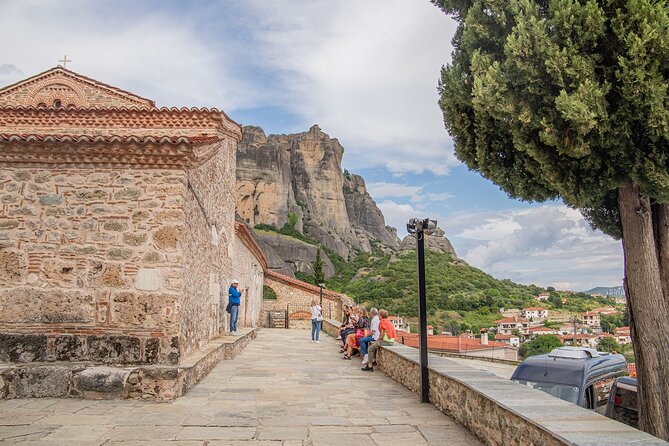
The tour is guided live in English. The guides named in feedback include Lina, Jim, Maria, Dimitri, Apostle, and Apostolou, though the person leading your departure will depend on the date.
The best part of the guiding style is the local storytelling. Jim has been praised for combining geological and historical background with stories that feel natural rather than recited. Maria and Lina have been noted for enthusiasm and clear explanations, while Dimitri and Apostle are known for a relaxed, friendly approach.
If you do not speak English comfortably, free audio guides are available in Spanish, French, German, Italian, Portuguese, Russian, Polish, Korean, Chinese, and Japanese. The audio guide covers points of interest, but it will not provide the same back-and-forth detail as the live English guide.
That distinction matters. The tour itself is not live-guided in those additional languages. You should choose it only if an audio guide is enough for you.
The driver is part of the experience too. Drivers such as Yanas, Sotos, Giannis, and Theodore have been praised for friendly service and for helping with photographs. Hotel pickup can run a few minutes after the official start time, particularly when the vehicle collects people from several addresses.
Price, timing, and practical value
At $36.28 per person, this is a strong value if you want transport, a guide, water, one monastery interior, the Byzantine church, hermit caves, and a sunset viewpoint in one outing. The price is especially useful if you are staying in Kalambaka or Kastraki and do not have a car.
It is less of a bargain if your main goal is to enter several monasteries. The tour does not include every interior, and the €7 site fee is separate. Add the admission cost to your budget, and carry cash because cards may not be accepted.
The tour normally lasts about four hours, but sunset sets the real clock. In mid-June, you may return around 9:30 p.m. A late finish can be wonderful if you want golden light, but it can feel tiring if you have dinner reservations or an evening train.
Pickup and drop-off are offered at hotels and Airbnbs in Kalambaka and Kastraki. The activity ends back at the meeting point or your arranged accommodation. The service allows service animals, is near public transportation, and is described as suitable for most people.
Free cancellation is available up to 24 hours before the start time. Poor weather or failure to meet the minimum number of participants can lead to a new date, another experience, or a full refund.
Who should book this Meteora sunset tour?
I would choose this tour if you have limited time, want a clear introduction to Meteora, or prefer not to organize transport between the rocks and villages. It also suits you if you want one accessible monastery visit rather than a day spent climbing stairs.
It is a good fit for photographers, history fans, first-time visitors, and anyone who wants the hermit caves explained rather than simply pointed out. The small group and helpful guides add real value, especially when you want local context.
I would think twice if you need a firm four-hour schedule, dislike late evenings, or want to tour the interiors of Great Meteoron, Varlaam, and Roussanou. In that case, use the sunset tour as an introduction and reserve another morning for monastery visits.
For most people staying overnight in Meteora, the best plan is to visit additional monasteries independently earlier in the day, then take this tour in the afternoon. You get the major interiors, the lesser-known sites, and sunset without repeating too much.
FAQ
How long does the Meteora sunset tour last?
The tour is listed at approximately four hours, but the actual duration can vary with the season and sunset time. In June, the return may be as late as around 9:30 p.m.
Which monastery do you visit inside?
The regular visit is inside St. Stephen’s Monastery. It is reached by crossing a small bridge rather than climbing a long set of steps.
What happens on Mondays when St. Stephen’s is closed?
On Mondays, the itinerary substitutes St. Nicholas Monastery or Roussanou Monastery.
Is the tour available in languages other than English?
The live tour is guided in English. Free audio guides are available in Spanish, French, German, Italian, Portuguese, Russian, Polish, Korean, Chinese, and Japanese.
What should I wear to the monasteries?
Men must wear trousers and long sleeves. Women must wear a long skirt. If needed, trousers and skirts are provided at the monastery.
Is the monastery admission fee included?
No. An admission fee of €7 per booking is listed separately. Bring cash because cards may not be accepted at the religious sites.
Where can I be picked up?
Pickup and drop-off are available from hotels and Airbnbs in Kalambaka and Kastraki. The meeting point is at Patriarchou Dimitriou 2 in Kalambaka.
Should you book it?
Book it if you want Meteora’s big view and its human story in the same afternoon. The combination of St. Stephen’s, the Byzantine church, hermit caves, local guiding, and sunset gives you much more than a viewpoint stop.
Just plan around the late finish, carry cash, dress for the monastery, and treat four hours as an estimate. If you do that, this is an efficient and well-priced way to get your first real sense of why Meteora feels unlike anywhere else in Greece.
Just added around Greece
- Monastery, Elafonissi and Winery Tour from Chania★ 5.0 · 8 reviews
- Chania Private Tour: Monastery, Scenic Gorge & Mountain Views★ 5.0 · 12 reviews
- Shore Explore Chania: City Charm, Beach, Monastery & Winetasting★ 5.0 · 13 reviews
- Chania Old Town, Public Market and Chrisopigi Monastery Tour★ 4.5 · 6 reviews
- Rethymno: Arkadi Monastery, Margarites Village & Melidoni Cave.★ 4.5 · 12 reviews
- Private Half-day Tour: Antisamos beach Swim, Melissani Lake, Agrilia Monastery★ 5.0 · 8 reviews
- Meteora Monasteries & Caves Unesco Wonder in Greece Day Trip★ 5.0 · 15 reviews
- Mercedes Private Tour to Classical Athens and Temple of Poseidon★ 5.0 · 13 reviews
Meteora Monastery Tours, compared.
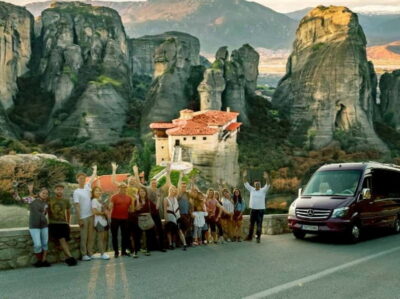
Meteora Monasteries Day Trip with Caves and Lunch
Read our review →
Athens to Meteora: Monasteries, Caves & Seaside Stopovers
Read our review →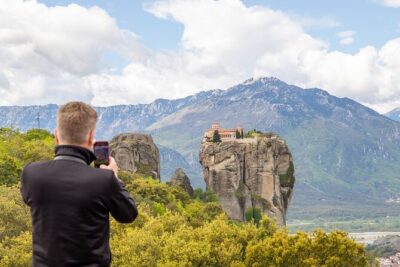
Meteora Monasteries, Caves & Coastal Stopovers with Lunch
Read our review →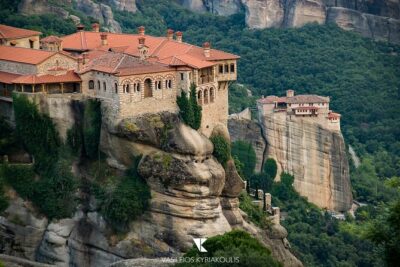
Meteora Monasteries & Caves DayTrip from Athens with Greek Lunch
Read our review →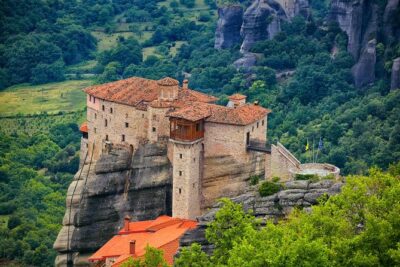
Meteora Monasteries, Hermit Caves Tour with Pickup
Read our review →
Meteora Monasteries, Hermit Caves & Seaside Escapes
Read our review →
Meteora Small Group Hiking tour with Transfer and Monastery Visit
Read our review →
Meteora: Morning Half Day Sightseeing and Monasteries Tour
Read our review →Browse the lists this tour appears in