
REVIEW · VALLEY OF THE TEMPLES TOURS
Paestum: Temples and Museum Tour with Archaeologist Guide
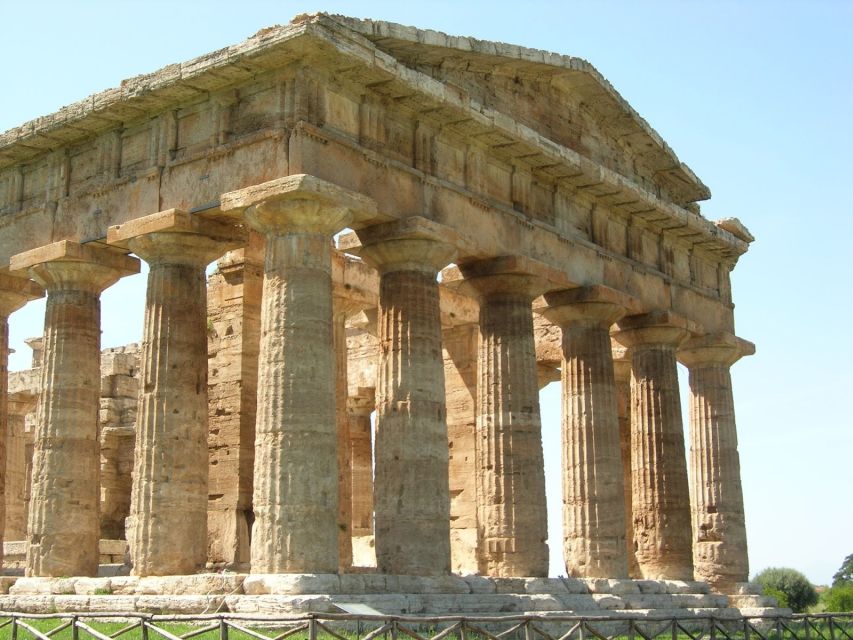
Paestum gives you something rare in Italy: three remarkably preserved Greek temples set along ancient streets, with enough space to appreciate their size and design. This two-hour private tour pairs the archaeological park with its museum, so you see both the buildings and the art that once decorated them.
I like the archaeologist guide and the sensible park-to-museum format. Guides including Angelo, Angela, and Luciana have been singled out for clear explanations, good pacing, and a real passion for the subject. The main consideration is the price: $260.56 for a group of up to one person is a serious expense, so this makes the most sense if you value private attention or can confirm how the rate applies to your party.
I also like that the tour begins at the museum entrance, includes skip-the-line admission, and stays focused for two hours. You do not get transportation or food, so you must arrange your own way to Paestum and plan around the fixed meeting point.
Key points to know before booking
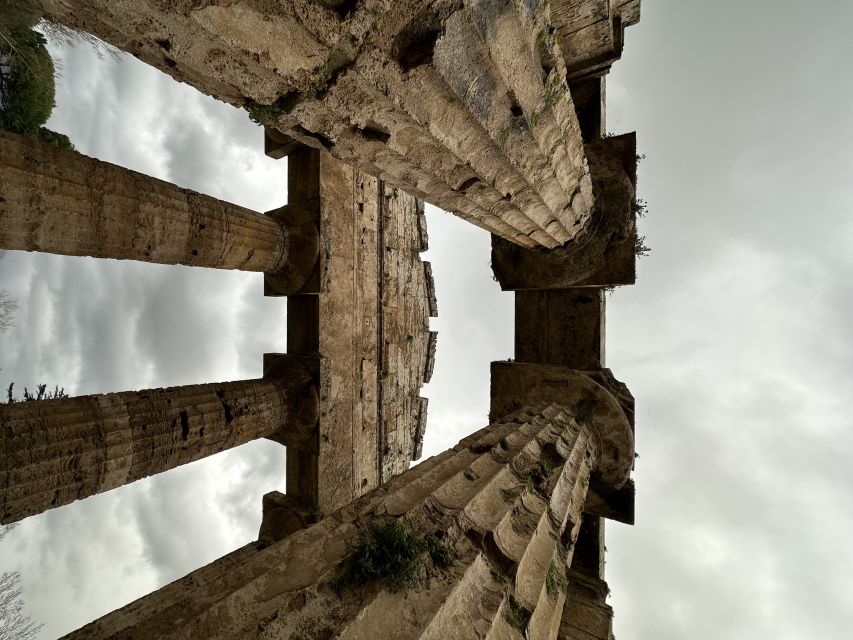
- Three major Doric temples: See the Temple of Neptune, Temple of Ceres, and Basilica within the Archaeological Park of Paestum.
- Museum and ruins in one visit: The guide connects temple remains with their surviving decorations and artworks.
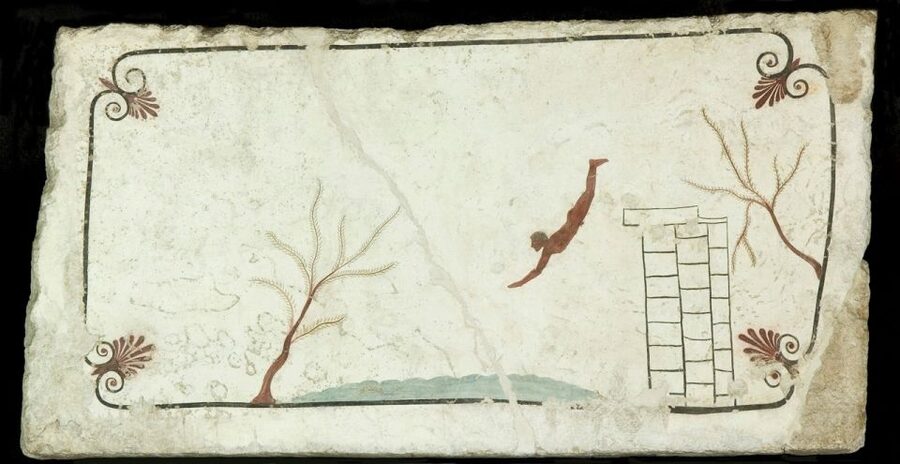
- The Tomb of the Diver: View one of the museum’s most memorable painted tombs, preserved in striking condition.
- Private two-hour format: Ask questions freely and set a pace that suits your group.
- Named guides with strong praise: Angelo, Angela, and Luciana are noted for clear introductions, thoughtful answers, and enthusiasm for Paestum.
- Four guide languages: Tours are offered in English, Italian, Spanish, and French.
Why Paestum makes such a strong Greek temple stop
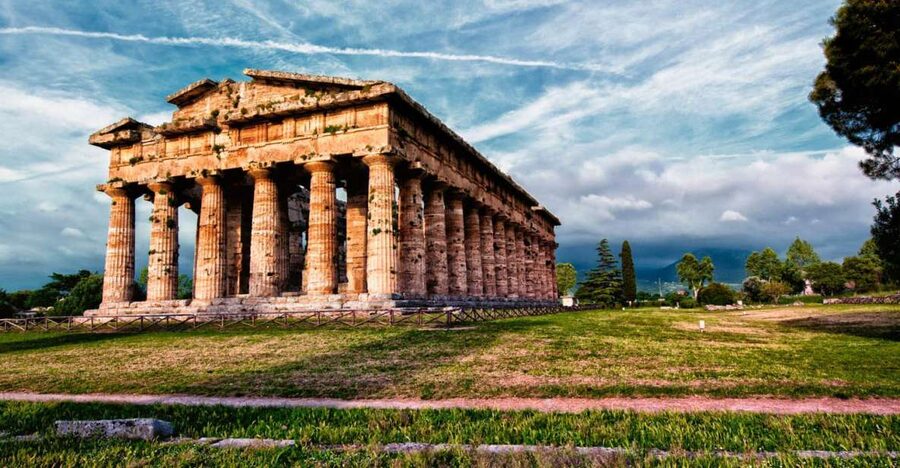
Paestum is in Campania, but the site shows the lasting presence of Greek architecture in southern Italy. Its ancient streets and religious buildings give you a different experience from the crowded urban ruins of places such as Pompeii. Here, the temples are the main event.
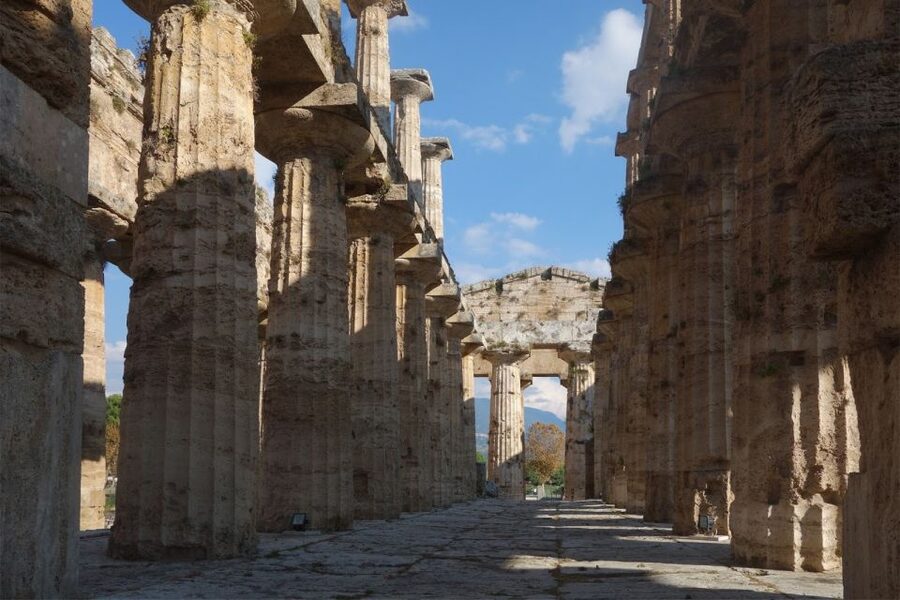
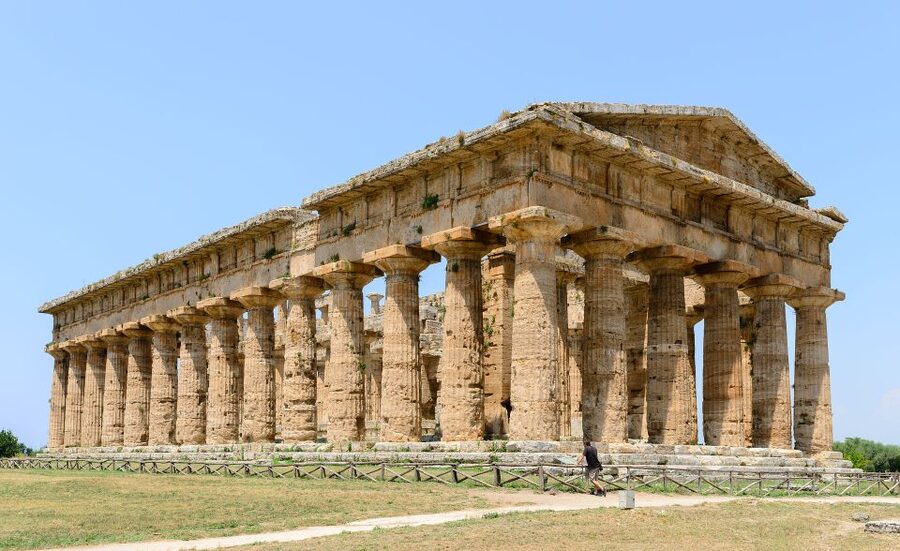
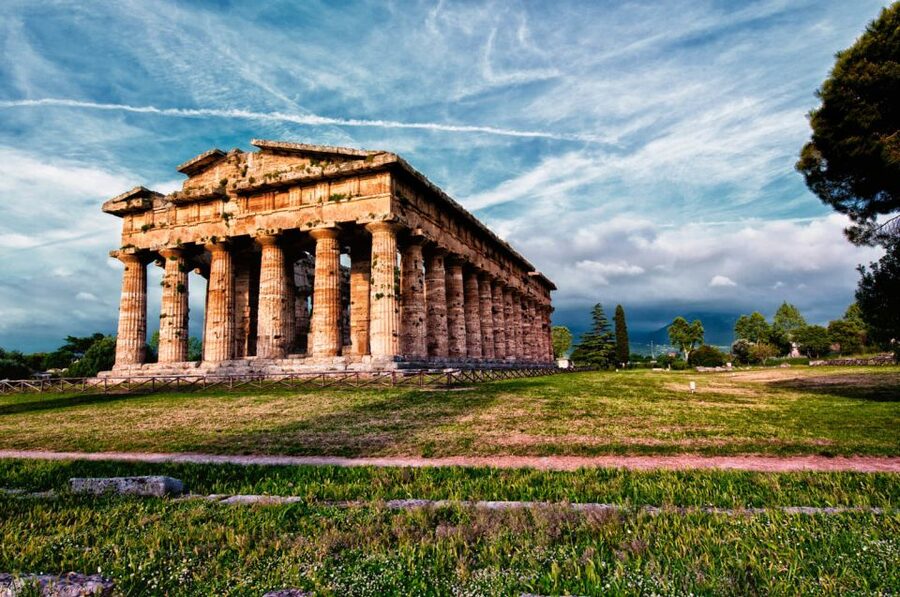
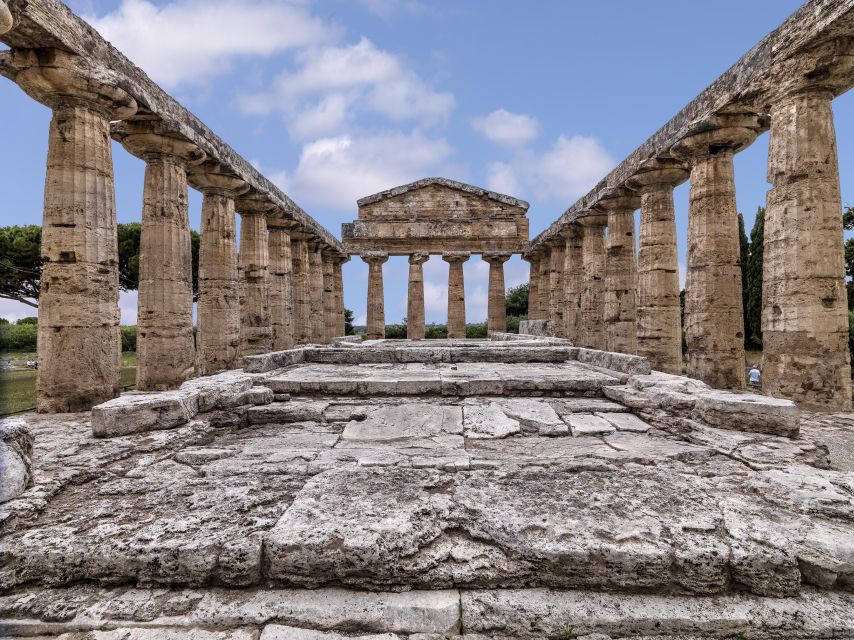
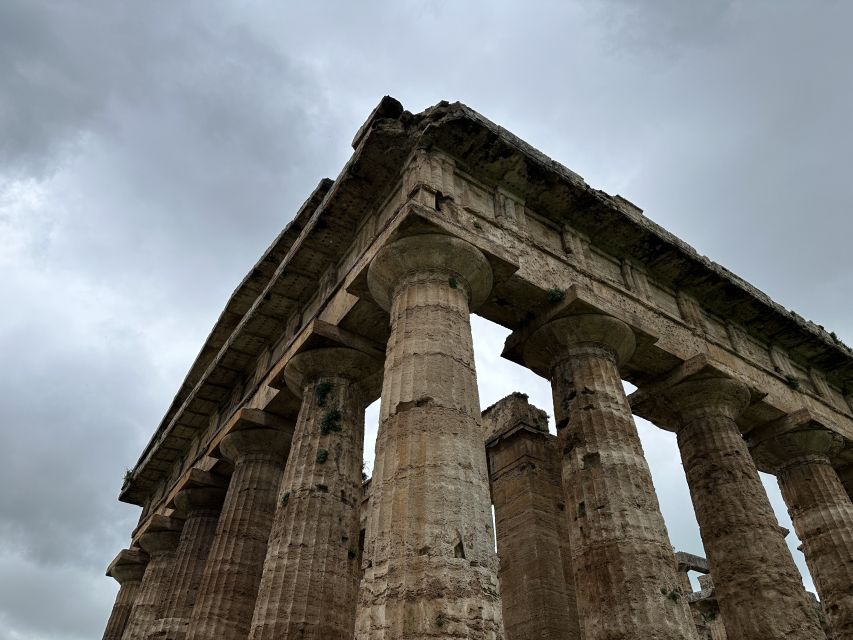
The park’s three Doric-style temples are the visual heart of the visit. Their columns and proportions remain easy to read, which matters when you are trying to understand ancient architecture rather than simply photograph it. A guide can point out the features that make Doric buildings distinct and explain how the temples fit into the religious life of the ancient city.
The scale is also important. A photograph can flatten a temple into a row of columns. Standing among the remains gives you a better sense of the heavy stone construction, the repeated shapes, and the care that went into the design. With an archaeologist beside you, you have someone to explain what you are seeing instead of walking past impressive stones without context.
More Valley of the Temples Tours in Italy:
- Agrigento: Valley of the Temples Skip-the-Line Sunset Tour
★ 4.5 · 1,512 reviews - Palermo: Agrigento and the Valley of the Temples Day Tour
★ 4.2 · 1,240 reviews - Agrigento: Valley of the Temples Ticket & App Audioguide
★ 4.3 · 1,160 reviews
Meeting at Via Magna Graecia and starting at the museum
The listed meeting point is the entrance to the Archaeological Museum of Paestum, at Via Magna Graecia, 917. This is useful to know because the tour does not include transportation. You need to make your own way to the site and arrive at the museum entrance for the start.
The activity ends back at the same meeting point. That makes the visit easy to fit into a wider day in Paestum, especially if you want to continue exploring after the guide finishes. It also means you should not expect a hotel pickup, transfer, or restaurant stop as part of the booking.
Because the meeting point is specific, check your route before choosing a start time. The duration is two hours, but the available starting times depend on the date you select. A little planning helps you avoid losing part of the visit to a late arrival.
Walking through the Archaeological Park of Paestum
The first major part of the tour takes place inside the Archaeological Park of Paestum. You walk along ancient streets and stop at the principal temples while your guide explains the site.
The Temple of Neptune is one of the key sights. Its preserved form lets you study the basic language of Greek temple design: the orderly columns, the broad mass of the structure, and the way the building was intended to be seen from outside. The guide’s role is especially useful here, since the eye can quickly become overwhelmed by repeated columns and weathered stone.
The Temple of Ceres is another important stop. It gives the visit a chance to compare different buildings rather than treating Paestum as one large ruin. Look for the contrasts in scale and preservation as your guide sets the temples within the wider religious area.
The Basilica completes the trio of major buildings named for the tour. Despite its modern-sounding name, the term reflects later interpretation of the structure. Your guide can help you understand why archaeologists use such labels and what can, and cannot, be said with certainty about ancient buildings.
The tour also includes a photo stop, but this is not designed as a photography-only outing. You will have time to see the architecture and listen to explanations. If you want long periods for personal photography, ask your guide how much time can be set aside, since the full route is limited to two hours.
What an archaeologist guide adds to the temples
A private archaeologist guide changes the tone of the visit. You are not tied to a large group’s questions or pace, and you can ask about details that catch your attention. The supplied guide languages are English, Italian, Spanish, and French.
The individual guides praised for this experience bring different strengths. Angelo is noted for giving a strong introduction, answering questions, and keeping a comfortable pace. Angela is described as passionate about history, which can make the ancient buildings feel less remote. Luciana is praised for clear information and for helping make Paestum especially enjoyable.
These details matter because Paestum rewards explanation. The columns are immediately impressive, but the site becomes more meaningful when you understand how the temples, streets, museum objects, and painted tombs connect. A guide who can slow down for questions is valuable here.
The private format is also helpful for mixed interests. One person in your group may want architectural details, while another may care more about daily life or art. In a shared tour, those questions can be difficult to balance. With a private guide, you have a better chance of shaping the conversation.
More Museum Visits in Italy:
- Paestum: 2-Hour Greek Temples & Archaeological Museum
★ 4.8 · 19 reviews - Montserrat Museum and Monastery Entry Ticket
★ 4.5 · 1,740 reviews - Lisbon: Belem, Jeronimos Monastery, and Coach Museum Tour
★ 4.8 · 478 reviews - From Sofia: Rila Monastery and Optional Museum, Cave or Spa
★ 4.6 · 270 reviews
Inside the National Archaeological Museum of Paestum
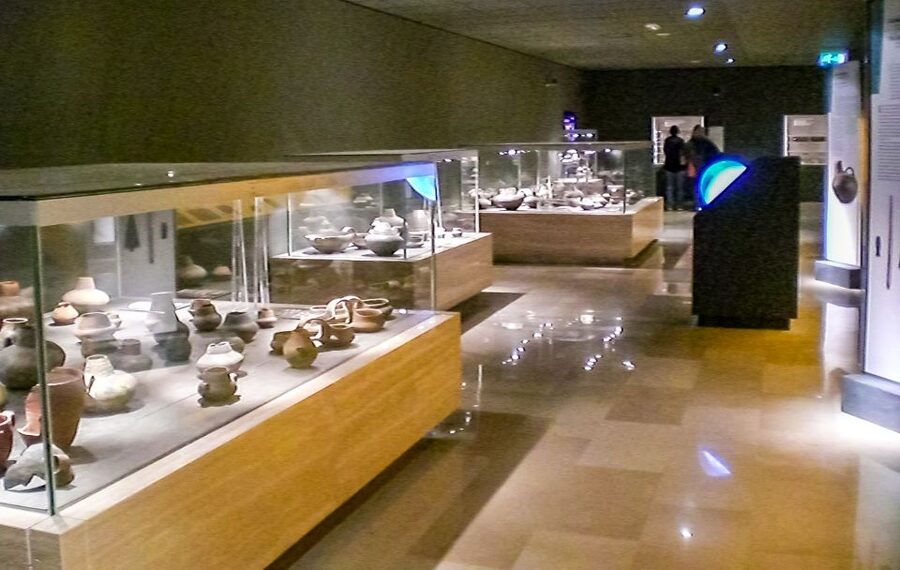
After the outdoor portion, the tour continues inside the National Archaeological Museum of Paestum. This second stop is not an optional add-on. It completes the visit by showing the art and objects connected with the ancient site.
Inside, you can see relics that served as decoration for the temples. These pieces help you imagine the buildings as finished religious spaces rather than bare stone structures. The park shows you the architecture that survived; the museum helps fill in some of the visual detail that time removed.
The museum also holds painted tombs from Campania. Their presence broadens the visit beyond temple architecture and introduces another side of ancient life and belief. You are not simply looking at isolated artworks. You are seeing objects preserved from the same wider culture and region.
The central museum highlight is the Tomb of the Diver. It is kept in very good condition and is one of the most memorable works connected with Paestum. A painted tomb can be easy to miss without guidance, especially after the scale of the temples outside. Make sure you give this part of the tour your full attention.
The park and museum work best together. Outside, you see the powerful public buildings. Inside, you encounter the decoration, paintings, and smaller objects that help explain how ancient people thought about religion, death, and ceremony.
Is two hours enough for Paestum?
Two hours is a focused introduction, not an all-day archaeological study. It should suit you if you want the principal temples and the museum’s most important works explained in one efficient visit.
The advantage is concentration. You can cover the site without giving up an entire day, which is useful if Paestum is one stop in a larger Campania itinerary. The guide keeps the visit moving and helps you spend your limited time on the major sights.
The tradeoff is that you may not have much extra time for lingering. Paestum contains more than the three named temples and the museum highlights. If you like to read every panel, sketch, photograph each angle, or explore at a slow pace, you may want to continue independently after the guided portion ends.
This is another reason the private format helps. You can tell the guide what matters most to you at the beginning. If your priority is architecture, the outdoor section can receive more attention. If the Tomb of the Diver and painted tombs are your main interest, you can make that clear before entering the museum.
What the $260.56 price means
The listed price is $260.56 per group up to one person. That is high for a two-hour visit, particularly because transportation, food, and drinks are not included. You should check the final price for your own party carefully, since the wording suggests a private booking structure rather than a simple per-person ticket.
Still, price is not only about minutes on a clock. The fee includes the guide’s services, skip-the-line entrance tickets, and a private group setting. If you are traveling alone and want a personal archaeological explanation, the cost may feel more reasonable than joining a large, fixed group. The same is true if your party values asking questions and setting its own pace.
The strongest value comes from the combination of park and museum. Buying admission alone gets you into the site, but it does not necessarily help you understand why the temples matter or how the museum pieces relate to them. This tour packages both parts with a specialist guide.
For budget-minded visitors, the price may be hard to justify. You should book it for the guided interpretation and private attention, not simply for entry. If you only want to see the temples and take photographs, an unguided visit may suit you better, provided that option works for your plans.
Who will enjoy this private Paestum visit
I would recommend this tour most to:
- First-time visitors who want the main archaeological sights explained clearly.
- Couples or solo visitors who prefer a private guide to a large group.
- Families or small parties with different questions and interests.
- People who enjoy ancient architecture but want help reading the remains.
- Visitors who want the museum included rather than treating it as an afterthought.
- Anyone choosing between Paestum and other major ancient sites in Campania.
The tour may be less suitable if you need transportation from another town, want a full-day exploration, or prefer to move independently. Since transport is not included and the visit lasts two hours, you need to arrange both the journey and any extra time at the site yourself.
The language choice is a useful strength. You can select English, Italian, Spanish, or French, so the explanations need not depend on your ability to read signs quickly or follow a language that is not comfortable for you.
Practical advice for getting the most from the visit
Arrive at the Archaeological Museum entrance, not simply somewhere in the wider archaeological area. The listed address is Via Magna Graecia, 917, and the same place serves as the end point.
Think about your priorities before the guide begins. Tell the guide if you care most about temple construction, Greek art, painted tombs, or the Tomb of the Diver. A private tour gives you a better chance to shape the visit around those interests.
Keep the two-hour limit in mind. The tour includes the archaeological park and museum, so you will get more from it if you stay engaged rather than spending too long at one photo stop. Afterward, you can decide if you want to remain in the area for a slower independent look.
The skip-the-line entrance is a practical benefit, but it does not remove the need to check starting times. Availability varies by date, and the tour does not include meals or drinks. Plan those separately.
Cancellation is flexible: you can cancel up to 24 hours in advance for a full refund. The reserve-now, pay-later option also lets you hold a place without paying immediately, which is useful when your Campania schedule is still taking shape.
Should you book the Paestum temples and museum tour?
Book it if you want Paestum explained by an archaeologist rather than viewed as a collection of impressive ruins. The best parts are the pairing of the three temples with the National Archaeological Museum, the private format, and the chance to ask questions in your own language.
I would hesitate if the $260.56 rate is outside your budget or if you want transportation included. This is a focused guided visit, not a transfer service or a full-day excursion.
For the right visitor, the tour offers a clear way into one of southern Italy’s finest ancient sites. Angelo, Angela, and Luciana are associated with the qualities you want here: a strong introduction, a comfortable pace, clear answers, and enthusiasm for the subject. If those matter more to you than keeping the cost to a minimum, this is a sensible Paestum choice.
FAQ
Where does the Paestum tour begin?
The tour begins at the entrance to the National Archaeological Museum of Paestum at Via Magna Graecia, 917.
Where does the tour end?
The activity ends back at the same meeting point, at the entrance to the Archaeological Museum of Paestum.
How long does the tour last?
The tour lasts two hours. Starting times depend on availability for your selected date.
What languages are available?
The live guide is available in English, Italian, Spanish, and French.
Are entrance tickets included?
Yes. Skip-the-line entrance tickets and the guide’s services are included.
Is transportation included?
No. Transportation, food, and drinks are not included, so you must arrange your own transportation to and from the meeting point.
Just added around Italy
- Cooking Class in a former Artist Monastery in the Heart of Monopoli★ 5.0 · 18 reviews
- Agrigento Valley of the Temples Archaeological Area★ 4.0 · 33 reviews
- Private transportation to the Valley of the Temples + Agrigento★ 5.0 · 8 reviews
- Agrigento: Valley of the Temples Entry Ticket & Audio Guide★ 3.0 · 40 reviews
- Rome underground hidden temples, ruins, and secret basilicas★ 3.7 · 21 reviews
- Rome: Temples, Squares & Markets Guided Walking Tour★ 4.8 · 26 reviews
- Paestum: 2-Hour Greek Temples & Archaeological Museum★ 4.8 · 19 reviews
- Paestum Tour: Best Preserved Temples in the World (UNESCO)★ 4.5 · 11 reviews
Valley of the Temples Tours, compared.
Agrigento: Valley of the Temples Skip-the-Line Sunset Tour
Read our review →
Palermo: Agrigento and the Valley of the Temples Day Tour
Read our review →
Agrigento: Valley of the Temples Ticket & App Audioguide
Read our review →
Agrigento: Valley of the Temples E-Scooter Tour
Read our review →
Palermo: Valley of the Temples and Scala dei Turchi Day Trip
Read our review →
Catania: Valley of the Temples and Turkish Steps with Snack
Read our review →
From Palermo: Villa Romana and Valley of the Temples Trip
Read our review →
Agrigento: Valley of the Temples Entry Ticket & Audio Guide
Read our review →Browse the lists this tour appears in