
REVIEW · WORKSHOPS
Osaka: Temple Tour and Traditional Calligraphy Lesson
At Saishoji Temple, a short walk from Yotsubashi Station, you trade Osaka’s fast pace for a brush, ink, and a quiet room. The main event is simple but satisfying: settle your breathing, learn basic brush strokes, then write one kanji on a mini shikishi.
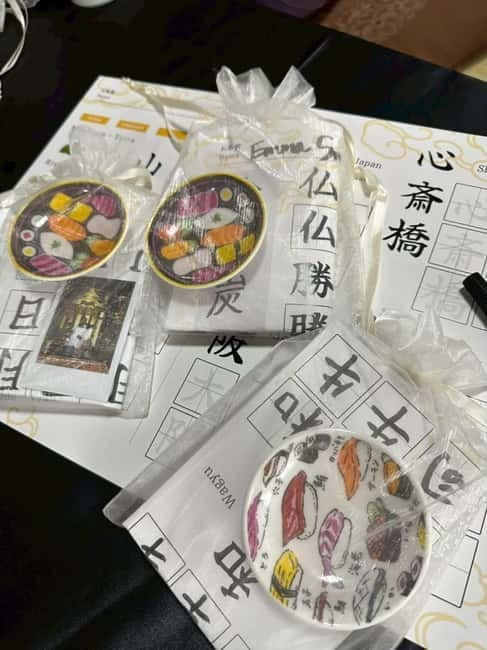
I like the peaceful temple setting and the fact that you leave with more than a photograph. The kanji name card gives you a small language lesson, while the ceramic plate and finished calligraphy make useful keepsakes. The $20 price is also friendly for Osaka.
The main consideration is time. One hour goes quickly, so this is a compact introduction rather than a full temple retreat or a serious calligraphy course. The tea ceremony and other cultural activities are described as part of the wider experience, but the clearest focus is meditation and beginner calligraphy.
Key points at a glance
- Saishoji Temple location: Reach the temple in about three minutes from Yotsubashi Station, or walk from Shinsaibashi and Namba.
- A calm start: Guided breathing and zazen help you slow down before picking up the brush.
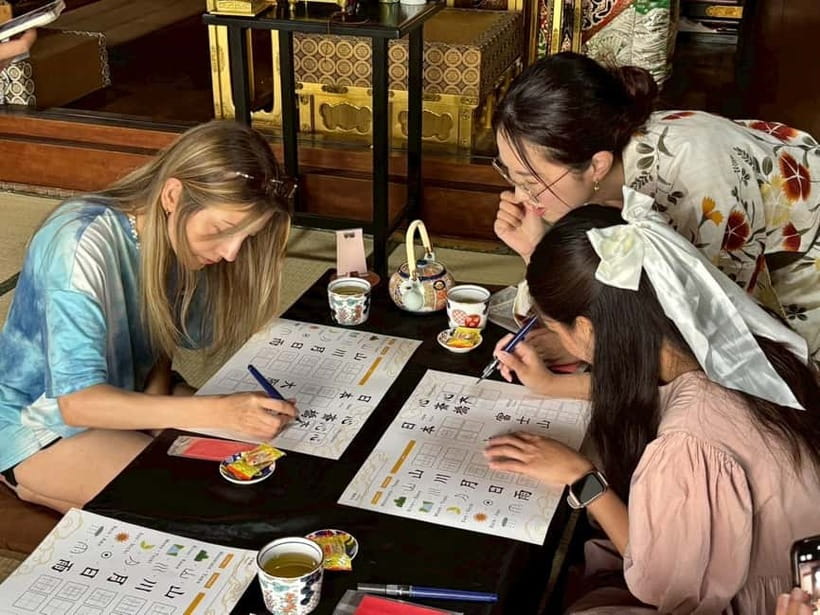
- Beginner-friendly calligraphy: You practice basic strokes, then write a favorite kanji on a mini shikishi.
- Personal keepsakes: Take home a kanji name card and a small 8 cm ceramic plate.
- English instruction: The activity includes a guided history and language lesson with an English-speaking instructor.
- Good value at $20: The price includes materials, cultural activities, and interaction with resident monks.
A quiet temple break in central Osaka
Osaka is known for food, shopping, bright signs, and quick movement. Saishoji Temple offers a sharp change of rhythm without sending you far from the city center. It is in Kitahorie, close to Yotsubashi Station and within walking distance of Shinsaibashi.
That contrast is the chief reason I find this activity appealing. You do not need to give up half a day or travel to a distant mountain temple. You can fit it between shopping in Shinsaibashi, a visit to Namba, or a meal in central Osaka.
The setting also gives the lesson a sense of purpose. Calligraphy is not treated simply as decorative handwriting. You are asked to slow down, control your breathing, and pay attention to each stroke. Even if you have no artistic skill, the process gives you a clear task and a calm place to focus.
The experience has earned a 4.9 rating from 24 reviews, and the strongest pattern is clear: polite instruction, a welcoming atmosphere, and the calming effect of writing slowly in a temple. Those are useful clues for solo visitors and first-timers. You do not need to arrive with prior calligraphy experience.
More Workshops in Osaka:
- Bali: Silver Jewelry Making Class in Kuta or Uluwatu
★ 4.9 · 380 reviews - Bali: Uluwatu Silver Jewelry Making Workshop with Creation
★ 4.9 · 260 reviews - Kyoto: Calligraphy class at Buddhist temple in city center
★ 5.0 · 167 reviews
What happens during the one-hour visit
The exact order may vary, but the experience begins with a short introduction to Osaka and the local area. You learn about Shinsaibashi, Yotsubashi, and Osaka Castle, along with the difference between Japanese temples and shrines.
That background is brief, but it gives the activity a useful frame. Many first-time visitors use temple and shrine as if they were the same thing. They are not. A lesson like this helps you understand the place you are entering and gives you a few words to listen for during the rest of your Japan trip.
The language element is practical rather than academic. You learn conversational phrases and cultural expressions while practicing mindful communication. Since instruction is in English, you can follow along even if you know only a few Japanese words.
The program also includes contact with resident monks. That does not mean you are signing up for a long religious training session. Instead, it gives the cultural lesson a direct connection to the temple and its traditions.
Zazen and the value of slowing down
Before calligraphy, you take part in a meditation designed to clear your mind and bring attention to your breathing. This is a small but important part of the hour. Without it, the activity could feel like a standard craft lesson. With it, the brush work becomes more focused.
Zazen, or seated meditation, asks you to stay with the present moment. You do not need to arrive knowing how to meditate. The goal here is not to perform perfectly. It is to pause, follow the guidance, and notice how your breathing affects your concentration.
I would especially recommend this experience if your Osaka schedule has been packed with shops, train connections, and busy streets. A short period of quiet can reset your day. Several direct comments describe the pleasure of reaching a state of nothingness while holding the brush, and that tells you what this activity does best.
The meditation may not suit everyone. If you want a fast, highly active cultural workshop, the quiet beginning could feel slow. If you enjoy hands-on experiences but dislike formal meditation, you may find the transition unusual. Still, the session is short, and it prepares you for the calligraphy rather than taking over the visit.
Learning the brush before writing kanji
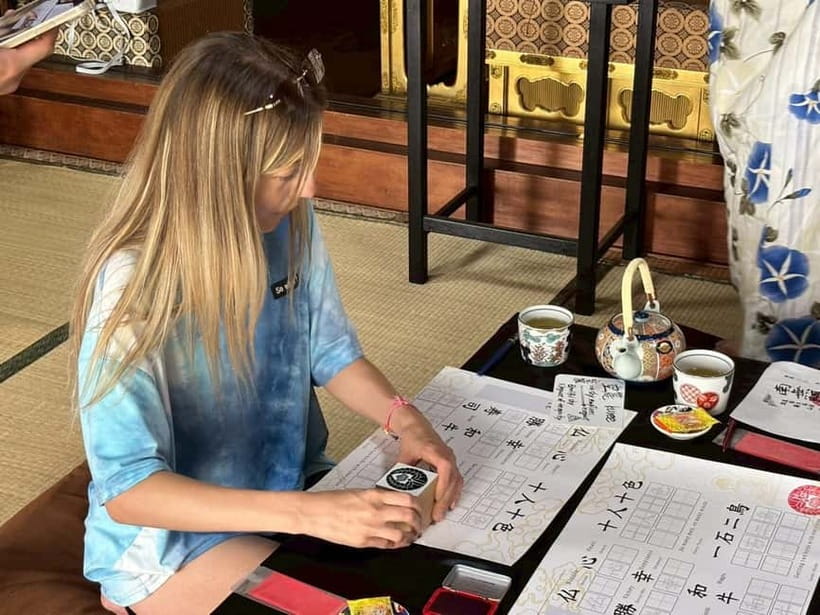
The calligraphy portion starts with basic practice. You learn how to hold and move the brush, then copy strokes before writing a favorite kanji on a mini shikishi.
This staged approach matters. Japanese calligraphy can look effortless when an experienced writer creates a character in a few movements. For a beginner, the brush reacts differently from a pencil, and ink control takes attention. Practicing first lets you make mistakes before working on the piece you will keep.
You should not expect to produce museum-quality work. That is not the point. The value is in seeing how much meaning can be carried by stroke order, pressure, spacing, and balance. A single character becomes a small lesson in Japanese language and design.
The finished kanji is written on a mini shikishi, a small decorative board used for displaying writing or artwork. It is easier to pack than a large scroll and gives you a finished object tied to the day.
The experience also provides a name card with Japanese kanji and its meaning. That is a thoughtful touch because it turns the language lesson into something personal. You can ask about the character and its meaning, then keep the card with your other trip mementos.
A few more temple visits around Osaka worth a look
- Kyoto and Nara Day Trip from Osaka
★ 4.0 · 175 reviews - Osaka: Minoh, Katsuoji Temple, & Minoh Falls Full-day Tour
★ 4.9 · 172 reviews - Osaka Temple Cool Foot Bath & Matcha Experience〈45min〉
★ 4.9 · 82 reviews - Osaka: Mind & Spirit Balance Temple Reiki Healing
★ 5.0 · 41 reviews
The temple atmosphere matters
A calligraphy class in a hotel or tourist shop could teach you the same basic brush motions. Saishoji Temple changes the mood. You are writing in a sacred setting, with the quiet and formality that brings.
The temple location does not turn the activity into a full religious ceremony. It does, however, encourage respectful behavior and careful attention. The smell of ink, the feel of the brush, and the slower pace all work better in a quiet temple room than in a noisy commercial space.
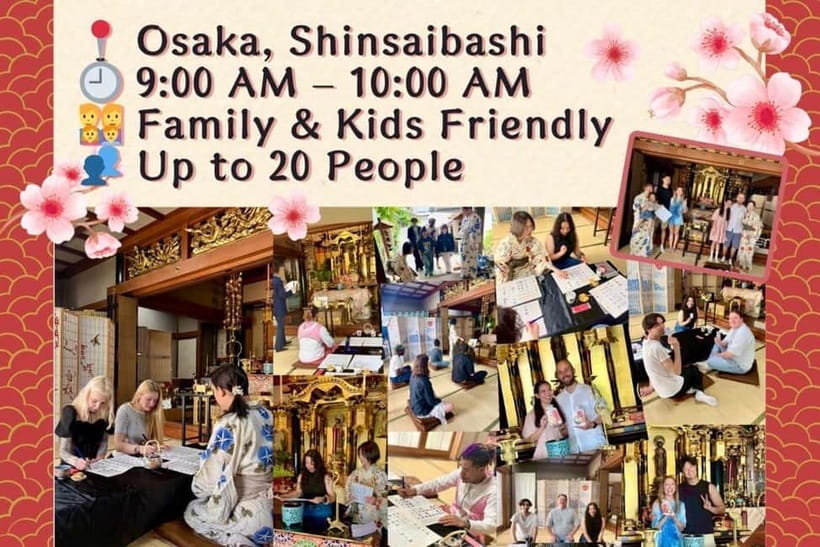
This is also why the experience works well for solo participants. You do not need a partner to share the activity or fill awkward pauses. The structure gives you something to do, and the English-speaking staff are there to guide you.
Family groups can enjoy it too. The hands-on nature makes the lesson more accessible than a long historical talk, while the finished kanji and ceramic plate give children a concrete reminder of the visit. The provided information does not specify a minimum age, so check the booking details if you are traveling with young children.
Matcha, cultural lessons, and what to expect
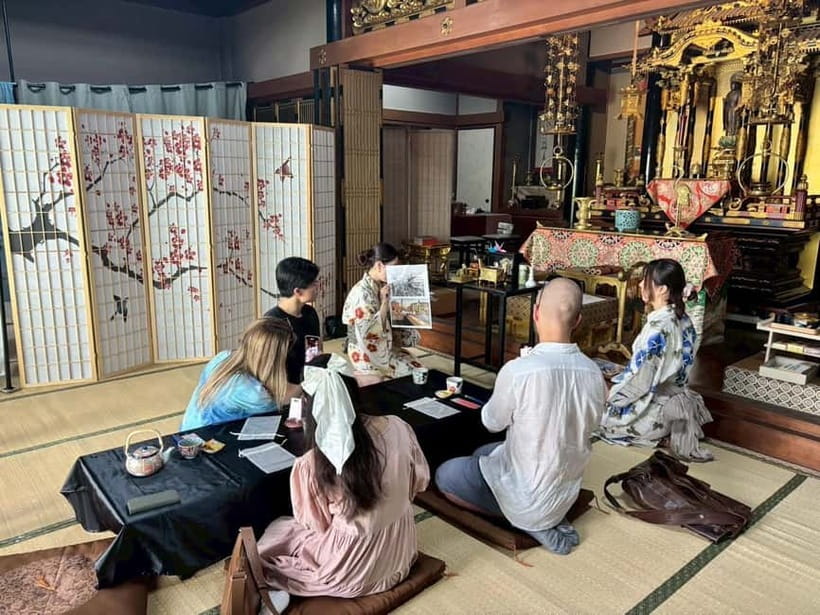
The wider program includes cultural activities such as zazen meditation, calligraphy copying, and a traditional matcha tea ceremony. It also includes a guided Japanese history and language lesson, cultural instruction, materials, and interaction with monks.
Because the total duration is only one hour, you should keep your expectations in proportion. This is a tasting menu of Japanese traditions, not a long tea-school lesson, extended meditation session, and full calligraphy course all packed into equal portions.
The strongest guaranteed details are the beginner calligraphy practice, the favorite kanji on a mini shikishi, the name card, meditation, and ceramic plate. Treat the other elements as part of the cultural program, with the exact balance depending on the session.
That compact format is useful if you want several different experiences during a Japan trip. It is less suitable if you want to study one tradition in depth. For serious calligraphy practice, you would need a longer workshop with more time for posture, brush control, and repeated writing.
What the $20 price really buys you
At $20 per person, this is inexpensive for an organized cultural experience in central Osaka. The price includes the instructor, materials, cultural activities, the guided history and language lesson, and the small gifts.
The value is not just the objects. A ceramic plate worth 8 cm in diameter is a modest souvenir, but it is easy to carry and gives the activity a physical finish. The name card and calligraphy board add more personal meaning. You are paying for the setting, instruction, and focused hour as much as for the keepsakes.
The low price also makes this an easy choice for a short Osaka stay. You do not need to spend a full day or commit to a costly formal class. If the activity helps you slow down and gives you a better understanding of temples, shrines, and kanji, it offers a good return for a small part of your budget.
The trade-off is depth. A $20, one-hour introduction cannot offer the same individual practice time as an extended workshop. If you are comparing it with a specialist calligraphy school, this experience is more about cultural contact and a memorable first attempt.
Location and timing tips
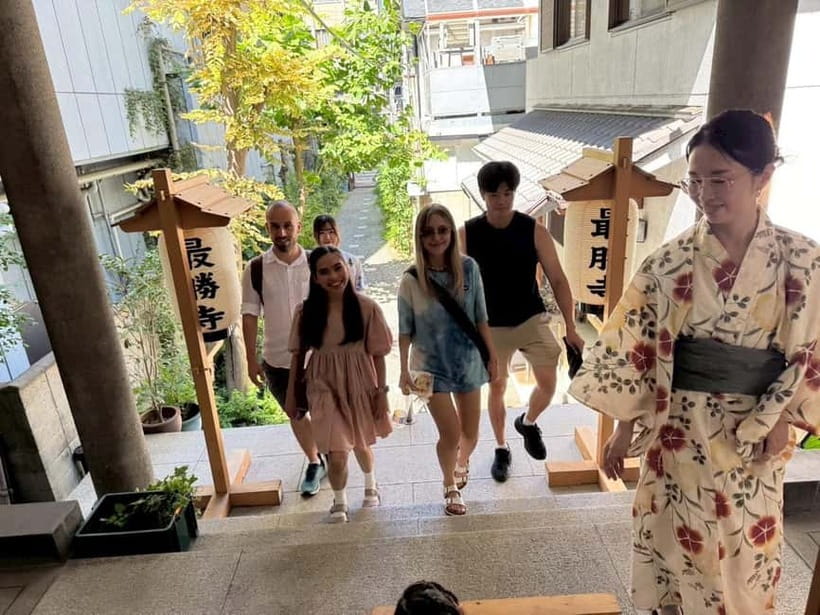
The meeting point is Saishoji Temple, at 1-6-18 Kitahorie, Nishi-ku, Osaka. From Yotsubashi Station on the Osaka Metro Yotsubashi Line, use Exit 4 and allow about three minutes on foot.
Shinsaibashi Station on the Midosuji Line is about ten minutes away. Namba is around a 15-minute walk. Yotsubashi is the simplest choice if you want the shortest route.
The central location makes this easy to pair with nearby plans, but give yourself enough time to arrive calmly. The activity depends on concentration from the start, and rushing in from a train platform works against the whole mood.
The duration is one hour, with starting times available according to the booking schedule. You should check the time before arranging another fixed reservation immediately afterward. A short activity can still run tight if you need to find the temple, settle in, and collect your belongings.
Free cancellation is available up to 24 hours before the activity for a full refund. You can also reserve and pay later, which helps if your Osaka plans are still shifting.
Who will enjoy this most
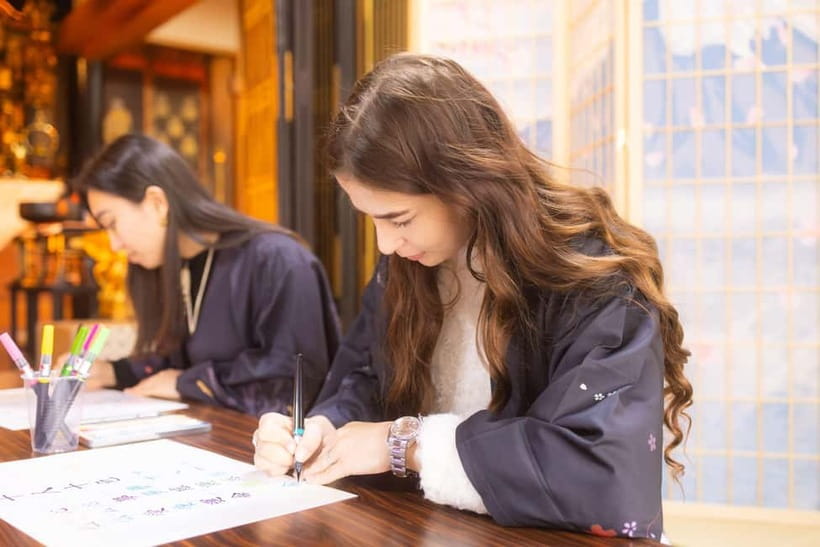
I would choose this for several kinds of visitors:
- First-time Japan visitors who want a clear introduction to temples, shrines, meditation, and kanji.
- Solo visitors who want an organized activity that feels comfortable alone.
- Couples and families looking for a shared, low-pressure cultural experience.
- Shoppers in Shinsaibashi who want a quiet break from retail streets.
- Visitors with limited time who cannot fit a half-day temple visit into the schedule.
- Anyone curious about calligraphy but unsure about paying for a longer class.
The English instruction is a major help if you do not speak Japanese. You can ask questions, follow the history lesson, and understand the calligraphy guidance without guessing.
I would hesitate only if you want a large temple complex, extensive sightseeing, or a long formal tea ceremony. Saishoji Temple is the setting for a focused one-hour activity, not a full Osaka sightseeing tour.
Practical details before you book
Wear clothes that allow you to sit and work comfortably. The supplied information does not give a dress code, but a temple setting calls for respectful behavior. Listen to the staff’s instructions and treat the space as a religious place, not merely a workshop.
Materials are included, so you do not need to bring brushes, ink, paper, or a plate. You may want a small bag or protective folder for your mini shikishi and ceramic gift, especially if you plan to continue sightseeing afterward.
The instructor language is English. The activity is designed for beginners and advanced language learners, but the calligraphy itself is accessible to someone with no previous experience. The helpful instruction is one of the strongest reasons to book rather than trying to copy kanji from a souvenir shop.
The experience provider is R株式会社. The meeting point is clearly given at Saishoji Temple, and the location link and coordinates can help you confirm the entrance before setting out.
Should you book Saishoji Temple calligraphy?
Book it if you want a calm, affordable cultural pause close to central Osaka. The combination of breathing practice, temple surroundings, basic calligraphy, and personal keepsakes gives you more substance than a quick souvenir-making class.
It is particularly good for solo visitors, first-timers, and anyone who wants to understand a little more about Japanese culture while doing something with their hands. The 4.9 rating from 24 bookings fits the activity’s strongest qualities: kind instruction, a peaceful setting, and an experience that feels easy to enjoy without preparation.
Skip it if you need a full historical tour, a long meditation retreat, or advanced calligraphy training. For everyone else, $20 is a small price for an hour that slows Osaka down and leaves you with your own kanji, a name card, and a ceramic plate.
FAQ
Where does the Osaka temple and calligraphy experience take place?
It takes place at Saishoji Temple, located at 1-6-18 Kitahorie, Nishi-ku, Osaka, 550-0014, Japan.
How do I reach Saishoji Temple?
The temple is about a three-minute walk from Yotsubashi Station, Exit 4, on the Osaka Metro Yotsubashi Line. It is about ten minutes from Shinsaibashi Station and 15 minutes from Namba Station on foot.
How long does the activity last?
The activity lasts one hour. Starting times depend on availability.
Is the experience offered in English?
Yes. The instructor language is English, and the activity includes a guided history and language lesson.
What do I receive during the experience?
You receive all materials for the activities, a Japanese kanji name card with its meaning, and a small ceramic plate measuring 8 cm in diameter. You also write a favorite kanji on a mini shikishi.
Can I cancel for a full refund?
Yes. You can cancel up to 24 hours in advance for a full refund. Reserve now and pay later is also available.
Just added around Osaka
- Osaka Temple :Warm Bamboo Oil Massage – Deep Restore〈60min〉★ 4.9 · 19 reviews
- Osaka/Kyoto: Kiyomizudera Fushimi Inari, Nara Tour w/ Pickup★ 4.5 · 8 reviews
- Osaka Temple :Warm Bamboo Oil Massage – Deep Restore〈90min〉★ 5.0 · 14 reviews
- Osaka Temple Cool Foot Bath & Matcha Experience〈45min〉★ 4.9 · 82 reviews
- Osaka: Mind & Spirit Balance Temple Reiki Healing★ 5.0 · 41 reviews
- Osaka Temple Head Spa &Matcha Facial – Refresh & Glow〈90min〉★ 5.0 · 24 reviews
- Osaka Morning Tour: Shitennoji Temple, Shinsekai &Doutonbori★ 5.0 · 23 reviews
- Osaka: Private Tour of Shitennoji, Osaka’s Oldest Temple★ 4.5 · 6 reviews
Workshops, compared.

Uluwatu Silver Jewelry Making Workshop with Creation
Read our review →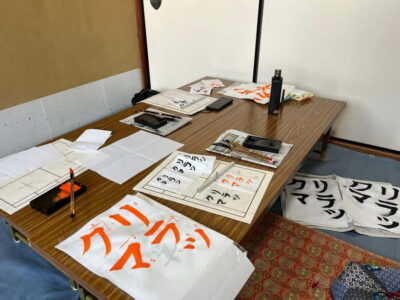
Calligraphy class at Buddhist temple in city center
Read our review →
Chinese Kungfu class in old temple beside Forbidden Ci
Read our review →
Vegan Temple Food Class, Jogyesa & Changdeokgung Tour
Read our review →
Full-Day Private Water Temple Ritual & Yoga Class
Read our review →
Kyoto Home Cooking Class &Supermarket tour near Fushimiinari
Read our review →Browse the lists this tour appears in