
REVIEW · E-BIKES
Naha: Guided E-Bike Tour of the 12 Zodiac Temples
Shuri’s temples are easy to miss from a car or a normal sightseeing route. This three-hour e-bike tour threads through quiet lanes, temple grounds, old houses, and sacred sites linked to Okinawa’s zodiac traditions. The red gates and carved buildings are only part of the story. Your guide explains how these places fit into the former Ryukyu Kingdom and everyday local belief.
I like two things right away: the electric bikes make Shuri’s hills manageable, and the small group, capped at five, keeps the ride personal. Guides such as Maki, Maria, Hiro, and Reiji have been praised for clear explanations, careful cycling guidance, and warm help along the way. The helmet intercom is a smart touch, since you can hear your guide without bunching up beside the road.
The main drawback is simple: you need to be comfortable riding a bicycle in town traffic. This is not a sightseeing ride where you sit back and watch. You pedal between stops, wear closed shoes, and cope with Okinawa’s sun, so bring water, sunscreen, and a hat.
Key points before you book
- Six-person maximum including the guide: The small format makes it easier to ask questions and adjust the pace.
- Electric bikes handle Shuri’s hills: You still ride, but the motor takes much of the strain out of the route.
- Temple visits beyond the main sights: Shuri Kannon, Ankokuji, Daruma Temple, Seikoji, and Sogenji give the tour a local feel.
- Shureimon Gate photo stop: You can pose with your bike beside one of Okinawa’s best-known landmarks.
- Helmet intercom included: You can hear directions and explanations while riding.
- $95 for three hours: The price is fair if you value a guide, bike rental, temple context, and access to places that are awkward to find alone.
Why an e-bike is the right way to see Shuri
Shuri rewards slow travel. Its famous sites are spread among residential streets, temple grounds, slopes, and small lanes where a large tour vehicle has no business going. A bicycle lets you connect the landmarks without spending the whole morning walking uphill or waiting for local transport.
The electric motor matters. Shuri is not flat, and the ride includes several cycling sections of about 15 to 20 minutes. You must pedal, but the bike gives you useful assistance on the climbs. That makes the route active without turning it into a fitness test.
The ride begins at the shop in Daisho Building, about a five-minute walk from Makishi Monorail Station and next to the post office. You’ll be fitted with an electric bicycle and helmet before setting off. The shop’s location is convenient if you are staying around central Naha or arriving by monorail.
I also like the helmet communication system. Your guide can give directions and share short comments while the group is moving, rather than stopping every few minutes to gather everyone around. Previous participants singled out this feature, along with the quality of the bikes and the care guides took with road safety.
Still, do not mistake an e-bike for a motor scooter. You need to balance, steer, brake, and ride with traffic. The tour is not suitable for anyone who cannot ride a bike. Sandals and flip-flops are not allowed, so wear comfortable closed shoes and clothing that works for cycling.
More Cycling Tours in Japan:
- E-Bike Nara Highlights – Todaiji, Knives, Deer, Shrine
★ 4.8 · 186 reviews - Kyoto: Fushimi Inari Shrine and Tofukuji Temple E-Bike Tour
★ 5.0 · 75 reviews - Kyoto: Hidden Gems E-Bike Tour Through Backstreets & Temples
★ 4.9 · 54 reviews
Shuri Kannon Temple and the first taste of old Okinawa
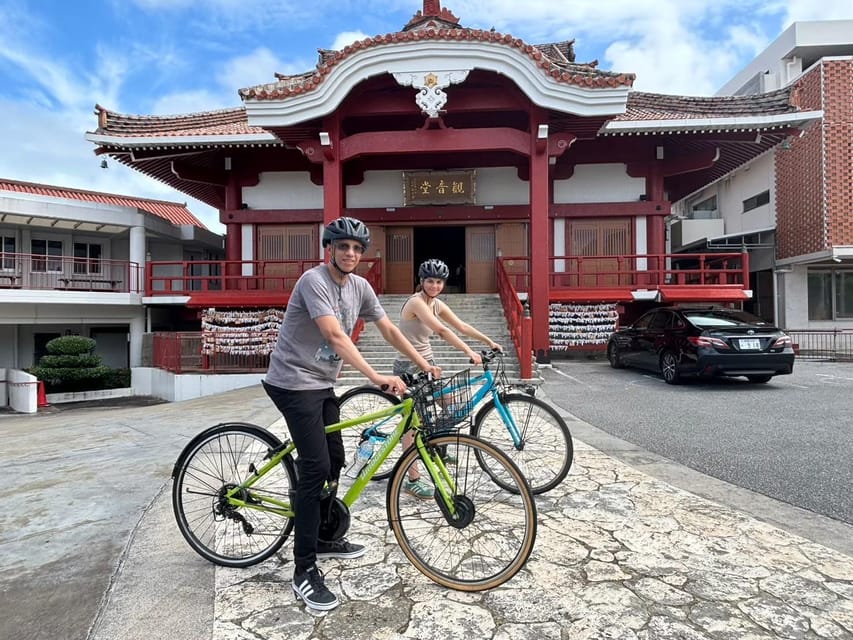
The first major visit is Shuri Kannon Temple, a guardian temple dating to the Ryukyu Kingdom era. Its bright red building and decorative carvings offer a quick lesson in how Okinawan religious sites differ from the plain, quiet image some people associate with mainland Japanese temples.
The setting also gives you a good first look at Shuri from above. After the ride, the view helps you understand the area’s position and scale. Your guide can add the local context that a quick photograph cannot provide, including the role of the temple and the customs connected with the sites you visit.
This is one of the stops where a guide earns the fee. The building details are attractive, but the meaning behind the carvings, colors, and guardian role is what turns a short visit into something memorable. Guide Maki, in particular, has been praised for explaining temple customs clearly and for tailoring the experience when the group is small.
Allow yourself to look closely rather than rushing through for a photograph. The tour has several stops, so visits are not designed for long independent exploration. If you want extended time at every temple, a private visit on foot may suit you better.
Ankokuji Temple, an old gate, and a giant gajumaru
The route continues to Ankokuji Temple, a more local-feeling stop surrounded by traditional houses. Its ancient gate and large gajumaru tree give the place a different character from the brighter, more formal Shuri Kannon Temple.
The tree is worth a pause. Gajumaru trees are a familiar sight across Okinawa, with thick trunks and spreading roots that make them feel closely tied to the island’s older stories. Here, the setting helps you notice how religious sites sit within ordinary neighborhoods rather than behind grand, isolated entrances.
The scheduled visit is short, around five minutes, so this is a stop for a focused look and an explanation from your guide. That pace works well for a three-hour ride, but it means you should not expect a long temple stroll at every location.
This is also where the tour’s local character becomes clear. You are not simply moving from one famous landmark to the next. You are riding through side streets and seeing how shrines, homes, trees, and daily life share the same small area.
Shureimon Gate and the classic bike photograph
Shureimon Gate is the most recognizable photo stop on the route. Its red and decorated facade has become a symbol of Okinawa, and the tour gives you time to photograph it with your electric bike.
The bike adds a useful sense of place to the image. Instead of another standard gate portrait, you get a picture that shows how you explored Shuri. Your guide may also help with photos, a detail that matters if you are traveling alone or want a group shot.
Do not expect Shureimon to be an undiscovered sight. It is a major symbol of Okinawa, and you will likely share the area with other people. That is not a reason to skip it. The value here comes from placing the famous gate within a broader route of smaller religious sites.
If you are focused on photography, ask your guide how much time is available at the gate. The tour’s purpose is to connect several locations, not to spend an hour waiting for an empty frame.
More E-Bike Rides in Japan:
- Hiroshima: Peace Park, Castle, and Mitaki Temple E-Bike Tour
★ 4.8 · 11 reviews - Angkor Sunrise Bike Tour / E-Bike or Tuk Tuk
★ 5.0 · 615 reviews - Morning Monastery E-bike Tour
★ 5.0 · 71 reviews - From Siem Reap: Angkor Wat Sunrise and Temples E-Bike Tour
★ 5.0 · 52 reviews
Daruma Temple and the meaning behind the red dolls

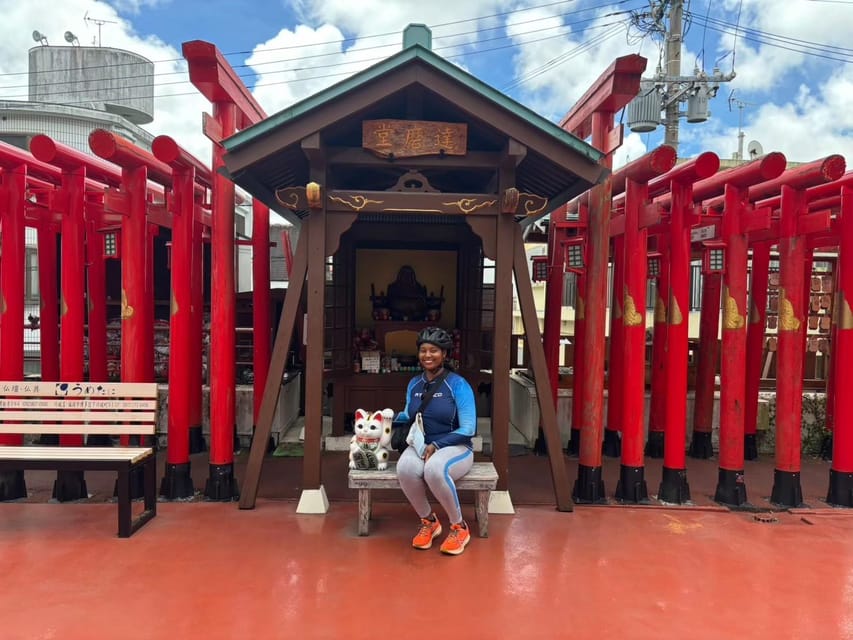
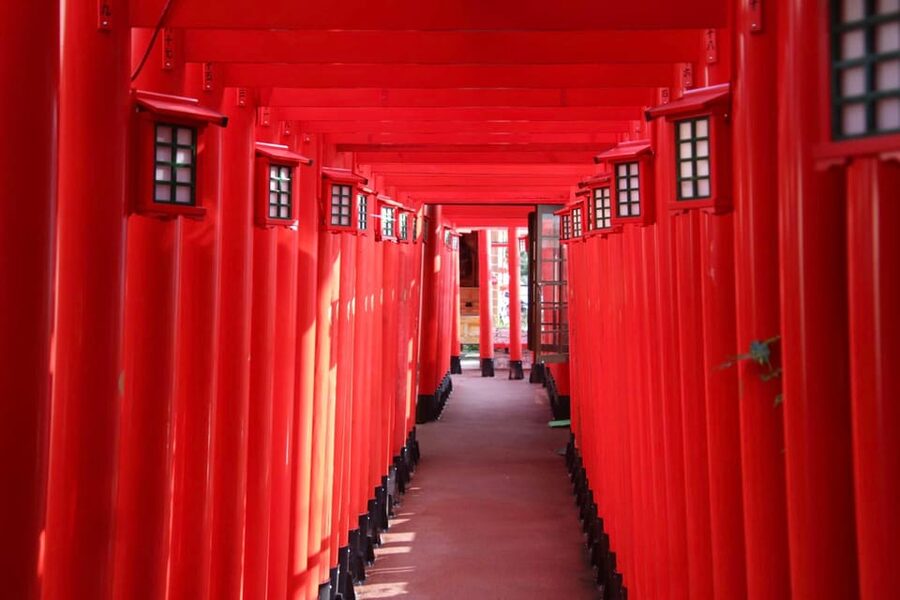
Daruma Temple is known for health and pregnancy prayers. The red daruma dolls and torii gate make it one of the more visually striking stops, but the religious purpose gives the visit more weight than the color alone.
A guided explanation is especially useful here. Daruma figures carry different meanings depending on the setting, and the temple’s connection with personal prayers gives you a glimpse of how people use these places today. You can look at the dolls as decoration, but you will understand more if you treat them as objects tied to hope and ritual.
The visit lasts about 20 minutes, long enough for a proper look and questions. If you are interested in Japanese and Okinawan customs, this may be one of the most rewarding stops on the ride.
Temple offerings are not included. You should not assume that a tour price covers donations or religious items. The guide can explain the local practice, but any money you offer is your responsibility.
Seikoji Temple, Jizo statues, and a quieter pause
Seikoji Temple brings the pace down. The grounds have a calm, sacred feel, with Jizo statues and a modern building that contrast with the older gates and trees seen elsewhere on the route.
The Jizo figures are a good reminder that religious spaces in Japan often combine old and new elements. You may find this stop less immediately dramatic than Shureimon or Daruma Temple, but it offers a quieter look at how worship continues in a changing city.
The planned visit is around 10 minutes. That is enough for an introduction and a short walk, though not enough for a long period of stillness or detailed photography. I see this as a useful breathing space between the more colorful stops.
Guide Reiji has been praised for giving detailed explanations at each site, while other guides, including Maria and Hiro, have been noted for checking that everyone is comfortable and keeping the group together. That kind of care matters when the tour shifts between riding and walking.
Saki Kasahigawa, the miracle spring
The stop at Saki Kasahigawa adds a natural element to a route otherwise centered on temples and gates. This miracle spring flows from deep forest, and the sound and movement of the water give the visit a different mood.
The spring carries a sense of age and local belief. You are not simply checking off another building. You are seeing a place where water, forest, and spiritual tradition meet.
Details about the time at the spring are not specified, so expect a short guided stop rather than a long nature walk. Wear shoes that are comfortable for riding and brief walks, and keep your water bottle with you. Okinawa’s heat can make even a relaxed ride feel demanding.
This is one reason I would not treat the tour as only a temple tour. The route combines architecture, belief, neighborhood streets, trees, water, and views. That variety keeps the three hours moving.
Sogenji Temple and the ride back to Naha
The final major stop is Sogenji Temple, a former royal mausoleum. Its gate and gajumaru tree sit within a park-like setting where the air feels clean and the pace slows again before the return ride.
The royal connection gives the tour a fitting closing point. Earlier stops show how temples function in the community, while Sogenji links the religious route to Okinawa’s former royal court. You get another chance to compare formal history with the smaller, more intimate places visited along the way.
After Sogenji, you ride back to the same shop in Daisho Building. The entire activity lasts about three hours, including cycling and visits. Since the tour starts and ends at the same place, you can easily continue to Makishi, return to your hotel, or make other plans nearby.
Some guides have added a small extra stop, such as a bakery, when time allowed. That is not a guaranteed part of the route, so treat it as a pleasant possibility rather than a promise.
What the $95 price really covers
At $95 per person, this is not the cheapest way to see Naha. You could walk around Shuri for less, and many temples do not charge an entry fee. The comparison is not really between a free temple visit and a paid tour, though. It is between finding these sites yourself and paying for the bike, route planning, guide, safety support, and explanations.
The price includes the electric bicycle, helmet, intercom system, and a live guide in English, Chinese, or Japanese. The group limit of five is important. A large bike tour can feel like a slow procession, while this format gives you a better chance to ask about customs, names, and local details.
I consider the price good value for a first visit to Naha if you want active sightseeing and cultural context. It is less appealing if you already know Shuri well, dislike cycling, or want long periods at each temple.
Meals and drinks are not included. Plan to eat before or after, and bring water. You should also bring sunscreen and a hat, especially during the warmer months.
Who will enjoy this tour most
I would recommend it to you if you want to see Naha beyond the main shopping streets and major palace grounds. It suits couples, solo visitors, and small groups who like a bit of exercise with their sightseeing.
It is also a good choice if you are curious about Okinawan religious traditions but do not want a formal lecture. The route lets you learn in short sections, with a ride between each stop. Guides such as Maki, Maria, Hiro, Jojo, and Reiji have been praised for making the information approachable and for helping riders feel safe.
Families and mixed-ability groups should think carefully about the cycling requirement. The e-bikes reduce the effort, but everyone still needs to ride independently and manage basic road movement. The tour can accommodate different skill levels, according to the supplied experience details, but it is not designed for non-riders.
People who dislike heat should choose their clothing carefully and carry water. The tour provider may change plans if the chance of precipitation is above 70 percent or if severe weather is expected. In that situation, you should receive notice the day before.
Practical details that make the ride easier
Meet at the bike shop in Daisho Building, a five-minute walk from Monorail Makishi Station, beside the post office. Allow a little extra time to find the shop, get fitted, and listen to the safety instructions before departure.
Wear comfortable shoes, not sandals or flip-flops. Lightweight clothing suitable for cycling is the sensible choice, along with sunscreen and a hat. Smoking is not allowed during the tour.
The cancellation policy is useful if your schedule is uncertain: you can cancel up to 24 hours ahead for a full refund. You can also reserve now and pay later, which gives you some flexibility while planning your Naha days.
The tour runs in English, Chinese, or Japanese. Since the group is limited to five participants, language availability and group composition may shape the feel of the ride, so check the available start time and language when booking.
Should you book the 12 Zodiac Temples e-bike tour?
Book it if you want a guided look at Shuri’s smaller temples, enjoy riding, and value local explanation over a quick list of famous sights. The combination of electric assistance, helmet communication, and a five-person limit makes the route practical and personal.
Skip it if you cannot ride a bicycle, want a completely passive sightseeing experience, or plan to spend a long time inside each temple. For everyone else, $95 buys a useful introduction to the spiritual side of Shuri, with enough movement to make the morning feel like an outing rather than a museum visit.
FAQ
Where does the tour start and finish?
The tour starts and ends at the bike shop in Daisho Building. The shop is about a five-minute walk from Monorail Makishi Station, next to the post office.
How long does the tour last?
The tour lasts three hours, including the cycling sections and visits to the temples, shrines, gate, and spring.
What is included in the price?
The price includes an electric bicycle rental, a helmet, and a guided tour with an intercom system.
Is food or drink included?
No. Meals and drinks are not included. Bring water, and plan to eat separately before or after the tour.
Which languages are available?
The tour is offered in English, Chinese, and Japanese.
How many people are in the group?
The activity is limited to five participants, making it a small-group tour.
Do I need to know how to ride a bicycle?
Yes. You must be able to ride a bicycle independently. The tour is not suitable for people who cannot ride.
What should I wear and bring?
Wear comfortable shoes and clothing suitable for cycling. Sandals and flip-flops are not allowed. Bring water, sunscreen, and a hat.
What happens in bad weather?
If the precipitation probability exceeds 70 percent or severe weather is expected, the provider may change the plans. You should be contacted the day before in that situation.
Just added around Japan
- From Asakusa: Old Tokyo, Temples, Gardens and Pop Culture★ 5.0 · 47 reviews
- Private guided tour: Mt. Aso volcano, grasslands, Aso Shrine★ 5.0 · 19 reviews
- Goshuin Collecting tour at Asakusa Local Temples & Shrines, Tokyo★ 5.0 · 8 reviews
- Tokyo:Nikko UNESCO World Heritage Sites Private 1-Day Tour★ 3.8 · 6 reviews
- Tokyo Yokohama Night View Tour With Kamakura And Enoshima★ 3.5 · 14 reviews
- Tokyo: Snow Monkey Park and Zenkoji Temple Private Day Tour★ 4.7 · 127 reviews
- Tokyo War History Tour: Yasukuni Shrine & War Museum★ 4.5 · 6 reviews
- Tokyo to Nikko: Exclusive Private Day Trip★ 4.8 · 6 reviews
E-Bikes, compared.


E-Bike Nara Highlights – Todaiji, Knives, Deer, Shrine
Read our review →
Fushimi Inari Shrine and Tofukuji Temple E-Bike Tour
Read our review →
Hidden Gems E-Bike Tour Through Backstreets & Temples
Read our review →


e-Bike Cycling Tour to Arkadi Monastery Full Lunch included
Read our review →Browse the lists this tour appears in