
REVIEW · SOUTH KOREA TEMPLE TOURS
Gyeongju: UNESCO Heritage Tour Including Bulguksa Temple
Gyeongju packs more Korean history into one day than almost any other city. This tour links Bulguksa Temple and Seokguram Grotto with royal tombs, an ancient observatory, a palace pond, and a traditional village, making it a strong choice if you are based in Busan and have only one day for the Silla capital.
I like two things right away. First, the air-conditioned van saves you from piecing together widely separated sights by bus or taxi. Second, guides such as Sue and Steve bring the Silla period to life with stories, clear explanations, humor, and help with practical details such as photos and local food.
The main consideration is pace. Eight hours is enough to see the major sites, but not enough to linger everywhere. A late start, holiday traffic, or large crowds can shorten some visits, and one afternoon group skipped its final stop after starting late.
Key points at a glance
- Six major Gyeongju stops: Visit Bulguksa, Seokguram Grotto, Daereungwon, Donggung Palace and Wolji Pond, Cheomseongdae, and Gyochon Village.
- Comfortable door-to-door transport: Pickup and drop-off are available anywhere in Busan or Gyeongju, with an air-conditioned van and an English-speaking guide.
- A strong Silla history lesson: The route moves from royal burial mounds and science to Buddhist art, palace life, and traditional homes.
- Lunch and entrance fees are included: You do not need to budget separately for the listed admissions or midday meal.
- Private or small-group formats: The experience can suit couples, families, or visitors who prefer a smaller setting.
- Highly praised guiding: Sue, Steve, Jina, and other guides have been singled out for warmth, humor, clear storytelling, and flexibility.
Why Gyeongju works so well as a one-day trip
Gyeongju was the capital of the Silla Dynasty for nearly a thousand years. That long run left behind royal graves, Buddhist monuments, palace remains, stonework, and traditional neighborhoods spread across a city that feels far less crowded than Seoul.
The best feature of this tour is its variety. You are not spending eight hours looking at one temple complex. You move from broad grassy burial mounds to a stone observatory, then up a mountain to a granite Buddha, before ending beside a palace pond. Each stop gives you a different way to understand Silla society.
I would especially recommend this route if you are staying in Busan. Public transport can get you to Gyeongju, but connecting all six stops in a single day takes planning. The private vehicle matters here because the sights are not gathered around one compact station area.
Pickup is available in Busan or Gyeongju, and the tour returns you to either location. The van, driver, water, guide, lunch, and entrance fees are included, so the $189 price covers much more than admission to a few monuments. It is still a serious price for a day out, especially for solo visitors, but couples and families may find the convenience worthwhile.
More History Tours in South Korea:
- Bali: Tanah Lot UNESCO World Heritage Sites Full-Day Tour
★ 4.7 · 1,947 reviews - 2 Days Guided Historical Tour in Angkor
★ 5.0 · 855 reviews - Chiang Mai: Historic Temples and City Guided Walking Tour
★ 4.7 · 650 reviews
Gyochon Village and the Gyeongju Choi Clan home
Gyochon Village is a gentle opening to the day. Its traditional hanok buildings and quiet lanes show a side of Gyeongju that stone monuments alone cannot provide. Here, you get a sense of historic domestic life and the careful design of Korean homes.
The House of the Gyeongju Choi Clan is the key stop. The family is associated with heritage and craftsmanship, and the property gives your guide a chance to explain how noble families lived and how traditional buildings were arranged.
When available, you may try Gyeongju Gyodong Beopju, a traditional liquor linked to the area. This is a small detail, but it gives the visit a local flavor that a standard monument checklist often misses.
Allow about an hour here. The village is best approached slowly, with time to look at roofs, courtyards, walls, and narrow lanes. If you prefer dramatic ruins right away, this first stop may feel modest. I see it as useful context before the grander royal and religious sites.
Daereungwon, where royal tombs rise from the grass
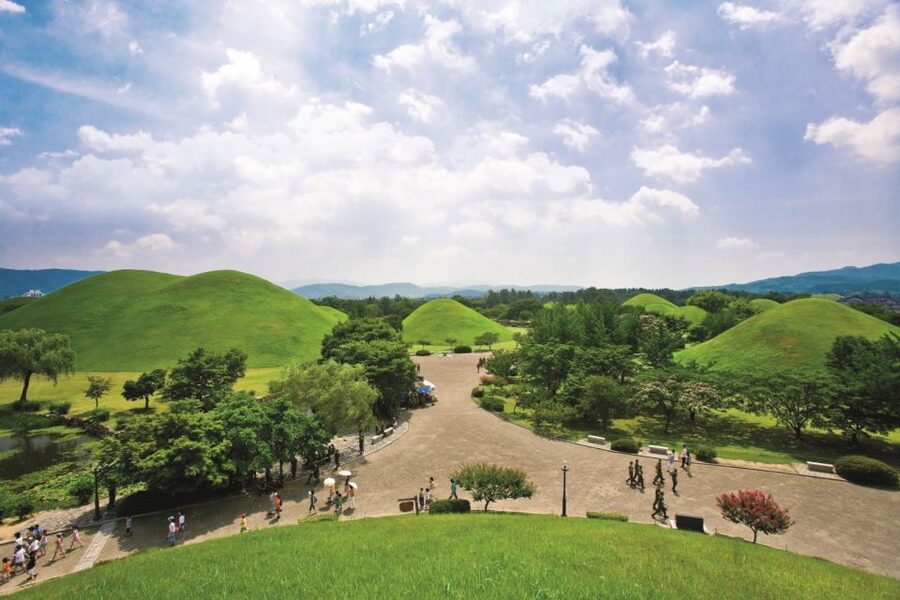
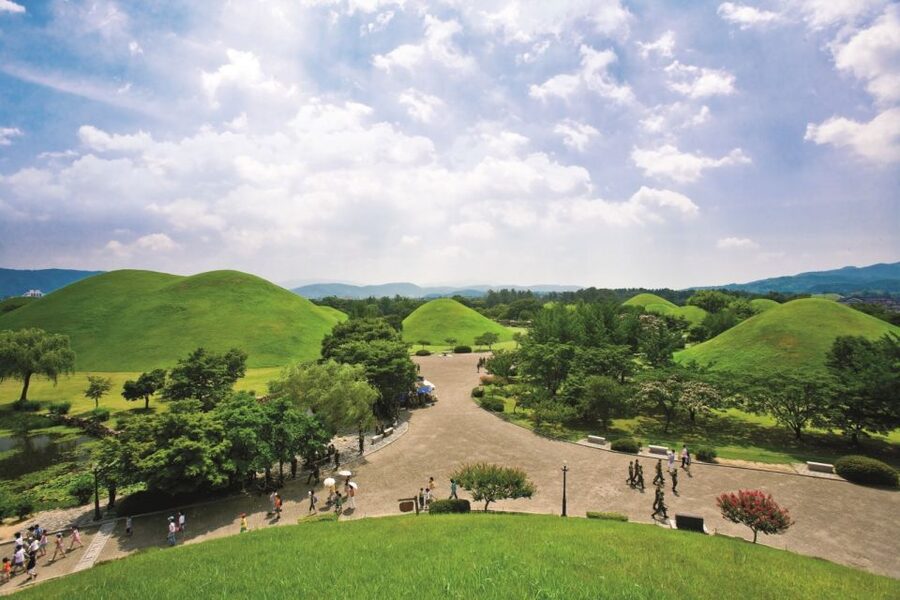
Daereungwon Tomb Complex is one of Gyeongju’s most memorable places. Large, rounded burial mounds rise across open grass, and their scale makes clear that these were not ordinary graves. They belonged to Silla kings and aristocrats.
The most famous mound is Cheonmachong, or the Heavenly Horse Tomb. It became important because archaeologists found an ancient horse painting there, along with objects that helped explain the wealth and beliefs of Silla’s ruling class.
Hwangnamdaechong is another major tomb, known for its size and elegant finds. Your guide can help you read the mounds as royal monuments rather than simply green hills. That explanation matters, because the site’s beauty is quiet and understated.
The one-hour guided visit should give you time to walk and take photographs. You will be outdoors, so comfortable shoes are useful. I particularly like this stop for visitors who want history they can physically see in the shape of the land, not only behind glass in a museum.
Cheomseongdae and Silla science
Cheomseongdae is a short visit, listed at about 30 minutes, but it adds an important layer to the day. This stone tower is regarded as the oldest surviving astronomical observatory in Asia and dates to the reign of Queen Seondeok.
Its compact form is easy to underestimate. The value comes from learning what the structure says about Silla’s interest in astronomy, calendars, farming, and royal authority. Scientific work was not separate from government and religion. Understanding the sky helped rulers manage the practical life of the kingdom.
This is a good place to listen closely to the guide rather than rush through a quick photograph. The stop is short, and there may not be much time for a long independent walk, but it balances the tombs and temples with a story about observation and calculation.
A few more temple visits around South Korea worth a look
- Seoul: Palace, Temple and Market Guided Foodie Tour at Night
★ 4.9 · 750 reviews - Seoul: Mt Seorak + Naksansa Temple or Nami Island Group Tour
★ 4.7 · 422 reviews - Best Things to Do – Half Day Seoul Trip (Seoul Palace & Temple)
★ 5.0 · 190 reviews - Full Day Busan Tour Including Haedong Yonggungsa Temple
★ 4.5 · 71 reviews
Bulguksa Temple, the day’s central monument
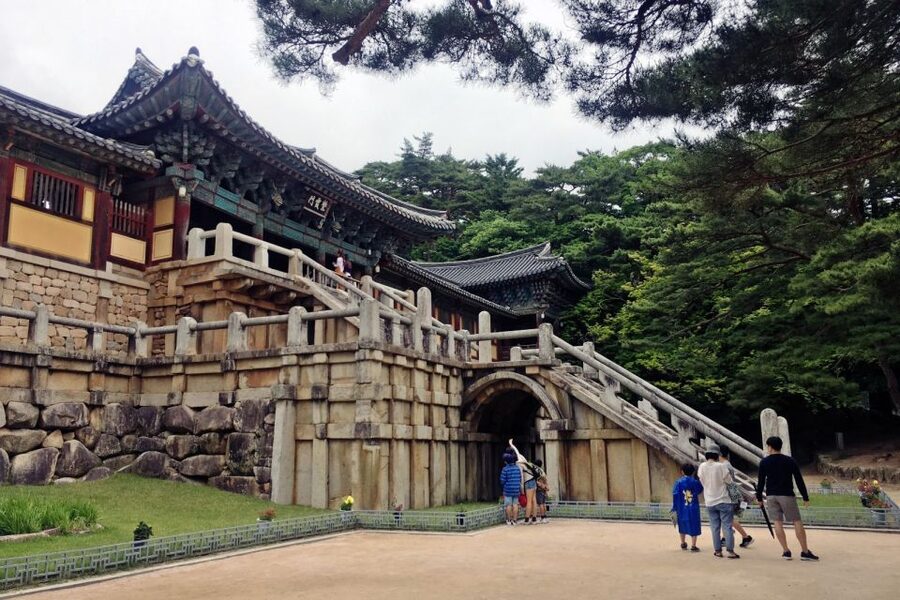
Bulguksa Temple is the main event for many people. Its UNESCO designation recognizes both its cultural importance and its remarkable design. The temple sits on the lower slopes of Tohamsan Mountain, where stone stairs, courtyards, bridges, and wooded surroundings work together.
You will spend about an hour here with a guide. Look for the famous Dabotap and Seokgatap pagodas, as well as the ancient stone bridges. The two pagodas have different forms, and that contrast is one of the details that rewards a slower look.
Bulguksa is not just a collection of old buildings. Its layout expresses Buddhist ideas through movement from one level to another. The stonework feels precise, but the setting remains calm rather than severe. Your guide can explain the symbols and construction choices that are easy to miss when walking alone.
The drawback is that the temple can be busy, particularly on public holidays. One October visit coincided with Korean Thanksgiving crowds, though the guide was able to adjust the route. Expect the guide to manage the timing, but do not expect every courtyard to feel empty.
You should also be prepared for steps and walking. The tour is not a museum visit where you remain indoors and seated. Bring shoes that are comfortable on stone paths, and keep the bottle of water provided for the day’s hills and outdoor stops.
Seokguram Grotto and the mountain road
From Bulguksa, the route climbs Tohamsan Mountain to Seokguram Grotto. The journey itself changes the mood. You leave the broad temple grounds and head toward a more secluded monument in the hills.
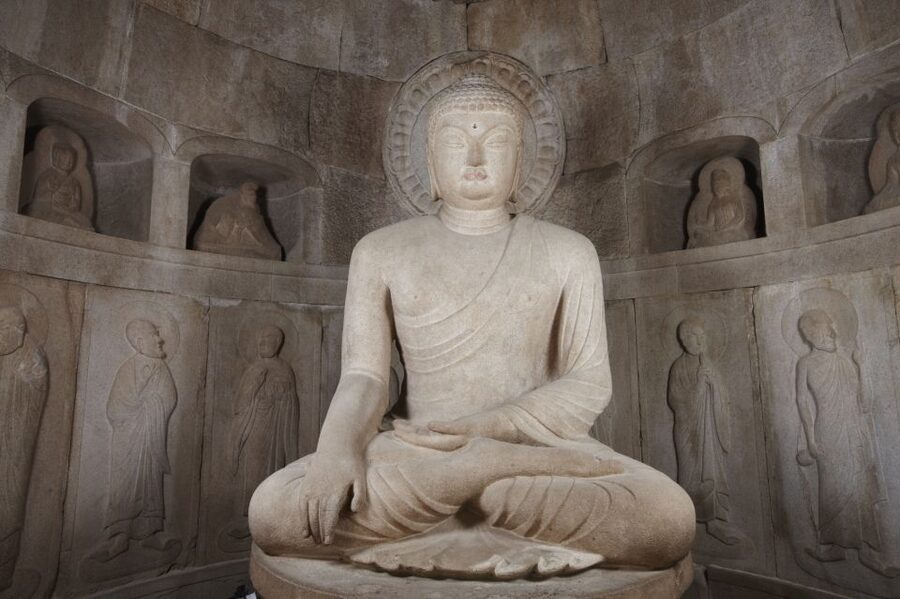
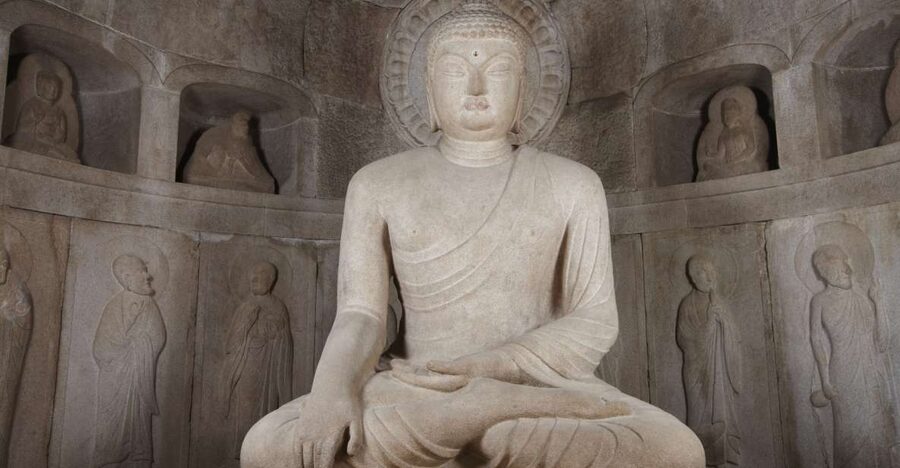
Inside the grotto is a granite Buddha surrounded by carved guardians. The statue and the chamber are celebrated as major achievements of Korean Buddhist art and engineering. The space is more controlled than a typical open-air shrine, so your guide’s explanation helps you understand why the grotto was created and why the Buddha’s setting matters.
Plan on about an hour here. The visit may feel intense because the central Buddha commands attention, while the surrounding carvings reward a close look. Photography conditions can be limited, so focus on seeing the work directly rather than trying to record every detail.
This is another stop where the van earns its keep. Reaching the mountain site independently takes more planning than visiting the central tombs. The tour also keeps the day moving without asking you to navigate the road and connections yourself.
Some guides add small local touches. Sue and driver Joe were known for helping with snacks sold outside the grotto, and Joe sometimes used photographs on his phone to explain what the group was seeing. Those gestures are not the formal core of the tour, but they can make a busy sightseeing day feel more personal.
Lunch, bibimbap, and a useful break
Lunch is included, which is helpful because the route is packed. Several visitors singled out the meal, with bibimbap receiving particular praise. One family said the guide showed them how to eat it properly, turning lunch into a small cultural lesson rather than a rushed refueling stop.
Guides Sue and Joe have also been described as joining the group for lunch. That can make a small party feel more relaxed, though the exact guide and meal setting may vary.
Do not expect a long, leisurely food tour. Lunch supports the sightseeing schedule. Still, including it in the price removes one practical decision and gives you a chance to ask questions while sitting down.
Donggung Palace and Wolji Pond at day’s end
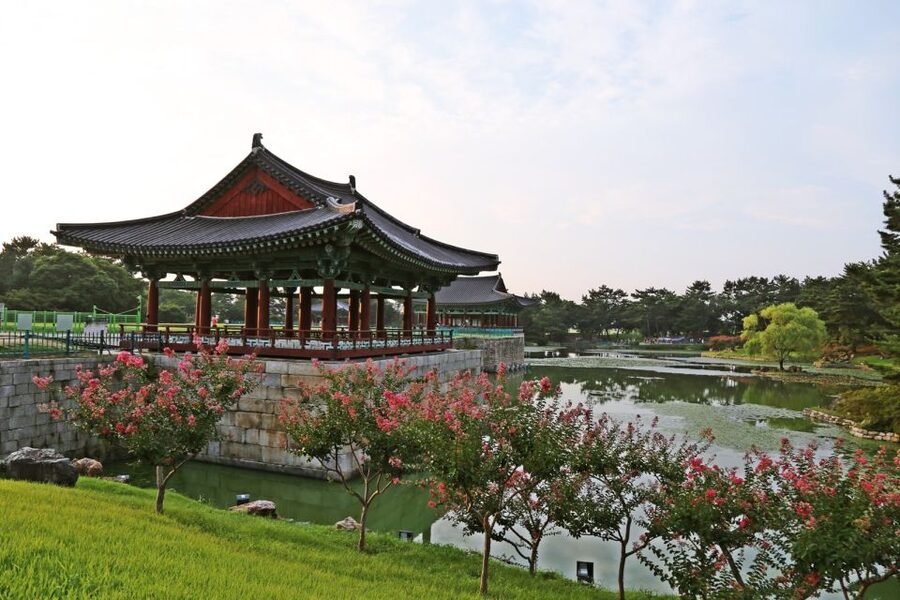
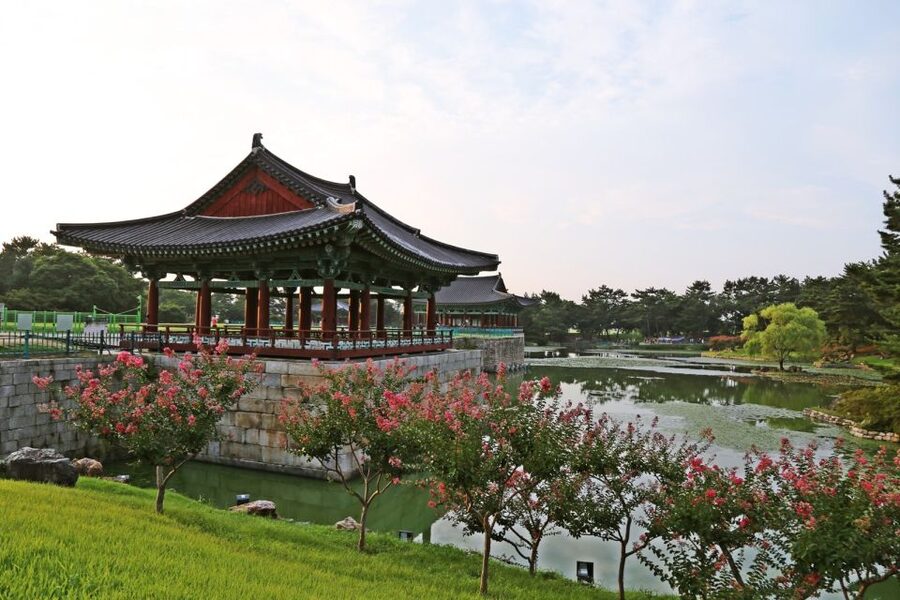
Donggung Palace and Wolji Pond, formerly known as Anapji, is a graceful final stop. The palace site dates to the reign of King Munmu, and the pond was designed as part of a royal garden.
The water reflects pavilions, trees, and the changing light. If the timing works, dusk gives the place its best mood, with the pond becoming a calm mirror for the reconstructed buildings and surrounding greenery. It is a fitting contrast to the solid tombs and carved stone of the morning.
You have about an hour here. I would save a little energy for this stop, since the pond rewards an unhurried walk and a few minutes simply looking across the water. It may also be the most photograph-friendly part of the day.
The schedule can be vulnerable to delays. Traffic, crowds, or a late start may reduce time here, and one group chose to visit a different village instead of completing the last listed stop. If Wolji Pond is a priority, tell your guide early and start the day on time.
What the guide and vehicle add
The guide is the difference between seeing old stones and understanding Gyeongju. Sue is praised for being warm, funny, attentive, and clear. Steve is described as especially good at bringing Silla stories to life and adjusting the route when conditions change. Jina has also led a strong private experience, with explanations covering several Korean dynasties.
The guide assigned to your date may be different. Still, the repeated pattern is useful: expect an English-speaking guide who explains the sites, answers questions, watches the clock, and helps the group move through a full schedule.
The driver matters too. Joe and other drivers have been praised for safe, comfortable transport, taking photographs, helping people find the right path, and keeping the van moving between scattered sites. A 96 percent perfect score for transport reflects how much this practical side contributes to the experience.
Private and small-group options are available. A group of five was described as a particularly pleasant size, while couples have also received attentive help and photos. If you dislike large coach groups, confirm the format when booking.
Is $189 a fair price?
At $189 per person, this is not the cheapest way to see Gyeongju. You are paying for convenience, not just entry tickets. The price includes pickup and drop-off from Busan or Gyeongju, a guide, an air-conditioned van, lunch, water, and all listed admission fees.
For a solo visitor, the cost may feel high compared with using public transport and paying for sites separately. You would also need to arrange the route, allow for transfers, and manage timing yourself. That independent approach can work, but it asks for more effort and may leave out one or two locations.
For two or more people, the calculation looks better. You gain a full day of transport and interpretation, with no need to return to Busan by train or find a taxi after the final stop. The strongest value comes when your time is limited or you want the historical links explained as you go.
One past assessment called the tour too expensive compared with a similar option departing from Busan. That is a fair warning. Compare departure prices before booking, especially if you are already staying in Gyeongju. The convenience remains real, but the premium may be harder to justify when the driving distance is shorter.
Who should book this Gyeongju tour?
I would choose this experience if you are in Busan, have one free day, and want the major Silla sites without building a complicated route. It also suits families and older visitors who will appreciate the van, planned stops, lunch, and help with steps, directions, and timing.
It is a good fit for first-time visitors who want history explained in plain English. You will get more from the tombs, observatory, and temple if someone connects them to Silla politics, Buddhist beliefs, royal life, and science.
I would hesitate if you prefer to spend half a day at one temple, browse museums slowly, or set your own pace. The route covers a lot, and the one-hour visits can feel brief. Visitors with a strong interest in the National Museum of Gyeongju should also note that it is not part of the listed route, although one private tour included it.
Free cancellation is available up to 24 hours before departure, and you can reserve now and pay later. Check the starting time and group format before committing, since those details affect how relaxed the day feels.
Should you book it?
Book this tour if your priority is seeing Gyeongju’s major UNESCO and Silla sites in one well-managed day. Bulguksa and Seokguram are the anchors, but the royal tombs, Cheomseongdae, Gyochon Village, and Wolji Pond make the experience much more complete.
Skip it in favor of independent sightseeing if price matters more than convenience or you want long, quiet visits at each site. For everyone else, especially those making the trip from Busan, the vehicle and guide solve the hardest parts of Gyeongju. Start early, wear good walking shoes, and tell your guide which stop matters most if the day begins to run late.
FAQ
Where does the tour pick up and drop off?
Pickup and drop-off are available in Busan or Gyeongju. The service includes hotel pickup and return to your hotel or preferred location in either city.
How long does the tour last?
The tour lasts eight hours. The listed guided visits include about one hour each at Bulguksa Temple, Seokguram Grotto, Daereungwon, Donggung Palace and Wolji Pond, and Gyochon Village, plus 30 minutes at Cheomseongdae.
Is lunch included?
Yes. Lunch and a bottle of water are included in the tour price. Bibimbap and other local food may be served, depending on the meal arrangements for the day.
Is the tour conducted in English?
Yes. The tour includes a live English-speaking guide.
Are entrance fees included?
Yes. All entrance fees listed for the tour are included.
Is this a private tour or a group tour?
Private and small-group formats are available. Confirm the format when booking if group size is important to you.
Can I cancel or pay later?
You can cancel up to 24 hours in advance for a full refund. A reserve-now, pay-later option is also available.
Just added around South Korea
- Seoul: War Memorial, Jogyesa Temple & Tapgol Park Tour★ 4.8 · 56 reviews
- Seoul: Vegan Temple Food Class, Jogyesa & Changdeokgung Tour★ 4.6 · 34 reviews
- Seoul: UNESCO Sites tour: Palace, Shrine & Bukchon Village★ 4.8 · 26 reviews
- Seoul: Night Bongeunsa Temple Guided Tour★ 5.0 · 11 reviews
- Seoul: Temple & Starfield COEX Mall Gourmet Tour in Gangnam★ 4.7 · 22 reviews
- Gyeongbokgung Palace, Jogyesa Temple and Bukchon village★ 5.0 · 12 reviews
- Danyang Tour:Guinsa Temple & Bobaljae & Cheongpung Cable Car★ 5.0 · 15 reviews
- Busan’s Best: Sea Temples, Yacht Tour & Sky Capsule Day Tour★ 4.8 · 24 reviews
South Korea Temple Tours, compared.
Palace, Temple and Market Guided Foodie Tour at Night
Read our review →
Busan’s Cultural Wonders with Beach Train & Gamcheon Village etc
Read our review →
Mt Seorak + Naksansa Temple or Nami Island Group Tour
Read our review →
Seoul Night Palace & Market Food Tour with Vehicle
Read our review →
Best Things to Do – Half Day Seoul Trip (Seoul Palace & Temple)
Read our review →Small Group Discover Busan Tour with hotel pickup and dropoff
Read our review →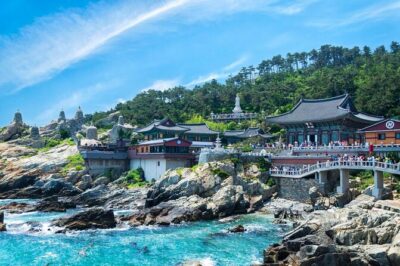
Full Day Busan Tour Including Haedong Yonggungsa Temple
Read our review →
Private Busan tour with gamcheon culture village and the temple (Customizable)
Read our review →Browse the lists this tour appears in