
REVIEW · HISTORICAL TOURS
Fukuoka’s Sacred Path: Temples, History & Culture
Fukuoka’s best lesson in Japanese culture may be this compact walk through Hakata. In three hours, you move from Japan’s first Zen temple to a huge wooden Buddha, a festival shrine, a modern shopping center, and one of the city’s oldest Shinto shrines.
I like the clear contrast between old and new, especially the quiet grounds of Shōfukuji followed by Canal City’s music-and-water display. I also like the relaxed pace and private-group format, which give you room to ask about Buddhist and Shinto customs. The catch is simple: this is a walking tour, and the route covers a fair amount of ground.
Key points
- See Shōfukuji, founded in 1195 by Eisai, the monk who introduced Zen Buddhism from China.
- Enter Tōchōji’s underground passage, a short, unusual experience linked to the afterlife.
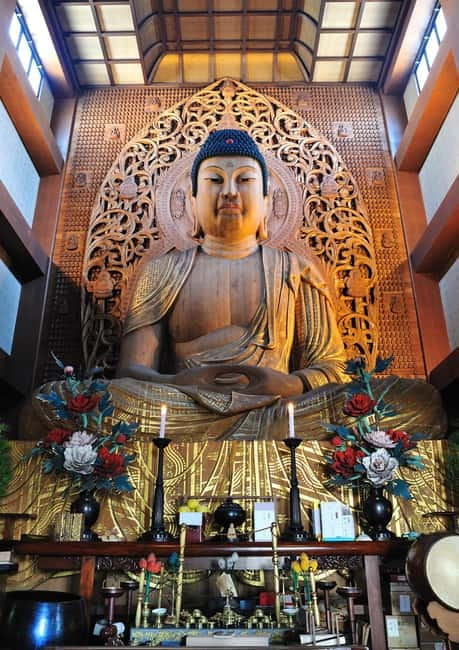
- Stand before a 10.8-meter wooden Buddha, one of Fukuoka’s most striking sights.
- Learn about Hakata Gion Yamakasa at Kushida Shrine, including the large float on display.
- Switch from temple calm to city energy at Canal City and its fountain show.
- Finish at Sumiyoshi Shrine, a place connected with safe travel and protection.
Why this three-hour walk works in Fukuoka
Fukuoka is easy to like, but its story can be hard to read on your own. Hakata has temples, shrines, shopping arcades, festivals, and modern architecture close together, yet the meaning behind them is not always obvious. This tour gives those places a common thread: how faith and custom still shape daily life in the city.
The route is especially useful early in a visit. You begin outside Hakata Station’s West Exit, so you can get your bearings fast. The tour then returns to the same point, making it practical if you have a train to catch or want to continue exploring from Hakata.
At $77 per person, the value depends partly on the size of your private group. You are paying for a local guide, three hours of walking, cultural explanation, and a route that joins several major sites without requiring you to work out the order yourself. Admission details are not separately listed, so confirm any entrance charges when booking if that matters to your budget.
The strongest part is the human explanation. Guides named Andy, Paula, and Arianna have led this experience. Andy is noted for a patient pace, good conversation, and useful advice for food and markets after the walk. If you book, you can request a particular guide, but do not assume that person will be available.
More History Tours in Japan:
- Mt. Fuji Heritage Tour: Traditional Villages, Lakes & Shrine
★ 4.5 · 509 reviews - From Tokyo: Nikko World Heritage Site Private Full-Day Trip
★ 4.9 · 243 reviews - Tokyo: Nikko World Heritage Private Day Trip Hotel Pick-up
★ 4.8 · 145 reviews
Starting outside Hakata Station
Meet in front of the CASETiFY STUDiO at Amu Plaza Hakata, just outside the station’s West Exit. This is a sensible meeting point, but give yourself a few minutes to find the correct side of the station. Hakata Station is large, and station exits can feel like a small puzzle when you are carrying luggage or arriving by train.
From the meeting point, the walk to Shōfukuji takes about 10 minutes. That opening stretch helps you shift from transport mode into neighborhood mode. Since the tour is on foot from the start, wear shoes you can trust and bring water, particularly in warm weather.
Shōfukuji, where Zen began in Japan
Shōfukuji is the first major history lesson of the day. The temple was founded in 1195 by Eisai, the monk credited with bringing Zen Buddhism from China to Japan. Its wooden buildings and quiet grounds offer a strong contrast with the nearby station district.
The guide explains Zen philosophy, meditation, and the role of the temple rather than simply pointing out architecture. That distinction matters. Without context, a temple can look like a collection of beautiful roofs and gates. With an explanation, you begin to notice how the setting encourages stillness and careful attention.
You have about 20 minutes here. That is enough to look around and ask questions, though not enough for a long, unhurried meditation session. The appeal is the atmosphere, not a long checklist of buildings.
Be respectful with photography and follow any signs on the grounds. The tour is designed for sightseeing and explanation, not for treating an active religious site like a museum.
Tōchōji and the 10.8-meter wooden Buddha
A five-minute walk brings you to Tōchōji Temple, one of Fukuoka’s key Buddhist sites. The main draw is the Great Buddha, a wooden statue measuring 10.8 meters high. Its scale gives the visit real impact, particularly after the more restrained mood of Shōfukuji.
You receive about 30 minutes here, giving the guide time to explain the statue and the temple’s place in Fukuoka’s Buddhist tradition. This is one of the tour’s strongest stops for visitors who want a clear sense of scale. You do not need to know much about Buddhist art before arriving to appreciate it.
Tōchōji also has an unusual underground passage. It symbolizes the journey through the afterlife, adding a physical element to the temple’s religious ideas. The experience is brief, but it gives you something more memorable than another explanation of dates and architecture.
The passage may feel dark or enclosed, so it is worth knowing what to expect. This stop also reinforces a useful point about Japanese religious sites: they can combine grand visual art, ritual meaning, and a small element of surprise in the same visit.
A few more temple visits around Japan worth a look
- Kyoto: Tea Ceremony Ju-An at Jotokuji Temple
★ 4.9 · 3,207 reviews - Tokyo: Asakusa Walking Tour with Sensoji Temple Visit
★ 4.8 · 1,583 reviews - Nikko: Kegon Falls, Lake Chuzenji & Toshogu Temple
★ 4.6 · 1,577 reviews - Tokyo: Kamakura & Enoshima Day Trip including Temple Tickets
★ 4.5 · 1,375 reviews
Kushida Shrine and Hakata’s festival spirit
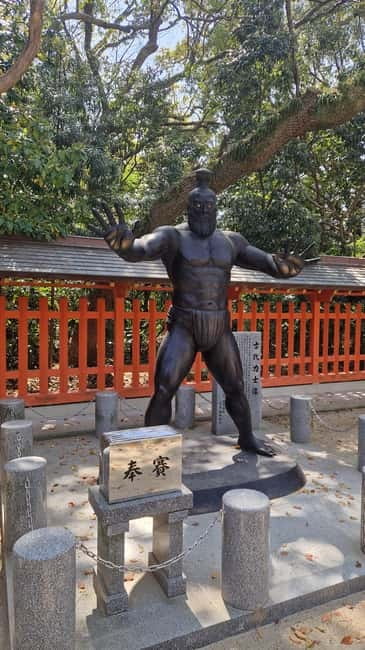
The walk to Kushida Shrine takes about 15 minutes. This is the longest transfer listed on the route, though it is still an easy city walk for most people who are comfortable being on their feet.
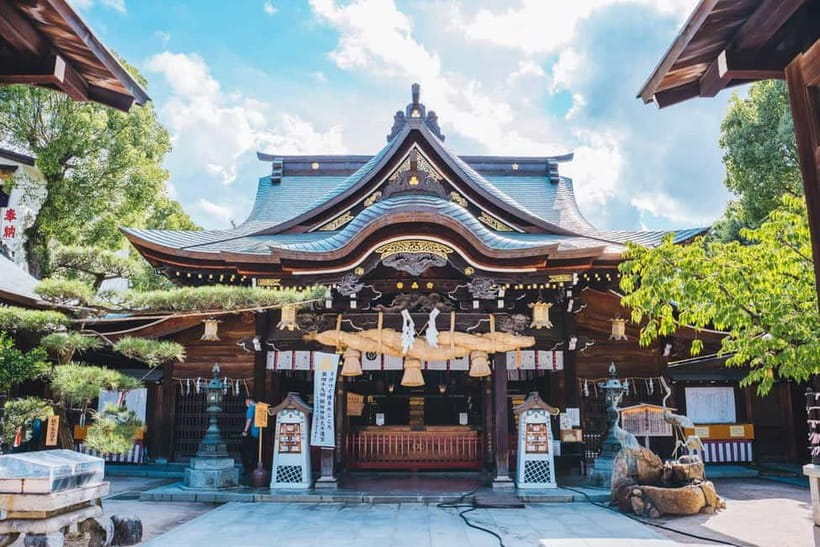
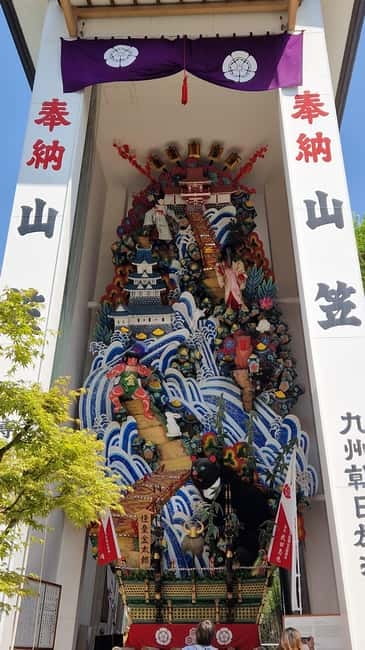
Kushida Shrine is closely tied to the Hakata Gion Yamakasa festival, one of Fukuoka’s best-known traditions. The festival takes place each summer, and a tall Yamakasa float is displayed at the shrine. Your guide uses the float and the festival to explain how local customs bring the city together.
This is a good place to ask about Shinto etiquette. The tour includes guidance on how Buddhism and Shinto are practiced together in Japan, a subject that can confuse first-time visitors. You will hear about everyday customs as well as major festivals, which makes the shrine feel connected to ordinary life rather than locked in the past.
You have around 30 minutes here for a guided visit and sightseeing. The shrine is a more active, public setting than Shōfukuji, so the experience changes tone. That variety is one of the route’s strengths.
The drawback is that the festival atmosphere depends on the season. You can see the float and learn about the event, but you will not be watching the full summer festival during this three-hour walk unless your visit happens to coincide with it.
Canal City, fountains, and a change of pace
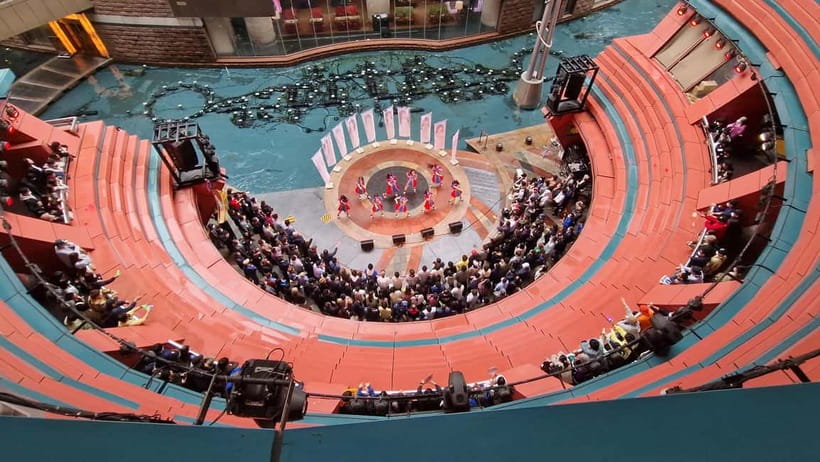
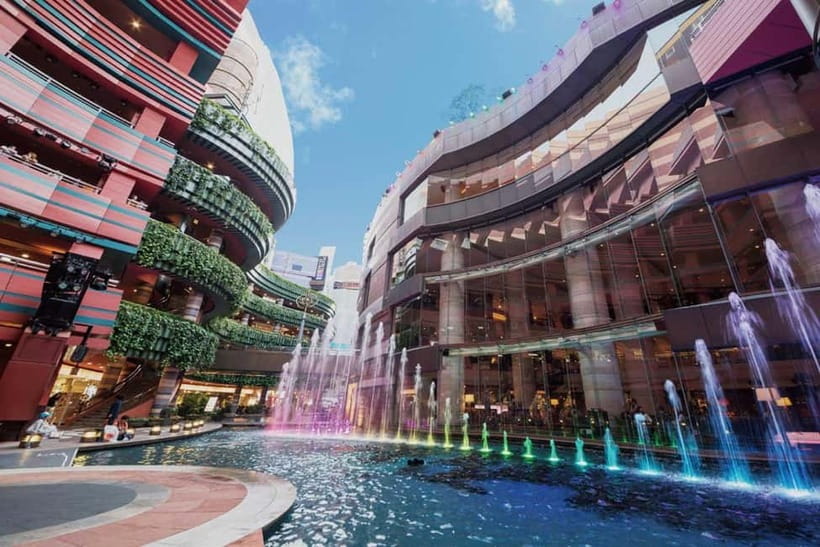
From Kushida Shrine, the tour shifts from sacred sites to modern Fukuoka at Canal City Hakata. You have about 15 minutes for sightseeing and the fountain show, a lively display combining water, music, and lights.
Canal City is not a historic stop, and that is exactly why it belongs here. It shows how the city has changed while keeping older districts and religious sites close at hand. After temples and shrines, the shopping and entertainment complex gives you a quick burst of modern city life.
The fountain stop is short, so treat it as a taste rather than a full shopping visit. You will not have time to explore the complex in depth, browse every store, or settle in for a meal. Food and drinks are not included, and the tour does not list a dedicated meal break.
Show schedules can vary, so check the timing when you book. The tour includes a fountain show stop, but the precise program may depend on the day.
Sumiyoshi Shrine and a fitting final stop
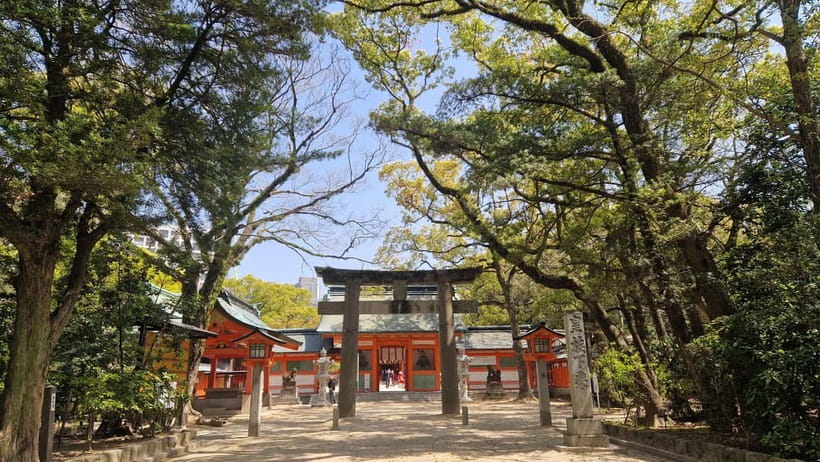
A five-minute walk takes you from Canal City to Sumiyoshi Shrine. This is one of Japan’s oldest Sumiyoshi shrines and is dedicated to the gods of safe travel and protection.
The shrine makes sense as the final stop. You began near Hakata Station, spent the afternoon learning about temples and customs, and now finish at a place connected with journeys. The vermilion torii gates and quieter setting give the walk a calm close.
The guided visit lasts about 25 minutes. This is enough time to understand the shrine’s purpose, see its distinctive features, and ask final questions about Shinto practice. It is also a useful point to discuss travel blessings and protection without turning the subject into a forced bit of symbolism.
After Sumiyoshi Shrine, you walk about 15 minutes back to the CASETiFY shop outside Hakata Station. That return makes the tour convenient for a later train, though you should allow extra time if you have a fixed departure.
How the guides shape the experience
The tour is offered in English and German. Conversational Japanese is also listed as available. Since this is a private group, the guide can spend more time on your questions than on a fixed script, at least in principle.
Andy is praised for patience, a leisurely pace, and helpful advice after the tour. That last part can be valuable in Fukuoka, where a guide’s suggestions about food and markets may help you plan the rest of your stay. Paula has led visits focused on local shrines and temples, while Arianna has guided private explorations of Hakata.
The pace is a major advantage for anyone who dislikes being rushed from one photo stop to the next. You have time to ask how Buddhist and Shinto practices differ, why a festival matters, or what a particular ritual means.
Still, three hours is not a lot of time for five main stops plus walking. You will get a useful introduction, not a detailed study of every building. If you want long periods for quiet reflection, sketching, or photography, you may prefer to revisit one or two sites on your own later.
Walking, comfort, and practical planning
The total route includes several walking sections: 10 minutes to Shōfukuji, five minutes to Tōchōji, 15 minutes to Kushida Shrine, five minutes to Sumiyoshi Shrine, and 15 minutes back to Hakata Station. The scheduled guided and sightseeing time adds up to the balance of the three-hour experience.
Wear comfortable shoes. That advice is not decoration here. You will walk between city streets and religious grounds, with time spent standing at each stop. Bring a camera, but also check the weather before setting out. The tour is outdoors for much of its duration, and conditions can affect your comfort.
Bring money for souvenirs if you want to shop along the way. Food and drinks are not included, and the schedule does not provide a meal stop, so eat before the tour or plan a meal afterward.
The route returns to its starting point, which is helpful for transport. Transportation costs are not included, but the stated route is walked rather than covered by a bus or train.
Who will get the most from the $77 price

I would recommend this walk to a first-time Fukuoka visitor who wants a structured introduction to Hakata. It suits people who enjoy history, religion, local festivals, and city neighborhoods, but do not want a full-day excursion.
It also works well for couples, families, or friends who prefer a private group. The ability to ask questions in English or German is useful, and the conversational Japanese option may help some visitors connect more directly with the setting.
The price is easier to justify if your group is small and you value personal explanation. It is less compelling if you only want to photograph the temples, since you could visit several sites independently. The guide is the main reason to book: the route connects the sites, but the interpretation gives them meaning.
I would not pick this tour for someone with limited walking ability, a strict desire for indoor activities, or a strong wish to spend hours at one temple. The route is leisurely, but it is still an active city walk.
Should you book Fukuoka’s Sacred Path?
Book it if you want to understand how Zen Buddhism, Shinto worship, local festivals, modern shopping, and travel customs fit together in Fukuoka. The combination of Shōfukuji, Tōchōji, Kushida Shrine, Canal City, and Sumiyoshi Shrine gives you a broad introduction without taking a full day.
The best reasons to choose it are the private format, the guide’s ability to explain etiquette, and the range of stops. The main caution is the amount of walking and the limited time at each place.
If your schedule is flexible, cancellation is free up to 24 hours in advance, and you can reserve now and pay later. For a compact first look at Hakata, $77 is a fair price when the guide’s local advice and cultural explanation matter as much as the sights themselves.
FAQ
How long does the Fukuoka Sacred Path tour last?
The tour lasts three hours.
What language is the tour offered in?
The tour is offered in English and German. Conversational Japanese is also listed as available.
Is this a private tour?
Yes. The activity is described as a private group experience.
Where does the tour begin?
It begins outside Hakata Station’s West Exit, in front of the CASETiFY STUDiO at Amu Plaza Hakata.
Where does the tour end?
The tour returns to the same meeting point outside the CASETiFY shop near Hakata Station.
Which temples and shrines are included?
The route includes Shōfukuji Temple, Tōchōji Temple, Kushida Shrine, and Sumiyoshi Shrine.
Does the tour visit Canal City Hakata?
Yes. The tour includes a sightseeing stop at Canal City Hakata and time for its fountain show.
Is food included?
No. Food and drinks are not included.
What should I bring?
Bring comfortable walking shoes and a camera. You should also check the weather and bring money for souvenirs if desired.
Can I cancel the booking?
You can cancel up to 24 hours in advance for a full refund. The activity also offers a reserve-now, pay-later option.
Just added around Japan
- From Asakusa: Old Tokyo, Temples, Gardens and Pop Culture★ 5.0 · 47 reviews
- Private guided tour: Mt. Aso volcano, grasslands, Aso Shrine★ 5.0 · 19 reviews
- Goshuin Collecting tour at Asakusa Local Temples & Shrines, Tokyo★ 5.0 · 8 reviews
- Tokyo:Nikko UNESCO World Heritage Sites Private 1-Day Tour★ 3.8 · 6 reviews
- Tokyo Yokohama Night View Tour With Kamakura And Enoshima★ 3.5 · 14 reviews
- Tokyo: Snow Monkey Park and Zenkoji Temple Private Day Tour★ 4.7 · 127 reviews
- Tokyo War History Tour: Yasukuni Shrine & War Museum★ 4.5 · 6 reviews
- Tokyo to Nikko: Exclusive Private Day Trip★ 4.8 · 6 reviews
Historical Tours, compared.
Tanah Lot UNESCO World Heritage Sites Full-Day Tour
Read our review →

Mt. Fuji Heritage Tour: Traditional Villages, Lakes & Shrine
Read our review →
Malta: Prehistoric Temples, Limestone Heritage & Blue Grotto
Read our review →
Day Trip From Addis Ababa See Historical Monastery,Stunning Nature,Animals,Birds
Read our review →
Beijing Historical Tour II including Summer Palace, Lama Temple & Panda Garden
Read our review →Browse the lists this tour appears in